
To replenish nitrogen deficiency in the soil, nitrogen fertilizers are needed. This article will examine two of the most popular types of nitrogen fertilizers: ammonium nitrate and urea. We'll try to understand which of these fertilizers is better and how to use them in practice.
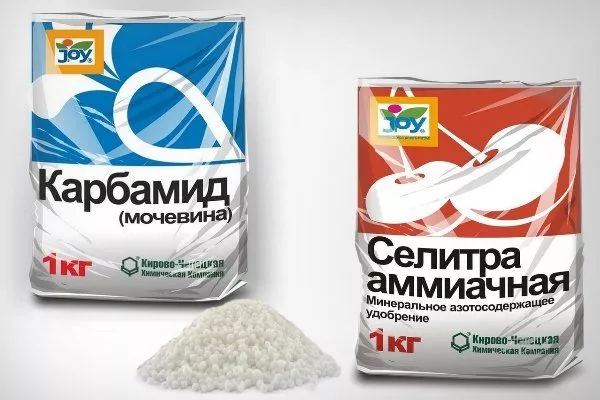
Use of nitrogen fertilizers
Every gardener knows that growing a good harvest without nitrogen-containing fertilizers is impossible. Nitrogen is one of the most essential nutrients for any crop. A nitrogen deficiency causes plants to weaken, develop poor foliage, have small leaves, and are susceptible to various diseases.
Nitrogen fertilizers are widely used in agriculture. They are applied to the soil as a primary pre-sowing fertilizer, as well as during inter-row cultivation and foliar feeding.
There are three groups of nitrogen fertilizers:
- nitrate;
- ammonium;
- amide.
Each of these fertilizers has different properties, characteristics, and applications. Most often, domestic farmers prefer urea or ammonium nitrate, as they have a high nitrogen content and are easy to use.
Characteristics of ammonium nitrate and its use as a fertilizer
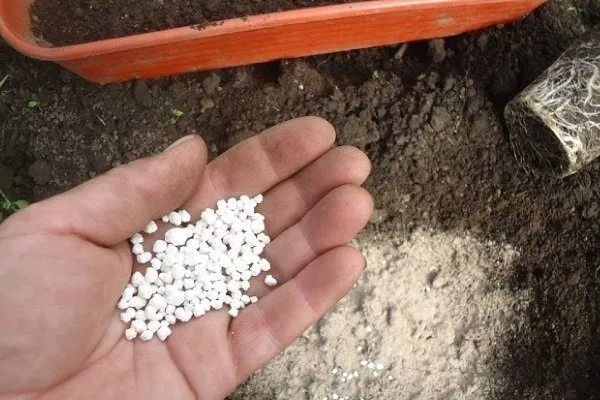
This is a type of mineral granular fertilizer, white in color but may have a gray, yellow, or pink tint. The granules range in diameter from 2 to 4 mm. The product contains 34% total nitrogen, including 17% in nitrate form and the same amount in ammonia form. It is sold under the brands "A" and "B."
The main name of this fertilizer is ammonium nitrate, but it is also called ammonium nitrate, ammonium salt of nitric acid, and ammonium nitrate.
Saltpeter is effective in regulating plant leaf growth, increasing protein and gluten in grains, and also in increasing yields.
Ammonium nitrate is produced using ammonia and nitric acid. This fertilizer also contains other beneficial elements: sulfur (up to 14%) and small amounts of potassium, magnesium, and calcium.
This is one of the most popular nitrogen fertilizers. Product "A" is used for many crops and in all climate zones, but farmers most often use it on grain crops. Product "B" is typically used on vegetable and ornamental seedlings, when growing them indoors during the winter.
Ammonium nitrate is added to the soil during garden tilling and preparation for planting. When planting seedlings, saltpeter is typically used as a fertilizer.
Fertilize root crops 20 days after germination. Ammonium nitrate is distributed between rows at a rate of 6-8 g of fertilizer per square meter.
Vegetable crops are enriched with ammonium nitrate at the time of planting or eight days later. It promotes plant strength and leaf growth. The second ammonium nitrate application begins a week before flowering.
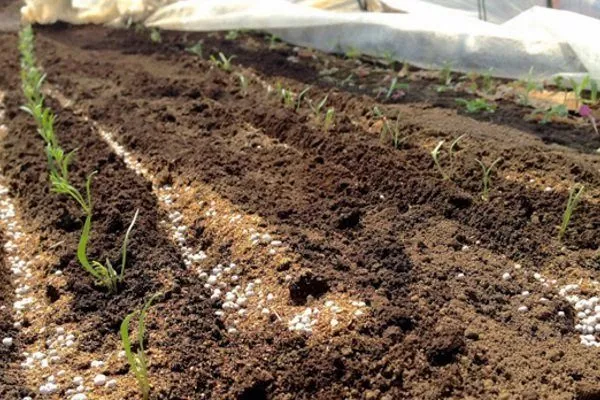
It is prohibited to use ammonium nitrate during the period of fruit formation and ripening.
Characteristics of urea and its use as a fertilizer
Urea (carbamide) is produced industrially through the synthesis of ammonia and carbon dioxide. The product is available in two grades, labeled "A" and "B." The former is used in industrial applications, while the latter, labeled "B," is intended for the agricultural sector.
Urea is a white or yellow, odorless crystal. It contains 46% nitrogen, all in the nitrate form. The domestic industry has established production of urea not only in granules but also in tablets.
Urea is the most concentrated nitrogen fertilizer. It dissolves completely in water and has a wide range of applications.
Urea is a very valuable fertilizer with both positive and negative aspects. Its nitrogen is completely water-soluble and does not penetrate into the lower soil horizons.
Urea is used for foliar feeding because it is gentle and does not burn leaves. This means it can be used during plant growth and development:
- Basic contributionFertilizer is buried 5 cm into the soil before sowing. On irrigated land, urea is scattered on the day of watering. 1.4 to 2.1 kg is applied per 100 square meters.
- Pre-sowing fertilizingUrea is applied as a starter fertilizer along with the seeds. A layer of soil must be placed between the fertilizer and the seeds. The urea dose is set at 40-60 grams.
- Foliar feedingApply with a sprayer in the morning or evening. To prepare the working solution, use 55-105 g of fertilizer per bucket of water. The working solution consumption rate should be 10 liters per 100 square meters.
Urea is widely used in various soil types to fertilize fruit, flower, berry, and vegetable crops. Never increase the urea dosage when spraying, as this will cause leaf burn.
Urea is not only a good fertilizer. It has proven effective against harmful insects on fruit crops. Before bud break, at temperatures above 5°C (41°F), tree crowns can be sprayed with a urea solution (60 g per liter of water).
Advantages and disadvantages of ammonium nitrate
Ammonium salt of nitric acid has the following advantages:
- Ammonium nitrate is extremely cost-effective. It is the cheapest fertilizer, requiring a consumption rate of 1 kg per 100 square meters.
- It can be used from March until frost. This fertilizer has a rare property: its granules can burn through snow, allowing crystals to be scattered across the snow at the earliest possible time.
Nitrate is effective even in frozen soil. It can be applied to crops on frozen ground, providing nitrogen supplementation to the soil when it's severely deficient. Organic fertilizers and urea are completely useless in such conditions—their effect only becomes apparent when the soil warms up.
Despite having many beneficial properties, saltpeter also has some disadvantages:
- It is not recommended to use it on soils with acidity above the norm;
- Ammonium nitrate should be applied with caution, otherwise the released ammonia can destroy crops;
- Saltpeter is not used for foliar feeding due to the risk of leaf burn;
- it cannot be mixed with superphosphate, lime, dolomite and peat due to possible spontaneous combustion;
- Nowadays it is difficult to obtain ammonium nitrate;
- Saltpeter is explosive, so you need to know how to transport it and store it properly.
Advantages and disadvantages of urea
Urea has the following positive qualities:
- the nitrogen contained in urea is easily and quickly absorbed by any plants;
- When the recommended doses of fertilizers are observed, urea, when applied as a foliar fertilizer, never causes burns to the leaves of the crop;
- Urea is highly effective on all types of soil, regardless of its acidity;
- Urea shows excellent efficiency in irrigated areas;
- Fertilizer can be easily applied using all known methods and at any time;
- Urea is relatively easy to transport and store.
The following factors indicate the negative qualities of urea as a fertilizer:
- Once it gets into the soil, it takes longer for it to start working;
- During storage, urea can adsorb moisture from the air;
- When seeds come into contact with fertilizer, germination may decrease;
- Urea is completely useless in cold soil, and therefore is not used for early spring application.
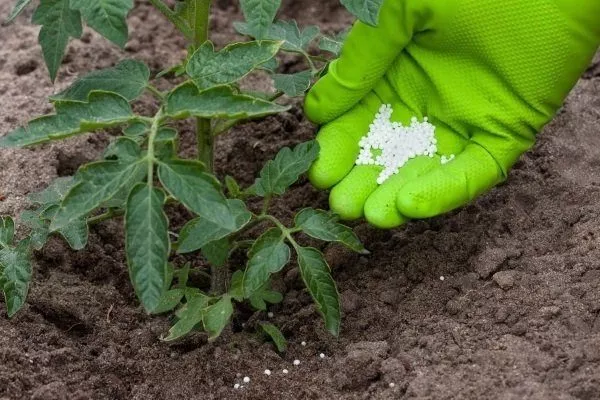
What is the difference between ammonium nitrate and urea?
Both substances are popular nitrogen-containing fertilizers, but there are differences between them:
- These products contain different amounts of nitrogen: 46% in urea and 34% in saltpeter.
- Urea can be used not only for root application, but also by spraying on the leaves, while saltpeter can only be applied to the soil.
- Urea is a more gentle fertilizer.
- The main difference is that saltpeter is a mineral substance, while urea is an organic compound.
- Plants absorb nitrogen from urea more slowly than from saltpeter, but the nutritional effect lasts longer.
- When applied, saltpeter increases the overall acidity of the soil, while urea does not alter it. Therefore, only urea is suitable for acidic soils and crops that do not tolerate acidic conditions.
- The effectiveness of treatment with saltpeter is greater than that of urea, because saltpeter contains two different forms of nitrogen: nitrate and ammonium.
- Saltpeter is explosive and requires specialized storage and transportation conditions. Urea is sensitive only to moisture.
| Characteristic | Ammonium nitrate | Urea |
|---|---|---|
| Nitrogen content, % | 34 | 46 |
| Form of nitrogen | Nitrate and ammonia | Nitrate |
| Application on acidic soils | Not recommended | Recommended |
| Directions for use | Only in the soil | Into the soil and on the leaves |
| Impact on soil acidity | Increases | Doesn't change |
| Efficiency in cold soil | High | Low |
| Explosive hazard | Yes | No |
| Storage conditions | Special | Sensitivity to moisture |
Which fertilizer is better to use: urea or saltpeter?
Much in this matter depends on the specific conditions and requirements for fertilizer:
- Ammonium nitrate is in high demand among grain farmers. An additional grain yield increase of 3-4 centners per hectare is quite possible thanks to the use of nitrate. The fertilizer is applied before plowing in the fall or before cultivation in the spring. For greater effectiveness, superphosphate and potassium fertilizers are applied along with nitrate. Recommendations for choosing fertilizer
- ✓ For grain crops, ammonium nitrate is preferable
- ✓ On acidic soils and for crops that do not tolerate an acidic environment, use urea
- ✓ For foliar feeding, choose urea
- ✓ For early spring application to cold soil, use ammonium nitrate
- On light sandy loam soils, the nitrate nitrogen of saltpeter applied in the fall can be washed out, so it is better to apply it before sowing for cultivation.
- If you need to apply several fertilizers, including ammonium nitrate, then you need to mix them before use.
- Urea should be used on acidic soils and in areas where plants that do not tolerate acidic conditions grow.
- For garden, ornamental and fruit crops, it is better to use urea, as it is a milder agent.
- To apply nitrogen fertilization by spraying on the leaves, you should choose urea.
This video explains the differences between these two fertilizers and when to use one:
Discussing which fertilizer is better—urea or ammonium nitrate—is, at the very least, incorrect. The choice of fertilizer in each specific case should be based on the intended use. If you want to accelerate plant growth, consider ammonium nitrate. If harvest quality is your top priority, choose urea.