
Potatoes are a popular vegetable in the CIS countries. It's difficult to find a variety that thrives in all latitudes, from the Baltic to the Yenisei River. But the Nevsky potato is just that – a surprisingly resilient and undemanding root vegetable. However, it still requires proper care.
History of the variety
The Nevsky potato variety was developed at the Northwestern Research Institute of Agriculture in 1976. It was the result of breeding two other varieties: Kandidat and Veselovsky. Nevsky combined the best properties and gained unprecedented popularity on collective farms and later among private farms. In 1982, it was added to the state register of varieties.
To this day, the Nevsky variety is recognized as the best among those bred in Russia using selective breeding methods.
Description of the Nevsky potato variety
This variety has a unique ability to survive in a variety of climates, easily tolerating both rainy periods and high temperatures. Currently, 26% of potato-growing land in Russia is devoted to the Nevsky variety, as it guarantees a harvest in virtually any weather conditions.
Escapes
The Nevsky potato variety grows 50-60 centimeters tall. The leaves lushly cover the robust stem. They are wide, oblong, and bright green, with wavy edges.
The flowering period is short-lived, the buds are white, have bright orange pistils, and form racemose inflorescences.
Roots
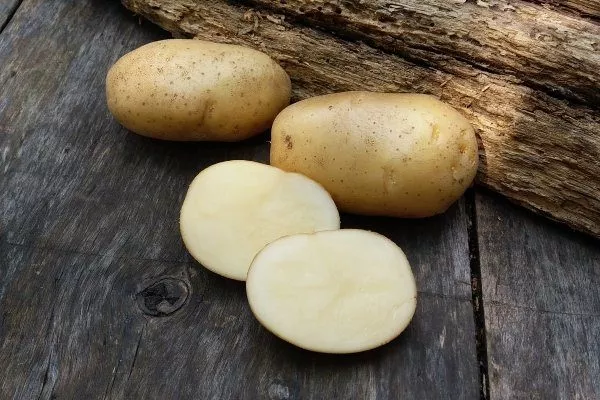
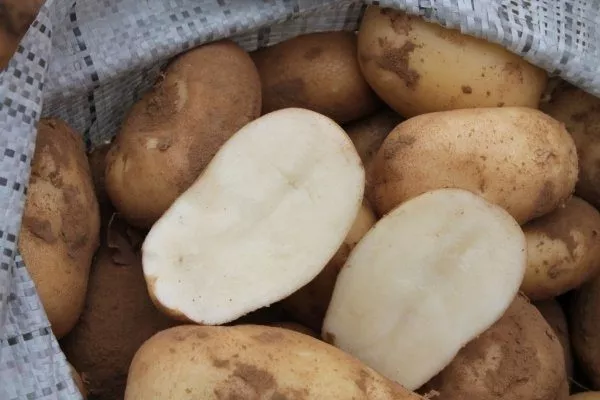
Mature potatoes are light beige, oblong-oval in shape, and have a delicate, thin, smooth skin. The flesh is creamy. The eyes are prominent and pink. Tubers weigh 50-130 grams, and their starch content is 10-13%.
Characteristics and features of the variety
The Nevsky potato variety can be described by the following properties:
- maturation time 75-100 days;
- drought-resistant;
- thermophilic;
- not afraid of waterlogged soil;
- good yield;
- shelf life index – 95%;
- marketable appearance;
- transportable;
- The taste is highly rated by consumers.
Has good immunity to the following diseases:
- potato cancer;
- scab;
- fusarium;
- Verticillium wilt;
- late blight;
- blackleg;
- Alternaria.
| Disease | Sustainability | Prevention methods |
|---|---|---|
| Potato cancer | High | Crop rotation, use of healthy seed material |
| Scab | High | Liming the soil, using resistant varieties |
| Fusarium | High | Seed treatment, crop rotation |
| Verticillium wilt | High | Crop rotation, removal of affected plants |
| Late blight | Average | Treatment with copper-containing preparations, crop rotation |
| Blackleg | High | Use of healthy seed material, crop rotation |
| Alternaria | High | Seed treatment, crop rotation |
The Nevsky potato has weak resistance to various types of mosaic, macrosporiosis, and root rot. However, nematodes pose a particular threat.
The Colorado potato beetle does not like Nevsky potatoes, and if there are other nightshades in the area or near it, it will prefer them.
Productivity and taste
One Nevsky bush produces 8 to 15 tubers, equivalent to 1.5-2 kg in weight. One hectare can yield 380 to 500 kilograms of roots. The most common yield is 450 kilograms. The maximum harvested was 6 centners per hectare.
Most potato lovers highly appreciate the Nevsky potato variety's flavor. It's suitable for boiling, baking, and frying, as well as for making salads and soups. However, due to its low starch content, it's not suitable for making mashed potatoes at home or on a commercial scale.
Advantages and disadvantages of the variety
Like any other variety, Nevsky has its strengths and weaknesses. Thanks to breeders, the former significantly outnumber the latter:
- easily tolerates both drought and high humidity;
- has high immunity to the most common potato diseases;
- tolerates transportation well;
- has a pleasant appearance;
- has excellent taste;
- long shelf life;
- it is difficult to cause mechanical damage;
- adapted to the climatic features of different regions.
But the Nevsky potato also has negative sides:
- not suitable for making puree;
- he is at risk from nematode worms;
- The lush tops make it difficult to weed.
To make it easier to care for potato bushes, avoid planting them too close together.
Features of planting and growing Nevsky potatoes
This variety is unpretentious, but before planting you need to choose the right place and time, and also prepare the seed material.
Optimal timing and choice of location
One of the main characteristics of the Nevsky potato variety is its love of warmth. Planting is only allowed when the soil has warmed up. This is especially important in regions with frequent spring rains. Nevsky potatoes are moisture-resistant if the soil is already warm. Otherwise, they will spoil. When choosing a planting time, aim for mid-spring, when there are no night frosts.
There are no special soil requirements, but this variety grows best in sandy loam and loamy soils. It's important that the planting site be shaded. Avoid planting potatoes in soil previously occupied by other nightshades, sorghum, or sunflowers. Ideally, the following crops should be grown in the area the previous season:
- legumes;
- cabbage;
- beet;
- garlic;
- onion;
- cucumbers;
- oats;
- carrot;
- herbs;
- corn.
Preparing the site for planting
In the fall, the soil is dug over, followed by the addition of mineral fertilizers or cow manure with compost. In the spring, a few days before planting, the soil should be cleared of weeds, dug over, and phosphate fertilizers added.
Preparing tubers
With Nevsky potatoes, proper selection and preparation of the tubers is crucial to ensure a high yield. The selection rules are strict.
- ✓ No signs of rot or mechanical damage
- ✓ Tuber weight from 60 to 80 grams
- ✓ Presence of healthy sprouts
- ✓ Treatment with a solution of potassium permanganate before germination
Nevsky should not be cut into sections or have its eyes removed and replanted separately. Only whole, sprouted tubers should be planted. Scratched, tender sprouts will not produce a harvest.
When selecting potatoes, pay attention to their condition. The slightest sign of rot or mechanical damage renders the tuber unusable. They should weigh no more than 80 grams and no less than 60 grams.
Before sprouting, root vegetables should be treated with a potassium permanganate solution to disinfect them. The tubers should either be washed or soaked in the solution for 3-4 minutes.
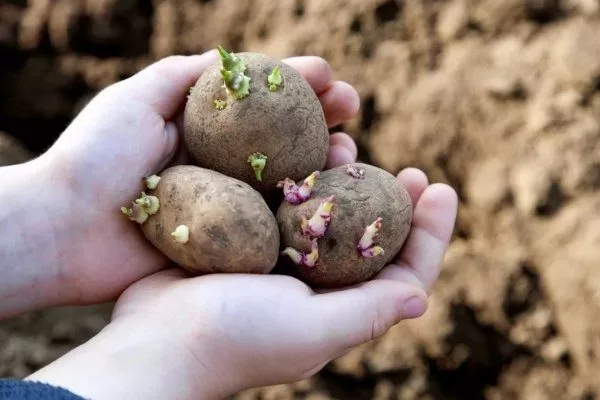
Then they are laid out in a single layer in a warm, dry room for 2-3 weeks. Planting occurs when the sprouts are just emerging and are still difficult to damage. They should not exceed 3 centimeters in height.
If the potatoes have already sprouted and the weather is still cold, place the planting material in a cool place. This will stop growth and harden the tubers.
Planting in the ground, planting pattern and depth
Planting should be done in warm soil. If bad weather persists in May, it's best to plant the potatoes earlier, otherwise they won't ripen until autumn.
The planting depth is 20 centimeters. The distance between holes should be at least 50 centimeters; sometimes 30 centimeters is acceptable. The distance between rows should be more than half a meter.
The sprouted tubers are placed and buried in the soil very carefully to avoid any damage. After this, if the soil is dry, the first watering is applied.
Fertilization
Fertilize the Nevsky potato variety once when planting. The plant doesn't need further feeding. Before placing the seeds, sprinkle fertilizer onto the bottom of the dug hole. This can include:
- cow dung;
- wood ash;
- eggshell;
- bird droppings.
If the soil is noticeably depleted, then additional feeding is allowed during the potato growth period:
- After the first stems appear, water the roots with a urea solution (half a liter per bush).
- Before flowering – a solution of wood ash and superphosphate in a ratio of 10:1.
- During flowering – a weak solution of superphosphate.
Care
If there's no rain, water the Nevsky variety 2-3 times a week. To ensure a drip effect, it's best to use a sprayer. Water in the morning or evening, away from direct sunlight.
The first sprouts will appear 15-20 days after planting. Before this, weeding and loosening the soil should be done. These procedures are repeated at least four times as the potatoes grow.
When the sprouts reach a height of 15 centimeters, the first hillingCarefully rake the soil to avoid getting it on the leaves or in the axils. The potatoes are hilled a second time when the sprouts reach 30 centimeters. This procedure is performed in cloudy weather on moist soil.
Protection from diseases and pests
The Nevsky potato variety is resistant to most diseases, but nematodes pose a particular risk. To avoid nematode infestations, you should:
- loosen and cultivate the soil;
- carry out a careful selection of seed material;
- adhere to crop rotation;
- If infected bushes are found, immediately remove and burn them, and treat the rest with Fosfamide.
To prevent potato blight, follow proper care instructions and spray the plants twice a month with a copper sulfate solution.
To protect against mice and insect pests, holes are dug on the site, poison and ultrasonic repellents are laid out.
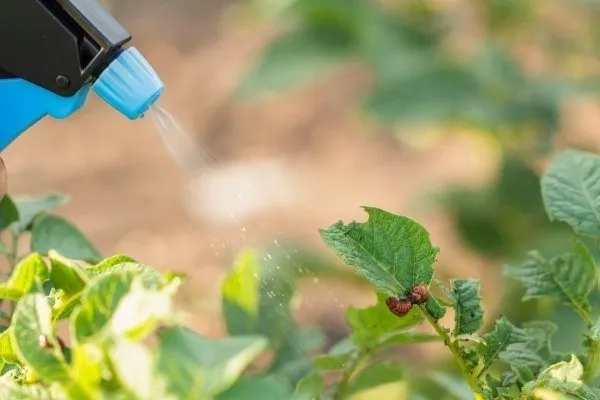
Colorado potato beetles are removed manually. Insecticides such as Iskra, Regent, Antizhuk, Prestige, Corado, Confidor, and Aktara are used as poison.
Mole crickets need to be eliminated early. In the spring, a manure pile is placed in the area chosen for potato cultivation, where the insects will lay their larvae. The pile is burned shortly before planting. During spring tillage, large eggshells can be added to the soil; this will injure the insects and encourage them to leave the area. Medvetox and Bazudin are used to control mole crickets. The latter is also effective against wireworms, a worm that damages tubers.
Harvesting and storage
New Nevsky potatoes are harvested as early as mid-July. The roots are carefully removed by hand to avoid damaging the entire root system. Full maturity occurs by late summer. Dig up the potatoes before the first frost. Harvesting is best done in dry weather. It is important to ensure that the shovel enters no closer than 20 centimeters from the bush.
After removing the potatoes from the ground, place them in a ventilated area to dry. Once dry, clean off any dirt, remove any damaged tubers, and place the remaining tubers in bags or boxes and store them in the cellar. These potatoes are best stored at 8 degrees Celsius.
Not every vegetable thrives equally well in both dry and rainy climates. This tolerance to climate extremes makes the Nevsky variety a versatile choice for many public and private farms. It is prized for its low maintenance, long shelf life, high immunity, and excellent flavor.