
Fresh, home-grown fruits and vegetables are always preferable to store-bought ones. However, a greenhouse or hotbed requires a lot of time and energy. High humidity and relatively high temperatures create a fertile breeding ground for pathogens. Proper spring treatment of your polycarbonate greenhouse will help prevent this problem.
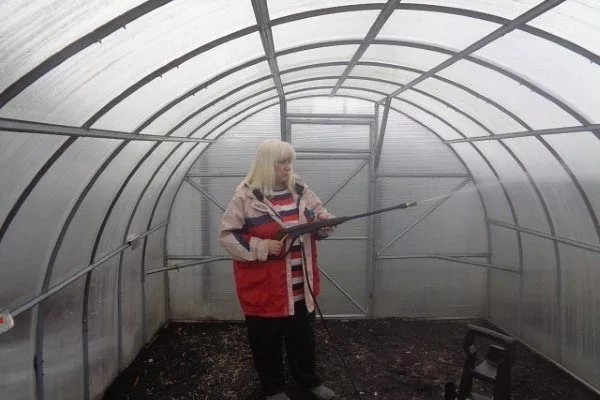
The main goals of spring treatment of a polycarbonate greenhouse
The potential for insect, microbial, and fungal infestations requires annual disinfection of the soil and the structure itself. Failure to perform seasonal treatments in the greenhouse can lead to a host of problems in the coming season:
- abundance of pests;
- fungal diseases of plants;
- deterioration of crop condition due to the impact of weeds;
- violation of temperature regime;
- low yield.
The main goals of seasonal treatment of a polycarbonate greenhouse are:
- keeping the premises clean;
- mold protection;
- clearing of weeds and their seeds;
- pest control;
- preservation of perennial crops;
- ensuring the required level of lighting and temperature;
- taking care of the integrity of the structure and maintaining its functionality.
The key to effective greenhouse treatment is frequency and adherence to deadlines.
Processing timeframes
A polycarbonate greenhouse structure typically provides sufficient protection from external contaminants, so many gardeners don't consider a thorough cleaning of the greenhouse important before the start of the new planting season. In fact, preparation can make all the difference.
The main principle for timing treatment is that pest control must begin when the pests enter their active phase. This requires time and favorable temperatures for the pests and their larvae to awaken. Treatments that haven't yet thawed are ineffective.
- ✓ The soil temperature must not be below +10°C to activate pests.
- ✓ The air humidity inside the greenhouse should not exceed 70% to avoid the development of fungal diseases.
If chemical treatment is planned, it is best done after a 10-cm-deep layer of soil has thawed. It is important to observe the interval between treatment and planting. Ideally, this should be at least 10 days before the planned planting of crops in the greenhouse.
The soil should be cultivated several weeks before planting seedlings and seeds. This is usually done in late February or early March.
Sequence of actions
Processing stages
Spring preparation of a polycarbonate greenhouse for the new planting season includes 6 main stages:
- General cleaning of the area where the greenhouse is located.
- Installation of the structure.
- Cleaning the frame and polycarbonate (which acts as glass).
- Disinfection inside the building.
- If necessary, minor repairs to the structure (strengthening, strengthening of load-bearing foundations).
- Soil cultivation. This involves the application of chemicals, insecticides, fertilizing, digging, or replacing the topsoil.
If no fall treatment was performed, spring cleaning should begin with removing old plants. This includes not only tops and fallen fruit, but also weeds, their large seeds, and roots.
Next, remove all stakes, trellises, string, pieces of twine, and other tying materials. These can harbor pathogenic bacteria, which will immediately attack the new seedlings. These should be removed from the greenhouse and burned. Leaving them in the garden risks spreading disease to other areas of the plot.
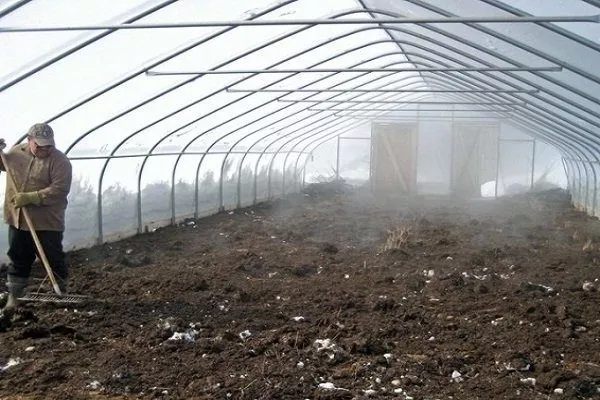
After this, the polycarbonate structure itself is cleaned. The most thorough cleaning will be achieved if the structure is disassembled and all surfaces are disinfected. If a disease outbreak has been detected within the greenhouse, the structure should be treated with a disinfectant. It is recommended to treat metal structures with warm water and vinegar.
Polycarbonate is a transparent material that loses its appearance and transparency when exposed to moisture and dirt. To restore its original appearance, wash the surface with soapy water or non-abrasive detergents. A mild solution of potassium permanganate can also be used. Afterward, thoroughly rinse off the detergents with clean running water.
Do not use hard sponges, metal brushes, or mechanical abrasives to clean polycarbonate coating. The coating is vulnerable to scratches.
Inside the greenhouse, all shelves, equipment, and containers should be cleaned. For this purpose, you can use boiling water, as well as certain chemicals (formaldehyde, copper sulfate, bleach).
Fumigation as a method of cleaning a greenhouse
Fumigation is an effective method of pest control in a closed greenhouse. To do this, tightly close the entrances and windows, seal any small cracks, and light a smoky fire. If this isn't enough, you'll need a few sulfur candles. These are laid out on metal sheets. You can also use sulfur pellets mixed with a small amount of kerosene.
Disinfection by fumigation is carried out for 4-5 days, after which the room is ventilated.
It is dangerous for humans to be in the greenhouse during this treatment, as the gas released during fumigation can cause serious respiratory problems. If it is necessary to enter the greenhouse, personal protective equipment must be used.
Basic methods of soil disinfection
The next step is soil disinfection. Three types of treatment can be used for this:
- temperature;
- chemical;
- biological.
The effectiveness of the treatment method depends on the type of crops grown in the greenhouse. This procedure is quite labor-intensive.
Change in temperature
If late winter and early March are frosty, you can take advantage of this natural blessing and freeze the soil. To do this, open the greenhouse and leave it open for a few days. Low temperatures can kill harmful bacteria and fungi that attack plants in abundance. Frost can also kill insect larvae laid in the soil in the fall.
If you're planting a small area for seedlings, you can skip the chemicals and simply treat the soil with boiling water. This is sufficient to kill most pathogens and pest larvae. For more information on soil treatment before planting seedlings, see here.
Biological control method
Biological treatment is usually carried out using the following preparations:
- Fitosporin;
- Phytocide;
- "Biodestructor of stubble."
The following drugs are also used:
- "Baikal M", effective against rot, fungi and lichens;
- "Fitolavin" against rot and pathogens;
- "Carbation", which helps to cope with clubroot and black leg, as well as verticillium and fusarium wilt;
- "Acrobat MC" for the control of powdery mildew and late blight;
- "Bayleton" against gray rot.
- ✓ The product must be specific to the target pests or diseases present in the greenhouse.
- ✓ Consider the half-life of the product to ensure safe planting.
To clean the soil, just water the top layer. For treatment, prepare the solution according to the instructions, then disinfect. After the solution has soaked in, use a rake to lightly dig the treated area. Then, cover the disinfected soil with a covering material (film or spunbond).
After using biological preparations, it is necessary to take care of the soil structure and replenish it with beneficial bacteria artificially.
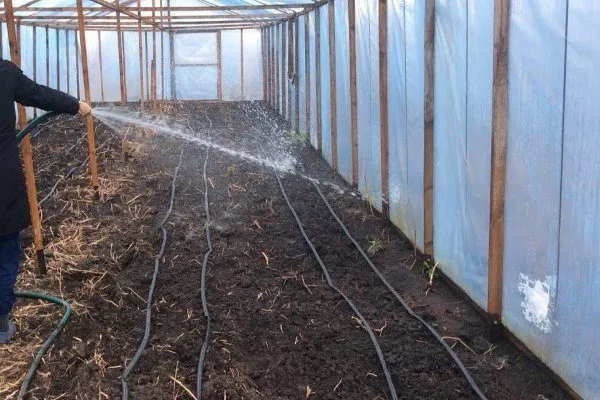
Chemical method of disinfection
The use of chemicals is usually driven by the desire to permanently eliminate pests. However, it's important to understand that any exposure to such substances has significant consequences for crops.
Chemical treatment is best carried out at the coolest time of day, ideally at night.
There are a number of chemicals widely used for soil disinfection:
- Chlorinated lime is considered the most readily available. It's affordable and has earned the trust of gardeners for its effectiveness. To prepare it, simply dilute 400 grams of quicklime in a 10-liter bucket of water. Let the solution sit for 8 hours: 4 hours with occasional stirring, 4 hours without stirring. After this, the top liquid layer is removed for soil treatment. The remaining solution can be used for whitewashing any wooden frames in the garden.
- A chlorine solution prepared in a proportion of 1 kilogram per 10 liters of water is effective in combating spider mites.
- Formaldehyde is applied two weeks before planting. After application, the soil should be covered with plastic for three days. The cleaned soil is dug over, and the greenhouse is ventilated.
- Bordeaux mixture is a powder for dilution in water. The main requirement is its proper application to the soil according to the instructions.
- "Iprodione" is a powder for disinfecting soil in the spring to prevent diseases such as gray and white rot, phomopsis, and oidium.
- "Hexachlorane" is effective against caterpillars and butterflies.
- A more radical method can be treatment with copper sulfate. It is quite aggressive against all bacteria (not just those harmful to plants). After its application, the soil is considered infertile, so artificial fertilization will be necessary for several years. Copper sulfate solution is most often used to treat the interior surfaces of the greenhouse and cracks in the foundation of the structure. It can combat late blight, powdery mildew, and scab.
You can buy ready-made preparations in specialized stores:
- "Lightning" against spider mites;
- "Thunderstorm" from snails and other types of slugs;
- "Marshall" against aphids and thrips.
Before using chemicals, it's important to carefully read the instructions and strictly adhere to the proper dilution ratios. Special equipment and protective gear, or readily available tools, can be used for spraying.
Features of greenhouse treatment for perennial plants
If perennials are growing in a polycarbonate greenhouse, it should be treated in the spring. For this purpose, it's necessary to use specialized products that won't harm the plants or the soil they grow in. These should be selected from a specialist store, choosing the right concentration depending on the plant's type and condition.
In addition to pest control, mechanical cleaning can be performed in a greenhouse with perennial crops: cleaning, minor repairs, digging up empty areas, and cleaning the structure with gentle cleaners. This involves removing unnecessary objects and small structures from the greenhouse and then cleaning them individually.
Next, the interior surfaces of the greenhouse and structures that cannot be removed for treatment are cleaned. Cleaning concludes with a wash of the structure's exterior. This is necessary both for the aesthetic appearance of the garden and to prevent potential insect infestations.
In spring, the shoots of perennial greenhouse plants are partially cut back and surrounding weeds are removed.
Recommendations for maintaining soil in a greenhouse
Some gardening recommendations recommend using greenhouse crop tops to create compost. This is possible, but only if several conditions are met:
- During the previous two seasons, there was no increase in the number of insects or outbreaks of infectious plant diseases in the greenhouse.
- A garden plot provides the opportunity to freely place a certain volume of compost for a period of 4 years to “process” pathogens without using it.
- The resulting compost will not be used to grow the crops from whose tops it was obtained.
To prevent pests from getting into the soil, you must follow some rules:
- A separate set of gardening tools should be provided for gardening. All tools (shovel, rake, pitchfork) should not be used outside the greenhouse.
- It's also worth bringing a separate set of shoes and gardening gloves. Using these will protect the indoor environment from external influences.
- After treatment, do not bring newly purchased plants into the greenhouse. They should be quarantined for at least two days. During this time, they may show signs of disease. If this occurs, the shoots should be disposed of in a neutral location to prevent their seeds from contaminating the soil.
Following simple recommendations will help preserve existing plants and prevent soil contamination by harmful insects.
This video explains how to treat a polycarbonate greenhouse in spring:
Even greenhouses made of modern polycarbonate require careful treatment in the spring. Mechanical, biological, and chemical treatments will preserve soil fertility and increase crop yields.