
Growing strawberry seedlings from seeds is a challenging, yet rewarding endeavor. Success is only possible if you follow all the important rules. This will ensure you get a fruitful, flowering plant that will delight you with delicious berries.
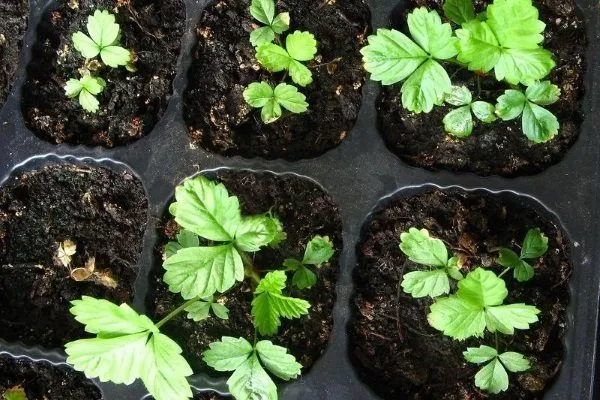
Varieties of everbearing strawberry seeds
For many years now, strawberries have migrated from gardens and vegetable patches to windowsills and loggias in ordinary apartments. At home, people often grow everbearing garden strawberries, often called strawberries.
Rmontantness — is a plant's ability to bloom and bear fruit several times during the growing season. This allows for harvesting from early summer until late autumn (right up until the first frost).
Today, there are a wide variety of everbearing strawberry varieties available, so you can choose one to suit your taste preferences. These include:
- large remontant hybrid strawberries (Scarlet Light, Sladkoezhka, Kapelka Leta, etc.);
- "whiskerless" early ripening variety (Marmeladnaya, Alexandrina, Baron Solemacher, etc.);
- strawberries with unusually colored berries (hybrid - Golden Dessert, varieties - Snow White, Pineapple, etc.).
Comparative table of everbearing strawberry varieties
| Variety/Hybrid | Ripening period | Weight of berries (g) | Yield (kg/bush) |
|---|---|---|---|
| Scarlet Light | Early | 15-20 | 1.2-1.5 |
| Sweet tooth | Average | 10-15 | 0.8-1.0 |
| Baron Solemacher | Early | 5-8 | 0.5-0.7 |
| Snow White | Average | 6-10 | 0.6-0.9 |
White strawberries are considered hypoallergenic, so even small children are given this berry. Moreover, their vitamin content is very similar to that of wild wild strawberries.
It's recommended to purchase seeds from reputable agricultural companies. Another option is to collect seeds from your own garden, but only after open pollination between several varieties will you be able to obtain a hybrid plant with special qualities.
How to properly collect seeds and prepare soil for seedlings?
Everbearing strawberry seeds should only be collected from cultivar bushes, not from hybrid plants, as this is the only way to preserve the strawberry's parental qualities. Follow this procedure:
- Select ripe berries from a productive bush. It's important to ensure they match the correct variety.
- Using a sharp knife, remove the outer layer of skin and seeds. Place on a plate until completely dry.
- It is best to place the plate in a sunny place with good ventilation - this will allow the berries to dry quickly and not rot.
- After a couple of days, you can collect the seeds and leave the pulp in the container.
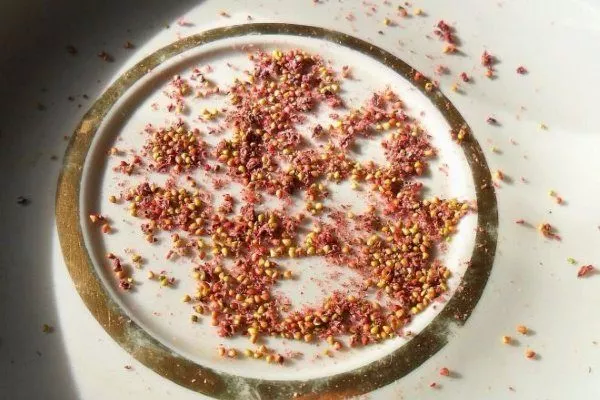
Seeds of large everbearing strawberries on a saucer
Everbearing strawberry seedlings are grown indoors, but in extremely rare cases, they are grown in a garden bed. The seedlings emerge very small and delicate, so they can easily perish in open ground.
For strawberry seedlings, it's recommended to use a ready-made universal soil with a neutral pH, which can be purchased at a specialty store. It typically doesn't contain pathogenic microflora, and its composition is quite suitable for growing berries.
To prepare the soil yourself, you should mix the following components:
- 0.5 kg of turf soil;
- 0.25 kg of sand;
- 0.25 kg of peat.
It's also a good idea to add some vermicompost and wood ash to this mixture. After mixing, place the soil in an oven preheated to 100 degrees Celsius and bake for 2-3 hours. This is necessary to kill weed seeds and insect larvae. The soil should then be left for 3 weeks, supplemented with beneficial bacteria using Siyanie or Baikal EM1.
Sowing seeds for seedlings and their germination
Strawberry seeds are known for their difficulty in germinating. Manufacturers indicate on the packets that germination takes up to one month. This process can be accelerated by pre-soaking, stratifying, or bubbling the seeds. The choice is yours.
Seed stratification
Stratification Stratification is the process of keeping seeds at low temperatures in a humid environment for a long time. This accelerates their germination, as in nature, seeds first undergo a dormant period before sprouting. Stratification is performed in February.
Sow the seeds on the surface of moist soil without covering them with soil (even a light dusting is not recommended, otherwise the seeds won't germinate). Then cover the container with plastic wrap and store it on a shelf in the refrigerator.
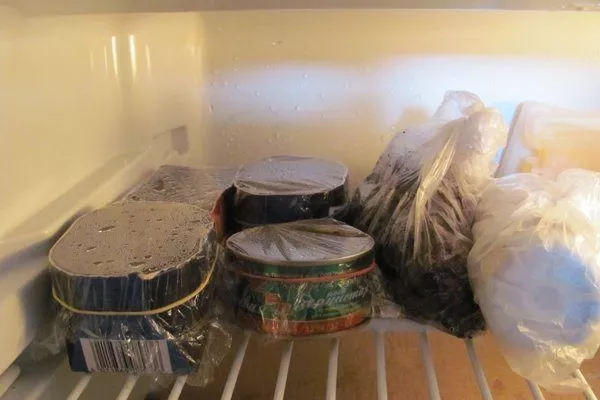
Many gardeners prefer another method of stratifying everbearing strawberry seeds:
- Fill the seedling container with soil, compact it slightly and moisten it slightly.
- Cover the soil with a centimeter-thick layer of snow and compact it slightly.
- Seeds are sown superficially (directly on the snow).
- Cover the container with plastic wrap and place it on the refrigerator shelf (temperature should be +2÷3 degrees).
- When the snow begins to melt, the seeds will sink slightly into the soil. There's no need to cover them with soil.
Stratification Control Checklist
- ✓ Check the temperature in the refrigerator (strictly +2…+5°C)
- ✓ Ventilate the container daily for 5-10 minutes
- ✓ Monitor the substrate moisture (do not allow it to dry out)
- ✓ Mark the start and end dates of stratification
The container can be kept at a temperature of +2 to +5 degrees Celsius for at least 14 days. Then, the seedlings should be moved to a warmer location. Seedlings usually emerge quickly after this.
Pre-soaking seeds
Harvested or store-bought everbearing strawberry seeds should be soaked in cold melted water for 72 hours. Be sure to change the water twice daily. During this period, the seeds will swell. Afterward, spread them out on a plate lined with damp paper towels, wrap them in a plastic bag or cover with glass, and place them in a warm place, making sure the towels don't dry out. After the seeds sprout and the first true leaves appear, plant them in special peat pots.
Seed bubbling
Bubbling is another method for increasing seed germination. This process requires soaking the seeds in warm water with air. To do this, lower the tube from an aquarium air pump into a liter jar of warm meltwater. Place the seeds in a cheesecloth bag or pour them directly into the jar.
Then, run the compressor for 48 hours. It's crucial that the water temperature remains at 25 degrees Celsius. After this, allow the seeds to dry slightly and sow them.
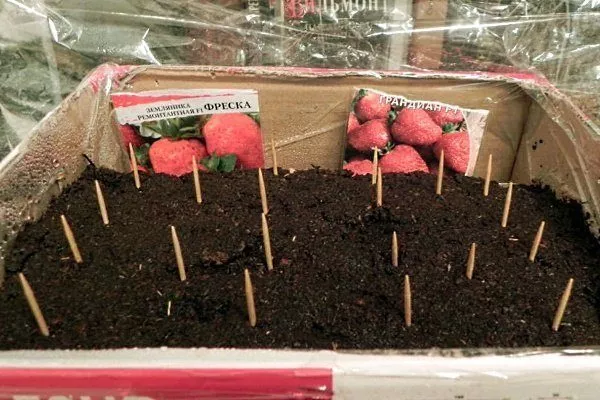
How to sow seeds in boxes?
Strawberries can be sown in both peat pellets and boxes. Here's how to sow:
- Take low boxes, fill them with prepared soil and compact them.
- Sow the seeds on the soil surface. Do not cover the seeds with soil!
- Spray the seeds with a spray bottle.
- Cover the boxes with film.
- If the seeds haven't been stratified beforehand, place the box in the refrigerator for 14-21 days. If the seeds have been cold-treated beforehand, place the boxes in a warm place.
Crop control schedule
- Day 1-7: Check condensation (remove excess)
- Day 8-14: Monitor soil temperature (not below +18°C)
- Day 15-21: Inspect for mold
- Day 22-30: Waiting for germination
When to sow everbearing strawberries and how to care for them afterwards?
Everbearing strawberries grown from seed need at least five months to bear fruit, so they should be sown in February. They prefer sunny or partially shaded locations. The optimal soil temperature for everbearing strawberries is 20-25 degrees Celsius. If favorable conditions are unfavorable, it's best to plant strawberries in March or April.
Keep the boxes with the planted plants in a warm place. Seeds can germinate in both the dark and the light. Check and ventilate the greenhouses at least once a day, removing any condensation from the film. Depending on the seed manufacturer and pre-treatment, germination may occur in a month or a little sooner.
As for seedling care, once the first shoots emerge, the trays should be moved to a well-lit area. It's not recommended to remove the plastic wrap yet, as excessively dry air in the room can kill the young seedlings within a couple of hours. Therefore, it's recommended to use trays with transparent lids. Water the seedlings with a spray bottle, and then increase the watering a bit.
How to transplant seedlings?
It's best to transplant seedlings for the first time after the first few true leaves appear. A week before this, allow the seedlings to acclimate to indoor conditions and life without cover. To do this, slightly open the greenhouse lid for a few minutes at first, then increase not only the time but also the opening. Gradually, you should begin removing the lid. It's essential to monitor the soil carefully to ensure it doesn't dry out, as this will kill the plants.
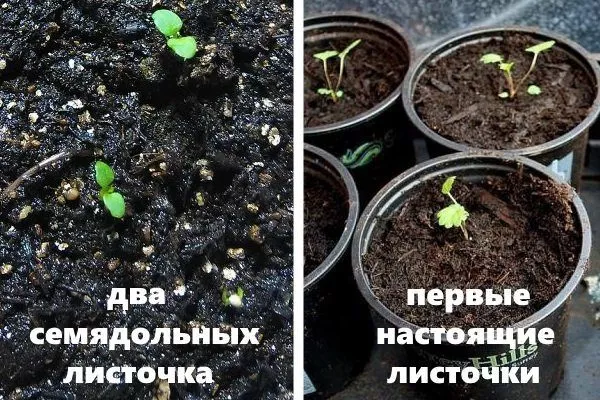
When seeds germinate, two cotyledon leaves appear first. As they develop, true leaves emerge, and the cotyledons fall off. This period is called the "1-2 true leaf phase." Seed packages often indicate that seedlings can be pricked out for the first time during this phase.
Transplant the transplanted seedlings into individual 200-250 ml pots. It's best to use universal potting soil, but be sure to add 500 ml of vermicompost per 10 liters of substrate.
What to do next:
- Before transplanting, you need to water the box with seedlings well.
- Pull out each seedling using a thin stick (for example, a toothpick).
- Long roots need to be pinched so that the plant can form a strong root system.
- Take a pot with prepared soil. Make a small hole in the soil, then place the strawberry roots in it, making sure they don't curl upward. The core of the plant should be above the soil.
- Water the planted plants with 20 ml of water and place them in a bright place, protected from the scorching rays of the sun.
During the first few days after transplanting, carefully monitor the seedlings. If the room is dry and extremely hot, mist the leaves with warm water.
Two weeks after transplanting, you should begin fertilizing the plant. During this period, seedlings are often actively growing, so it's recommended to use nitrogen-rich fertilizers. Liquid, dry, and water-soluble mineral fertilizers are suitable for this purpose. Fertilize the soil once a week.
How to plant seedlings in open ground?
90-120 days after germination (i.e., when the first six true leaves appear), the seedlings can be planted outdoors. This should be done in mid-May or after daytime temperatures reach 20°C (68°F) and nighttime temperatures drop below 15°C (59°F). Before planting, it's essential to harden the seedlings. Therefore, take them outdoors daily for seven days, gradually increasing the time from 30 minutes to 1.5 hours, and then continue.
If you're really short on time, you can place strawberry seedlings in a greenhouse or hotbed. It's important to harden off the plants, especially those grown in the dark. Planting unhardened plants in a garden bed can result in the leaves being scorched by the bright sun.
Seedling transplantation technology:
- Water the seedlings well before planting them in open ground.
- Make holes in the prepared bed, keeping a distance of 15-20 cm between plants and 25-30 cm between rows.
- Remove the seedlings from the pot. If the roots are curled into a spiral, gently straighten them out, and trim any that are too long.
- Place the root ball into the hole so that the core is at ground level.
- Press down and water the soil around the strawberries.
Parameters for planting seedlings
| Indicator | Optimal value | Critical value |
|---|---|---|
| Soil temperature | +12…+15°C | Below +8°C |
| Number of leaves | 5-6 pcs | Less than 3 pcs |
| Stem height | 7-10 cm | More than 15 cm (overgrown) |
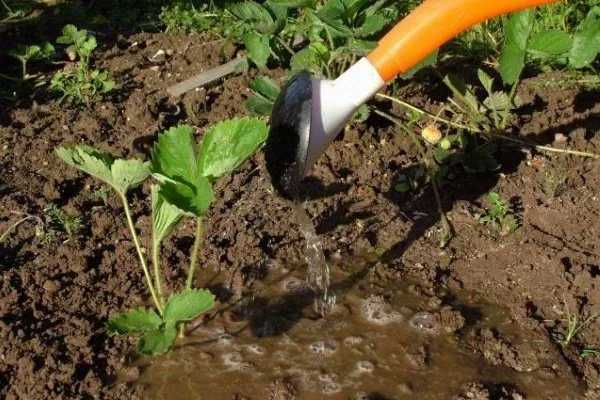
Garden plant mulch chopped straw - this is necessary to avoid rapid evaporation of moisture and to protect the crop from destruction.
In the fall, you can bring everbearing strawberries back indoors, transplanting them into spacious containers. However, this variety of strawberry can bear fruit until the first frost, and then produce another harvest the following year.
Proper care
The basic care for strawberries before planting outdoors involves watering, fertilizing, and spraying. Certain rules should be followed:
- Occasionally, you need to spray the seedlings with water from a spray bottle to maintain optimal humidity.
- It is not advisable to loosen the soil around the seedlings, as strawberries have a superficial root system – this can damage them.
- Water the plant carefully—the soil shouldn't be dry, but it shouldn't be too wet either. Pay attention to the soil's condition. For example, seedlings placed on a south-facing window (in direct sunlight) will dry out much more often than those placed under grow lights in the back of the room.
Seedling fertilizing schedule
- Week 1-2: 0.5 g/l calcium nitrate
- Week 3-4: 1 g/L of complex NPK (10-10-10)
- Week 5-6: 0.5 g/l potassium monophosphate
- Week 7-8: 1 g/l potassium humate
To successfully grow everbearing strawberries, don't neglect seed stratification and seedling nutrition. Only by following all the above recommendations will you be able to obtain healthy seedlings, strong strawberry plants, and a bountiful harvest.