
Apple picking is a crucial process that shouldn't be done by eye. Not only does the apples' taste but also their shelf life depend on when they're picked. We'll explain when and how to pick apples for eating and storage, the different types of apple ripeness, and how to determine them.
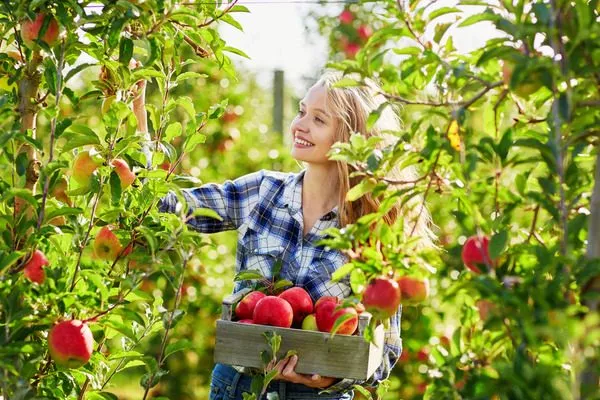
The degree of ripeness of apples
In gardening, there are four stages of apple (and pear) ripeness. Apples can be picked at any stage of ripeness, but only with consideration for their intended use. Fruits intended for consumption, storage, processing, etc., are harvested at different stages of ripeness. Let's take a closer look at these.
Consumer maturity
It's not hard to guess that apples that have reached consumer ripeness are completely ready for fresh consumption. At this stage, the fruit has reached its peak flavor—it acquires the color, flavor, and aroma typical of the variety.
These apples should be eaten within a short time - approximately 3-4 weeks, as they will then begin to spoil.
Technical maturity
Technical maturity occurs approximately a week before consumer maturity. Fruits at technical maturity have a property that fully ripe apples lack: they retain their shape after heat treatment.
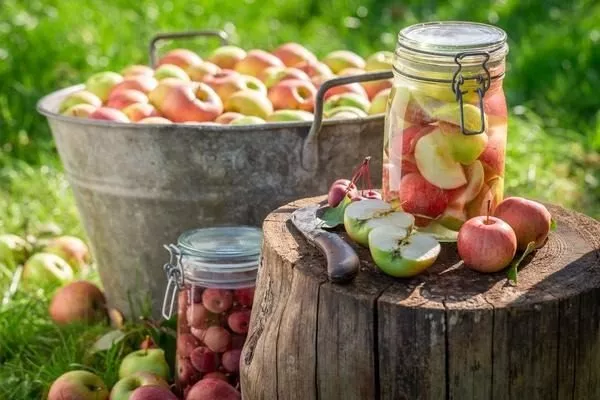
Apples harvested at technical ripeness are used for winter preparations—they are used to make jams, compotes, and other preserves that require the fruit to retain its shape.
Physiological maturity
At physiological ripeness, apples are no longer as tasty as we'd like. This occurs approximately two weeks after consumer ripeness. Essentially, these apples are overripe. The flesh is soft, crumbly, and tasteless. These apples are harvested for their seeds.
Although apple trees are usually grown from seedlings, there are situations when gardeners and breeders use seed propagation.
Removable maturity
Apples that have reached picking maturity are ideal for winter storage. At this stage, the fruit achieves a consistency and chemical composition optimal for storage. Autumn and winter apple varieties are harvested at picking maturity. For summer varieties, picking maturity coincides with consumer maturity.
How to tell when apples are ripe
So, when deciding to harvest apples, you need to consider the ripening time of the variety—summer or autumn/winter—and the desired degree of ripeness of the fruit, as well as whether they are intended for consumption or storage.
Ideally, to determine harvest time, you simply count the number of days from flowering to fruit ripeness, based on the information provided by the cultivar's originator. However, this method isn't 100% accurate, as the ripening time of any fruit crop, including apples, is influenced by a huge number of factors—weather conditions, tree age, canopy light exposure, and much more.
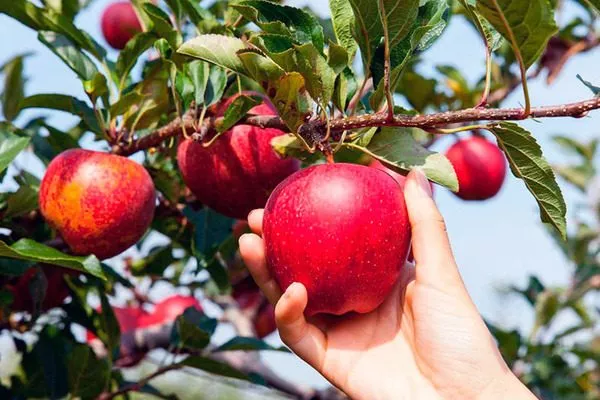
To ensure apples store well, it's important to pick them from the branches promptly. Rushing or delaying the harvest by a few days will result in poor results.
Problems due to violation of rental deadlines:
- If you pick apples too early, they won't store well. Firstly, they haven't yet fully developed, are too hard, and contain too much fiber. Their skins haven't fully developed and haven't developed a waxy coating. Most importantly, apples that haven't reached harvestable ripeness lose sugar over time.
- If apples are harvested later than necessary, they will not last more than 2-3 months. After this period, the fruit begins to rapidly lose firmness and weight. Furthermore, late harvesting results in crop losses due to the shedding of overripe apples.
There are several signs that help you understand whether apples have reached harvestable ripeness:
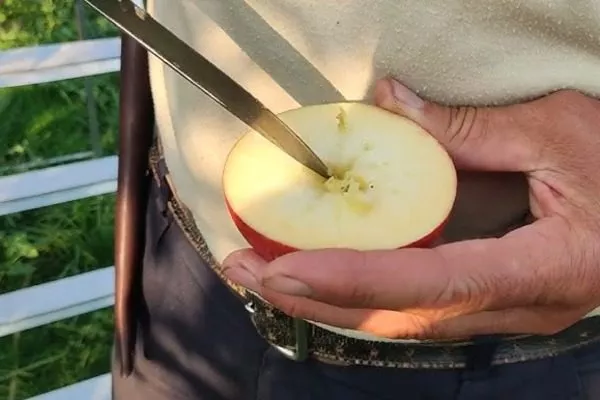
- Iodine test. This method is very simple, but it allows you to accurately determine the ripeness of the fruit. Cut an apple in half and apply a small amount of iodine solution (1:15) to the pulp. If the color of the pulp doesn't change, the fruit is ripe and ready to pick. If the pulp has darkened, it's not time to pick the apples yet.

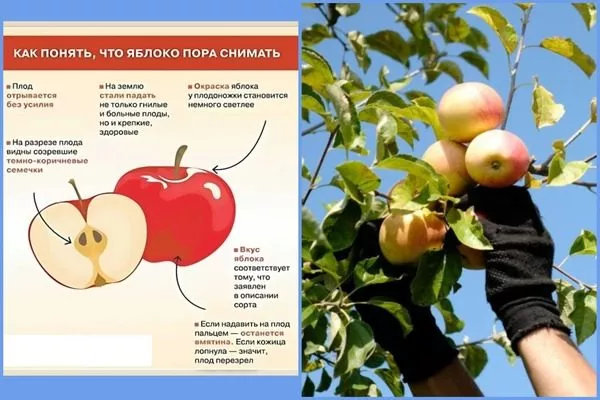
- Carrion. If fallen fruits begin to appear under the apple tree, and they are not rotten or damaged by pests, it is most likely time to remove the fruits from the branches.
- Easy breakaway. Ripe apples come off the branches easily; a gentle tug is all it takes. If the fruit is firmly attached to the branches and requires force to remove, it means they're not ripe enough to be picked.
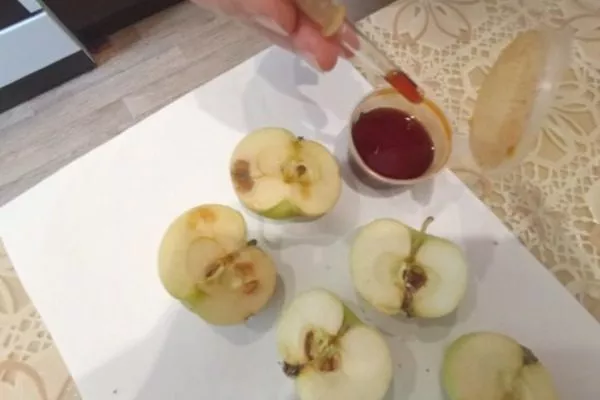
As we've already mentioned, summer apples reach harvest and consumer maturity at the same time. However, for other varieties, the latter occurs after a certain time, depending on the variety, its ripening time, and weather conditions. Autumn apples reach consumer maturity 2-4 weeks after harvest, while winter apples reach it 1-3 months or more later.
In addition, consumer ripeness of apples is determined visually and by taste:
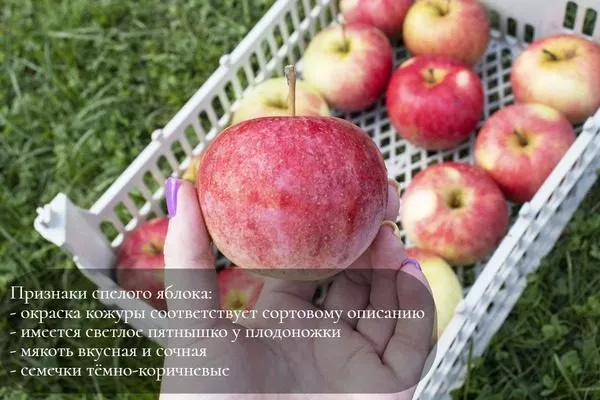
- Peel color. When apples reach harvestable ripeness, the skin around the stem becomes slightly lighter. Naturally, the fruit color should also match the characteristics specified for the specific variety.
- Taste qualities. You should taste the apples. They should match the declared flavor characteristics of the variety.
- Seeds. When the fruit is ripe, the seeds become dark brown, and the color should be uniform.
When to harvest?
When harvesting apples, the first thing to consider is the ripening time of the fruit—this helps determine the ripeness of the fruit for harvest. Of course, the regional climate must also be taken into account, as the same variety can ripen in the south and in temperate climates within a few weeks of each other. Based on ripening time, all apples are divided into three groups:
- Summer. They begin to be harvested in July and August. The fruits are sweet, having accumulated a fair amount of sugar by the time they are picked, but they don't last long. They are suitable for fresh consumption and processing. Popular varieties include White Filling, Mantet, and Candy.
- Autumn. They reach harvestable maturity in late summer to early fall. They are harvested for food a little later, but the key is to harvest them before frost. These apples can be stored for up to four months. Examples of varieties include Baltika, Idared, Daughter of Antonovka, and Uspenskoe.
- Winter. These apples typically don't reach consumer ripeness on the tree; that ripeness occurs during storage. Winter apples are harvested from late September to mid-October. Examples of varieties include Antonovka, Renet Simirenko, and Orlik.
How to pick fruits correctly?
If you're picking apples for food, there's little difference in how you pick them. Storing them for months is a different matter. Proper harvesting determines how long the fruit will last.
How to properly pick apples from branches:
- Grasp each fruit with your entire palm, touching the stem with your index finger. Next, lift the apple slightly and press your finger against the base of the stem, separating it from the branch.
- When picking apples, be extremely careful not to damage the skin. Never rub off the protective waxy coating—it prevents moisture from evaporating, preserves their juiciness, and ensures their shelf life.
- Don't store fruit that has fallen to the ground—set it aside. Apples damaged by codling moths are also unsuitable. They can be processed.
- Always pick all fruits with their stems attached. If an apple's stem is torn out or broken, it will wilt faster and lose its marketability and flavor during storage.
How and with what to pick apples?
Apples can be picked by hand—the most reliable method—or with specialized tools called fruit pickers. Nets stretched under the trees can also be used to prevent the apples from being damaged or coming into contact with the ground as they fall.
Manual harvesting is convenient for small trees. For apple trees reaching 4-5 meters in height, a ladder and/or fruit pickers are essential. There are a variety of fruit picking devices available, allowing every gardener to find the perfect option to suit their needs.
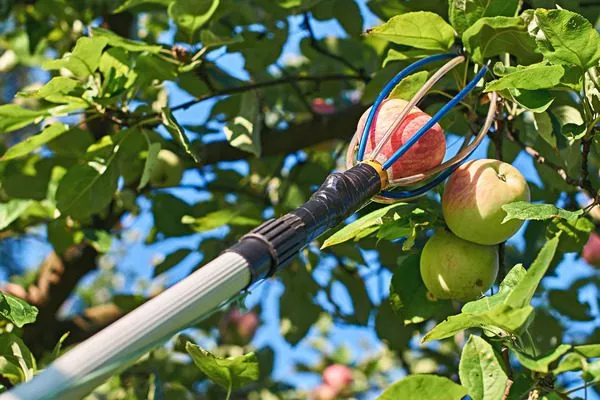
Fruit pickers should be reliable, with ergonomic handles that are easy to use. Here are some types:
- Saccular. A bag is always attached to the end of such a device, into which the picked apples are placed. This design prevents the fruit from falling and being damaged. The crown-shaped cutter has a series of protrusions that separate the petioles from the branches.
- With captureIdeal for varieties with apples that cling very tightly to the branches. The grip prevents the fruit from falling to the ground.
- Wire. A distinctive feature of such fruit pickers is the presence of a specific grip made of thick wire and movable “legs” that, when closed at the top, tear the fruit from the branch.
Fruit sorting
To avoid sorting apples immediately after harvesting, it's best to set aside any defective fruit during picking. This is especially convenient if the apples are to be stored.
Fruits selected for long-term storage:
- have no defects, damage, or signs of disease;
- they have whole stalks;
- their size, weight and color correspond to the declared varietal qualities.
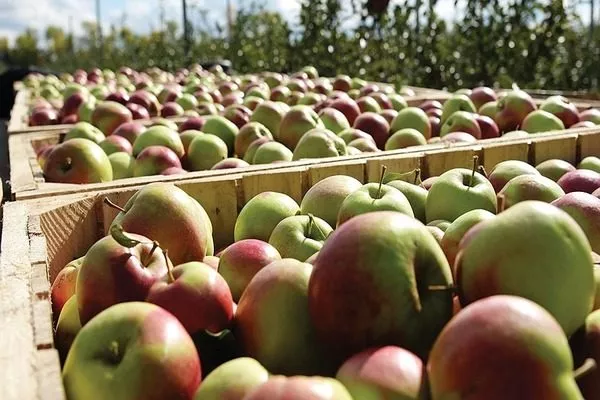
If it's hot outside, it's best to cool the harvested apples. To do this, move the entire crop indoors to a room where the temperature is at least 10°C lower than outside. The apples should stay there for a couple of weeks. They shouldn't be left outdoors. If keeping the fruit indoors isn't possible, it's best to immediately take them to a long-term storage facility.
After cooling, it's advisable to sort the apples before storing them. Sorting the apples at this stage will significantly improve their storage quality, as defects that weren't noticeable during harvesting may become apparent within two weeks.
Where and how to store apples?
Apples are stored in a cool, dark place—a basement, cellar, crawlspace, or pantry. If that's not possible, simply under the kitchen table or on the balcony. The key is to create the right conditions—cool, dark, and moderately humid.

Don't wash apples before storing them, as this destroys the waxy protective layer. If the fruit is dirty, simply wipe it with a dry, soft cloth. To prevent rot and other diseases, treat the apples with a potassium permanganate solution and/or wrap each fruit in parchment paper.
Optimal storage conditions for apples:
- The optimal humidity level is 85-90%. If the basement is excessively damp, place buckets of slaked lime near the apple boxes. If it's too dry, place buckets of damp sand, periodically adding water.
- The ideal temperature is between 0 and +5°C. When storing outdoors, for example on basement shelves, it's important to avoid sudden temperature changes and frost.
- Potatoes are an undesirable companion for apples. They give the fruit a starchy flavor.
- The room where apples are stored must have good ventilation and fresh air. However, drafts are undesirable for apples, as are the presence of rodents, insects, fungi, and mold.
- The best containers for apples are wooden crates. They are pre-treated with a solution of potassium permanganate. A few days before storing the apples, the crates are thoroughly dried in the sun. The bottom is lined with straw, sawdust, thick paper, or regular newspaper.
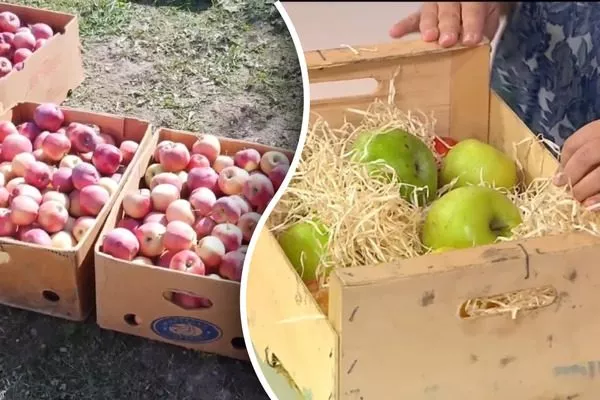
You will find more useful information on how to store apples so that they do not spoil for a long time. Here.
When storing apples, remember that they emit ethylene, which can spoil other fruits and vegetables. Apples can cause sprouting in potatoes, beets, and celery, and they also negatively affect carrots, causing them to become tasteless if placed in unfavorable conditions.
It's important not only to grow a good apple crop but also to harvest it on time. This will not only ensure high-quality fruits—tasty and healthy—but also, if we're talking about autumn and winter varieties, it will also help them keep for a long time.