
Quail eggs are delicious and nutritious, and they're also considered dietary. One major advantage of keeping quail is that they begin laying eggs at a very early age, meaning you can start collecting eggs just over a month after the bird's birth.
Beginning of egg laying of quails
Quails begin laying eggs around 37-40 days old. At this point, they weigh approximately 100 grams. During the first month of laying, a female typically lays up to 8 eggs, and then a single bird can produce around 25 eggs per month.
Quails usually lay eggs after 12 noon or late in the evening.
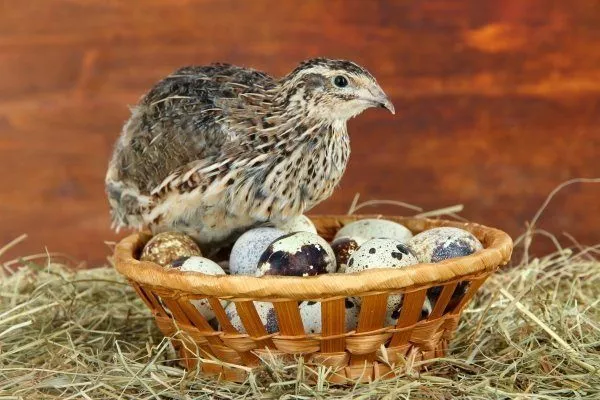
Females lay one egg daily for 5-6 days, then take a break for a day or two and then resume laying. Therefore, a break of a couple of days in laying is normal.
Birds lay the most eggs approximately 3-6 months after the first egg laying.
When a quail will start laying eggs and how many eggs it can produce per year also depends on the quail breed. Let's look at the most popular ones.
- Pharaoh birds They begin laying eggs at approximately 43–50 days of age. They lay 220 eggs per year, each weighing 13–15 grams.
- Female Japanese quail They lay their first eggs between one month and 40 days old. Over the course of a year, they produce more eggs than a pharaoh—300. Each egg weighs about 10 grams.
- Estonian quail Lays approximately 250 eggs per year, each weighing 12 g. This breed begins laying early, at 37 days old.
- Female Texas white quail They begin laying eggs at approximately day 50. They produce approximately 270–300 eggs per year, weighing 12–17 grams.
- Manchurian quail The female lays up to 250 eggs per year, each weighing 16 grams. The female lays her first eggs at 40–45 days of age.
- Quails of the NPO Complex population They begin laying eggs at one month of age (and a little later, up to 40 days). They lay 260 eggs per year, each weighing 12 grams.
- English White Quail The female begins laying eggs at 41 days old. She lays a large number of eggs per year: 280, each weighing 11 grams.
- Tuxedo breed Lays the same number of eggs per year as English Whites and weighs the same. They begin laying eggs at 6-7 weeks.
- In marble quails The annual figure is 300 eggs, each weighing 11 grams.
| Breed | Beginning of oviposition (days) | Number of eggs per year | Egg weight (g) |
|---|---|---|---|
| Pharaoh | 43–50 | 220 | 13–15 |
| Japanese quail | 30–40 | 300 | 10 |
| Estonian quail | 37 | 250 | 12 |
| Texas white quail | 50 | 270–300 | 12–17 |
| Manchurian quail | 40–45 | 250 | 16 |
| NPO "Complex" | 30–40 | 260 | 12 |
| English White Quail | 41 | 280 | 11 |
| Tuxedos | 42–49 | 280 | 11 |
| Marble | 40 | 300 | 11 |
Description and characteristics of eggs
The size and weight of eggs depend on the breed and the hen's age. First-time eggs weigh approximately 9 grams. At four months, they can weigh 12 grams, as is the case with Estonian quail. Large eggs are laid by birds around six months of age.
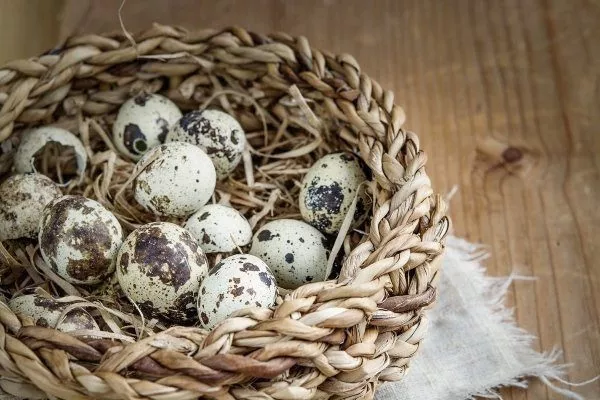
Quail eggs have very thin shells. This is their main difference from chicken eggs. They are light-colored with flecks of various dark colors.
Some people believe that quail eggs are free of harmful bacteria and are safe to eat raw. The truth is that, unlike chicken eggs, quail eggs are free of salmonella, but pullorum bacteria are common. Don't worry about the health benefits of hard-boiled eggs: they retain their protein and vitamins even after cooking.
Reasons for the decline in quail egg production
Quail shouldn't have a long break from laying, regardless of the time of year. There can be many reasons for a decline in egg production; let's look at the most common ones:
- Failure to maintain the maximum number of birds per square meter. The recommended number of birds per square meter is 50–60. Cage density varies by breed.
- Check the food you feed your quail. First, it's important to observe the expiration date, and second, it's important to formulate the birds' daily diet correctly. Also, switching from one food to another may cause quail to stop laying eggs for a short period.
- Quail feed should contain vitamins and protein. Avoid overfeeding: obesity negatively impacts productivity.
- A drop in air temperature reduces egg production. Temperatures should be around 20 degrees Celsius for optimal egg production.
- On a farm, it's better to keep quail in cages rather than in an aviary, as egg production declines in the latter case. Young birds are placed in cages at three weeks of age. Songbird cages are suitable. They should be 20 x 30 centimeters in size, and can accommodate about six birds. A typical cage size is one male for every two or three females. Three-tiered cages (30 x 20 x 20 cm) are also convenient.
- The air humidity in the room where the quails are kept should be 75%.
- One of the reasons for poor egg production may be various diseases.
- Quails need about 17 hours of light per day. Incorrect lighting can negatively impact egg production. Egg production will be reduced if the birds are exposed to light for 18 hours a day. This will prevent them from resting and sleeping.
- The room where quail are kept should be clean, warm, and free of drafts. However, the birds do require good ventilation.
- When replacing the male, the female's egg-laying may stop for 6-7 days.
- Molting can also cause a decline in egg production. This period is shorter in quail than in hens. To help the birds regain their strength, they are sometimes molted during the winter. This is done by leaving the female in light for only 6-7 hours a day and feeding her low-protein feed. This causes the quail to stop laying eggs and begin molting. New feathers emerge beneath the old ones. The molt lasts a little less than a month. Afterward, the birds are returned to their normal feeding and lighting regimen. This procedure prolongs their productivity for a couple of years.
- Females can reach senescence between 10 and 30 months of age, which can be one of the reasons for egg production ceasing. Normally, healthy birds lay eggs for three summers (during winter rest).
- Stress also negatively impacts egg production. Birds can be nervous around loud noises and other large birds and animals.
- Transporting birds can be stressful and negatively impact egg production. After such an event, hens sometimes need up to 3-4 weeks to adjust to the new environment and begin laying eggs.
- Bird cages must be cleaned. Droppings must be removed daily, as they can harbor pathogenic bacteria and microbes.
How to improve egg production?
To restore stable egg production, it's important to understand the cause of the decline in egg production. Then the problem can be addressed.
Quails need a balanced and regular diet. An adult female should eat 30 grams of food three times a day. Avoid overfeeding, as excess weight will prevent her from laying eggs.
Monitor the microclimate in the bird cage, maintain the required temperature and proper lighting.
Additionally, to increase egg production, you can use a special type of quail feeding called "contrast feeding." With this type of feeding, the birds are fed 3-4 times a day at the same time. Between meals, there should be no food in the quail's feeders at all.
If females lay small eggs, it could be due to a protein deficiency. However, if this happens to a young female at the very beginning of egg production, it's completely normal.
Continuous egg-laying can last up to two years, but it is important to know that if quails are kept for more than a year, their immunity decreases, they become sick more often, and their meat becomes of poorer quality and taste.
We invite you to watch the video "How to Increase Quail Egg Production," which will teach you more about the reasons for declining egg production and how many eggs each quail breed lays per year:
How to determine the sex of a bird?
If you decide to start breed quails, but you will be doing this for the first time, you need to learn how to determine the sex of the bird for successful breeding.
To do this, look at their body structure. Females are 15% larger due to the organs in which the eggs develop. Their beak and neck feathers are lighter than those of males, and the breast feathers of hens are gray with black speckles. These differences are visible as early as three weeks after hatching.
What are the benefits of breeding quails?
Keeping quail is more profitable than keeping chickens. From the moment an egg is placed in the incubator until the first egg is laid, it takes only about 55-65 days. Females begin laying eggs around the 40th day, which is quite early compared to chickens. Each kilogram of quail meat requires about 3.5 kg of feed. Quail are completely undemanding in terms of living conditions.
The meat and eggs of these birds are considered dietary: they are low in calories. The meat is tender and juicy, and the eggs contain many more vitamins and nutrients than chicken eggs. Each egg contains nutrients such as:
- iron;
- B vitamins;
- phosphorus;
- potassium.
If your quail's egg production has decreased, it's not a big deal. By correctly identifying the cause, you can solve the problem. There could be many reasons, but the most important thing is that it's rarely due to bird disease, as quails have strong immune systems. Therefore, increasing egg production is not difficult, and you can easily get up to 300 eggs per year from a single hen.