
The common quail is a well-known bird in poultry circles today. Many people know about the health benefits of its meat and eggs, so they prefer to eat them more often. Wild quails differ from domesticated breeds in many ways. It's worth examining this breed from various perspectives and learning more about it.
Description and characteristics of the bird
The common quail should be considered from two perspectives: as a wild migratory bird and as its domesticated cousin. The former is hunted, the latter is raised on poultry farms.
Appearance and distinctive features
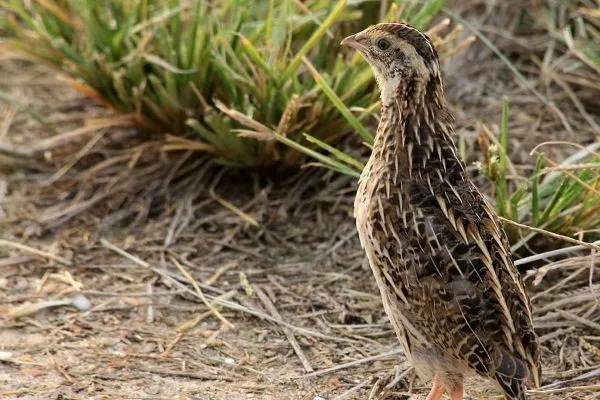
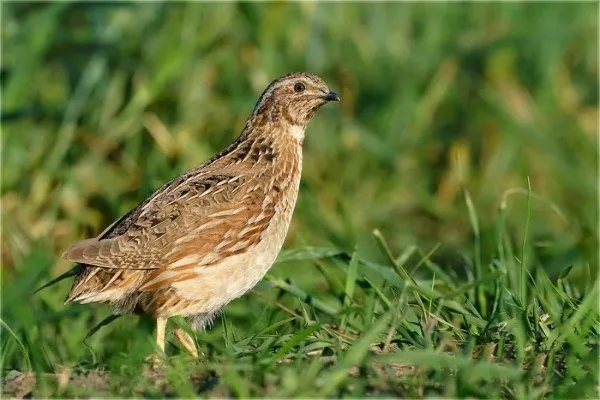
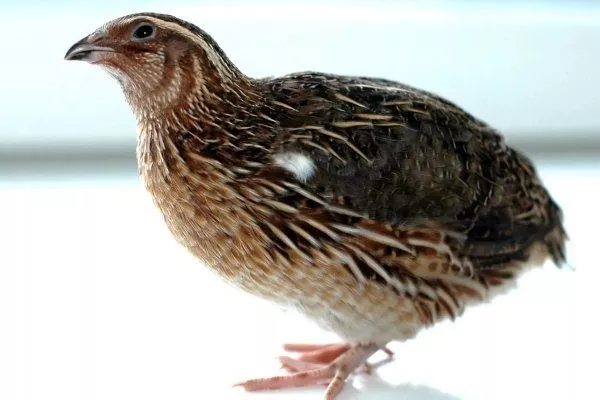
Quails belong to the pheasant family, the smallest members of the gallinaceous order. Their average weight ranges from 80 to 150 grams, and their body length is approximately 18 cm. The common quail's plumage is a brownish-brown color interspersed with light streaks and spots. The wings are pointed, the tail is short, the four-toed feet lack spurs, the nostrils are featherless, and the bill is small.
It becomes possible to distinguish a male from a female around the third week of a bird's life, when the chick's down is replaced by the full plumage of an adult.
Females have a brighter coloration, and their chests have numerous black spots. The male's chest plumage is less conspicuous and is usually uniform in color. However, the color of the head feathers is a greater contrast to that of the female. Males have a lighter call, and their bills are darker and quite massive. Males are smaller than females in overall body mass.
Spreading
Two subspecies of common quail are found in Russia: the European quail and the Japanese quail. The Japanese quail was domesticated in Japan about 100 years ago and is currently bred commercially on poultry farms as a meat and egg-laying bird.
The common quail is widespread in Western Asia, Africa, and Europe. In Russia, it is found throughout the temperate zone. This bird is migratory. They prefer to winter in southwest Asia or Africa. They return from their wintering grounds quite late, usually in May.
Quail migrate at night, resting during the day in meadows and fields. Their dull coloration, which makes them difficult to spot even in short grass, provides protection from predators when tired.
Lifestyle
In the wild, quail feed on various insects, invertebrates, and the seeds of weeds, cereals, and oilseeds. They nest on the ground when the grass is just beginning to sprout. This occurs in late May, with a clutch typically containing around 15 eggs. The chicks hatch in June and are raised by the female; the male plays no role.
Quails have many enemies—martens, foxes, harriers, and crows. These and many other animals destroy their nests.
Today, the numbers of wild quail are significantly impacted by mineral fertilizers and pesticides used in agriculture to spray crops. Birds are often killed by tractors and other agricultural machinery. Strong winds over the Mediterranean and Black Seas cause some quail to die during migration. Poaching, especially during the autumn bird migrations, also causes significant mortality.
Productivity
A characteristic of quails that makes them extremely valuable in the poultry industry is their early maturity and high egg production. A female begins laying eggs at 5-6 weeks after birth and can lay approximately 300 eggs per year. Approximately 2.8 kg of feed are required per 1 kg of egg mass.
If we compare quails with chickens in terms of egg production, considering the ratio of the female's body weight to the annual volume of eggs she produces, then quails are 3 times more productive than chickens.
Table 1. Egg production and egg weight of female domestic quails at the beginning of egg laying
| Bird age (days) | Egg production, % | Egg weight (g) |
| 35-40 | 4.0 | 5.63 |
| 41-45 | 22.0 | 8.12 |
| 46-50 | 47.3 | 9.50 |
| 51-55 | 54.0 | 9.78 |
| 56-60 | 67.0 | 10.75 |
| 61-65 | 72.6 | 10.78 |
At first, the mass of the eggs is small (about 5 g), but by the age of two months it is comparable to the mass of eggs of adult females, whose age reaches 4-5 months, and is equal to approximately 10 g.
When raising poultry for meat, the emphasis is on weight. Intensive feeding of meat quail breeds allows them to weigh three times more than egg-laying breeds. They will also lay eggs, but they will begin to do so later..
Classification
Today, people know about two dozen species and numerous subspecies of quail. Most of these species belong to the scallop-billed partridge, which is common in North America.
The common quail (Coturnix coturnix) belongs to the partridge subfamily and is divided into 8 subspecies:
- c. africana;
- c. confisa;
- c. conturbans;
- c. coturnix;
- c. erlangeri;
- c. inopinata;
- c. parisii;
- c. ragonierii;
Description of breeds
Depending on their productivity, breeds and lines of domestic quail are divided into:
- egg-laying;
- meat;
- public;
- laboratory.
Among the most common breeds of modern domestic quails, the following can be distinguished:
- JapaneseDeveloped in Japan, selective breeding has resulted in the creation of egg-laying lines of Japanese quail, which have also become widespread in many other countries.
- English white and black. They were bred in England as a result of mutation of Japanese quails.
- Tuxedo. Obtained by crossing black and white English quails.
- Manchurian goldQuite popular among breeders due to the largest eggs of the species.
- MarbleDeveloped in Russia, this breed's feathers have a characteristic light color.
- PharaohA meat breed developed in the USA.
- EstonianA general-purpose breed. Developed in 1988 in the Estonian SSR by crossing Japanese and English white quail with Pharaoh birds.
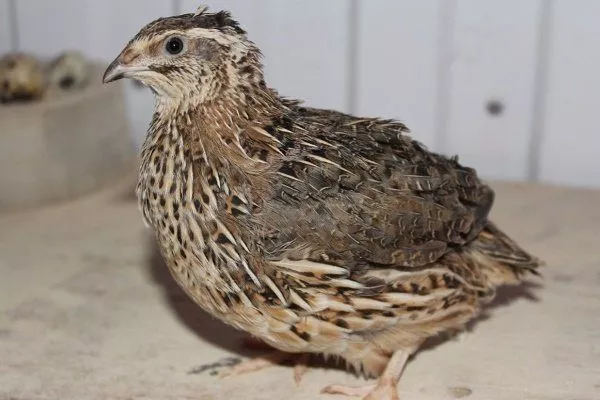
Japanese quail
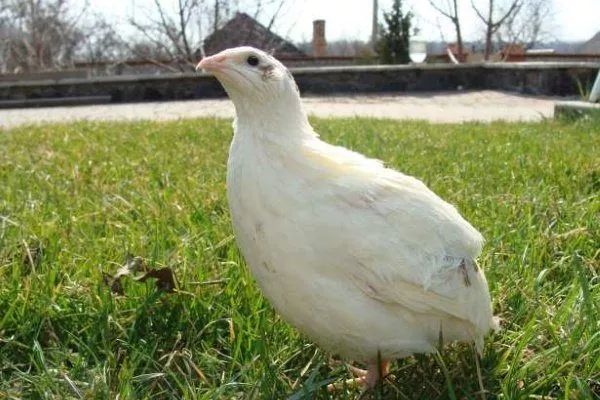
English white
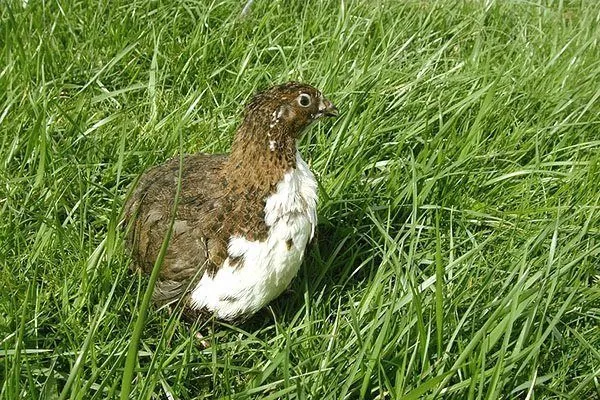
Tuxedo quail
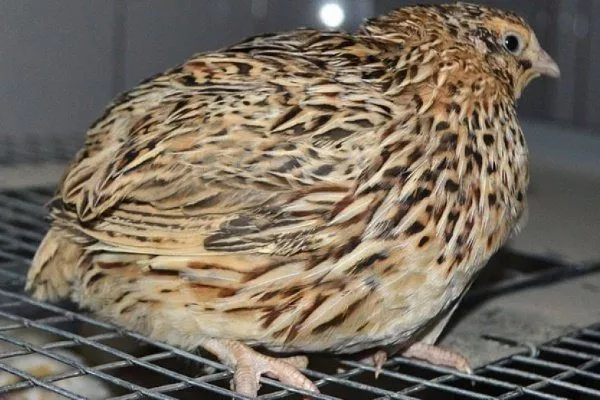
Manchurian golden quail
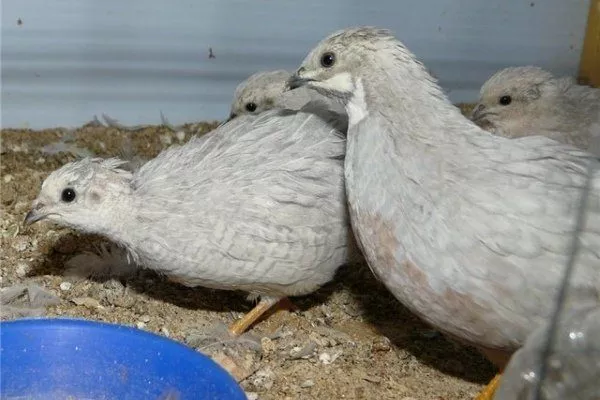
Marbled quail
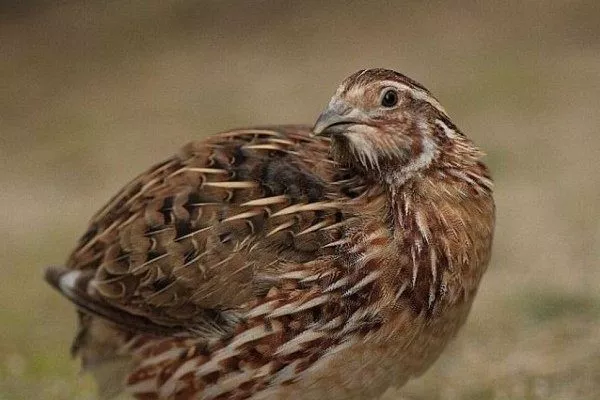
Pharaoh
Estonian quail
Morphological differences between the sexes
| Sign | Male | Female |
|---|---|---|
| Chest color | Monochromatic | With black dots |
| Feathers on the head | Contrasting | Less pronounced |
| Beak | Dark, massive | Lighter, more graceful |
| Body weight | 80-110 g | 100-150 g |
| Voice | A loud cry | Quiet sounds |
Why are quails bred?
Quail meat and eggs are highly sought after by consumers and constitute an important part of their daily diet for most.
Quail farming is widespread throughout the world – this genus of birds adapts well to captivity and is distinguished by the high taste of their meat and eggs.
Several methods of hunting and trapping common quail exist in various Eurasian countries. Since ancient times, this bird has been hunted with guns and hawks. Various nets, decoy whistles, live female quail, dogs, and even nets have been used to catch quail. Today, this type of hunting is becoming very popular, making it quite profitable to raise quail for hunting grounds. However, quail hunting is prohibited in some European countries.
There have been cases of poisoning from wild quail meat. These cases are caused by the accumulation of toxic substances found in certain plants in the meat of individual birds. While these cases are rare, they occur regularly—the highest number of cases in Russia is recorded in early autumn, when the birds begin their winter migration.
Common quails were also kept as fighting birds in Central Asian countries. Fighting between male quails was quite common there. Owners of fighting quails typically carried them tucked under their shirts. Large pits, with spectators seated along the walls, were used as arenas for the fights, which always involved betting. Even today, such bird fights are not uncommon in this region.
In ancient times, quails were also prized for the male's voice, commonly referred to as a song, although it bears little resemblance to a call. Female quail cannot produce such sounds. In pre-revolutionary Russia, quail were often kept in cages as songbirds. Today, the bird is also used as a decorative bird, but this is less commercially viable.
Home conditions of detention
Quails are best kept in cages, which can be placed in an apartment, attic, or shed. The cage should be well-ventilated, warm, bright, and rodent-proof.
When placing and keeping quails, the following conditions must be observed:
- the cage must meet the environmental needs of the birds;
- the diet is selected taking into account the age of the quails and the purpose of their keeping;
- Birds need to be properly cared for.
Premises
For keeping quails, it is customary to use solid metal, wooden or combined types of cages.
All-metal cages are made from aluminum, duralumin, and steel. These cages possess very important qualities:
- durability;
- hygiene;
- transmit light well.
Such designs also have their drawbacks: they get too cold in winter, and it is quite difficult to make such a cage at home.
For the production of wooden cages, hardwood is used:
- oak;
- beech;
- maple;
- birch.
Ornamental quail require cages with raised sides and a pull-out tray covered with 3 cm of sand. These quail love to bathe in the sand, so cleaning up after them will be more frequent.
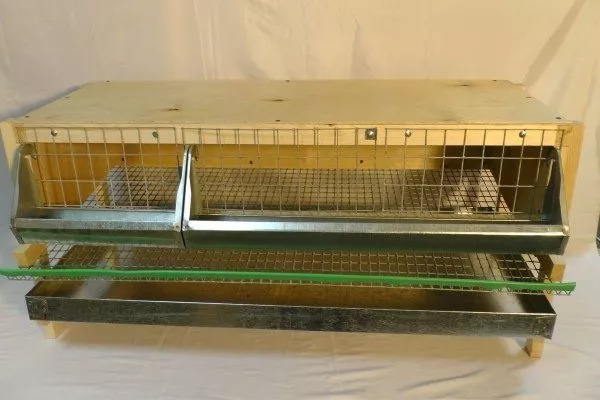
Read more about making quail cages from various materials. Here.
Lighting
For quails, the duration of daylight hours and the intensity of lighting in the cage are very important.
In winter, when days become especially short, some quail don't have time to consume their daily food ration. Therefore, it's necessary to artificially extend daylight hours to 17 hours using electric lighting.
It has been established that the light from conventional incandescent lamps and gas-discharge lamps (more economical) completely replaces natural sunlight in terms of their effect on birds (with the exception of the effect of ultraviolet radiation).
The ultraviolet portion of the solar spectrum, blocked by window glass and absent under artificial lighting, has a bactericidal effect and promotes the formation of vitamin D. Therefore, during warmer months, it is advisable to place quail on the balcony or in the yard during the day to ensure they receive the necessary dose of ultraviolet rays. However, part of the cage should be shaded to prevent overheating and heatstroke.
In well-lit rooms and with exposure to direct sunlight, quails feel better, their egg production increases, and the young grow up healthy.
The duration of supplemental artificial lighting is determined by seasonal changes in daylight hours and weather conditions. In cloudy weather, lighting should be turned on earlier; in clear weather, later.
Lighting modes for different ages
| Age | Daylight hours | Intensity (lux) |
|---|---|---|
| Chicks (0-3 weeks) | 24 hours | 30-40 |
| Young animals (3-6 weeks) | 18-20 hours | 20-30 |
| Adults (egg-laying) | 4-5 p.m. | 15-20 |
| Fattening (meat) | 12 hours | 10-15 |
Humidity
Humidity in quail-rearing rooms should not be below 50%. Lower humidity levels cause quail to drink more and eat less food, egg production decreases, and their feathers become more brittle and stiff. The optimal humidity level for quail-rearing rooms ranges from 60 to 70%.
If indoor humidity is low, the floor should be watered or trays filled with water should be placed. Humidity should be monitored especially closely during hot weather and when the room is heated intensively.
Temperature
Air temperature affects egg production, egg weight and quality, feed consumption, bird weight, and well-being. The optimal temperature for quail is considered to be 16-20°C.
As air temperature rises, quail water consumption increases, a significant portion of the birds' digestive tract becomes filled with liquid, and the humidity of their droppings and indoor air increases. Since good layers have a higher body temperature and water requirement than males and non-laying hens, they have a harder time adapting to environmental changes.
Cell equipment
Before populating the cage with quails, it must be equipped with feeders and waterers.
When keeping quail in groups, feeders should be placed outside the cage bars and at the front of the cage. Feeding equipment must meet the following requirements:
- ease of maintenance;
- minimal feed loss;
- no possibility of contamination by droppings;
- moisture resistance.
Feeders for domestic quail are made of sheet metal. In factory-made cages, the feeder is built into the cage.
When keeping quail alone, the waterer is installed outside the cage, like the feeder—in front of the opening in the side wall. It can be made from the same materials as the feeder.
In imperfect feeders, feed losses can reach 15-30%.
Feeding
Adults are usually fed 3 times a day. Using the usual compound feed for quails, it needs to be enriched with cottage cheese, fish, or soy. By increasing the protein content above the recommended level, it's possible to get eggs with two yolks.
Types of food and diet of quails
The composition of quail feed must include:
- Grain, grain waste, grain legumes and grass seeds – beans, vetch, peas, hemp seeds, corn, buckwheat, poppy seeds, oats, pearl barley, millet, wheat groats, millet, rice, weed seeds, sorghum and chumiza, soybeans, lentils, barley, oilcake, meal, bran.
- Animal additives – fat, quail blood or blood meal, fish and fish oil, fish meal, yogurt, cottage cheese, bloodworms, mealworms, meat and bone meal, earthworms, maggots, eggs.
- Vitamins A, D, E, C, PP group B - boiled potatoes, dandelions, cabbage, nettles, clover, alfalfa, grass meal, green onions, carrots, beets, pumpkin, zucchini, pine needles and pine flour, garlic.
- Minerals – gravel, bone meal, chalk, table salt, shells, eggshells.
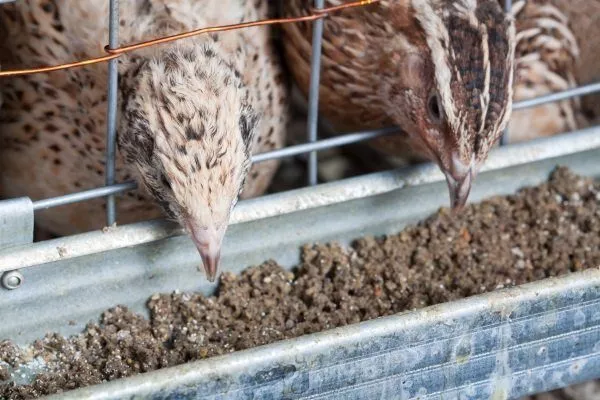
If the quail diet is not sufficiently complete and varied, the following can be included in the quail diet: premixes, protein and vitamin supplements, yeast and chiktonic.
If feeding quails with compound feed is not possible, they can be fed separate, pre-mixed feeds (mash). These mixtures should contain grains, protein, vitamins, and minerals.
Table 2. Quails' requirements for some elements
| Elements, mg | Units of measurement | Age of quails (weeks) | ||
| up to 6 | from 6 to 12 | adults | ||
| Calcium | % | 1.30 | 0.60 | 4.50 |
| Phosphorus | — | 0.75 | 0.60 | 0.70 |
| Magnesium | — | 0.02 | 0.04 | 0.04 |
| Potassium | — | 0.30 | 0.30 | 0.50 |
| Manganese | mg/kg | 90.0 | 90.0 | 90.0 |
| Selenium | — | 1.00 | 1.00 | 1.00 |
| Iodine | — | 0.40 | 1.20 | 1.20 |
| Zinc | — | 65.0 | 75.0 | 75.0 |
| Iron | — | 8.00 | 20.0 | 20.0 |
| Copper | — | 2.00 | 3.00 | 3.00 |
Nutrition depending on the season
During the winter, they are fed not only with compound feed but also sprouted oats, wheat, millet, and green onions. These provide additional sources of vitamins and minerals.
In the absence of fresh grass, you can feed quails dried herbs prepared in the summer, including, for example, nettles, clover and alfalfa.
During the summer, the amount of green fodder can be easily increased by adding spinach, lettuce, clover flowers, nettles, alfalfa, beet leaves, and cabbage. These enhance digestibility and nutrient absorption. To properly feed quail, green fodder must be finely chopped. Earthworms can be used as animal feed.
How to breed quails?
Young domestic and ornamental quails can be hatched in two ways: artificially - in an incubator and naturally - under hens. Incubate Any eggs obtained from a home farm are acceptable, except for rejected ones. The latter are used for feeding chicks and for human consumption.
Freshly laid eggs are best for hatching chicks. These eggs hatch earlier, grow better, and gain weight faster.
The following eggs are considered unsuitable for incubation:
- irregular shape;
- with two yolks;
- with a yolk that is displaced or stuck to the shell;
- with a wandering air chamber;
- affected by mold and having dark spots.
Incubation
The incubator must provide the optimal temperature and humidity for embryo development. Eggs are placed in the incubator once the required conditions have been met. The eggs should be placed in the trays with the blunt end up, at a slight angle. Humidity and temperature in the incubator should be checked regularly, and the eggs should be turned every two hours.
Quail embryos are less sensitive to temperature fluctuations in the incubator than those of many other birds. They better tolerate temperature drops during power outages and overheating up to 40°C.
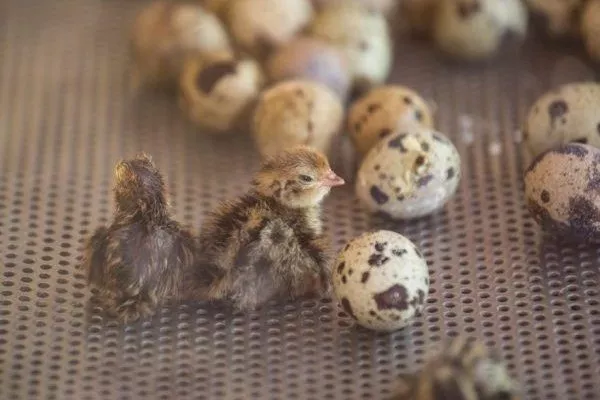
On the 16th day, after incubation begins, the eggs are examined with an ovoscope. By this time, the embryos, if developing normally, should fill the entire egg except for the air cell at the blunt end. After candling, the eggs containing the living embryos should be carefully transferred to the hatcher of the incubator. By this time, the shells are already very thin and fragile, so extreme caution is required.
At this time, eggs with dead embryos or without embryos are transparent, and their contents will have a greenish tint. Eggs with embryos that later died are darker. Eggs with live embryos have a pinkish tint.
Incubation parameters by day
| Period (days) | Temperature (°C) | Humidity (%) | Ventilation |
|---|---|---|---|
| 1-12 | 37.7 | 55-60 | 2 times a day |
| 13-15 | 37.3 | 50-55 | 3 times a day |
| 16-18 | 37.0 | 65-70 | Not required |
Care of quail chicks and their living conditions
Young quail require special care. The conditions in which they are raised are crucial for their proper development.
Growing conditions
Healthy, full-fledged chicks are placed in boxes with electric heaters.
It's important to ensure that chicks placed under the electric heater are evenly distributed under the heat source. Crowding indicates that the room temperature is too low. Excessively high temperatures are also unfavorable for chicks: they begin to drink excessive amounts of water and lose their appetite, which affects their growth and development.
Table 3. Conditions for growing quail chicks
| Age, days | 1-8 | 8-15 | 15-21 | 9:30 PM |
| Average temperature in the brooder, +°C | 35-36 | 29-32 | 25-27 | 20-24 |
| Room temperature, +°C (floor growing) | 27-28 | 25-26 | 23-25 | 20-22 |
| The feed requirement is g/day per head | 4 | 7 | 13 | 15 |
| Lighting duration hours/day | 24 | 24 | 22-20 | 20-17 |
The room should be free of drafts. Chicks aged 2 to 4 weeks are raised on a bed of sawdust or clean river sand. The young are then transferred to the same cages as the adult birds. Lighting for chicks up to 3 weeks of age should be approximately 18-20 hours per day, then gradually decrease to 17 hours.
Feeding the chicks
From the very first day of hatching, chicks are given food and water. The water level in the water bowl should not exceed 0.5 cm to prevent the chicks from drowning. The diet must include animal food:
- finely grated omelette;
- small mealworms;
- bloodworm.
Vaccination schedule for young animals
- Day 1: Vitamin complex
- Day 5: Against coccidiosis
- Day 14: Vitamin D3
- Day 21: Complex Vaccine
- Day 30: Revaccination
Finely chopped fresh greens should also be given. Feed the chicks as often as possible, but in small portions, as soft food (hard-boiled eggs, boiled fish, etc.) spoils quickly. After four days, gradually eliminate eggs from the diet.
For the first 4-7 days, chicks should not be given river sand. They cannot distinguish it from food and may die if they peck at it. Therefore, during the first few days of life, it is best to keep chicks on paper bedding, changing it daily. Drinking water should be provided in shallow cups.
Before egg-laying begins (in meat breeds it begins a little later than in egg-laying breeds), the young are separated by sex and transferred to adults or for fattening.
Table 4. Live weight of young animals depending on age
| Age (days) | Weight of quails (g) | |||
| egg direction | meat breed | |||
| females | males | females | males | |
| 1 | 6-8 | 6-8 | 8-10 | 8-10 |
| 10 | 20-25 | 20-25 | 35-45 | 35-45 |
| 20 | 55-60 | 55-60 | 70-80 | 70-80 |
| 30 | 85 | 75 | 135 | 120 |
| 45 | 95 | 85 | 160 | 140 |
| 60 | 120 | 110 | 200 | 180 |
Read more about breeding and keeping birds here.
Poultry health
Before raising quail, you need to take care of their future home. It should be free of drafts and dry, musty air. Signs that the conditions are unsuitable for the birds include isolated bald spots and patchy feather loss on the head or back.
If the birds are kept in unsuitable conditions for a long time, their plumage will become brittle. Removing drafts and creating the optimal humidity for the quail will help correct the situation.
Young birds should be raised separately from adults. The normal microflora that inevitably accumulates on the body of an adult bird can be harmful to the chicks.
In addition to problems with the coop, the birds' health is also affected by their population. If the coop is small and there are many birds, they may begin to peck at each other. This leads to various injuries and even deaths.
Maintaining cleanliness
Keeping the cage clean is one of the most important factors for maintaining bird health. It's important to keep the equipment and tools clean daily, and remove any debris from the cage.
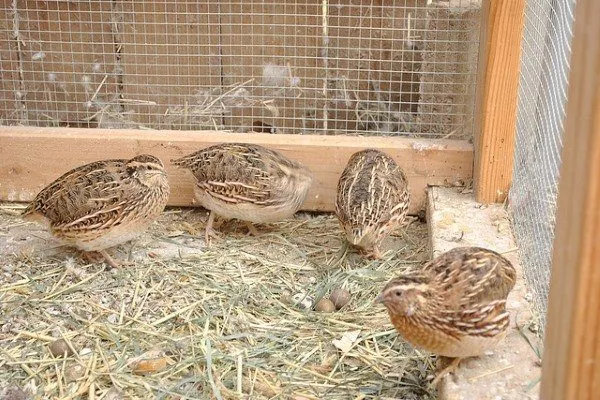
During the warmer months, it's especially important to thoroughly clean feeders and waterers, and keep bedding materials such as sand and sawdust clean. The accumulation of droppings and dirt in cages creates favorable conditions for the proliferation of external parasites.
There should be no cracks in the premises that would allow rodents to enter, and any rodents that appear must be exterminated. Dead birds and those removed due to suspected illness should be securely isolated from the rest of the flock.
Bird diseases
The main cause of non-communicable diseases in quail is poor or improper nutrition. A lack of essential vitamins leads to persistent vitamin deficiencies in these birds.
The following symptoms indicate a lack of nutrients:
- loss of appetite;
- throwing back the head;
- neck extension;
- lowering the wings;
- ruffled feathers.
Comparison of infection symptoms
| Disease | Main symptoms | Mortality |
|---|---|---|
| Pullorosis | White diarrhea, thirst | 70-100% |
| Aspergillosis | Shortness of breath, cyanosis | 50-80% |
| Colibacillosis | Depression, diarrhea | 30-70% |
| Pasteurellosis | High temperature | 90-100% |
You can treat this problem yourself, without the need for a veterinarian. All you need to do is prepare a balanced diet for your bird.
Among the infectious pathologies in quails, the most common are:
- Newcastle disease;
- pullorosis;
- aspergillosis;
- colibacillosis;
- pasteurellosis;
- infectious diarrhea.
Preventing infectious diseases is much easier than treating them. As a preventative measure, you can place containers of baking soda or chlorine in the coop. Using ultraviolet lamps has shown good results in this case.
Read more about quail diseases Here.
Unfavorable conditions
Unfavorable microclimate parameters that cause stress in birds may include any errors in caring for quails, their feeding, the presence of external irritants, and much more.
Stress can be caused by irritants such as:
- hunger;
- abrupt change in diet;
- loud extraneous noise;
- cramped conditions in the bird keeping room;
- unsuitable temperature and humidity;
- low oxygen concentration.
To keep a bird, it's necessary to create all the conditions necessary for its normal existence. Any stress factors must be eliminated.
The cost of quails
Hatching eggs for chicks can be purchased today for 10-35 rubles, depending on the breed. Day-old quail chicks cost 30-60 rubles. Particularly rare and expensive breeds cost 300-500 rubles.
The price of birds fit for slaughter ranges from 50 to 150 rubles. A cooked quail costs around 600 rubles per kilogram. The price of quail eggs fit for human consumption is 30 to 40 rubles per dozen.
It is better to buy birds in the fall: over the winter they will grow up, get stronger, and the females will begin to lay eggs.
Quail are a very common bird, and their meat and eggs are extremely beneficial for the human body. To achieve high productivity, it's important to understand the basics of breeding and raising chicks. If you follow the rules, you'll quickly achieve the desired results.