
Wild quail meat is considered a delicacy due to its incomparable taste, health benefits, juiciness, and tenderness. The demand for quail meat has led many farmers to develop quail breeding businesses. The characteristics of domestic quail breeds and their varieties will be discussed below.
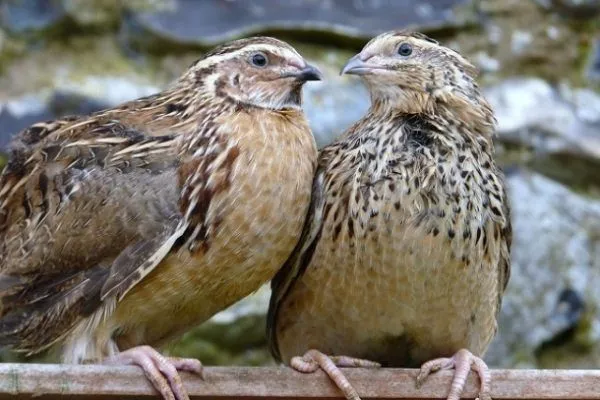
Features of meat quail breeds
Quails were originally domesticated to produce eggs, which are healthier than chicken eggs. Having experienced the meat of these birds, people came up with the idea of raising quail for meat production. However, there are currently fewer meat breeds than egg breeds.
Quails are small birds. To produce sufficient meat, they need to be fattened. Therefore, fattening is the key to raising meat-producing birds. When doing so, it's important to formulate a diet that provides the quail with vitamins and minerals, including greens. This will not only help the birds gain weight but also prevent disease.
One of the unique features of quail is that its meat is dietary. It makes it difficult for humans to gain excess weight. Furthermore, the meat strengthens the immune system and alleviates certain illnesses.
Also, the following are characteristics of meat breeds:
- The carcass weight is significantly greater than that of common wild bird species. Some breeds reach 300-400 grams.
- Weight gain is significantly more intense. This depends on the regularity and quality of feeding.
- Meat breeds require frequent feeding in large quantities.
- These quail species are characterized by low egg production, which makes it difficult to produce offspring.
In all other respects, meat quails are no different from other species of these birds.
Types of meat quail breeds and their characteristics
- ✓ Disease resistance
- ✓ Rate of weight gain
- ✓ Requirements for conditions of detention
- ✓ Economic benefit
Breeding quail for meat production has led to the development of a wide variety of species. These quails differ in several ways, so before starting breeding, it's important to choose a specific breed.
The following types of meat quail are available:
- Texas White
- Pharaoh
- Virginia
- Manchurian
- Californian
| Breed | Male weight (g) | Female weight (g) | Number of eggs per year | Egg weight (g) | Chick survival rate (%) |
|---|---|---|---|---|---|
| Texas White | 350 | 450 | 200 | 12-20 | 80 |
| Pharaoh | 200-250 | 300-350 | 200-250 | 12-16 | 75 |
| Virginia | 200 | 300 | 150 | 10-12 | 70 |
| Manchurian | 250 | 300-350 | 200-220 | 13-16 | 85 |
| Californian | 200 | 300 | 150 | 10-12 | 65 |
Texas White (albino)
One of the most frequently bred breeds is the Texas White Quail. The species' name derives from its origins in Texas, USA.
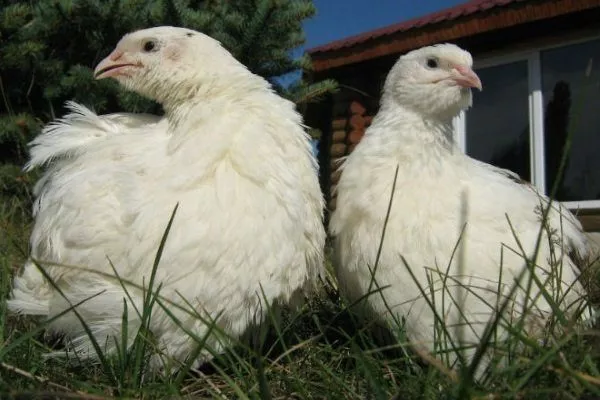
A distinctive feature of these quails, indicating their purebred status, is their white plumage, free of any other color. The exception is the black spots on the white nape.
When it comes to the appearance of the Texas Albino, it has the following distinctive features:
- a dense build with a broad back and a protruding chest;
- the body is elongated with a short neck and a small oval head;
- eyes - black beads;
- the beak is proportional to the size of the head, its color is uniform pale pink or with a dark spot on the tip;
- the color of the feathers is exclusively white, but there may be a few black dots on the back of the head;
- The legs of Texas White Quail are well developed for running, and the lower part of the legs is pink in color;
- calm disposition.
Beyond its appearance, this meat breed boasts excellent productivity. This is reflected in the following figures:
- weight: males – 350 grams, females – 450 grams, maximum possible figure – 550 grams;
- amount of meat at the exit: from females - up to 350 grams, from males - up to 250 grams;
- maturation of reproductive function – 60 days;
- number of eggs laid per year – 200 pieces;
- the weight of 1 egg is 12 grams, but it can also be 20 grams;
- Chick survival rate is 80%.
Pharaoh
The Egyptian name of this meat-producing quail breed doesn't reflect its origins. It was developed in the United States in the 1960s. The "creator" of this quail breed was the American scientist and breeder A. Marsh. The scientist achieved this by reducing egg production He increased poultry meat profits by 40%.
You can distinguish the Pharaoh from other representatives of the quail family by its external characteristics:
- The first is the coloration, although it's not much different from that of other wild birds. The plumage is a mottled gray-brown with numerous patches of white, black, and gray.
- The head is small, oval-shaped.
- The eyes are round, small in size, black in color with a dark gray rim.
- The beak is proportionate to the size of the head and is dark gray or black. A pink beak is rare, although it does occur in this species.
- The legs are strong, grey-pink in colour.
- The carcass weight of males and females differs: for the former it reaches 200-250 grams, for the latter – 300-350 grams.
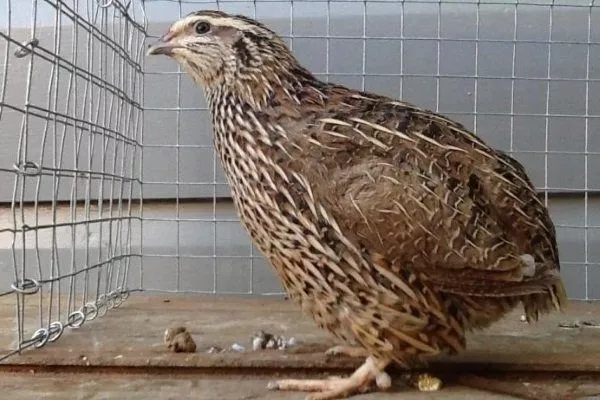
The egg production is low compared to egg-laying breeds: only 200-250 eggs per year.
Many entrepreneurs choose to breed the Pharaoh breed because it has the following qualities:
- good meat gain per carcass;
- enormous benefits for the human body: supply of all necessary vitamins and microelements;
- the number of eggs may be small, but they are large in size (compared to standard parameters) and very beneficial;
- the offspring have a high survival rate and rapid sexual maturation;
- high fertility.
The presence of shortcomings does not affect the popularity of this breed. The disadvantages include:
- high demands on content;
- low egg laying (although for a meat breed this is not so significant);
- The similarity of color to that of wild birds reduces the value of domesticated specimens among farmer-buyers.
Virginia quail
Unlike their meat-producing cousins, the Virginian breed isn't widely cultivated. Some European farmers raise them as ornamental animals. However, there is interest in the breed as a meat source, as each individual yields 200-300 grams of pure product.
The appearance of the Virginia breed cannot be called special:
- body size is small, rounded;
- the plumage color is brown with many dark and light inclusions;
- black and white stripes run from the forehead to the neck;
- the beak is dark grey or grey with a serrated edge;
- tail length – 5-7 cm.
Representatives of this breed are easy to care for. They don't require spacious cages or special types of food. However, they prefer to live in pairs.
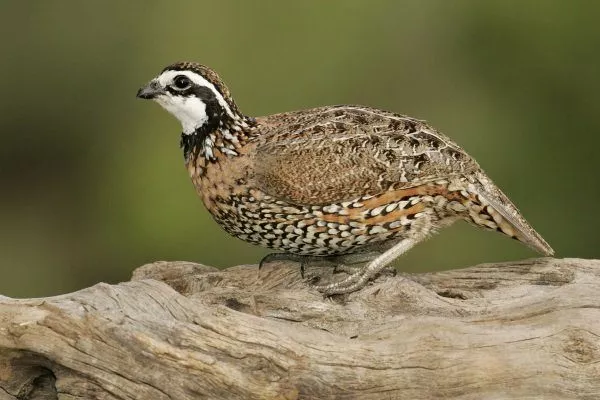
Manchurian quail
The Manchurian quail is one of the most popular meat breeds of these birds. It was developed in northeastern China, and its ancestors were common wild birds. The Manchurian breed's original function was egg laying. This remains the case today, but these quails are also bred for meat.
Only a trained eye can easily distinguish the Manchurian quail breed, as its appearance is very similar to that of the Japanese or Pharaoh quail. However, the following characteristics can be used to identify this breed of quail:
- The variegated coloration is reddish, light brown, or hazel. Females have more variegated markings than males.
- Miniature round body.
- A small head on a short neck. The plumage on the head is darker than on the body.
- The eyes are small black beads.
- The beak is also small and grey-brown in colour.
- The legs are thin but strong and grayish-pink in color.
- The character is characterized by impulsiveness, capriciousness and timidity.
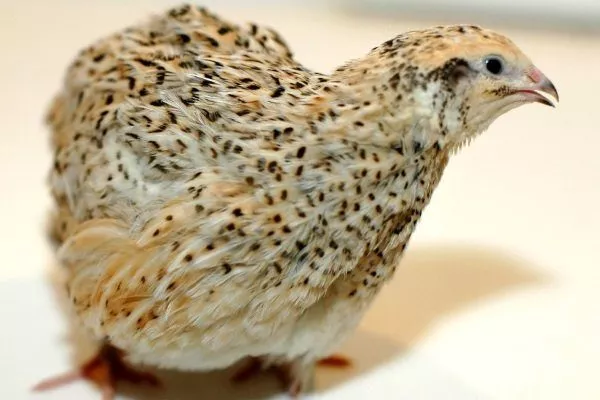
The numerical indicators of the Manchurian breed are as follows:
- female weight – 300-350 grams, male – 250 grams;
- the amount of meat obtained from 1 carcass of a female is 200 grams, of a male – 150 grams;
- Quails lay up to 200-220 eggs per year, the weight of one egg varies between 13-16 grams.
A distinctive feature of this breed, as well as its advantage, is its unpretentiousness when it comes to food. The birds gain weight quickly on both special food and homemade diets.
California quail
California quail are most common in North America. They are bred both for meat and as ornamental pets. This latter distinction is possible due to their beautiful plumage. This is why California quail are considered the most beautiful meat breed.
The beauty of these birds lies in their plumage: it has an iridescent brown or gray coloring. The iridescence extends from the head to the body. Light stripes are found on the sides, primarily on the wings. The chest has colored patches. On the crown of the head is a crest consisting of 3-4 feathers. Females are not only larger in weight but also brighter in plumage.
One California quail carcass yields 200-300 grams of pure, healthy meat.
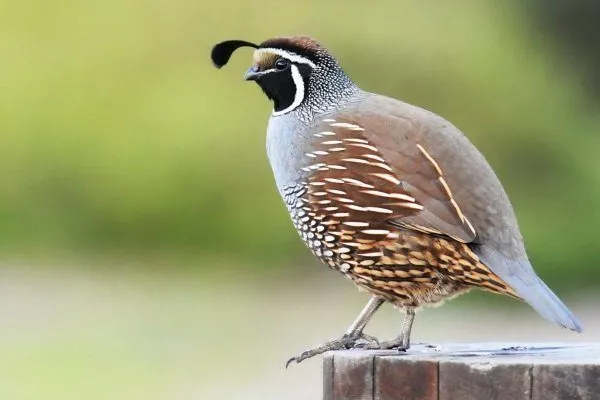
When breeding such quails, the cages must be spacious, since in cramped cages the birds wither, gain weight poorly, and lay many empty eggs.
What meat breeds of quail are bred in Russia?
Quail farming in Russia is a relatively new but rapidly growing industry. Several large-scale quail farms have already been established across the country, raising birds not only for domestic consumption but also for export.
The most popular meat breeds in Russia include:
- Pharaoh
- Texas Albino
- Manchurian
California quail are also bred in small quantities, but for decorative purposes.
The listed meat breeds of birds are very well adapted to the changeable conditions of the Russian climate, although they are bred in closed nurseries.
Conditions for keeping and breeding quails for meat
To breed quails for meat purposes, it is necessary to provide them with everything they need: a habitat and food.
Habitat
Must meet the following conditions:
- Birds should be kept in cells;
- To ensure that the quails do not feel cramped, it is necessary to follow the rule: there should be 20 square cm of cage space per bird;
- cell size 90×40×20 cm;
- The front of the cage should have holes into which the birds can easily stick their heads;
- Outside the cages, under the cells, there are feeders and drinkers so that the birds can eat without leaving their home;
- at the bottom of the cages there should be trays for eggs and for organic waste;
- the temperature in the place of keeping varies from +18 to +22 degrees;
- Lighting in the cages must be provided - not bright, but constant throughout the day;
- the humidity in the cells needs to be high – at least 70%;
- cleaning of the quail's home should be regular;
- There must be ventilation holes, but such that they do not create drafts;
- Birds selected for slaughter are kept separately from the main mass, having first been divided into males and females.
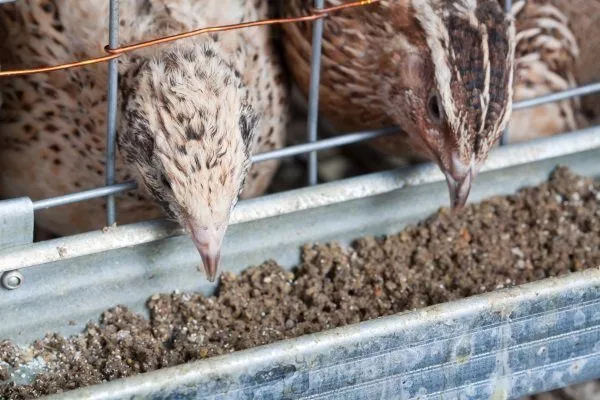
Necessary feed
Feeding affects quail weight gain. Two types of feed can be used:
- purchased for quails or chickens;
- home-made.
If the second option is chosen as a priority, it must include:
- grain crops;
- vegetables;
- green;
- chalk;
- salt;
- fish bone meal;
- unrefined oil.
This composition will help to saturate quails with all the necessary elements.
In the pursuit of profit, it is important to remember that overfeeding birds can have a detrimental effect not only on their condition, but also on the number of eggs they lay.
Breeding of quail breeds
Quail breeding is easy in captivity. Select one male and two to four females. All selected birds are placed in a common cage. After collecting the eggs, they are placed in an incubator, which can be homemade or commercially available.
The incubation period lasts 17 days. If all conditions are met correctly, the offspring appear on the 18th day.
Meat-producing quails are a profitable investment for agricultural businesses. Breeding costs are low, but proper care is essential: regular feeding, cage cleanliness, disease prevention, etc. The result is healthy, dietary meat that commands a high market price.