
Chicken farming can not only provide the owner with meat and eggs but also become a profitable business. Besides providing the necessary conditions for the birds, it's important to choose the right breed of chicken, in line with the farm's purpose or the owner's preferences.
Meat and eggs
Meat and egg breeds They are called chickens that simultaneously have a good meat set and show good egg production.
| Breed | Disease resistance | Temperature requirements |
|---|---|---|
| Australorps | High | Moderate |
| Adler silver | High | Hot climate |
| Amrox | Average | Cold-resistant |
Australorps
Australorps come in a variety of colors. The comb, wattles, earlobes, and wattles are bright scarlet. Males have a leaf-shaped, five-pronged comb, dark brown irises, dark or gray metatarsus, lighter toes and claws, and white soles.
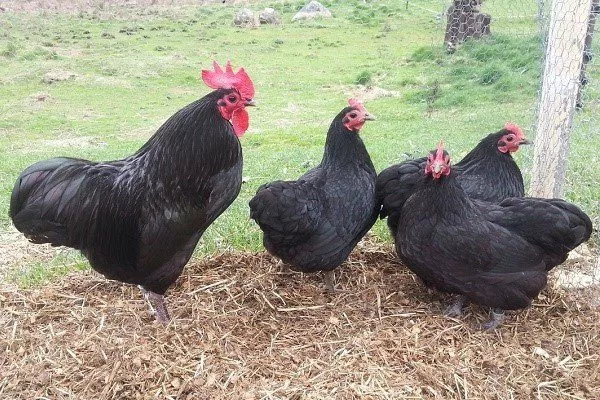
Main characteristics:
| Rooster weight, kg | Chicken weight, kg | Egg weight, g | Egg production, eggs/year | They begin to lay eggs in months. | Breeding |
| up to 4 | up to 3 | 55-58 | 200-300, sometimes eggs have 2 yolks | 5-6.5 | incubator |
Australorps are peaceful, not quarrelsome, and not easily frightened. Roosters are very active, despite their considerable weight. Four roosters should be kept per square meter. It's important to provide the hens with a balanced supply of micronutrients, otherwise they will produce shell-less eggs.
Adler silver
Adler Silverbacks have white feathers on their bodies and edged feathers on their wings, tail, and mane. They are robust birds with powerful legs. They have a red leaf-shaped crest, red earlobes, and wattles on their heads.
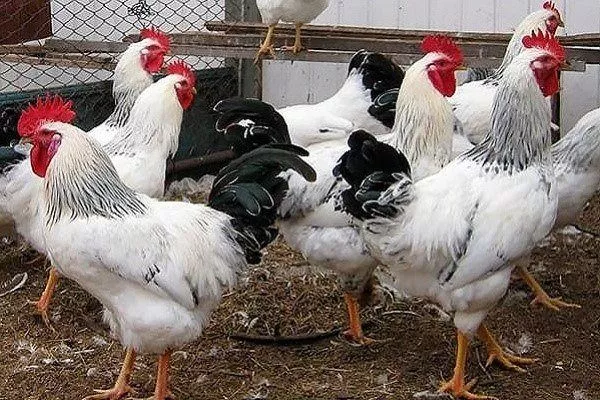
Main characteristics:
| Rooster weight, kg | Chicken weight, kg | Egg weight, g | Egg production, eggs/year | They begin to lay eggs in months. | Breeding |
| 2.1-3.5 | 2.1-3.5 | 45-60 | 150-200 | 6-8 | incubator |
One of the most beloved breeds among breeders. Owners praise their immunity and lack of sensitivity to hot climates. These chickens are kept in enclosures and also in ranges, where they successfully forage for food.
Amrox
Amroxes have fine black and white stripes. The hen has wider stripes, while the rooster has narrower ones. The head is small, and the comb is large and red, leaf-shaped, complemented by lobes and wattles of the same color. The eyes are brown. The bird has a strong bone structure, a broad chest, prominent shanks, and a bushy tail.
Dwarf Amroxes are the same, but weigh 1.1-1.3 kg.
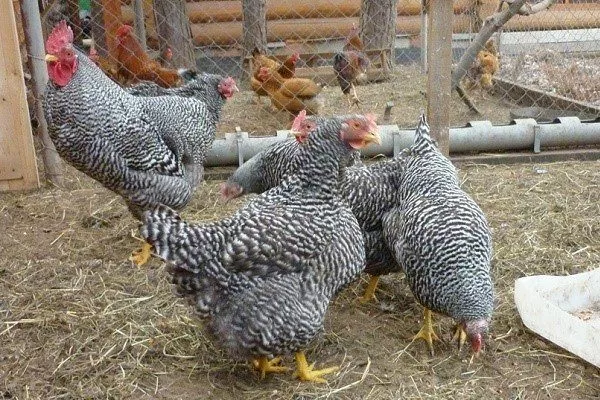
Main characteristics:
| Rooster weight, kg | Chicken weight, kg | Egg weight, g | Egg production, eggs/year | They begin to lay eggs in months. | Breeding |
| 4.5 | 3.5 | 55-60 | 200-220 | 5-6 | incubator |
Amrox chickens don't escape or fly away from their run, and they don't disturb neighbors. Chickens and roosters thrive in the coop if they can't go outside. In winter, the indoor temperature should be maintained at around 5-10 degrees above zero. Amrox chickens are also capable of walking and snow bathing.
Barbezieux
The black feathers have a greenish tint. The hens have brown eyes with a yellow tint, and their combs and wattles are bright red. The roosters have leaf-shaped combs with deep teeth, up to 8 cm high and up to 14 cm long.
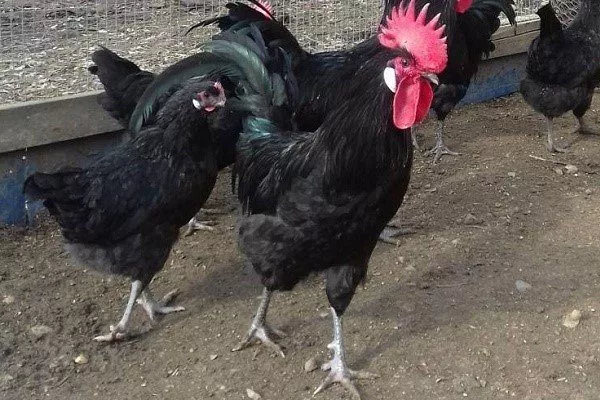
Main characteristics:
| Rooster weight, kg | Chicken weight, kg | Egg weight, g | Egg production, eggs/year | They begin to lay eggs in months. | Breeding |
| 3.5-6 | 2.1-3.5 | 60-70 | 200-250 | 6-8 | incubator |
This breed isn't particularly difficult to maintain. They don't require a heated coop (except in northern latitudes). They need soft, thick bedding (straw, sawdust, hay) in the coop, and grass and horse manure in the pasture. These birds can fly high, so their wings are clipped.
Barnevelder
These birds have a broad, rounded body, a broad, low chest, a broad head with a short, dark yellow bill, small, elongated red lobes, and red-orange eyes. Their plumage ranges from white, dark brown with a double edge, to black with a green tint. Roosters have a low comb with 4-6 teeth.
Barnevelders come in dwarf varieties.
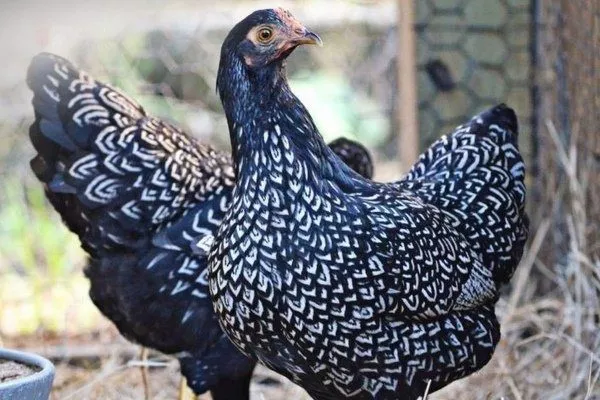
Main characteristics:
| Rooster weight, kg | Chicken weight, kg | Egg weight, g | Egg production, eggs/year | They begin to lay eggs in months. | Breeding |
| 3-3.5 | 2.5-2.8 | 50-65 | about 180 | 7-8 | incubator |
Barnevelders have a good temperament, are slow and lazy in flying (which allows them to conserve fence height), but they prefer to sleep higher up, for example, in a tree. These birds are very hardy and are completely unfazed by weather conditions, laying eggs in both freezing and hot weather. Being outside is beneficial for these birds, as they easily gain excess weight.
Welsummer
The bird is sturdy, with a curved back, short legs, and small wings. Roosters have high-set tails, while hens have folded tails. Their heads are topped with red combs with several teeth, earlobes, and a wattle. The birds have red eyes surrounded by yellow skin. The hens' colors fade when they are actively laying eggs.
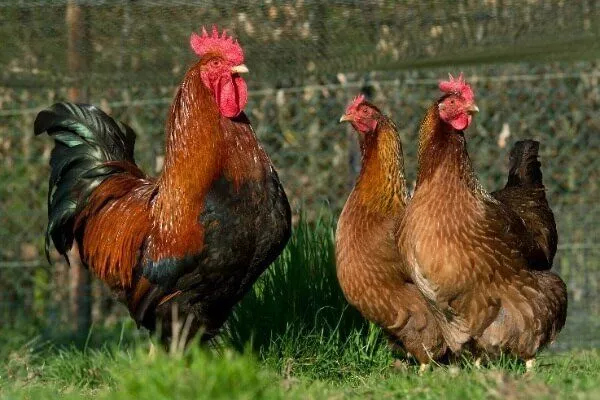
Main characteristics:
| Rooster weight, kg | Chicken weight, kg | Egg weight, g | Egg production, eggs/year | They begin to lay eggs in months. | Breeding |
| 3.5 | 3.5 | 45-60 | 200 | 6-8 | incubation |
This breed is easy to care for and has an excellent, friendly nature. Chickens should be provided with a spacious run with access to foraging. In winter, Welsummers should be provided with an insulated coop. Because this is a dwarf breed, they don't require a lot of feed.
Hungarian giant
This is a large breed with a massive body and broad chest. The birds are reddish-brown in color, with roosters having medium-sized black tails and more intensely colored wings. The neck is long, the legs are medium-sized and featherless. The head has small earlobes, a weakly developed, rounded comb, and small wattles. The light yellow beak is surrounded by red, featherless skin, and the eyes are small and red.
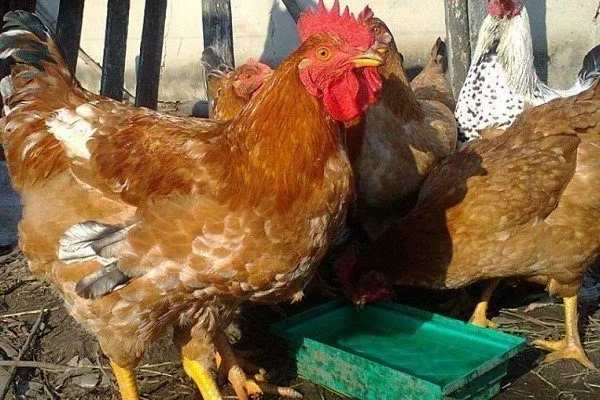
Main characteristics:
| Rooster weight, kg | Chicken weight, kg | Egg weight, g | Egg production, eggs/year | They begin to lay eggs in months. | Breeding |
| 3.6-4.5 | from 3.6 | 45-60 | 150-200 | 4-5 | incubation |
Even less experienced farmers can breed and care for this breed. It's suitable for small farms. Dry, non-heated houses are essential. Hungarian giants love to roam and are skilled foragers. They don't tolerate cages very well. There's only one problem with giants: overfeeding and lack of exercise can lead to obesity.
Wyandotte
Standard Wyandottes come in 16 color variations. They are characterized by feather fringing over a significant portion of the plumage.
The Wyandotte can be dwarf.
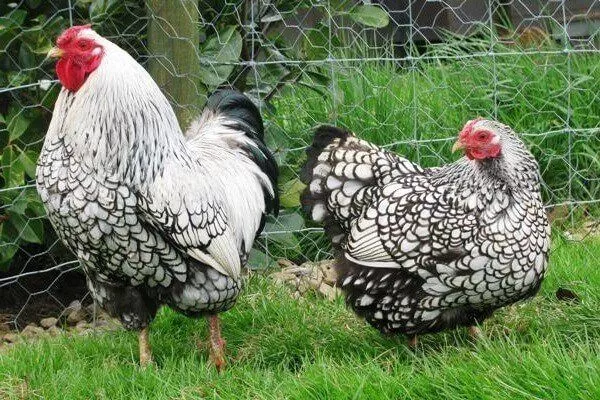
Main characteristics:
| Rooster weight, kg | Chicken weight, kg | Egg weight, g | Egg production, eggs/year | They begin to lay eggs in months. | Breeding |
| 3.8 | 3 | 48-62 | 140-200 | 6-9 | they don't breed |
This breed is undemanding in terms of living conditions and is cold-hardy. It has a calm and quiet nature. It can be kept in a spacious cage in winter and in an outdoor enclosure in summer. Consider providing UV light baths. It's best to have access to pasture. Fencing the area is not necessary.
Galan or Russian Black Bearded
A large bird with a high-set, rectangular body, strong bones, and a powerful neck. The head is large, feathers around the beak are absent, and the skin there is red. The beard covers the earlobes and neck. The eyes are reddish-brown and bulging. Roosters lack long feathers or tail feathers.
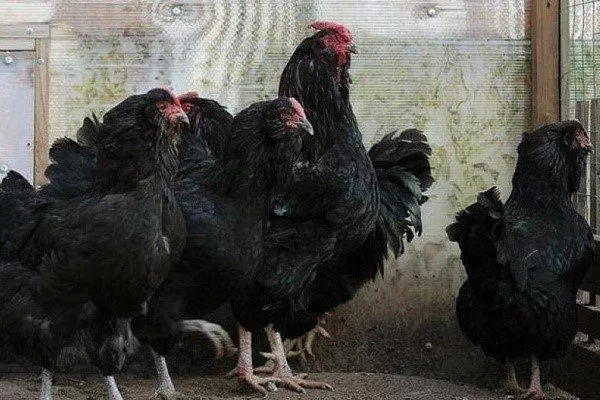
Main characteristics:
| Rooster weight, kg | Chicken weight, kg | Egg weight, g | Egg production, eggs/year | They begin to lay eggs in months. | Breeding |
| more than 3.6 | 2.1-3.5 | 45-60 | about 150 | 5-6 | incubation |
This breed can be raised by novice farmers. Galans get along well with other poultry species. They thrive both in a cage and in the open air, foraging skillfully. Galans thrive in frosty weather. However, the poultry house must be protected from dampness and drafts. Galans maintain egg production during cold periods.
Naked necks
Naked Necks are fairly robust birds with a rectangular body. Their necks are featherless, red, and S-shaped. Several color variations are acceptable. All hens have red combs on their heads that extend down to their beaks. The comb is leaf-shaped with rounded teeth. The wattles and earlobes are also red, slightly protruding. The plumage determines the color of the cornea. For example, black Naked Necks have red eyes.
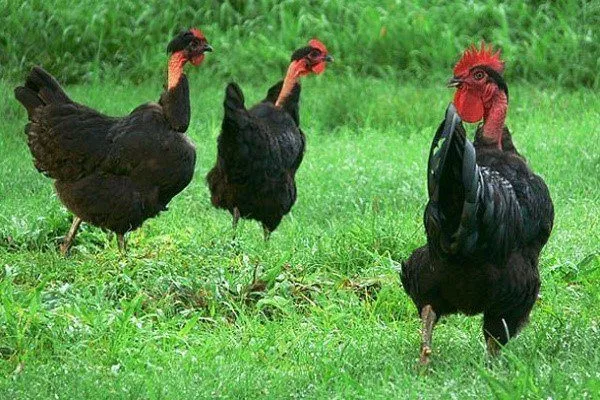
Main characteristics:
| Rooster weight, kg | Chicken weight, kg | Egg weight, g | Egg production, eggs/year | They begin to lay eggs in months. | Breeding |
| 3.6 | 3.5 | 45-60 | 200 | 6-8 | incubation |
Naked-neck chickens thrive in warm locations. They can tolerate occasional cold spells, but not prolonged ones. Chickens can roam freely in winter at temperatures no lower than -15°C (-5°F), but only for short periods. The coop should be reasonably warm—between 5°C and 15°C (41°F)—but well-ventilated.
Delaware
Hens and roosters are muscular and hardy. Their standard coloring is limited to one type: white birds with black and white feathers encircling their strong necks. Hens have a small comb, wattles, and feather lobes. Roosters have a leaf-shaped comb with five fairly large, bright red teeth.
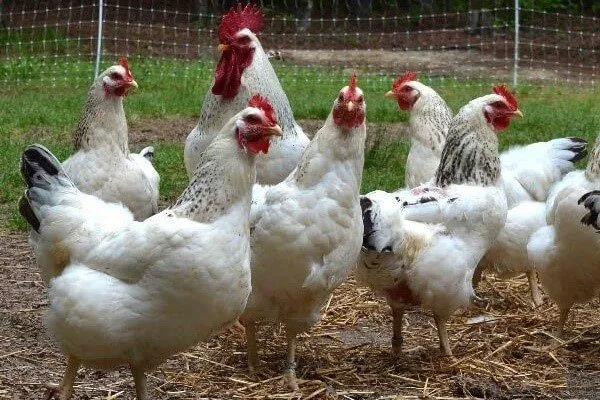
Main characteristics:
| Rooster weight, kg | Chicken weight, kg | Egg weight, g | Egg production, eggs/year | They begin to lay eggs in months. | Breeding |
| 3.5 | 2.1 | 45-60 | 200-250 | 4-5 | incubation |
This is a breed that even the most inexperienced poultry breeder can keep. Delaware are quite suitable for backyard farming. They have a calm, even phlegmatic, nature, can live in a cage, and get along well with other birds and people. They tolerate cold well, but egg production declines in winter.
Jersey Giant
The breed is tall and large. The birds have long, muscular, widely spaced legs with impressive thighs, drumsticks, and four toes. The beak is black with a yellowish tip. The roosters' heads are large and wide, with a leaf-shaped vertical comb. The earlobes are medium-sized and bright red. The eyes are dark brown, almost black, bulging and round. The hens are not much different from the roosters; they are shorter and smaller.
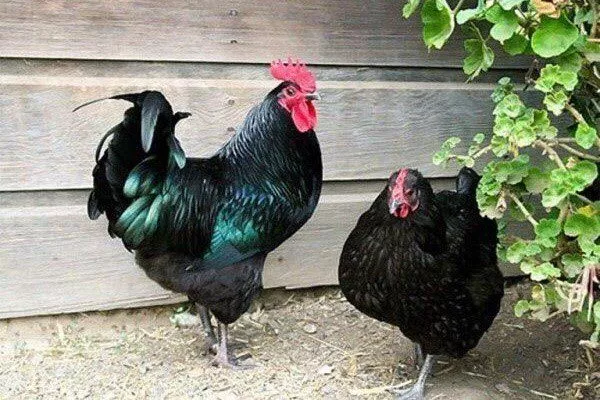
Main characteristics:
| Rooster weight, kg | Chicken weight, kg | Egg weight, g | Egg production, eggs/year | They begin to lay eggs in months. | Breeding |
| 7 | 4 | 55-68 | 180 | 6-7 | incubator |
This breed is primarily a meat breed. Outdoor access during warm weather is preferable, as Giants don't fly far. If this isn't possible, Jersey Giants can be kept in an enclosed coop, with 1-2 birds per square meter. In winter, it's best to keep the temperature in the coop below -5°C.
Dominic
Dominicans are often compared to hawks due to the similarity in coloration—feathers with a white base and dark stripes. They have a medium-sized comb, red earlobes, and wattles. The rooster's back is curved like a U, with its tail held vertically. Hens lack this tail, and their backs are sloping, with their shoulders higher than their tail.
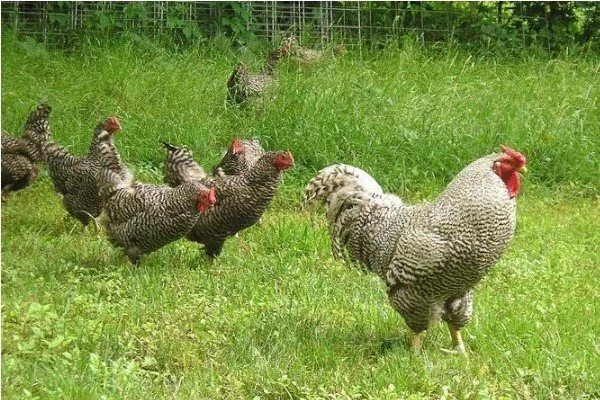
Main characteristics:
| Rooster weight, kg | Chicken weight, kg | Egg weight, g | Egg production, eggs/year | They begin to lay eggs in months. | Breeding |
| 2.1-3.6 | 2.1-3.5 | 45-60 | 150-200 | 6-8 | incubation |
The breed was developed for both northern and southern climates. The hens have a calm disposition. However, Dominica roosters are very aggressive and tenacious fighters. Therefore, it is advisable to limit the number of roosters in a flock immediately. Dominicas should be provided with adequate foraging conditions and the opportunity to consume fine gravel for digestion.
Zagorsk salmon
Zagorsk salmon fowl have light brown plumage with delicate pink and orange hues. The birds have large bodies, slightly widening at the base, an elongated back, and strong, long legs. Roosters' heads are adorned with leaf-shaped red combs, a red wattle, and earlobes. Their beaks are yellow. The beak, comb, and earlobes of hens are much lighter.
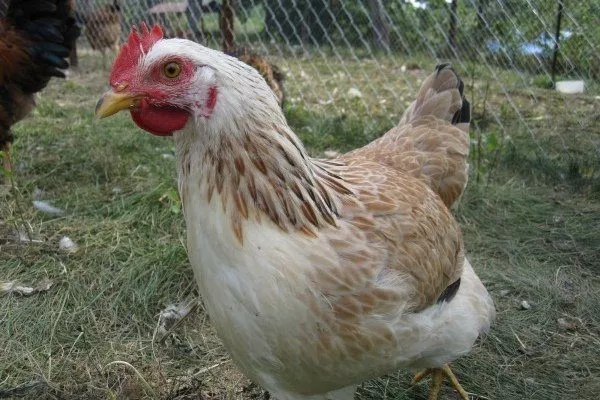
Main characteristics:
| Rooster weight, kg | Chicken weight, kg | Egg weight, g | Egg production, eggs/year | They begin to lay eggs in months. | Breeding |
| 3.0-3.5 | 2.5-2.7 | 60-89 | 250 | 6-8 | incubator |
This breed was developed for cold climates. Even a novice poultry farmer can handle them. Zagorsk salmon hens are best kept with access to a yard for foraging in the summer and an unheated coop in the winter. However, if frosts are severe, it's best to find a way to warm the coop.
Catalan
The plumage should have a beautiful light-colored buff and sideburns with a reddish tint, along with a red wattle. Cocks' combs are always erect, while hens have four combs hanging down to the side and one, the very first, set upward. The eyes are dark red, and the beak is pink. The birds' tails are black with a green tint, and their legs are featherless, green or gray.
The dwarf subspecies of the Catalan chicken weighs 900 grams.
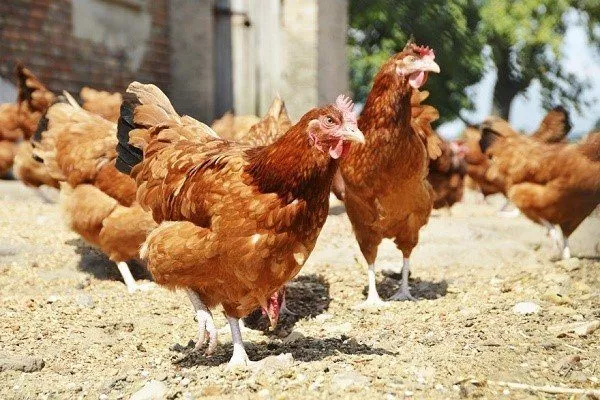
Main characteristics:
| Rooster weight, kg | Chicken weight, kg | Egg weight, g | Egg production, eggs/year | They begin to lay eggs in months. | Breeding |
| 3.0-3.5 | 2.1-3.5 | 45-60 | 150-200 | 6-8 | incubator |
Catalan chickens are an excellent breed for breeding in private farms, if you treat the birds with an understanding of their special qualities:
- the bird is sensitive to low temperatures, so it is not suitable for breeding in northern latitudes;
- It is essential to provide free range and access to very fine gravel or clean sand for digestion.
Kyrgyz grays
Chickens have a large, conical body with a small head. Their plumage is striped, black and white, more variegated than solid. They have a small, leaf-shaped comb and red earlobes. Their strong legs are medium-length.
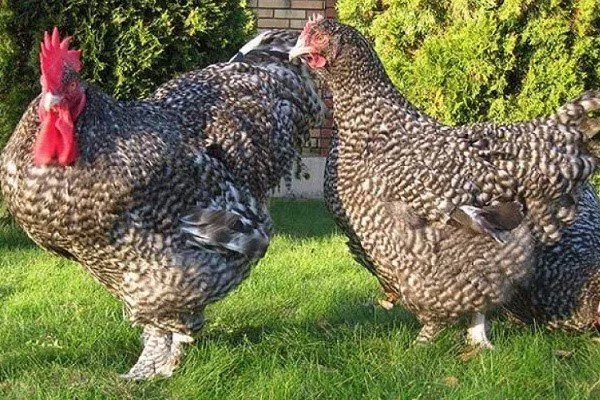
Main characteristics:
| Rooster weight, kg | Chicken weight, kg | Egg weight, g | Egg production, eggs/year | They begin to lay eggs in months. | Breeding |
| 3.5 | 2.1 | 45-60 | 150-200 | 6-8 | incubation |
They are undemanding in terms of living conditions. They don't try to escape from humans and don't fly very high, so their enclosures don't need to be too high. They get along well with other poultry housemates.
Kuchinskaya Jubilee
The Kuchinok's coat is light brown with a pink tint. The birds have yellowish-brown bills and legs of the same color. Roosters often sport red feathers, a black chest, and a lush black tail, with a proudly carried head. They are very large and stately.
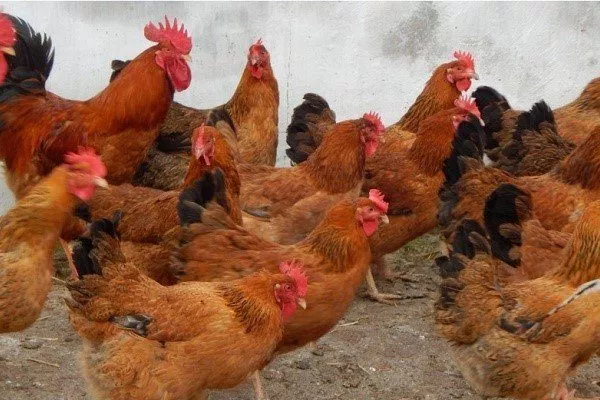
Main characteristics:
| Rooster weight, kg | Chicken weight, kg | Egg weight, g | Egg production, eggs/year | They begin to lay eggs in months. | Breeding |
| 2.5-4 | 2-3 | 60 | 240 | 5.5-6 | incubation |
This breed is one of the most common in Russia. A major advantage of this breed is that the hens lay eggs even in temperatures as low as -15 degrees Celsius. They have a calm temperament. These birds can be let out for a range even in winter. The only potential problem with Kuchinsky Yubileiny hens is their tendency to become obese.
Moscow White
The Moscow White is a sturdy, short-legged chicken with a broad body and bright yellow tarsi and beak. The earlobes and comb are bright red, and the comb lies close to the head to prevent frostbite. The tail and wings are well-developed.
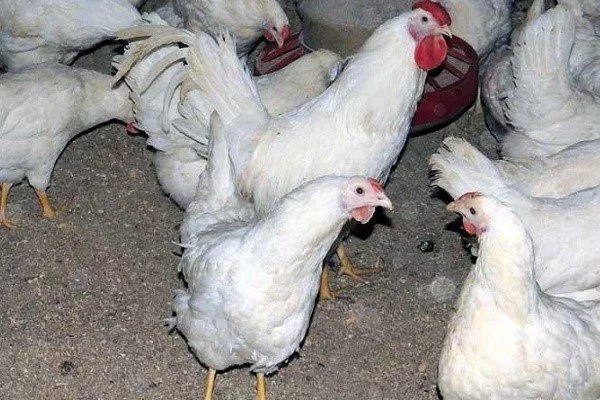
Main characteristics:
| Rooster weight, kg | Chicken weight, kg | Egg weight, g | Egg production, eggs/year | They begin to lay eggs in months. | Breeding |
| 3.6 | 2.7 | 60 | 250 | 5-6 | incubator |
The breed's unique feature is that it was developed specifically for the Russian climate. All a chicken farmer needs to do is provide a nutritious diet and protect the coop from drafts. The hens lay eggs regardless of the season. They are prone to pecking, which can be prevented by avoiding bright lights and keeping the hens in crowded conditions.
Moscow Blacks
Black Moscow storks have an elongated body with well-developed muscles. Their black plumage is flecked with gold and copper. Their heads are broad, with a leaf-shaped, serrated comb and red or white earlobes. Their bills are curved and medium in length. Their eyes can be dark brown or orange.
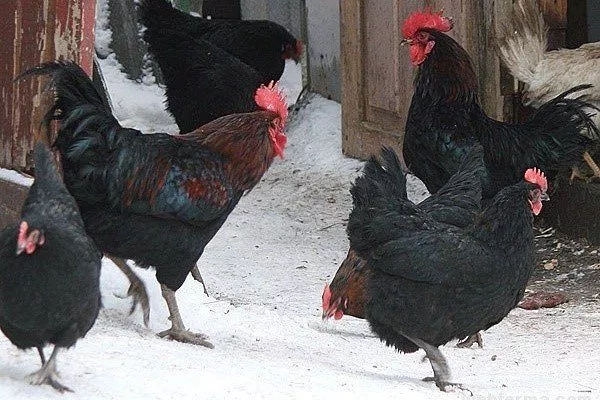
Main characteristics:
| Rooster weight, kg | Chicken weight, kg | Egg weight, g | Egg production, eggs/year | They begin to lay eggs in months. | Breeding |
| 3.5 | 2.5 | 55-60 | 220-280 | 5-6 | incubation |
This unpretentious breed, adapted to the Russian climate, has a strong immune system. Moscow Black chickens can tolerate temperatures down to -30°C (-86°F) in unheated rooms. However, deliberately keeping the birds in the cold is not recommended. At very low temperatures, an infrared lamp should be placed in the coop. These chickens can also live in a cage, on the floor, or in the pasture without any problems.
Plymouth Rock
The Plymouth Rock is a sturdy bird with a rectangular body, a long, strong neck, and a large head. They have high-set wings, a rounded, bushy tail, orange-red irises, a short yellow bill, and bright red earlobes and wattles. Their legs are strong and muscular, with yellow tarsi and light-colored claws. Roosters have a vertical, leaf-shaped comb with symmetrical teeth.
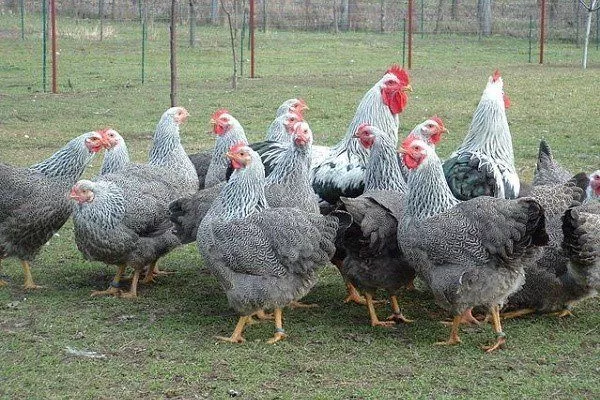
Main characteristics:
| Rooster weight, kg | Chicken weight, kg | Egg weight, g | Egg production, eggs/year | They begin to lay eggs in months. | Breeding |
| 5 | 3.5 | 55-60 | 170-200 | 6-8 | incubation |
Breeding birds of this breed doesn't require any special conditions. They adapt well, rarely get sick, and don't quarrel with other yard inhabitants. Being a fairly large bird, Plymouths are not prone to flying away from their aviaries, but they enjoy exploring. Providing them with a range with foraging opportunities and access to horse manure is a good idea.
Ukrainian Crested (crested)
Crested chickens are called crested because they have rounded crests or tufts on their heads. A rooster's comb falls to the side and is leaf-shaped. The bird's head is small and has a curved, strong beak. They have a strong, elongated body, a broad chest, and a bushy tail. Their legs are strong and short. Their colors are predominantly Colombian, fawn, and black.
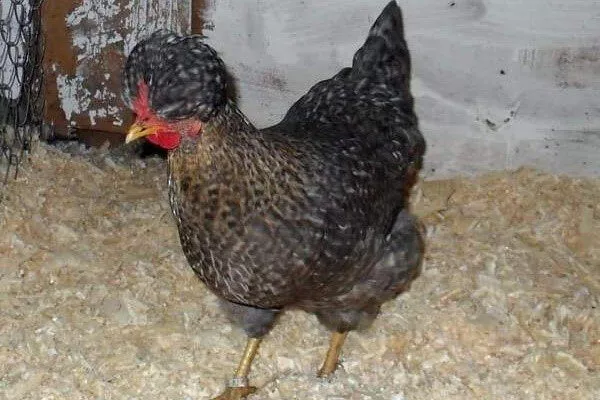
Main characteristics:
| Rooster weight, kg | Chicken weight, kg | Egg weight, g | Egg production, eggs/year | They begin to lay eggs in months. | Breeding |
| 2.1-3.5 | 2.1-3.5 | 45-60 | 150-200 | 6-8 | incubation |
The Ukrainian Crested was bred for southern regions. The breed is easy to maintain. There is only one problematic trait: Ukrainian Cresteds love to travel and forage in other people's gardens. Their cages must be kept clean and provided with sand and ash baths.
Ushankas
Hens and roosters are brown with a leaf-shaped, walnut-shaped, or rose-shaped comb. The Ushanka's body shape is very distinctive. Some roosters have brownish-black feathers, and hens have a wattle under their beaks.
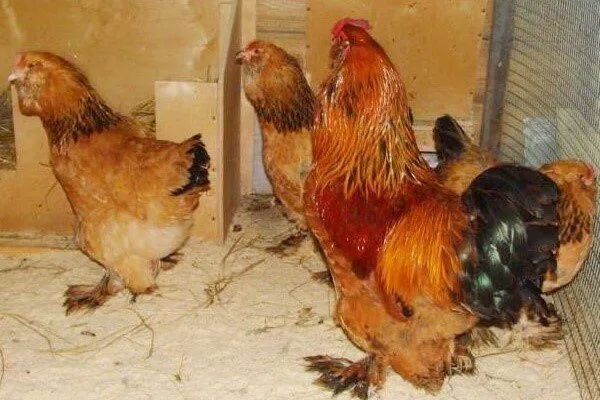
Main characteristics:
| Rooster weight, kg | Chicken weight, kg | Egg weight, g | Egg production, eggs/year | They begin to lay eggs in months. | Breeding |
| 2.8 | 2-2.3 | 51-56 | 160 | 6 | incubation |
A versatile and easy-to-care-for breed, they are ideal for private households. These chickens have strong immune systems. They require a small area for grazing. Feeding problems can lead to pecking and sometimes even cannibalism. This can be easily treated by adding protein and calcium to their diet.
Faverolles
The hen is large with a small head, a broad, elongated body, and a horizontally positioned plumage with a broad chest and short, strong, feathered legs. Red earlobes are located under the sideburns, and the bird's neck is short and strong with a voluminous mane. The birds have orange-red eyes, a short, yellowish-white bill, and a wattle beneath it, concealing small wattles, and a leaf-shaped comb.
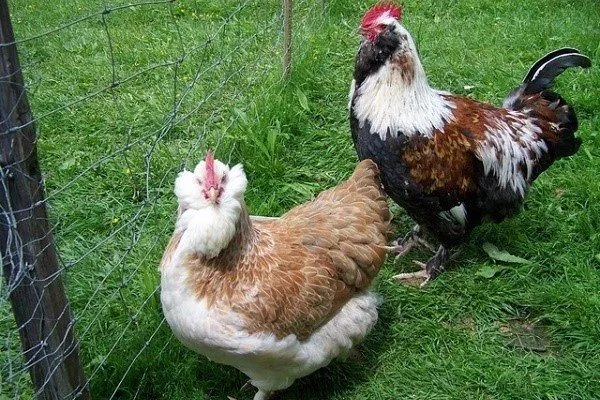
Main characteristics:
| Rooster weight, kg | Chicken weight, kg | Egg weight, g | Egg production, eggs/year | They begin to lay eggs in months. | Breeding |
| 4.5 | 3.5 | 55-60 | 100-160 | 6-8 | incubator at a temperature of strictly 37.6 °C |
Faverolles grow quickly, are very calm, and don't cause problems in the coop. Their plumage helps them survive the fairly severe winter cold. They lay eggs well in winter. The most important thing is to keep the cage dry, otherwise the birds become ill. Faverolles don't tend to rake flowerbeds, so they can wander around yards. They are prone to obesity.
Holland
There are two main color variations of Hollands: white and tabby. Roosters have a comb that stands upright on their heads like a crown, while hens have a comb that hangs to the side. Their earlobes are red, sometimes with a white center, and their wattles are also red.
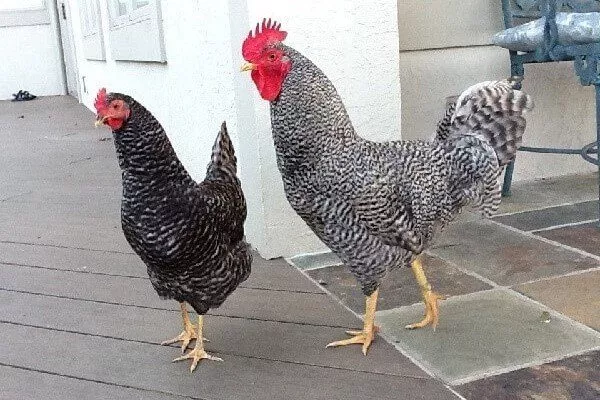
Main characteristics:
| Rooster weight, kg | Chicken weight, kg | Egg weight, g | Egg production, eggs/year | They begin to lay eggs in months. | Breeding |
| 2.1-3.6 | 2.1-3.5 | 45-60 | 150-200 | 6-8 | incubation |
These birds are easy to keep and are well-suited for private farms. They should be provided with free-range access and foraging opportunities, and should not be allowed to roam in extreme cold. Hollands have a good temperament, but they are timid and sometimes restless. Roosters can be aggressive.
Tsarskoye Selo
Tsarskoye Selo hens are stocky and robust birds with a long, wide body, a broad chest, and a large belly. The hens are red with stripes all over their bodies and a dark Columbian collar. The roosters are red, but with a dark, striped tail. They have red combs, either leaf-shaped or rose-shaped, and red earlobes. The hens have yellow legs and tarsi.
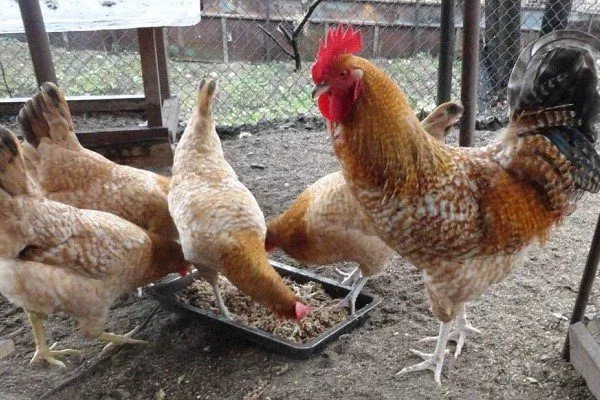
Main characteristics:
| Rooster weight, kg | Chicken weight, kg | Egg weight, g | Egg production, eggs/year | They begin to lay eggs in months. | Breeding |
| 3.2 | 2.8 | 80 | 170-200 | 5-6 | incubation |
The Tsarskoye Selo chicken is intended for indoor use. This breed was specifically bred to allow the birds to lead an independent life in the open air. These hens have excellent immunity and a good temperament. The hens are willing to work even in cold weather, but it's important to feed them well.
Chanticleer
These large chickens are tall and come in three main varieties: partridge, white, and fawn. To prevent frostbite, the breed was bred with a small, pea-shaped comb and miniature wattles.
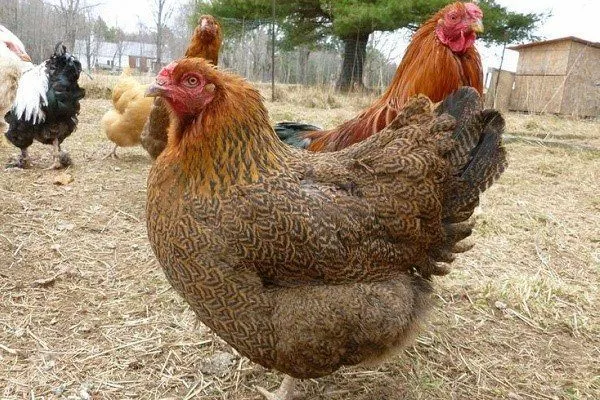
Main characteristics:
| Rooster weight, kg | Chicken weight, kg | Egg weight, g | Egg production, eggs/year | They begin to lay eggs in months. | Breeding |
| 2.1-3.5 | 2.1-3.5 | 45-60 | 200-250 | 6-8 | incubation |
The breed has excellent plumage and a dense layer of down that protects against cold. Therefore, it is not recommended to breed it in hot climates. It is best to let the birds roam outdoors whenever possible, as they dislike cages and become nervous in confined spaces. Chanticleers are efficient foragers. They have a calm and friendly nature.
Yurlovsky's vociferous
Yurlovsky chickens are a mixture of black, silver, and light brown. They have brown or orange eyes, a strong, curved beak, and yellow or olive tarsi. Their comb is rose-shaped, sometimes walnut- or leaf-shaped. Hens and roosters are tall, with massive, upright bodies. Their massive heads rest on long, strong necks. Rooster tails are short. Roosters have a fighting spirit and a distinctive voice.
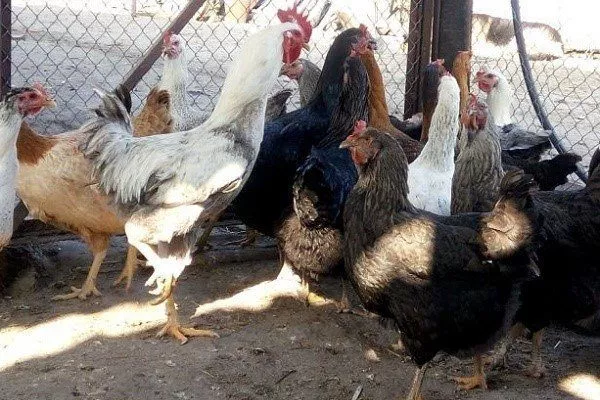
Main characteristics:
| Rooster weight, kg | Chicken weight, kg | Egg weight, g | Egg production, eggs/year | They begin to lay eggs in months. | Breeding |
| up to 6 | up to 4 | 70-100 | 130-180 | 8-9 | incubation |
This is one of the oldest Russian breeds. A family consists of 12-20 hens and one rooster. Due to their temperament, chickens cannot coexist peacefully with other poultry in a poultry yard. They do not tolerate cramped cages.
Meat
Meat breeds Valued for their excellent meat quality, record-breaking size, rapid weight gain, and calm disposition, these breeds are popular among poultry farmers.
Gate
The species has strong legs, a broad chest, a massive body and lush plumage.
Gates differ in color:
- Light Brahma (roosters reach a weight of up to 5.5 kg and hens 5.5 kg);
- dark Brahma;
- fawn Brahma;
- Brahma partridge (roosters weigh up to 4.5 kilograms, and hens – up to 4 kg. Laying hens produce up to 110 eggs per year, each weighing 55 grams).
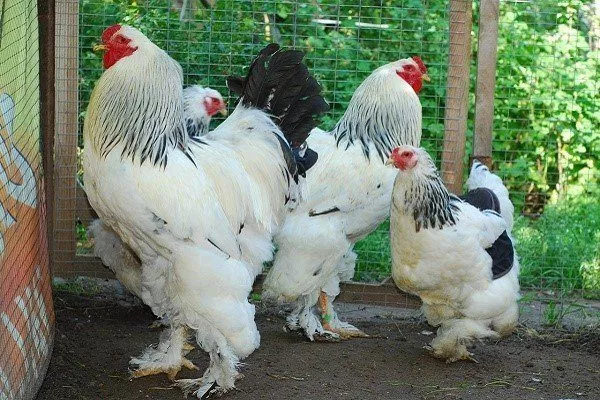
Main characteristics:
| Rooster weight, kg | Chicken weight, kg | Egg weight, g | Egg production, eggs/year | They begin to lay eggs in months. | Breeding |
| 3.6 | 3.6 | 45-60 | 150 | 6-9 | incubation |
This breed was developed for northern climates. The hens have a phlegmatic nature, but they are protective of themselves and their offspring. These birds lay eggs better in winter than at other times. The coop should be suitable for the Barm's weight and dry, draft-free environment. A large area is not required for walking, but it should be clean, protected, and allow for foraging.
Bresse de Gaul
The most striking feature of the Bresse Gallus is its blue legs, combined with white feathers and red combs. However, Bresse Gallus also have other color variations.
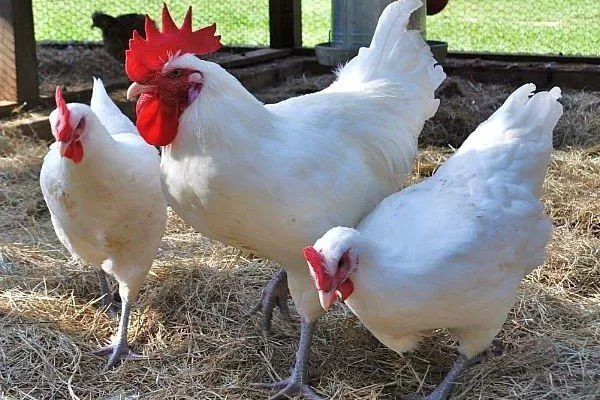
Main characteristics:
| Rooster weight, kg | Chicken weight, kg | Egg weight, g | Egg production, eggs/year | They begin to lay eggs in months. | Breeding |
| 3.6 and more | 3.6 | 60 | 150-200 | 6-8 | incubator |
This breed was developed for southern regions. Even beginners can raise them. Bresses are known for their good health, excellent temperament, and ability to get along with other birds and people. A safe area should be provided for the birds to roam freely, preventing them from escaping. Ideally, a net should be placed over the aviary. Bresses' cages should be heated in winter.
Gudan
The standard allows two color variations for Houdan Terriers: white and speckled. A distinctive feature of these birds is the crest on their bald head, complemented by sideburns and a wattle. The bird's comb is V-shaped, and the small wattles and earlobes are hidden beneath the feathers of the flanks. The five-toed nature of the bird affects its gait, giving it a hopping appearance.
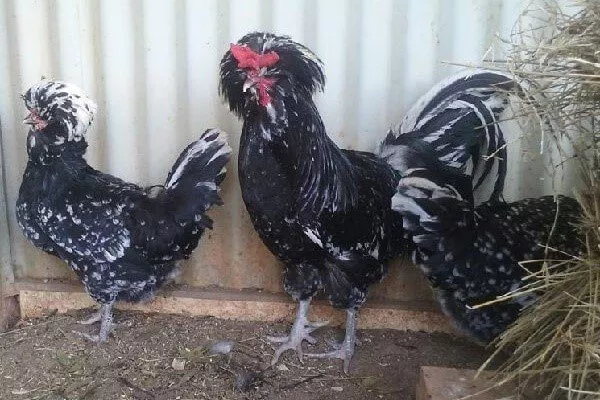
Main characteristics:
| Rooster weight, kg | Chicken weight, kg | Egg weight, g | Egg production, eggs/year | They begin to lay eggs in months. | Breeding |
| 3.6 | 2.1-3.5 | 45-60 | 150 | 8 | incubator |
This breed was developed for southern regions and is difficult to access in Russia, but adopting one is relatively easy. These birds thrive in grassy areas. Their heads freeze in freezing temperatures. They can be kept in a cage. They require specially designed feeders and waterers.
Dorking
Dorkings are classified into several plumage types, with silvery-gray being the most common. All varieties have large, bright red eyes, large crests on their heads, and small wattles and earlobes. Their legs are white.
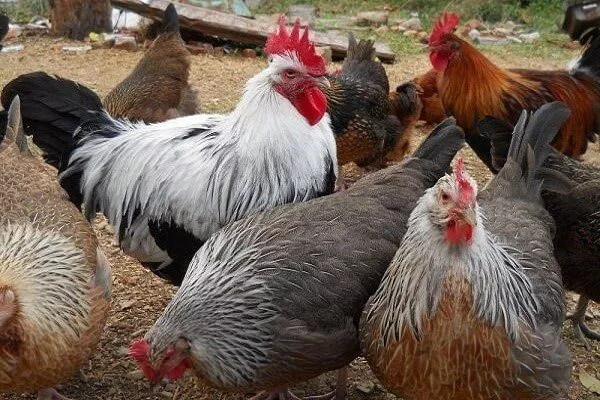
Main characteristics:
| Rooster weight, kg | Chicken weight, kg | Egg weight, g | Egg production, eggs/year | They begin to lay eggs in months. | Breeding |
| from 3.6 | 3.6 | 45-60 | 150 | 8 | incubation |
This breed is healthy, hardy, and strong. By nature, the birds are good-natured, peaceful, and not easily panicked. They can be kept in cages, but it's better if they have access to a walk-in area. Residents of northern regions should provide them with a warm, draft-free, and damp-free coop. Large nests are needed for hens, as the birds are large.
Javanese
Javanese chickens have a compact, strong body. Their chests are broad and their legs are strong. Their heads are adorned with a red comb, small wattles, and equally small, red earlobes. Black Javanese chickens have beautiful black plumage with agate accents and green highlights.
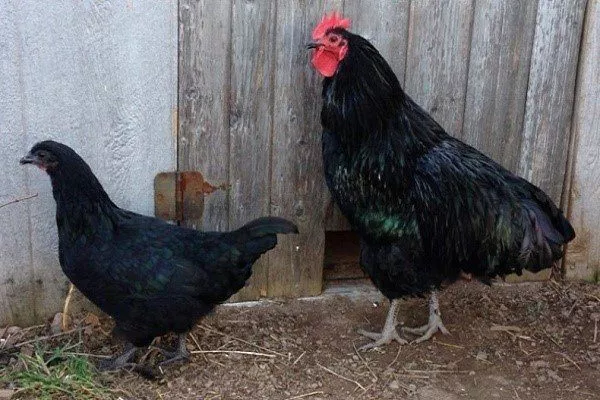
Main characteristics:
| Rooster weight, kg | Chicken weight, kg | Egg weight, g | Egg production, eggs/year | They begin to lay eggs in months. | Breeding |
| 3.6-4.5 | 3.6 | 45-60 | 200 | 6-8 | incubation |
The bird is a heat-loving bird, so it should only be kept in insulated coops. Yanvan chickens have a calm, playful nature; they are active, but not shy or noisy. In summer, when the weather is good, they enjoy wandering around and feeding on insects, grass, or grains on the ground. It's important to collect eggs immediately after they hatch.
Egg
Laying hens are distinguished primarily by the quality of their eggs. They don't gain weight, and they don't require large amounts of feed or special care.
Ameraucana
Ameraucanas are distinguished by their beautiful sideburns and beards. In hens and roosters, these grow in separate tufts. The comb is pea-shaped, preventing frostbite. Colors can vary widely.
Ameraucanas come in dwarf varieties.
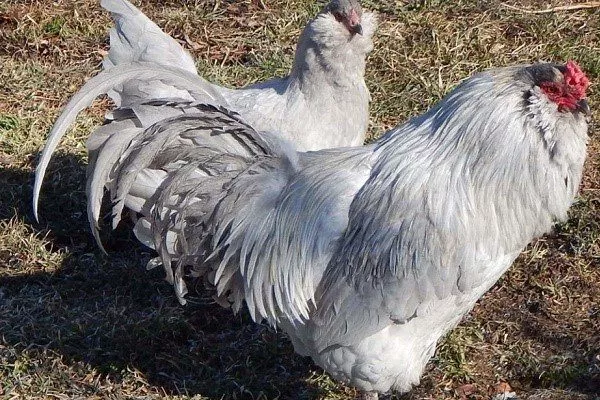
Main characteristics:
| Rooster weight, kg | Chicken weight, kg | Egg weight, g | Egg production, eggs/year | They begin to lay eggs in months. | Breeding |
| 3 | 2.5 | 60-65 | 200-250 | 5-6 | incubation |
Ameraucanas tolerate both cold and heat well. Roosters are very aggressive and will attack other birds and even people. Keeping these hens requires spacious coops, heated in winter, and free-range areas where the birds can forage. Their diet should be high in protein—16-20%. They enjoy dust baths.
Ancona
Anconas are beautiful, sturdy chickens with a black and white coloring, sometimes tinted with a copper hue. The wattles and comb are red, and the earlobes are white. Roosters have a rose- or leaf-shaped comb with five vertical teeth. In hens, only the first tooth of the comb is vertical; the others are slanted. Anconas have yellow beaks and bare legs.
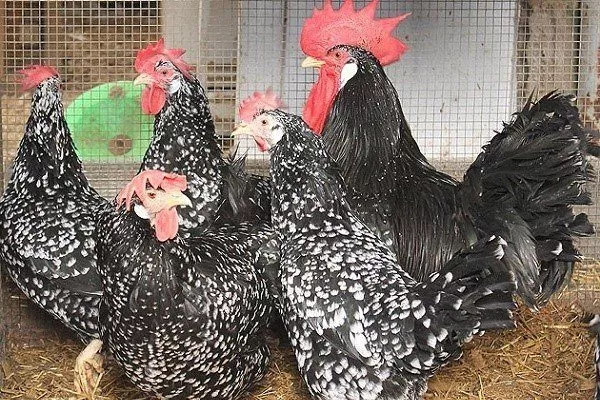
Main characteristics:
| Rooster weight, kg | Chicken weight, kg | Egg weight, g | Egg production, eggs/year | They begin to lay eggs in months. | Breeding |
| 3.5 | 2.0 | up to 60 | 200-250 | 6-8 | incubator |
This breed is suitable for warmer climates, but tolerates low temperatures well. These chickens are prone to hysteria and are freedom-loving (they are good flyers). They tolerate caged conditions well, but lay best when allowed to forage freely. Artificial lighting is not required in winter, but the coop should be warm and free of drafts and dampness.
Araucana
The bird is small and tailless. According to the standard, the Araucana's head may be decorated with a beard, sideburns, tufts, or both. There are 12 color variations. Representatives of this breed have a rounded body, a long back, well-developed shoulders, and a rounded belly and loin.
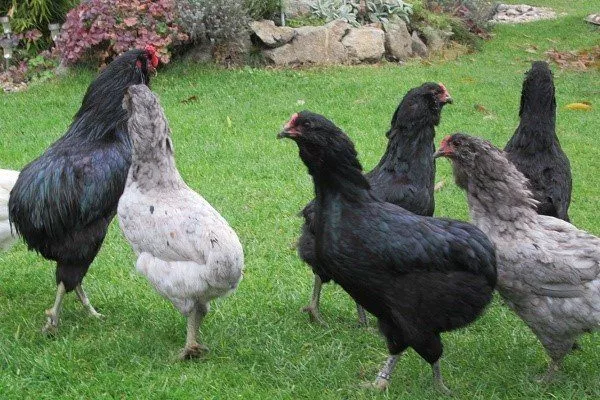
Main characteristics:
| Rooster weight, kg | Chicken weight, kg | Egg weight, g | Egg production, eggs/year | They begin to lay eggs in months. | Breeding |
| 2.0-2.5 | 1.6-2.0 | 56-72 | 160-180 | 5.5-6 | incubation |
The coop should be separate from other bird species and other Araucanas of different colorings, as roosters are very aggressive, but hens are quite peaceful. A family of this breed consists of a rooster and a pair of hens. They don't need tall cages. Araucanas are capable of grazing outdoors. They can easily tolerate temperatures down to -8°C (46°F), so heating the coop isn't necessary unless you're living in northern regions with extreme cold.
Spanish Black and White Face
Spanish White-Faced chickens are slender, black birds. They are small, lightweight, with flexible backs and a graceful posture. Roosters have bushy tails adorned with several long feathers. Their "white face" features long, wide white lobes that contrast with their black plumage. Roosters have a separate comb and lack a crest.
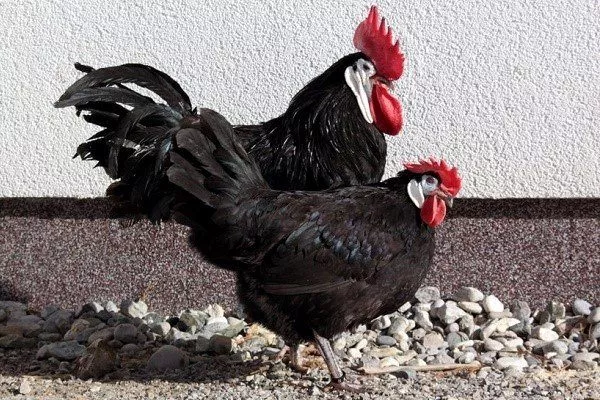
Main characteristics:
| Rooster weight, kg | Chicken weight, kg | Egg weight, g | Egg production, eggs/year | They begin to lay eggs in months. | Breeding |
| 2.1-3.5 | 2.1-3.5 | 45-60 | 150-200 | 8 | incubator |
This breed was developed for southern climates. These birds are highly excitable and emotional, they absolutely cannot remain silent, they dislike human touch, and they are difficult to handle. Spanish geese are unpretentious, enjoy warmth, thrive in open range, and are good foragers.
Russian white
This is a slender, all-white bird with a slightly elongated body, a strong neck, and a broad chest and belly. Roosters have bushy tails. The birds' legs and beak are always yellow. The head is proudly carried, the comb is leaf-shaped with five teeth, and the wattles are red. The hen's comb is not vertical, but tilts to the side. The earlobes are white.
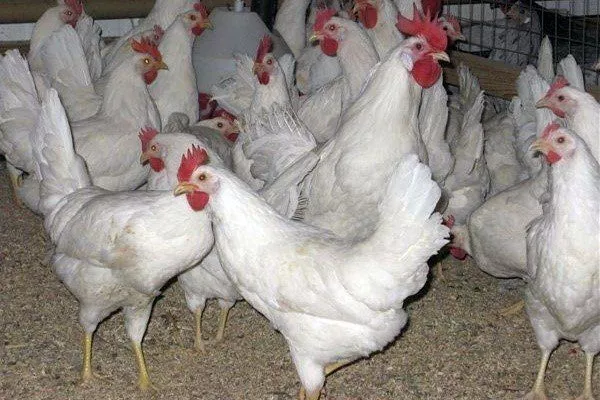
Main characteristics:
| Rooster weight, kg | Chicken weight, kg | Egg weight, g | Egg production, eggs/year | They begin to lay eggs in months. | Breeding |
| 2.5 | 1.8 | 56 | 200-240 | 6-8 | incubator |
This breed enjoys good health and, especially, immunity. Chickens can be kept in cages with a run, with open pasture, in an aviary, or in battery cages. If chickens are kept in battery cages, the humidity and temperature of the coop must be monitored and the lighting regulated. It is advisable to provide the chickens with opportunities to forage. The aviaries and run area should be enclosed with a high fence—Russian Whites are good flyers.
Crosses
Crossbreeds are selectively bred chickens that cross breeds to increase productivity. They are primarily kept on farms. The only drawback of crossbreeds is that subsequent generations do not possess the same qualities as their parents.
Avicolor
The Avicolor has broad shoulders, a short, strong neck, and strong yellow legs. The bird's medium-sized head is adorned with a comb with 5 or 6 teeth. The hen's comb is significantly smaller. The eyes are red and the beak is yellow. The rooster's tail is small, with braids of different colors. The feathers are red with black speckles in the roosters and red in the hens. The chicks differ in appearance: the hens are brown, while the cockerels are yellow.
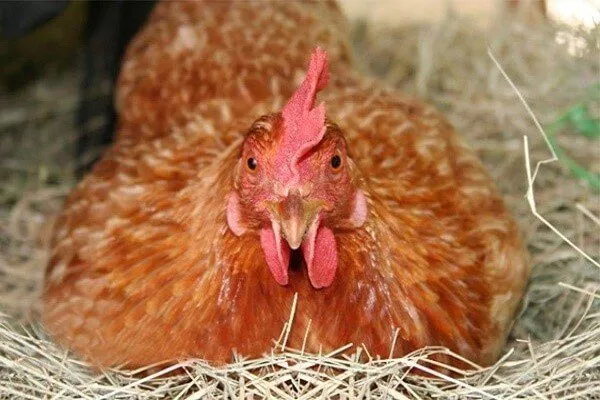
Main characteristics:
| Rooster weight, kg | Chicken weight, kg | Egg weight, g | Egg production, eggs/year | They begin to lay eggs in months. | Breeding |
| 2.1-3.5 | 2.1-3.5 | 45-60 | 250-300 | 6-8 | incubation |
A broiler for meat and egg production. The birds are in excellent health and are unaffected by weather changes. The chicks survive well, fledge early, and reach adulthood. They can be kept in enclosures with free-range access and high-quality nutrition.
Hercules
Hercules' hen are large birds with a broad body on long legs and a small head. They have a red, leaf-shaped comb with 4-6 teeth, red earlobes, and wattles. Their eyes are orange, and their bill is yellow. Their legs are strong and their feet are long. Roosters have small tails. These birds come in five colors.
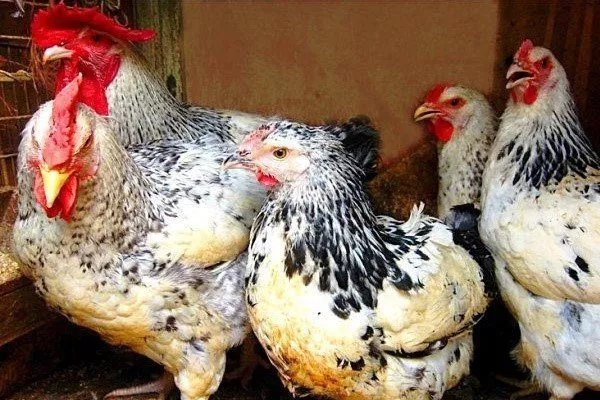
Main characteristics:
| Rooster weight, kg | Chicken weight, kg | Egg weight, g | Egg production, eggs/year | They begin to lay eggs in months. | Breeding |
| up to 7 | 3.6-3.6 | 45-60 | 200-220 | 4.5-6 | incubator |
A four-line crossbreed producing both meat and eggs. Developed for southern regions, this breed boasts excellent immunity. It is quite manageable for a novice poultry farmer. Hercules hens can be kept in cages while being fattened, but layers need an open-air range with the opportunity to forage and exercise. If the frosts are not too severe and there is no wind, the birds can be allowed to roam outdoors. However, in the coop, they should be protected from drafts and dampness. They are prone to overeating.
Dominant
Dominants have long legs. Otherwise, the birds vary greatly in color and appearance, which is explained by the presence of mixed breeds.
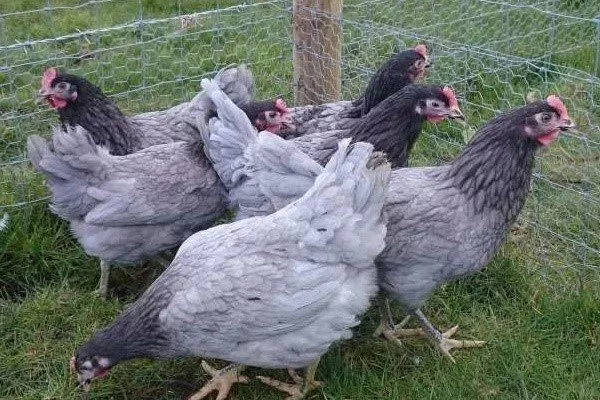
Main characteristics:
| Rooster weight, kg | Chicken weight, kg | Egg weight, g | Egg production, eggs/year | They begin to lay eggs in months. | Breeding |
| 2.1-3.5 | 2.1-3.5 | 60-70, eggs with 2 yolks | 250 | 4-5 | incubation |
This breed was developed for warm climates, and even a novice can handle their care. A chicken colony should be started with a single rooster. In cramped quarters, Dominants are prone to pecking, even to the point of cannibalism, but this does not happen if they are kept outdoors. Hens may hide their eggs, indicating limited nest space.
Star
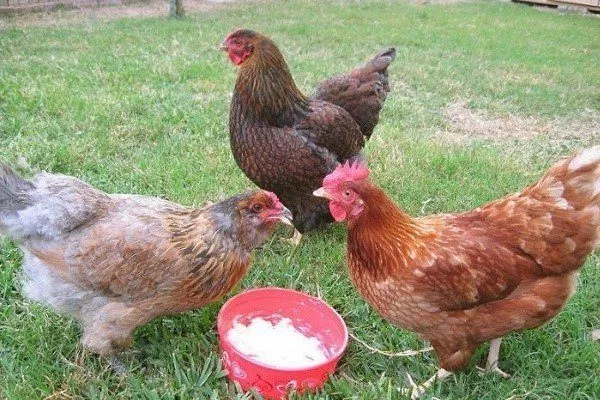
Stars of both species (red and black) are birds with a sturdy body, medium-length legs, and a beautifully set, small head. They have a broad chest, a full belly, and a curved back. Roosters have a longer neck and a raised tail, while hens have short, straight tails. They have small combs, red wattles, earlobes, and pink skin around the beak and eyes.
Main characteristics:
| Rooster weight, kg | Chicken weight, kg | Egg weight, g | Egg production, eggs/year | They begin to lay eggs in months. | Breeding |
| 3.5 | 2.1 | 60 | 200-250 | 4-5 | incubator |
A meat and egg cross. They have excellent character traits and are highly productive, adapting easily to new conditions. Care is easy:
- proper maintenance in walking conditions;
- a chicken coop protected from drafts and dampness;
- good nutrition.
Loman Brown
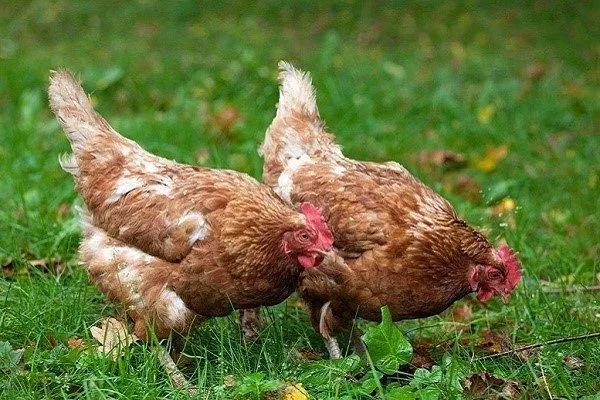
The hens are red or reddish-brown in color and have a lighter tail. Roosters are white with only patches of brown feathers. They have a broad, compact body. The comb is leaf-shaped and red.
Main characteristics:
| Rooster weight, kg | Chicken weight, kg | Egg weight, g | Egg production, eggs/year | They start laying eggs at months. | Breeding |
| 3 | 2 | 60-65 | 310-320 (for the period of effective use - about 1.5 years) | 4-5 | they don't breed |
This egg-laying cross is characterized by increased egg production. This breed should be kept at a temperature of approximately 16-18 degrees Celsius. The coop should be insulated for winter. The birds adapt well to various conditions, whether in an aviary, a cage, or a run. Six to eight birds can be accommodated per square meter of floor space. To ensure optimal productivity, good lighting is required in the coop. For large farms, keeping hens beyond their productive egg-laying period is unprofitable, as their productivity declines significantly after that. In private farms, they can be kept for two to three years.
Shaver
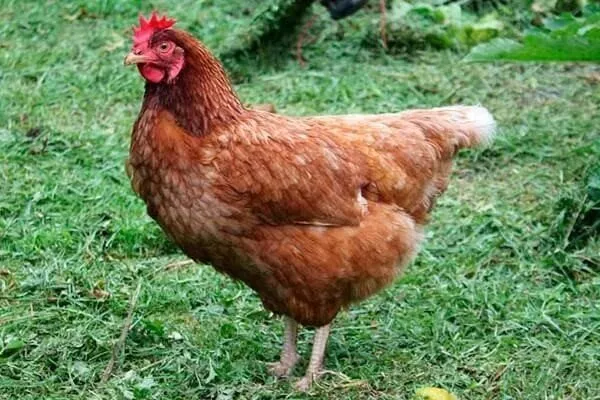
These chickens have a rounded body, a small head with a leaf-shaped red comb and wattles, and a strong yellow beak. The comb of roosters is thick and pointed upward, while that of hens hangs to the side. These birds have a rounded and full chest, a slightly arched back, and a small tail.
Main characteristics:
| Rooster weight, kg | Chicken weight, kg | Egg weight, g | Egg production, eggs/year | They begin to lay eggs in months. | Breeding |
| 3.5 | 2 | 45-60 | 200-250 | 4-5 | they don't breed |
These birds are relatively easy to care for, and even someone with little experience in poultry farming can handle them. They are distinguished by their exceptional resilience and strong immune system. They can lay eggs at temperatures of 5-7 degrees Celsius and walk in the snow, but not below -10 degrees Celsius. A well-insulated, draft-free coop is ideal for keeping them. To protect the flock, it is recommended to run the hens in a pen covered with mesh. Wing clipping should not be done, as this may affect egg production.
Decorative and fighting
Breeding ornamental breeds not only beautifies your property, but can also generate a good profit through the sale of eggs and young birds, setting you apart from your competitors.
Breeding fighting birds is more of a hobby these days, but it can also be profitable, as most of these birds have beautiful plumage and are considered ornamental.
Ayam Cemani
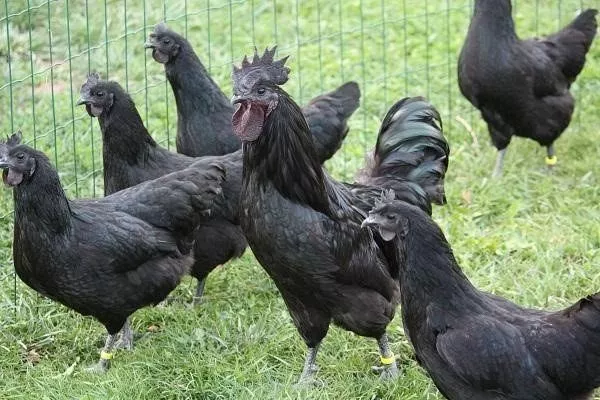
The chicken is completely black: black feathers with a greenish tint, a black comb, a black beard, black earlobes, beak, legs, mucous membranes, and skin. Surprisingly, the bird has black meat and black bones. The only red remaining is the liver and blood. The eggs of these hens, however, are creamy or beige, with normal yolks and whites.
Main characteristics:
| Rooster weight, kg | Chicken weight, kg | Egg weight, g | Egg production, eggs/year | They begin to lay eggs in months. | Breeding |
| 2.1-3.5 | 1.6-2 | 45-60 | 150 | 6-8 | incubator |
This bird was specifically bred for southern climates. It's difficult to get along with them due to their combative nature. They constantly quarrel with their neighbors, even when housed in separate cages. The most important thing is to keep the coop warm and avoid drafts. In winter, the air temperature should be between 15 and 20 degrees Celsius. Runs with foraging areas should be enclosed with a high fence, or better yet, covered with mesh.
Azil
At first glance, you can recognize a guillemot: the upright stance of the body on long, strong legs. The birds have broad shoulders, powerful wings, and a robust build. Their heads are high-set, with a wide skull, cool pearly eyes, and prominent eyebrows. They have a pod-shaped comb and small wattles. Their tails are long and horizontal.
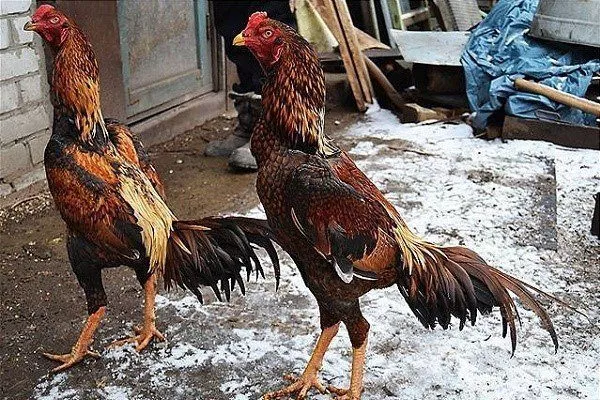
Main characteristics:
| Rooster weight, kg | Chicken weight, kg | Egg weight, g | Egg production, eggs/year | They begin to lay eggs in months. | Breeding |
| 2.1-3.5 | 2.1-3.5 | 40 | 150 | 8 | incubation |
This breed will impress you with its robustness and physical health, survival instinct, independence, and proud character. They are uncontrollable fighters, not giving up a fight once it's started until it's fatal. Hens, roosters, and chickens all fight among themselves, but not hens and roosters or chickens. Free-range is beneficial for this breed's health, but the birds do not suffer without it. The main thing is to provide them with a territory where they don't interfere with each other. The coop should be designed so that the roosters cannot reach each other. To fight, Azilis are capable of digging holes or flying over fences. The coop should be kept damp.
Andalusian
This breed has a beautiful appearance due to its dark blue feathers with black edging. They have long red wattles, a vertical leaf-shaped comb, brown eyes, and white earlobes. Chickens in the same litter may vary in plumage color and may have black or spotted feathers.
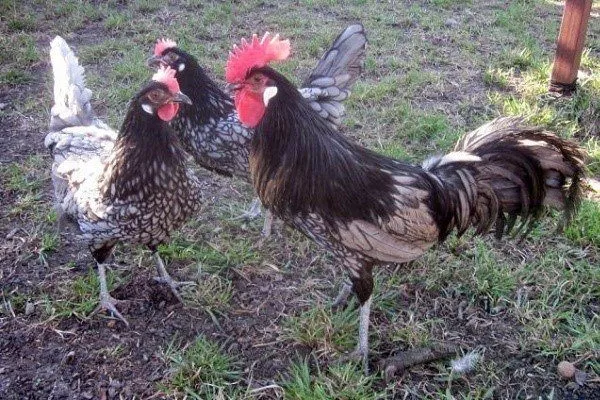
Main characteristics:
| Rooster weight, kg | Chicken weight, kg | Egg weight, g | Egg production, eggs/year | They begin to lay eggs in months. | Breeding |
| 2.1-3.5 | 1.6-2.0 | 45-60 | 150-200 | 4-5 | incubator |
Andalusian chickens were bred to thrive in both the North and South. They are very active and agile, accustomed to grazing freely, and have learned to independently escape predators. These birds do not require an insulated coop. They lay eggs in winter and during hot weather, regardless of seasonal changes.
Appenzeller Spitzhauben
The plumage of Appenzeller Spitzhaubens is varied, ranging from black to dark blue or silver to gold. Silver Appenzeller Spitzhaubens are the most popular. They have white feathers edged with black, and their heads are adorned with crests resembling a lady's hat, horn-shaped combs, and small wattles. The bird's legs are bluish-gray.
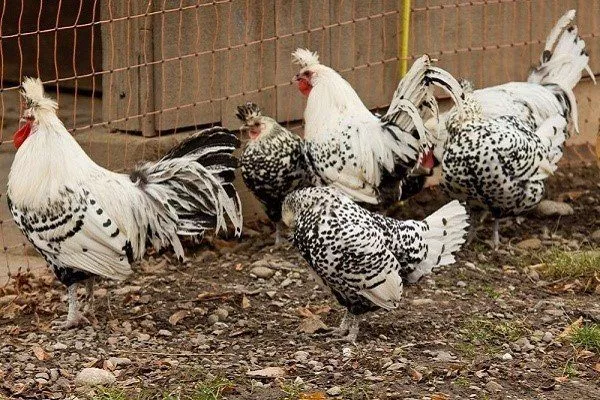
Main characteristics:
| Rooster weight, kg | Chicken weight, kg | Egg weight, g | Egg production, eggs/year | They begin to lay eggs in months. | Breeding |
| 2.0 | 1.5 | 40 | 150 | 8 | incubator |
This breed is designed for life in northern latitudes. Appenzeller Spitzhauben chickens are very clean and get along well with people. These birds love to roam the surrounding countryside. They can spend the entire day outdoors, returning to the coop only in the evening. In the wild, they enjoy hunting insects, sleeping on tree branches, and wandering through high-altitude pastures. These birds cannot be confined to a cage 24/7.
Bankivskie jungle
Roosters have a large, bright comb, wattles located under the beak, and bald spots on their cheeks. Reddish-orange feathers cover their head, neck, some of their back, and lower body, while purple-red feathers cover the rest of their back and chest. Long, wide, black-green feathers with a metallic sheen adorn their wings and tail. Hens have a rather plain appearance—unadorned, their plumage beige-pinkish, with short feathers of uniform length. They have small wattles and a comb.
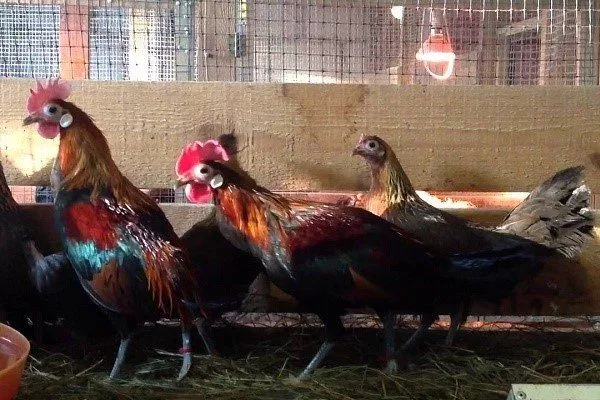
Main characteristics:
| Rooster length, cm | Chicken length, cm | They lay eggs during the breeding season (1-2 times a year) | Egg production lasts, years | Become adults, months. | Breeding |
| 75 | 46 | 5-11 | 3 | 4-7 | incubation |
Bankivka chickens require a large space to live. It's important to enclose the cage or run with a high fence. Also, be aware that the chickens tend to fly quite high when startled. Perches should be placed off to the side for the birds to sleep on. Ideally, the enclosure should be built around a tree with branches. Access to a small pond 5-7 cm deep is also beneficial. The chicken's nest is a hole in the ground lined with leaves and grass. In winter, the temperature in the coop should be between 25 and 30 degrees Celsius.
Roosters don't know how to stop fighting; they have to be separated and the wounded bird carried out, otherwise it will be finished off. Chickens fight among themselves, too.
Belgian Bearded Bantam from Uccle
These chickens come in a huge variety of colors. Their distinctive feature is the long feathers on their legs, resembling boots.
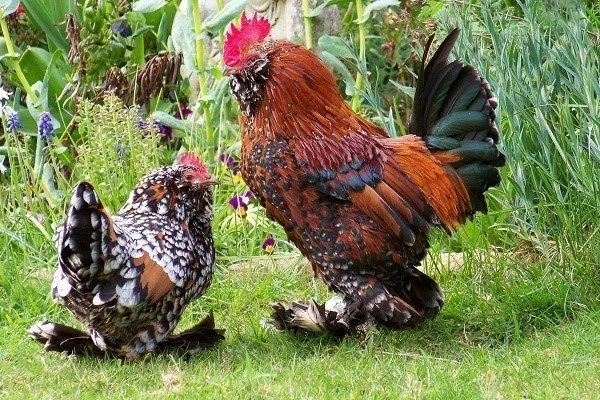
Main characteristics:
| Rooster weight, kg | Chicken weight, kg | Egg weight, g | Egg production, eggs/year | They begin to lay eggs in months. | Breeding |
| 2.0 | 1.5 | 40 | 150 | 6-8 | incubation |
This breed was developed as a decorative and fighting bird. It thrives in warm climates. Its temperament is active and lively. It's undemanding, easy to feed and raise. Belgian Bearded Bantams get used to people and will sit on their shoulders for hours at a time. However, roosters can sometimes be aggressive. Bantams love to roll around in the dust, putting on quite a show.
The birds are kept in portable cages, and show birds are kept on special bedding to protect their "jackboots." Chickens only have a couple of square meters of space to roam, but care must be taken to keep them dry and to regularly remove their droppings. In winter, it's best to keep these birds in a warm, dry environment.
Hamburg
Hamburg chickens have several color standards. The bird has a red, rose-shaped comb and small wattles. The beak is pink in the middle and tip, with a gray base. The body is curved at the back but sturdy. The legs are strong, with pink soles.
The bird has a dwarf subspecies, weighing 700 grams.
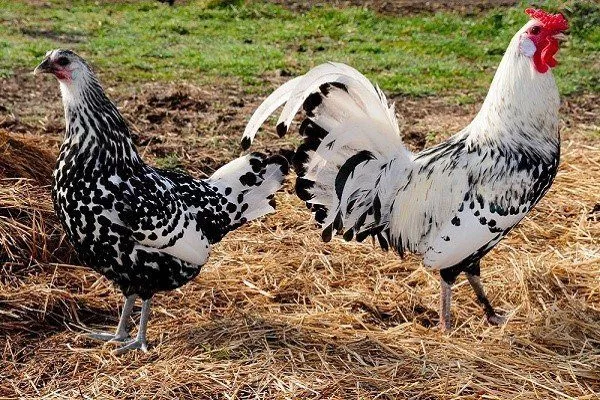
Main characteristics:
| Rooster weight, kg | Chicken weight, kg | Egg weight, g | Egg production, eggs/year | They begin to lay eggs in months. | Breeding |
| 3 | 2.0 | 40 | 200-220 | 4-5 | incubator |
Hamburg chickens are considered easy to care for and easy to raise. They adapt easily to new conditions, tolerate cold well, can roam outdoors for long periods, and forage successfully even in winter. The run should be surrounded by a high fence—Hamburg chickens are quite capable of sleeping in a tree instead of returning to the coop.
Egyptian Fayoumi
Despite its small size, the Fayoumi is a long-legged bird. Their plumage glitters in the sun, silvery-white on the back, neck, and head. Elsewhere, it is elongated black and white. A red crest adorns the head, along with red earlobes and wattles. A distinctive white spot appears on the earlobes.
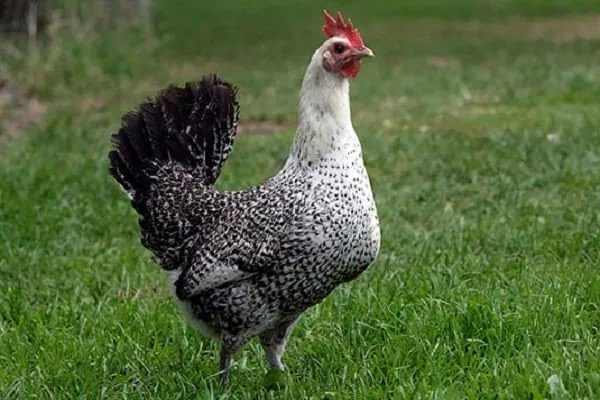
Main characteristics:
| Rooster weight, kg | Chicken weight, kg | Egg weight, g | Egg production, eggs/year | They begin to lay eggs in months. | Breeding |
| 1.6-2.0 | 1.6-2.0 | 45-60 | 150 | 8 | incubation |
Fayoumi boast robust health and are resistant to various viruses and bacteria. They can easily survive by foraging alone. Owners keep them in large, spacious aviaries. The most important thing is to keep the birds within the enclosure, otherwise catching them will be virtually impossible. Living in a cramped cage can kill Fayoumi: they become bored, start pecking at their neighbors, and even start fighting. These birds cannot stand being handled.
Yokohama
Yokohamas have long feathers on their underparts and wingtips, creating a flowing plumage effect. Red feathering on the back is also a typical trait of the breed. However, the rest of the plumage can vary widely. Roosters have small, walnut-shaped combs and small wattles.
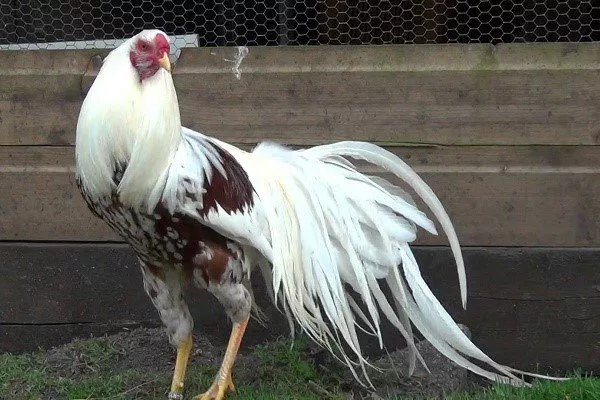
Main characteristics:
| Rooster weight, kg | Chicken weight, kg | Egg weight, g | Egg production, eggs/year | They begin to lay eggs in months. | Breeding |
| 1.6-2.0 | 1.6-2.0 | 45-60 | 150 | 6-8 | incubation |
This breed thrives in warm climates. Their temperament is rather capricious, sometimes aggressive. It's important to create conditions that help the bird maintain its feathers: place perches higher, keep the litter clean, and maintain its health and immunity. Sometimes, birds can become very unfriendly toward other birds in the coop, in which case they should be separated from the flock. Yokohamas are one of the most beloved ornamental birds in the world.
Campin
Small birds are divided into two types according to the color of the plumage on their backs:
- Golden Campinas have feathers with an orange tint;
- silvery - with snow-white.
The bird's head features a red wattle, a red comb with 5-6 teeth, and white earlobes. Roosters' combs are held upright, while hens' combs are slanted to the side. The chest and abdomen are well defined, and the birds have long legs and dark blue tarsi.
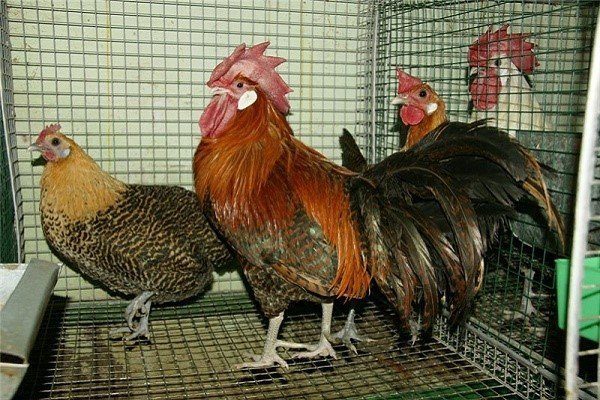
Main characteristics:
| Rooster weight, kg | Chicken weight, kg | Egg weight, g | Egg production, eggs/year | They begin to lay eggs in months. | Breeding |
| 1.6-2.0 | 1.6-2.0 | 40 | 150-200 | 8 | incubator |
Campinas aren't particularly emotional birds, but they can sometimes be overly excitable. When living in a flock, they tend to be more aggressive and can often be skittish. They love to fly, don't like being confined to closed cages for long periods, and suffer from immobility. If pens and aviaries aren't closed, Campinas will attempt to escape. They enjoy foraging and spending long periods outdoors, but this can be dangerous in winter, as they are prone to frostbite. They should be housed in a comfortable, spacious coop.
Chinese silk
Chinese Silkies have amazing feathers—fluffy, silky to the touch, covering the bird's entire body from the beak to the tip of the tail. The bird has a small, rounded body, set low on small feathers. The comb is buried in down and is practically invisible. The comb is shaped like silk. The legs and skin are blue, and the feet have five toes.
This breed has an even more dwarfed version.
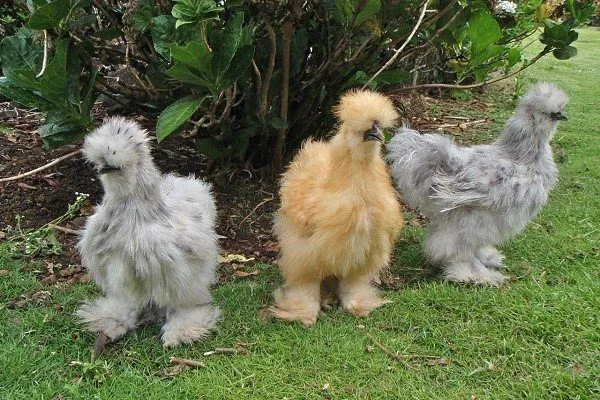
Main characteristics:
| Rooster weight, kg | Chicken weight, kg | Egg weight, g | Egg production, eggs/year | They begin to lay eggs in months. | Breeding |
| 1.6-2.0 | 1.5 | 45-60 | 150 | 6-8 | incubation |
Silkie chickens' thick, fluffy feathers provide good insulation, so they don't require much heat. Because they can't fly, they don't require much space to thrive. Silkie chickens are a popular ornamental breed worldwide.
Phoenix
Phoenixes are distinguished by their exotic tails with long feathers. Their heads are adorned with a crest and small light-brown earrings. Colors vary.
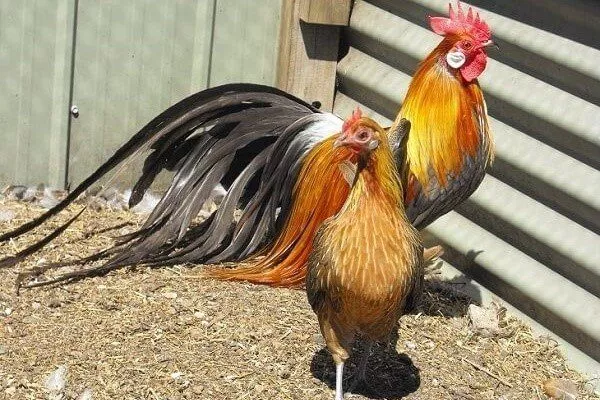
Main characteristics:
| Rooster weight, kg | Chicken weight, kg | Egg weight, g | Egg production, eggs/year | They begin to lay eggs in months. | Breeding |
| 2.1-3.6 | 1.6-2.0 | 45-60 | 150 | 6-8 | incubation |
Keeping Japanese chickens is only worth it if you want to add a touch of exoticism to your home. These birds thrive indoors, which is convenient, as the Phoenix's beauty requires care. However, they require space. The cage should be clean and dry, and the perches should be positioned so that their tails hang down without touching the floor. It's also important to heat the cage in cold weather to prevent damage to the feathers. These birds have varied personalities—some are aggressive, while others are shy.
Choosing a chicken breed is a responsible task. The profitability of your farm directly depends on it. Based on the characteristics and adaptability of different chicken breeds to specific weather conditions, you can select the right birds for any region and any poultry farming application.
Experienced poultry farmers claim that the Adler silver hen no longer exists as a species; attempts are being made to revive it, but it has not yet been restored.