
Turkey farming is a profitable and promising business that even inexperienced farmers can master. With a little theoretical knowledge and a small start-up capital, you can start buying young birds for fattening. If you approach the business wisely, turkeys will provide you with a stable income.
Features of the bird
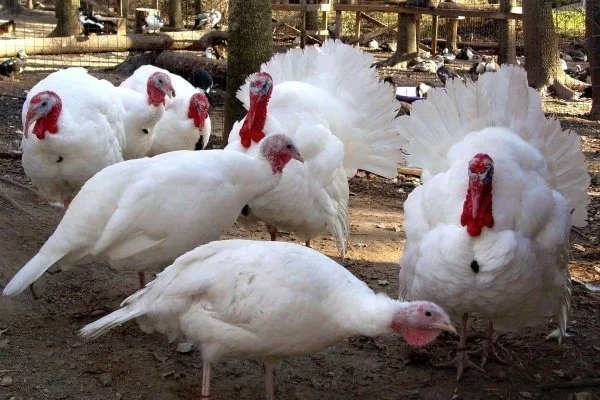
Turkeys differ from other domestic birds in:
- quarrelsome nature;
- gluttony - they eat a lot, but their meat productivity is enviable;
- a strict hierarchy - only one, the most important turkey, has the right to fertilize females;
- slow growth – they reach marketable weight in 6 months, and broiler crosses – in 3 months;
- low egg production - turkeys lay about 120 eggs per year.
Differences between males and females
The sex of a chick can be determined at one day of age. Males have smooth wings because their feathers are the same length. This characteristic then disappears, and it's only possible to distinguish between "boys" and "girls" at two months.
Differences between males and females:
- Male turkeys have a distinctive nasal appendage. It's located on the top of their heads and extends down to their chests. The growths on the nose resemble large, fleshy warts.
- The male has no feathers on his head at all.
- Males are almost twice as heavy as females.
- Males have stiffer chest feathers with tufts. Turkeys have down so soft it's used to stuff pillows.
- The legs of males are decorated with spurs.
Features of egg laying
Turkeys' egg production is influenced by their age, physical condition, and living conditions. Turkeys reach peak egg production at one year of age. In their second year, egg production drops by 30-40%. Farmers typically select the fittest, 18-month-old turkeys for egg production.
Turkeys lay eggs for their brood in the spring—in late March or early April. Therefore, before spring arrives, it's important to select females of the appropriate age.
How much do turkeys weigh?
Turkey weights vary widely, from 10 to 35 kg. Poultry farmers distinguish three classes of turkeys:
- heavyweights;
- average;
- lungs.
The maximum weight of turkeys is 10-15 kg.
Advantages and disadvantages of breeding
Turkeys' egg-laying abilities are secondary. The primary goal of breeding this bird is to produce tasty, dietary meat—and in large quantities, as turkey carcasses are much heavier than those of other poultry.
When it's time for slaughter - after 6 months of growing - the carcass contains 80% valuable dietary meat, which in many ways is more valuable than rabbit and chicken.
When raising turkeys, the largest investments are in purchasing eggs, incubation, and the chicks' first month of life. Subsequent costs are reduced by switching to more affordable feed. The advantages of raising turkeys are obvious:
- Producing valuable, dietary meat with excellent taste, turkey meat is in demand.
- The costs of breeding are quickly recouped.
- In addition to meat, down and feathers are also available for sale.
- Rapid gain of meat mass.
- Unpretentiousness to the conditions of maintenance and nutrition.
Turkeys were domesticated on the American continent about a thousand years ago, and they were brought to Europe in the 16th century.
Disadvantages of turkey breeding that cause many to abandon this profitable business:
- low egg production;
- high risk of death of chicks;
- water requirements – it is necessary to use only fresh water, warmed to room temperature;
- a tendency to illness due to violation of hygiene and sanitation rules during care;
- Turkeys are prone to obesity.
Recommended breeds
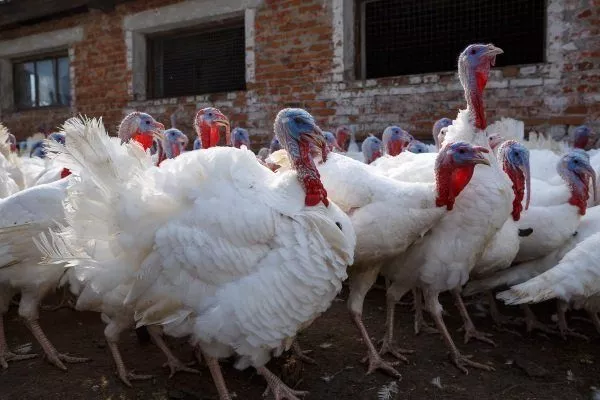
Once the decision to breed turkeys has been made, the first step is to choose a breed. Your choice should be influenced primarily by your goals and living conditions, and only then by personal preference. The most popular turkey breeds, bred in Russia – in Table 1.
- ✓ Disease resistance: Choose breeds with a strong immune system.
- ✓ Climate adaptability: give preference to breeds that tolerate the climatic conditions of your region well.
Table 1
| Breed | Description | Turkey weight, kg | Turkey weight, kg | Number of eggs per year |
| Bronze | The feathers are red and brown, with stripes. Males have a black neck. They enjoy being outside and are undemanding. | 13 | 7 | up to 100 |
| Moscow bronze | They are distinguished by their increased endurance. They are suitable for both domestic and mass production. They enjoy grazing. | 15 | 9 | 100 |
| Bronze broad-breasted | They resemble the bronze breed, from which they descend, but have a larger body. They are not suitable for outdoor use and have low egg production. They are more often used in commercial farming. | 14 | 8 | 70-80 |
| North Caucasian bronze | Developed in the USSR in 1946, it is one of the most popular domestic breeds. A large bird, it adapts well to a variety of conditions. | 14 | 7 | 80 |
| White broad-breasted | They are distinguished by their large chest and broad back, luxurious plumage, and strong legs. | 15 | 7 | 100-120 |
| North Caucasian white | A hardy and productive breed. They gain weight quickly. They thrive in pasture conditions and are undemanding in terms of nutrition. | 13 | 7 | up to 180 |
Productivity and purpose
When breeding turkeys, depending on the goals set, farmers are interested in productivity in two parameters:
- Egg production. Turkey hens begin laying eggs at 8-10 months. They typically lay 80-100 eggs, but can lay as many as 180-200 per year. A clutch contains 10-20 eggs, each weighing 60-70 g.
- Meat. Contains a lot of protein, vitamins, and minerals. Net meat yield depends on gender: males yield 7-10 kg, females 3-6 kg.
To produce large quantities of eggs, laying breeds are chosen. There are broiler breeds that reach market weight by three months, but if left to lay eggs, they will lay 200 eggs per year. Such crosses include Canadian turkeys, Hidon, and Big-6. The most popular laying breeds are listed in Table 2.
Table 2
| Breed | Peculiarities | Turkey weight, kg | Number of eggs per year |
| Virginia (Dutch) | love free range | 4-5 | 120-130 |
| Bronze | females are twice as light as males | up to 10 | up to 100 |
| White Moscow | unpretentious, easily adapt to new conditions and sudden climate changes | 8 | up to 140 |
| Tikhoretskaya black | compared to other breeds – increased maternal instinct | 5 | 100 |
Special meat breeds—crosses—are bred for meat, obtained through selective breeding. These breeds are characterized by rapid weight gain. Birds are ready for slaughter at 3-5 months. For example, the Hidon cross weighs 9-10 kg at 3 months. There's no point in keeping such heavyweights longer than 6 months—if they continue to gain weight, they will put stress on their bones, causing them to become deformed, and the bird will become ill. Popular meat breeds are listed in Table 3.
Table 3
| Breed | Peculiarities | Turkey weight, kg | Turkey weight, kg |
| White broad-breasted | a relatively new breed, developed in America, undemanding in maintenance | 17 | 8 |
| Hybrid Converter | has the highest weight to meat ratio – 85% | 22 | 12 |
What conditions are required for breeding and maintenance?
Turkeys are easy to care for, and most importantly, they can tolerate temperatures as low as -15°C without harming their health. However, the most important requirement for raising them is providing them with a dry and warm environment.
Requirements for the premises
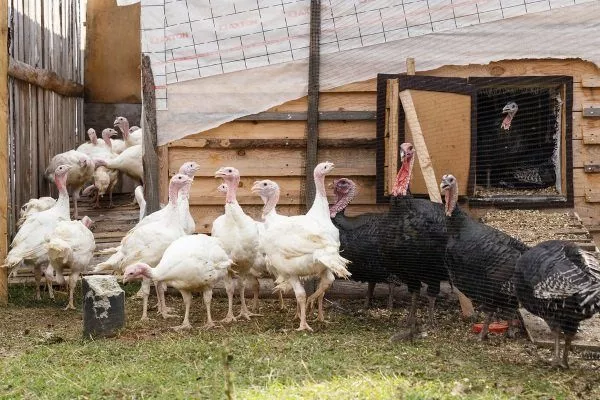
When creating a comfortable poultry house, you need to consider the following points:
- There should be at least 1 square meter of space per two birds. Ideal conditions are 1 square meter per bird.
- The optimal summer temperature is 20°C; in winter, the room temperature should not fall below +5°C.
- A regular 60W light bulb is suitable for lighting the poultry house.
- There must be regular ventilation.
- Turkeys don't like dampness - there should always be dry bedding on the floor, which should be changed at least twice a week.
- Each pen should have boxes with sand and ash to prevent parasites.
- There should be no drafts.
- Perches are set up according to the number of birds—there are as many perches as there are turkeys. The distance between adjacent perches is at least 60 cm. The perch is 70-80 cm from the floor. The width of the perch is 5-7 cm, and the height is 8-10 cm.
In a pen there should be one male for every 5 females so that all the hens are covered.
When breeding young animals, the requirements for maintenance are increased:
- temperature not lower than 36°C;
- the presence of constant lighting.
Turkey poults can spend their first days in a cardboard box or crate. Once they're older, they're moved to a common pen.
Walking
Free range has a positive effect on the physical condition and productivity of turkeys. Free range is essential for preventing obesity. Here, the birds search for nutritious food such as worms, beetles, and plant seeds. The best place for free range is a dry area with grass and shrubs.
If free-range grazing isn't available, an outdoor run should be set up. The run should be enclosed with mesh to protect the birds from predators. It's recommended to set up the run with a clear path between it and the poultry house, so the turkeys can move from the house to the outside on their own. Feeders and waterers should be installed in the run. Feed can also be scattered directly on the ground.
Climate requirements
Temperature is a critical factor in turkey productivity. If the room is cold, the feed consumed is constantly used to warm the hens, rather than to produce eggs or fat. However, excessive heat also negatively impacts egg production, degrading shell quality and reducing egg weight. The ideal temperature for adult turkeys is 12-16°C, while poults require warmer conditions. Optimal temperatures for poults depending on age are listed in Table 4.
Table 4
| Age | Optimum temperature, °C |
| up to 4 days | 22 |
| Days 5-20 | 16-20 |
| up to 26 days | gradually normalizes and reaches 12 degrees |
How comfortable the turkeys are in the created microclimate can be determined by their behavior.
- If the temperature is right, the turkeys are active, eating and drinking well, and are evenly distributed throughout the room.
- When birds are cold, they spread their feathers—this increases their protective layer of air. Birds huddle together to keep warm, which can cause some to suffocate.
- If the room is hot, the birds breathe heavily, drink frequently and profusely, their beaks are open, and their wings are spread. Their appetite is reduced or they refuse to eat at all.
Heat transfer is greatly affected by room humidity. At low humidity, moisture evaporates quickly, and the temperature rises. However, if humidity drops below 50%, birds experience irritation of the mucous membranes, feather breakage, and breathing difficulties. High humidity is also harmful, causing damp bedding and mold growth.
Wintering of turkeys
If the region doesn't experience extremely low temperatures, a lean-to or a light wooden structure will be sufficient for turkeys to survive the winter. However, in severe frosts, these conditions will be insufficient. A sturdy structure provides both protection from frost and from predators, which are especially active in their search for prey during the winter.
- Insulation of the poultry house: check and strengthen the insulation of the walls and roof.
- Forage storage: Increase your grain and succulent feed supplies.
- Provide additional lighting: install lamps to compensate for short daylight hours.
Features of winter turkey keeping:
- Temperature conditions. Turkeys can tolerate temperatures down to -15°C (-15°F) for short periods, but they hate dampness. Therefore, during freezing temperatures, it's recommended to maintain the temperature between -3°C and -5°C (-3°F and -41°F) to prevent dampness in the room. If the bedding is straw, change it at least every 10 days, while sawdust and peat should be changed every three weeks.
- Lighting. If the coop housing the young birds has windows, there's no need to turn on the lights. If there are no windows, turn on the lights for 5-7 hours a day. For adult birds, turn on the lights for 14 hours a day—otherwise, there will be problems with egg-laying and fertilization. To save energy, you can let the birds outside on sunny days.
- Diet. In winter, birds are fed three times a day. Dry feed is given in the mornings and evenings, and mash is given during the day. The winter diet consists primarily of wheat, barley, and corn. Succulent feed is also a must, such as grated carrots, beets, and steamed chopped alfalfa or clover.
During the day, you can also feed them ground chestnuts and acorns. Conifer branches are also recommended, as they are rich in vitamin C and carotene. The needles are crushed and left in a trough for an hour, then added to the mash. Rowan berries, dried nettles, and dried birch leaves are also given to replenish vitamins. - Walks. Since turkeys are prone to obesity, they need to be walked. In normal weather, without extreme cold, a walk lasts at least two hours. The run should be located on a sunny side. Snow should be removed from the area beforehand, as turkeys' feet are very sensitive to cold.
- Prevention. Birds spend a lot of time indoors during the winter, so they can become infested with parasites. During winter, be sure to keep boxes filled with crushed shells, charcoal, or chalk in the room.
Puberty and breeding
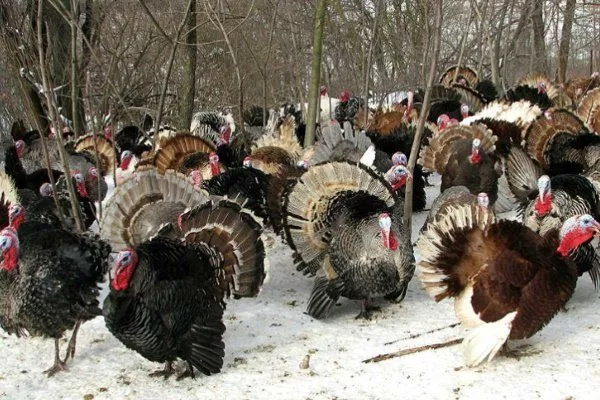
Turkeys reach sexual maturity at 8-10 months. Hens begin laying eggs at 10 months. Many hens sit on the eggs, so they have to be driven away to retrieve the clutch. Laying hens need to be fed five times a day, supplemented with succulent feed in winter.
Natural breeding
After mating, the female can lay up to 17 eggs. These are checked to see if they are fertilized. To confirm their fertilization, the eggs are dipped in water one by one. Those that sink are fertilized and are placed in a nest or incubator. Those that float are not suitable for breeding turkeys, but they can be eaten.
A single mother turkey incubates and raises not only her own brood but also other turkeys' chicks. She can raise up to 80 chicks.
The hen incubates her eggs for four weeks. It's important that she gets food on time. She should be fed in the morning. Soaked oats are best. While the turkey is feeding, the eggs should be covered with something warm to prevent them from getting too cold.
Turkey hens make excellent mothers, brooding their young superbly, raising them, and protecting them from all danger. In their busy lives, these mothers even forget to feed—they have to be forcibly removed from the nest to feed them.
Incubation breeding
An incubator can be used instead of brood hens. The eggs are removed from under the turkey hen in a timely manner and stored. The eggs are placed in the incubator with the pointed ends down. Hatching occurs approximately 28 days after placement.
In order for turkey poults to hatch, it is necessary:
- for 22 days, turn the eggs 12 times a day - that is, every two hours;
- strictly observe the temperature regime.
The incubation time and temperature-humidity conditions are shown in Table 5.
Table 5
| Incubation period, days | Temperature, °C | Humidity, % | Number of turns |
| 1-7 | 38 | 65 | 6-12 |
| 8-14 | 38 | 50 | 6-12 |
| 15-25 | 37.5 | 65 | 4 times + 15 minutes of cooling |
| 26-28 | 36.6 | 70 | No |
Feeding according to age
The diet and feeding frequency are determined by the age of the birds and their intended purpose—layers, young birds, and adults all require different feeding schedules. Let's look at sample menus and feeding rates for birds of different ages and purposes.
Feeding turkey poults
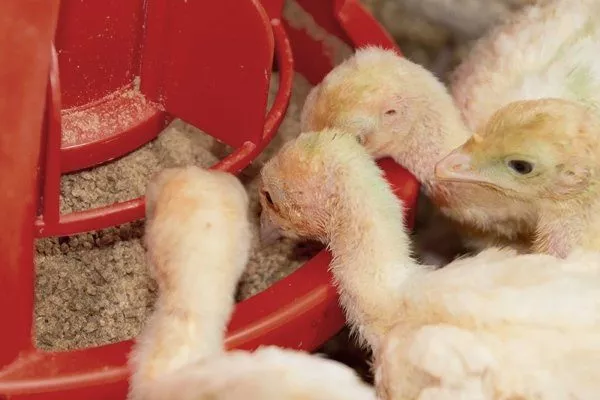
Feeding the chicks frequently helps increase their survival rate. For the first six days, feed them every two hours, including at night. To encourage feeding, the light in the aviary should be on.
Gradually, the feeding frequency is reduced to six times a day, by which time the chicks are one month old. Two-month-old turkey poults are fed four times a day.
At first, the chicks are reluctant to eat, so you need to attract their attention:
- pouring food in a thin stream;
- tapping on the feeder;
- sprinkling the food with chopped green onions and dandelion leaves.
Chicks up to one week of age require 10 grams of feed per day. By the 30th week, the amount increases to 280 grams, and one-year-olds consume 400 grams.
During the first few days, chicks should receive high-protein feed (up to 22%). Feeding requirements for turkey poults depending on age are listed in Table 6.
Table 6
| Feed, g | Day | ||||||||
| 1-5 | 6-10 | 11-20 | 9:30 PM | 31-40 | 41-50 | 51-60 | 61-90 | 91-100 | |
| corn | 5 | 8 | 20 | 25 | 45 | 55 | 77 | 112 | 145 |
| wheat bran | 5 | 5 | 6 | 10 | 11 | 12 | 13 | 14 | 25 |
| dry food of animal origin | — | 0.5 | 3 | 7 | 9 | 14 | 14.5 | 20 | 19 |
| fresh grass | 4 | 8 | 15 | 18 | 30 | 12 | 40 | 38 | 104 |
| reverse | 5-5.5 | 9 | 10 | 13 | 10 | — | — | — | — |
| low-fat cottage cheese | 1.5 | 10 | 9 | — | — | — | — | — | — |
| boiled eggs | 2-3 | 3-4 | — | — | — | — | — | — | — |
| shells | — | 0.5 | 0.7 | 1.5 | 2 | 2.5 | 2.3 | 2.1 | 2 |
| bone meal | — | — | 0.6 | 0.5 | 1 | 1.2 | 1 | 2.5 | 2.5 |
| table salt | — | — | — | — | — | 0.2 | 0.1 | 0.2 | 0.3-1.1 |
These are approximate feeding guidelines—it's not necessary to feed all the listed foods at once. They can be interchanged, adding variety to the bird's diet.
Week-old turkeys can be fed greens and kitchen scraps, but gradually to avoid health problems. Mash is also offered.
Here is a basic recipe for mash for 5-10 day old turkey poults:
- ground wheat groats – 35%;
- corn grits – 35%;
- wheat bran – 8%;
- chopped boiled eggs – 10%;
- fresh cottage cheese – 10%;
- shells and chalk – 2%.
Nutritional features depending on age:
- From 10 days of age Ground nettles, clover, and onions can be added to the mash. The mash is mixed with skim milk or sour milk. The mash is fed around midday, and dry food is given in the evening. From 10 days old, the chicks can also be released into the wild onto the grass.
- From one month of age Roughage and salt are included in the diet. By this time, the chicks' digestive systems are already strong and will not reject roughage.
- From two months of age You can give a full diet to adult birds, but in a softened version - grated, ground, crushed.
- At three months Turkeys can be fed bran and ground corn. When transitioning to a four-meal diet, the birds are given grain scraps, dry food, yeast bread, grass, greens, and leaves.
Young animals are transferred to an adult diet at the age of 4-5 months.
Feeding adults
To ensure that a bird grows evenly and is in good physical condition, it needs a specific diet:
- cereals – 65%;
- ground grass – 5%;
- fodder yeast – 4%;
- limestone – 3.5%;
- fish meal – 3%;
- chalk – 3%;
- sunflower cake – 1%;
- bone meal – 1%;
- premix – 1%;
- salt – 0.5%.
To help birds gain weight, they are fed mash. One basic recipe:
- crushed corn, barley and oat grains – 20, 40 and 20% respectively;
- wheat bran – 15%;
- sunflower cake – 5%.
The mixture is salted, 100 g of boiled potatoes or other root vegetables are added, broth is poured in, and the mixture is stirred. The mash is served for lunch.
The diet of adult birds varies during the laying period and during the non-laying period. The typical daily diet of non-laying turkeys is:
- For breakfast – cereals, whole or ground.
- For lunch - a mash with root vegetables, pumpkin or kitchen scraps.
- For dinner - similar to breakfast.
Additionally, they are allowed to roam freely. Here, the birds are provided with a variety of herbs, insects, and seeds.
Feeding standards for adults depending on the time of year are shown in Table 7.
Table 7
| Feed, g | feeding period | |||
| spring | summer | autumn | winter | |
| cereals | 170 | 150 | 150 | 160 |
| wheat bran | 30 | 20 | 30 | 40 |
| sunflower cake | 20 | 10 | 10 | 15 |
| meat and bone meal | 8-10 | 7 | 6 | 5 |
| green | 100-150 | 200-250 | 100 | — |
| beets, carrots | 150 | — | 160 | 200 |
| chopped hay, grass meal | 50 | — | — | 50 |
| crushed shell, chalk | 10 | 10 | 10 | 10 |
| table salt | 1 | 1 | 1 | 1 |
In winter, instead of grass, turkeys are fed hay and brooms, which are prepared in the summer. Poplar, aspen, birch, linden, and nettle brooms are suitable. Bunches are simply hung around the aviary for the birds to enjoy the dried leaves.
Feeding during the breeding period
During egg-laying, birds require a lot of energy, so their diet must be as nutritious as possible. Males don't eat well during this period, so their weight should be maintained by adding root vegetables such as carrots, boiled beets, and potatoes to their feed. It's also beneficial to feed them cottage cheese, legumes, and grains.
The following will help support the egg production of females:
- cottage cheese;
- cereals;
- yeast products;
- red carrots;
- compound feed.
Fattening for slaughter
Fattening for slaughter begins at 4-5 months of age – by this time, the birds already gain 8-10 kg. Slaughter typically occurs from August to October. The fattening regimen is introduced one month before the expected slaughter. Fattening for slaughter procedures include:
- increase walking time;
- flour mash and compound feed are introduced into the diet;
- The daily food requirement for one individual is 800 g.
It's important that during fattening, the birds gain lean mass rather than fat, which reduces the quality of turkey meat. This is why they are given free range.
Ready-made compound feed can be replaced with homemade mixtures, which must contain the following components:
- milk and cottage cheese;
- cabbage leaves and roots;
- cereals;
- chopped greens;
- flour mixtures;
- meat and fish waste;
- crushed eggshells.
Experienced poultry farmers also feed turkeys dumplings and gnocchi—250 grams daily. These are carefully placed in the bird's beak.
When slaughter is near, the turkeys are restricted in their movements. During the last 3-5 days, movement is completely prohibited, with the birds confined to their aviaries. Feeding is stopped 12 hours before slaughter. The birds are moved to a dark room and given water ad libitum.
Methods of fattening for meat
For force-feeding turkeys, pellets are prepared. A mixture is made for them:
- barley and corn flour – 20% each;
- wheat flour – 15%;
- bran – 15%;
- oat flour – 25%;
- salt – 1%;
- yeast – 5%.
For every 100 g of mixture, add 150 g of water. Knead a stiff dough. The pellets are 6 cm long and 2 cm thick. The prepared pellet, moistened with water, is placed in the bird's esophagus. Open the beak with one hand and insert the feed with the other. Slowly press on the underside of the neck, pushing the pellet into the crop. Feeding begins twice daily and increases to 30% of the daily feed. Force-feeding continues for up to two weeks.
Self-feeding
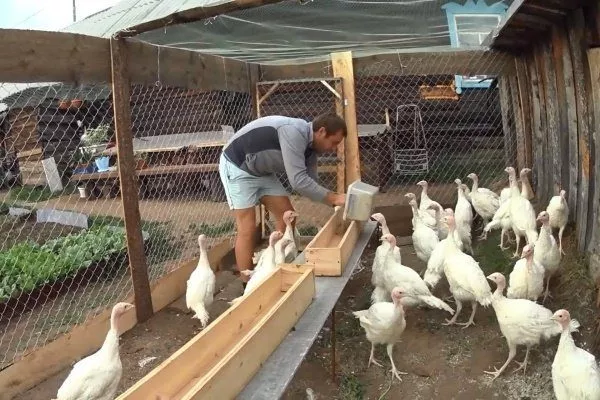
Birds are released into fields where sunflowers, grains, or melons have been harvested. They are fed 2-3 times a day while grazing. They are given unlimited amounts of water, preferably cool. The water should be changed several times a day to prevent it from getting too hot.
A hut and a canopy should be built on the pasture for shade. This fattening method requires a large area, but it uses little feed and promotes rapid weight gain.
Fattening adult turkeys
The birds are inspected beforehand—it's possible they won't all need to be fattened. If the skin is thin, lacking fat, and the bones are prominent, the bird should be fattened. Birds of average weight are also selected for fattening. Well-fed turkeys with rounded bodies and easily palpable subcutaneous fat can be sent straight to slaughter. After the birds are inspected and selected, some are slaughtered, while others are fattened to make up the remaining kilograms.
Diseases and prevention
Turkeys can become infected not only with various viruses and infections from each other, but also from other animals. Turkeys can become ill with:
- Respiratory mycoplasmosis. This is a runny nose caused by high humidity. An unbalanced diet can also trigger the condition.
- Tuberculosis. It affects the upper respiratory tract, lungs, and other organs. Infection occurs through water, eggs, dirty straw, and dishes.
- Histomoniasis. Cecal lesions. May occur in birds placed in an enclosure previously housing chickens or geese.
- Worms. They affect the digestive organs and even the respiratory system. This is the most common problem. It's easily transmitted through water, soil, and infected birds.
- Smallpox. An incurable disease. Dead birds must be burned. It can be transmitted through water, soil, infected birds, and certain insects that carry the infection.
To prevent diseases, birds must be fed with tested food, kept clean, undergo preventive examinations, and vaccinated on time.
Prevention of newborns:
- In the first days, turkey poults are given glucose and ascorbic acid dissolved in water.
- From the 2nd to the 5th day, they are given Rex-vital or Amino-vital once a day.
- Disinfection of the cage or poultry house is carried out weekly.
How profitable is breeding?
Turkey farming is attractive due to its high profitability and low competition. Turkeys are more profitable than chickens—they're larger, and their meat is tastier and more nutritious. A single turkey can produce 100 eggs and 600 kg of meat if the offspring are properly fattened. However, if you're raising turkeys for profit, consider the following:
- Initial capital is required – large investments.
- The first months are constant investments, as the young need to be fed.
- The profit will cover the expenses in six months, when the meat is sold.
- Now it's time to buy new stock. If you buy 30 chicks and several adult turkeys, you can earn 150,000 rubles in profit in just six months.
Well, raising turkeys for your own meat supply is undoubtedly a highly profitable endeavor. Your family will be provided with delicious meat—a single turkey carcass is enough to feed a large family for a week.
Let's sum it up
If you've decided to start breeding turkeys, you need to follow three important rules to maintain your flock and avoid losing profits:
- Cleanliness, cleanliness, and more cleanliness. Not only in the poultry house, but also in the pasture.
- Optimal microclimate. Dampness and drafts can cause death of livestock.
- Feeding birds occurs at a consistent time. This not only helps preserve the flock but also increases the rate of weight gain.