
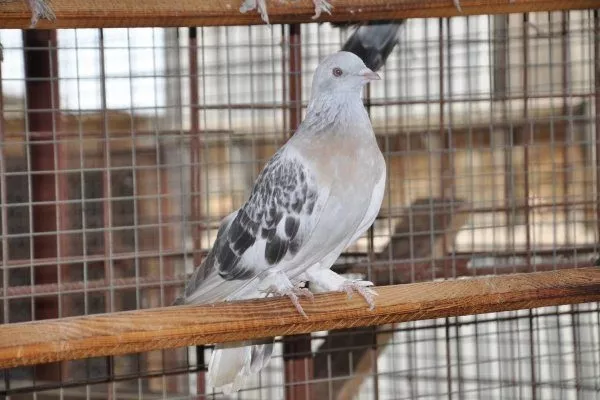
Beautiful fighting pigeons called Takla have been around in Turkey since ancient times. The Turks used them to deliver and receive important letters. Today, they are bred in many countries, including Russia. These pigeons possess excellent flight characteristics, capable of performing the most unusual movements and somersaults in the air.
Breeding history
The very first fighting pigeons of this breed were brought from Central Asia to Turkey. In ancient times, Takla pigeons were kept for delivering urgent messages. The birds were excellent at navigating their surroundings, and after delivering a message, they always returned to their nests with the letter tied to their feet.
While constantly training Takla pigeons, Turkish residents noticed their beautiful flying style. The most beautiful and ambitious birds, those that performed the best somersaults and turns in the air, were singled out and crossbred.
Birds then began to be shipped from Turkey to other countries. When the birds reached the Middle East, they were first described in 1055.
The first area of distribution were the following regions:
- Siberia
- Kazakhstan
- China
- Mediterranean
These birds appeared in Europe in 1071.
Exterior and views
| Name | Flight altitude | Flight duration | Ability to perform tricks |
|---|---|---|---|
| Sivash | 20 m | 10 o'clock | High |
| Miro | 15 m | 8 hours | Average |
| Boz | 25 m | 12 hours | High |
| Sabuni | 18 m | 9 o'clock | Average |
| Eflaton | 22 m | 11 o'clock | High |
Today, experts have come to the following conclusion: Takly helped create the following breeds:
- Iranian
- Iraqi
- Armenian
- Syrian
Takla pigeons are divided into 4 types based on their appearance:
- Mustachioed
- Crested
- Noso-chubbye
- Double-crested
In Turkey, where Takla is bred in almost every household, it is divided into 5 types:
- Sivash
- Miro
- Boz
- Sabuni
- Eflaton
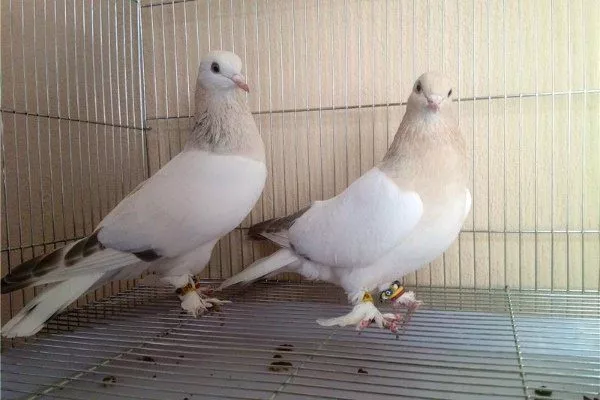
Many of them have a standard body, slender, and not bulky. As for color, pigeons come in a variety of colors. But the most common is the rock pigeon. The tail is almost always white, as is the cap.
This breed's legs are shaggy, meaning feathered, and their forelocks are comical, but you can't pigeons all by the same exterior. These pigeons aren't show pigeons; their forte is flight and somersaults. The most sought-after "elite" birds are white and milky-white, as they have superior flight and fighting abilities.
Takla's Peculiarity
Turkey is the main supplier and breeder of Takla fighting pigeons, but they are popular worldwide. These pigeons have two positive traits: beauty and flight ability. Their somersaults are truly unique and beautiful.
Pigeons fly for up to 10 hours a day, but this requires reinforcement and refinement through training, which should begin from a very early age. Taklas are intelligent, quick-witted, and have a good memory. They also learn and remember tricks easily.
Summer Features:
- Pigeons fly all day long.
- During fights, pigeons enter the pole several times in a row.
- They can repeat battle cycles for up to 5 hours.
- Pigeons can fly up to 20 meters or more.
- The best fighters are pigeons with a faded color.
Fighting skills manifest in different ways, often at a young age. Some people only need three months of training and begin fighting before they're even a year old, while others require several years of dedicated training.
Keeping and caring for birds in a dovecote
The best option for a dovecote is a dedicated dovecote, offering ample space, light, ventilation, and isolation. Takla care should be luxurious and comfortable, including maintaining a varied feeding schedule and tidy living quarters. All of this is necessary to keep the bird healthy, active, and capable of flying high, performing beautiful and unusual tricks.
The size of the poultry house, its heating and ventilation supply
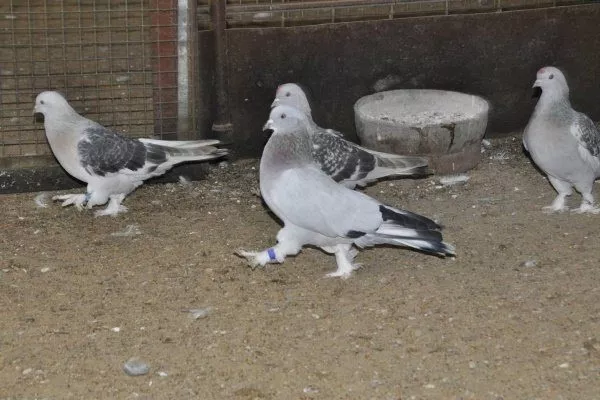
All breeds, including Takla pigeons, require open-plan aviaries, as they require not only ample space in the air for their various tricks but also indoors. Each bird requires 50 square centimeters of floor space and 1.5 meters of headroom.
The aviary can be made of any material, but it must be durable. The bars should be spaced fairly closely to prevent the bird from getting its head between them and suffocating. The bottom should be lined with a common board. It's important to keep the bird's feet dry.
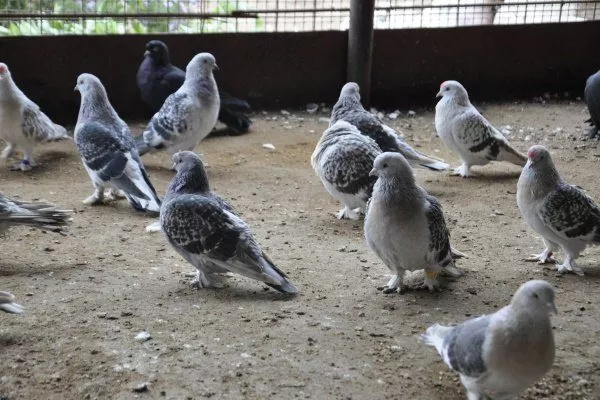
The temperature in the poultry house should be between 5 and 7 degrees Celsius in winter, and no more than 20 degrees Celsius in summer. Birds do not tolerate heat well, so they do not require additional heating, but thermal insulation is necessary.
Ventilation should be installed in the poultry house. This can be as simple as an additional mesh door that can be opened on hot days. To ensure a constant supply of fresh air, several small windows in the grille can be installed above the floor. It's also important to install exhaust hoods to remove any unpleasant odors.
Perches and nests
A perch might seem unimportant, but it's not. If it's not secured correctly, it can cause spinal deformities in pigeons. Such birds are culled even at a young age because they won't be able to fly well or perform complex tricks.
The pigeons will spend all their sleep and some time during the day on this device. The perches should not be round and thin; they should be triangular. The width of each perch should be sufficient for the bird to sit, spread its toes, and hold on. This size ranges from 2.5 cm to 3.5 cm, but these are not definitive measurements.
The perches need to be sanded and painted periodically, removing any old paint first. The pigeon steamer box should be 80 x 50 x 40 cm in size. It should accommodate a pair of nest boxes, each 25 cm in diameter and 8 cm deep.
Standards and installation of feeders, drinkers and baths
It's important to keep the feeders and waterers free of debris, and the size of the feeder depends on the number of pigeons in the coop. Standard feeders have a lid and vertically arranged rods.
As for waterers, there are many varieties available today. It's best to choose a pneumatic version, as they're the most convenient and prevent contamination of the water, as they have a lid and are designed to prevent birds from bathing in them. Both the feeder and the waterer need to be disinfected periodically.
A bird bath is an essential part of a bird's life, as bathing boosts their immunity and helps them avoid the summer heat. When they molt and begin bathing, they feel a sense of relief. Pigeons, bathed in water, always look beautiful and cheerful. Depending on the number of birds in the household, the bath's size is selected individually. It should always be no more than 10 cm high, with curved edges.
Hygiene and bedding
The bird house should be thoroughly cleaned every 30 days, or once a week if there are sick birds. Before disinfecting the house, the walls and perches should be cleaned and rinsed with clean, warm water and soap. Only then should disinfection be performed.
A blowtorch is suitable for this procedure, as flame destroys all pathogens and parasites, even in crevices. The mixture should consist of 4% bleach, 1% formalin, and 2% sodium.
The depth of the bedding should be at least 5 cm, the material of which can be:
- straw;
- peat;
- needles;
- hay;
- branches;
- bark;
- sand.
- ✓ The bedding must be dry and clean to prevent diseases.
- ✓ The bedding thickness is at least 5 cm to ensure comfort and warmth.
- ✓ The bedding material must be hygroscopic to absorb moisture.
If sand is used as bedding, it needs to be changed frequently, and in plant bedding, some of the dirty material is removed and some new material is added.
Letok
Among the additional structures, Taklam constructs an entrance, which looks like this: a triangular frame covered with mesh. One side of the entrance should be secured to the aviary itself, and the other to a window from which the flock flies out for a walk or intensive training. The entrance has a notch that protrudes beyond the frame, where the birds land upon returning from outside.
In one day of light, a fighting pigeon can fly 900 km, and its maximum speed is 70 km per hour.
Feeding and watering
Before preparing a diet for your birds, it's important to determine their beak size. Purebred Takls have short beaks (up to 15 mm), medium beaks (up to 25 mm), and long beaks (over 25 mm). This is an important factor when feeding, as the feed will vary slightly depending on the beak size. Long-billed pigeons will have difficulty eating small grains, while short-billed pigeons will have difficulty eating large grains.
Approximate feeding ration for long-beaked pigeons:
| Feed | Daylight Saving Time (DST) as a percentage | Winter time, in percent |
| Barley | 25 | 15 |
| Wheat | 20 | 15 |
| Peas | 10 | 15 |
| Beans | 15 | 15 |
| Corn | 10 | 15 |
| Beans | 10 | 15 |
| Hemp seed | 6 | 6 |
| Flax-seed | 4 | 4 |
Approximate diet of long-billed pigeons:
| Feed | Daylight Saving Time (DST) as a percentage | Winter time, in percent |
| Millet grain | 20 | 15 |
| Crushed wheat grain | 15 | 15 |
| Crushed barley grain | 20 | 15 |
| Vetch | 15 | 15 |
| Small peas | 10 | 15 |
| Small lentils | 10 | 10 |
Pigeons train both in winter and summer, so they need protein year-round. When they breed, which occurs in the spring, they expend more energy than usual. Therefore, they are given even more protein. During the molting period, which begins in the summer, the amount of protein is reduced, and the amount of oils increases.
In addition to their main diet, Takla also need additional bait.
| Feed | What does the component contain? | Why is it needed? |
| Water | Clean water, milk, juicy grass, juicy vegetables. | Body temperature is regulated, the digestive system, the hematopoietic system and other internal organs are improved. |
| Carbohydrates | Grains, potatoes, root vegetables, fruits and vegetables. | Creation of normal amount of fat tissue, increase of energy. |
| Squirrels | Milk, fermented milk products, meat, fish and bone meal. | Improving energy, strengthening muscles, feathers, and eggs. |
| Fats | Oil seeds, fish oil. | Production of motor and thermal energy. |
| Minerals | Shell rock, lime, gravel and chalk with sand. | The structure of the skeleton, eggs, and normalization of the digestive tract. |
| Vitamin A | Greens, carrots, hay, pumpkin, pine needles and cones, egg yolk. | Strengthening immunity, disease prevention, good egg production and successful incubation. |
| Vitamin D | Legumes, sun, fish oil and specialized preparations. | Strengthening bones, metabolism, shell strength. |
| Vitamin B | Yeast, cereals, milk. | Metabolism, blood circulation, good egg laying and proper incubation, strengthening the nervous system, disease prevention. |
| Vitamin C | Vegetables and fruits, greens. | Metabolism, strengthening the immune system, increased productivity. |
| Vitamin E | Greens, bran, hay, eggs and milk. | Stimulation of the reproductive instinct. |
Pigeons consume approximately 60 ml of water per day, while nursing mothers and those who exercise regularly consume up to 80 ml per day. Depending on humidity and temperature, fluid requirements may increase or decrease.
Breeding and fertility
Before deciding to breed pigeons, it's worth deciding on the purpose. This breed isn't bred for meat. The primary goal is beauty. These birds are very beautiful, with each pigeon having a unique color pattern. These birds are often trained for spectacular flight; flight performance and appearance are the Takla pigeons' strong points.
One bird can produce 12 chicks per season, but they cannot be overfed, because their flight rate will be greatly reduced, while mating will increase.
During molting, it's important to limit your birds' protein intake to avoid a decline in strength. During this time, remove any building materials from the aviary, as the birds may use them to build their own nests.
Relationship with neighbors
Keeping Takla pigeons with other pigeons is unacceptable; they cannot even be kept with the same breed but with distinctive generic characteristics. This means that crested and mustache pigeons must be kept separately. Even during training, they should be kept away from each other to prevent accidental crossbreeding.
Education
Pigeons perform many tricks beautifully, and perform somersaults in flight with great ease. In the "fight" trick, they flick their wings, then fly vertically in a beautiful formation. Apart from Takla, no other pigeons are capable of performing these tricks one after another.
- Start training with short flights, gradually increasing their duration.
- Conduct your workouts in the morning hours when the air is fresh and cool.
- Provide pigeons with rest between training sessions to recuperate.
It's impossible for an ordinary person to teach a chick tricks from a young age, so it's recommended to buy a grown and already trained bird. However, it's important to know that adult, intelligent birds capable of performing magnificent tricks will cost a lot of money. The approximate price for one pigeon is between $100 and $150. When choosing a pigeon, pay attention to its coloring—beautiful, brightly colored, and colorful pigeons won't be particularly good flyers, while plain, dull-colored birds learn quickly and fly beautifully, performing somersaults.
Advantages and disadvantages of Takla
Takla pigeons have their own advantages:
- good orientation in the area, they quickly find their way home;
- unpretentious in maintenance, they can eat monotonous and meager food for a long time;
- endurance, because they can fly for a long time and high.
Flaws:
- susceptibility to diseases (read more about common pigeon diseases) here);
- demanding in care;
- are expensive;
- If the bird is not trained, it will turn into a simple flying pigeon.
Reviews of the breed
Below are real people's reviews of Takla pigeons:
Turkish Takla fighting pigeons are among the most beautiful of all birds. They also have another unique characteristic: long flight and beautiful aerial acrobatics. Overall, breeding Takla pigeons is a profitable business, as long as it's done correctly.