
Around eight hundred pigeon breeds have been developed by humans, including some birds that are particularly attractive. They are used for both ornamental and sporting purposes. Let's find out which breeds are considered the most beautiful by pigeon fanciers.
| Name | Weight (g) | Body length (cm) | Color |
|---|---|---|---|
| English Cross Pigeon | 400 | 23-25 | Black and white |
| Old German Seagull | 350 | 20 | White with colored splashes |
| Saxon field | 450 | 25 | Blue with white stripes |
| Volga ribbon | 500 | 28 | Red-brown with white |
| Moody pigeons | 300 | 22 | White with colored spots |
| Bohemian swallow | 380 | 24 | White and black or white and brown |
| Chinese gull | 370 | 23 | Multicolored |
| Jacobins | 420 | 26 | Multicolored |
| Peacock | 350 | 22 | Multicolored |
| Rock-crested scaly-sided ... | 250 | 18 | Variegated brownish |
| Golden variegated | 200 | 20 | Golden |
| Maned | 600 | 40 | Iridescent |
| Fan-necked Crowned Pigeon | 2500 | 70 | Blue and slate blue |
| Red-necked Pied | 180 | 18 | Purple-pink with gray |
| Mariana variegated | 220 | 20-24 | Bright and colorful |
| Pink-headed Pied | 190 | 18 | Hot pink with green |
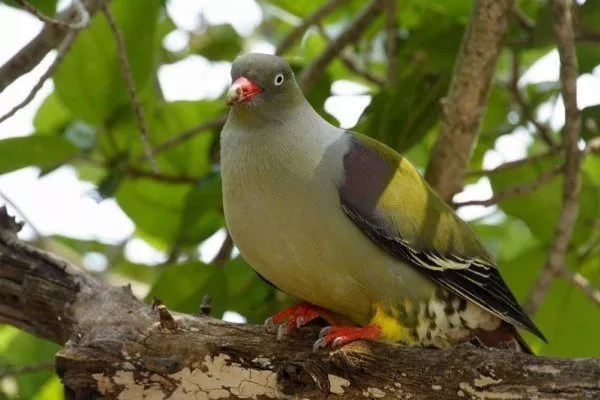
| African green | 300 | 25 | Green |
English Cross Pigeon
This breed's second name, the "Nun Pigeon," derives from its black and white plumage and distinctive feather "hood," reminiscent of religious figures. The breed was developed in the UK and is used for ornamental purposes. Appearance:
- The main color is white.
- The head, apron and long tail feathers are black.
- The boundaries between differently colored areas are clearly delineated.
- The eyes are pearly white. The pupils are unusually small.
- The body is compact and short, the chest is convex, and the shoulders are broad. The neck is medium. The height is 23-25 cm.
- The head is large, the forehead is high, and there is a luxurious crest on the head.
- Short beak, 1 cm long.
- The paws are featherless. The color is bright red.
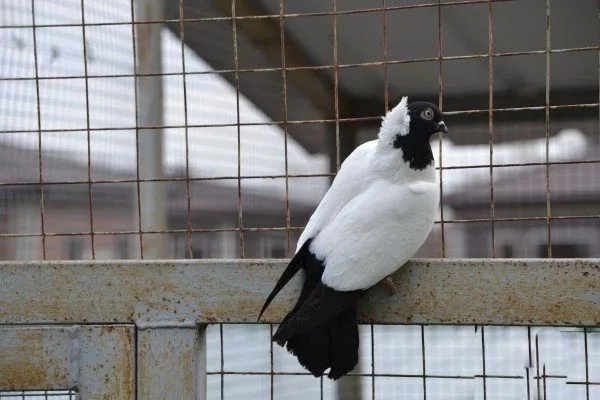
The breed was originally called "German." When the "monks" spread across Russia, they acquired a second name—"cross." This refers to the birds' flight—when they spread their wings, a cross can be seen on the underside.
The breed was originally bred as a hunting dog, but their unusual appearance overshadowed their hunting abilities. However, "monks" can easily be used for their original purpose—to frighten birds hiding in trees.
Features and benefits of "monks":
- friendly and sociable;
- obedient and neat;
- unpretentious;
- affectionate.
Old German Seagull
These pigeons got their name from their resemblance to another beautiful bird – the seagull. This breed originates from Germany. The pigeons originally had a pattern resembling wild seagulls. Later, after extensive selective breeding, the breed's coloring changed, but the name "Old Seagull" remained.
External characteristics:
- The plumage is white.
- The beak is short.
- Small frame. Dense and rounded body. Proud posture.
- Plumage: black, blue, red, yellow.
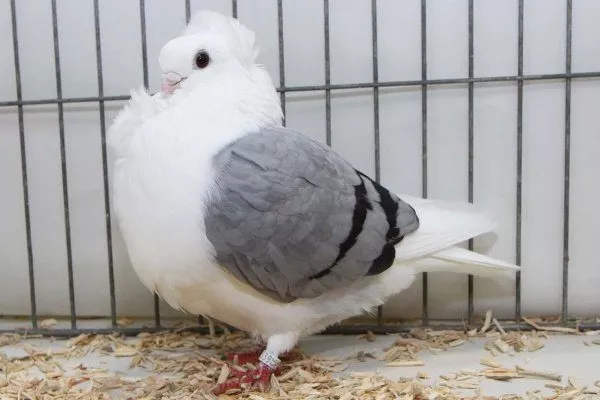
This breed is bred for decorative purposes, but many representatives of the breed can compete with flying pigeons.
Features of the old German seagull:
- demanding to the conditions of detention;
- low viability;
- capricious about food;
- fertile, but cannot feed their chicks without human help;
- active and energetic;
- become attached to the owner.
This breed attracts pigeon fanciers with its harmonious color and form. The bird is very graceful, delicate, and truly ethereal.
Saxon field
An observant pigeon fancier will immediately recognize the rock pigeon's features in this breed's appearance. And for good reason – the wild rock pigeon was used in the Saxon fieldwork selection. They are distinguished from their wild ancestor by the paired white stripes on their wings and the long feathers on their legs. It is the luxurious feathering on their legs that gives this breed its unique appearance.
Volga ribbon
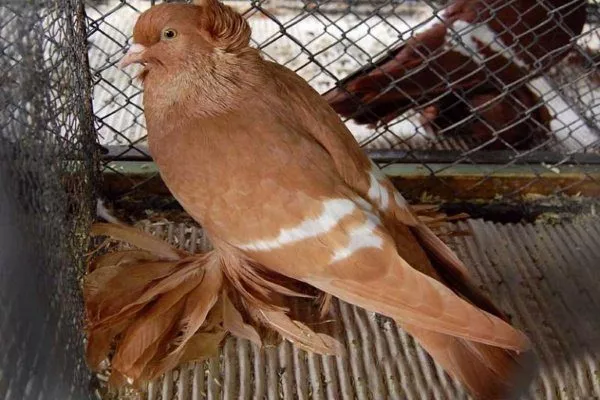
Volga breed Considered one of the most beautiful, it was developed by Volga pigeon breeders in the early 20th century. Not only is this bird beautiful, but it also boasts a breathtaking circular flight, capable of soaring for 2-3 hours. It is distinguished by its graceful habits and colorful plumage.
The breed has a unique appearance – they have a distinctive body structure and bright plumage. External characteristics:
- proud and confident posture;
- flat crown and walnut-shaped head;
- dark eyes with narrow eyelids;
- broad and convex chest;
- short feathered legs;
- plumage – red-brown with white, less often – light brown with white.
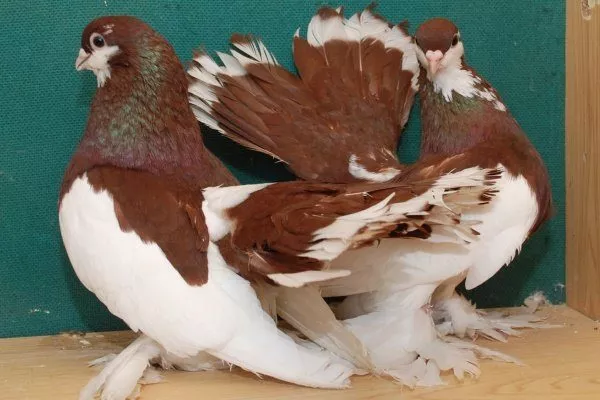
At the age of one year, the Volga ribbon pigeon chooses a mate – one for life.
Breed characteristics:
- unpretentiousness;
- good flight qualities;
- caring parents.
The main attraction of this breed's appearance is the long leg feathers and beautiful plumage. The coloring is clearly delineated. The neck, back, chest, tail, and uppertail are cherry or yellow. The cheeks, throat, wings, eyebrows, belly, and legs are white. Thanks to this successful color combination, Volga pigeons have a smart and elegant appearance.
Moody pigeons
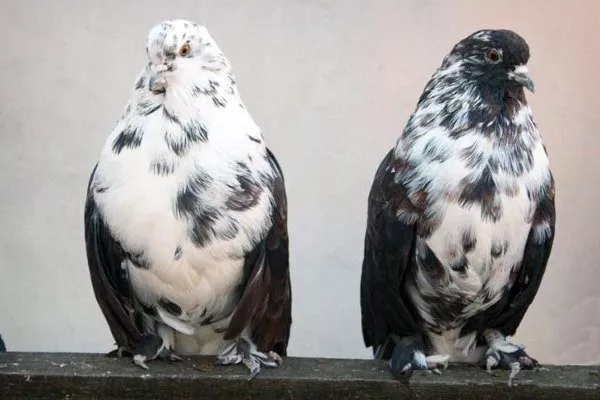
Nothing is known for certain about the moor pigeon breed. The bird is distinguished by its slender body and distinctive coloring, which is why they are often called speckled or calico. The colored feathers are randomly distributed over the white base plumage. They have a strong constitution, a pear-shaped body, and short legs.
The bird breeds poorly in captivity, so its numbers are small. The speckled pigeon's native land is southern Crimea. It is believed that it was introduced there during the Russo-Turkish War.
The colored feathers, scattered asymmetrically across the white plumage, can be red, yellow, blue, or black. Other advantages of the breed:
- have excellent spatial orientation;
- friendly and obedient;
- hardy and unpretentious.
Bohemian swallow
The Bohemian Swallow was bred in the Czech Republic. It is distinguished from other pigeons by its distinctive checkered wing pattern and large leg feathers. These birds can have white and black or white and brown plumage. Besides the unusual wing pattern, another distinctive feature is the cockade on the head.
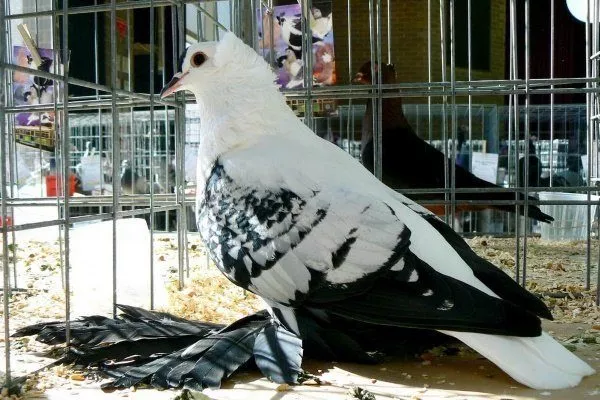
The bird owes its name to its extraordinary beauty – when it was brought from the Czech Republic, Russian pigeon breeders gave it the name “magic swallow” for its special external attractiveness.
Chinese gull
This breed is very popular among pigeon breeders. They were brought to Europe from Africa as early as the 19th century. The reason they are called Chinese pigeons is unclear – it is believed that a French bird trader gave them this name. They have rich plumage, are excellent flyers, prolific breeders, and are completely undemanding. They have a luxurious appearance thanks to their beautiful shades – they can be white, gold, gray, red, or any combination of colors.
The bird has a broad, stocky body with dense plumage. It has a round head, a short neck, and a well-developed chest—convex and rounded. Its legs are short and featherless.
Jacobins
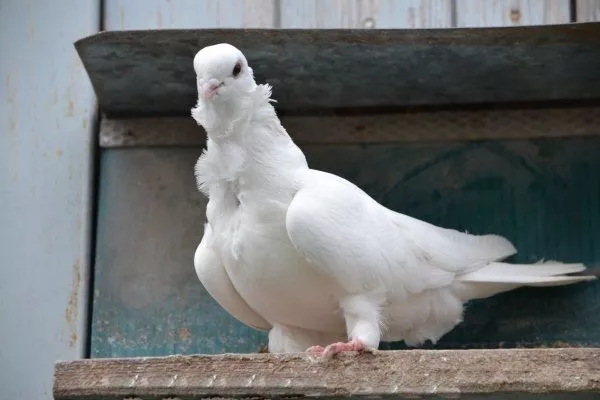
These amazing birds originate from India. Their ancestors are the Indian white-headed tumbler and capuchin monkeys. They arrived in Europe in the 16th century, with their second homeland being England. Their main distinguishing feature and decoration is the unique feather ruff that encircles the head and covers the neck.
Appearance features:
- slender build and long neck;
- long tail;
- short legs;
- plumage - different colors.
There are individuals with golden feathers, monk-patterned feathers, and speckled feathers. Jacobins are slow fliers, their large heads hindering their speed. However, they are productive and excellent parents.
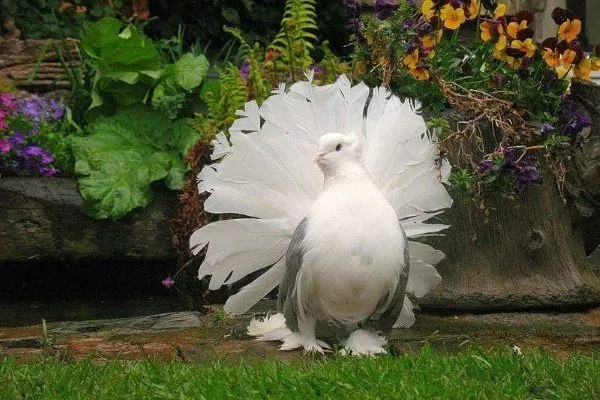
Peacock
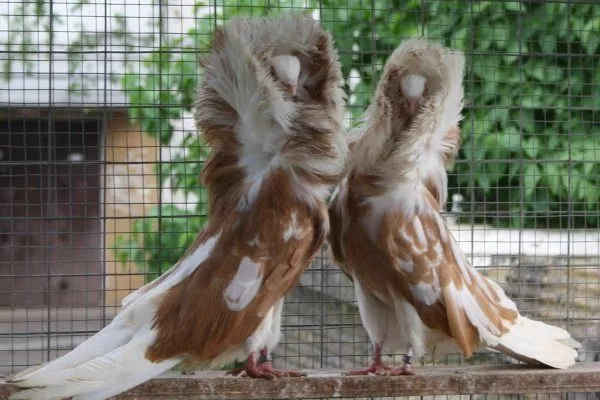
The exact origin of these amazing pigeons is unknown. However, it is believed that they originated in India. These birds are not adapted to long flights, but they are remarkably beautiful and graceful. They are neat and elegant, with a dignified and dignified demeanor. They spend most of their time moving along the ground, spreading their tail feathers wide—a characteristic that gives them the name peacock pigeon.
Peacock pigeons have a small head and large dark eyes. Their beak is small, flesh-colored or reddish. Their feet are red. Their plumage varies from yellow-white to gray-blue. The most unusual and attractive feature of peacock pigeons is their luxurious tail, which becomes more luxurious the more feathers it contains.
Rock-crested scaly-sided ...
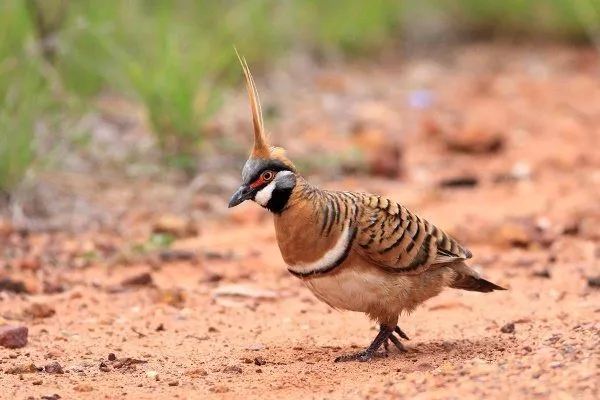
This pigeon has an unusual appearance. It seems to combine the characteristics of several birds. With its mottled brown plumage and small body, it resembles a partridge, while the red skin around its eyes resembles a pheasant. But its most striking feature is its long, perky crest.
This breed has short legs and a plump, rounded body. The plumage is stiff but smooth. Thanks to its plumage, the bird can fly at very low speeds.
This small pigeon nests in hard-to-reach places. Its homeland is Australia. The bird is renowned for its exceptional endurance—it can spend long hours in the heat searching for food.
Golden variegated
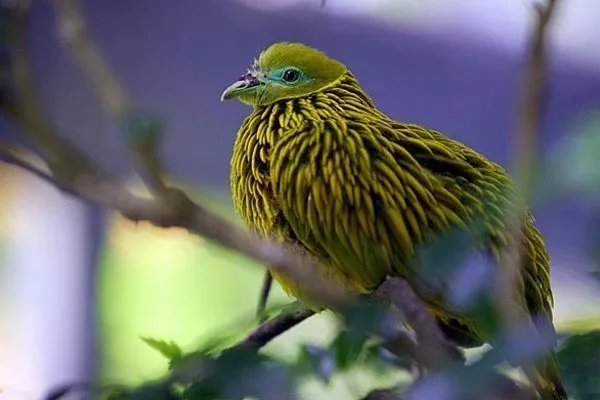
This unusual bird (of the Columbidae family) lives on the islands of the Pacific Ocean. It has a very elegant appearance. Its plumage shimmers in the sun, casting a golden sheen. Having a limited habitat, the bird feeds on fruits, berries, and insects. Females, unlike males, have greenish plumage. This tropical bird grows to about 20 cm in length.
The golden spotted dove's most distinctive feature is its feathers. They look so stylish and unusual, as if the bird had been styled at a hair salon. This distinctive plumage is due to the unusual structure of the feathers, which is similar to the texture of human hair. This elegant bird has turquoise feet, and the skin around the eyes and the beak, which are the same color, harmoniously complete the appearance of this small but vibrant bird.
Maned
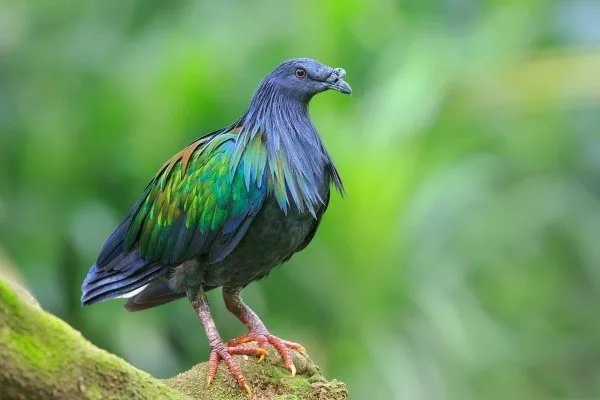
The bird's other name is the Nicobar pigeon. It has a unique appearance—like a fairytale phoenix, bright and mysterious. This most beautiful member of the pigeon family inhabits the tiny islands of the Indian Ocean.
This island bird has virtually no enemies in its isolated habitat. The maned pigeon is heavy to fly—it weighs about 600 g, is about 40 cm long, and is extremely flightless.
The maned pigeon's distinctive feature is its unique neck plumage, shimmering with azure and emerald. This "necklace" resembles a luxurious, colorful mantle. In the sun, the maned pigeon's feathers shimmer with a variety of colors. Without the sun, the coloring subdues, and the bird becomes more modest and ordinary.
Fan-necked Crowned Pigeon
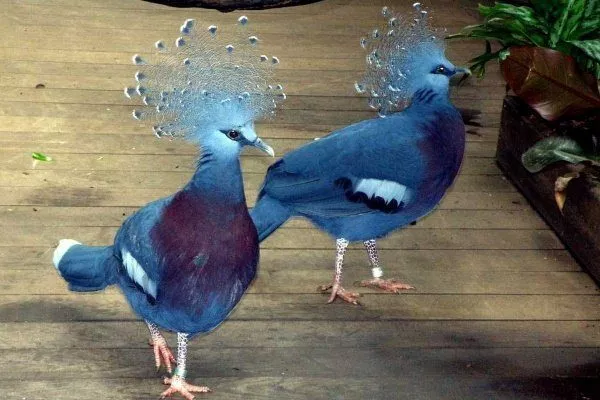
Looking at this fabulous bird, one immediately thinks of birds of paradise and peacocks. This member of the pigeon family lives in New Guinea. This large bird resembles a pheasant not only in appearance but also in flightlessness, preferring to travel on foot. It only takes flight when threatened. It weighs about 2.5 kg.
The main thing that catches the eye about this bird and makes it irresistible is its incredibly beautiful crest. It's a true "crown"—airy and light. Another striking feature is its coloring. This bird's plumage is blue and slate-blue.
Red-necked Pied
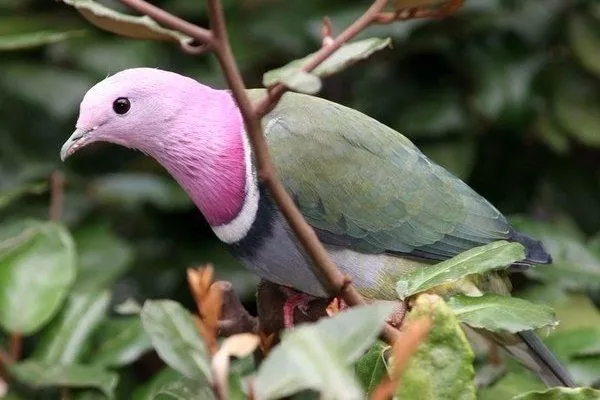
The breed has about fifty colorful relatives, each with its own distinctive plumage. All varieties of colorful pigeons are very fond of fruit. This bird inhabits Southeast Asia – Sumatra, Java, and Bali. The wild pigeon prefers to live in trees, descending to the ground only in exceptional circumstances.
The bird is distinguished by its unusual purple-pink neck, head, and chest. Their plumage is dominated by pink, olive, and dark green.
The rest of the body is a plain gray, against which the purple coloring stands out especially vividly. The birds are 18 cm long, much shorter than the common rock pigeon, which reaches 36 cm. The legs are red, and the beak is greenish-yellow.
Mariana variegated
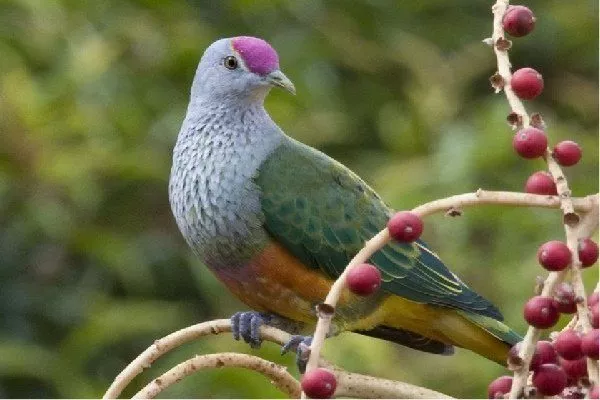
Fruit doves are also known as fruit doves. They inhabit the islands of the Mariana Archipelago. They are distinguished by their vibrant plumage. They have a pink spot on their head, a blue chest, a purple-orange belly, and green wings. Of the fifty or so species of fruit doves, this bird is the most vibrant and beautiful. It measures 20-24 cm in length and lives in trees, feeding on juicy fruits.
Pink-headed Pied
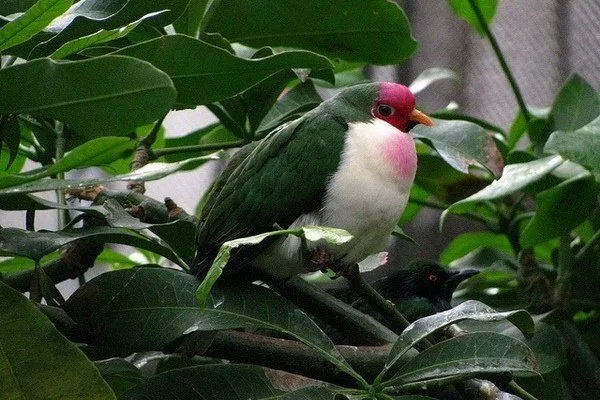
This exotic bird lives in Southeast Asia. It has a striking coloration: its face is bright pink, while the back of its head is dark green. The wings and tail are also green. There are white circles around the eyes. The eyes are reddish-brown. The throat is blackish-brown, and the chest and belly are white. The beak is yellow. The underside of the tail is reddish-brown. The unusual plumage—bright and multicolored—makes this Asian pigeon extraordinarily beautiful.
Features of the pink-headed pigeon:
- They rarely breed in captivity, making them rare in Europe. They were first brought here in 1870, but the birds never produced any offspring.
- Both the female and the male incubate the eggs, taking turns.
- They eat only fruits and berries.
Little is known about the life of this bird; the bird has not been sufficiently studied.
African green
It lives in the subtropics of Africa, south of the Sahara. The bird's plumage provides excellent camouflage. The pigeon's coloring is green, with shades of olive and yellow.
If an African pigeon is kept in captivity, over time the pigment in its feathers deteriorates, and the bird acquires a grey or yellowish colour.
Pigeon breeding is losing ground with the advancement of civilization, but thanks to enthusiasts, the industry continues to thrive. Ornamental pigeons are a special category in pigeon breeding, kept primarily for their stunning beauty, with flying qualities being relegated to a secondary importance.