
Historians believe pigeons were domesticated about five centuries ago. Since then, humans have developed hundreds of breeds, each with distinct appearance and behavior. While pigeons were initially used for purely practical purposes, today they are often bred for the "soul" and purely decorative purposes.
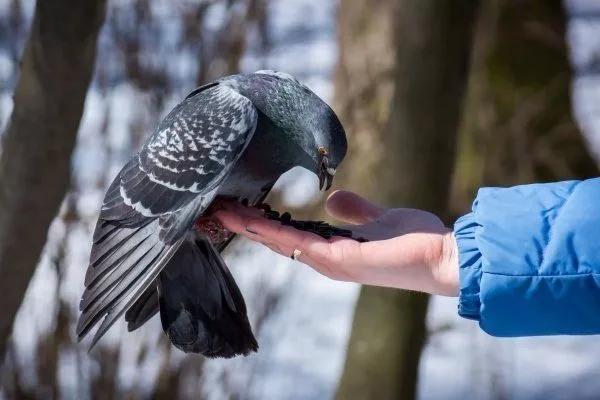
Classification of pigeon breeds
There are approximately a thousand domestic pigeon breeds alone. To understand the diversity of this bird, several classification methods exist. The most convenient and straightforward is to classify pigeons by purpose.
Classification of pigeons by practical use:
- wild;
- sports;
- flight;
- meat;
- decorative.
Pigeon breeding continues to be of interest to those with a passion for the animal world. These birds are raised for both practical and aesthetic purposes. It's simply impossible to cover the full diversity of pigeons in a single article, so we'll focus on the most interesting and popular breeds.
| Name | Weight (g) | Body length (cm) | Flight Features |
|---|---|---|---|
| Hryvnias | 200-400 | 35-47 | 10-12 hours, high altitudes |
| Dubovsky pigeons | 300-370 | 32-34 | 8 hours, spatial orientation |
| Black-and-white tumbler | 800 | 34-36 | Tumbling, wide circle |
| Kamyshinsky | 300-370 | 35-38 | High altitudes, stability |
| Spartacus | 300-370 | 33-35 | Long flight, small circles |
| Rock dove | 200-400 | 35 | Sedentary lifestyle |
| Rock dove | 300-370 | 32-34 | Nests in rocks |
| Klintukh | 300-370 | 32-34 | Migration, two subspecies |
| Armavir pigeons | 700-800 | 33-34 | 1.5 hours, 50-100 m |
| Tumblers | 800 | 25-30 | Somersaults, endurance |
| Coffee tumblers | 800 | 33-34 | Requires care |
| Voronezh white-breasted storks | 300-370 | 33-34 | A special flying style |
| Curly-coated pigeon | 300-370 | 32-34 | Decorative plumage |
| Nikolaevskie | 300-370 | 25-30 | 10 hours, various techniques |
| Volga ribbon | 300-370 | 35-37 | 2-3 hours, circular flight |
| Nezhinsky | 300-370 | 32-34 | Beautiful flight, unpretentiousness |
| Izhevsk | 300-370 | 34 | Quick ascent, orientation |
| Ochakovskys | 300-370 | 32-34 | Beautiful flight, solo flights |
| Klaipeda | 300-370 | 35-37 | Group flight, somersaults |
| Pakistani | 300-370 | 32-34 | Duration, somersaults |
| Iranian | 300-370 | 34-37 | 3-5 hours, upside down |
| Hungarians | 300-370 | 34-37 | 8 hours, good memory |
| Budapest | 300-370 | 34-37 | High, circular flight |
| English Tippler | 300-370 | 32-34 | 20 hours 40 minutes, flock flight |
| Perm high-flyers | 300-370 | 32-34 | 12 o'clock, circular style |
| Belgian | 300-370 | 32-34 | Excellent aerodynamics |
| Barb | 300-370 | 32-34 | Decorative qualities |
| Bohemian Spacefoot Fairy Swallow | 300-370 | 32-34 | Unique plumage |
| Saxon priest | 300-370 | 32-34 | Rich plumage |
| Peacock dove | 300-370 | 32-34 | Luxurious tail |
| Berlin Long-billed | 300-370 | 32-34 | Good altitude gain |
| King breed | 700-1500 | 32-34 | Meat breed |
Hryvnias
An ancient Russian flying breed. Also known as the Perm. The breeds from which the Perm was developed include the Kamyshin and Dubovsky pigeons, and the White Penza Tumbler. Along with the Perm, the Kirov, Nikolaev, Kazan, Yaroslavl, and Bugulma Grivuns are also bred.
Description. A bird with dense white plumage, a small rounded head, and dark eyes. The body length ranges from 35 to 47 cm. The mane is blue, black, or red.
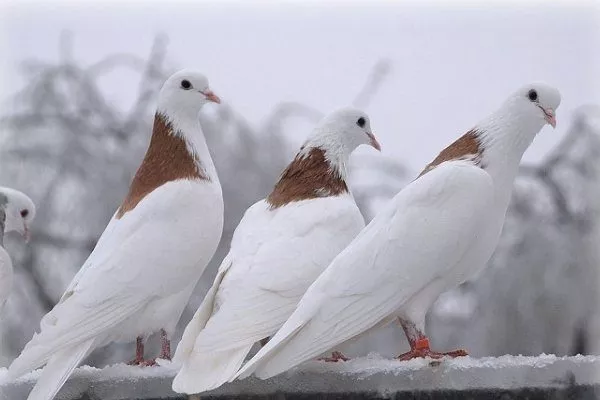
Breed characteristics. They are distinguished by excellent flight qualities. They have developed spatial orientation. They can remain in flight for 10-12 hours. They can fly at high altitudes and in a thin atmosphere.
Breeding. The bird's modest yet graceful appearance will grace any dovecote. The breed impresses with its flying abilities.
Dubovsky pigeons
Named after the town of Dubovka, located on the Volga River, where this high-flying breed was developed. Another name is Kondratievskie.
Description. A medium-sized bird with an elongated body. The tail is slightly raised. The legs are short and featherless. The head is oblong, and the neck is arched. The bill is white and long – up to 24 mm. The body, tail, head, and neck can be magpie, white, gray-blue, gray-white, or pure white. The wings have colored feathers called "epaulettes." The eyes are light silver.
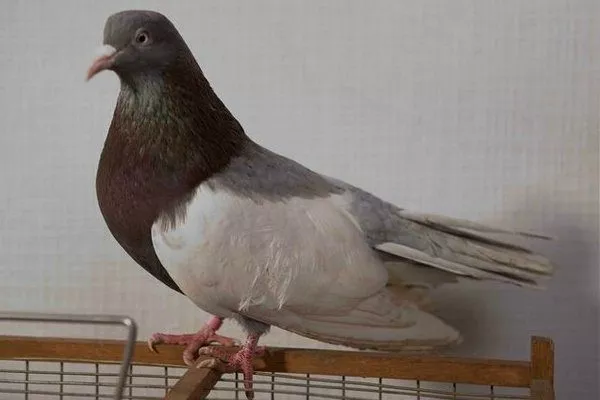
Breed characteristics. This breed is distinguished by an unusually prolonged and subdued cooing sound emanating from its belly. This breed can spend up to 8 hours in the air. Spatial orientation is well developed. They fly in small circles at high altitudes.
Breeding. They are bred for flight competitions. They are undemanding in terms of maintenance and have a well-developed parental instinct.
Black-and-white tumbler
This ancient flying breed is believed to have been developed in the 19th century by crossing Orlov Bearded and Orlov White pigeons. The best tumblers belonged to Kaluga pigeon breeders, which is why the breed is often called the Kaluga breed. It was officially recognized in 1912.
Description. The body length is 34-36 cm. It is distinguished by long, sweeping wings that reach below the tail. The head is rounded, with a high, convex forehead. Large dark eyes. The beak is white, slightly curved downward. The plumage is black with a greenish tint. The cheeks, thighs, belly, chin, and wings are white. The legs are short and featherless. A forelock may be present.
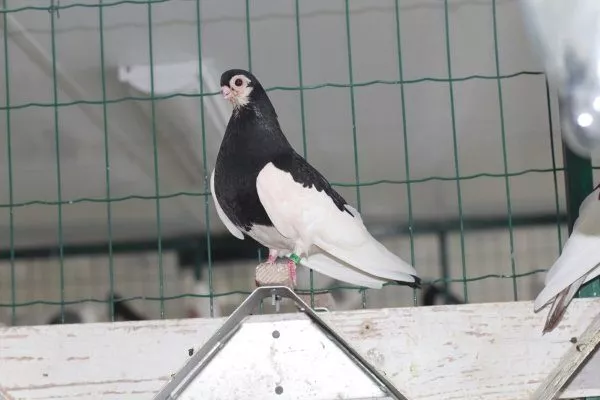
Breed characteristics. The unique flight qualities of the Orlov pigeons have been lost in this breed. Tumblers are characterized by short flight times and a difficult turn. Their flight typically involves a wide, high circle, accompanied by somersaults.
Breeding. Previously bred as flight birds, today tumblers are ornamental birds.
Kamyshinsky
The breed originates from the town of Kamyshin in the Volga region. It was formed in the late 19th century. Developed from the blue breed, Kamyshin birds were bred for pigeon fanciers' favorite pastime—racing.
Description. A proportional drooping-winged bird. Body length is 35-38 cm. The primary plumage is black. There are varieties with yellow, blue, fawn, coffee, and red plumage. Standards allow a metallic sheen on the chest and neck. The wing color, regardless of color, is pure white. The head is retracted, the forehead is sloping. The eyes are yellowish or pinkish-gray. The beak is pink, tightly closed. The wings are long, and the tail is flat and raised.
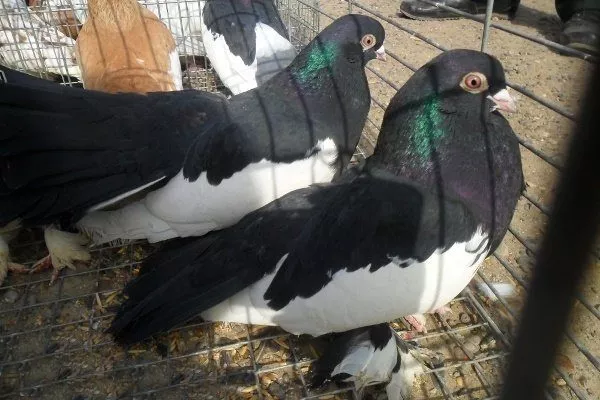
Breed characteristics. Excellent flight skills. Very attached to their home range. They find their way back to their nest in any situation. They fly alone or in flocks in high circles. They are exceptionally stable – they soar to great heights in any weather.
Breeding. The breed is bred for its excellent flying qualities.
Spartacus
A high-flying breed developed in Ufa. The breed was formed in the mid-19th century, but its final development occurred in the 1950s. Its ancestors are Old Ufa pigeons. Another name is Bashkir. The breed standard was adopted in 1981.
Description. The body is small – 33-35 cm in length. The body is strong, slender, and robust. The plumage is dense – shades of red, blue-gray, and black. It does not blend with the white feathers. The belly is white. The head is broad, with a low forehead. There is a depression near the beak. The eyes are yellow-red. The beak is straight and white. The back of the head is decorated with a crest. Birds with a crest longer than 5 mm are especially prized.
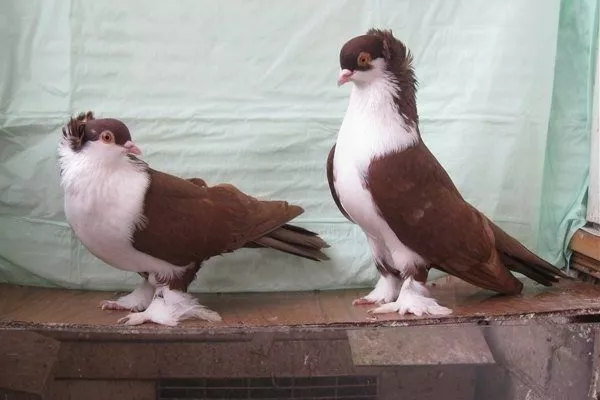
Breed characteristics. A prolific and viable breed. They prefer to fly in flocks. They fly for long periods, making small circles. They fly at very high altitudes.
Breeding. This high-flying breed is popular in its native Bashkiria, but is not particularly well known in other regions. It is bred by enthusiasts for its excellent flight qualities.
Rock dove
These pigeons are a wild breed. Their other name is rock pigeons. They are common throughout Russia and are named for the color of their plumage.
Description. Body length is 35 cm. Weight is 200-400 g. The plumage is glaucous. However, this can vary – sometimes it's almost black or coffee-colored. Rock deer bred by humans may have brown or white plumage. The beak is dark or pink. The eyes of domesticated rock deer are dark, not orange like those of wild ones.
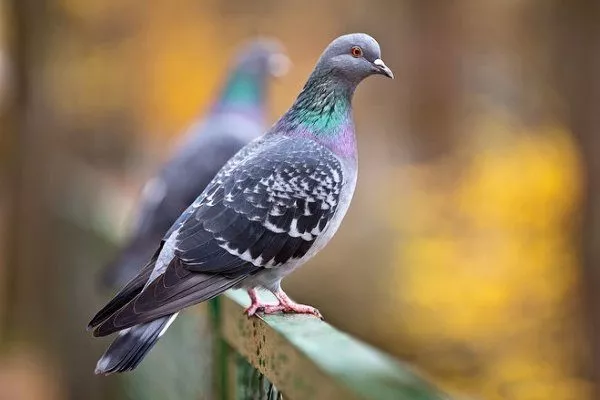
Breed characteristics. They lead a sedentary lifestyle, becoming attached to a specific territory. They live primarily in colonies.
Reproduction. Rock doves typically breed from spring until autumn. Some pairs even build nests in winter. A single pair produces three to five clutches. Rock doves are very useful in agriculture, clearing fields of unharvested grain.
Rock dove
This wild pigeon breed is native to the Ussuri and Primorsky Krais. It also nests in the mountainous regions of Tibet, Altai, and the Himalayas.
Description. The plumage is almost identical to that of the rock dove, but the tail is lighter. The beak is black. It is smaller than the rock pigeon. Its plumage is bluish-blue. The head and neck are darker, with a metallic sheen. The back of the back is white. The feet are red.
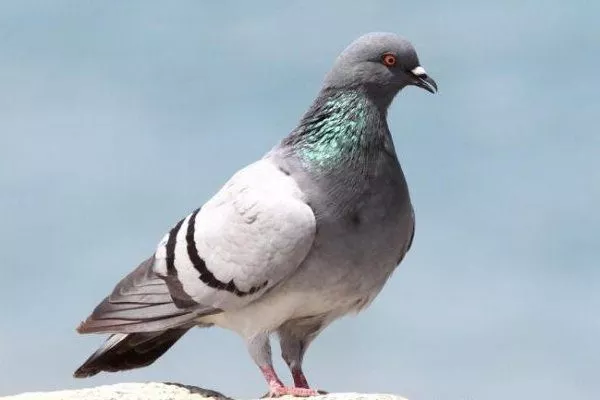
Breed characteristics. Nests in pairs or groups. They prefer to settle in gorges, cliffs, and abandoned construction sites.
Reproduction. The rock dove can produce hybrid offspring when crossed with domestic pigeons. The clutch consists of only two eggs.
Klintukh
These are wild pigeons native to the wooded areas of Asia and Europe. They are related to the city pigeon.
Description. The body is small. Body length is 32-34 cm. Weight is 300-370 g. The plumage is bluish-gray. The neck has a greenish tint. The back, neck, and wings are stripeless and spotless. The upper and lower parts are uniformly colored, virtually indistinguishable from each other.
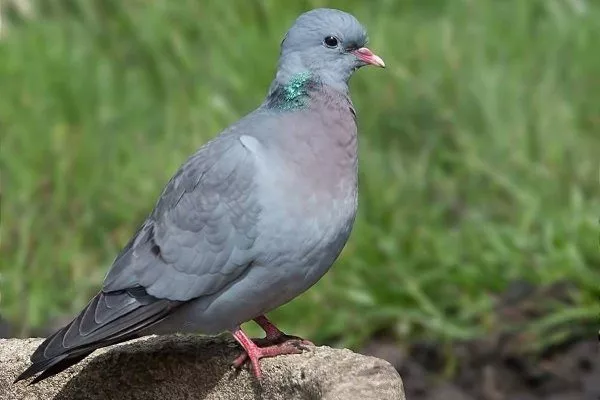
Breed characteristics. It migrates to warmer climates. It has two subspecies—eastern and western populations—which differ in plumage.
Reproduction. The population is numerous and not in danger of extinction. They breed from spring to autumn. They manage to hatch two clutches of two eggs each.
Armavir pigeons
The breed was developed in the city of Armavir. Selective breeding began in the late 17th century. Armavir White-headed Kosmachi were bred from the North Caucasian Long-billed Kosmachi.
Description. Breed standards include high, feathered legs with spurs. A proud stance. The beak is long and white. The coat is yellow and black with a reddish tint. The head and wings are white. The edges of the wings have a dark border.
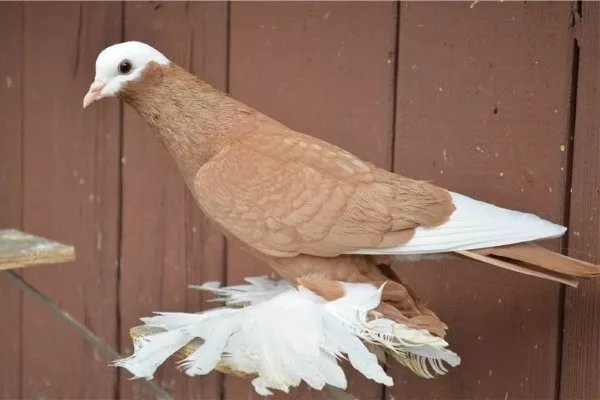
Breed characteristics. The breed's distinctive feature is the luxurious plumage on its legs—the tufts. There are two varieties of tufted scaly-tail ...
Reproduction. The breed is included in international pigeon catalogs. It ranks among the most beautiful breeds—these are expensive, elite birds. The Armavir breed is bred for its ornamental qualities and fighting qualities—this breed is part of the Fighting Group.
Tumblers
This is one of the most valuable breeds. The short-billed tumbler almost disappeared during the Second World War, but was revived through the efforts of breeders. There are many subspecies of tumblers, the most popular being the Viennese, Odessa, Orlov, Kursk, Ribbon, Moscow Gray, and Volsk.
Description. Most tumblers have a small head and compact body. They weigh around 800 g. Their eyes are dark, and their eyelids are light. Their legs are short and set wide apart. The tail is raised and contains 13 feathers.
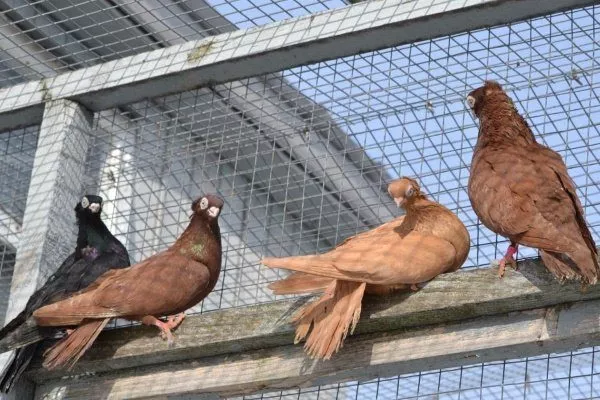
Breed characteristics. They are small in size and have excellent flight qualities. They perform somersaults in flight, including head, tail, and wing rolls. They are noted for their strength and endurance.
Breeding. Breeders conduct intensive training for tumblers. Due to their special abilities, tumblers are also known abroad as rollers. Most tumblers combine flight and decorative qualities.
Coffee tumblers
The breed originates from Tula. Fanciers have no precise information about the breed's origins. It is believed that the Coffee Tumblers were developed from the Smolensk Crested Lobachy.
Description. The head is cubic and faceted. The forehead is wide. The eyes are large and light silver. The eyelids are white. The forelock is wide. The plumage is reddish-brown. The shades vary from fawn to dark coffee. The beak is powerful, thick, and short.
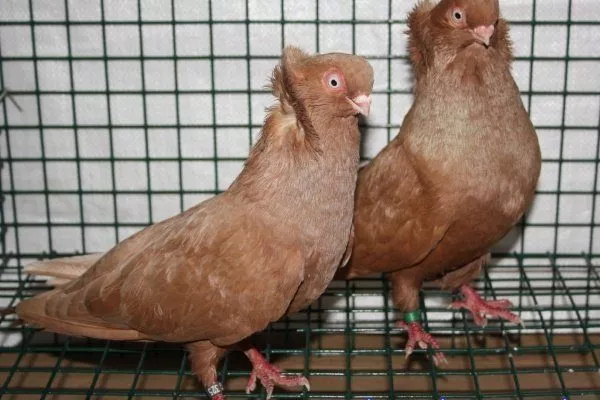
Breed characteristics. This bird is demanding when it comes to its living conditions. It is picky about its food and requires careful care.
Breeding. This bird is very beautiful and is bred for ornamental purposes. But its main advantage is its exceptional flying ability. It is an expensive breed and difficult to raise. Like all short-billed breeds, the Coffee Tumbler is unable to feed its young, so special feeders are required for the chicks.
Voronezh white-breasted storks
A beautiful breed, one of the oldest domestic breeds. Its history dates back to the time of Empress Catherine the Great.
Description. A strong, muscular body. Body length is 33-34 cm. The chest is convex and broad. The plumage is blue-gray and shiny. The head and neck are light gray or white. The head is elongated, with a beard. There is a small, flat crest. The eyes and beak are dark. The wings are long, lying close to the body. The tail is straight.
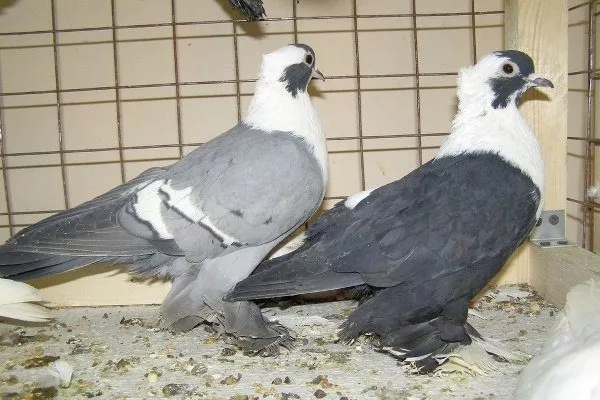
Breed characteristics. They have a distinctive flight style. They don't circle when gaining altitude. Instead, they slow down and turn on the spot to gain altitude. Once they reach a high altitude, the group of pigeons forms a line. They circle when descending.
Breeding. The breed is considered ornamental. Breeding does not require large investments or complex care.
Curly-coated pigeon
There is no precise information about the origins of this pigeon. It is believed that the breed came to us from Asia or Southeastern Europe. It has been known in Europe since the 17th century. The distinctive, curly feather structure was achieved through years of selective breeding, involving pigeon fanciers from various countries.
Description. They look like common pigeons, but with one important difference: their wings are covered in fine curls. Similar curls are also found on their feet. The body is broad and short. The head, chest, and neck are completely smooth, without curls. Only the white curled pigeon has a crest on its head. The crown is sloping, the forehead is low. The eyes are orange. The wings and tail do not touch the ground. The plumage is black or white. The coloring should be rich, with whites free of yellow and blacks with a green sheen.
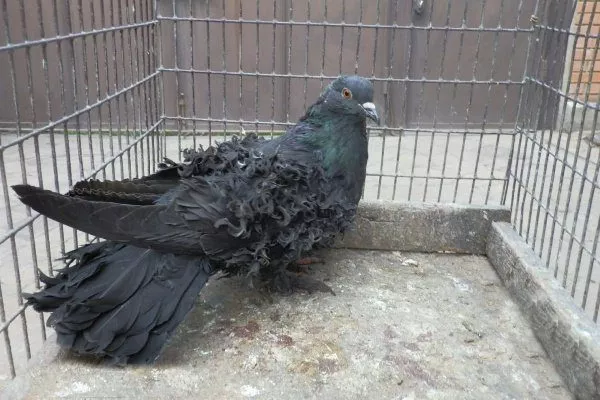
Breed characteristics. The breed is difficult to achieve the correct coloring. It requires several generations of breeding.
Breeding. The breed is primarily ornamental and requires little care.
Nikolaevskie
A high-flying breed developed in Nikolaev (Ukraine) in the late 19th century. The breed was obtained by crossing pigeons brought by sailors from abroad with local birds.
Description. They are distinguished by their dense plumage, streamlined body shape, and powerful muscles. Their body length is 25-30 cm. Their plumage can be cherry red, black, orange, white, or glaucous with dark stripes. Their head is rounded or oblong. Their eyes are gray, black, or dark yellow. Their beak is white or milky. Their wings have a dozen feathers that do not overlap their tail. Regardless of their base color, the tail is always white. Their legs are short and covered with feathers above the knees.
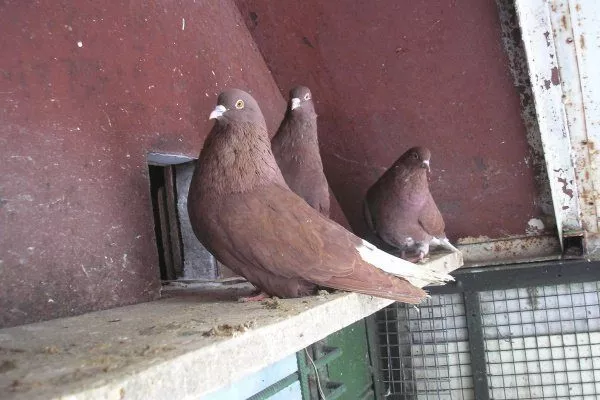
Breed characteristics. These pigeons are capable of soaring without circling. They reach great heights in a very short time. With proper care and training, they can stay in the air for up to 10 hours. They can perform solo flights, demonstrating various techniques. They can soar with their wings spread wide, or they can flap their wings frequently, achieving a steep climb.
Breeding. The breed is bred for its excellent flight qualities. A distinction is made between the Nikolaev pigeons with a wing and a sickle. The former only soar vertically, while the sickle-winged ones fly horizontally.
Volga ribbon
This breed originates from central Russia. They were developed using drooping-winged pigeons from Rzhevsk and Syzran. The Volga pigeons inherited their decorative qualities from the Volga Red-breasted. This breed is considered one of the most beautiful. They have a memorable appearance—unusual even for pigeon connoisseurs.
Description. The plumage is cherry-white, brown-white, or beige-white. The tail is broad, flat, and raised. It is crossed by a white stripe 1 cm wide. The head is round, the crown is flat. The eyes are dark, and the beak is light pink. The body is short, with a broad chest and back. The wings are long, carried lower than the tail. The legs are short and feathered.
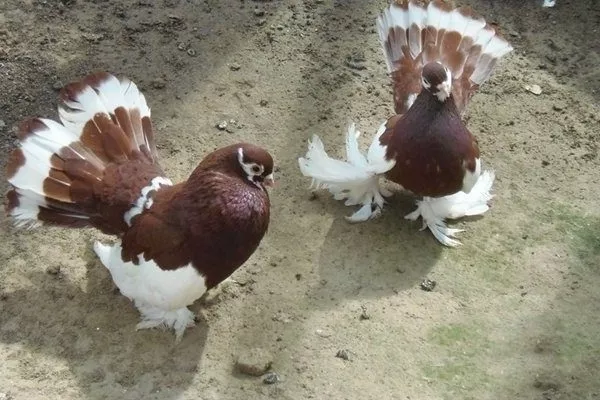
Breed characteristics. Capable of circular slow flight for 2-3 hours.
Breeding. This exceptionally beautiful breed is bred not only for its decorative qualities but also for its flight performance. With proper training and good care, Volga pigeons demonstrate excellent flight qualities.
More information about Volga pigeons is available Here.
Nezhinsky
The breed's origin is unknown. It is believed to have originated in Nizhyn, a city in Ukraine. The breed was nearly wiped out during World War II. Its restoration began in the 1970s.
Description. The primary plumage is white. The head, beard, and tail are dark. The head is small, there is no forelock, the forehead is high, and the eyes are black. The bill is long and light. The chest is full and rounded, and the wings are held tightly to the body. The tail is flat and the legs are short.
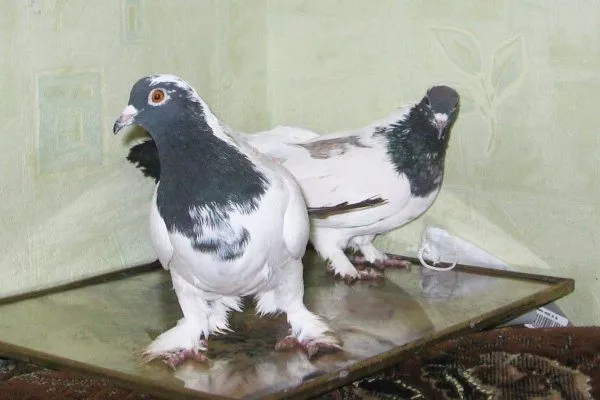
Breed characteristics. They are distinguished by their beautiful flight—they fly in a "saucer" formation, a term used to describe small, closed circles. Their wings flutter, and their bodies tilt alternately left and right. For a second, the birds hover vertically. They land swiftly, folding their wings and making a rocking motion.
Breeding. These pigeons are valued for their unpretentiousness, external elegance and unique flying qualities.
Izhevsk
This breed was developed in the early 20th century. The Perm breed served as the basis. Breeders sought to create a breed with improved flight qualities, and they succeeded in achieving this in the Izhevsk pigeons.
Description. They resemble Perm pigeons in appearance, but lack a crest and have short, featherless legs. They can have a single-color plumage—white, black, yellow, or red. They have a powerful body and strong muscles—they are excellent fliers. Their body length is up to 34 cm. The bill is light, and the eyes are bulging and dark. The wings are long, their tips touching the rectangular tail.
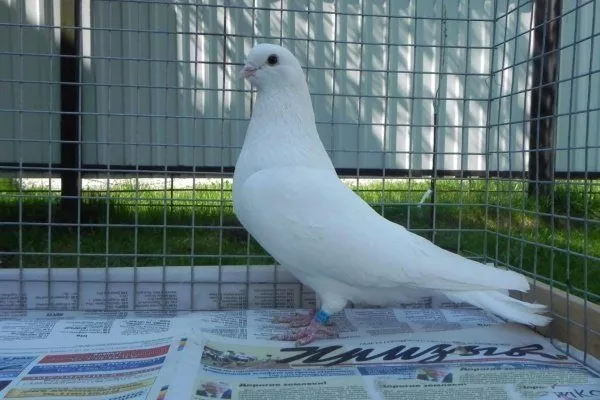
Breed characteristics. They never fly far from home. They rise very quickly, sometimes flying so high that they are difficult to see from the ground. They have excellent navigation skills and return home without difficulty.
Breeding. They are prized for their excellent flight skills. Maintenance is simple, the main thing is proper feeding and regular flight training.
Ochakovskys
Pigeon breeding has long been practiced in Ochakov. The Ochakov breed was developed through selective breeding, based on the sickle-shaped Nikolaev pigeons.
Description. Externally, they are virtually indistinguishable from Nikolaev pigeons. They have an elongated body and a slender build. The head is small, and the eyes are bright. They are dark pigeons with white eyes. The wings are elongated, reaching the tail. Crested specimens are rare, but many individuals are found with "stockings."
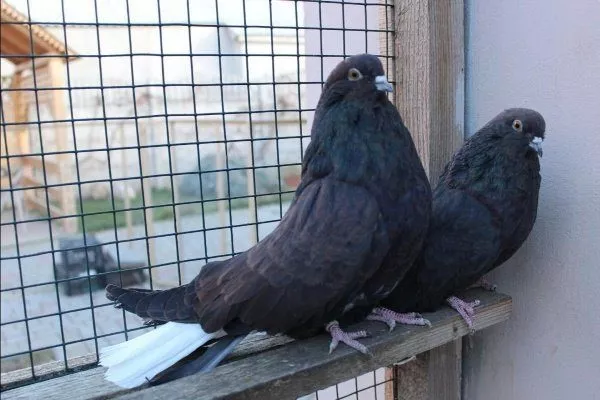
Breed characteristics. The breed's main advantage is its beautiful flight. They can soar in one spot for hours, sometimes soaring high, then diving swiftly. They fly alone in the air.
Breeding. These unpretentious pigeons are bred for their flying qualities.
Klaipeda
The breed was named after the city where it originated: Klaipeda, Lithuania. They are not very common in Russia; they are mainly kept by Latvian fanciers.
Description. The body is strong and long – 35-37 cm. The head is broad-browed. The forehead and bill form a straight line. The bill is small – 15-16 mm. The neck is short, and the chest is wide. The wings are positioned in a straight line with the tail. The legs are short, without feathers. The plumage is fawn, white, red, black, and glaucous. The neck is rippled – brown or glaucous. The wingtips are white. The eyes are light and small.
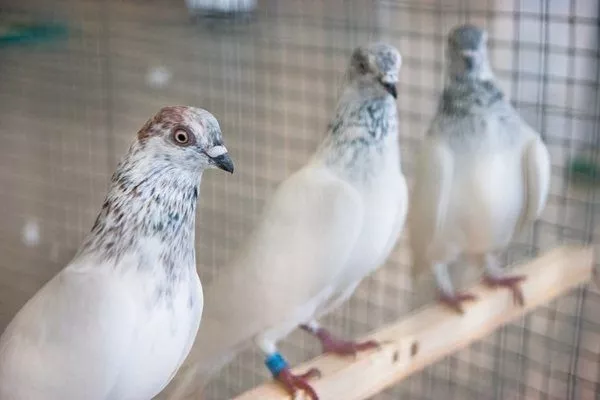
Breed characteristics. They like to fly in groups of 2-4 birds. They prefer to climb to high altitudes and circle above their nesting grounds. Some individuals can somersault, but then they spend less time in the air.
Breeding. These high-flying pigeons are easy to breed – they are undemanding in maintenance, prolific and very resilient.
Pakistani
This is one of the best flight breeds in the world. There are several subtypes, each with distinct appearances. Some have feathers on their legs, some have featherless legs, and some have feathers reaching 20 cm in length.
Description. Like most flight breeds, they are distinguished by their modest plumage. They have a rounded, protruding chest. A small, elongated head. Black or orange eyes. Muscular legs of medium length. A long tail. The wings are black. The base plumage is white. Each individual has its own wing pattern, which it retains throughout its life.
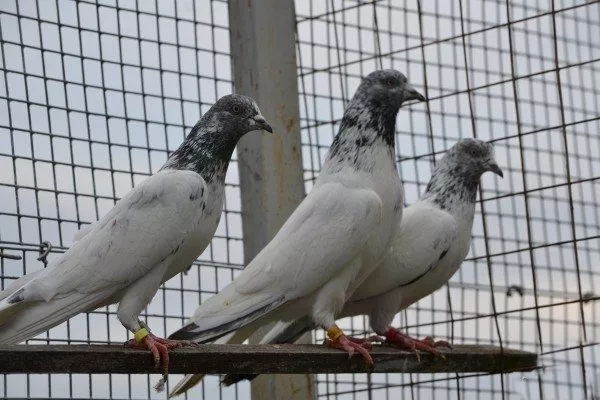
Breed characteristics. They are distinguished by their long flight duration and unusual flight style. They are capable of climbing to great heights and performing somersaults.
Breeding. They are easy to care for and prized for their unique flight abilities.
Iranian
The birthplace of the first domesticated pigeons is Persia. Even today, pigeon breeding is a sacred tradition in Iran. Iranian fighting pigeons come in many varieties. They are called "fighting pigeons" because of the flapping sound their wings make in the air.
Description. The plumage is varied, with varying colors and patterns. Iranian pigeons most commonly have red, yellow, blue-gray, almond, and black plumage. Their body length is 34-37 m. The head is rounded or oblong. They have a crest or tuft. The eyes are small, their color depending on the feather color. The beak is pink or dark, long and curved. The legs are bare or feathered.
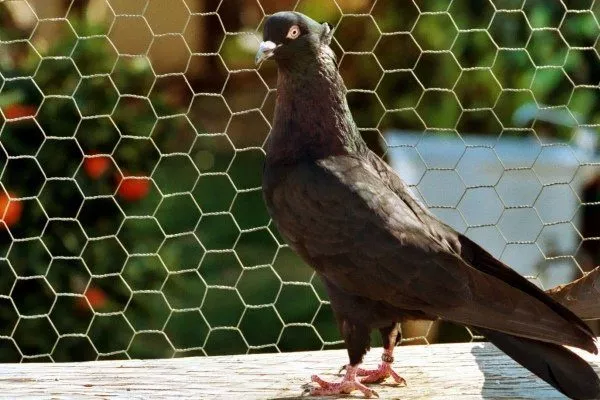
Breed characteristics. Numerous subspecies of the Iranian breed have been developed, the most common being the Big-headed, Tehran High-flying, Tabriz, and Hamadan. A common feature of all fighting pigeons is their flight style. They turn over in the air. They can fly for 3-5 hours, with the most enduring ones lasting 8-10 hours.
Breeding. When raising Persian guinea pigs, a lot of time must be devoted to training. They are trained two to three times a week in the morning, before feeding.
Hungarians
A relatively young breed, Hungarian pigeons were officially bred in the early 1940s. Budapest Stork Pigeons served as the breeding stock.
Description. A simple exterior, nothing fancy. The head is small, the body is stocky. The eyes are large, and the beak is small, triangular, and downturned. The head is rounded with a smooth forehead. The tail does not touch the ground. The plumage is variable in color, usually brown and gray shades, and less commonly, pure white. Body length is 34-37 cm.
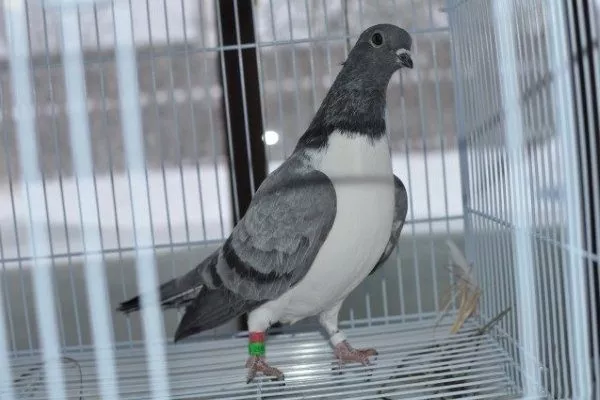
Breed characteristics. A high-flying breed with a strong temperament. It has a good memory, including topographic memory. It can return home hundreds of kilometers away. Its flight time without interruption is eight hours.
Breeding. The breed is not fussy and doesn't require special care, but adequate living conditions must be provided. They are bred primarily for their excellent flight qualities. They are excellent at incubating and raising their young.
Budapest
There is no information about who developed the Budapest breed or when. It is believed that it originated in Budapest.
Description. It has a proportional, medium-sized body and close-fitting plumage. Its plumage is pure white, stork-like, and spotted. The head is neat and smooth, the crown is slightly concave, and the forehead slopes gently toward the bill. The eyes are bluish-white. The bill is long and slightly curved. The chest is broad, and the wings lie close to the body, touching the tail.
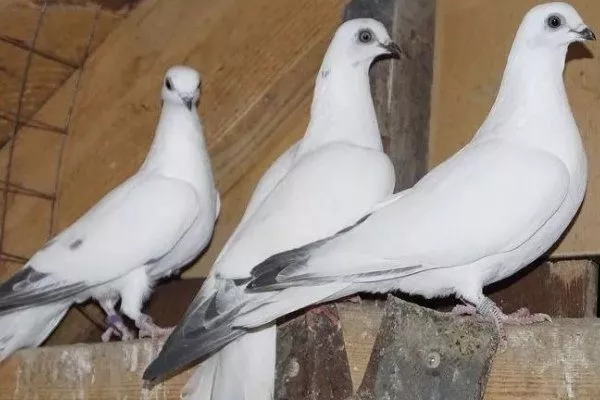
Breed characteristics. They have a lively temperament and are distinguished by their high, circular, and prolonged flight.
Breeding. These are ornamental flying birds that do not require special conditions for maintenance.
English Tippler
They were developed in Great Britain in the 19th century. They were created from the English Tumbler and French Highflying pigeons. They are rare in Russia.
Description. The body is medium-sized and streamlined. It has a broad chest and a smooth head. It has light eyes and a long beak. The wings are powerful and held tightly to the body. The plumage comes in a variety of shades—black, gray, yellow, red, and blue.
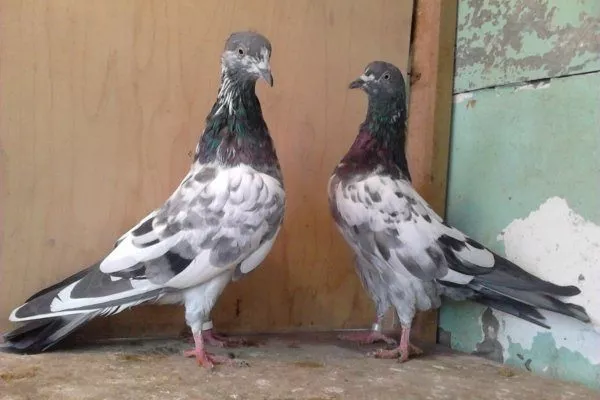
English high-flying tippler, colour - blue-and-white.
Breed characteristics. They have an athletic build and are noted for their great endurance. They fly superbly in flocks, circling. They don't need wind—tipplers can glide effortlessly.
It was the English tipplers who set the record for the longest time in the air – 20 hours and 40 minutes.
Breeding. The breed is often used in racing flights and does not require any special care.
Perm high-flyers
The breed is named after its place of origin—it was developed in Perm. Local and imported birds were used in the crossbreeding.
Description. The plumage is varied, with some birds being solid-colored and others patterned. The body is strong, with firm muscles. The bill is light and medium-sized.
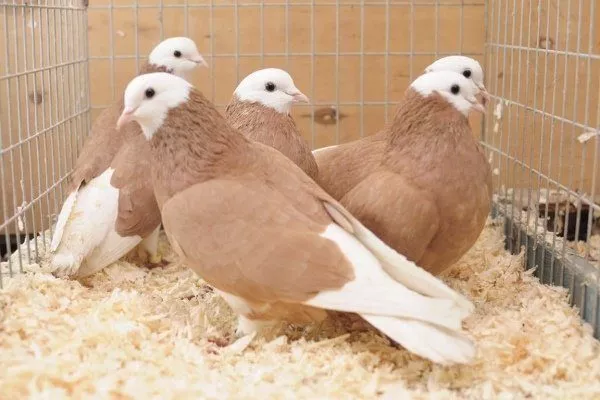
Perm white-headed high-flying pigeons
Breed characteristics. They fly at very high altitudes, alone or in groups. Flight duration is up to 12 hours. Their flight style is circular. They are tied to a dovecote and have excellent orientation. Their eyes are bulging and black. Their long wings touch their tail.
Finding purebred Permians is very difficult these days; even renowned breeders mostly sell culls.
Breeding. The birds are bred for their flight qualities. Perm pigeons are used for competitions. They have a strong attachment to their fanciers. This breed is bred throughout Russia.
Belgian
The Belgian breed is one of the best racing pigeons. The breed has been refined in Belgium since the 19th century.
Description. A solidly built body. A small, rounded head. A powerful neck. A well-developed chest.
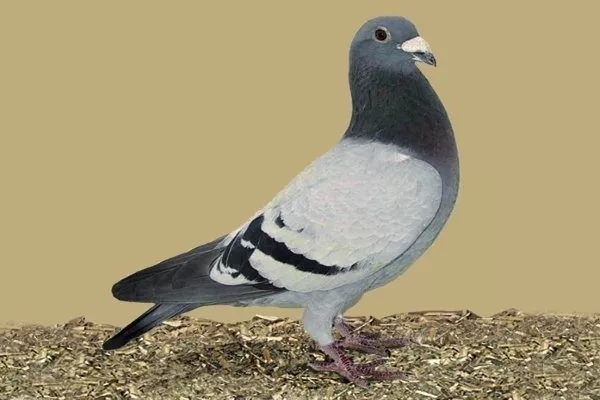
Breed characteristics. They have excellent aerodynamics thanks to their stiff, dense plumage. The tail is thin and narrow. The legs are strong and short. The eyes are dark, almost black.
Among the most popular Belgian breeds are the Antwerp pigeons, which are the most frequent winners in sporting competitions.
Breeding. Keeping sport breeds is practically no different from keeping decorative pigeons.
Barb
An unusual ornamental breed from the warty pigeon group.
Description. The bird has a distinctive feature: special skin growths around the eyes. The forehead is convex, and the beak is small. The plumage is black, red, and white.
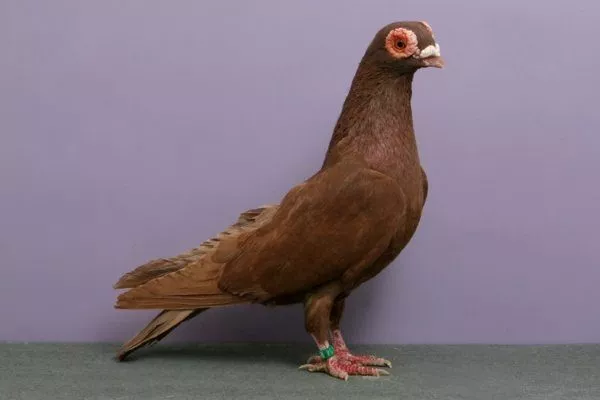
Breed characteristics. These pigeons are never motley, only one-color.
Breeding. To preserve the decorative qualities of barbs, they need to be kept clean.
Bohemian Spacefoot Fairy Swallow
The breed with unique plumage was developed in the Czech Republic – in Bohemia.
Description. The Bohemian swallow has a large build, with lush feathers on the back of its head. Its feet are feathered. Its wings and legs have a striking checkered pattern. Its head bears a cockade-like marking.
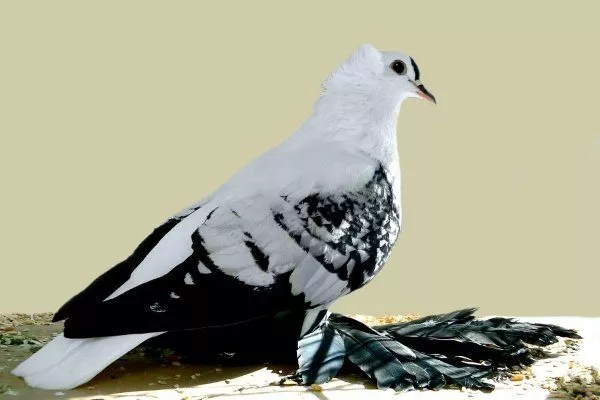
Breed characteristics. The breed is very elegant, and is called “magical” for its unique beauty.
Breeding. This is a decorative breed – it is bred for its beautiful, unusual plumage.
Saxon priest
A true gem for any dovecote. The breed originates from Germany and was introduced to German soil – in Saxony.
Description. The bird has an unusual appearance. It has a rich plumage. Its legs have unusually long feathers, and its head has two crests. A distinctive feature of the Saxon Priest breed is its white forehead.
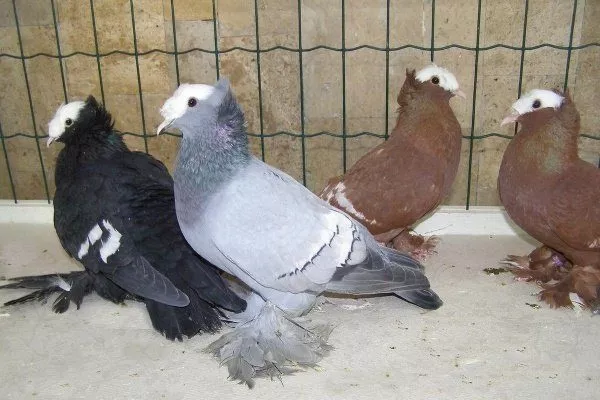
Breed characteristics. Whatever the base color, the forehead always remains white. The plumage resembles a monk's hood, hence the name.
Breeding. The breed requires care and attention to maintain its unusual beauty.
Peacock dove
The exact origin of peacock pigeons is unknown, but they are believed to have originated in India. The breed owes its name to its luxurious tail.
Description. The body is rounded and compact. The back is concave. The head is small, without markings. The eyes are large and dark. The beak is small, reddish or flesh-colored. The widely spaced legs are red. The plumage color ranges from white-yellow to gray-blue.
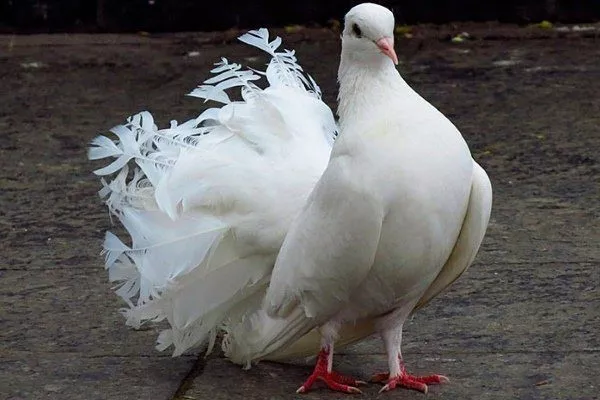
Breed characteristics. Not adapted to long flights, they are a graceful bird that loves to show off their beauty—spreading their magnificent tail and then freezing.
Breeding. These beautiful birds are commonly used at festive events and weddings. They can be trained to perform circular flights.
Berlin Long-billed
A very rare German breed. It can only be found in a few German cities. It was developed in Berlin in the 19th century.
DescriptionThey have a slender posture, with a vertically positioned head and body. The neck is also vertical. The beak is thin and elongated..
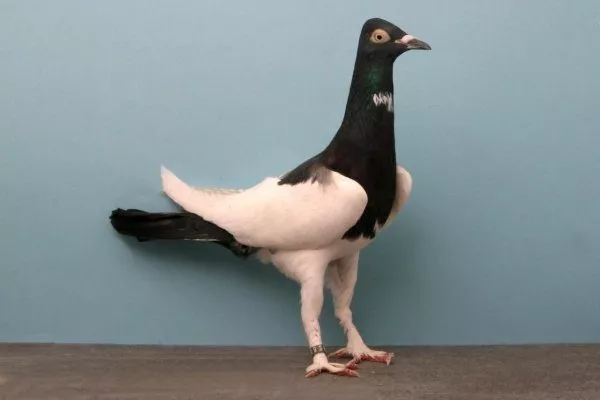
Breed characteristics. They fly well in flocks. They gain altitude well.
Breeding. This is a decorative breed; pigeons are kept in spacious rooms with cells for each pigeon.
King breed
This meat breed was developed by American breeders using homing pigeons, Romans and Maltese.
Description. The dominant color is white. Silver, red, and black pigeons are less common. The head is large, with a strong beak. The eyes are yellow or black. The neck is thick and long, and the chest is broad. The tail is small and carried erect. The legs are bare.
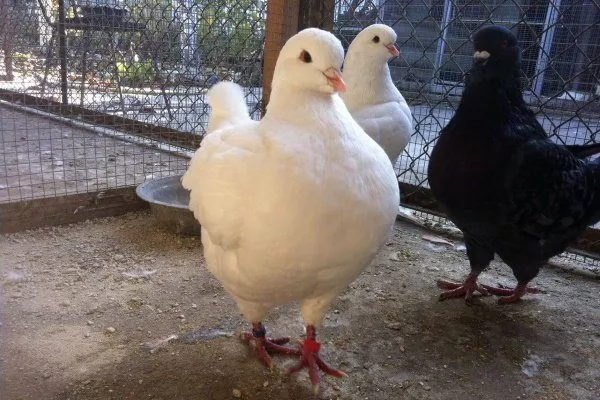
Breed characteristics. The pigeon weighs 700-800 g, maximum 1-1.5 kg. This is one of the best meat breeds.
Breeding. The breed is bred for meat and ornamental value. They are demanding in terms of housing conditions and feeding regimen.
Modern veterinary drugs extend the life of domestic pigeons up to 25 years.
The diversity of pigeons is impressive—different breeds, plumage, appearance, and practical uses. Anyone interested in pigeons can choose a pet based on their interests.