
Pheasants are stunningly beautiful birds, often kept for ornamental purposes. However, farmers don't breed them for their beauty. Wild pheasant meat has always been renowned for its unrivaled flavor. Today, these beautiful birds are raised on farms for their valuable meat and nutritious eggs.
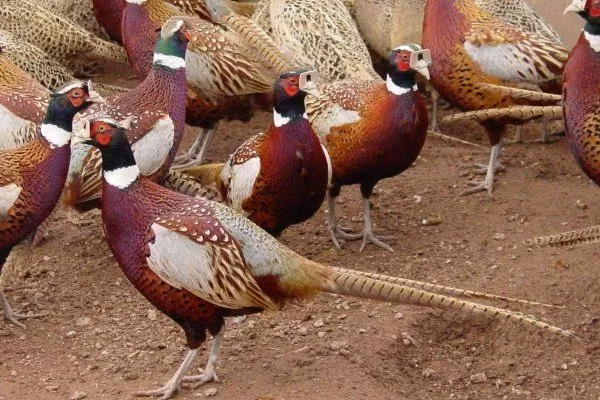
Description of the pheasant
Pheasants, despite the diversity of breeds, share common features that make them unmistakable. These gallinaceous birds are quite large and have a striking, distinctive appearance. Among their key characteristics are:
- Gracefulness.
- The males have beautiful plumage.
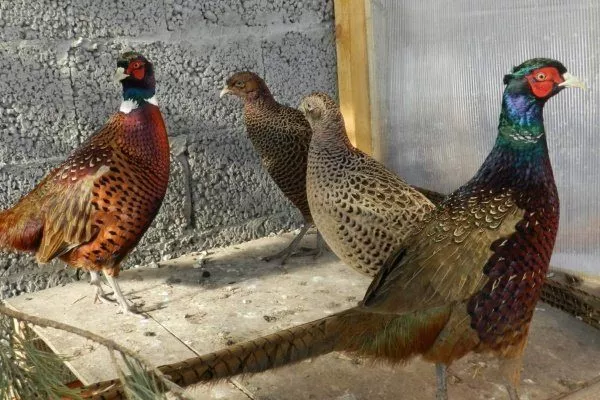
Females cannot compete with males in terms of ornamentation. Only males have bright, multicolored feathers. Females have gray plumage, their only "decoration" being black and brown speckles generously scattered over their bodies.
The coloring of males varies among breeds, depending on their habitat. However, all breeds generally have a green or blue-violet head and neck. There are featherless rings around the eyes. The rings are usually red, but can be other colors. The plumage color depends on pheasant breedsThe males are lavishly colored; nature has gifted them with the most vibrant colors – orange, blue, bright red, emerald.
Males are about 80 cm long, while females are slightly smaller. Any breed of pheasant can be bred for meat, but heavier birds are preferred. The choice is made based on meat and egg production.
Breeding Features
Pheasants are raised on both commercial and private farms. Commercial farming emphasizes accelerated weight gain and increased flock size. Farms raise up to 10,000 birds. Small farms focus on providing for their own needs and generating profit from sales.
To start a pheasant farming business, you'll need to purchase several colonies, which will reproduce and increase the flock's size. Beginning farmers are advised to start with the silver pheasant breed, which thrives best in temperate climates.
Why is it profitable to breed pheasants:
- unpretentious in terms of nutrition;
- gain weight quickly;
- bring real profit to their breeders – from the sale of meat, eggs and feathers.
To breed pheasants independently, they are housed in colonies: there should be 2-3 females per male. Alternatively, you can use 4 to 7 females per male. However, it's important to remember that the more females per male, the lower the egg production and the fewer fertilized eggs.
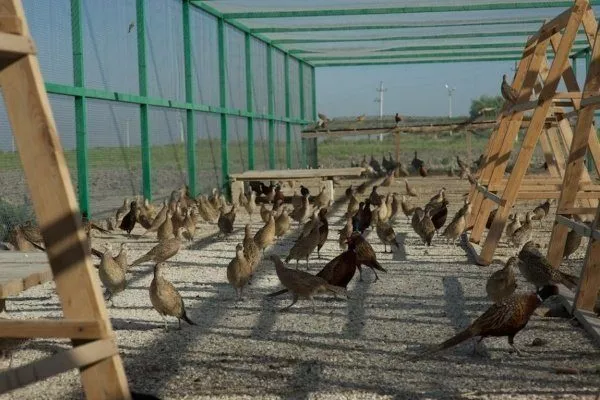
The main feature of breeding pheasants is that they cannot be kept in closed cages; this bird needs spacious, mesh-covered enclosures.
High-producing hens lay around 50 eggs per season. However, if desired, this figure can be increased to 100 eggs. To achieve this, laying hens are given:
- Biovit – 0.7 g.
- Terramix-10 – 1.1 g.
- Penicillin sodium salt – 0.3 g.
- Erythromycin – 21.5 g.
- Biomycin – 35-40%.
In the video below, a pheasant breeder shares his knowledge on raising pheasants at home:
Important aspects of purchasing poultry
To start a pheasant farm, you can use one of three methods of acquiring livestock:
- Catch pheasants in the wild.
- Buy eggs for incubation.
- Buy young or adult birds from a nursery or breeder.
Wild birds are hardy and undemanding, but they often refuse to breed in captivity. Therefore, a more reliable option is to purchase a family or young birds.
Buying eggs
Buying pheasants requires a considerable investment. If finances are tight, start with eggs. This option is much cheaper. However, to start a business "from eggs," you'll need incubators or brood hens. To ensure the pheasants hatch successfully, you'll need at least some poultry breeding experience. And most importantly, to get offspring from eggs, you should:
- Transport eggs carefully, avoiding any shaking.
- Prevent temperature fluctuations.
The cost of one hatching egg is 80-110 rubles.
Purchasing chicks
The most productive way to start your own mini pheasant farm is to purchase young birds. Avoid buying chicks that are too small. Ideally, birds aged 4-5 weeks are ideal. Characteristics of healthy young birds:
- active behavior, mobility;
- well-developed food search reflex;
- good spatial orientation;
- dry, withered umbilical cord;
- absence of growths on the beak and nostrils.
Pheasants do not have visible sexual differences until they are 3-4 months old.
Prices for young animals:
- One pheasant chick, up to 3 months old, costs 200-300 rubles.
- Individuals aged 3-6 months cost 450-600 rubles.
Adults
When purchasing pheasants, carefully inspect each individual. Pay attention to the following:
- Age. It's unprofitable to breed birds older than 2.5 years. After this age, pheasants' productivity declines.
- Appearance. Avoid birds that are too thin or have excess fat. To the touch, the bird should feel plump, firm, and fleshy.
- Health status. It's important to examine the feathers near the vent. A healthy bird will have dry feathers, while a sick bird will have wet and dirty ones.
To prevent inbreeding, it's recommended to collect birds from different locations. Offspring resulting from inbreeding have weak immunity and are often sterile. It's recommended to start with 2-4 pairs, and once you develop care and breeding skills, the flock can be increased.
Recommended breeds
The most popular breeds of pheasants:
- Diamond Pheasant. The diamond pheasant originates from the highlands of China. It is prized for its ornamental qualities, which is its main advantage. It is not worth raising this bird for meat. Firstly, it produces little meat. Males produce 0.9-1 kg. Secondly, the diamond pheasant does not tolerate cold well; it is necessary to provide the bird with a certain temperature regime. Temperatures below -30 degrees Celsius will simply kill this bird. Egg production is 30 eggs per season. It is monogamous.
- Silver Pheasant. An ideal breed for meat production, the Silver Pheasant, like the Diamond Pheasant, originates from China but has adapted well to the Russian climate. Its dense plumage helps it withstand cold temperatures. It weighs 2-6 kg. Egg production is 50 eggs per season. To stimulate productivity and increase egg production, 5-6 eggs are left in the nest under the hen. It is raised for meat and for taxidermy, which is used to decorate hunting lodges, restaurants, and other similar objects.
- Golden Pheasant. An ornamental breed. It is not raised commercially. Weight: up to 1 kg. Egg production: 25 eggs. Requires an insulated house.
- ✓ Consider the breed's climatic adaptation to your region.
- ✓ Assess the meat and egg productivity of the breed.
- ✓ Check the breed's resistance to common diseases in your area.
About productivity and breeding goals
There are dozens of pheasant breeds, but a few are particularly popular among farmers and breeders. Some are bred for meat, while others are raised for hunting or ornamental purposes. Raising pheasants at home rarely yields real profit; only a large farm can be truly profitable.
When choosing a decorative breed for breeding, the main things to pay attention to are the bird's appearance, its ability to reproduce in captivity, and its requirements for living conditions.
When raising pheasants for meat, the birds' appearance is secondary; their meat production is paramount. And if a farmer plans to replenish their flock themselves, the breed's egg production is also of great importance. The most productive meat breeds (compared by male weight):
- Steppe hunting - 1.7-2 kg.
- White – 2.3-2.7 kg.
- Lemon – 1.9-2.1 kg.
- Eared - 2.3-2.7 kg.
- Romanian – 2.4-2.8 kg.
Other breeds of pheasants cannot boast of high meat productivity; the weight of males ranges from 0.9 to 1.7 kg.
Pheasant egg production varies from 25 to 50 eggs per season, depending on the breed. The Silver Pheasant is the highest egg producer. This breed optimally combines high meat and egg production, making it a top-rated breed among farmers.
Content requirements
To breed pheasants, it is necessary to fulfill two main conditions for their maintenance:
- The standard area per individual, when kept in a family, is 2 square meters. If the birds are kept in large groups in aviaries, the standard area is 5 square meters.
- Aviary. Unlike other poultry, pheasants require an aviary enclosed on all sides, including the top, to prevent them from escaping. These aviaries are where the birds spend the winter and summer; special wintering houses are not necessary. This is provided, of course, that the breed can withstand the low temperatures typical for the specific area. Otherwise, insulated wintering houses will have to be built.
When pheasants are kept for meat, they are housed in large groups and fed regular chicken feed. Pheasant feeding depends on the breed—each has its own daily nutritional requirements. Pheasants must receive sufficient protein and calcium, otherwise they will become cannibalistic (eating their own kind).
Setting up a poultry house/aviary
A pheasant farming business requires initial investment. The first step is to set up a farm. Here's what you need to know when preparing pheasant enclosures:
- If birds are raised for hunting, it is better to keep them in high cages - they need to learn to fly.
- If pheasants are raised for meat, high fencing is not necessary.
Pheasants are very pugnacious. They often pluck each other's feathers. To preserve their feathers, breeders order special plastic goggles.
Pheasants require a spacious, fully enclosed enclosure. Aviary construction guidelines:
- The plant should be placed in a sunny location. Sandy soil is preferred.
- At the top there is a covering made of mesh, nylon or rope.
- Inside there are stairs, driftwood, bushes, etc.
- Grass. If there is none, they sow it.
- In harsh climates, a heating system and individual houses are provided – a must for heat-loving breeds.
- The back wall should be solid so that the bird feels protected and has privacy.
- A separate place for young animals.
There are particularly aggressive breeds that shouldn't be kept in large groups—they'll fight. Among these breeds are royal pheasants, which are kept in pairs.
Aviaries are constructed of metal or wood. A more modern option is polycarbonate. A polycarbonate structure is impact-resistant and dry. The size of the aviary depends on the flock size and breeding potential. The total area is calculated based on housing standards. The height of the aviary is from 2.5 m.
To build a simple enclosure, you will need the following materials:
- galvanized mesh (mesh size no more than 1.5 x 5 cm);
- rope or nylon mesh;
- slate, tiles or metal sheets;
- metal or wooden beams;
- sand and cement;
- nails and staples;
- gravel and sand.
Having decided on the materials and stocked up on the necessary tools, we begin to build the enclosure:
- The top layer of soil is removed. For disinfection, the area is sprinkled with slaked lime – a 2 cm thick layer.
- The foundation is prepared by digging a trench around the perimeter. The depth is 70 cm. The beams are laid in the trench and filled with mortar. The foundation takes 2-7 days to dry.
- They are putting up the frame. They are installing the posts.
- They stretch the mesh over the frame.
- They are pulling the roof of the enclosure.
- The floor is covered with a mixture of river sand and gravel.
- They set up snags, perches, and ladders. They construct huts from branches, resting houses, and put out boxes of ash for dust baths.
The video below provides a detailed look at the construction of pheasant enclosures:
Do you need an incubator?
Theoretically, there are three methods for breeding pheasants. But only one is truly productive: artificial incubation. Female pheasants very rarely sit on eggs; if they do, the breeder is extremely lucky. Of the 50 eggs laid, female pheasants only hatch 10-15. While you can lay eggs with turkeys, ducks, or chickens, they often crush the pheasant eggs.
What you need to know about incubating eggs:
- Before placing eggs in an incubator, you need to make sure they are fertilized by shining an ovoscope on them.
- Incubation periods depend on the type of pheasant and are often determined experimentally.
- Reliable data is available for the Asian pheasant. The incubation period for this breed is 24-25 days. For the Silver pheasant, it's 30-32 days.
Rules for incubating pheasant eggs at home:
- Before placing eggs in the incubator, they should be kept at room temperature for 5 hours.
- The warmed eggs can be placed in the device. The temperature is set to 37.8°C.
- After two weeks, the eggs should cool slightly. To do this, open the incubator door for 10-15 minutes. This procedure increases gas exchange and improves metabolic processes.
- The air humidity in the incubator should be 60-65%.
- From the 22nd day, they begin to reduce the temperature and increase the humidity in the apparatus.
- By the 24th day, the temperature should be 37.5˚C, humidity is increased to 80%.
Raising chicks
Pheasant chicks, hatched by any method, require careful care and proper feeding. Hatching pheasant chicks is not easy, so breeders often purchase additional chicks for breeding. However, these chicks should only be obtained from reputable breeders, and even then, the new birds should be quarantined to prevent any disease transmission.
From the first days of life
During the first days of life, chicks need to be given maximum attention, paying particular attention to the following points:
- Light. Artificially hatched chicks do not require artificial lighting. In fact, excess light is harmful to them, as it can cause cannibalism.
- Temperature. For the first three days, the temperature is maintained at 28°C. Then, it is gradually reduced to 20°C—this temperature is maintained until the birds are six months old. After six months, the pheasants are considered adults.
- Containment area. To prevent pheasant chicks from crushing each other, it's important to adhere to the space requirements. For newborn chicks, the recommended space is 30 per square meter.
- Feeding. For the first 2 months, the chicks are given hard-boiled eggs with chopped greens.
Feeding by week
For the first 2-4 hours of life, hatched pheasants do not require food. After this time, they begin to be fed gradually. The following is the recommended food for hatchlings:
- protein mixture with antibiotic – 40%;
- boiled chopped egg (2-3 days only the white, and then the yolk) – 35%;
- grated carrots – 10%;
- finely chopped greens (nettles and lettuce) – 14%.
During the first week, pheasants are fed five times a day, and four times a day during the second week. The homemade mixture can be replaced with chicken feed. The consumption of protein mixture with eggs, greens, and carrots depending on age is shown in Table 1.
Table 1
| Week | Volume of feed, g |
| 1 | 20-70 |
| 2 | 70-90 |
| 3 | 90-135 |
| 4 | 135-200 |
| 5 | 200-300 |
| 6-9 | 300-350 |
Starting in the second week, the chicks are given a small amount of grain feed. First, they are offered millet or clover seed, then larger grains such as rye or wheat. In addition to feed, the pheasant chicks should be provided with:
- clean water for drinking;
- crushed charcoal;
- small pebbles;
- fine sand for bathing.
Pheasant feeding
Pheasant nutrition depends on various factors, including the season, living conditions, and the bird's overall health. A single nutrient deficiency—in any direction—can immediately impact the bird's metabolism and overall health.
Rules
Rules for feeding pheasants:
- The diet is designed to meet all the bird's nutritional needs.
- The diet should contain components that match the bird's taste - the pheasant should eat its food with appetite.
- The volumes of feed offered must correspond to the capabilities of the digestive system, otherwise the bird may experience motor and secretory disorders in the digestive organs.
- The diet is designed to maximize the use of readily available and inexpensive feed, making pheasant keeping cost-effective. However, this should not in any way compromise the feed's quality, nutritional value, or energy content.
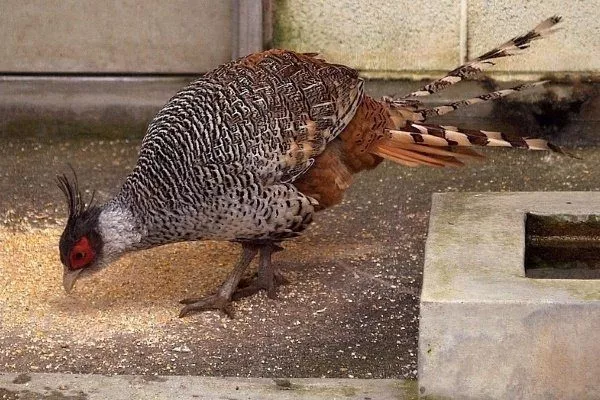
Feeders and drinkers
Feed accounts for a large portion of the cost of keeping pheasants. Therefore, it's important to choose feeders that prevent food from wasting—spilling, becoming dirty, or getting wet. If the feeder is made of wood, it's important to remove all knots, burrs, and sharp edges to prevent injury to the birds.
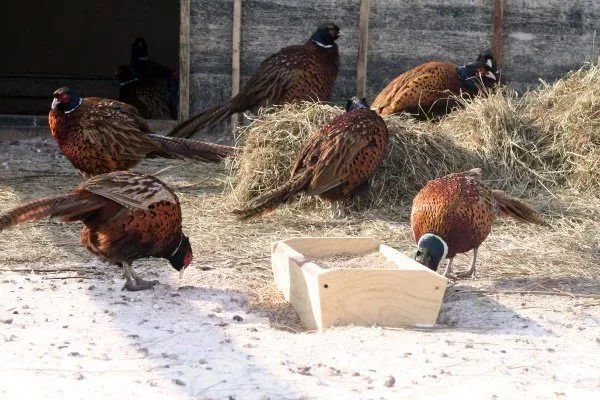
The feeder should be designed to allow birds to reach the food but prevent them from climbing into it. The most practical option is a trough-type feeder.
Features of trough feeders:
- the end walls are higher than the side walls - this allows you to install a spinner that prevents birds from landing in the feeder;
- Fill the feeder with food – 2/3 full.
Tray-type feeders—plastic, metal, or plywood—are also suitable for chicks. The sides should be up to 2 cm high. The overall size of a tray feeder is 30 x 70 cm. It is designed for 20-30 chicks.
Pheasant drinkers are usually made of glass or plastic. They can be trough, flow-through, or bowl-type.
Using feeders on stands can create additional space. There should be enough feeders to avoid crowding during feeding.
Diet
When pheasants are kept in enclosures, they forage for part of their own food, eating greenery, shrub leaves, insects, and larvae. The average feed requirement for an adult pheasant is 80 g. The exact amount is determined experimentally and depends on the breed.
When keeping pheasants on private farms, they are fed wet mash, which may consist of the following components:
- compound feed;
- food waste;
- grain (millet, wheat, barley, sorghum, ground peas, corn);
- succulent feed – greens, vegetables;
- animal feed.
Pheasants' diet may also include sunflower seeds, fruits, berries, and worms.
Pheasants, unlike other poultry, eat Colorado potato beetles – if you release the young into potato beds, you can avoid spraying the bushes with poison.
During the breeding season, the diet should become more caloric. In winter, apples and rowan berries should be added to the diet. In summer, crushed chalk, lime, and shell rock are added to the food—these ingredients determine the thickness of the shell and the beauty of the plumage.
Table 2 shows an approximate diet for adult pheasants for the summer and winter seasons.
Table 2
| Stern | Daily ration, g | |
| autumn-winter | spring-summer | |
| Concentrated feeds (wheat, millet, corn, etc.) | 50 | 45 |
| Succulent feed (potatoes, carrots, etc.) | 10 | 20 |
| Animals (cottage cheese, minced meat, meat and bone meal, etc.) | 6 | 9 |
| Vitamins (fish oil, yeast) | 3 | 2 |
| Minerals (salt, lime) | 3 | 3 |
You can prepare your own pheasant food. An example of an affordable yet complete diet (in %) is in Table 3.
Table 3
| Ingredients | Daily ration, g | |
| autumn-winter | spring-summer | |
| corn | 40 | 40 |
| wheat | 20 | 20 |
| wheat bran | 14 | 9 |
| sunflower cake | 10 | 15 |
| meat and bone meal | 3 | 5 |
| fish meal | 10 | 10 |
| fodder yeast | 3 | 1 |
Reproduction
Males begin mating in March or April. A few days after mating, the female begins building the nest. After 2-3 weeks, the female lays eggs. She typically hides them under a bush or in the grass. The female lines the nest with dry stems, down, feathers, and leaves.
The breeding pattern—the number of females per male—depends on the breed. The male is introduced to the females in February-March. Birds that have reached 2-3 years of age are not used for mating.
Optimal age for mating:
- for females – 8-18 months;
- for males – 1-2.5 years.
A month before mating, the female is given antibiotics along with her food—these increase egg production and the quality of fertilized eggs. If there are no bushes in the enclosure for the female to build a nest under, reed shelters are constructed.
During nesting, females are very timid, and males during the breeding season are so aggressive that they can beat their opponent to death.
Keeping pheasants in winter
Many pheasant breeds are frost-hardy. These are the ones recommended for breeding in Russia. However, it's also a good idea to provide them with conditions that will allow them to survive the winter safely.
When freezing temperatures hit, pheasants don't need their aviary as much, so farmers often move them to insulated coops for the winter. Supplemental lighting is installed in the coops to prevent a drop in egg production.
If you're raising winter-hardy breeds, there's no need to build a special wintering house. The only thing you can do is insulate the enclosure itself. To do this, lay a special covering on the floor and walls to protect the pheasants from drafts and wind.
During the winter, the diet is adjusted. The key is to provide the pheasants with energy-rich food. Corn kernels are the preferred grain. If whole grain is fed, the enclosure should be filled with plenty of fine gravel—it will help grind the grains in the birds' stomachs.
Diseases, their treatment and prevention
Pheasants are affected by three types of diseases:
- infectious;
- non-infectious;
- invasive.
- Examine your birds regularly for signs of disease.
- Ensure that the enclosures are clean and disinfected regularly.
- Vaccinate birds as recommended by your veterinarian.
Pheasants are especially susceptible to illness when kept in overcrowded conditions. Birds should be slaughtered immediately if they become ill:
- smallpox;
- flu;
- leukemia;
- infectious bursitis;
- Marek's disease;
- adenovirus infection;
- egg production decline syndrome;
- pullorosis;
- respiratory mycoplasmosis;
- infectious encephalomyelitis.
All other diseases can be cured, these include:
- coccidiosis;
- colibacillosis;
- helminthiasis;
- salmonellosis.
The most common diseases among pheasants are listed in Table 3.
Table 3
| Diseases | Etiology | Peculiarities |
| Smallpox | viral | High mortality rate. Accompanied by rashes, loss of appetite, and exhaustion. The rash is treated with Lugol's solution. |
| Laryngotracheitis | viral | It is transmitted through the air. Symptoms include coughing, sneezing, and refusal to eat. Treatment with antibiotics is based on test results. |
| Aspergillosis | fungal infection | Bronchial infection. Symptoms include thirst and bluish discoloration of the legs and beak. Treatment is with antifungal aerosols. |
| Dermatitis | non-contagious | Red inflammation at the site of injury. Treatment: antibiotics, iodine. |
| Emphysema | non-contagious | Lumps on the body that shift when pressed. Apply a cloth bandage and place in a tight cage. |
| Scabies | invasive | The causative agents are ticks. Treatment is with a 0.15% solution of Neguven. |
| Lice | invasive | Insects carry lice larvae. Treatment involves ash and sand baths. In severe cases, insecticide treatment is recommended. |
In private backyards, pheasants often come into contact with chickens and other poultry, which increases the risk of disease. Young birds are at particular risk.
Business goals and benefits
All products—meat, eggs, feathers—are expensive. The primary objectives of a farmer who decides to start breeding pheasants are:
- Determine the breeding goals.
- Choose the right breed.
- Find sales markets.
For meat and eggs
One male meat-producing hen weighs approximately 2-2.5 kg. 1 kg of meat costs approximately 1,000 rubles. Some eggs can be used for breeding and some can be sold. If a female lays 50 eggs in a season and hatches 10, 40 can be sold. Cooking eggs cost 55-200 rubles each. It's easy to calculate that one female brings in between 2,000 and 8,000 rubles per year from eggs alone.
To make a real profit, you need to maintain a large herd of sows and young animals for slaughter. It's important to know that meat can only be sold with the necessary documentation—without it, no reputable restaurant will buy meat from a private seller. Therefore, it's essential to establish a fully-fledged business that raises livestock in compliance with all veterinary standards and requirements.
Hunting
Wealthy people enjoy pheasant hunting. It's a pleasure to receive a beautiful bird as a trophy. Wholesale prices for adult birds range from 1,500 rubles or more.
Decoration
Pheasants have magnificent feathers, which were once used by aristocrats to decorate everyday attire. Today, they are used to create designer and theatrical costumes and are purchased for mini-zoos. Breeding ornamental breeds can be a lucrative business.
Sales of products
When raising pheasants, you need to decide for what purpose they will be raised: for meat or for live sale. Depending on this, you'll select the breed and the market. Profitability options:
- Sale of eggs. Pheasants lay more eggs than they can hatch. These eggs can be sold as a valuable dietary product. Pheasant eggs are considered a dietary product, and allergists recommend them for baby food. The eggs can be purchased by a restaurant or a specific buyer found online.
- Sale of adult birds. The consumers of this product are hunting farms. Pheasants can also be sold to taxidermists for stuffed mounts, and the feathers to art studios.
- Sale of carcasses. Pheasant meat is delicious, so it's sold in upscale catering establishments. They use it to prepare high-end banquet dishes. A direct supply agreement allows for a stable profit. Pheasant meat isn't sold in stores, so the farm gains a reliable distribution channel through restaurants.
Advantages and disadvantages of breeding
Advantages of the pheasant business:
- A high-quality and valuable meat with unrivaled taste and nutritional qualities, pheasant dishes are considered elite.
- Low competition. Due to the specifics of breeding and the cost of meat, few people are interested in pheasant farming.
Disadvantages of breeding pheasants at home:
- Pheasants have late sexual maturity;
- large area norm per individual;
- the pugnacious nature of pheasants;
- a high percentage of egg breakage due to the thin shell;
- losses due to disease outbreaks;
- significant monetary investments;
- The high cost of products complicates sales.
- There is little demand for the products – you still need to find distribution channels before you can get money for the grown produce.
What costs are expected?
One of the downsides of pheasant farming is the large investment required. To generate real profit from sales, you need a large, officially registered farm—only then can you sell the meat. Consequently, a large enterprise requires significant investment. To raise, for example, 100 pheasants, you'll need:
- The enclosures have a total area of 300 square meters. They should be of different designs – for individual families, for groups, for females, males, and young animals.
- There is a separate nursery of 15 square meters specifically for hatching chicks.
- Incubator – for hatching livestock.
The initial investment for starting a pheasant farming business is $5,000-$6,000. This includes the cost of equipment, inventory, and breeding stock. Under favorable circumstances, the project pays for itself within two years.
Reviews
Pheasant farming is an interesting and promising business. The focus is on the fantastic taste of the meat and demand from hunting grounds. Becoming the owner of a profitable pheasant farm requires a certain investment, official registration, and a desire to understand the intricacies of these beautiful and capricious birds.
A very comprehensive and comprehensive article. We were just planning to get pheasants, and this topic came up. Almost a year has passed now, and everything is going swimmingly for us. That's what it means to get the right information in a timely manner. Thank you so much!