
Bashkir bees are amazing insects, distinguished by their high productivity. They are hard workers, capable of working exhausting hours a day. They lack the strength to defend their nest, but if disturbed by humans, they can become enraged and sting the offender. This article examines the lifestyle of Bashkir bees.
Story
Previously, before the 1950s, honeycombs were completely removed from the hives. Bees died during the winter, but the combs were renewed and the hives did not rot. And colonies could often settle in them. wild beesThis method became obsolete in the 1960s, when bees were already kept in hives in Bashkiria. Bashkir beekeepers not only keep bees in apiaries but also engage in beekeeping in the forests.
Tree hollows and abandoned beehives often contain perfectly healthy bee colonies, free of any signs of disease. Nature itself cares for the offspring of wild forest bees. Their existence directly depends on honey plantsThese insects once colonized new lands and built entire villages near new beehives.
Appearance and character of insects
Many European bees are predominantly dark in color. Burzyanki bees received their name due to their location in the Central Russian Upland. These bees produce a unique, excellent-tasting honey product derived from collecting nectar from linden trees and other medicinal plants.
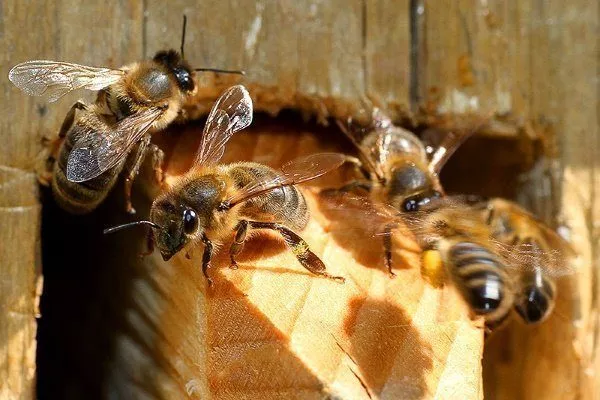
Bashkir bees are characterized by a distinctive dark gray body color with no yellow markings. They have a large body, making them the largest representatives of their species in the wild. However, they have a short proboscis, measuring 5.6-6.1 mm in length.
Regarding the character of the Bashkir bee, it is quite complex: bees are aggressive when using smoke and maintaining the hive.
Productive indicators
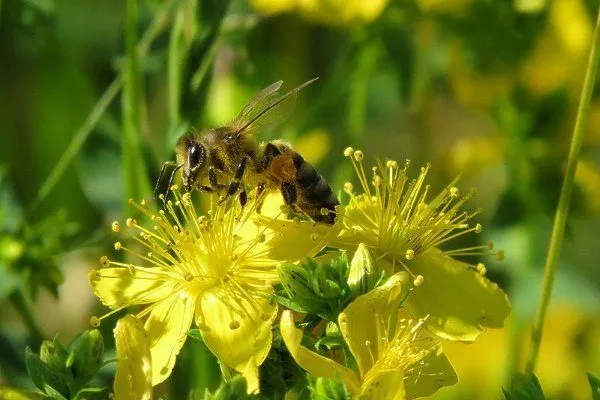
Bees enjoy collecting nectar from linden and buckwheat, as well as from cultivated and wild plants. Honey has attractive visual properties. With intensive work, bees can collect a large amount of nectar. During linden blossom season, a single colony of bees can bring 12 liters of nectar to the nest per day.
- ✓ Air temperature above 7 degrees Celsius for the start of active honey flow.
- ✓ Preference for monofloral honey collection for maximum productivity.
Bees collect nectar especially abundantly from monofloral honey flows. These insects accumulate a large amount of product in a short period of time. They tend to build large honeycombs with capacious and high-quality cells—a direct result of the bees' large size.
Compared to southern species, queen cells have thick, durable walls. The Bashkir bee's advantage is its extreme hard work, which is why beekeepers prefer this breed.
Lifestyle
Bees are highly productive, although they are quite sensitive to changes in weather conditions. These bees thrive in the sun, so they fly out to "work" in sunny weather when the air temperature is above 7 degrees Celsius.
When a hive is fumigated, the bee colony becomes incredibly aggressive. Not all individuals enjoy being visible, so they constantly hide in the hive's shadow. Replacing the queen is a stressful experience for them, as the colony becomes strongly attached to the "queen of the swarm," even if she is wild. This not only poses a challenge when reinforcing the colony for winter, but also makes it virtually impossible for two queens to coexist in the same hive. Therefore, handling these insects should be done exclusively in protective clothing to prevent stings.
Many beekeepers claim that Bashkir bees are capable of working 17 hours a day. Bashkir bees leave for work at 5:00 a.m. and return late at night, around 10:00 a.m. This industrious insect creates a dry seal of its honey, which is white. Because of this, comb honey has many attractive characteristics.
The Bashkir bee's greatest advantage lies in its being the most productive breed during intensive honey flow. However, its mediocre honey flow rate puts it behind many other species, and it takes a long time to adapt to new honey plants.
Honey collection
The Bashkir bee collects honey from small-leaved linden trees—a process that takes 10-12 days in early July. Bashkiria has tall linden trees, and a single century-old tree can yield as much nectar as a hectare of buckwheat. However, this doesn't happen every year.
The wood is sampled, drilled, and mixed with iodine. If starch is detected, the mixture turns blue—an indication of a good flow. The frequency of an excellent flow is eight years.
Features of wild and Bashkir honey
Some beekeepers prefer beekeeping to apiary management, but this is largely a tribute to ancient traditions, as the profitability of this type of activity is significantly lower, both financially and in terms of bee product production. Wild bee honey contains wax and pollen in greater quantities than honey extracted from frames.
The honey's color is darker. Bashkir bees are prized for their ripeness, as honey is harvested only once a year. The honey contains many beneficial elements and is free of harmful impurities, imparting a distinctive aroma and tart flavor.
How is honey flow obtained?
Burzyan bees aren't known for their high productivity, but they compensate for this shortcoming with their long working hours—the insects spend approximately 17 hours collecting honey. If they collect honey from a single honey plant, productivity is maximized. This produces a monofloral honey, but because it is collected only once a year, the product is polyfloral.
Bees are slow to adapt to new honey plants, but it's not true that the Bashkir bee collects nectar exclusively from familiar honey plants. They are quite prone to collecting honey from buckwheat and heather, acacia, and even sow thistle. Low productivity is due to minimal honey consumption in winter.
Bees feed on honey and bee bread, which are protein-rich foods. This shifts the balance toward proteins. Scientists are still debating what makes up propolis. Several theories have been put forward: from resinous tree buds or from pollen. However, Burzyan bees store pollen in large quantities.
Swarming
Swarming is a drawback of the Bashkir bee. On average, swarming among all insect families accounts for the majority of those found in apiaries. The same process occurs in wild swarms. The downside is that it is very difficult to restore them to a productive state. However, bees cope well with frosts and are considered frugal insects in terms of food consumption during the winter.
Beekeeping in beehives
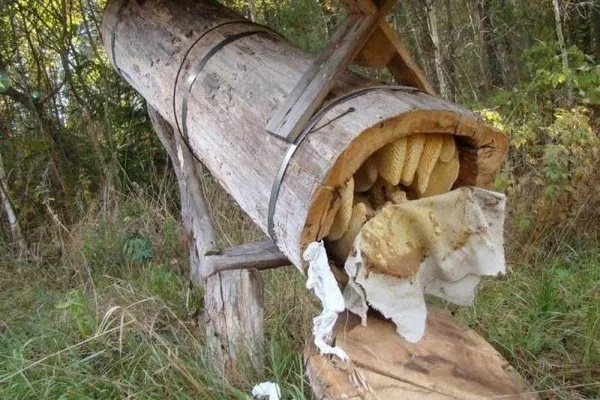
Bashkir bees are raised using both traditional methods, using hives, and apiculture. This is a special type of beekeeping in which the insects live in tree hollows rather than hives. This method requires selecting a site with sufficient forest cover. Coniferous and deciduous trees are suitable for making apiculture nests. These nests can last for approximately 300 years.
Instructions for making beehives and keeping bees:
- Making a beehive takes just one day, using modern tools. Previously, it took weeks. Beekeepers once believed that collecting all the honey was the correct technique. But over time, they realized that the bees needed some for food, so they began reserving some for them.
- The beehives are made using small round bars resembling a tree trunk. The center is removed and then cleaned out, creating hollows that serve as a home for bees. To attract insects, the inside is coated with wax.
- Next, you need to make guides—the bees will use them to build their combs. Nail the blocks just below the lid. Then tie the beehives together with wire. In areas with severe frosts, insulate the bee houses with moss.
- Beekeepers who keep bees suffer greatly due to severe swarming. This is because the beehives are not disassembled. However, there is a solution: the beehive is sawed open, leaving a circle on top for honey collection.
It's best to make large hives—this minimizes swarming. However, smaller hives also have their advantages, as they help draw off bees and strengthen weaker colonies.
Advantages and disadvantages of the Bashkir bee
The Bashkir bee has quite a few disadvantages:
- When working with bees, you need to wear a protective suit, because the insects can attack anyone who disturbs them.
- A queen bee is very difficult to replace. The Bashkir bee forms a strong bond with its "swarm queen" and is reluctant to let her go, even if she is a wild species.
- It is practically impossible to strengthen a colony before the winter period, the reason for this is that two queens are unable to coexist in one hive.
- Behaves aggressively with the beekeeper - does not like it when smoke is used and the hives are disturbed.
- The Bashkir bee is characterized by strong swarming and is difficult to return to work.
- They tend to hide at the very depths of the hive.
The Burzyan bee has many positive aspects:
- Beekeepers initially valued this breed for its hard work. Intensive work contributes to a large harvest. Another characteristic of this breed is that bee colonies can fly out even in light rain to "hunt" if they sense a small harvest is possible.
- In a short period of time, they bring a lot of food into their houses and actively build honeycombs.
- Careful and careful handling of honey yields makes the product not only tasty, but also visually attractive.
- Insects are able to easily survive the winter without using up their winter food reserves.
Beekeepers' reviews
Beekeepers have varying opinions about the bees' behavior and lifestyle. Here are some characteristics of Bashkir bees, and beekeepers have described them as follows:
Among the disadvantages, I noted the bees' inability to defend themselves. If attacked, they are unable to fight off the enemies and are unable to defend their nests. Other bee species can easily destroy Bashkir bees. But they also have a significant advantage: they drive away any nectar they find, preventing other insects from collecting it. Throughout all the seasons, I have not observed Bashkir bees to be prone to theft.
The Bashkir wild-hive bee is one of the finest varieties of European bees. This insect has distinctive external characteristics, a unique personality, and a lifestyle unlike that of other bees.