
Bee poisoning can be caused by a variety of factors, ranging from infection to improper care of the insects. It often leads to mass deaths of hive inhabitants. Each case presents a complex of symptoms, indicating the intoxication and its cause.
Honeydew poisoning of bees
One of the most common causes of mass bee deaths is honeydew poisoning. This occurs when the insects' food contains honeydew, a substance produced by certain insects (aphids, psyllids) and plants or trees such as poplar, aspen, and fir.
Honeydew, which is harmful to bees, is sweet in taste, so they consume it in large quantities. Bees most often consume honeydew when there is a nutritional deficiency, causing severe digestive distress.
Mass poisoning weakens a bee colony, and the queen may die. In the most severe cases, all bees in the hive die.
When examining dead bees, changes in the intestines are revealed: they become black or dark brown. They become flabby and fragile, easily destroyed.
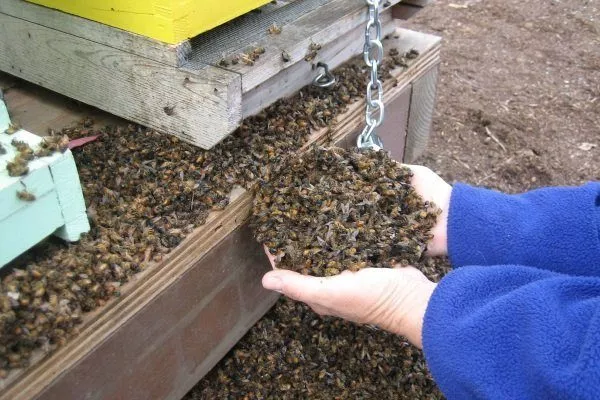
Honeydew poisoning is most often observed in the summer, when large quantities of honeydew accumulate in the nest. The possibility of mass poisoning during the fall and winter cannot be ruled out.
To detect honeydew and remove contaminated honey, you need to check it as follows:
- take a tablespoon of honey from the hive and dissolve it in the same amount of water;
- add 10 parts of ethyl alcohol to the resulting composition;
- shake the mixture.
If the mixture is cloudy, it contains honeydew, which is harmful to insects. If it remains clear, the honey is safe.
If the honey is found to be contaminated during testing, it should be removed and disposed of, and replaced with new honey. You can also provide the bees with large quantities of sugar syrup to allow them to store the necessary amount of honey for the winter. In this case, at least 8 kg of sugar should be provided per colony.
Nectar intoxication of bees
Honey bees can become poisoned by nectar when collecting it from plants toxic to bees. The risk of infection increases if such plants are found within a 1 km radius of the apiary.
Poisonous plants that can cause nectar toxicosis include:
- saffron;
- wolfberry;
- black nightshade;
- wild rosemary;
- rosemary;
- knapweed;
- onions;
- marsh marigold;
- oleander;
- broom;
- St. John's wort;
- rhododendron;
- spurge;
- noble laurel.
There are approximately 35 families of higher plants in nature whose pollen is poisonous to bees. Under adverse weather conditions, even non-poisonous plants can produce toxic nectar.
The pathogenicity of nectar is due to the presence of essential oils, alkaloids, saponins and some other components that cause the death of honey insects.
Nectar poisoning most often occurs in late May or early June. The risk is increased by adverse factors such as drought, rain, and low temperatures.
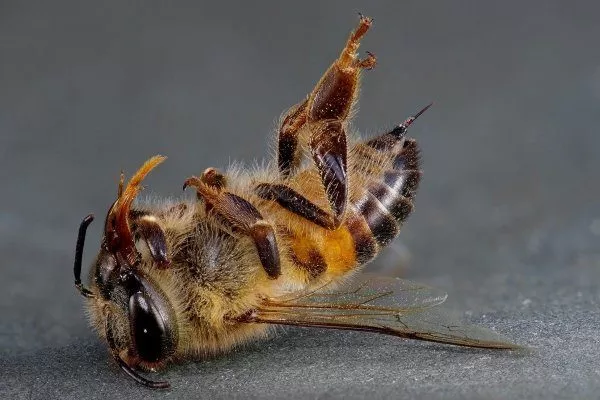
Nectar poisoning begins with agitation in bees, which gradually progresses to depression. Due to paralysis of the limbs, wings, abdomen, and antennae, the insects lose the ability to move and fly. They are only capable of making weak movements.
The duration of intoxication, as well as the outcome, depend on the specific poisonous plant from which the nectar was collected. If the insects collected nectar from henbane, the period of intoxication lasts up to 20 days, after which mass death occurs. Bees also die in large numbers from buttercup pollen. When collecting nectar from onions, insects suffer from severe digestive problems. Furthermore, queens' egg production decreases, and some larvae die.
Honey containing toxic nectar causes poisoning not only to bees, but also to people.
| Plant | Lethal dose (mg/bee) | Latent period | Specific symptom |
|---|---|---|---|
| Rhododendron | 0.3-0.5 | 2-4 hours | Abdominal cramps |
| Aconite | 0.7 | 30 min | Proboscis paralysis |
| Henbane | 1.2 | 12-20 days | Aggression |
| Buttercup | 0.9 | 3-5 days | Orange stool |
| Spurge | 1.5 | 6-8 hours | Sticky wings |
Pollen poisoning
Honeybees are also poisoned by pollen. Pollen toxicosis is a non-contagious disease belonging to the group of phytotoxicoses.
This disease is associated with the flowering period of plants growing near the apiary that are toxic to insects. Bees are also exposed to pollen from the plants mentioned in the previous section. They contain an abundance of glycosides, alkaloids, and essential oils that are harmful to honey plants.
Foraging bees, which deposit pollen in their hind legs and bring it back to the hive, are unaffected. Young bees aged 3-13 days are more susceptible to poisoning when they consume contaminated pollen brought into the hive.
Under the influence of toxic substances contained in the pollen of poisonous plants, digestion and peristalsis are disrupted, and undigested particles accumulate in the body, which causes poisoning.
The bees are restless and agitated. They are unable to move. Many insects fall out of the hives and crawl along the ground.
Emergency measures during an outbreak
- Isolate the hive from flight (install a net)
- Replacing 100% of feed with sugar syrup 1:1
- Introduction of absorbents (activated carbon 5g/liter of syrup)
- Irrigation of frames with 0.9% saline solution
- Temperature control in the hive (strictly +24…+26°C)
If the poisoning is severe, then not just individual bees die, but a significant part of the bee colony, not excluding the queens, drones, as well as open and sealed brood.
Poisoning also occurs when consuming pollen from non-poisonous plants, which harbors toxin-producing microbes. These pathogenic microorganisms belong to the Mucor, Aspergillus, and Actinomycetes groups.
Salt poisoning of bees
Salt toxicosis is another type of bee poisoning. It occurs in autumn, winter, or spring. The intoxication results from an excess of mineral salts in the honey bee's body, ingested through food and water.
Salt poisoning is most often associated with feeding bees sugar waste mixed with mineral salts, as well as water with high salt content. Bees can become infected by drinking contaminated wastewater from livestock farms.
Salt toxicosis in insects causes degenerative changes in the intestines, as well as the accumulation of microorganisms in certain areas of the intestine.
Salt poisoning most often affects worker bees. The severity of the intoxication depends on the salt concentration in the feed or water.
Symptoms of intoxication are typical: the insects initially become agitated, actively crawling in and out of the hive. They develop intense thirst.
After some time, the bees become lethargic and suffer from diarrhea.
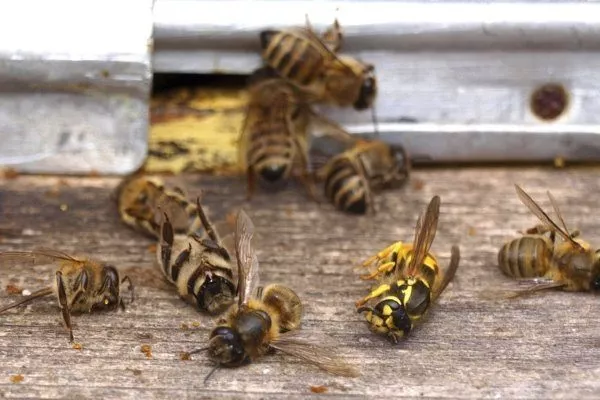
Adverse outcomes are more common in winter. Bees experience irreversible degenerative changes in the intestines, ultimately leading to death.
Chemical intoxication
Chemical toxicosis in honey plants occurs due to poisoning by chemicals (herbicides, insecticides) used to treat plants to control agricultural pests.
Poisoning can be caused by:
- Intestinal insecticides (arsenic, methoxychlor, barium, thiophos): poisoning occurs when chemicals enter the bee’s body, which cause the death of both adults and larvae;
- aqueous solutions of mineral fertilizers, which are sprayed on plant leaves;
- Furmigating insecticides used in vapor or gaseous form (hydrocyanic acid, dichloroethane, naphthalene).
Chemical intoxication is recorded during the period of bees’ vital activity – from April to October.
The course of poisoning depends on the type and concentration of the chemical. When a bee ingests a fast-acting poison, death occurs quickly. In this case, the poisoned bees are unable to return to the hive and die en route.
If a bee collects nectar containing a slow-acting chemical, it manages to bring it back to the hive. This causes mass die-offs of colonies.
| Group of poisons | Half life | Antidote | Quarantine |
|---|---|---|---|
| Organophosphorus | 3-7 days | Atropine | 14 days |
| Pyrethroids | 10-15 days | Glucose 40% | 21 days |
| Neonicotinoids | 30-45 days | No | 60 days |
| Copper-containing | 20 days | Milk | 30 days |
Chemical poisoning in bees occurs in a typical manner, beginning with a phase of excitement, gradually flowing into a state of depression.
Prevention of poisoning
Monitoring schedule
| Parameter | Frequency | Method | Norm |
|---|---|---|---|
| Honeydew test | 2 times/month | Alcohol test | Transparency |
| Chemical analysis | Before the honey harvest | Laboratory | 0% pesticides |
| Microscopy | At death >5% | Intestinal preparation | No necrosis |
Measures to prevent bee poisoning include the following:
- Temporary isolation of bees during chemical treatments within a 7 km radius of the apiary. Apiary owners must be notified of the planned treatment three days in advance.
- Proper storage of chemicals. Sites where toxic mixtures were produced are ploughed. Paper bags and wooden decks are burned.
- Returning insects to a place treated with hazardous substances should be done no earlier than 20 days later.
- Creating a dedicated beekeeping forage base. Sweet clover, buckwheat, and other honey plants should be planted in apiary plots. Planting should be done at a time when their flowering period coincides with the chemical treatment of the plants. You can read about the best honey plants for bees. Here.
Bee poisoning most often occurs when bees consume pollen or nectar collected from poisonous or chemically treated plants. To reduce the risk of poisoning among honey plants, it's important to create an adequate food supply for bees and follow safety precautions when treating plants with chemicals.