
Farrowing is a crucial event in the life of a pig farmer. This complex process requires careful preparation in advance to ensure a quick and uncomplicated birth. This requires at least a minimum of knowledge and necessary skills.
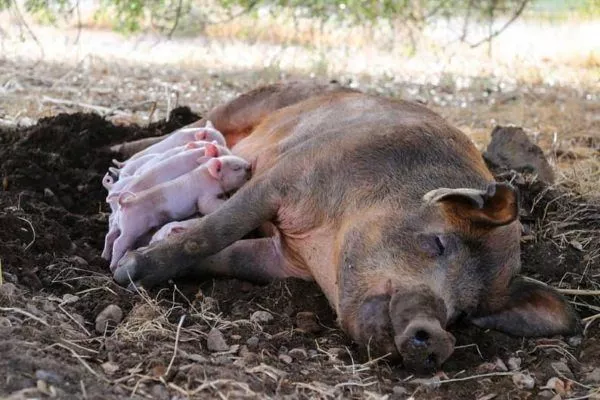
Preparing for farrowing
Knowing the sow's mating date and the estimated birth date, you need to take care of the farrowing room, equipment, and calling a veterinarian in advance.
Typically, the animal is moved to an individual, dry, and clean stall. It should have optimal artificial and natural lighting. If the pig farrows in winter, the stall must be additionally insulated (the ideal temperature is 18-20 degrees Celsius) and ensure there are no drafts.
Preparing the premises
The farrowing room should be prepared no later than 6 days before farrowing, removing all unnecessary items. The following tasks should be completed in the room:
- Disinfect the floors, walls, and ceilings. This is necessary to prevent diseases of the queen and her offspring. Prepare a disinfectant solution using 100 grams of alkali per 500 grams of hot water. Wash the interior with it, then whitewash the walls and ceilings with slaked lime.
- Change the bedding. To provide the sow with optimal conditions for birthing, cover the floor with dry straw.
- Prepare a place for the litter. In rooms that are unheated in winter, construct an insulated corner with a covered roof for the future litter. Hang a lamp (preferably an infrared lamp) in it to provide the necessary warmth for the piglets. Line the nest with a thick layer of dry straw.
- It's advisable to use a metal waterer—it's more hygienic than a wooden one. Remember to change the water regularly; there should be plenty of it.
Preparing the tools
A veterinarian may not always be present during a pig farrowing in a backyard. To prevent potential complications, it's important to ensure that essential tools, equipment, and at least a minimum of aseptic preparations are readily available.
- dry diapers;
- iodine or brilliant green;
- gloves;
- cord and scissors;
- hot water.
To help a sow farrow (it's rare, but it does happen that the animal is unable to do this on its own), you need to have special veterinary equipment for farrowing:
- universal tongs;
- hook;
- obstetric loop.
All the above tools must be sterilized. Boil water should be prepared, hands washed up to the elbows, and rubber gloves should be put on. As soon as the first signs of labor appear, the sow's lower abdomen, including the teats, should be washed. This will help prevent infection.
Timing and duration of farrowing
The gestation period for sows is approximately 4 months (114 days on average). However, a 1-1.5 week deviation from the average is considered normal.
The duration of pregnancy depends on the individual characteristics of the animal. For example, sows farrowing for the first time often give birth 6-8 days later. The breed of the animal also influences the duration of pregnancy.
Sows that are giving birth more than once often give birth to premature offspring.
The duration of farrowing itself is directly affected by the animal's physical condition. It can average:
- from 2 to 4 hours – in strong females with good pushing;
- up to 10 hours – in sick and weakened females.
Among the negative factors affecting the duration of labor in sows, the most common are poor nutrition and inactivity. As a result, the sow has difficulty farrowing on her own due to weak contractions. It is advisable to have a human present to assist the animal if necessary.
Signs of approaching farrowing
About a week before the scheduled farrowing date, it's important to observe the sow especially closely to avoid missing the onset of labor. For easier observation, the pregnant sow should be separated from the main herd.
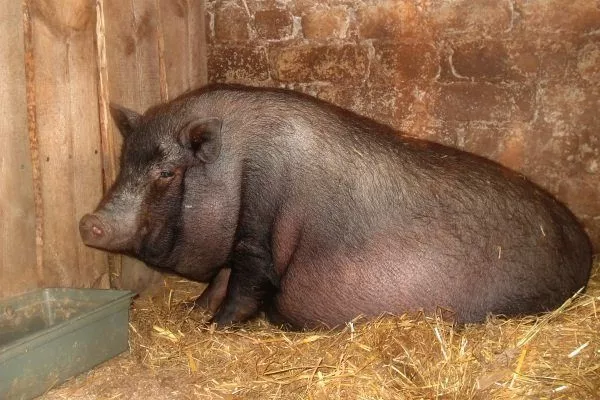
Characteristic signs of approaching farrowing are:
- Restlessness. The animal begins to lie down and then suddenly get up, grab straw in its mouth to make a nest, and searches for a secluded spot. Sometimes it displays aggression.
- The udder enlarges. It swells and begins to sag along the entire length of the body.
- Redness and enlargement of the loop (external genitalia).
- Lower back sagging. Typically, it begins to sag 2-3 days before farrowing.
- Colostrum formation. This is observed the day before farrowing when attempting to milk the teats.
- The appearance of mucus from the genitals.
Labor can begin at any time of day, but most often farrowing occurs at night, especially if the signs of its approaching were particularly pronounced the day before.
Feeding and walking the sow before farrowing is not recommended. However, access to clean water should be unlimited.
Immediately before giving birth, the animal, having chosen a suitable place, lies down on its side and prepares to give birth to its offspring.
Farrowing and human assistance in this process
How does farrowing take place?
The animal's uterus consists of two birth canals, or "horns." With each contraction, a piglet emerges and the water breaks. Piglets are born in a strict sequence: first from one horn, then from the other. The placenta typically joins in pairs.
The time between the birth of the first and second piglets is short—only 5-7 minutes. The remaining piglets are born on average 20 minutes apart. The last two piglets take the longest to be born.
Helping a first-time sow
The most difficult farrowing process occurs in first-time sows. Humans often have to assist them during this process.
When a piglet appears in the mother's genital area, it must be picked up and the amniotic sac must be ruptured if it has not burst on its own, otherwise the newborn may suffocate.
If the victim remains in the shell for a period of time, cardiac and respiratory arrest may occur. In this case, the following resuscitation measures are performed:
- Chest massage. Also, use the palm of your hand to gently but firmly hit the piglet's face and sides. Continue this process for two minutes.
- Artificial respiration. If the first option is unsuccessful, mouth-to-mouth resuscitation is performed using a cloth folded in two or three layers.
- Water therapy. A lifeless piglet is placed in water heated to 45 degrees Celsius, immediately removed, and placed in a bucket of room-temperature water.
- ✓ Availability of an oxygen cushion for resuscitation of piglets with signs of asphyxia.
- ✓ Stock of broad-spectrum antibiotics to prevent infections in the sow.
If the sow's membranes break prematurely, an oily fluid should be artificially injected into the birth canal. Flaxseed infusion or sunflower oil, boiled and cooled, are suitable for this purpose. If the cervix remains undilated for a long time, warm water can be injected into the birth canal to speed up the process.
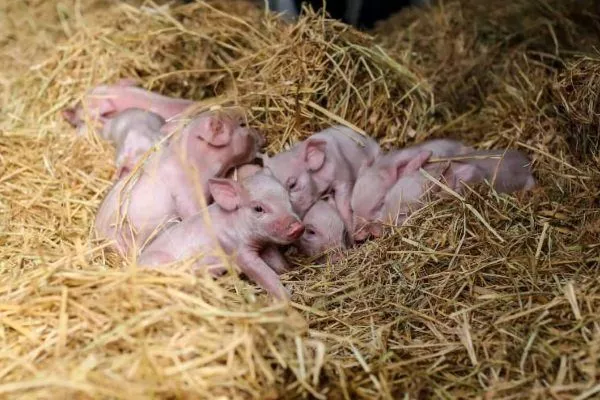
After a piglet is born, its body must be thoroughly dried, its nasal passages must be cleared, and any remaining mucus must be removed from its mouth. The umbilical cord should also be cut approximately 5 centimeters from the body, and the navel must be treated with brilliant green or iodine solution. Then, especially in cold weather, the newborn is warmed with an infrared lamp.
After this, they are asked to attach themselves to their mother's teats. Weakened piglets are placed on the teats located at the beginning of the sow's body, as they are more saturated with milk. Colostrum protects the newborns, who do not yet have their own immunity, from infections and prevents illness. Otherwise, they may die.
Help with prolonged labor
A narrow birth canal, abnormal fetal position, and many other factors can cause delayed farrowing. In this case, the following steps should be taken:
- remove the animal from the farrowing room;
- do a stomach massage;
- give sweetened water to drink.
If active labor continues for 2-3 hours or more while the piglets are still in the womb, human assistance is required. A veterinarian is preferred. This procedure requires gynecological gloves to reach up to the elbows into the uterus. To prevent infection, the gloves should be lubricated with nitrofurazone or another specialized antibacterial agent. After farrowing, it is advisable to administer an antibiotic injection as a preventative measure.
The algorithm of actions is as follows:
- A glove lubricated with Vaseline is put on.
- The birth canal is washed with a weak soap solution (it will improve sliding).
- The hand is carefully inserted into the vagina.
- The piglet is palpated and the reason for its inability to exit is determined.
- Pushing is expected, after which the fetus begins to gradually and carefully move towards the exit, so as not to damage the uterus.
As a rule, a single treatment is sufficient. The procedure is repeated if necessary.
Aggression during childbirth
Some sows become irritable and angry during labor. Be prepared for this. At such moments, the animals are capable of not only crushing the newborn piglets but also chewing them. In this case, the sow will need to be supervised throughout the labor, and the piglets should be isolated in a box or separate pen after birth.
What steps should be taken if an animal's aggression persists after farrowing? Typically, nervousness isn't constant, and after a short period of time (this can last several hours), it subsides and the sow calms down. To determine the animal's reaction, try gently introducing one piglet to the sow's teats.
In the future, if cases of aggressive behavior occur, it is advisable not to use such a sow for breeding any more.
Large offspring
As a rule, a healthy, not overly fat sow producing the required number of piglets does not require outside assistance. The optimal litter size for a first-time sow is seven piglets (plus or minus one piglet); for other sows, especially mature sows, the average litter size is 12 piglets.
Sometimes, Large White sows produce even more litters. This is abnormal, as a sow typically has 12 teats, designed to adequately feed exactly that many piglets. In this situation, or if milk production has dried up, it's necessary to switch to artificial feeding.
This video shows how a sow farrows and how a person can help with the process:
Caring for a pig after farrowing
Each pig during this period requires an individual approach, which depends on its physiological state and other characteristics. However, general recommendations should be followed to ensure the survival of the piglets and positively impact the health of the sow:
- The animal must be provided with high-quality water, as it needs to quench its thirst regularly after birth. A lack of water can not only negatively impact milk production but also lead to piglet consumption.
- To improve the sow's digestion and to avoid overloading her stomach with coarse food, it is necessary to give her the first feed - a liquid slurry - 12 hours after giving birth.
- To prevent a decrease in milk production, the animal must be transferred to a full diet one day after birth.
- Pay special attention to thin sows with large litters. Their diet should contain a large amount of compound feed and high-fat foods.
- Sows should be supervised at all times. If the animal is primarily lying down, it should be gently lifted at least 2-3 times a day. A short walk is recommended on the fourth day after farrowing.
Following these recommendations will help stimulate appetite, improve the digestive system and the overall condition of the sow.
Possible problems after farrowing
It's important to observe the sow for some time, as birth is a complex process, and various complications can arise that aren't immediately noticeable. The delivery of the placenta is crucial. If all goes well, the sow's labor pains subside, she gradually recovers, and begins caring for her litter.
The placenta must be removed from the pen immediately after delivery. Otherwise, the sow may consume not only it but also the piglets.
Typically, the placenta doesn't come out immediately, but rather after 4-7 hours. If the placenta hasn't come out within this time, you should consult a veterinarian.
For the first four days after giving birth, the sow will secrete lochia. This fluid is initially reddish, then brown, and eventually becomes clear. It should not emit a putrid odor; if so, consult a specialist.
Sows often experience constipation after farrowing. In this case, it's necessary to feed them a small amount of liquid oatmeal and bran mash 6-8 hours later. It's best to transition the sow to a full diet later to prevent excessive lactation and mastitis.
Mastitis also often occurs in the first hours after farrowing. It is treated with antimicrobials and cold clay and vinegar (3 tablespoons per 1 liter of water) applied for 3-4 hours, with the teats regularly moistened with cold water.
If swelling of the mammary gland occurs, piglets are allowed to suckle every 3 hours, after first lubricating the gland with Vaseline oil, lard or mastitis ointment.
Sometimes a sow refuses to eat after farrowing. She should be offered high-energy, highly digestible feed, as she's been stressed, exhausted, and depleted of energy. Sugar dissolved in water is a good option. If the sow can't stand up on her own, help her up. Otherwise, consult a veterinarian.
Farrowing in pigs is a stressful process for both the animal and its owner. To minimize potential complications, the owner must be aware of and consider not only feeding a pregnant sow, the duration of pregnancy, the timing of farrowing, pre- and post-partum care, and also the ability to provide assistance directly during farrowing. Then you can hope for a healthy, viable litter.