
African swine fever is a highly contagious and acute viral disease. It can cause rapid death of an entire pig population. Initially, the disease affected wild boars, but the virus subsequently spread to domestic pigs.
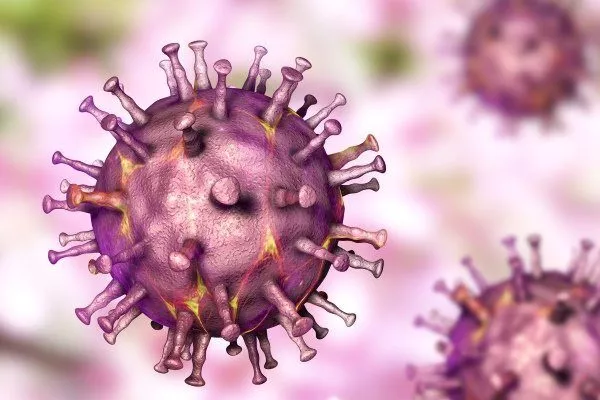
General characteristics of the disease
African swine fever is also known as Montgomery's disease, named after the researcher who demonstrated its viral nature. It is an infectious process characterized by inflammation, fever, and disruption of blood flow to internal organs.
The disease-causing DNA-containing virus of the Asfarviridae family spreads to the entire herd, regardless of the age of the pigs.
In individuals who died from this disease, the following pathological changes were observed in the body:
- multiple connective tissue lesions;
- multiple sources of hemorrhage;
- severe pulmonary edema;
- enlargement of the spleen, kidneys, and liver;
- serous-hemorrhagic fluid in the respiratory system and in the stomach;
- content of blood clots in the lymph.
The virus that causes this severe disease is resistant to external conditions. It survives temperature fluctuations and reproduces during desiccation, crystallization, and decay. The virus is also resistant to formalin and alkaline environments, but is sensitive to acids.
This virus can survive in pickles and smoked foods for several weeks or months. It remains active in feces for about 160 days, and in urine for up to 60 days. It can survive in soil for 180 days, and in bricks and wood for 120 to 180 days. It remains active in meat for about 5-6 months, and in bone marrow for up to 6-7 months.
The first case of this formidable disease was recorded in 1903 in South Africa. The infection spread to wild boars. It subsequently spread to many African countries in the sub-Saharan region.
In the mid-20th century, a case of African swine fever was recorded in Portugal. This occurred after meat products were imported from Angola. The infection subsequently spread to Spain, Cuba, France, the Netherlands, and Malta.
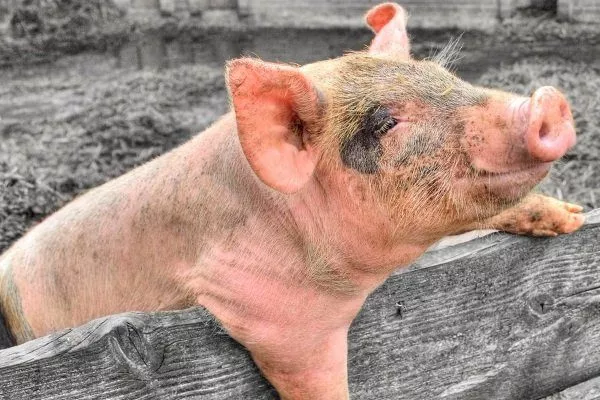
In Russia, as well as Ukraine, Georgia, Armenia and Abkhazia, African swine fever was first identified in 2007.
The statistics for African swine fever outbreaks by year are as follows:
- Kenya – 1921;
- Portugal – 1957 and also 1999;
- Spain – 1960;
- France – 1964, as well as 1967 and 1974;
- Italy – 1967, 1969, 1978-1984 and 1993;
- Cuba – 1971;
- Malta – 1978;
- Dominican Republic - 1978;
- Brazil - 1978;
- Belgium – 1985;
- Holland – 1986;
- Russia – 2007;
- Georgia – 2007;
- Armenia – 2007.
Analyzing the reasons for the rapid spread of infection, researchers concluded that in most cases it is facilitated by contaminated food waste.
Plague was brought to Russia from Georgia. In Georgia, the virus spread due to improper waste management from international ships carrying contaminated meat and meat products. Media reports indicated that carcasses of animals killed in the country were found in regular landfills, riverbanks, and on the seashore.
In areas considered to be permanently affected by African swine fever, outbreaks occur periodically: in Africa, this viral process occurs every 2-4 years, in Europe – every 5-6 years.
Currently, this infectious disease of pigs is registered in 24 countries worldwide.
Methods of virus transmission
The source of the virus is a sick pig. African swine fever is also transmitted by virus carriers, which can include humans, insects, birds, and animals.
This disease, which affects domestic pigs, is transmitted in the following ways:
- as a result of close contact between a sick animal and a healthy one: infection occurs through the oral cavity, skin, and mucous membranes of the eyes;
- through contaminated food waste, as well as equipment intended for slaughtering pigs;
- from domestic animals, birds, rodents, insects and people who were in an infected area - a slaughterhouse or warehouse;
- through the bite of a virus-carrying tick;
- through vehicles that were contaminated during the transportation of sick pets;
- through food waste that is added to pig feed without being properly processed first.
The incubation period of the disease lasts about 5-10 days.
Comparison of transmission routes
| Route of transmission | Risk of infection | Preventive measures |
|---|---|---|
| Direct contact | High | Isolation of sick individuals |
| Food/water | Very tall | Thermal processing of feed |
| Ticks that carry diseases | Average | Regular pest control |
| Transport | High | Disinfection of transport |
| People/animals | Average | Access restriction |
This disease poses no danger to humans, as they are not susceptible to this type of virus. However, humans can carry the virus and infect pigs through contact with them.
Symptoms of African swine fever
The disease can occur in three forms:
- Lightning fastIn this case, the disease develops over 2-3 days and inevitably ends in the death of the infected animal.
- AcuteThis form of the disease is characterized by pronounced clinical manifestations.
- ChronicThis form is mild and very rare. This variant of African swine fever is most often observed in wild boars.
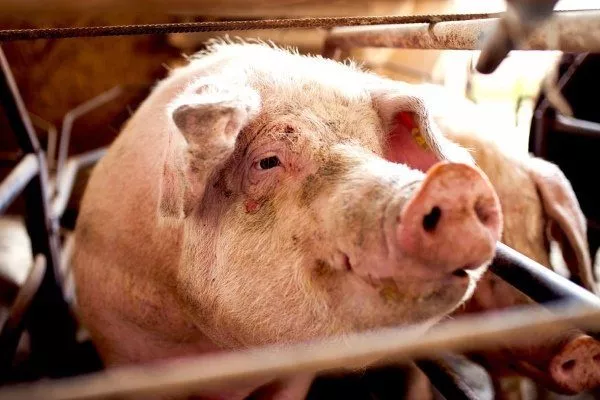
The following manifestations are characteristic of this pathology:
- an increase in body temperature to 42 degrees, such levels are maintained until the death of the animal;
- general depressed state;
- weakness;
- cough;
- serous conjunctivitis;
- increased thirst;
- lack of appetite;
- discharge of purulent matter from the nose and eyes;
- severe shortness of breath;
- hind limb paresis;
- vomit;
- fever;
- enlarged lymph nodes;
- exhaustion;
- change in skin color on the abdomen and under the breasts to red or dark purple;
- constipation or bloody diarrhea;
- motor impairment;
- pinpoint hemorrhages in the lower abdomen, neck, and ears.
Sick pigs huddle in the far corner of the barn, constantly lying on their sides. The tails of infected pigs curl up.
If African swine fever affects pregnant sows, they will spontaneously abort.
Individual pigs may survive, but they remain carriers of the virus for a long time, posing a threat to other animals. Immunity does not develop in this case: pigs that have recovered from African swine fever are susceptible to recurrence.
Diagnostic methods
African swine fever can be identified by the characteristic symptoms of this infectious process, which manifest themselves externally.
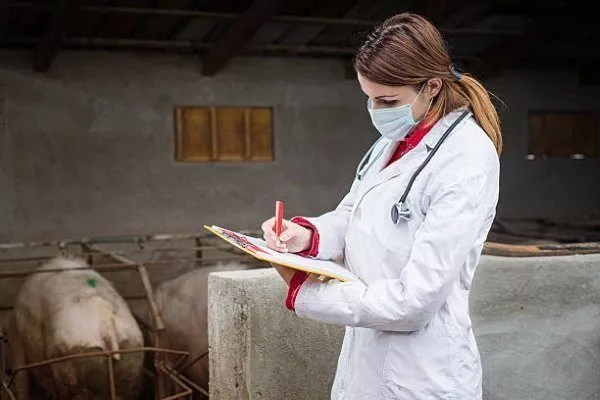
The diagnosis is made comprehensively, based on laboratory data and pathological examination results. The diagnostic center analyzes samples from the lungs, spleen, lymph nodes, blood, and serum.
To identify the pathogen, PCR, hemadsorption, and fluorescent antibody methods are used.
Ways to solve the problem
The African swine fever virus spreads rapidly. Treatment is prohibited; the only solution is the complete destruction of infected animals. There is currently no adequate treatment for pigs infected with African swine fever.
When an infectious process spreads, it is necessary first of all to determine the boundaries of the source of the infection and declare a quarantine regime.
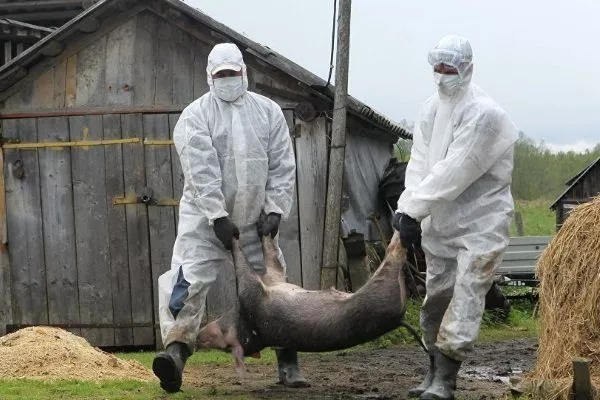
All animals infected with African swine fever must be culled bloodlessly. The area where the virus-infected animals are to be culled must be isolated.
The bodies of dead and destroyed pigs, as well as their waste products, feed scraps, and equipment, are burned. The same should be done with feeders, partitions, and dilapidated buildings. The resulting ash should be mixed with lime and buried in the ground. The depth should be at least 1 meter.
All areas where animals were kept must be treated with special solutions. This should be done three times, at intervals of 3-5 days. A solution of bleach and sodium hypochlorite is used for disinfection.
All pig farms located within 25 km of the contaminated area are slaughtering their livestock, even if the pigs are healthy.
Following the detection of African swine fever, quarantine lasts for at least 40 days. During this period, the export of any animal products (even those not derived from pigs) outside the zone is prohibited. For six months after the outbreak, the export and sale of any agricultural plant products is prohibited.
Activities related to the elimination of the African swine fever epidemic must be ensured by veterinary services.
Action plan for detecting ASF
- Immediate isolation of suspicious individuals
- Notification of the State Veterinary Service
- Introduction of quarantine on the farm's territory
- Stop all movement of animals and products
- Preparation for slaughter according to the instructions of specialists
Prevention
Currently, there is no vaccine that can protect livestock from African swine fever. Research is underway, but it is experimental. Scientists note that a vaccine against this viral disease will not be developed within the next 10 years.

There are preventative measures that can minimize the risk of an African swine fever outbreak. These include:
- timely examination of livestock by a veterinarian and vaccination against classical plague;
- carrying out heat treatment of feed, purchasing it only from reliable manufacturers;
- proper organization of processes for disinfection of manure and wastewater, disposal of animal carcasses;
- organization of fencing of livestock farms;
- ban on feeding food waste and confiscated goods to animals;
- keeping pigs in fenced areas and excluding the possibility of their contact with the livestock of other owners, as well as with domestic animals, birds, and insects;
- isolated equipment of the slaughterhouse area from livestock complexes;
- cleaning the farm territory and adjacent areas from garbage and manure;
- restriction of free-range grazing of pigs;
- preventing the import of unprocessed tools, as well as vehicles that have not undergone special treatment, into the territory of the pig farm;
- conducting periodic disinfection of pig farm areas, feed warehouses, and treatment against parasites;
- purchase of pigs only with the consent of the State Veterinary Service.
If you suspect an outbreak of African swine fever among your pig population, you must immediately report it to the relevant authorities – the sanitary and epidemiological station.
Preventive measures do not provide complete protection against the spread of the virus, but they significantly reduce this risk.
Notification of a detected virus and liability for concealing information
Notification periods according to regulatory documents
| Organ | notice period | Reporting form |
|---|---|---|
| Rosselkhoznadzor | No more than 12 hours | Emergency notification |
| Main Directorate of Veterinary Medicine | 24 hours | Inspection report |
| Ministry of Emergency Situations | In case of mass death | Form 1-VET |
If an outbreak of African swine fever is detected among livestock, it is necessary to immediately report it to the sanitary and epidemiological station.
Concealing information about sudden animal deaths or simultaneous mass outbreaks of animal diseases is punishable by an administrative fine. For individuals, the fine is 3,000-4,000 rubles, for officials, 30,000 to 40,000 rubles, and for legal entities, 90,000 to 100,000 rubles.
Administrative penalties are also provided for violation of quarantine rules and prescribed recommendations regarding the handling of potentially hazardous waste (animal carcasses, feed, premises).
Watch a popular science film about the origin, spread, and dangers of this pig disease, which has become a real scourge of 21st-century farming:
African swine fever is a dangerous disease of domestic animals that causes massive mortality. Humans can carry the virus, but it has no effect on their bodies. African swine fever requires drastic measures: bloodless slaughter of all infected and healthy animals and quarantine.