
Sheep breeders strive to create a superior breed by crossing different breeds. This is how Katum sheep were created. While they are currently kept only in Russia, it's quite possible they will soon become famous abroad as well.
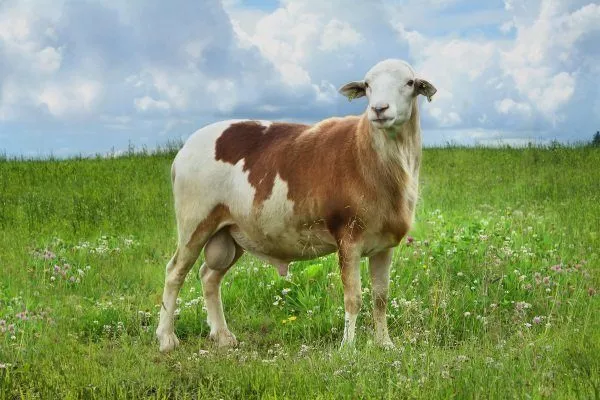
Description
This breed was created only in 2013 by crossing sheep Romanov breed and Katahdin. Romanov sheep tolerated extreme climate changes well and produced many lambs at a time. But fur is now worthless, thanks to the advent of artificial materials that are just as good as sheepskin but much cheaper. Romanov sheep meat is good, but not enough to make production profitable.
A Russian agricultural enterprise called "Katumy" began to think about how to develop a sheep breed that would be resilient to our climate, easy to feed, produce large numbers of lambs, and also gain weight well without losing fat. Such a breed didn't exist anywhere in Russia, so they found it in the United States. They have the same problem as in Russia: there's no demand for fur, but there is plenty of demand for good lamb meat.
The elite Katahdin breed was developed in America. Katahdin sheep were shipped from the United States to Leningrad, where they were crossbred with Romanov sheep. This was done to achieve superior meat flavor.
The Katum breed was created through rigorous selection, with ewes unsuitable for fertility simply culled. It's difficult to call this breed approved today, as it hasn't yet been included in the new breed group, but these sheep nonetheless have distinctive features:
- the fur is the same as that of any wild animal;
- the taste of the meat is excellent and the aroma is delicate;
- prolificacy, which was inherited from the Romanov breed of sheep;
- lambing occurs twice a year;
- These sheep gain muscle well, and a lamb weighs up to 15 kilograms at one month.
| Parameter | Katum sheep | Romanov sheep |
|---|---|---|
| Wool type | Short, like wild animals | Thick, with undercoat |
| Lambing frequency | 2 times a year | 3 times in 2 years |
| Lamb weight at 1 month | Up to 15 kg | 6-8 kg |
| The smell of meat | Absent | Light specific |
| Adaptation to climate | High | Very high |
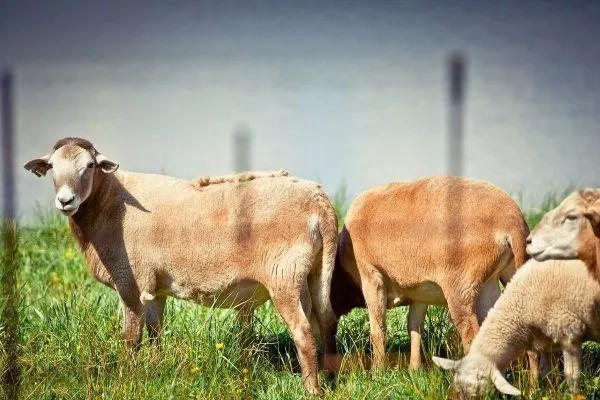
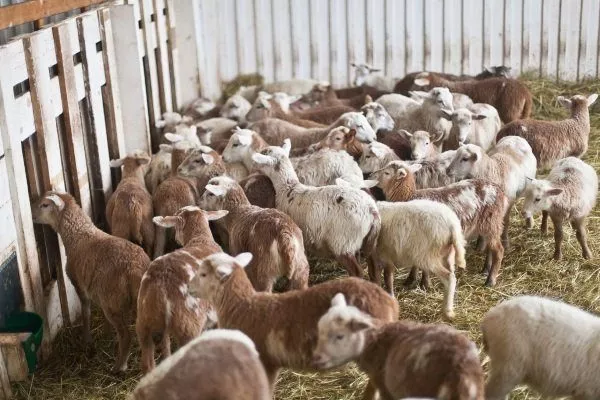
Katumsky smooth-wool meat sheep
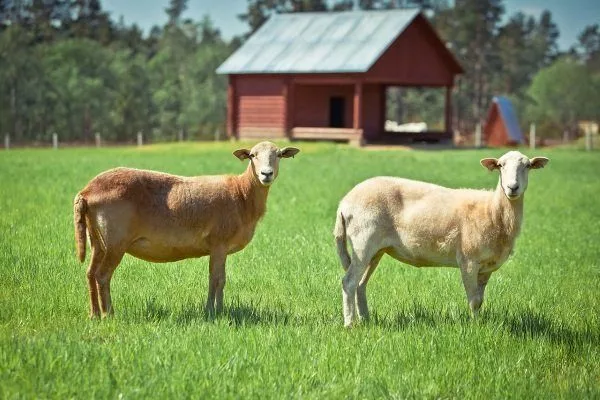
Katum sheep of fawn and light red color
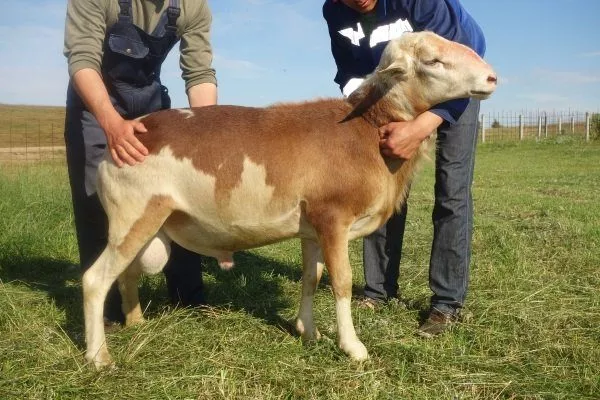
Katum sheep are smooth-wool, and only in the cold season do they develop an undercoat.
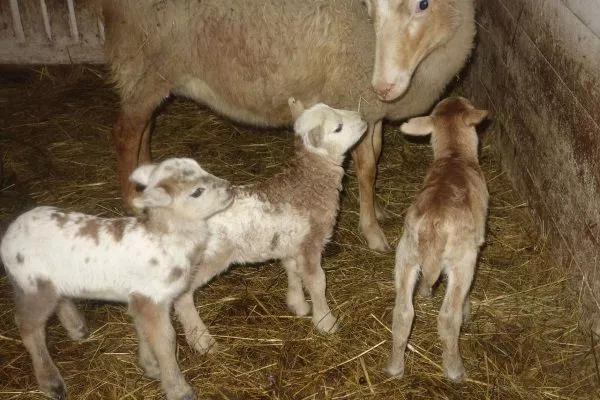
Lambs have a rapid rate of growth and weight gain
The meat of such sheep does not have a specific smell, like lamb, and even tastes somewhat like veal.
Sheep productivity
Katum sheep were bred for meat because their meat is lean and tender, somewhat similar to veal. Even in adult rams and ewes, the meat doesn't spoil or develop a distinctive odor. If the animal doesn't receive adequate nutrition, it will still quickly gain weight. Compared to other fur-producing breeds, which use their food not only for muscle mass but also for their hide, Katum sheep dedicate all their nutritional value to their meat.
In addition to meat, Katum ewes produce milk during lactation, which, like cow's milk, is beneficial for both newborn lambs and humans. The quantities are smaller than cow's milk, and the ewes produce milk only during the lactation period, which occurs twice a year. However, since farmers keep dozens of ewes, milk is available year-round.
Caring for Katum sheep
In winter, this breed of animal requires a warm room, and in spring, sheep can be kept under cover. The flock should be housed as close to the sun as possible, and most importantly, the stall should be dry. In extreme heat, a fan is recommended, as this is essential for their well-being. The ideal stall temperature is between 10 and 15 degrees Celsius.
It's important to remember about vaccinations. Although sheep are disease-resistant, they still require vaccinations, like other animals, which are administered by a veterinarian. Like other sheep, they can suffer from hoof infections, so it's important to ensure that sheep aren't exposed to moisture for long periods of time.
Feeding
Katum sheep are not picky eaters; they can eat a variety of grasses, including those that other large animals would refuse. It's important to ensure that the flock's grazing area is not damp or wet, as this can negatively impact their stomach, liver, and, most importantly, hooves.
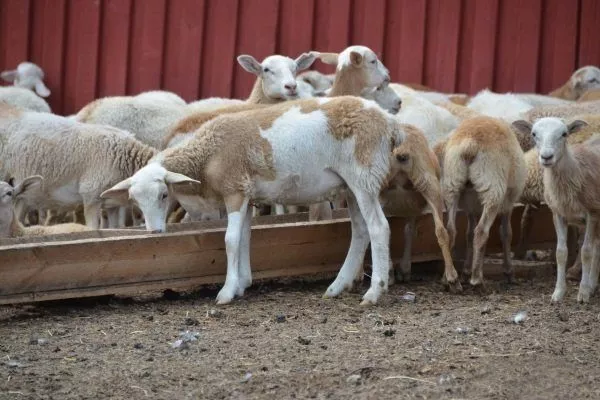
Feeding in summer
In winter, sheep are accustomed to munching hay, straw, and mixed feed, so during the summer, the animals must gradually acclimate to a new diet. A new type of feed should not be introduced for seven days; this is the period during which the animal's body will adapt to a particular food and be ready to accept the new one. Grass alone is not enough; they need supplemental vitamins and minerals appropriate for their age.
Feeding in winter
The sheep themselves won't be able to feed themselves during the winter, so the owner must ensure they receive all the necessary nutrients. The main diet should be hay and straw, mixed with the necessary nutrients. impurities.
Hay should be fed every day, with pregnant ewes needing 700 grams, nursing ewes 900 grams, and young lambs 600 grams per day.
Grass can be fed in unlimited quantities, as can water. Don't forget about salt; it should be present in the animals' diet at a rate of 15 grams per head.
Feeding tips:
- The straw is treated with water and ammonia, then crushed and poured with boiling water.
- Vegetables are important for the proper functioning of all organs, especially the stomach.
- Salt must be added to any food.
- Hay is allowed to be mixed with straw.
| Mineral supplement | Norm per head/day | Method of submission |
|---|---|---|
| Table salt | 10-15 g | Lick or in food |
| Chalk | 5-8 g | Mixed with concentrates |
| Bone meal | 3-5 g | With wet mashes |
| Premix PKK 80-1 | 15-20 g | With compound feed |
How to feed sheep:
| Feed | Pregnancy (first half) | Pregnancy (second half) |
| Hay | 1 kg | 2 kg |
| Straw | 1 kg | 500 g |
| Branch feed | 500 g | 1 kg |
| Vegetables | 1 kg | 1.5 kg |
| Food waste | 1.5 kg | 1.5 kg |
| Concentrates | 350 g |
The table shows the feeding standards for young animals:
| Feed | from 6 to 8 months | from 8 to 10 months | from 10 to 12 months |
| Hay | 1 kg | 1.2 kg | 1.5 kg |
| Vegetables | 1 kg | 2 kg | 2 kg |
| Branch feed | 1 kg | 1 kg | |
| Concentrates | 200 g | 250 g | 300 g |
The vegetables that are meant for feeding are potatoes and beets; other vegetables are not recommended for feeding sheep and rams.
Reproduction
Mating preparation schedule
- For 30 days: Increased feeding (+15% of the norm)
- 21 days before: Introduction of vitamin E (50 mg/head)
- 14 days in advance: Deworming
- 7 days in advance: Veterinary examination
- Mating Day: Coverage Control
This breed is very hardy; they can walk for long periods, moving to different pastures and even climbing hills. These animals don't need a special place where the grass grows high, as their narrow muzzles allow them to bend down and munch grass close to the ground.
Based on the above, it's clear that raising Katum sheep is profitable. They can be bred when they reach 80% of their adult weight, which typically occurs at four months. Thirty days before mating, the ewe is fed the best grass, concentrates, and, if necessary, compound feed.
For the first two weeks of life, lambs feed exclusively on their mother's milk, and then they can be offered hay, carrots, and potatoes, but chopped first. They should be fed separately from the adult animals, but they should not be separated from their mother for long periods. Once the young ewes are separated into separate enclosures, they still need to be brought to their mother for half an hour to an hour every three hours. As they grow older, the frequency of visits is reduced and gradually reduced to zero.
Advantages and disadvantages
Katum sheep have positive aspects:
- large weight of an adult (males up to 110 kg, and females 80);
- the coat is short, but it is too early to consider them smooth-haired;
- no need to bother with a haircut;
- unpretentious in feeding;
- This breed very rarely gets sick;
- a ewe can give birth to two or even three lambs at a time;
- tolerate harsh winters well, but only if the room is protected from the wind;
- Katum sheep live for as long as 10 years;
- calm character.
There are also some disadvantages of Katum sheep:
- the genetics are heterogeneous, that is, there is an admixture of two breeds;
- signs may split;
- there is a great need for fresh grass, and on a permanent basis.
In conclusion, we recommend watching an interview with farmer Oleg Lebedev, who developed the Katum sheep breed:
As you can see, Katum sheep have many more advantages than disadvantages, making this breed very profitable to raise, primarily for its meat. A single ewe or ram produces a large amount of meat, and the taste is so amazing and delicate that it's impossible to stop eating. Although this variety is not yet registered, it is already in high demand in Russia.