
Domestic sheep provide people with clothing, carpets, and delicious food. Romanov sheep are highly fertile, and the females have a strong maternal instinct, allowing their lambs to gain weight quickly. This breed, which originated in Russia, is now bred worldwide because of its hardiness and adaptability to any weather conditions, even the harshest.
Description and origin of sheep
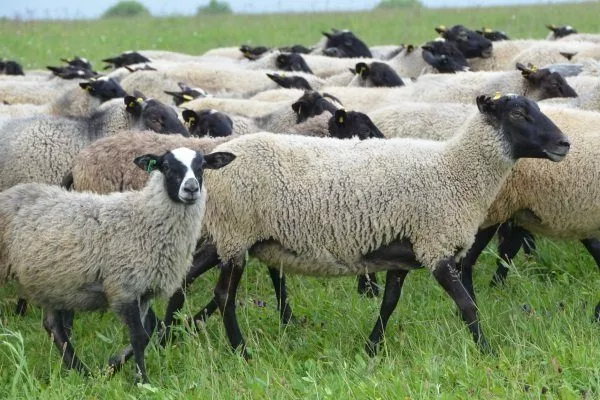
Sheep are divided into several groups, and the Romanov breed belongs to the short-tailed family, meaning it has a short, fat-free tail. The most common areas where Romanov sheep are bred are Russia and northern Europe. These sheep can graze on pastures with a monotonous and relatively poor diet and still gain good weight. They also tolerate both harsh winters and hot summers well.
These sheep produce the best sheepskin, and the breed is also renowned for its high meat production. Besides the countries mentioned above, sheep are also popular in Kazakhstan, Belarus, and Mongolia. In these countries, sheep are kept primarily for their sheepskin.
The sheep of this breed are completely different from their relatives. They are large, with short tails and wool that is gray in various shades. Some males and females have horns, while others lack them.
Sheep are divided into three groups: the first has a coarse bone structure, the second has a soft bone structure, and the third has a large bone structure. Cattle with a strong bone structure are distinguished by high fertility and a long lifespan. These sheep produce highly valuable sheepskin. Their appearance is as follows: a broad chest, thick wool, and gray sheepskin.
The second group of cattle has coarse wool and a heavy frame. Both males and females have a black mane. The sheepskin itself is also black, and the skin itself is not very attractive. These sheep are more common than the others.
Sheep with a soft frame have the following appearance: a long, narrow head, a narrow chest, a pointed withers, and a drooping rump. The frame of such sheep is underdeveloped, and they are not known for their high vitality and fertility. Wool predominates over down at a ratio of approximately 1:10. The wool is white, and the sheepskin is of poor quality because the down does not adhere to it.
| Skeleton type | Productivity | Viability | Quality of sheepskin |
|---|---|---|---|
| Strong | High | High | Valuable |
| Rude | Average | Average | Low |
| Gentle | Low | Low | Unsuitable |
Sheep productivity
Sheep also stand out among other breeds for their fertility. A female can give birth to as many as three lambs at a time, and it has been known for a ewe to give birth to up to seven lambs at a time. Twenty females can produce 110 lambs, as the neonatal mortality rate is zero. Everything depends on care, nutrition, and, most importantly, the feed must be free of any additives or growth hormones.
Milk
Besides being meat-producing sheep, these sheep can also produce milk—less than cows, of course, but better. The amount is small, but it's richer and more filling than even cow's milk. Now we can calculate how much milk a ewe can produce per year. A female can produce about 100 liters of milk in one lactation period, but there are two such periods per year, so a ewe produces 200 liters of milk per year.
Compared to cows, sheep certainly produce less milk, but no one keeps just one ewe, so they'll produce much more. Cows have periods of downtime, and sheep are no exception, but when one ewe is down, the second will be producing, and so on, and there's always milk.
| Indicator | Sheep's milk | Cow's milk |
|---|---|---|
| Fat content | 7-9% | 3-5% |
| Protein | 5-6% | 3-3.5% |
| Lactose | 4.5-5% | 4.5-5% |
| Calcium | 190-200 mg/100 g | 120-130 mg/100 g |
Meat
The meat of these sheep is delicious, tender, and juicy, and it also has a pleasant aroma, which is unique to sheep. The meat yield per sheep is 50%. The meat obtained from a six-month-old lamb is the most delicious and nutritious. At this stage, the lamb weighs 35-40 kilograms. The carcass weighs 19 kilograms, yielding 11 kilograms of meat, and the bones weigh only 4 kilograms.
Raising lambs for meat is a very profitable business, as 100 grams of shashlik sells for $20. A mature male ram weighs 90 kilograms, and some, if well-fed, can reach as much as 100 kilograms. A female ram typically weighs 60 kilograms, but with good feeding, she can reach 75 kilograms live weight.
Scientists have discovered that the weight of a newborn lamb depends precisely on the number of lambs in the ewe's womb. The same applies to the initial weight at 100 days of age. If the lambing is one, the birth weight will be between 3.5 and 4 kilograms; if there are two, the weight will be around 3 kilograms; and if there are three or more, the weight will not exceed 2.5 kilograms.
A lamb that is one hundred days old will weigh 25 kilograms if it was the only lamb in the litter, and if there were two or more, their weight will be 16 kilograms.
Wool
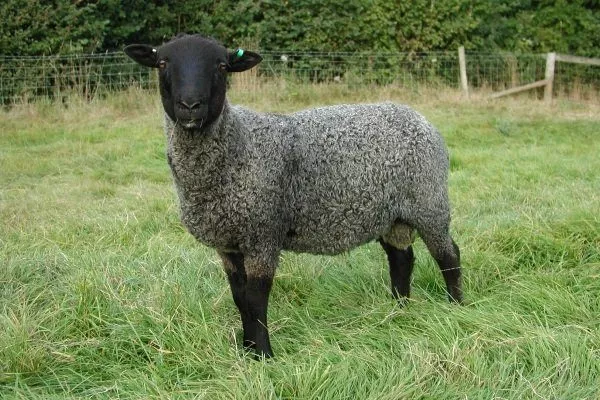
The wool of these sheep can be white or black, and it's exceptionally coarse. However, statistically, the wool of the Romanov breed is of high quality. The wool is made up of down and hair; the hair is black, and the down is white, which is what creates the mixed color.
The best time for shearing is when the ratio of fluff to hair is 7 to 1, it is during this period that the sheepskin acquires a beautiful blue hue.
This is crucial, as too much down will cause the garment to bunch up when worn. If there's too much down, the garment won't be as warm as you'd like.
| Indicator | Optimal value | Critical value |
|---|---|---|
| Fluff to hair ratio | 7:1 | <5:1 or >9:1 |
| Length of fluff | 5-6 cm | <3 cm or >8 cm |
| Tonina fluff | 20-22 microns | >25 µm |
Care
Equally important to a farmer is the health of the sheep. If a sheep in the flock becomes sick, it may be easier to slaughter it, but a farmer must prevent this. There are some rules for caring for sheep:
- Sheep need to be vaccinated twice a year.
- Before and after winter, the room where the sheep will live must be disinfected.
- New sheep are first housed separately for about 30 days and if all is well, they are released into the flock.
Sheep often suffer from hoof infections, which is why they don't tolerate dampness and moisture well. Therefore, they should be kept in dry areas, and their hooves should be trimmed before spring. Deworming medications should be purchased from veterinary pharmacies.
Schedule of veterinary events
- January-February: Prevention of helminthiasis
- March: Trimming hooves before turning out
- April: Vaccination against clostridia
- September-October: Deworming
- November: Complex vaccination
Feeding
Sheep need to be fed not only fully but also with variety year-round. The question of what sheep should be fed to produce tasty meat, good wool, and sheepskin cannot be answered definitively, as it all depends on the farmer's resources and compliance with regulations.
Sheep have a high metabolism, so they expend a high amount of nutrients per kilogram of body weight. Their diet is determined by the animal's purpose, body weight, and overall condition.
The table shows approximate food norms for one male per day:
| Feeding | Lambs | Adults |
| Straw | 1.2 kg | 1 kg |
| Hay | 500 g | |
| Vegetables (beets and potatoes) | 1.5 kg | 2 kg |
| Concentrates | 300 g | 300 g |
| Body weight of cattle | 25 kg | 42 kg |
| Daily weight gain | from 150 to 170 g | from 160 to 180 g per day. |
Below are the female's food requirements:
| Feed | Walking period | Stall period |
| The first half of pregnancy | ||
| Hay | 1.3 kg | 1 kg |
| Silage | 2 kg | |
| Compound feed | 300 g | |
| Vegetables (potatoes) | 500 g | |
| Branch feed | 1 kg | |
| Food waste | 1.5 kg | |
| The second half of pregnancy | ||
| Hay from beans and cereals | 1 kg | 1 kg |
| Silage | 1 kg | |
| Bran | 300 g | 300 g |
| Food waste | 1.5 kg | 1 kg |
| Compound feed | 600 g | 500 g |
| Branch feed | 300 g | 300 g |
| Vegetables (potatoes) | 500 g | 500 g |
Feeding lambs by month:
| Feed | from 6 to 8 months | from 8 to 10 months | from 10 to 12 months |
| Hay | 1 kg | 1.2 kg | 1.5 kg |
| Vegetables (potatoes and beets) | 1 kg | 2 kg | 2 kg |
| Concentrates | 200 g | 250 g | 300 g |
| Branch feed | 1 kg | 1 kg |
In summer, instead of straw and hay, sheep are grazed on pastures where there is green and fresh grass.
Reproduction
The flock's behavior must be monitored daily, but generally, raising sheep is easy. The point is that ewes can do their business as they please. Farmers say that a ewe could become pregnant even during lactation. This is an advantage, as this allows her to lamb three or more times a year. Puberty occurs at four to five months, but it is not recommended to put her near a ram during this period.
It is commonly believed that mating is only possible when the female has reached 80% of her adult weight, which is approximately 40 kilograms. Mating occurs at this point and lasts two to five days. The female carries the lamb for 145 days, and then gives birth independently, without human assistance.
Three days before the expected birth, the ewe should have the wool clipped between her legs and around her udder. Before birth, the ewe will begin to rise and lie down frequently and bleat loudly. The ewe's milk supply is only sufficient for three lambs, so if she has given birth to more than three, she should be bottle-fed.
- ✓ Check the weight of the uterus before mating (at least 40 kg)
- ✓ Separate housing of artificially fed lambs
- ✓ Temperature in the lambing house: +15…+18°C
- ✓ First grazing of young animals: from 3-4 weeks
- ✓ Feeding with concentrates from 2 weeks
Advantages and disadvantages
Romanov sheep have their advantages and disadvantages.
Among the advantages we can note:
- This is a very high-quality sheepskin that doesn't clump, and garments made from it are very warm. The wool is white with a blue tint, and the flesh side is translucent.
- High productivity and year-round reproduction.
- From a hundred sheep you can get 300 lambs per year.
- They are ready to inseminate a ewe at 13 months, and pregnancy is a week shorter than in other breeds.
- At six months of age, you can already get valuable sheepskin, and at eight months - excellent meat.
Now the disadvantages:
- Romanov sheep are very shy.
- Susceptible to lung diseases.
- They do not tolerate sudden changes in temperature and humidity well.
Romanov sheep are highly prolific, with one ewe able to give birth to as many as seven live lambs at a time. These sheep also produce the most valuable sheepskin. The meat, especially from 6-7 month old lambs, is delicious, aromatic, tender, and juicy, and cooks very quickly.