
All the largest horses were created through selective breeding of heavy draft horses—there are now over a hundred breeds of these horses. All heavy draft horses are distinguished by their powerful bodies, great height, and weight. Differences between breeds are minor, consisting primarily of subtleties in appearance.
| Object | Height (cm) | Suit | Usage |
|---|---|---|---|
| Arden | 152-163 | bay, red or dark red, roan | Workhorse. Horse meat production. |
| Brabancon | 156-168 | light bay and red, less often gray and black | Performing heavy physical work. Used as a "tractor." |
| Percheron | 150 | gray and black, less often roan and red | Previously used for hunting trips and as draft animals in military operations, small Percherons are now used under saddle and for fast riding, while larger ones are used for agricultural work and for transporting goods in ecological zones. |
| Vladimir heavy draft horse | 166-162 | bay and red, less often brown and black | This versatile breed can be used for virtually any purpose—riding, harnessing, hauling cargo, farming, and hunting. They look beautiful in harness—today, Vladimir Heavy Draft Horses are actively used at celebrations and festivities. |
| Russian heavy draft horse | 150 | red, brown. Less often - bay, roan, black | In rural life, the Russian heavy truck replaces a small tractor. |
| Soviet heavy draft truck | up to 170 | red, red roan, bay, bay roan | Rides under saddle. Used for agricultural work, hauling cargo, and competitions. Can replace a tractor in terms of pulling power. Can pull loads that other horse breeds cannot. Ideal for large agricultural operations and farms. |
| Shires | 170-190 | black, bay, roan, gray | Today, they are rarely used for agricultural work. They are more often seen at exhibitions and various equestrian events. |
| Scottish Clydesdale | 163-173 | black, bay, roan, gray | Agricultural work. Celebrations, ceremonies. |
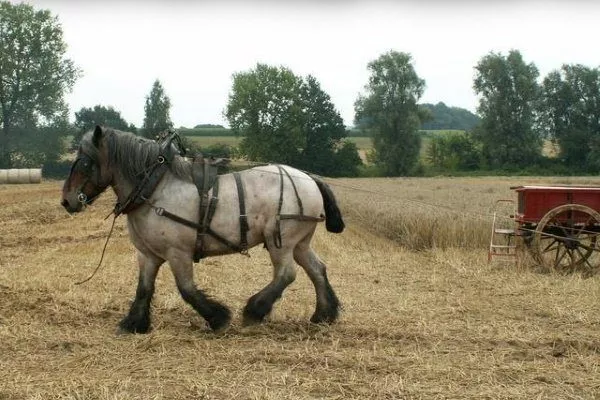
Arden
The Ardennes is an ancient horse breed. Its homeland is the Ardennes mountain region, located on the border of Belgium and France. Horses were needed here to haul heavy loads along the mountain roads. This sturdy, short horse—Ardennes horses stand no taller than 160 cm—was ideal for this task. Ardennes even saw service in Napoleon's wars, transporting large cannons.
Ardennes are believed to be descended from the ancient Solutre breed, which inhabited Europe approximately 50,000 years ago. The history of the Ardennes breed begins in the 19th century. At that time, their height reached 140 cm. These horses are small compared to other heavy draft horses, hence their nickname "small draft horses."
During the Napoleonic Wars, Ardennes began to be crossed with Arabian horses to improve the latter's endurance. It was the Ardennes breed that was used to develop the famous Russian Heavy Draft Horses. In 1900, during a breed exhibition held in Paris, the latter were presented as "Russian Ardennes."
Description of the breed:
- Height – 152-163 cm.
- Suit - bay, red or dark red, roan.
- Exterior. The head is large, with a low forehead and large, expressive eyes. The ears are pointed. The neck is arched, the shoulders are strong. The profile is straight. The body is compact and massive. The legs are short, strong, and covered with dense hair.
- Usage. Workhorse. Horse meat production.
Brabancon
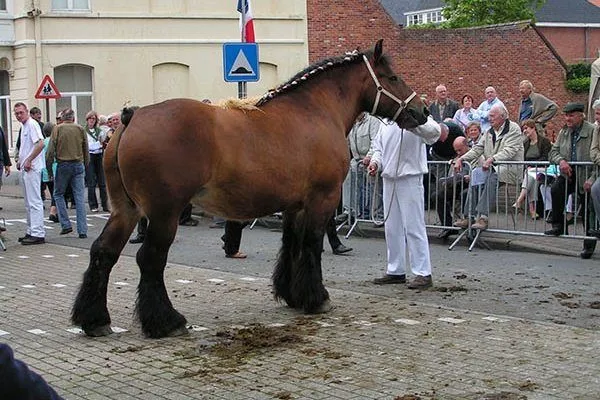
Brabancons are Belgian horses considered the strongest heavy draft horses. Today, they are the hallmark of Belgium. Brabancons can haul very heavy loads over long distances, weighing 700-1000 kg. The breed was created by crossing Ardennes and Flemings. Brabancons have a powerful yet graceful appearance.
Description of the breed:
- Height – 156-168 cm. This is not a large figure. But tall horses achieve their height through the length of their legs, and this is unimportant for heavyweights. These horses pull, not gallop.
- SuitThere are no strict standards, but Brabancons are predominantly found in light bay and red colors, less commonly in gray and black.
- Exterior. A powerful body with massive bone structure and a broad chest. They have the traditional draft horse croup—wide, rounded, and forked. The back and loin are short, with most of the power coming from the front. There is no slackness in the back, typical of draft horses. The legs are strong, with ample joints and wrists, and the hooves are well-covered. The neck is powerful and short, with a rounded profile. The head appears small, with a well-developed forehead and a slight hump.
- Usage. Performing heavy physical work. Used as a "tractor."
Percheron
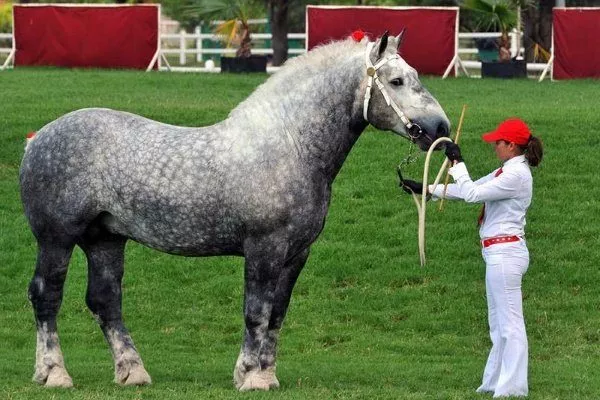
Percherons are the most popular French horse breed. There is no precise data on their origins, but it is believed that they originated in the Normandy province of Perche. The exact time of their origin is unknown. It is possible that the Percheron's ancestors were ancient French horses. The latter are described as medium-sized, bay racehorses, strong and capable of work. However, the first mention of the Percheron appears only at the dawn of the 19th century.
Percherons were once knightly horses, but later they were used as draft horses. There were different types of Percherons: heavy ones were used in cities, while light ones were used for military purposes. A horse can weigh upwards of 500 kg. The breed is now extremely popular, and private breeders in France specialize in them.
- Height – 150 cm.
- SuitGray and black, less often roan and red.
- Exterior. They have a very distinctive and recognizable appearance. They have a small, beautifully shaped head, a broad forehead, and slightly protruding eyes. The ears are pointed. The muscular neck is beautifully arched. The mane is thick, and the tail is bushy. The croup is quite long. The body has a broad, deep chest, and powerful legs.
- Usage. Previously used for hunting trips and as draft animals in military operations, small Percherons are now used under saddle and for fast riding, while larger ones are used for agricultural work and for transporting goods in ecological zones.
A Percheron can effortlessly and gracefully run 60 km with a rider on its back. A distinctive feature of Percherons is their even gait under saddle and in harness.
Percherons are exceptionally intelligent, kind, and easy-going. They are calm and balanced, patient, and easy to train. Despite their size, they are active and energetic.
Vladimir heavy draft horse
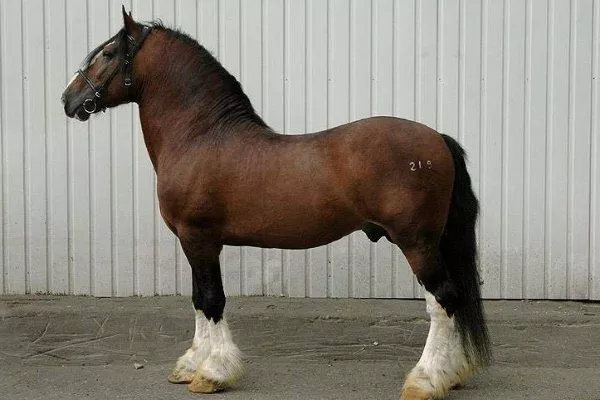
The breed was developed by crossing Russian breeds with Clydesdales and Shires. It is the heaviest and strongest domestic breed. The Vladimir Heavy Draft can trot for long periods, hauling enormous loads. It weighs approximately 800 kg, and its chest girth is over 2 m.
Breed characteristics:
- Height – 166-162 cm, maximum – 175 cm.
- SuitThe most common colors are bay and red, less common are brown and black.
- Exterior. The head is massive and convex. The neck is long and full. The body is broad. The legs are long, with well-developed muscles. The lower legs have white "stockings."
- Usage. This versatile breed can be used for virtually any purpose—riding, harnessing, hauling cargo, farming, and hunting. They look beautiful in harness—today, Vladimir Heavy Draft Horses are actively used at celebrations and festivities.
Despite its impressive size, Vladimir heavy draft horse This breed isn't slow or clumsy—it can run briskly while carrying a load of 1.5 tons. The breed is known for its calm and docile nature. They are obedient when in harness. They are very hardworking and diligent. They only show temperament when mistreated. They quickly adapt to new living and working conditions.
Russian heavy draft horse
The breed's pedigree dates back to the 19th century. It was developed from Belgian Ardennes and French Percherons. For a long time, they were called "Russian Ardennes." Breeders were drawn to the Ardennes's unpretentiousness and agility, while the Percherons were drawn to their strength and size.
The main difference between the Russian Heavy Draft and other heavy draft breeds is its small size. Its body type is clearly harness-type. Stallions can weigh up to 700 kg.
Characteristics:
- Height – 150 cm.
- SuitMost often – red, brown. Less often – bay, roan, black.
- Exterior. The body is long and massive. The legs are strong and sinewy. The lower part is slightly feathered. The croup is powerful and muscular, the neck is massive and beautifully arched. The head is small, with a broad forehead. The ears are small and erect. The chest is wide and barrel-shaped. The tail and mane are thick.
- Usage. In rural life, the Russian heavy truck replaces a small tractor.
The breed is distinguished by its endurance at a walk and trot. These horses have a docile and even temperament. They are active and curious. These horses are obedient in harness. They are tireless workers and are considered ideal workers. They easily adapt to harsh climates, new environments, and new owners. They are good companions by nature.
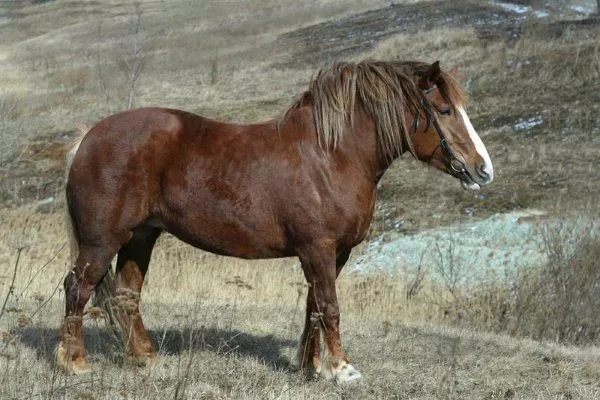
Soviet heavy draft truck
Soviet Heavy Draft Horses are large and massive horses, capable of easily hauling multi-ton loads. The breed was developed during the Soviet era from Belgian Brabancons. The goal of breeders was to create a powerful and hardy breed. The breed was officially recognized in 1952. These horses weigh approximately one ton.
Breed characteristics:
- Height – up to 170 cm.
- SuitRed, red roan, bay, bay roan.
- Exterior. The head is medium in size and proportionate. The ears are erect, sometimes drooping. The chest is broad and massive. The neck is powerful and muscular. The loin is wide and level, the croup is forked and slightly drooping. The legs are strong and muscular. The mane is lush and the tail is equally lush.
- Usage. Rides under saddle. Used for agricultural work, hauling cargo, and competitions. Can replace a tractor in terms of pulling power. Can pull loads that other horse breeds cannot. Ideal for large agricultural operations and farms.
Some breeds have incorrectly positioned legs, but this defect doesn't affect the horses' performance. Soviet heavy draft horses have a friendly disposition, are very energetic, and hard-working.
The breed is characterized by rapid growth and early maturity. At 2.5 years of age, horses can be used for heavy work. They are undemanding in terms of feed. They have the ability to reproduce for a long time – mares can have foals even after 20 years.
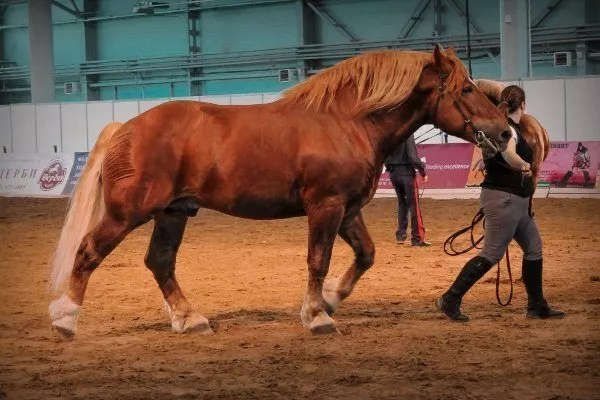
Shires
These are heavy draft horses of English origin. They trace their ancestry to knights' horses, which in turn descend from the horses of the Roman conquerors. The breed's exact origins are unknown. However, it is believed that Shires were created by crossing local English breeds with Flemish and Friesian horses. Shires are the largest horses on the planet, weighing between 800 and 1,220 kg. Some specimens weigh up to one and a half tons. Breed characteristics:
- Height – 170-190 cm. There have been cases when the height of representatives of the breed reached 2 m.
- SuitShires can be black, bay, brown, or grey.
- Exterior. The body is powerful and proportionate. The back is broad and strong. The croup is long and muscular. The skull is massive, the forehead is wide. The ears are pointed. The bushy tail is set high. The legs are powerful. The hooves are strong and large. The lower legs are "friesian." Distinguishing features include a bald spot on the head and "stockings" on the hind legs.
- Usage. Today, they are rarely used for agricultural work. They are more often seen at exhibitions and various equestrian events.
Shires are known for their balanced and calm nature. They are easy to manage and train. They are slow but strong. At three years old, a Shire can carry a load five times its own weight—that's 5,000-6,000 kg.
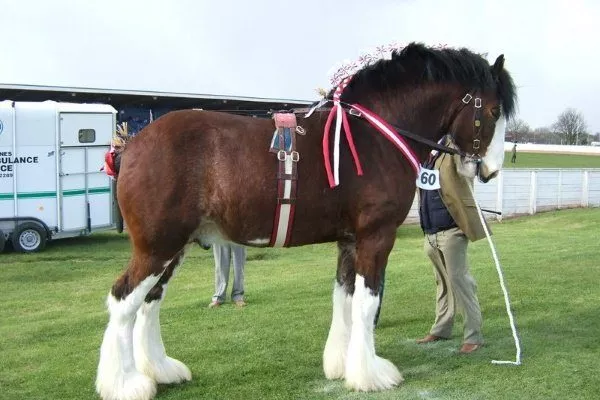
Scottish Clydesdale
The breed's origin is Scotland. Its name comes from the valley of the River Clyde. Powerful horses have long been found in this area. The first mentions of the breed date back to the early 18th century. The breed was created by crossing Flemings and local Scottish mares. Horses weigh 800-900 kg, with some specimens weighing up to 1 ton.
Characteristics of Scottish Clydesdales:
- Height – 163-173 cm.
- SuitBlack, bay, roan, gray.
- Exterior. A large and powerful body. A large head with a straight profile and a broad forehead. Large nostrils and large, expressive eyes. The neck is long and muscular, beautifully arched. The chest is long and wide. The body is somewhat shortened, with a broad and short back. A muscular croup. Long, powerful legs. Wide hooves. Feet on the lower legs. White markings are characteristic of the breed, appearing on the muzzle and legs.
- Usage. Agricultural work. Celebrations, ceremonies.
Clydesdales are known for their docile and good-natured nature. They are even a bit phlegmatic. They are intelligent and obedient, energetic and active. They are known for their endurance, undemanding nature, heavy load-bearing capacity, and adaptability to any climate. They were previously widely used to pull stagecoaches.
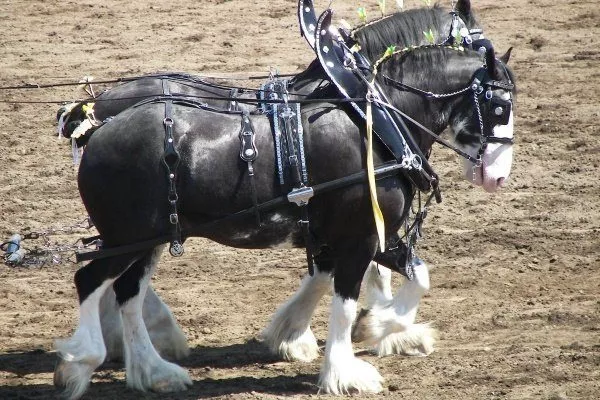
Individual record holders
Breeding for powerful and resilient horses has resulted in the emergence of true giants. Many giant draft horses have gone down in history as unique examples of breeding, and their names have become known throughout the world.
- ✓ Consider not only the horse's height and weight, but also its endurance under long-term loads.
- ✓ Pay attention to the horse’s character: calm and docile individuals are preferred.
- ✓ Check the condition of the hooves and legs – they should be strong, without signs of disease.
Big Jake
The Belgian gelding Big Jake earned the reputation of being the largest horse in the world. He currently holds the title of the world's largest horse. Big Jake is listed in the Guinness Book of World Records. He stands 2 meters 17 cm tall and weighs the same as a large SUV—2,600 kg. These are simply incredible figures. Big is a performer in all sorts of performances. When appearing on the talk show "Ronald McDonald House," Big "donates" all his earnings to charity.
To maintain his magnificent form, the gelding eats a couple of bales of straw and 5 kg of oats daily. And to stay hydrated, he needs 30 buckets of water daily.
- ✓ Increased sweating without physical exertion.
- ✓ Refusal to eat or drink for a long period of time.
- ✓ Unusual aggression or, conversely, apathy.
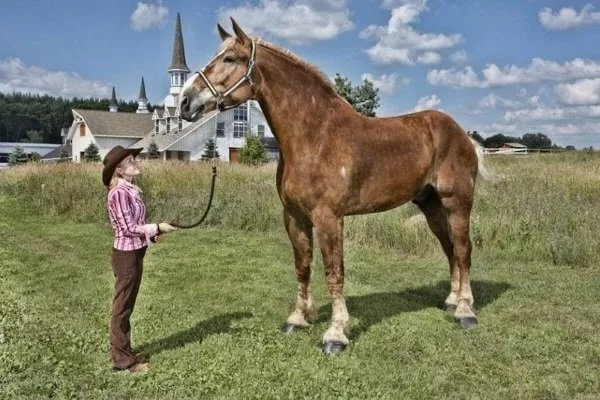
Noddy
Noddy is a Shire horse from Australia. He weighs 1,300 kg and stands 205 cm tall. He is currently considered the tallest horse. He inherited his massive build from his ancestor. Noddy's grandfather, Edward, lived in England and also topped the height charts in his time. To support his expensive upkeep, Noddy works on the farm of his owner, D. Greenman.
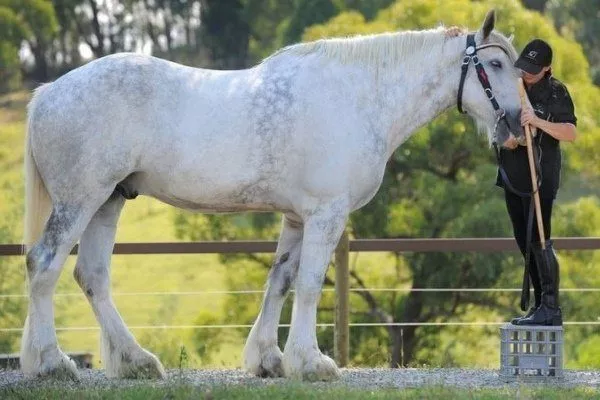
Digger
Digger is a member of the Royal Horse Guards. The Royal Horse Guards are accustomed to large horses, but Digger caused quite a stir with his arrival in 2012. This Clydesdale is the largest horse in the guards. This giant stands 220 cm tall. He requires 25 kg of hay and 95 liters of water daily. Digger weighs 1200 kg. He has already entered the Guinness Book of World Records, and his growth continues.
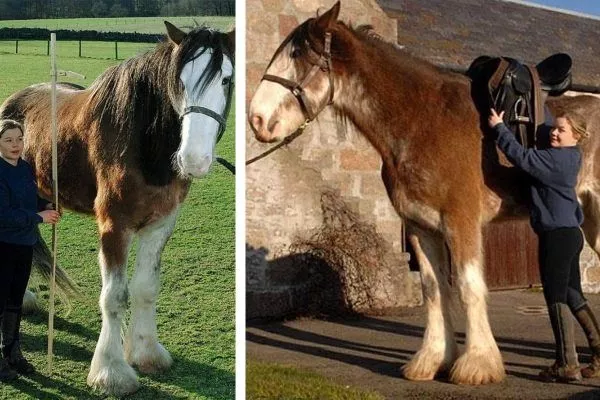
Cracker
Cracker represents the English Shire breed. This giant reaches a height of 198 cm and weighs 1,200 kg. He eats two bales of hay and 4-5 kg of grain daily. He drinks up to 13 buckets of water a day. He often appears on television and is a popular figure in England.
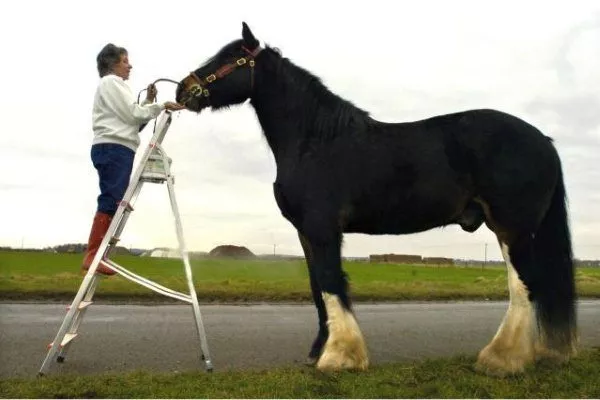
Duke
Duke lives in the UK. This gelding stands 207 cm tall, but he's still growing. It's entirely possible that Duke could break the record and become the tallest horse in the world. Duke is fed a special diet, which is why he's growing by leaps and bounds. His owner gives him special herbal infusions and apples. He eats plenty of grain and hay, washing them down not only with water but also with 20 liters of herbal tea. Despite his size, Duke is timid and terrified of mice.
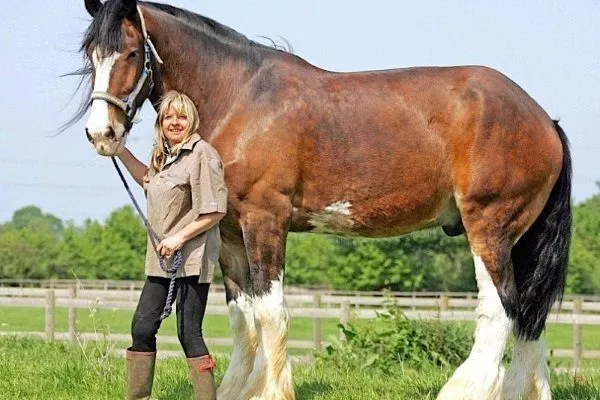
Brooklyn Supreme
Brooklyn Supreme was a Belgian Brabancon who lived in the mid-20th century (1928-1948). He belonged to a certain S.G. Good (Ogden, Iowa). This stallion lived and died in the state of Iowa, USA. At the age of 10, this giant weighed 1,450 kg, and his height at the withers was 198 cm. The horse had enormous hooves, and the total weight of his horseshoes was 13 kg. A standard horseshoe weighs 700 g, while Brooklyn's horseshoes weighed 3.5 kg each. This colossal stallion was a bay roan. His chest circumference was 259 cm.
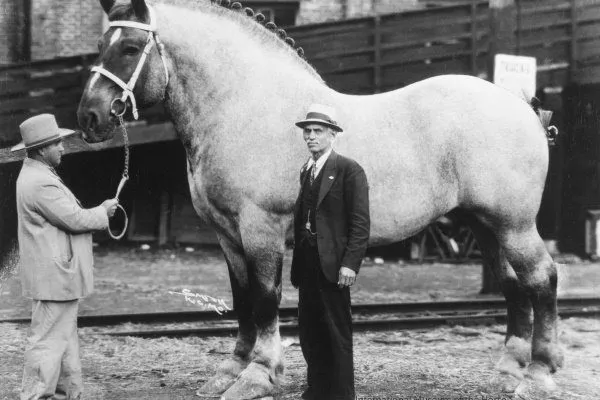
Samson
The record-holder among giant heavy draft horses is considered to be Samson (Sampson), a Shire stallion. He lived in the 19th century. His height was recorded at 220 cm and his weight was 1520 kg. He was born in 1846. He was born in the English town of Toddington Mills (Bedfordshire).
Samson's owner was a certain Thomas Cleaver. He achieved the status of the largest and most powerful horse at the age of four, not just in England but worldwide. Due to his colossal size, they decided to call him "Mammoth." Samson's record has yet to be broken, and the few surviving photographs of him can be used to estimate his size.
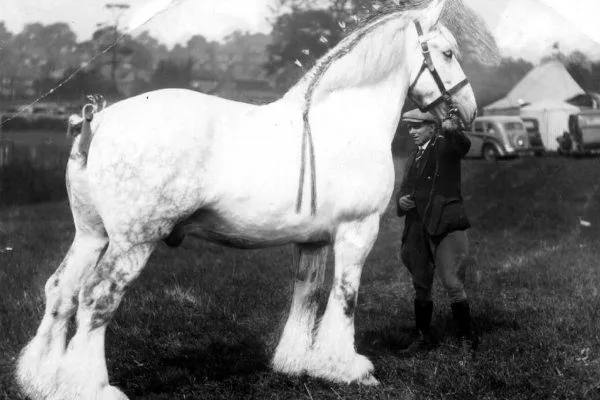
Morocco
Morocco is a Percheron that was once the largest horse. Little information remains about Morocco. It is known that he stood 215 cm tall and weighed approximately 1,300 kg. A photograph that survives gives an idea of Morocco's size.
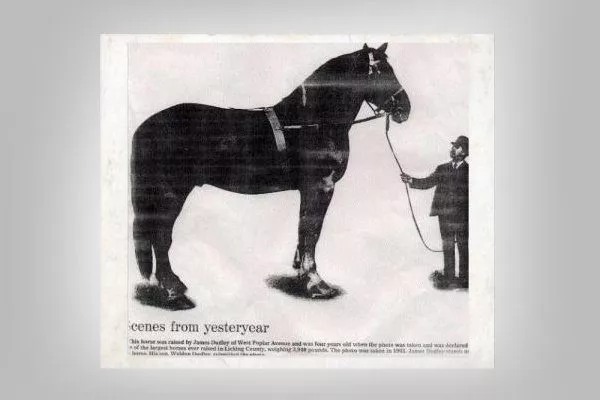
Copy of newspaper clipping (pictured is Morocco's horse with its owner)
Doctor Le Ger
This magnificent Percheron was born back in 1902. The stallion reached a height of 2 m 13 cm. He weighed 1,400 kg, comparable to a car. He is the largest horse in the history of French horse breeding. No other Percheron has come close to Dr. Le Ger's record.
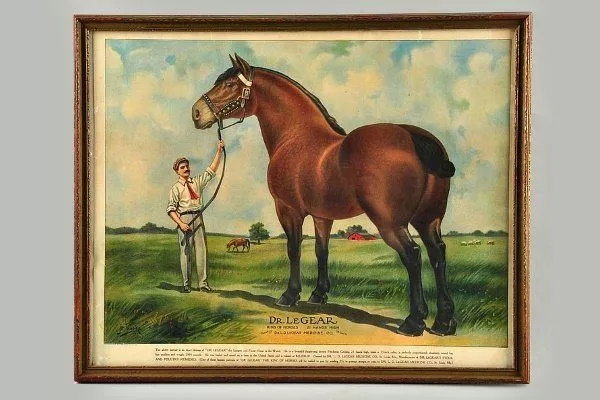
This illustration was released as wall posters and postcards.
The functions of horses have changed over the centuries, but they have always remained excellent companions for humans. Today, heavy draft horses are not only faithful helpers and friends of man, but also true gems of the natural world, requiring care and attention.