
Miniature Highland cows are considered the most resilient breeds. They find food in any weather, even under snow and rocks, and they don't get sick, thriving outside a warm stall. The only drawback is that they produce little milk, but their meat is incredibly tasty.
Description and appearance of the breed
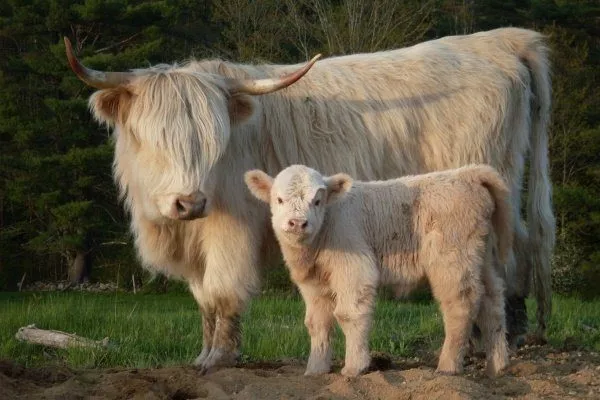
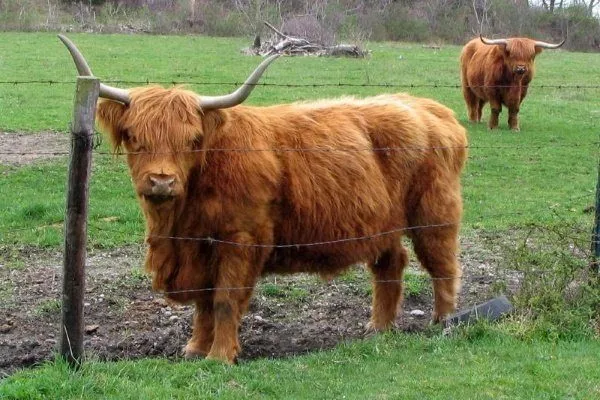
The Highland cattle owe their unique appearance to the harsh environment of their origin—northern Scotland, a highland region with rain and fierce winds. Their long coats provide protection from the cold, and their curved horns help them find food in rocky terrain. Although their ancestors are thought to be large animals, this breed is a descendant of the miniature cows that have become a symbol of Scotland.
Highlanders are also popularly bred in other countries, but mostly as an exotic variety. These small calves resemble adorable plush toys, and their temperament is calm and easygoing.
Appearance of the Scottish breed:
- Frame. Disproportionate in appearance, these cows have short legs despite their powerful build. Good stability is genetically determined to enable them to climb mountains with agility and speed.
- Head. The muzzle is large, the jaws are powerful, the eyes are wide-set.
- Neck. Straight, small in size, with a clearly visible comb in bulls.
- Breast. Broad and deep, but without dewlap.
- Back. Powerful, rounded.
- Horns. Huge, with pointed ends, excellent protection from wild animals, in particular from pumas and wolves.
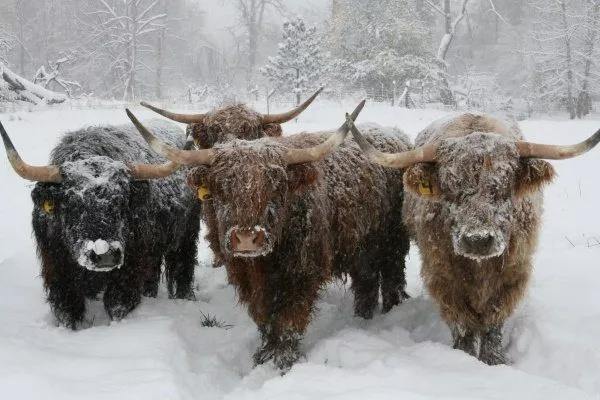
- Wool. It appears very dense and curled. Its unique feature is that it is arranged in two layers, providing protection from enemies just as effectively as sharp horns. The outer layer is made of stiff hairs, while the inner layer is very soft. Thanks to this type of wool, cows don't need a subcutaneous layer of fat. This also means they don't need expensive, insulated barns or pasture shelters. These cows can easily sleep in the snow.
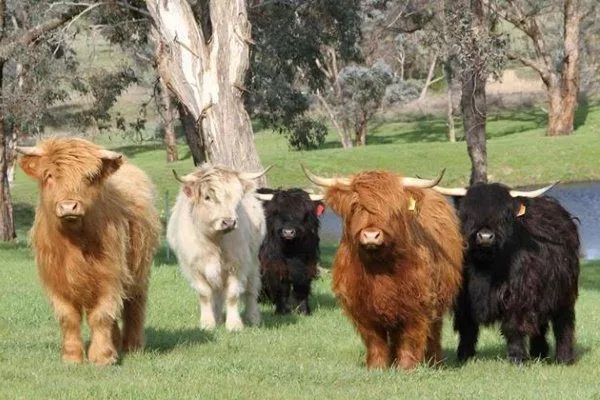
- Color. There are different types:
- black;
- brown;
- grey;
- yellow;
- red-brown;
- motley;
- silver;
- gray-brown;
- yellow-brown.
- Bang. Highlanders have a long, flowing coat that falls over the forehead. It has several functions:
- protects eyes from infections that can be carried by insects;
- protects from snow and rain;
- repels flies, mosquitoes and horseflies from animals.
- Legs. Short but very strong, Scottish breed animals easily overcome mountain paths and long passages.
- Weight. Fluctuates between 400 and 800 kg.
- Height. On average, adults reach 110-120 cm, but breeding bulls can grow up to 130 cm.
Highlanders have a lot of sebaceous glands; the fat covers the fur and provides additional protection from the cold.
Origin and distribution
This breed was developed in the Scottish Highlands and the Outer Hebrides by crossing two varieties: black cattle from the islands and red cattle from the highlands. In 1885, they were registered as cattle; locals called these cows "kyloes." Initially, they were bred for high milk yields, but later discovered that their meat was much better. Since the early 20th century, Highland cattle have spread worldwide, gaining particular popularity in North America and Australia.
Interesting facts:
- In 2013, these breeds were introduced to Berlin's Herzberg Park as an experiment. The effect exceeded expectations, and these peaceful, gentle animals became the adoration of both children and adults.
- Today, even the Queen of Great Britain has her own small herd—around 100 Highland horses. They are kept on pastures at Balmoral Castle.
- They belong to the dwarf breeds, although they have large horns and massive muscles.
Scientists believe that Highlanders are ideal for breeding in Russian climate zones.
What is the productivity of Highland?
Although Highland cows are small in size, they can gain significant weight.
| Floor | Weight |
| Bull | 750 kg |
| Cow | 500 kg |
| Calf | 11-20 kg |
Since this is a meat breed, the ideal age for a bull is between 1 and 3 years old. By this age, they gain a good weight and their meat remains tender. However, when they reach 10 years of age, the meat becomes tough and loses many of its qualities.
This breed is bred primarily for meat, since cows produce very little milk – up to 5 liters per day, the maximum being when feeding calves.
Features of Highland meat:
- Amazing taste, a bit like wild game meat.
- Contains very little fat, it does not form due to the warm wool.
- Low cholesterol level, the product is considered dietary for heart patients.
- Contains a lot of iron and proteins.
Animals of this breed gain weight slowly, so they are not suitable for intensive fattening for quick slaughter.
Keeping cows
All farmers note that keeping this breed is very profitable and convenient. A small yard is sufficient, as they are small and thrive on grass. They produce enough milk for a small family, and, remarkably, they love to play, making these charming cows a favorite among children. They also perfectly trim lawns and provide excellent fertilizer.
To summarize:
- It's easier to care for.
- They take up little space.
- Requires less feed than ordinary breeds.
- No special devices are needed to protect from rain, wind and sun.
- They get along well with other domestic animals and can even coexist with wild ones if there is no threat to their lives.
- Excellent maternal instinct ensures high productivity of offspring. Calves of this breed rarely die.
- ✓ Sufficient space for free walking.
- ✓ Availability of a variety of vegetation, including tough grasses and shrubs.
- ✓ No need for additional shelter from bad weather.
The main requirement is to keep them in an open space; ideally, a large paddock that can accommodate a large herd. If the grazing area is large and the terrain is wooded, you may not even need to feed them in winter. Only the young animals require supervision, and only during cold weather, when there are severe frosts and snow.
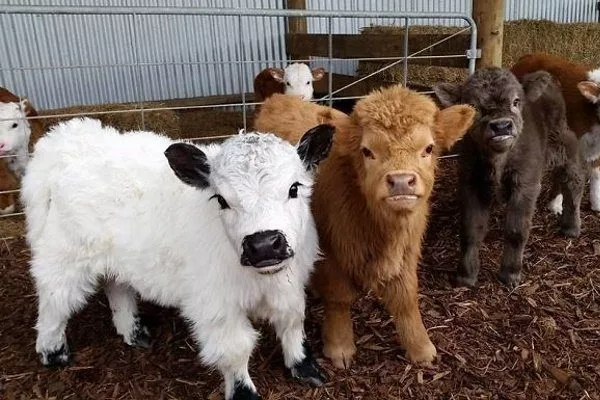
Highlands do not tolerate being tethered and immediately begin to lose weight.
All about care
The first thing farmers need to consider when purchasing this breed is the availability of pasture. If pasture is tight, it's better to choose other animals. Also, keep in mind the very low milk yield: Highland cattle produce up to 1,500 liters of milk per year, and almost all of that goes to calves.
- Assess climate conditions and availability of suitable pastures.
- Purchase animals from trusted suppliers.
- Organize the minimum necessary infrastructure (sheds, drinking bowls, feeders).
- Develop a feeding diet taking into account the season.
- Regularly inspect your pets for health and coat condition.
Care tips:
- Special shelters should be installed on the farm's property. They will help the herd shelter from rain and sun and provide comfortable overnight accommodations.
- Provide waterers and feeders. The number is determined by the composition of the individuals.
- Brush the coat and bangs regularly to prevent tangles.
- Clean hooves from dirt, stones and debris.
- A special shed is designated for calving cows. The animals can manage without human assistance, but supervision is still necessary, especially in winter.
Newborn calves are quite frost-resistant; if they are cold, they hide under their mother’s long fur.
Feeding
Professional farmers advise against intensive fattening of Highland cattle; this approach isn't suited to this breed. They gain weight, but not as quickly as desired. It's crucial that the herd takes care of itself: by removing the sod from the soil in search of food, they help new, lush grass grow. Their broad muzzles and sharp horns make it easy for them to remove the sod. Therefore, farmers save significantly on feed for this breed.
Feeding features of Highland sheep:
- They consume even the toughest grass and thorny bushes, and their digestion can handle the coarsest fiber.
- There is enough grass for grazing in summer.
- In winter, it is enough to prepare hay, although experienced farmers still advise leaving supplementary feed.
- Large areas are needed for grazing.
The supplementary feeding includes:
- silage;
- pulp;
- feed mixture;
- cake;
- bran;
- meal;
- fodder root crops.
Highlanders have even been adapted to restore pastures destroyed by goats and sheep. These animals eat up tough litter and allow grass to grow. For many years, the Czechs have been using Scottish breeds to restore protected meadows.
For vitamin deficiencies beef cows may lose a lot of weight.
Diseases
This breed is noted to be disease-resistant and easily adapts to cold conditions. Their immunity is resistant to viruses, making Highlanders a very profitable purchase for large farms.
This is explained by the fact that they:
- Rarely interact with other animals.
- They have strong genetic protection: wool and a compact body, which protect against cold and promote thermoregulation.
Breeding Highland cows
Highland cows also offer the advantage of producing strong and independent calves. The heifers raise their young themselves, requiring farmer supervision only during extreme cold.
What is important to know:
- Cows give birth for the first time at about 3 years of age, and they continue to give birth to calves until they are 20 years old.
- They produce babies quickly and easily, with virtually no complications, which is extremely important for breeding.
Some farmers specialize not in meat but in milk, although the Highlanders produce little of it. However, the product is extremely valuable, thanks to its unique properties that help treat the heart, blood vessels, stomach, and intestines.
The milk of Scottish cows is distinguished by its high content of phospholipids. These are esters of polyhydric alcohols, carriers of phosphoric acid, which is very beneficial for:
- brain function;
- restoration of the nervous system.
Advantages and disadvantages of the breed
Despite all their talents, Scottish cows have not only advantages, but also disadvantages that must be taken into account by those who decide to breed this breed.
Pros:
- Low maintenance. No special facilities, equipment, or feed are needed. A good shelter, waterers, and feeders are sufficient.
- Minimum feed costs.
- Excellent health, resistant to viruses.
- They tolerate cold easily.
- They reproduce well, and losses among calves are extremely rare.
- All young animals survive.
- They live a long time – up to 20 years.
- The meat is dietary and very tasty.
- Healing milk.
- They have a calm disposition and are friendly with children. Only cows can display aggression when their calves are threatened.
- They are restoring lost pastures.
Disadvantages:
- They produce very little milk.
- They do not tolerate heat and high humidity well. Therefore, they should not be kept in tropical or subtropical climates.
- They require large pastures for grazing. A "barn-and-graze" regime is absolutely unacceptable for this breed.
- They do not tolerate being tied.
It is recommended to keep Highlanders in herds, as this will help them adapt better to life in open spaces.
Price
Today, breeders in Siberia, the Urals, and the Far East are showing great interest in this breed. You can buy this charming, furry calf in Russia, but it's quite expensive: starting at €7,000. In Europe, however, a similar purchase would cost up to €1,000. Customs and shipping costs must also be factored in. Still, it's considerably cheaper: a Scottish Fold calf will cost around €4,000.
Farmers' reviews
Highland cattle are an expensive breed, but extremely profitable. Without the expense of animal housing and feed, you can easily recoup all your expenses in a couple of years through sales of meat, milk, or calf breeding. Some farmers even lease out their herds to restore pastures and meadows. So the profit margin is enormous. The key is to consider your pasture supply capabilities and the climate of your region.