
Breeding beef bulls at home is very profitable for producing high-quality, tasty meat. It's considered dietary, is expensive, and is recommended even for dieters. Bulls are not picky about feeding, eating any kind of forage and grass, so nutrition should be a no-brainer. The best beef bull breeds are described below.
| Breed | Weight of an adult bull, kg | Slaughter yield, % | Daily weight gain of a calf, kg | Disease resistance | Adaptation to climate |
|---|---|---|---|---|---|
| Aberdeen Angus | 1000 | 60 | 1 | High | Good |
| Hereford | 900-1300 | 70 | 1 | High | Excellent |
| Shorthorn | 950 | 70 | 1.1 | Average | Moderate |
| Galloway | 800 | 67 | 1.1 | High | Excellent |
| Salersky | 1300 | 70 | 2 | High | Good |
| Aquitaine | 1300 | 70 | 2 | High | Excellent |
| Kalmyk | 1100 | 60 | 1 | High | Excellent |
| Kazakh | 950 | 60 | 1.5 | High | Excellent |
| Belgian Blue | 1250 | 80 | 1.1 | Low | Bad |
| Charolais | 1300 | 60-70 | 1.1 | High | Good |
| Santa Gertrude | 800 | 65 | 1.2 | High | Excellent |
| Brahman | 1000 | 60 | 1 | High | Excellent |
Features of beef bulls
Beef breeds can be distinguished by their appearance, as their body structure differs from that of ordinary bulls:
- long body;
- round, large hips;
- the muscles are well developed.
- ✓ Consider the climatic conditions of your region
- ✓ Pay attention to the breed's resistance to diseases
- ✓ Calculate possible feeding costs
- ✓ Consider the rate of weight gain of calves
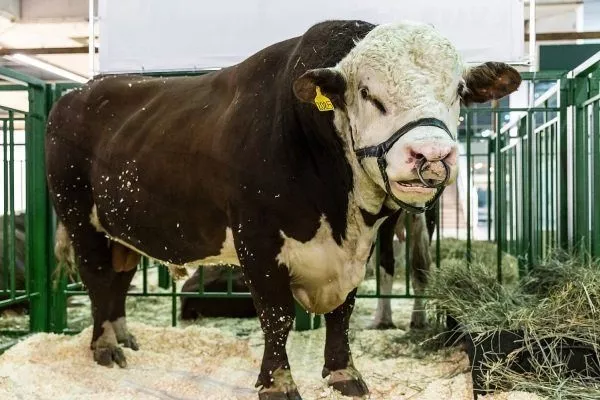
In terms of height and weight, their figures are significantly higher than those of other breeds. There are three varieties of beef bulls:
- A large breed of beef bulls, created by crossing domestic cattle with zebu. They do not tolerate cold well, so they are raised in hot climates. Their bodies are massive and well-muscled.
- Bulls with good meat production. Fat deposits accumulate from the very first days, and they gain weight quickly. The same applies to muscle mass, which strengthens quickly. The meat is high in protein and is juicy and fatty.
- These bulls develop slowly and gain weight slowly. They don't reach their normal weight until they're two years old. They have low fat content, but their muscle mass is well developed. These bulls acclimate quickly, are easy to feed and manage, are resistant to various diseases, and are ideal for crossbreeding with other cattle species.
The quality of meat production directly depends on the quality and quantity of feeding, cleanliness, and, of course, genes. If the bull is turned out daily, the owner can save significantly on feed, as the bull will be out on the range almost all the time. In addition to lush, fresh grass, the cattle should receive compound feed, and vegetables are a treat. As for vitamins and minerals, bulls need them to maintain and strengthen muscles, strength, and overall health.
The best beef bull breeds for the Russian climate
There are beef bulls of various origins and nationalities around the world, all of which differ from each other in the quality of their meat, the care and maintenance they require, and most importantly, they can be distinguished by their appearance and how they acclimatize to different countries, especially in Russia.
British beef bulls
British bulls are distinguished by their substantial weight. Their meat is highly palatable, has a pleasant aroma, and a thin layer of fat, making it even more tender and juicy. Due to the local climate, this breed has a certain fur. British bulls are bred throughout the world, but are especially common in Russia, as they can withstand any climate, even the harshest.
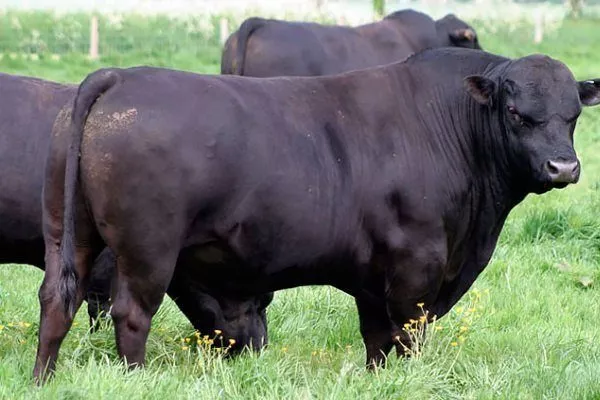
Aberdeen Angus
This breed was developed in Scotland in the 21st century. In 1878, the herd was transported to the United States, and then to other parts of the world. Since then, the breed has become famous. These bulls have strong yet slender bones, and a rounded body. Their legs are not long, but due to their broad body, they reach a height of one and a half meters at the withers. A single bull can weigh up to one ton.
The head is small, the neck is practically absent, and the head blends seamlessly into the shoulders. Males of this breed are horned. The coloring can be either red or black. The meat is marbled, with a yield of 60% per carcass, and very little fat. Beef from this breed is very popular in Russia. Calves gain weight quickly, increasing profits for farmers.
Hereford
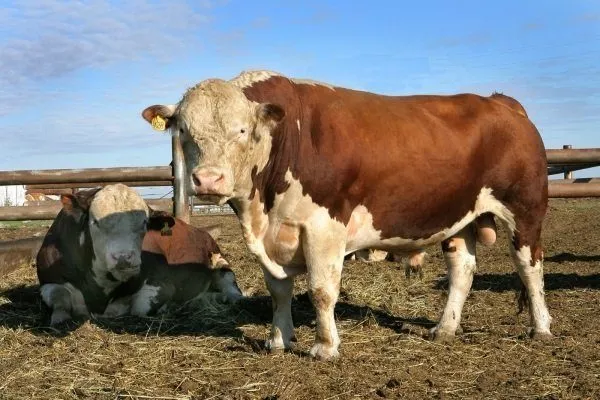
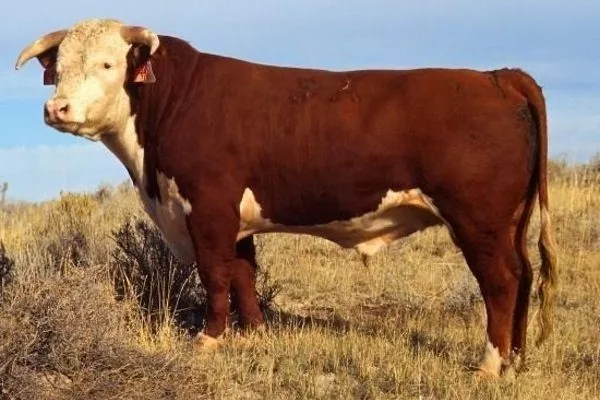
They brought it out Hereford breed In the 18th century, it was one of the most popular bulls worldwide. Its body type is barrel-shaped and broad, with well-developed muscles. A single male can weigh between 900 and 1,300 kilograms. Its legs are strong, and its neck is short. The bull itself is red, with a white tail and legs. Its height reaches no more than 130 centimeters.
Cattle of this breed quickly adapt to any climate, can travel long distances, and are easy to care for. They are kept both in Russia and other countries, and even in the North, they thrive and produce good, juicy meat. The slaughter yield per carcass is 70%, with delicious, marbled meat. Newborn calf mortality is very low, with each calf gaining about one kilogram of weight per day.
These animals can even be kept on pasture in winter; they adapt to any climate within a few days. Therefore, Hereford bulls are often bred by Russian farmers, as in addition to being easy to maintain and care for, they also gain weight quickly.
The only drawback of these bulls is their enormous appetite; 15 animals can consume around 200 tons of hay in a single winter. Therefore, before deciding to raise Hereford bulls, it's essential to purchase haymaking equipment. They also hate drafts; if they are present, they lose their appetite and, consequently, their weight, so all cracks must be sealed.
Shorthorn
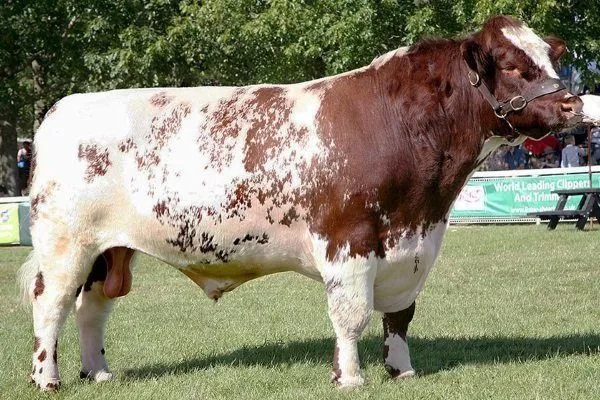
This breed was developed in Great Britain in the 18th century. The bulls are covered with thick, short hair, so they are not kept in southern regions. The animals quickly adapt to climate change and are used for breeding. These bulls thrive in humid, temperate climates, but should not be kept in the North. If the decision is made to keep bulls in colder climates, they are kept exclusively in barns where the temperature does not drop below 15 degrees Celsius.
The constitution itself is loose, but the skeleton is strong, the body is broad, the legs are short but strong. Their bellies are white, the legs are covered with white spots, and the bull itself is red. The head is proportionate to the neck and back, the sides resemble a round barrel, the chest is broad, and the dewlap is prominent.
A single bull can weigh up to 950 kilograms. These animals can vary in color: red and white, white, red, or red. The marbled meat is juicy and fibrous. The slaughter yield per bull is 70%. The young animals mature quickly, but their fertility is unfortunately low.
This breed is not very popular because the bulls are picky about their food, preferring the best feed. They are also susceptible to infectious diseases, so all necessary vaccinations are essential.
Galloway
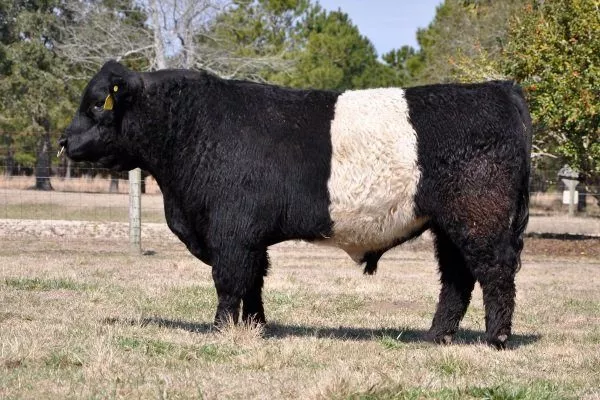
This breed can be kept on pasture year-round. They thrive in any climate and weather. This breed isn't popular in all countries, but they're especially common in Siberia. As for their native Scotland, only a handful of these bulls are found there, as they're considered an obsolete beef breed.
The body is long and the bones are strong. The body is covered with thick, coarse hair about 20 centimeters long. These bulls can weigh up to 800 kilograms live. These young bulls are noted for their precocity, with a daily weight gain of 1,100 kilograms. The slaughter yield per bull is 67%, and the meat is lean, tasty, and juicy.
Bulls are primarily black, with a wide white stripe running from the shoulder blades to the loins. Dark brown, light yellow, and white bulls are also less common. They are short in stature, with an elongated body and well-developed muscles.
French bull breeds
The following bull breeds were developed in France and are in high demand; today, they are popular in Russia. The milk of French cows produces the most delicious and most expensive cheeses.
Salersky
This breed of bull was developed in the 19th century; the milk from the cows is used to make the well-known Salers cheese, which is considered a noble cheese. Salers bulls are bred in 25 countries worldwide. They have a compact body and are not very tall, reaching up to 150 centimeters. Their bones are strong, their horns are robust, and their legs are strong and straight. Their coat is dark red, and an adult bull can weigh up to 130 kilograms. The marbled meat is fatty.
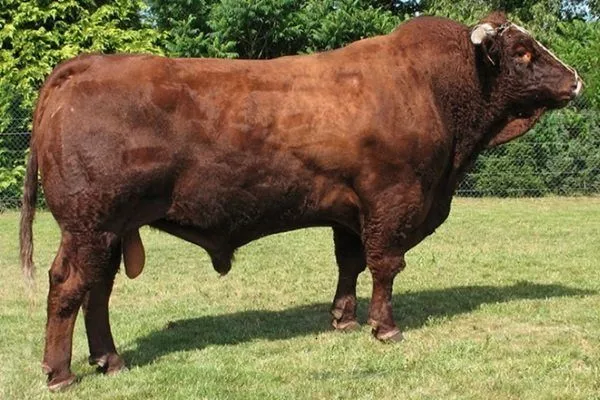
Bulls are highly productive, which is why this breed is often bred in Russia and elsewhere. Tasty, juicy meat with minimal fat can be achieved with proper and balanced feeding.
Aquitaine
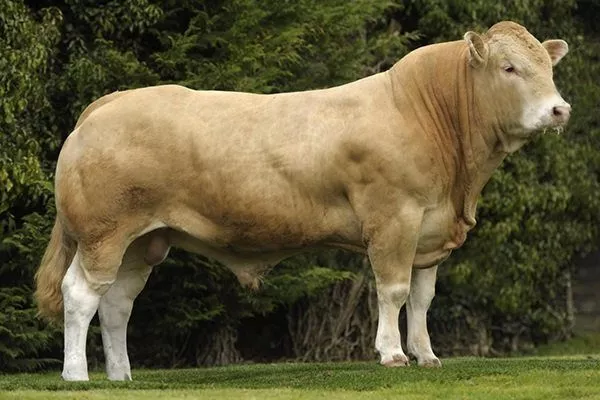
This breed was developed in France in 1962. Its color is light brown wheat. Appearance: The body is muscular, broad, and elongated. An adult boar can weigh up to 1,300 kilograms. Newborn calves weigh 45 kilograms and gain 2 kilograms daily, provided they are fed a proper, balanced diet. The slaughter yield per carcass is 70%, and the meat has excellent taste.
Bulls easily withstand both harsh winters and hot summers, quickly adapting to any climate. To obtain the maximum amount of meat, animals should be kept outdoors as much as possible. Aquitaine bulls are popular throughout Russia because they are easy to care for, are not prone to disease, and acclimate quickly.
Central Asian bulls
Central Asian bulls are renowned for their ease of maintenance and feeding. They can eat any feed, even cheap ones, while remaining healthy and gaining weight well. A special feature of these bulls is their ability to withstand even severe frosts.
Kalmyk
This breed was developed in the 17th century in Kalmykia from Mongolian bulls and cows. This breed has strong bones, a dense body, and a broad torso. A single bull can reach 130 centimeters in height and weigh approximately 1,100 kilograms. Coloring can include red, red-and-white, red with white spots, or brown-and-white.
A calf gains 1 kilogram daily. The slaughter yield is 60%. The meat is juicy, highly palatable, and low in fat. About 400 years ago, the breed gained popularity in Russia, and they are bred everywhere from Siberia to the Volga region and the Don River.
Kazakh
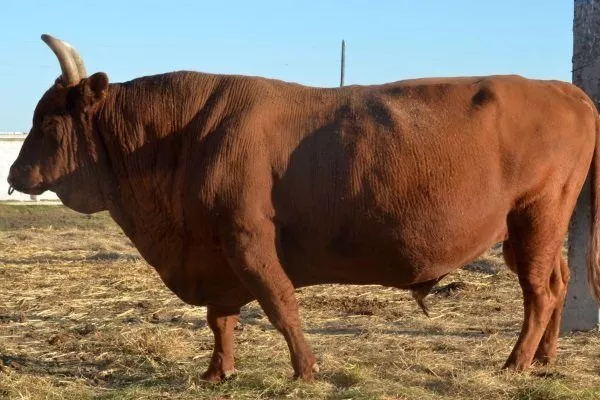
This breed of cow was developed in the 20th century by crossing a Kazakh bull and a Kalmyk cow. The body is broad and barrel-shaped. The skeleton is strong and massive, with well-developed muscle mass. The bulls are red in color, with a white tail tip, head, legs, and belly. A single bull can reach 130 centimeters in height.
As for weight, with good housing and feeding, it can exceed 950 kilograms. The daily gain of young animals is 1,500 kilograms. Kazakh bulls mature early, with a slaughter yield of 60%. The meat is tasty and juicy, with a thin layer of fat between the muscles.
Kazakh bulls are often found in the middle and lower Volga regions, as well as in the Saratov and Orenburg regions. The best bulls can be purchased in the Urals at the Chapayev and Ankantinsky breeding plants.
Other beef breeds of bulls
There are many other beef bulls, all of them typical, but it's worth noting a few varieties that deserve attention. The beef carcasses listed below have a high meat yield.
Belgian Blue
This breed was developed in Belgium; the bull has a muscular, defined body. The skin is so thin that the veins are visible. The bull's color is light blue, hence the name; white, black, and even red bulls are less common. The body is long, and the legs are strong and short.
An adult bull can weigh up to 1,250 kilograms. The minimum weight for slaughter is 450 kilograms. The slaughter yield per carcass is 80%. Belgian bulls produce high-quality meat, and they mature early with a calm disposition. They do not tolerate severe frosts well, and they also have a weakened immune system.
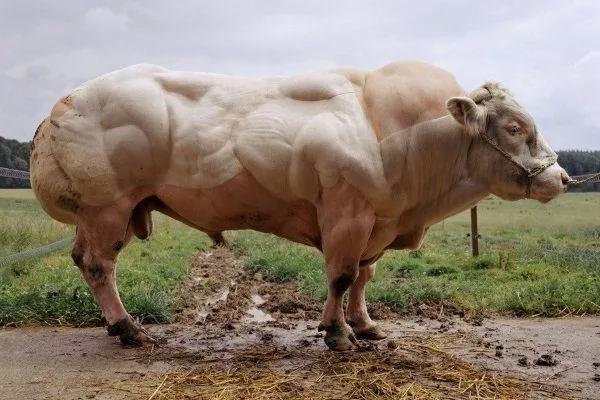
As for Russian latitudes, only a few bulls can be found in warmer climates, as they won't survive in colder climates. These bulls are primarily kept in Germany, France, the United States, and Belgium.
Charolais
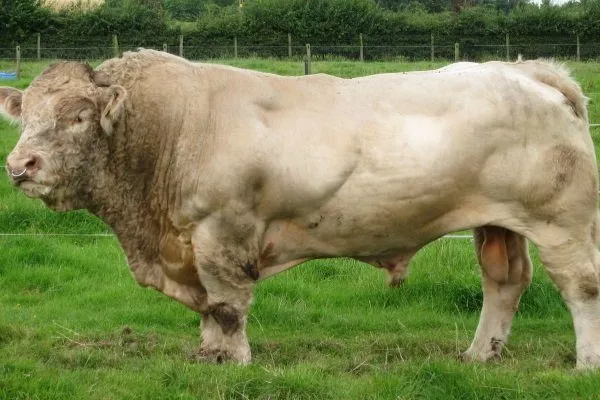
This breed is bred in 50 countries worldwide. It was first registered in France in the 18th century. Currently, there are few bulls of this breed in Russia, as it is considered exotic, although it was first imported to Russia 15 years ago. The body is muscular, with an elongated, straight back and a broad head. The color can be cream with a white tint.
A single Charolais bull can weigh up to 1,300 kilograms, with the record being 1,500 kilograms live weight. The slaughter yield is 60 to 70% per carcass. Calves grow quickly, with a daily weight gain of 1,100 kilograms. The meat is quite high in protein and has a pleasant flavor. This breed is noted for its early maturity and is easy to manage and feed.
Santa Gertrude
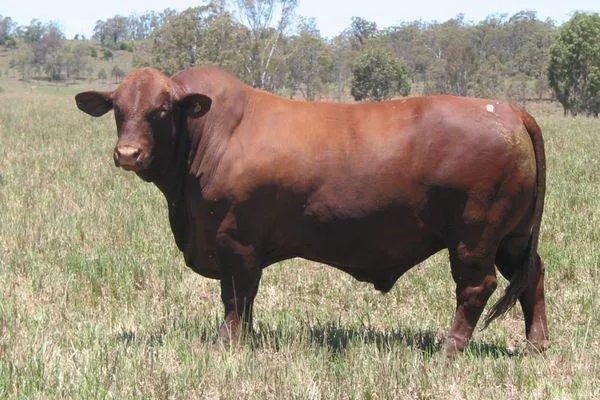
This breed was first developed in the United States in the 20th century. Bulls are often crossbred with other breeds to produce even better results. These bulls are highly hardy, mature early, acclimate quickly, and are easy to feed and maintain. Their coloring is red, sometimes with spots on the underside.
These bulls aren't known for their heavy weight; an adult bull can reach 800 kilograms. The slaughter yield per carcass is 65%. The calves have good immunity, and their daily weight gain is 1,200 grams. This breed was brought to Russia in 1956 for raising in the steppe zones. Santa Gertrudis are common in Russia, particularly in the Urals, the Volga Federal District, and the Southern Region. These bulls can also be found in the United States, Brazil, Kazakhstan, and Argentina.
Brahman
This breed was developed in India from the Indian Zebu. In India, bulls are considered sacred animals and their meat is not eaten, but those who transported them to other countries bred them specifically for their meat and fat. These bulls quickly adapt to various climates, tolerating both cold and heat well, which is why they are bred throughout Russia.
The coloring can be very diverse, from white to black, with or without spots. They have a hump on their neck, large, drooping ears, and loose skin in many places. Adult Brahman bulls can weigh up to 1 ton.
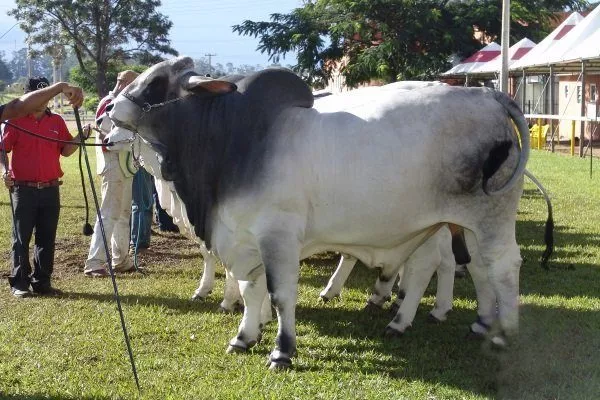
There are a large number of beef bulls worldwide, including Central Asian, French, British, and many others. Before purchasing a bull of a particular breed, everyone should research information on care and feeding, and only then make a choice.