
Today, most people buy milk not from cows, but from supermarkets. Many shoppers don't know the difference between store-bought and fresh milk, how healthy it is, and what types there are. Let's explore the different types of milk and the terminology found on the packaging.
Natural milk
| Type of milk | Fat content, % | Shelf life | Heat treatment |
|---|---|---|---|
| Paired | 8-9.5 | Day 1 | No |
| Whole | 8-9.5 | Day 1 | Yes |
The taste and composition of milk produced by cows are influenced by the season, breed, feed, health, and mood of the animals. Natural, freshly milked milk is characterized by a high fat content and density. This nutritious product is extremely healthy and tasty, but it is susceptible to lactic acid bacteria, so it spoils very quickly—it turns sour.
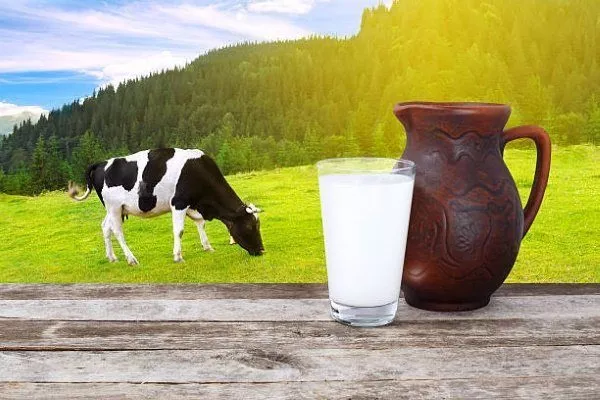
Natural milk comes in:
- Paired. This is the name given to fresh, freshly milked milk, untreated. Fresh milk is warm and still retains the cow's temperature.
- Whole. This is the name given to milk that has not undergone any artificial treatment other than heat. Its structure, composition, and fat content remain unchanged. Whole milk has a fat content of 8-9.5%. It has a short shelf life—it turns sour within 24 hours.
Once upon a time, only children could drink cow's milk—only their bodies produced lactose, the enzyme necessary to break down milk. Scientists believe that later, due to a gene mutation, adults also acquired this ability.
It's whole and raw milk that has healing properties. It's expensive. But selling it unprocessed is officially prohibited. Milk that hasn't undergone any processing—boiling, pasteurization, or sterilization—may be contaminated with brucellosis or leukemia.
To avoid contracting infectious diseases, do not buy milk from private sellers at spontaneous markets.
Types of milk depending on processing
| Type of processing | Temperature, °C | Processing time | Shelf life |
|---|---|---|---|
| Pasteurized | 65-100 | 30 minutes - 8-10 seconds | 5-15 days |
| Sterilized | 115-150 | 15-30 minutes - a few seconds | up to 6 months |
| Ultra-pasteurized | 135-145 | 3-4 seconds | 6-8 weeks |
| Ghee | 85-105 | 15-30 minutes | not specified |
The processing method affects the nutritional value of milk and even its taste. The dairy industry's objectives in milk production are:
- preserve maximum nutrients;
- destroy pathogenic microorganisms;
- create products with a long shelf life.
Pasteurized
Pasteurization involves heat treatment of milk at temperatures below 100°C. At home, milk is simply boiled to 100°C, which destroys many vitamins and nutrients. Pasteurization reduces nutritional loss by killing microbes. After heat treatment, the milk is cooled and packaged. Pasteurized milk, refrigerated, retains its flavor for 5 days.
The most persistent pathogens are those that cause tuberculosis. To destroy them, milk must be heated to 80-90°C.
Several pasteurization methods are used in industry:
- Low temperature – the raw material is heated to 76°C.
- High temperature – up to 77-100°C.
The naturalness of a pasteurized product can be tested by fermenting it. Milk diluted with chemicals is incompatible with lactic acid bacteria—you won't be able to produce kefir or yogurt from it.
Types of pasteurization depending on the duration and temperature of heating are shown in Table 1.
Table 1
| Type of pasteurization | Processing time | Temperature, °C |
| Long-term | 30 minutes | 65 |
| Short-term | 15-40 minutes | 71-75 |
| Instant | 8-10 seconds | 85 |
Pasteurization preserves more nutrients than boiling and sterilization. The advantage of pasteurization is that milk can be curdled. The disadvantage is its short shelf life. In an unopened container, it lasts for 4-15 days.
Sterilized
Milk sterilization is a heat treatment that completely destroys microorganisms, fungi, spores, and enzymes. Sterilized milk can be stored for up to six months without the addition of preservatives.
At home, sterilization is performed in a container filled with water. Milk is placed in the container and boiled for 30 minutes. Industrial sterilization uses two methods:
- Single stage. Heating temperature is 115-120°C. Processing time is 15-30 minutes. The raw materials are then transferred to a vacuum chamber and then packaged.
- Two-stage. This method increases product sterility. This treatment leads to profound changes in the composition and structure of the milk. First, the raw material is sterilized for several seconds at a temperature of 130-150°C. The second stage involves 15-20 minutes of treatment at a temperature of -115-120°C.
Benefits of sterilization:
- complete disinfection of the product;
- high resistance to lactic acid bacteria;
- It has a long shelf life and is easy to transport.
Sterilization causes changes in the components. Casein can withstand temperatures up to 140°C, but lactose is destroyed by such heat, forming lactulose.

Ultra-pasteurized
Ultra-pasteurization is often called aseptic pasteurization. This method involves treating raw milk with ultra-high temperatures. The exposure time is only 3-4 seconds. The temperature is 135-145°C. The product is then immediately cooled to 4-5°C and poured into aseptic bags. The advantages of ultra-pasteurization:
- destruction of all microorganisms and their spores;
- preservation of a significant portion of milk protein;
- high preservation of vitamin and mineral composition;
- long shelf life – 6-8 weeks;
Ultra-pasteurized milk can be stored at room temperature and does not require boiling before consumption. Because all bacteria—both harmful and beneficial—are killed, it does not spoil even when opened. If ultra-pasteurized milk spoils, it becomes bitter due to the oxidation of milk fat. The milk proteins then deteriorate, rotting, and the product goes rancid.
You can't make either cottage cheese or sour milk from UP milk, but you can make yogurt if you have a special starter culture.
Ghee
Baked milk is produced by heating raw milk to 85°C and holding it for half an hour. Another method is heating it to 105°C and holding it for 15 minutes. Baked milk is a delicious product with a nutty flavor. Baked milk has a rich, creamy color. During processing, significant changes occur in the milk's composition:
- proteins are destroyed almost completely;
- vitamins are destroyed;
- the mass fraction of fats increases.
When milk is heated, tuberculosis pathogens do not die!
New technologies
Traditional processing methods have their drawbacks, which is why scientists are constantly searching for new technologies for the food industry. Today, new milk processing options are being developed:
- Ultraviolet. The raw material is treated with ultraviolet radiation, creating a sealed, controlled-thickness milky layer. Irradiation occurs in the 165-185 nm range, producing a layer thickness of 80-120 µm. This technology utilizes ultraviolet light's ability to destroy the DNA of microorganisms, rendering them unable to reproduce. The industry now produces CCM light sterilizers, which can be used in livestock farms.
- Infrared. The industry produces infrared pasteurizers used to pasteurize milk from cows with mastitis. This milk is not suitable for human consumption, but it can be used to feed calves. There are three groups of devices: up to 300, 500-1500, and 2000-5000 l/h.
Types of milk depending on standardization and fat content
The food industry doesn't simply package the raw milk it receives; it also undergoes special processing. The milk's composition, taste, nutritional value, shelf life, and other characteristics depend on the processing method used. Let's take a closer look at the types of milk produced by the dairy industry.
Normalized
Milk standardization involves adjusting the raw material's fat content and dry matter. At the same time, it increases the product's shelf life.
Standardized milk is obtained from whole milk. The product is separated into its components: skim milk and fat. To achieve the desired fat content, whole milk cream is added to the skim milk.
GOST standards stipulate that the fat content of standardized milk should not exceed 3.5%. Standardized milk has a shelf life of 7-10 days. Unlike whole milk, standardized milk has less fat and contains significantly fewer trace elements and vitamins. However, it does contain vitamins B and H, potassium, calcium, and phosphorus—albeit in smaller quantities than whole milk.
Each standardization stage requires specific equipment. Cream is separated from whole milk—some of it is removed, while the rest is mixed with skim milk to achieve the desired fat content. The advantage of standardized milk is the ability to achieve the desired fat content.
Restored
This is a drink made from concentrated milk and water. Dry powder or condensed milk is used. Reconstituted milk is similar to standardized milk in composition and calorie content, but it offers few health benefits, as the drying process destroys its beneficial properties.
The process of reconstitution from dry milk looks like this:
- The dry powder is diluted in warm water.
- After a few hours, the product's normal density and viscosity are restored. No additives or preservatives are added to the drink.
- The resulting milk mixture is purified, heat-treated and packaged.
At one time, a product made from dry milk powder was sold as "milk." Following the introduction of Federal Law No. 88 – "Technical Regulations for Milk and Dairy Products," such products were renamed "milk drinks." This term now applies to all products made by mixing water with concentrated or condensed milk, or whole/skim milk powder.
Mixed
This is a compromise between reconstituted and standardized milk. It is made from both products. Reconstituted milk is inferior in biological value to its standardized counterpart. "Milk drinks" usually appear on store shelves in the winter, when whole milk is in short supply.
Selected
Selected milk is distinguished by its highest quality. It has high nutritional value, as it is made from the finest raw materials. It is not sterilized or separated. This product is only pasteurized, which preserves most of its beneficial properties.
Unlike regular milk production, selected milk does not allow the mixing of different types of raw materials. Only milk with improved characteristics is used, typically sourced from specific farmers. Selected milk is not standardized or mixed with skim milk—its fat content remains at its natural level.
Selected milk may have a different fat content per batch, which is indicated on the packaging. This product has a longer shelf life because it is made from exceptionally high-quality raw materials with a reduced microbial content. Selected milk is significantly superior to regular milk. It is indispensable in baby food and is also popular with those seeking natural products.
Other types of milk
The dairy industry, striving to meet consumer demands and requirements, produces various types of milk with unique properties. These products are designed for specific target audiences or are created for specific nutritional purposes.
Homogenized
If milked milk is left to stand, cream will accumulate on top after a while. The fattier the milk, the thicker the layer. Milk fat is formed by small globules. In dairy production, milk is homogenized—pressed, crushing the fat globules. After processing, the milk fat is evenly distributed throughout the milk.
Advantages of homogenization:
- improved milk taste;
- digestion is simplified.
City dwellers are accustomed to milk having a uniform consistency. They're more likely to be wary of the process of cream formation.
Recombined
This product is made from various ingredients—milk fat, dry matter, cream, and condensed milk. It can be made from cheap and low-quality ingredients, or from unsafe substitutes. If you see the label "recombined" on a package, it's best to put it aside and choose milk labeled "standardized."
To determine whether store-bought milk contains powder, taste it. An artificial, surrogate flavor will indicate the presence of powder. Artificial milk is especially abundant during the winter season. Read the labels on the packaging before buying milk.
Lactose-free
Lactose is a disaccharide carbohydrate. In lactose-free milk, glucose and galactose replace lactose. This milk is easily digestible. In other characteristics, it is similar to natural milk. It retains its flavor and nutritional value. It is rich in protein, calcium, phosphorus, potassium, and vitamins.
Protein
This is a fermented milk mixture made from cottage cheese and buttermilk. Buttermilk is skim milk obtained by churning butter. Protein milk is a healing product used to treat and prevent gastrointestinal diseases. It is also fed to infants.
Protein milk is rich in vitamins B, C, H, D, and PP. It also contains choline, iron, selenium, molybdenum, calcium, potassium, and other natural compounds essential for the body. The calorie content of protein milk is 52 kcal per 100 ml.
Fortified with vitamins
Fortified milk is made from standardized whole milk. Artificial vitamins are added to natural milk in a specific proportion. Milk fortified with a milk-vitamin complex is similar to whole milk in composition, organoleptic properties, and physicochemical properties.
Fortified milk contains 10 mg of vitamin C per 100 ml. The production process for fortified milk is similar to that of pasteurized milk. To reduce vitamin C loss, it is added to the milk after pasteurization.
Frozen
Freezing is used for long-term storage of milk. If milk is frozen slowly—to a temperature of -10°C—the milk protein is partially destroyed. Quick freezing at -22°C is preferable.
Freezing reduces the number of microorganisms, making milk safer, but does not completely destroy the microflora.
Re-freezing milk is impossible – it completely loses its properties and becomes a useless drink.
In industry, freezing is used to store concentrated products. Pasteurized, homogenized, and condensed milk are packaged and frozen. Freezing increases the shelf life of the product and reduces transportation costs.
Fat content of milk
Every package of milk indicates its fat content, allowing each customer to choose a product that meets their needs:
- Low-fat (fat-free). Its fat content is not necessarily 0%. Fat content of up to 1% is permitted. This fat content is preferred by people who are prohibited from eating full-fat milk for health reasons. This type of milk is the only way to enjoy dairy milk.
- Low fat. Fat content: 1-2%. Manufacturers claim that the most popular product is 1.5% fat. It has a good taste and is gentle on your figure and body.
- Fat content 3.5%. This is the average fat content of homemade milk, which is used as a guide when choosing milk in bags.
- More than 4.5%. This milk is quite rich. If it's sold in a store, it's likely artificially rich—it's been supplemented with skimmed milk fat. But in the countryside, you can find natural milk with similar fat content. There are certain breeds, for example, Jersey cows, which produce milk with a fat content of up to 8%. This milk helps in nursing patients when enhanced nutrition is needed.
Which type of milk is best?
It's easy to guess that homemade milk, milked from a healthy cow, ranks first in the healthiest milk rankings. If homemade milk is purchased at the market, don't drink it unboiled—it could contain infections, viruses, and pathogenic bacteria.
- ✓ Check that the seller has a veterinary certificate.
- ✓ Pay attention to the color of the milk – it should be white with a creamy tint, without any blue tint.
- ✓ Taste the milk – it should not be bitter or have any foreign flavors.
If you're buying milk at the store, the best option is pasteurized milk. It's healthier than other types of milk. However, pasteurized milk only has a shelf life of 5-7 days. Therefore, those shopping at hypermarkets for a week are better off buying ultra-pasteurized milk.
- ✓ Store pasteurized milk at a temperature of +4°C for no more than 5 days.
- ✓ Ultra-pasteurized milk can be stored at room temperature until the package is opened.
- ✓ After opening the package, any milk should be stored in the refrigerator and consumed within 2-3 days.
Sterilized milk has the longest shelf life—up to six months. However, it's not as nutritious as pasteurized milk. It's best to use it only in extreme cases—for example, when traveling. Reconstituted milk, made from concentrates, is the least nutritious.
Selected milk is especially valuable—it's a premium product. However, don't expect fortified milk to be particularly beneficial.
Briefly about the composition of milk
In terms of consumption, cow's milk ranks far ahead of other milks, such as mare's, goat's, and buffalo's. This product is 85-90% water. The remaining 10-15% is dry matter, the composition of which determines the nutritional value and taste of the milk. The composition of milk is shown in Table 2.
Table 2
| Substance | Concentration | Compound |
| Fat | 2.8-4.5% | Milk fat contains essential fatty acids, which the human body does not synthesize |
| Protein | 3.3-3.9% | casein, lactalbumin and lactoglobulin (20 amino acids, of which 8 are essential) |
| Carbohydrates | 3.0-5.5% | sugar, lactose |
| Salts | 0.7-0.8% | salts of calcium, phosphorus, potassium, etc. |
If a person is allergic to alpha-1s-casein, which is not uncommon, then they can drink goat's milk, as it contains beta-casein.
The calorie content of milk depends on the fat content:
- 100 ml of product, with a fat content of 2.8% - 60 kcal;
- 100 ml of product, with a fat content of 4.5% - 74 kcal.
Milk contains valuable vitamins—A and D3, E, K, C, B1, B2, B6, B12—and about 50 micro- and macronutrients. Unfortunately, milk may also contain harmful substances (lead, mercury, cadmium, arsenic, and others)—these can be ingested through feed.
Reviews
For milk to be truly beneficial to the body, it must be processed in a special way. When buying this product at the store, pay attention to the labels on the packaging and choose the option that suits your needs in all respects—taste, fat content, nutritional value, and shelf life.