
Kindling is one of the most anticipated events on the farm for any breeder. However, successful breeding of rabbits does not guarantee good meat and fur. There are many rules to follow that will help you achieve an excellent, high-quality product.
Age of weaning of offspring from the female
| Kindling schedule | Weaning age | Purpose of use | Risks |
|---|---|---|---|
| Loose | 60 days | Broiler meat | Low birth rate |
| Semi-compacted | 40-45 days | Meat and skins | Moderate load on the female |
| Compacted | 24-28 days | Skins | High risk of female exhaustion |
It's important to note that weaning the rabbits from the doe does not affect the animal's meat or skin. Furthermore, the doe may be allowed to mating As early as the second day after birth, based on the farm's tight birth schedule. Often, a lactating female may already be pregnant with a new litter.
Even among experienced rabbit owners, there's still debate about when to separate the kits from their mother. There are several options, each with its own advantages and disadvantages.
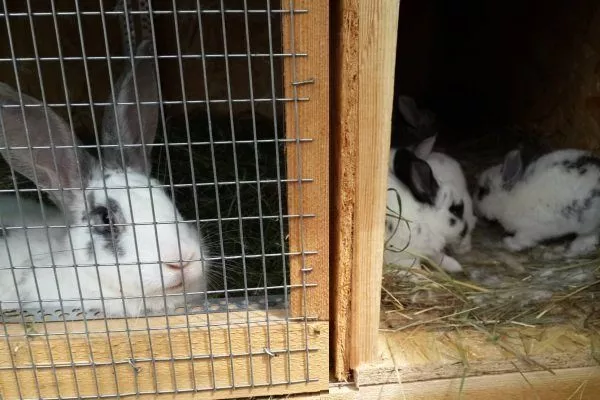
Rabbit owners have varying opinions regarding weaning. However, there are some rules and regulations for the weaning procedure:
- First of all, the kittens should be separated from their mother no later than 24 days after birth. This should not be done earlier, as the babies' digestive organs are not yet fully developed and they may die without their mother's milk.
- After three weeks, the baby rabbits' milk teeth begin to change, and they begin to eagerly enjoy the food their mother eats. This herd instinct is ingrained in rabbits: they eagerly learn from each other.
A sow can produce milk for up to three months, but often does not nurse their kits for that long. If the kits are over 40 days old, they may well begin feeding independently and even become sexually active. It's crucial not to miss this stage, as a pregnant sow should be at least six months old. Otherwise, her body may simply not be able to handle the stress.
From a physiological perspective, the optimal age for weaning rabbits is 24 days after birth. However, these young rabbits tend to grow up weaker. Other breeders recommend weaning the babies no earlier than 28 days after birth.
This rush can be explained by the fact that there are three types of kindling schedules on the farm:
- Loose schedule The breeding process is aimed at improving meat quality and is intended for broiler fattening. Rarely, rabbits can be weaned two months after birth. This is called broiler weaning, which allows for the production of high-quality meat. However, the birth rate will be significantly lower.
- Semi-compressed schedule This breeding schedule allows for raising rabbits for the sale of all types of rabbit products due to its neutrality. Females mated according to this schedule can safely nurse their kits for over a month. These females are typically mated to a male in the second week after birth. The kits of such a female will later be sold as high-quality meat. Rabbits weaned after 40 days are larger and stronger, and the females subsequently give birth to healthy kits.
- Compressed schedule This breeding schedule is suitable for large farms focused on selling pelts. With a tightly scheduled kindling schedule, the female is bred as early as the second day after the birth of the babies. If the kits are not separated from the pregnant doe by 28 days of age, the doe will simply not be able to regain her strength and nervous system to produce more kits. Once the kits are at least one month old, they can be fed greens and mixed feed. Month-old kits often weigh half a kilogram. Everything depends on the breed and the amount of food they receive.
Typically, on large farms, methods of weaning rabbits from their mothers are alternated or individually selected in accordance with the requirements for the offspring and the purpose of their further use.
What requirements must be met?
To minimize stress for both the babies and the mother, certain rules for weaning should be followed. To best accomplish this task, it's important to familiarize yourself with a few methods, of which there are only three:
- One-time jigging The entire litter from a doe is delivered at once when the babies are 1.5 months old. The babies no longer require large amounts of their mother's milk and experience virtually no stress. To further reduce the risk of stress in the offspring, it's acceptable to allow the doe to nurse every couple of days.
- Weaning of a nursing mother The advantage is that the cubs won't have to experience the stress of a change of environment. The threat of new smells and noises is eliminated.
- Gradual weaning of offspring This is considered the most optimal option, but it's quite labor-intensive. Weaker babies should be left with their mother for a few more days, while the stronger ones should be moved to cages. This will ensure that all the babies are fed to their full potential without negatively affecting the mother.
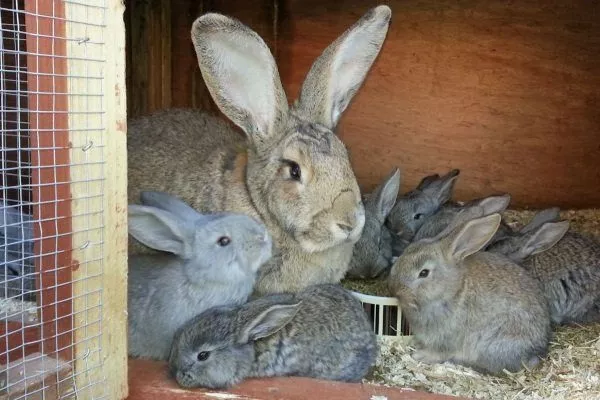
Gradual weaning is beneficial because it allows the sow to release milk evenly, reducing the risk of mastitis. However, it's important to keep in mind that on large farms, several sows often give birth, making it difficult to distribute all the litters. Therefore, this method of weaning is more suitable for smaller farms.
Females rarely experience pain when their babies are weaned, so they take it calmly and continue to give them attention, but less frequently, no more than twice a day. After the kits are separated from the doe, they should be immediately sorted into breeding and slaughter kits. This facilitates the selection of individual diets and living conditions.
Measuring parameters of rabbits after weaning
After weaning the rabbits, it's crucial to measure their parameters. There are numerous methods for analyzing these parameters, but a beginner should primarily pay attention to their weight, sex, and health. Slow-growing individuals should be placed in separate cages, as their healthier siblings may overwhelm the underdeveloped ones.
Rabbits lagging behind in weight gain should be transitioned to a more nutritious diet. This way, they'll catch up with their littermates within a few weeks. At 45 days, they can begin feeding ground, concentrated feed without coarse fiber. This promotes improved nutrient absorption.
Control parameters
- Weight: daily measurements (normal: +20-30 g/day)
- Coat condition: no bald spots
- Activity: response to food
- Stool: hard balls
- Temperature: 38.5-39.5°C
Where to place the kids?
It's crucial to prepare a place in advance for the kittens to be separated from the mother. When choosing a new home, it's important to remember that rabbits are herd animals, making it very difficult for them to live alone.
Females should be kept separate from males for the first few months. Caution is advised, as young rabbits have a rather feisty nature, and fighting over territory is common. If this occurs in a cage, it's crucial to immediately separate the rabbits into separate houses.
When moving baby rabbits to cages and runways, they should be thoroughly disinfected beforehand. During the first months of life, baby rabbits are extremely vulnerable to various infectious diseases. It's important to choose spacious housing for the young, as cramped conditions can lead to the development of various unpleasant diseases. There's also a risk of bone deformities.
The cage bottom should be made of wood or plastic. Straw or sawdust should be used as bedding. To minimize stress for the babies, mix some of the straw from the nest with fresh straw and line the tray with this mixture: the babies will be calmed by the familiar scent.
It is equally important to monitor the quality of the grass used for bedding in the cages where the rabbits will live – insects and parasites can often hide in it.
When choosing a home for rabbits, consider the number of litters born. Rabbits born to different females can be housed in the same enclosure, but it's crucial that they are of similar ages. There should be no more than three rabbits per cubic meter.
Feeding babies after weaning
It's crucial to pay special attention to the rabbits' diet: it must be nutritious and light. Young rabbits' stomachs are not yet fully developed, making it extremely difficult for them to fully digest plant foods, so the feed must be light to avoid feeling heavy. At the same time, rabbits need to gain weight, as they grow extremely quickly.
During the first 1.5 months, special attention should be paid to the babies. They often shed their fur during this period, making them particularly vulnerable to stomach problems. Young rabbits should be fed small amounts of food three times a day. The feed should be crushed. For a couple of weeks, it is recommended to feed the babies the same food the mother ate while breastfeeding. Other complementary foods, especially greens, should be introduced very carefully to avoid stomach upset.
| Feed | Deadline for entry | Share in the diet | Method of preparation |
|---|---|---|---|
| Compound feed | From day 1 | 70% | Crushed (1-2 mm) |
| Hay | From 14th day | 20% | Finely chopped |
| Vegetables | From the 30th day | 10% | Grated (carrots, zucchini) |
| Green | From the 45th day | 5% | Dried |
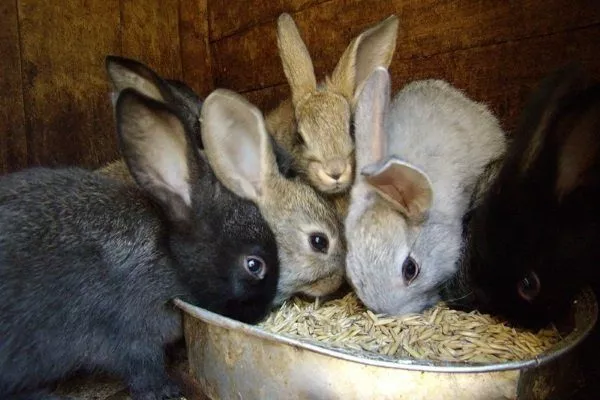
Avoid introducing wheat or barley as these grains can clog the intestines and cause diarrhea. Rye and oats are the best grains for young rabbits. After some time, fruits and vegetables can be introduced. During this period, it's important to ensure the rabbits' diet is balanced. If the rabbits aren't getting enough vitamins and minerals from their food, they need to be supplemented artificially.
So, if you've decided to start breeding rabbits, it's crucial to delve into the topic, which details the age at which the doe should separate the offspring. This is crucial, especially if the rabbits are being sold for meat or pelts.