
Mating rabbits is a necessary process for breeding them. Only proper and high-quality mating can guarantee healthy offspring. However, it's important to understand some aspects that affect breeding. This article explains everything in detail.
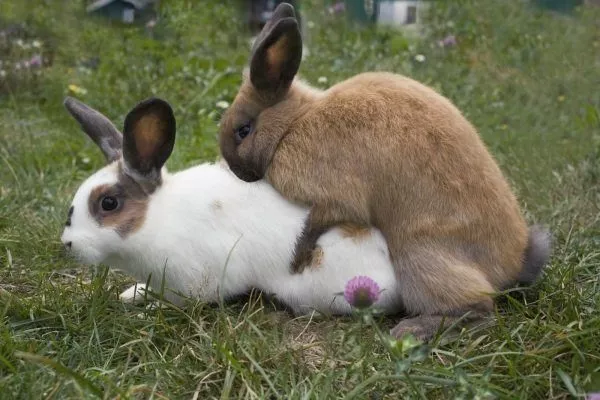
How do you breed rabbits?
If a farmer decides to breed rabbits, mate them, and have them litter, they should know the methods for raising these furry creatures. There are only three methods:
- Breeding at home in a natural environment. For successful fertilization, the male and female must be placed in the same cage for two days and observed to allow the natural process to occur. Success may not always be achieved on the first try, even with a longer period of time. Therefore, some farmers introduce several females and one male at a time.
- Rabbit breeding with human participation. This method is practically no different from the one described above, only in this case you should hold the female so that the male can mount her.
- Breeding on large farms. This method is used when breeding large numbers of rabbits. Therefore, to ensure maximum success, females are inseminated artificially. Of course, this method isn't exactly simple, as several nuances must be understood to make it a reality. First, semen must be collected from the rabbits, specifically from mature specimens, and then the sperm must be injected into the female using a syringe.
| Method | Efficiency | Requirements | Deadlines |
|---|---|---|---|
| Natural | 70-80% | 1 male for 5-7 females | 24-48 hours |
| Manual | 85-90% | Fixation of the female | 15-30 minutes |
| Artificial | 95% | Special equipment | 5-7 days of preparation |
Sex determination
Before mating rabbits, you need to determine their sex. This isn't as easy as it might seem at first glance. It's even more challenging for someone new to the process.
To determine the sex, place the rabbit on its back, lower its tail, and press with your fingers on both sides near the rabbit's genitals. In females, the genitals are loop-shaped or hood-like with a slit (the genital slit). In males, the genitals are tube-shaped with a round opening in the middle.
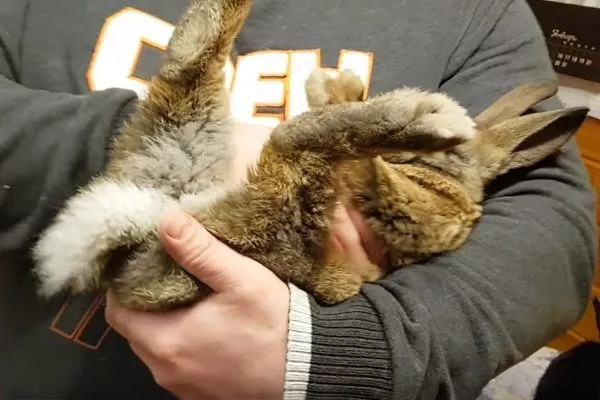
Place the rabbit on its back
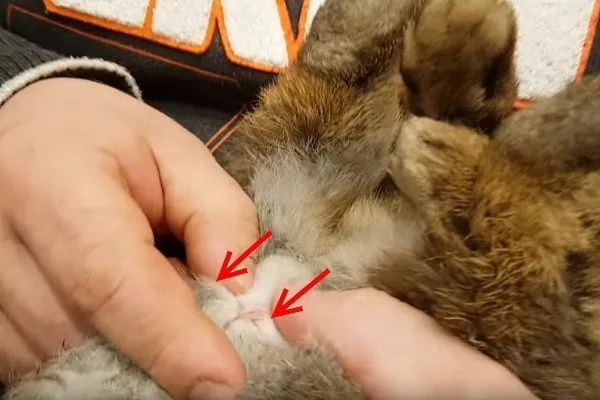
Press on both sides to bring out the genitals
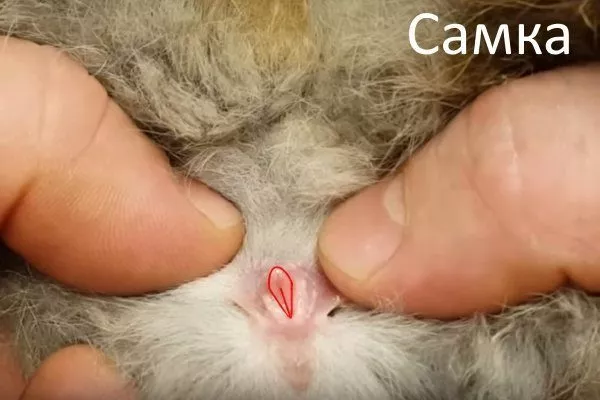
The female's genitals are loop-shaped.
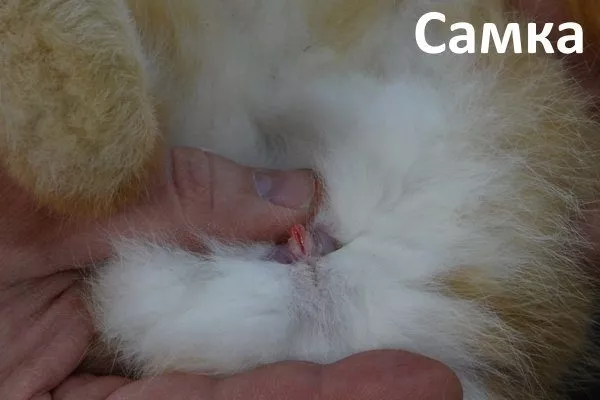
The genital slit of a female rabbit
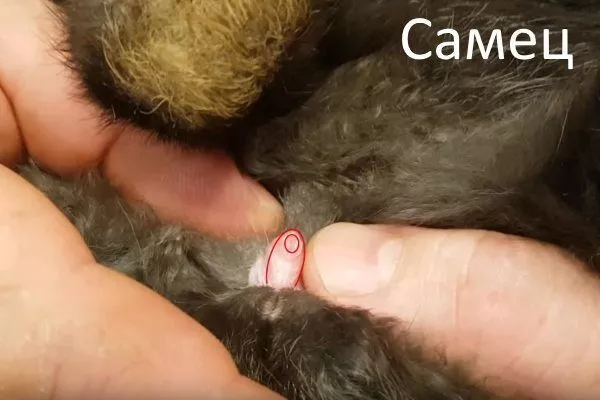
The external genital organ of the male rabbit is shaped like a tube.
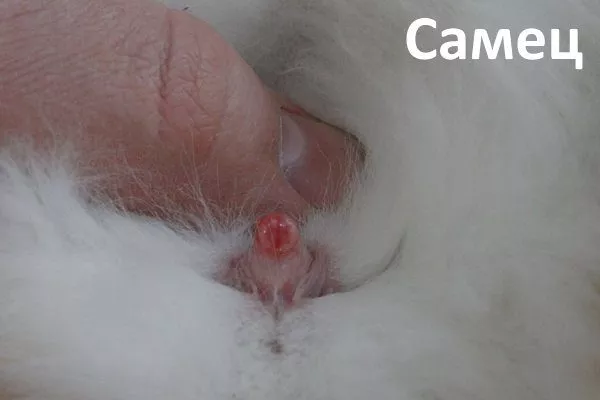
Rabbit's genitals
Preparing for mating animals
First of all, the animals must be prepared to ultimately produce healthy and viable offspring. To begin, the diet of the stud rabbits must be reviewed. The diet must include vitamins and protein. Furthermore, the rabbits' cages must be cleaned to ensure favorable conditions (spacious, plenty of light, and warm). Next, the female rabbit is placed in the male's cage.
Choosing the Right Doe
| Indicator | Norm | Deviation |
|---|---|---|
| Weight | 3.5-5.5 kg | ±15% of the breed standard |
| Age | 6-36 months | Less than 5 or more than 48 months |
| State | Cheerful | Lethargy, discharge |
Choosing a female rabbit for breeding isn't all that difficult. First, consider the animal's age: the female shouldn't be younger than 6 months, as she won't be able to carry a litter properly at a younger age. Naturally, the best option is a young female that has already given birth to litters and nursed them properly. In this case, the female can be bred again 45 days after her previous litter.
It happens that a doe cannibalizes her own kits. If this happens, do not breed the doe again.
An equally important criterion for choosing a young doe for mating is her weight. She should be moderately plump, but not obese. If she's thin, she should be fattened up. The doe must be in heat, otherwise mating will not occur. If a specific day of the month for mating is chosen, the doe should be separated from her fellow rabbits for a while.
How do you know when it's time to mate rabbits?
To reproduce, you need to wait until the rabbits reach full sexual maturity. The age of puberty varies slightly for each breed. Then you need to wait another couple of months for their bodies to strengthen. Therefore, on average, the first mating takes place at 5-6 months. This is the optimal age.
If a female rabbit begins actively marking her territory, it indicates the male is ready to mate. Requirements for males:
- activity;
- healthy appearance and sufficient weight.
If your rabbit is shedding, it's best to postpone mating until later, as the animal's immune system is weakened during shedding, which can negatively impact the quality of the litter.
As for the female, she should be experiencing a desire to mate. This is easy to understand: her behavior becomes restless, she moves around the cage frequently, and may pluck out her own down to prepare the future nest. Furthermore, the female's vulva swells and turns bright pink. If you stroke the female's back, she will lie down and begin to stretch. Sexual desire in females occurs regularly (every 7-9 days).
It's possible to mate rabbits without the female being in heat, but the success rate will be low, as the female needs about five days to mature her eggs. Therefore, it's recommended to regularly check the female's heat before mating. During the mating process, the female should be held back so that her rear end is raised and her tail doesn't interfere with penetration.
The female is considered mated when, after a couple of minutes of rapid movements, the male suddenly stops in a certain position or jumps off the female, making snoring sounds. Mating can be repeated in 5-7 days. The advantage is that you don't have to wait for the right day to mate.
While humans can only become pregnant on certain days, rabbits ovulate spontaneously immediately after intercourse. Rabbits are naturally designed to reproduce regularly. Incidentally, female rabbits do not go into heat (menstruation).
If the female refuses to accept the male during a second mating, she is likely already pregnant. Her lower abdomen should be gently palpated. Two parallel strings of soft, cherry-sized balls will be palpable in a pregnant female 13-15 days after a successful mating. The female rabbit should be separated and not palpated again to avoid causing a miscarriage.
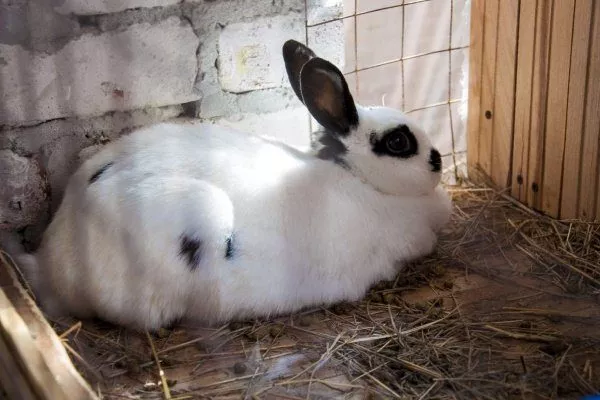
Up to what age can you breed female rabbits?
To accurately determine the age for mating, it's important to consider that rabbits have a short lifespan, about 9-10 years, and the success rate drops after the age of 5, so mating is not recommended. Furthermore, in old age, does experience a sharp decline in milk production after the birth of their litter, as the mother is unable to nurse them on her own.
In rabbits, the aging process and the fading of maternal instincts are individual characteristics. It often happens that a male or female rabbit would be culled by all academic criteria, yet they still produce numerous and healthy offspring. However, statistics show that, regardless of the age at which the first mating occurs, an animal can produce strong kits within the first two to three years of its life.
Mating rabbits
Mating control schedule
- 08:00 — Animal inspection
- 09:00 — First class
- 13:00 — Second pair
- 17:00 — Third pair
- 21:00 — Checking results
Despite the expression "mating like rabbits," these animals are quite selective in their choice of mates. That's why, when kept on a farm with a large number of rabbits, humans are forced to participate in the natural process.
A male and several females can be used. However, most often, a pair is separated, monitoring the entire process and, if necessary, restraining the female to prevent her from moving. Mating is a relatively quick process, lasting no more than two minutes. The male can be presented with several females per day for mating, at intervals of approximately four hours (this time is necessary to restore sperm quality).
It is not recommended to mate more than four females per day. After each mating, the female is returned to her cage.
During mating season, remove all contents from the cage, leaving only a water bowl. Avoid leaving the animals alone, as fighting is possible. Experienced females often reject young males. Experts believe their scent is not as strong and desirable to females as that of mature males.
When to mate rabbits after breeding?
It's important to know how much time should pass after kindling. Of course, it's helpful to wait a certain amount of time, as the mother's body needs time to recover from the birth. On average, a doe shouldn't be bred for about 45 days after kindling. During this time, the mother and her babies should be placed in a separate cage.
It's also important to isolate pregnant females from males. This is necessary to avoid mating a male with a pregnant doe, as this can harm the litter, such as stillbirth. Furthermore, the structure of a female rabbit's uterus allows her to become pregnant again while carrying kits. The second litter will then be weak.
A female's pregnancy (gestation) lasts about a month. A few days after kindling, the female may become restless, refusing to breed. A "blank" mating is then performed. To do this, a male rabbit is mated with several does, one after the other (without pauses). Immediately after the last mating, a recently foaled doe is introduced. The sperm of this male will be inactive, meaning she will not become pregnant, and the doe will go into heat and return to her kits.
But keep in mind that in this case, the first female that is introduced to the male will turn out to be pregnant!
What is inbreeding?
Inbreeding is the mating of two rabbits within a single family. In most cases, this is undesirable, as it can result in unhealthy and weak offspring. However, this applies specifically to inbreeding between close relatives. There is also distant inbreeding, which is even desirable to produce a stronger rabbit breed.
Inbreeding isn't always well-thought-out; it often leads to human oversight if herd records and mating schedules are improperly managed. To correct this error, it's important to introduce new individuals, preferably males, into the rabbit family, as they will help straighten out the animals' lineage and produce healthy offspring.
Mating rabbits in winter
- ✓ Heating: 250W infrared lamps
- ✓ Ventilation: no drafts
- ✓ Feed: +15% of the norm
- ✓ Water: heated (+20°C)
- ✓ Light: +2 hours to normal mode
Of course, rabbits can be bred year-round. However, winter mating requires special attention. Many farmers worry that low temperatures can hinder successful mating. Therefore, early morning hours are chosen for mating, allowing the sun to sufficiently warm the rabbits' quarters.
Mating rabbits in winter is the same as at other times of the year. Furthermore, some rabbit breeds can continue mating even in the complete absence of a heat source. Naturally, such conditions should be avoided: indoor farms should have a temperature of at least 12 degrees Celsius.
The only thing to be wary of is drafts, as they are a terrible enemy and can make rabbits sick. Drafts can also lead to poor mating results. During the winter, this process requires increased comfort in the animals' quarters.
After the doe gives birth to her litter during the cold season, she should keep them as warm as possible. If there is no radiator or heater in the hutch, it is recommended to bring the litter indoors so they can grow stronger and gain strength.
How can you tell if mating was successful?
To independently determine the success of the mating, carefully palpate the rabbit's abdomen two weeks after mating. If you can feel small balls with your fingers, this indicates that future rabbits are developing in the gestational sacs. However, the examination must be carried out carefully and gently to avoid harming the babies.
Why do matings fail?
Sometimes, despite all your efforts, a female rabbit fails to conceive. Don't be discouraged, as you can breed the rabbits again in a few days. However, to achieve better results, you should replace the male, as he may be too young for mating.
In such cases, unsuccessful mating often occurs because not all of the male's sperm reaches the female's internal organs. However, this problem can be overcome: the female rabbit must be held properly to ensure the male rabbit can complete the insemination process without any problems.
Knowing how and at what age to mate rabbits will help you learn how to mate them properly so the female produces good, healthy offspring. Only by approaching the process correctly and creating comfortable conditions for both the female and the male will it be possible to breed both decorative and farm rabbits.