
Keeping goats is within the reach of any private farmer, including beginners. A goat requires significantly less feed than a cow, and milk is on the table every day. If you take goat breeding seriously, you can earn a good income from selling meat, milk, wool, down, and hides. Below, we'll cover the basics of goat breeding and care for beginners.
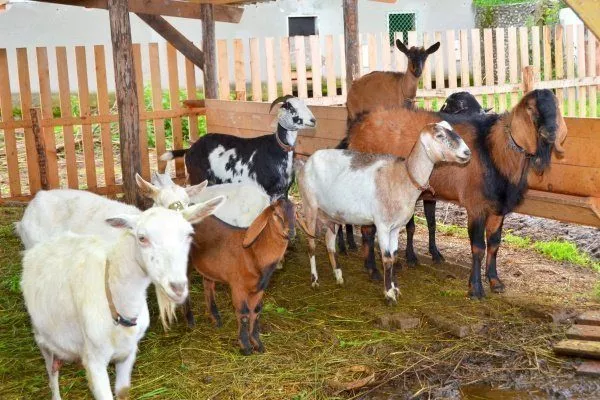
Choosing a goat
Before buying a goat, you need to decide on your priority product. There are three main types of goat breeds:
- Dairy.
- Meat.
- Downy.
Private households most often keep goats for their milk. Goat milk is very healthy, tasty, and rich in fat (4-6%). Because of their low maintenance and low cost, goats were nicknamed "poor man's cows" in past centuries.
There are approximately two hundred officially recognized goat breeds worldwide, and even more subspecies. In addition to the three main breeds, goat breeders distinguish several other types:
- park;
- woolen;
- skins;
- dwarf;
- mixed;
- decorative.
Beginning goat breeders, as a rule, breed dairy goats.
Dairy breeds
When choosing a dairy breed, examine the goat's exterior. External signs that can help you identify a female with good milk yield include:
- the head is small, light and graceful;
- the skeleton is well formed;
- the back is straight and the chest is wide;
- legs are straight, set wide apart;
- The udder is spherical or pear-shaped, with well-developed nipples.
- ✓ Check the goat’s age: the optimal age to start milking is from 1.5 to 5 years.
- ✓ Assess the condition of the udder: it should be elastic, without compaction, with well-defined nipples.
- ✓ Make sure there are no diseases: check vaccination records and veterinary examinations.
A large udder doesn't mean a goat produces a lot of milk. If the udder doesn't fall off after milking, it means it contains a lot of fat.
Among dairy breeds, in addition to high milk yields, the following are also valued:
- taste and nutritional characteristics of milk;
- precocity of goats;
- fertility.
The most popular dairy breeds in Russia are mixed breeds—milk-meat and milk-wool. Our goat breeders especially value the following breeds:
Down breeds
Once you've gained experience with dairy goats, you can try breeding down breeds. The exterior of down breeds:
- impressive dimensions – the larger the dimensions, the greater the down productivity;
- the line of the back and sacrum are straight;
- chest circumference is large;
- legs are straight and powerful;
- the head is small;
- the body is evenly overgrown;
- The hair on the head is not stiff, and hair hanging over the eyes is welcome.
Down goats are purchased before shearing and carding. Down goat breeders prefer the following breeds:
- Orenburg;
- Don;
- Kyrgyz;
- Mountain Altai;
- black down;
- Angora;
- Soviet woolen ones.
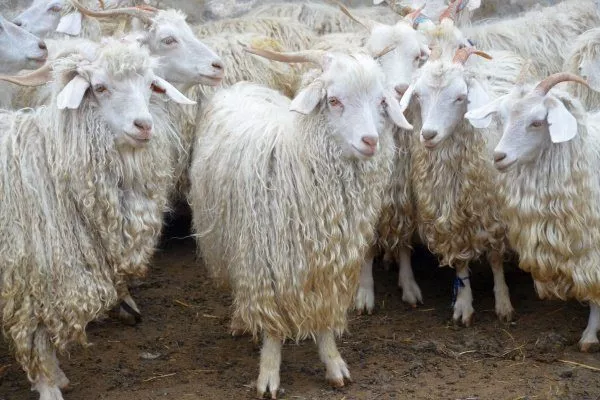
Less commonly, cashmere, Volgograd and Turkmen down goats are bred.
One down goat produces up to 700 grams of down per season. Breeders also receive the skin, which is used to make gloves, shoes, and warm clothing.
Meat breeds
Goat meat tastes similar to lamb, but is considered healthier. In the Middle East, goat meat is used as a therapeutic food – it is eaten to treat circulatory, respiratory, and cardiovascular diseases, diabetes, and gastrointestinal problems. Popular meat breeds include:
In Russia, goat meat is not highly valued, so goat farming for meat is not developed. In Russia, these animals are raised primarily for their milk and fur.
Descriptions of popular dairy, down and meat breeds are in Table 1.
Table 1
| Breed | Direction | Description |
| Boer | meat | Low milk production. Excellent meat flavor. Similar in taste to veal. No distinctive goaty odor. |
| Gorky | meat | The milk is rich in fat. The annual milk yield is small – 500 liters. An adult female weighs about 50 kg, and a male – 60 kg. The maximum is 75 kg. |
| Saanen | dairy | A famous Swiss breed. Their color is snow-white. They are very large goats, with males reaching 100 kg and females 90 kg. Their annual milk yield is 1,000 liters. Record-breaking females produce up to 2,000 liters. The milk is thick, with a delicate, creamy flavor. It is used to make excellent cheese, butter, and quark. |
| Toggenburg | dairy | Bred in Switzerland. Their coat is brown, with white stripes on their muzzle. They are slightly smaller than Saanens, with males weighing 60 kg and females 50 kg. |
| Orenburg | downy | The annual milk yield is only 250 liters. Males and females weigh 60 and 45 kg, respectively. The down is gray, short, and fine. White down is rare. The annual fleece yields 300 g. Record-breaking breeders yield up to 800 g. Orenburg down is used to knit lightweight and elegant garments. |
| Don | downy | Medium-sized goats adapted to the steppe. Males produce more down than females—up to 1,000 g. Down combed in winter and fall is especially good. |
Where does breeding begin?
To start breeding goats, you need to acquire kids or a pregnant doe. When buying a doe expecting a calf, find out when she was bred. This information is essential for preparing for lambing. Goat breeders recommend choosing kids or a doe from a mother proven to be a high-yielding goat with a high-quality fleece—these traits are inherited from the mother.
Kids of different sexes are kept separately. The first mating of females occurs at one and a half years of age. The optimal age for a male is 2-5 years. The male and female goat should not be closely related. The male goat's mother should be a high-yielding goat, so that the future offspring will be productive in milk.
Criteria for selecting and purchasing kids
If you decide to buy kids for breeding, choose kids 2-4 weeks old. When choosing kids, pay attention to the following:
- Motor abilities. Active kids have a higher chance of becoming productive goats. Muscle development positively influences the development of the respiratory system. This stimulates metabolism and promotes rapid growth and development.
- Position of legs - hind and front. The legs should be set wide apart—this is the key to good chest development. Wide-set hind legs allow for a large udder.
- Head. It shouldn't be too narrow. Animals with narrow heads expend a lot of energy chewing coarse feed. This will hinder the development of kids with narrow heads.
- Earrings. Some goat breeders claim that wattles are a sign of milk production. However, there's no scientific evidence to support this. However, wattles can cause plenty of problems. If a kid damages a wattle by poking its head through it, it will experience intense pain—they're so full of nerve endings. The pain will interfere with feeding and growth. An adult goat with damaged wattles may experience a drop in milk yield due to the pain.
- BackThe ideal is a straight line. There shouldn't be any hunching or sagging. As you get older, these flaws will become more apparent.
- Nose and eyes. There shouldn't be any discharge here. If there is, the cause needs to be determined.
- Mechanics of movements. You need to watch the kid in motion. Its legs should move freely, without any stiffness. The legs should bend freely at the joints. If its movements resemble an automatic robot, something is wrong.
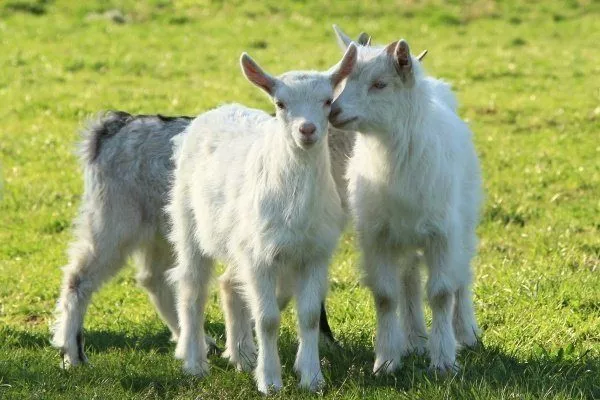
After assessing the kid based on all the above criteria, it's time to visually evaluate the entire exterior. Consider the following:
- An animal with high milk productivity has an elongated body.
- A short neck indicates a meat-producing breed. Short-necked goats tire quickly in pastures—they find it difficult to bend their heads for long periods to eat grass. This characteristic will negatively impact future milk production.
When buying a kid, ask the seller what the animal is fed and how often. Kids are fed in two ways: from a bowl or from a bottle. It's important to transition the kid gradually to avoid stress. Bring some of the milk it was fed with along with the kid—this will reduce stress and the risk of the kid getting sick during the move.
Male kids develop faster than females. They are larger, taller, and weigh more. But they have a calmer disposition, and are happy to lie down and eat more.
The age of kids is easy to determine by their weight, if you know their weight gain patterns. Table 2 shows the relationship between the weight of Saanen kids and their age.
Table 2
| Age, months | Weight, kg |
| 0 | 3-3.5 |
| 1 | 8 |
| 2 | 12 |
| 4 | 21 |
| 5 | 26 |
Goat house equipment
The goat barn is equipped with stalls. Each animal has its own stall, separated by wooden posts. The "cell" size is 2 x 1 m. Young goats can be placed two per stall. However, this increases the area to 2 x 2 m. Other things to consider when setting up the goat barn:
- The goat is kept away from the goats – in a separate stall.
- The kids will be provided with a separate room.
- Drinking bowls are installed in the stall.
It is recommended to equip the goat house with an attic for storing hay, feed and tools.
Conditions of detention
Goats are easy-to-care-for and adapt easily to any climate. The optimal management system for achieving maximum productivity is a combination of stall and pasture. In the summer, the animals graze on pastures, and with the onset of cold weather, they are moved indoors. Requirements for housing goats:
- There should be 4 square meters per animal.
- Goats do not tolerate polluted air well – the goat house must be equipped with good ventilation.
- In the northern regions, goat houses are insulated and heated in frosty weather.
- The floors in the room where the goats are kept are made with a slight slope.
- Goats don't like high humidity. It's important to ensure adequate humidity levels.
- The optimal temperature in the goat house is between +18 and +20°C. The minimum temperature is +8°C. In the kids' room, the temperature should not fall below +12°C.
- Windows are installed in the barn to allow natural light in. Milk production depends on the length of daylight hours.
- A manger filled with hay is installed in the room, and feeders are placed above it.
- The floors are covered with dry straw, hay, or sawdust. The bedding generates additional heat, reducing heating costs.
- A walking area is being set up next to the barn. A canopy is being built and combing sheds are being installed.
- Goats like to sleep on a slight elevation. They are provided with sleeping places—beds made of planks. A simpler solution is to lay planks on the floor; the animals will happily sleep on them.
In the following video you can see an example of the conditions for keeping goats:
It is not recommended to keep goats tethered in stalls. Restricted movement negatively impacts milk yield.
Maintenance during the warm season
As the weather warms, the goat barn is cleaned with particular care. While the barn is being cleaned, the goats are moved under cover.
Work performed:
- Replacing the straw bedding.
- Washing walls, floors, and stalls. Wash the goat house with a warm soda solution. Laundry soap is also used. After washing, air out and dry the room.
- Whitewashing walls with lime.
During warmer months, while the weather is favorable, goats graze in the pasture all day. They are turned out after the dew has dried. The grazing season begins when the grass has established itself. Before turning them out to pasture:
- goats have their hair trimmed around their eyes if necessary;
- they give them plenty to drink so that they don’t drink dirty water from puddles;
- They give them hay before they go out to pasture so that they don’t overeat on grass.
Once the goats have become accustomed to the pasture grass, hay supplementation can be discontinued. In the morning, the animals are sent to a poorer pasture, and then moved to areas with more lush grass.
Goats don't like heat. The sun can even cause heatstroke. That's why the herd is taken out to graze as early as possible—at dawn. When the heat sets in, the animals should seek shade. It's recommended to take breaks from grazing at the following times:
- from 10 to 11 o'clock;
- from 2 pm to 4 pm.
When the heat subsides, the animals return to the pasture, where they feed until dark. Young animals can also be left out to graze, but if it's cool outside, they should be supervised to ensure they don't lie on the ground.
It's not recommended to graze goats in the rain or before it rains—these animals are too sensitive to changes in atmospheric pressure. If an animal is grazing alone, it should be tethered with a collar.
With the onset of autumn coolness, the goats are moved to stalls. The transition occurs gradually, over 7-10 days. Hay rations are gradually increased, and the time spent on pasture is reduced.
While kept in stalls, care is taken to maintain the animals' health, combating helminths and other parasites that weaken the animals' immune system and cause various diseases.
Keeping goats in winter
With the onset of cold weather, goats are not only transferred to a winter diet but also provided with comfortable conditions. Goats spend the winter indoors. Lights are turned on in the goat barn at night to help maintain high milk yields. The optimal temperature in the goat barn is 18 to 20°C. The minimum acceptable temperature is 6 to 8°C.
In winter, livestock should be outside for at least 3-4 hours daily. Restricting goats' exercise deteriorates their health, milk yields drop, and reproductive function suffers. Access to exercise is especially important for downy breeds—they don't mind the cold, especially if the weather isn't windy. Downy breeds are grazed longer than other breeds. They are fed and watered outside—in a pen; feeding in a barn is only done during snowfall or rain.
Feeding regimen and diet
Goats are easy to feed; they're undemanding animals. They happily eat any kind of food, making them easy to care for. To ensure high milk yields and healthy offspring, it's important to provide them with a well-balanced diet. In the summer, goats' main food is green grass, and in the winter, hay. The grass should be lush, and the hay high-quality. To ensure a dairy goat produces 8 liters of milk per day, it needs to be fed generously and properly.
Feeding schedule:
- The first time food is given at 6-7 o'clock.
- The second one is at 12-13 o'clock.
- The third one is at 18-19 o'clock.
Dairy goats are fed more frequently. Water should be freely available.
It is prohibited to feed goats:
- potatoes turned green in the sun;
- sour silage;
- rotten vegetables and fruits;
- grain with insects.
Summer diet
When grazing on pastures, a goat eats about 7 kg of grass per day. However, this is not enough to produce sufficient milk. To obtain 8 liters of milk per day, it is necessary to supplement the goat's diet with concentrates. This is especially important during hot weather, when the grass loses its juiciness and becomes scorched.
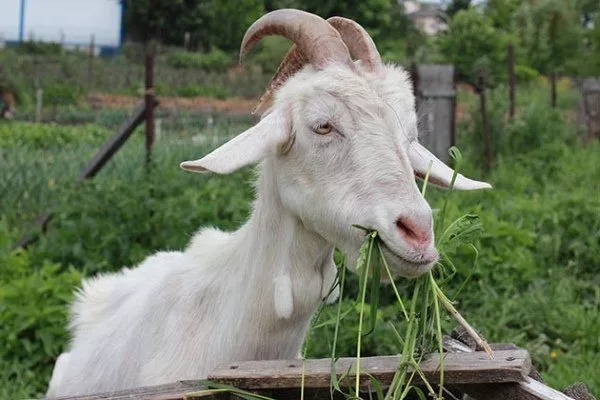
Goats are fed two types of concentrates: legumes and grains. These are ground into powder. The daily requirement for one goat is 500 g. The summer diet should also include:
- vegetables;
- branches;
- kitchen scraps;
- salt - 15-20 g per day;
- chalk – 12 g;
- bone meal – 12 g.
Summer daily routine is in Table 3.
Table 3
| Times of Day | Events |
| Morning | They give them feed. They milk them. They drive them out to pasture. |
| Day | Goats are grazing in the pasture. |
| Evening | They are given table scraps, cabbage, potatoes, fruit, and succulent feed. They are also given compound feed. |
| For the night | They put hay in the manger. |
A dairy goat should receive 6 liters of water daily, a dry goat receives half as much – 3 liters.
Examples of daily diets that are suitable for any type of goat:
- meadow grass – 6-8 kg, alfalfa hay – 1 kg, haylage – 2.5 kg;
- oats – 4 kg, meadow hay – 1 kg;
- Pasture walk – here the goats eat as much grass as they want, green oats – 4 kg.
Winter diet
In winter, the main diet consists of roughage—hay and straw. Hay is considered more nutritious, especially leafy hay. The approximate feeding norm is 3 kg per goat.
To reduce hay consumption, goats are fed with brooms prepared in the summer. A calculation formula is used: instead of 1 kg of hay, give approximately 2 kg of brooms. In winter, they are also given succulent feed:
- Vegetables. They can be given dried, raw, or cooked. They should be washed and chopped before feeding.
- Fruits. This is a treat and a vitamin supplement. It can be given in any form.
- Silage. The main succulent feed in winter. It is prepared in the summer by storing garden tops. It has a positive effect on milk yield.
- Food waste. They add compound feed, chalk and bone meal to them.
It's more cost-effective to buy ready-made feed. To make it yourself, you'll need to buy a grain crusher and maintain the correct proportions.
Goats are given a salt lick. A dairy goat needs 8 grams of salt per day, while a pregnant goat needs 25 grams.
Winter feeding schedule is shown in Table 4.
Table 4
| Times of Day | Events |
| Morning | Vegetables or food scraps are given at half the daily feed rate. Hay and brooms are added. |
| Day | Hay, brooms and vegetables |
| Evening | Hay, succulent feed and remaining compound feed. |
Feeding is always given at the same time. Feeding is done three times a day. The feeding schedule is as follows:
- First, they give the animal compound feed. It's not given in its pure form, but as a thick porridge or slop.
- Succulent feed.
- Roughage.
When preparing a swill from compound feed, you cannot use boiling water - it will destroy some of the nutritional components.
Examples of winter diets:
- clover hay – 2 kg, crushed beets – 2 kg, ground oats – 400 g;
- meadow hay – 2 kg, fodder cabbage – 3 kg;
- alfalfa hay – 1.5 kg, meadow grass hay – 0.5 kg, mixture of ground oats and carrots – 2.5 kg.
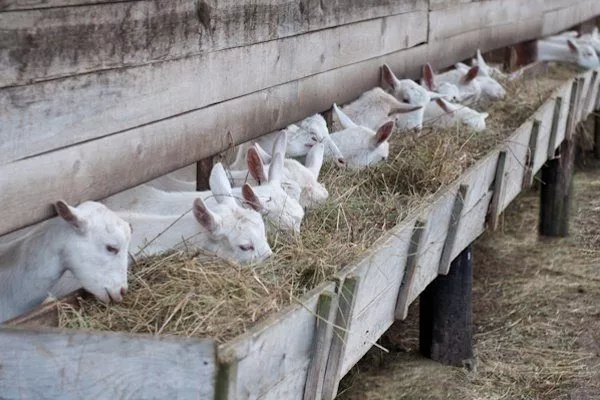
Nutrition of lactating goats
During pregnancy, goats require enhanced nutrition. From three months onward, their nutrient requirements double. However, overfeeding is essential, as it can lead to miscarriage. After lambing, a goat's digestive system is weakened and requires rehabilitation. For a week after lambing, feed only light, easily digestible feed.
The following products are suitable:
- mash;
- finely chopped vegetables;
- legume hay.
A week after lambing, the animal is transferred to a standard diet. During the lactation period, the goat is fed primarily fresh hay and root vegetables – 3-4 kg of each.
Preparing brooms
Winter brooms are prepared from June 5th to 10th. Suitable trees for harvesting include birch, willow, maple, ash, and rowan. The branches should be no more than 1.5 cm thick at the cut. The best time to cut branches is evening and early morning, when they are at their most nutritious.
Cut branches are laid on the ground and dried for several hours to allow the sun to produce vitamin D. Once the branches have wilted, they are tied with twine or string. The brooms can be finished drying in an attic or shed. Herbal brooms can also be made from nettles or corn stalks. While the brooms are drying, they should be turned over and stirred to prevent mold.
Watering goats
Watering rules that must be followed:
- Provide clean and warm water, or at least room temperature. In winter, the water should also be warm.
- Water is provided at every feeding. However, it's best if the animal has access to water and can drink whenever it wants.
- It is forbidden to give water to hot goats to avoid colds.
- Goats should not drink from puddles or swamps – they can become infected with infectious diseases and parasites.
Keeping goats without grazing
The best option for keeping goats is stall-and-pasture management. However, goat owners don't always have access to pasture. This type of management is typically used in regions with harsh climates. Keeping goats without pasture is similar to the stall-and-pasture management system.
Stall housing doesn't mean that goats are kept indoors all the time. They can go outside in a fenced enclosure. The timing of these walks depends on the weather. In harsh climates, goats are taken outside in warm weather and not allowed outside during severe frosts or rain. It's also not recommended to take goats outside when the snow depth is more than 10-15 cm. This can be resolved by clearing the enclosure of snow.
Goats kept indoors are fed hay, grass, and concentrated feed. Vitamin supplements are essential. Legume hay is recommended as it is high in protein. A balanced diet is the most important factor when keeping goats indoors.
Breeding and lambing
Goats live for 10 years or more. Their reproductive lifespan depends on their living conditions. If well cared for, goats produce 2-5 kids annually. Sexual maturity occurs at 6 months. Females are ready to mate at 8-9 months. Goats' heat cycle is not seasonal and can occur at any time. However, insemination most often occurs in the fall. Lambing then occurs in February-March—the strongest and healthiest offspring.
To ensure that goats produce milk in winter, many goat breeders mate their animals in the spring.
There are several mating methods, from which the optimal one can be selected. Experienced goat breeders use three mating options:
- manual;
- free;
- harem.
The most reliable method of insemination is to adopt a stud buck. Confirmation of pregnancy can be obtained within two months. The goat gains weight, her udder enlarges slightly, and she becomes calmer and more cautious.
Inbreeding—mating closely related animals—is not permitted. It degrades breed characteristics, reduces productivity, and leads to high rates of disease in young animals.
The gestation period for goats is 145-155 days. Pregnant females are given intensive feeding, supplemented with legumes. Milk yield declines during fetal development. If this doesn't happen, the goats are put on hold—milking frequency is reduced, and the amount of green and succulent feed is reduced. Once lactation ceases, the normal diet is resumed. The key is to maintain a balance—the goat should be well-fed but not overweight. Obesity leads to difficult lambing.
- 2 weeks before the expected lambing, clean and disinfect the room.
- Prepare a separate area for the goat and the future kid with soft bedding.
- Make sure you have your veterinarian's contact information in case of complications.
Two weeks before the birth, clean the goat's shed and insulate the windows and doors. If the goat is healthy, the birth will last 1-3 hours. No human intervention is required. The placenta is expelled two hours after lambing.
Keeping kids
Once the mother goat has licked the newborn kid, it can be fed. The kid can be fed directly from the udder or from a bottle with a nipple, after milking the mother goat.
The room where the kids are kept should be warm, with a minimum temperature of 15°C. If the barn is unheated, the kids should be brought indoors.
There are two ways to raise young animals:
- Under the uterus. Kids raised by a mother goat grow stronger and healthier. If a goat farmer is raising a full-fledged herd, they forgo milk in favor of the young offspring.
- Without a uterus. The kids are fed from a bottle—milk is given to them for 10 days. Then they are given hay and green grass.
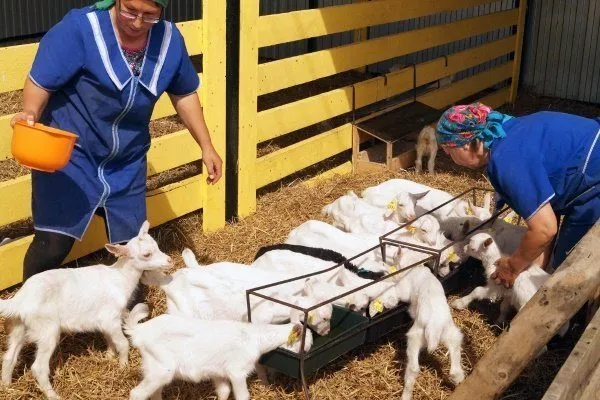
Weaning occurs at three months. The young are then transferred entirely to an adult diet.
How to milk a goat properly?
To quickly milk a goat, keepers equip them with a special device. A platform is constructed, and the goat is placed on it, with its head secured in a clamp. A feeding trough is placed next to the clamp to give the goat something to do during milking.
Useful facts about milking goats:
- After lambing, lactation in dairy goats lasts a little less than a year, in other breeds – about six months.
- The animal can be milked immediately after lambing. Milking frequency is twice a day. Milking should be done at the same time.
- During milking, be quiet and avoid screaming. Screaming can cause goats to lose milk.
- It is necessary to milk out all the milk to prevent mastitis.
How to milk a goat by hand:
- You need to sit to the side of the goat.
- The udder is washed and wiped dry.
- Massage the udder and teats.
- Taking the nipple between your fingers – thumb and index finger – squeeze it, pushing the milk out.
- The first portion should be poured into a separate container - it is not drunk.
- After milking the goat, massage the udder and wipe it with a towel.
Diseases and prevention
Goats are known for their robust health, but they too suffer from various diseases – non-infectious, infectious, invasive, and parasitic. The most common goat diseases are listed in Table 5.
Table 5
| Name of the disease | Symptoms | Treatment | Note |
| Acute tympany of the rumen | Gas formation, belching disorder, bloating, loss of appetite, possible death. | Removal of gases from the rumen, restoration of belching. | A sudden change in diet can provoke this. |
| Infectious mastitis | The udder enlarges, becomes hot, and painful. Milk production drops, and then the milk disappears. | Adequate treatment. Prevention: a warm room and good nutrition. | Affects lactating females. Acute and chronic forms occur. |
| Foot-and-mouth disease | Lesions of the oral cavity, udder, hooves, fever. | Temporary isolation, washing with disinfectants. | The disease lasts for a week. There is a high mortality rate among kids. Milk from sick goats is boiled. |
| Listeriosis | Nervous system damage. Loss of balance, convulsions. Head turned to the side. | Antibiotics. Vaccination. Disinfection of premises. | Death occurs within 10 days. The meat is boiled for two hours. |
| Leptospirosis | Fever. Lethargy or agitation, seizures, frequent urination. Urine takes on a reddish tint. | Contacting a veterinarian. | The animals usually die within two days. Even if they are cured, they are unfit for farming, so they are slaughtered for meat. |
| Fascioliasis | A parasitic disease caused by Fasciola larvae. The source of infection is pastures and stagnant waters. The liver is affected, and metabolism is disrupted. | Treated with carbon tetrachloride. | Preventive measures are being carried out. |
| Echinococcosis | Infestation with parasites—sexually mature cystodes. The parasites live in the internal organs. | Antiparasitic measures. | During slaughter, the organs are destroyed. |
Goats experience a variety of illnesses, but the symptoms are generally similar. If your animals exhibit any of the following symptoms, consult a veterinarian immediately:
- the temperature rose to 41-42°C;
- changes in behavior – depression, rapid pulse, rapid breathing;
- discharge from the ears, nose, eyes;
- swelling of the eyelids;
- diarrhea;
- plaque on the gums;
- cough;
- lack of appetite and decreased milk yield.
The beauty of goats is their unpretentiousness. With minimal effort, you can easily produce several liters of valuable goat milk daily. Even a beginner can manage goat keeping. And if you take it seriously, goat breeding can become a profitable business.
Hello, I recently came across your article and decided to read it because I thought it would be helpful. I really liked how everything is described in detail: what to feed, how to care for them, how to treat them, etc. My husband and I recently started keeping goats, although my parents have been keeping them for over 10 years. Yes, I agree that goats can be picky, but their milk is very healthy. I once purified my blood with goat milk, and it saved me. Thank you so much for such a detailed article!