
Alpine goats are unique animals that can easily survive in harsh climates. This breed offers many advantages, including low maintenance, low breeding requirements, and a calm disposition.
History and origin
Alpine goats are believed to have originated in the French region of Savoy, located at the foot of the Alps and partially within them. However, this region straddles the borders of three countries—France, Italy, and Switzerland—leading some scientists to believe that Swiss breeders also played a significant role in the breed's development.
Since the early 20th century, French farmers have been actively cultivating the breed. Some believe that before this, the breed was cultivated only in the Savoy region or in the adjacent cantons of Switzerland. It wasn't until 1930 that the first Alpine goat studbook was created in France, documenting the animal's appearance and production characteristics. However, ten years earlier, the first 22 goats had arrived in North America, where they were used to develop the American intra-breed type. All Alpine goats bred in the United States today are considered descendants of these 22 individuals.
Over the following decades, Alpine goats became popular in Europe and North America. Today, breeding animals make up over 90% of the goat population.
Alpine goats in Russia
Alpine goats have become famous in Russia for their high productivity and ease of maintenance. With minimal investment, farmers can reap handsome profits from selling dairy and meat products.
When purchasing an animal, you should approach it with care, first finding a breeder or farm with positive reviews. You should also sample the milk, assess the farm's overall condition, and examine the farm's housing conditions and herd size.
Characteristics and exterior
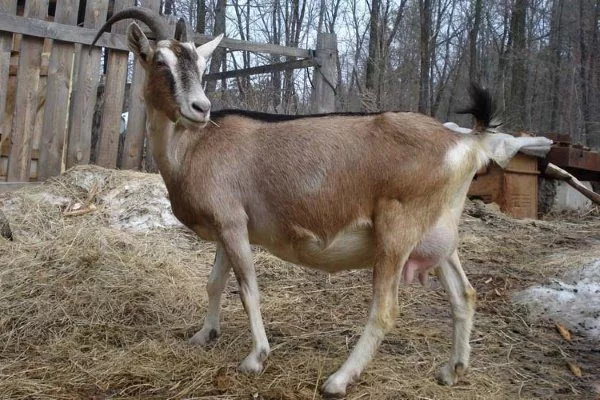
Alpine goats, which correspond to the American and French breed descriptions, are most commonly found in Russia. These animals have a proportional, elongated, narrow body with a strong skeleton. The body rests on short, sturdy legs with a prominent withers. They have a prominent spine and a full, deep chest. Females weigh between 60-63 kg, reaching 75-85 cm at the withers. Males weigh 75-78 kg and stand 80-90 cm tall.
Alpine goats are characterized by a straight back, a sloping, narrow, and short croup, and a large udder with regularly shaped teats. The animals have a small head set on a short neck. They have a flattened muzzle and erect, short ears. The head is topped with short, hard, oval horns, set vertically and curved toward the back. Alpine goats have long, hairy tails and massive hooves. Their bodies are covered with short, smooth hair.
Alpine goats come in a wide variety of colors; a single litter can contain white, gray, and brown kids. Standards in different countries describe several basic color variations:
- Kunavar. The goat's front part is black, and the back part is white.
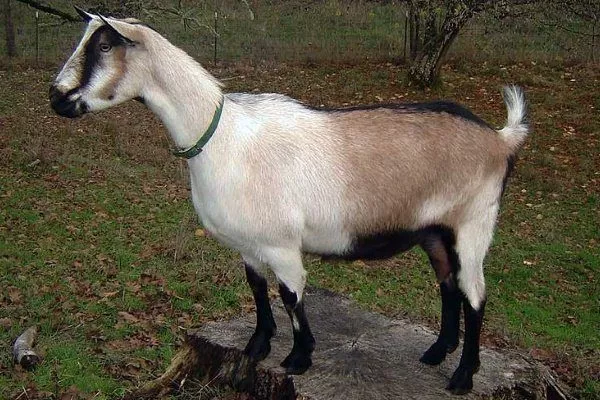
- White neck. These specimens are most commonly found in Russia. These goats have a white neck and shoulders. Black or gray hair covers the main body and head. A distinctive feature is a dark or black stripe running along the outer legs from the knees to the hooves.
- Paid. These are animals with a variegated or spotted coat.
- Red neck. The color of the neck and shoulders gradually changes from brownish-red to black or dark brown on the croup.
- Sandgo. There are white markings on the main black background.
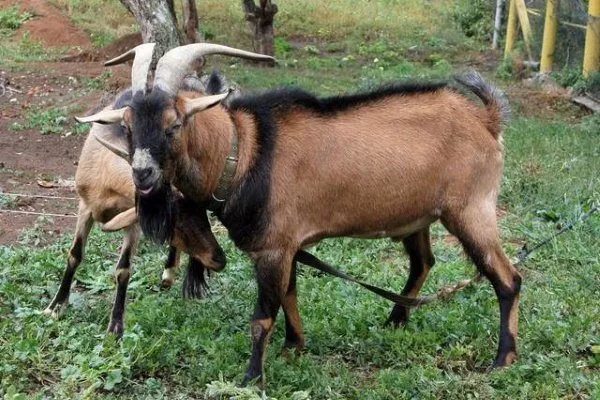
- Bay or chamois. The primary color is red, brick, or ocher. The head and neck are dotted with black markings. The legs are black. A dark stripe runs along the spine.
- Magpie or forty. Animals with this color have a white head and colored markings on the main background.
There are many more color variations, where one, two, or three colors are present.
About the character of the animal
Alpine goats have a calm disposition. They are independent, good-natured animals, so the breeder doesn't need to interfere with their lifestyle. They get along well with other animals, including goats of other breeds. However, in this case, it's important that these "neighbors" are not aggressive.
Alpine goats are active, hardy animals, capable of traveling considerable distances in search of food. They enjoy running and frolicking in the pasture. These qualities protect them from problems such as obesity.
What is the productivity of goats?
Alpine goats are a dairy breed. These animals are prized for their high milk yield, lack of unpleasant odor, long lactation period, high-quality milk production, and ease of milking.
One female produces approximately one and a half tons of dairy products annually. The maximum annual milk yield for record-breaking animals is 2.2 tons. The average daily yield is 4.5 liters. The milk is characterized by a high nutrient content: 3.5% fat, 3.1% protein.
Dairy products have a predominantly sweet flavor, making them approved for use in baby food. Cheese and cottage cheese are also made from milk at home.
Conditions of detention
Although Alpine goats tolerate cold climates well, it is recommended to keep them in an insulated building during winter to maintain productivity. Humidity in the building is maintained at 40-60%. Each goat is allocated 4 square meters of space. A fenced stall is required for the sow and her litter.
It's equally important to keep the barn clean. It should be dry and the floors insulated, as goats' feet are a weak point. For added comfort, install low-height perches for the animals to climb onto. Alpine goats don't have a distinctive odor, but it's best to keep breeding bucks in a separate room.
In summer, it's best to let goats out to pasture. However, if this isn't possible, feeding fresh greens in the barn is permitted.
Feeding
During the summer, goats roam freely in the pasture, and pasture is considered ideal for them. During this time, Alpine goats should be fed green fodder, with occasional scraps. If the farmer grows vegetables and other plants, it's perfectly acceptable to feed the animals weeds. Goats are prone to nibbling tree branches. Experienced breeders recommend including table salt in their diet—in the wild, goats forage for it on rocks.
In winter, goats of this breed are fed hay. The animals readily consume vegetables and root vegetables. During the cold season, mineral supplements and chalk should also be included in the diet. It is recommended to feed three times a day at the same time. First, the goats are fed a compound feed, then succulent feed, and then roughage. The compound feed can be mixed with thick or thin porridge, but do not boil it, as this will deplete the feed of all the necessary vitamins and beneficial additives.
Livestock farmers must include combined and concentrated feeds and grains in their diet. Water should be changed as frequently as possible to ensure it is always clean and fresh—this directly impacts the quality of milking. Feed and drinking bowls should always be kept clean.
Farmers must carefully monitor their diet. Alpine goats are prohibited from being fed birch branches, as they can cause various diseases. It's important to provide a balanced diet for pregnant females, as nutrition is essential for healthy offspring.
Breeding
The advantage of this breed is that human presence is not necessary during the birth—the goats give birth without any complications. Crossing this breed with other breeds produces strong, resilient kids with excellent future performance and a distinctive coloring. The goat nurses and raises the kids independently.
Pregnancy and lambing
Alpine goats' gestation period lasts approximately 5 months (145-155 days). Six weeks before birth, the goat is stopped from milking to ensure intensive nutrition for the fetus. Ten to fifteen days before the kids are due, the farmer will need to treat the maternity shed with 5% creolin or lime milk. The shed is also lined with straw and protected from drafts. In good weather, pregnant goats are allowed to be allowed outside in a fenced area.
Before lambing, a pregnant goat becomes restless, frequently lying down and waking up, and bleating piteously. A noticeably enlarged udder indicates impending labor. Lambing occurs quickly and easily. The second and subsequent kids are born immediately after the first kid or after a short interval.
Caring for young animals
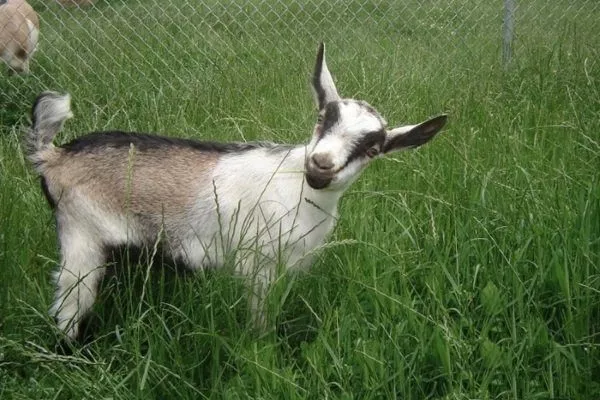
A newborn kid should have its sinuses, mouth, and eyes cleared of mucus, then placed next to its mother for licking or wiped with clean wipes. The umbilical cord is cut, the end is anointed with iodine, and the kid is placed on warm, dry bedding in the same stall as the mother goat.
After giving birth, Alpine goats must be milked to prevent inflammation. One to one and a half hours after the birth of the last kid, the mother goat is given warm water. During the first few days, the mother goat is fed exclusively high-quality hay, warm mash of bran or flour, and fresh grass. After three days, the diet can be varied with silage, root vegetables, and bran. For the first three days, the goats are milked four times a day before feeding the kids. In the second month, the goats are milked three times a day.
After birth, the kids are viable and rarely get sick. The survival rate of young Alpine goats is high. Alpine goats are good mothers who care for their offspring.
Diseases and their prevention
Alpine goats are prized for their robust health and increased resistance to various diseases. Although they rarely get sick, they can still experience the following major ailments:
- monieziasis;
- anthrax;
- bruises, wounds, injuries;
- coenurosis;
- tympany;
- fascioliasis;
- inflammation of the bronchi of the lungs;
- dermatitis, scabies;
- brucellosis;
- anaerobic dysentery of young animals or diarrhea in kids;
- bradzot;
- paratyphoid;
- enterotoxemia;
- infectious mastitis;
- hoof.
Acute forms of the disease are accompanied by a fever exceeding 39.5 degrees Celsius. Goats typically lose their appetite and experience rapid breathing. Sick goats should be isolated and a veterinarian should be called. Vaccination can help prevent anthrax, smallpox, and foot-and-mouth disease. It's important to disinfect the premises regularly and keep water bowls and equipment clean.
Where to buy?
There are no state-run breeding farms for the Alpine goat breed in Russia. All representatives of the breed are kept on private farms. Stud books and records are maintained by enthusiastic goat breeders. When purchasing a purebred animal, it is recommended to visit the breeders you are interested in, inspect the herd, and inspect the conditions in which the goats are kept. It is advisable to sample the product before making a purchase decision.
- ✓ Availability of a stud book or documentation confirming purebred status.
- ✓ No unpleasant odor in milk during trial milking.
- ✓ Proportional build and compliance with breed standards for weight and height.
Purebred goats are acquired not for their attractive appearance, but for the high productivity inherent in the chosen breed. Purebred Alpine goats are very difficult to acquire in Russia. Females can pass on their coloring to their offspring, leading many unscrupulous farmers to profit from this by crossing common goats with a purebred sire and passing off the offspring as purebred kids.
Dishonest livestock breeders may also crossbreed closely related animals, which negatively impacts the offspring. Those who purchase such animals ultimately complain of unpleasant-tasting milk and low milk yields.
There are some factors to consider when purchasing an animal:
- The presence of multiple kids of different ages in a herd indicates that the goat is frequently mated, which can negatively impact the animal's health. Reputable farms ensure that pedigree goats are mated once a year.
- When a farm doesn't have milk for sale, it's time to worry. This is often an indicator of poor-quality dairy products.
- When keeping purebred and non-pedigree goats on a farm, the buyer should clarify the purpose. After all, it makes no sense to keep non-pedigree goats, which produce virtually no milk but require adequate nutrition.
- Genuine breeders of pedigree animals will always have answers to all your questions; they'll tell you everything about their pets themselves, as they're proud of it. Unscrupulous breeders, on the other hand, will evade questions, citing their busy schedules.
Many farmers know that a true purebred Alpine goat is expensive. If an animal is offered for half the price, prospective owners should be wary. Breeding requires considerable financial investment: purchasing the animals, housing and care, feeding them, veterinary checkups, vaccinations, etc.
Advantages and disadvantages of the Alpine goat
Alpine goats have many advantages. They are especially common in France, where industrial goat farming is quite well developed. The main advantages of these goats, which farmers value them for, are:
- Calm disposition. Almost all breeders of this breed claim that the animals have a peaceful, friendly nature. The goats are docile, do not cause harm, and do not create any problems for their owners.
- Cold tolerance. Because the Alpine goat originates from the Alpine region, it is naturally adapted to life in harsh climates. This allows it to be bred in any mountainous area, even in northern regions where other goat breeds might freeze.
- High milk yield. The Alpine goat produces good volumes of nutrient-rich milk. With an average lactation yield of 800 liters, the breed is ideal for commercial dairy farming.
However, this breed also has several significant disadvantages that should be taken into account before breeding:
- High cost. Alpine goats are not yet very popular in Russia, which makes the cost of young animals in breeding farms sky-high.
- Sensitivity to water quality. This characteristic of this breed of goats requires careful and responsible management from the owner.
Breeder reviews
There aren't many reviews online today, due to the difficulty of acquiring a purebred goat in our country. However, those who have been fortunate enough to acquire one have positive reviews of the breed.
Alpine goats are low-maintenance animals, requiring minimal care. They are easy to handle, well-behaved, and very active. Even a novice farmer can manage to raise this breed of goats—there are virtually no difficulties.