
The bitterling mushroom belongs to the genus Lactarius and the family Russulaceae. They can grow in large groups or singly. This mushroom is not uncommon, but it still causes controversy among mushroom pickers; many avoid collecting them due to their bitter taste—the name itself speaks for itself.
Description and appearance of the bitterling
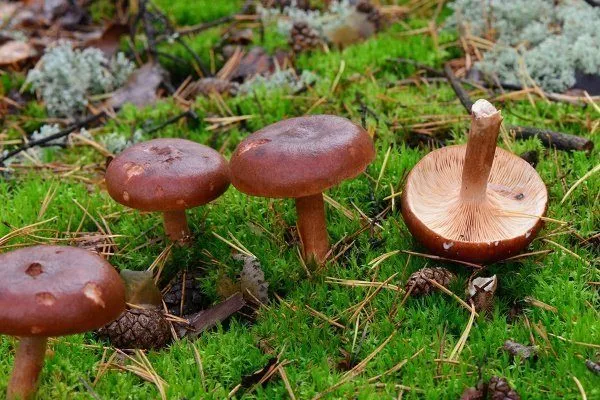
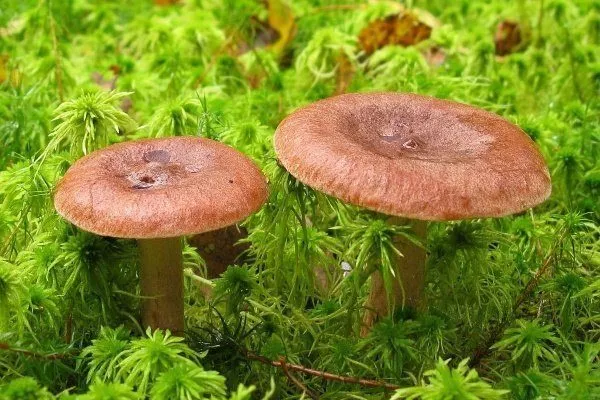
hat The mushroom cap reaches 12 cm, and in some cases up to 18 cm, in diameter, and is convex-flat, becoming funnel-shaped with age. The cap is fleshy and dry, with a matte brownish-red color. There is a small tubercle in the center, with small indentations around it. In older mushrooms, the cap is dark red. Some specimens have small light circles. The cap's skin is thin and furrowed.
Leg The stem reaches 10 cm in length and is 2 cm in diameter. It is cylindrical in shape and lacks fibers. The stem is slightly pubescent near the ground. In young mushrooms, the stem is smooth and solid, while in older specimens, it is hollow. When the mushroom is young, the stem is a dirty white, while in older specimens, it is pink or red with a rusty pollination.
Pulp Very thin but dense, with a resinous aroma. The profusely secreted juice is pungent and acrid, white in color. The mushroom has a slight bitterness. The gills are dense yet narrow. When young, they are red with a yellow tint; as they mature, they become red with a brown tint, and in very old mushrooms, a white coating develops on the gills.
Other names of the mushroom
The mushroom was named "bitterhead" by the person who first studied it, but people also call it by other names:
- red bitterling;
- bitter milk mushroom;
- path;
- mountain woman.
Edibility of the mushroom
The bitterling mushroom is considered conditionally edible, meaning it can only be eaten after being boiled in salted water. It is rarely used in cooking; mushroom pickers primarily collect it for drying, soaking, or pickling. When salted, the mushroom turns brown.
In the West, this type of mushroom is not eaten as food, as it can absorb radioactive elements. Therefore, these mushrooms should only be harvested in ecologically clean areas, and they must be soaked before cooking to remove their bitterness.
What can bitter mushroom be confused with?
The bitterling mushroom is similar to many other mushrooms, so before putting it in a basket, you should pay attention to its cap. If there is a bump in the middle of the cap and juice is released, then you can safely take this mushroom with you.
The bitterling can easily be confused with the following mushrooms:
| Name of the mushroom | Description |
| Camphor mushroom | It is an edible mushroom. The milk mushroom smells like dried tree roots. |
| Orange milk mushroom | The cap of this mushroom is chestnut-colored and its stem is the same color. |
| Marsh milk mushroom | It also looks like a bitterling, the color of the cap is the same, it can be found near a swamp in pine forests. |
| Liver milkweed | It is considered an inedible mushroom; it is distinguished by the color of its juice: the milk mushroom's juice is yellow, while the bitter mushroom's juice is reddish. |
| Gladysh | It is very similar to the bitterling, but its cap lacks a tubercle, and the color of the cap is chestnut-red. |
An inexperienced mushroom picker may also confuse the bitter mushroom with:
- russula;
- brown milk caps;
- rubella;
- smooth.
Where and when can you find bitterlings?
The bitter mushroom is most often found in moist soil under moss and near mossy trees. This mushroom variety can be found in the following forests:
- coniferous forest;
- birch grove;
- pine forest.
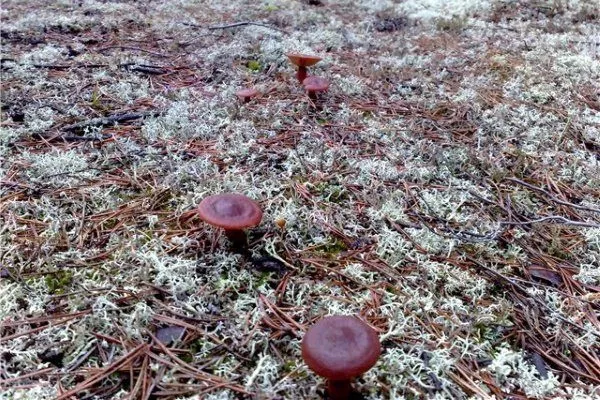
Bitterlings especially like to grow under birch or pine trees. These mushrooms are most abundant from June to October, but some mushroom pickers find them before frost.
Mushrooms bear fruit reliably every year, regardless of weather conditions. Putiki mushrooms grow primarily in moist, swampy soil. Wormy mushrooms are very rare.
Culinary uses
Bitterlings should be soaked for three days, changing the water twice a day with clean water. Cook the mushrooms over medium heat for 40 minutes, removing the scum that forms during cooking with a spoon. Only after this process can the mushrooms be canned or dried. Although you can find recipes for fried bitterlings in books and online, this is an acquired taste.
Pickling is the most common method of preparing bitter mushrooms. Preference should be given to hot pickling with the addition of seasonings.
Contraindications and harm of the mushroom
It is contraindicated to consume the bitter mushroom for people with the following pathologies:
- gastrointestinal ulcer;
- pancreatitis;
- gastritis;
- kidney disease;
- cardiovascular problems;
- childhood;
- pregnancy;
- lactation period.
Application in medicine
The bitter mushroom is a plant that can be used both for food and for medicinal purposes. It contains a substance similar to an antibiotic, so in medicine, the mushroom is used in bacterial treatments and can also inhibit the growth of Staphylococcus aureus.
In addition, the bitter mushroom has additional properties:
- Antiseptic. Young mushrooms, just like old ones, have antiseptic properties, so they can be used to heal any wounds and cuts.
- Restores blood pressure. Bittersweet contains nutrients that help normalize blood pressure.
- Strengthening the immune system. Due to the fact that the mushroom contains a lot of ascorbic acid, the product increases strength and tone.
- Positive effect on the skin. Bittersweet juice can prevent skin diseases.
- Prevents skin from aging. The bitter mushroom contains selenium, a mushroom that prevents aging.
- Helps to lose extra pounds. The mushroom is low in calories and has beneficial properties, so it can be included in a diet.
Growing the bitter mushroom
Those who love these savory mushrooms can grow them in their yard, garden, or even on their balcony. Growing mushrooms is not difficult and does not require much expense. There are two growing methods.
- The first method The simplest method involves purchasing ready-made mycelium and adding it to a substrate prepared in advance. To do this, mix the bark of the tree the bitterling comes into contact with with soil and sawdust. Next, make holes near the tree (the closer to the root, the better) and add the prepared mycelium. Water the mixture, and after a year, you can harvest your first crop.
- The second method is the independent collection of mushrooms, the spores of which are subsequently used for mycelium.
Bittersweet loves moisture, so the beds need to be constantly watered with plain water. If the summer is hot, the beds should be protected from the scorching sun.
Growing mushrooms indoors
Bitterlings can be grown not only in a garden or orchard, but also in any indoor space, be it a shed or basement. The mycelium, pre-mixed with the substrate, should be placed in a plastic bag with holes punched through it for the mushrooms to emerge.
The room temperature should be approximately 20 degrees Celsius; if all rules have been followed, the first harvest can be collected after just 2 weeks.
The bitter mushroom isn't very popular, but some mushroom pickers still collect it and pickle it, either hot or cold. These mushrooms are also often used in folk medicine to heal wounds, boost immunity, and for other purposes. They can also be easily grown at home without much expense.