
Hibiscus, or China rose, is a beautiful tropical plant often found in apartments and gardens across Russia. It is especially decorative during flowering. If the bright, large, funnel-shaped buds stop appearing on its branches when expected, urgently investigate the cause and resolve the issue.
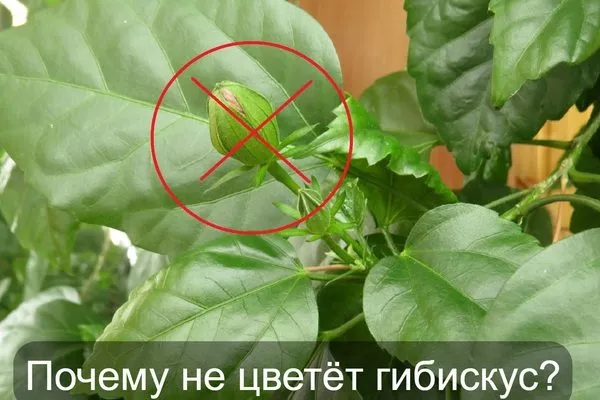
Understanding the Hibiscus Flowering Process
To achieve maximum decorative value from a plant, a gardener must understand how budding occurs and what conditions are necessary to initiate it. Knowing all the nuances of this important biological process will help you achieve your goal—a luxurious bloom from your tropical plant.
The biological significance of flowering for a plant
Mother Nature herself has ensured that every living organism has the opportunity to reproduce and continue its lineage. Plants are no exception. The flowering process, from a biological perspective, is a mechanism for reproduction through seed formation.
When the China rose begins budding, gametes (sex cells) are formed at the cellular level, ready to be fertilized. The blossoming flowers should attract beneficial insects that carry pollen.
The main aspects of the biological significance of flowering in plants include the following:
- PollinationIt occurs thanks to the wind and insects: bees, bumblebees, butterflies, etc. It consists of the transfer of pollen from the stamen (the male organ of the flower) to the pistil (the female organ).
- FertilizationIt is the result of pollination. After pollen lands on the stigma and penetrates the ovule, a zygote is formed, from which the embryo of the future plant develops.
- Formation of seed materialAfter flowering, the plant produces fruit. When fully ripe, seeds can be found within. Each seed contains an embryo with a supply of nutrients. After planting, it germinates and gives birth to a new plant.
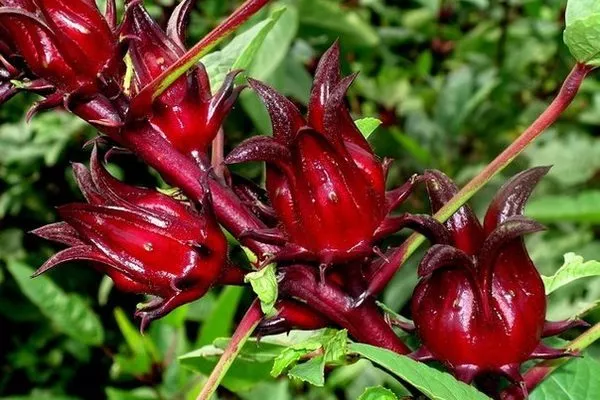
The fruits of different hibiscus varieties vary in appearance. The Syrian and Chinese varieties produce a five-valved capsule that splits open when ripe, while the edible variety produces a pod rich in vitamins and minerals.
Normal flowering cycle and factors influencing it
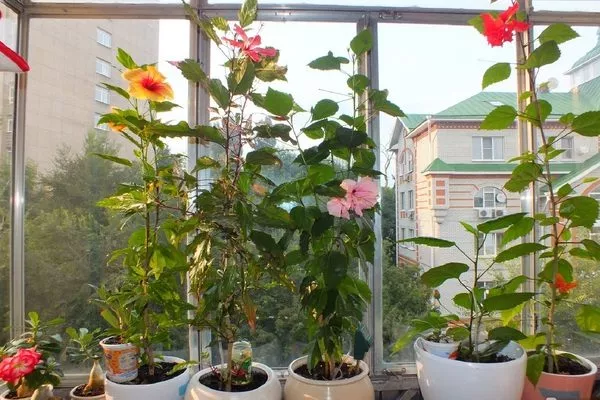
The China rose, grown outdoors, delights the eye with its beautiful funnel-shaped flowers from July to the end of September (until frost). Indoor plants bloom from February to November, and under special conditions, year-round. The buds "live" for 1-2 days after opening, but the bush continually produces new ones.
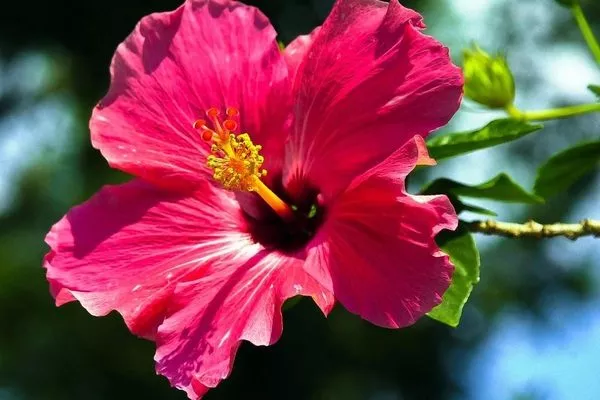
To extend the flowering period of hibiscus as much as possible, you will need to provide it with proper care and maintain favorable living conditions for it:
- Temperature conditionsThe temperature should be between 16°C and 30°C. Moderate warmth (20-25°C) is most favorable for flowering. In winter, it is advisable to lower the temperature to 16-18°C.
- Air humidity. Hibiscus is a native of tropical climates, where it's very warm and damp. It doesn't tolerate dry conditions indoors, which negatively impacts bud formation. If the room humidity is below 60%, it will need to be increased by misting the plant or placing containers of water nearby.
- LightingThe plant requires abundant, bright, but diffused light for 6-8 hours per day. Direct sunlight is harmful, causing sunburn. Shade is essential. Without sufficient sunlight, flowering will be sparse and short-lived, and the buds will wither and fall off without ever opening their petals.

- IrrigationMoisten the potting soil regularly, avoiding it from drying out or becoming waterlogged. Use warm, settled water (rainwater, river water, or boiled tap water) for watering. Repeat this procedure as the top layer of soil dries out.
- Top dressingFor lush and long-lasting flowering, the plant requires potassium-phosphorus fertilizers. Apply them every two weeks during budding. Suitable mineral complexes include NPK (10:20:10 or 10:4:12) and special preparations for flowering plants.

Periodicity and intensity of flowering
As a rule, indoor hibiscus It blooms in waves. It allows several buds to emerge and bloom in a row, then takes a break. However, if you create the most favorable environment for it, regularly water it, and feed it with the right nutrients, it will produce flowers continuously year-round.
The intensity of flowering of the Chinese rose is determined by several factors:
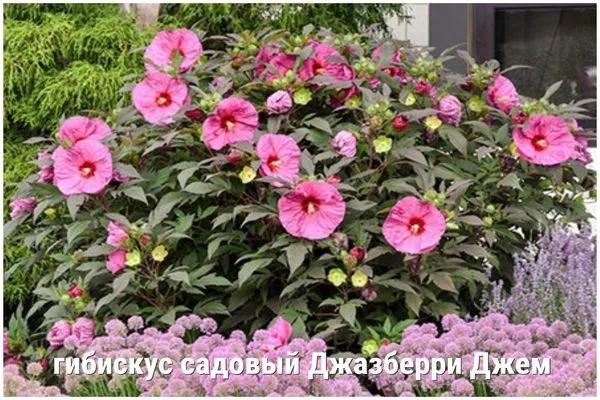
- the type and variety of plant (the most intensely flowering herbaceous hybrids are those like Jazzberry Jam, which produces a huge number of buds on annual shoots from July to October, and the species Hibiscus rosa sinensis);
- the age of the bush (the most abundant and long-lasting flowering is observed in plants that are 3-4 years old);
- conditions of maintenance and quality of care.
You can find out about the different varieties of hibiscus, read their descriptions and admire the photographs Here.
Diagnosis of the causes of flowering cessation
If your hibiscus has stopped producing buds, try to determine the cause. This is necessary to restore the plant's ability to bloom.
Analysis of external characteristics and plant behavior
Observe your green pet that hasn't bloomed on time. Pay particular attention to its appearance and how it "behaves":
- If the leaves on the bush turn yellow and fall off, the reason for the lack of flowering lies in over-watering of the soil, insufficient lighting or a lack of nutrition.
- If buds form but fall off, the plant is probably experiencing stress after transplantation, suffering from drafts or sudden temperature changes.
- If the bush is growing intensively, but there is no flowering, the problem is caused by excess nitrogen in the soil (this nutrient stimulates the growth of green mass, but inhibits budding).
- If the Chinese rose there are no new shoots, which means it doesn’t have enough light or it’s growing on a depleted substrate.
Methods for diagnosing soil and climate factors
If the plant is not flowering, don't be lazy and analyze the soil in the pot containing the Chinese rose or the soil in the flowerbed if the bush is planted in the country:
- Check your pH level Using special test strips and litmus paper, hibiscus grows well and produces buds in neutral or slightly acidic soil. Its optimal pH ranges from 6.0 to 6.5. Alkaline or acidic soil inhibits flowering.
- Assess the nutrient content of the substrateTo do this, use an NPK test or have your soil chemically analyzed in a laboratory. A deficiency of phosphorus and potassium is a common cause of lack of buds. Excess nitrogen also causes flowering problems.
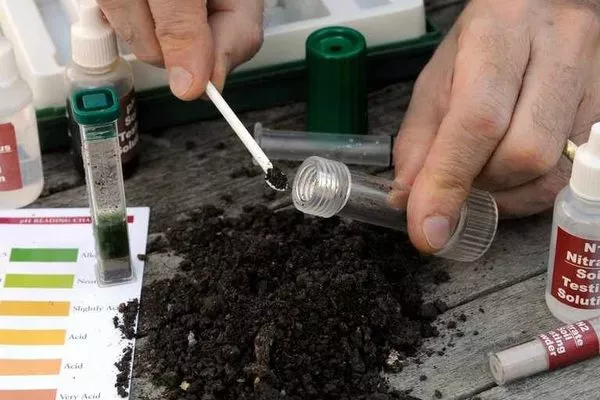
Plant conditions such as lighting, temperature, and humidity greatly influence the budding process. Use instruments to check these values:
- lux meter - to assess whether the hibiscus is receiving enough sunlight (for good flowering, the Chinese rose requires 10,000-15,000 lux);
- thermometer - to check if it is warm enough for the tropical plant in your home (if the temperature is below +15°C, the plant goes into a dormant phase and does not form inflorescences);
- A hygrometer - to determine whether the air humidity is suitable for the Chinese rose (the indicator should be above 60%; in dry rooms, buds often fall off).
Main causes and methods of their elimination
Hibiscus plants don't bloom for a number of reasons. Learn the most common ones. These are typically due to care errors and unfavorable environmental conditions.
Insufficient lighting and exposure to direct sunlight
To bloom profusely and for a long time, the bush requires abundant sunlight. It should be bright but diffused (6-8 hours per day). Under these conditions, photosynthesis occurs intensively in the foliage, producing glucose. This substance ensures vigorous growth, proper development, and abundant flowering.
If there's insufficient light, photosynthesis slows down. Little glucose is produced. The hibiscus starves, weakens, and withers. In this state, it is unable to form buds.
Direct midday rays, especially in the summer months, also cause harm to the crop:
- cause burns on leaves;
- cause severe stress to the plant;
- inhibit the budding process.
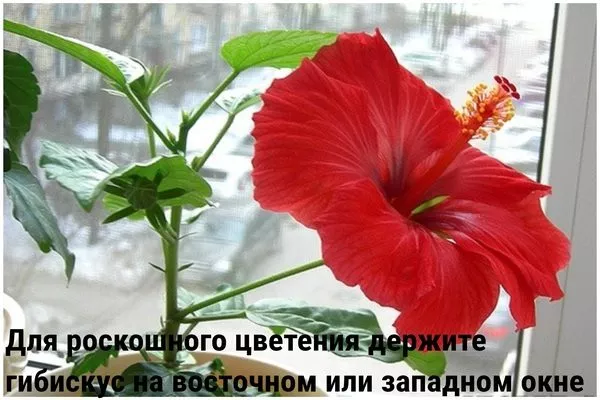
To solve the problem of China rose not blooming, move the pot to an east- or west-facing window. This will provide plenty of soft light. Make sure to provide shade from midday sun. In winter, supplement the bush with phytolamps. Place them 50-60 cm from the top of the plant.
In open ground, it's best to grow the bush in the southwest corner of the garden. Avoid nearby trees with spreading, dense crowns and buildings that block the sun.
Deviation from the rules of transplantation
If your China rose has stopped producing buds after you repotted it or moved it to a new location in your garden, you likely made some mistakes during the process. These mistakes reduce the plant's ability to adapt, weaken it, and prevent it from blooming. These include:
- Using a pot that is too bigIf it is significantly larger than the root mass, the bush will spend its energy on root growth and green mass, rather than on flowering.
- Incorrect substrate compositionHeavy, poorly drained soil can cause waterlogging and root rot. The plant will wither and lack the energy to produce buds. Use a light, nutritious substrate with good drainage.
- It's not the right time for transplantationThe best time to perform this procedure is spring, before the active growth phase begins. If done in the fall or winter, the hibiscus's development will be inhibited.
- No adaptation periodAfter repotting, the plant needs to be provided with gentle conditions: no bright sun, drafts, or temperature fluctuations. Otherwise, it will take a long time to recover and delight you with its vibrant buds.
- Root damageIf the underground part of the hibiscus was damaged during transplanting, this will slow down the plant's recovery. Don't expect flowering until the hibiscus has established itself.
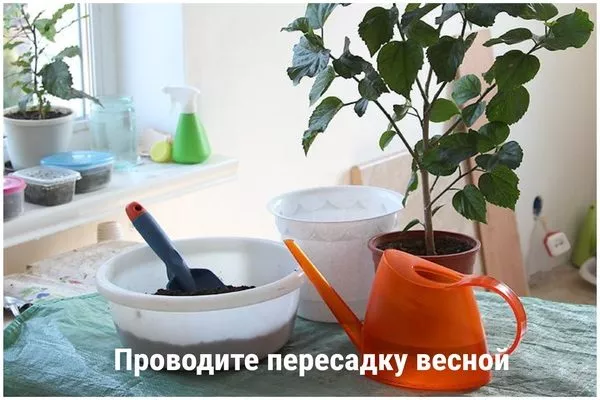
To correct the situation and promote the appearance of buds on the bush, resort to the following measures:
- Provide the Chinese rose with a gentle regime after transplantation (it needs a lot of soft, diffused light, stable heat and moderate watering);
- do not feed the plant immediately after the procedure, give it 2-3 weeks to adapt;
- Prune the bush to stimulate the growth of new shoots and the formation of buds.
Inappropriate temperature conditions
The problem is often caused by improper overwintering of the bush. During the cold season, it should remain dormant, gathering strength for flowering the following season. To achieve this, lower the room temperature to 15°C. This will initiate the process of flower bud formation.
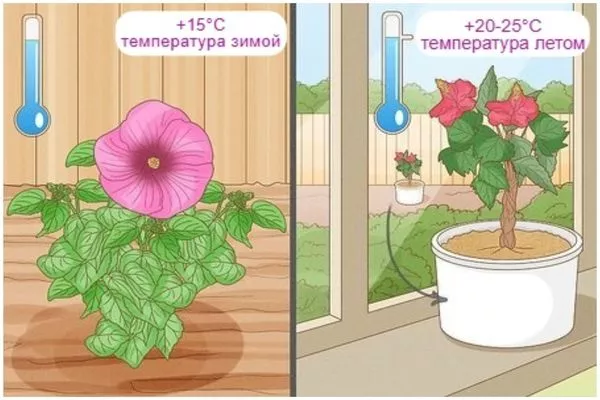
Inappropriate temperature conditions for growing hibiscus can cause many complications:
- If the room stays as warm in winter as it was in spring and summer (above 20°C), the plant won't get the rest it needs. This can lead to exhaustion. Rest is essential for normal bud formation.
- If the plant is kept indoors with temperatures below 12°C during the colder months, it will experience severe stress. This will cause leaf drop and growth to stop. There's also a high chance that it won't bloom in the spring or summer.
- Sudden temperature fluctuations, particularly large differences between day and night temperatures, are also harmful to the crop. They negatively impact bud formation.
To solve the problem, try the following steps:
- Move the potted plant to a cool room for the winter. Flower buds are forming well when the thermometer reads 15-18°C.
- In summer, maintain a room temperature between 20°C and 25-28°C. Avoid overheating the plant. Ventilate the room. Protect the hibiscus from drafts.
You will find more details on how indoor hibiscus should overwinter in order to bloom abundantly next season. Here.
Nutritional problems
Hibiscus may not bloom if grown in poor soil with low nutrients, neglected or over-fertilized. To maintain the plant's health and beauty, provide it with a balanced diet.
Nutrient deficiencies and excesses
To avoid problems with budding, apply the right fertilizers at the right time. Avoid deficiencies. A lack of the following nutrients can lead to a lack of bloom:
- Phosphorus and potassiumWithout these nutrients, the normal process of bud formation is impossible.
- Magnesium and ironTheir deficiency can lead to yellowing of leaves and weakening of the plant, which does not have the strength to produce flowers.
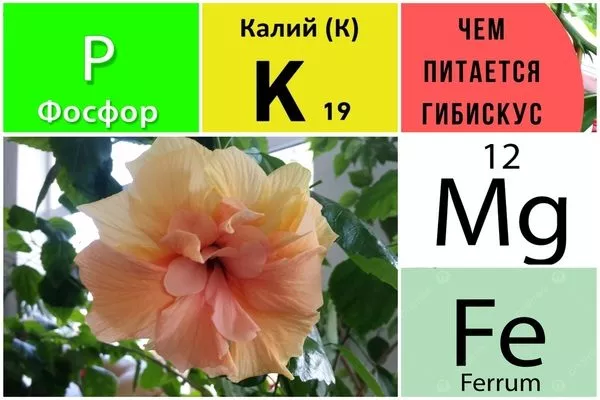
Overuse of nutrients can also lead to a lack of blooms. This is especially true for nitrogen-rich mixtures, which stimulate foliage growth but suppress bud formation. Excessive use of these nutrients also leads to soil salinization and root suppression.
Soil acidity and its effects
Hibiscus grows and flowers best in slightly acidic soil with a pH of 6.0-6.5. Deviating from this can lead to complications:
- In an alkaline environment (pH > 7.0), the crop has problems with the absorption of microelements, in particular iron and manganese.
- Acidic soil (pH < 5.5) causes aluminum toxicity and slows down crop growth.
Check the soil's pH using test strips or a digital tester. If the soil is alkaline, add peat or pine soil, or water it with water containing citric acid (1 teaspoon per liter). If it's very acidic, add wood ash or dolomite flour.
Wrong soil
The absence of flowering in hibiscus can be caused by its cultivation in an unsuitable substrate:
- Dense and heavyThese are typically clay soils. They don't allow air to pass through well and retain moisture. Roots in such soil are stunted and prone to rot.
- scantyThis could be due to depleted soil that hasn't been changed or fertilized for a long time. It's unable to provide the plant with the nutrients it needs.
- Poorly drainedThis type of soil causes the bush to become overwatered and the roots to rot.
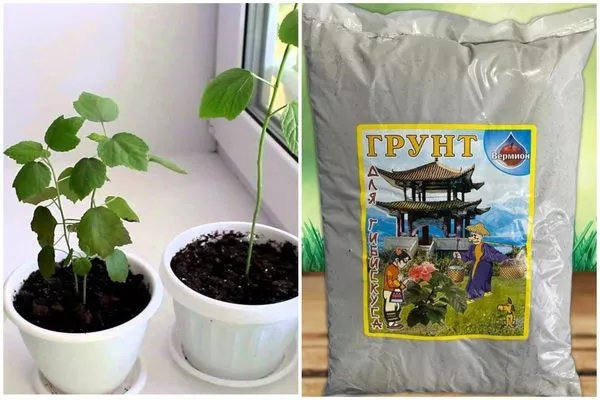
Using a light, loose, and fertile substrate consisting of peat, humus, sand, and leaf mold will help solve this problem. Add perlite or vermiculite to improve the structure. Don't forget to create a drainage layer of expanded clay or gravel at the bottom of the pot.
The lack of flowering in a Chinese rose can also be caused by an unsuccessful pot in which it is growing:
- too large (in it, hibiscus actively grows roots and leaves to the detriment of budding);
- cramped (in a small container, the growth of the culture is limited, it lacks nutrition);
- without drainage holes at the bottom (this can lead to stagnation of water at the roots and their rotting).
Overfilling or underfilling
This tropical plant requires careful irrigation. The soil beneath it should not be overwatered or allowed to dry out. Both conditions are detrimental to its flowering.
How does overwatering affect hibiscus?
Overwatering and stagnant water in the substrate can cause many complications when growing Chinese roses:
- Root rotIn this state, they lose the ability to absorb nutrients from the soil, which the plant needs to form buds.
- Yellowing of the foliage of the bushIt loses turgor, becomes limp, turns yellow, and falls off. The plant weakens and withers. It expends energy fighting the unfavorable conditions, and there's simply no energy left for flowering.
- Development of fungal infectionsA humid environment is favorable for the habitation of pathogenic microorganisms that affect roots and leaves.
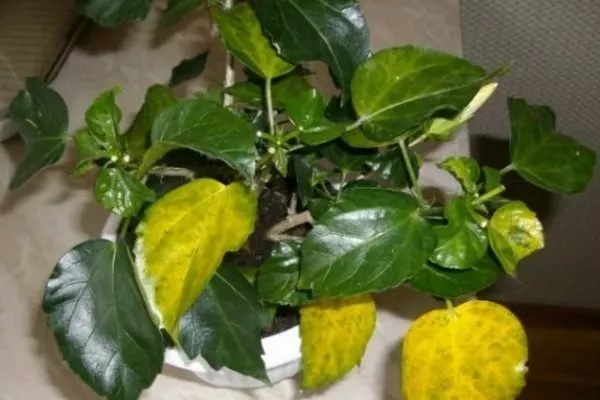
All of the above conditions caused by overwatering not only deprive the Chinese rose of the opportunity to bloom, but also pose a threat to its life.
What is the danger of dry soil?
If a moisture-loving tropical plant isn't watered regularly, allowing the soil in its pot to dry out, it will suffer severe stress. The consequences will be dire:
- the bush will drop buds or will not form them;
- its growth will slow down and development will stop;
- the foliage will fade, become brittle, and begin to fall off.
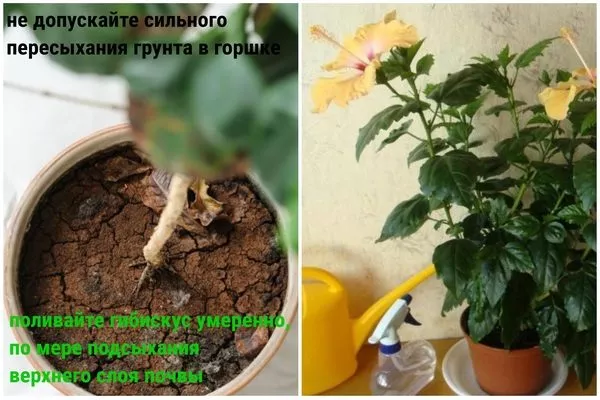
Without water, the plant poorly absorbs nutrients, especially potassium and phosphorus, which are essential for flowering. To reduce moisture evaporation and improve its chances of survival in drought conditions, it begins to shed all unnecessary elements, including leaves and buds.
Diseases and pests
Infections and insect attacks can also prevent a plant from blooming. Regular inspection will allow you to detect threats early and treat the bush with the appropriate product.
Diseases causing absence of flowers
If your hibiscus isn't blooming, it may be sick. This problem can be caused by the following unhealthy conditions:
- Non-infectious chlorosisIt occurs due to a lack of nitrogen, iron, potassium, or magnesium, or a nutrient absorption problem caused by an excess of certain elements. It manifests itself as thinning branches, faded flowers or lack of buds, spotted leaves, yellowing, and leaf drop. The solution is to use complex fertilizers.
- Infectious chlorosisIt's caused by viruses, fungi, and bacteria infecting hibiscus. It manifests itself through yellowing and leaf drop, lack of flowering, and a weakened plant. To save the plant, apply a fungicide.
- Vascular agingIt is caused by infection with Verticillium or Fusarium fungi, which cause diseases such as fusarium wilt and verticillium wilt. The bush exhibits drying branches, wrinkling, yellowing, and leaf drop. Root rot occurs. Without treatment, the plant dies.
Removing parts affected by fungi, replanting in sterile soil, and using systemic fungicides will help solve the problem.
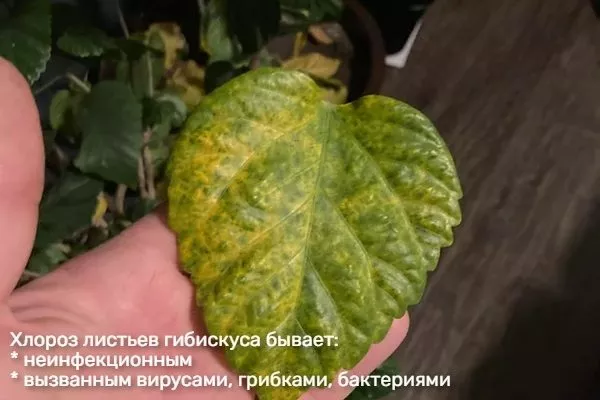
For more information on what diseases hibiscus can suffer from and how to treat it so that it will delight you with lush flowering again, read on. Here.
Pests and their control
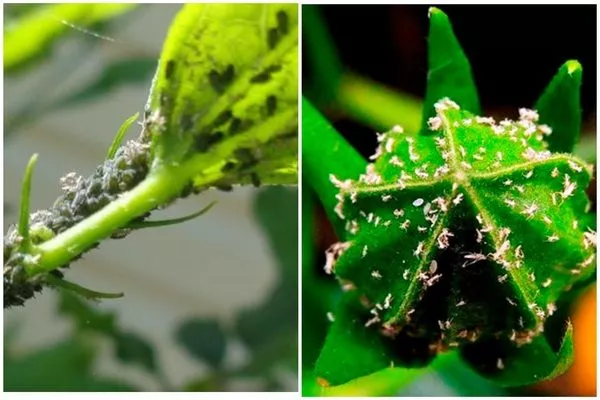
Hibiscus suffering from a pest infestation (in advanced cases) loses vigor and fails to bloom. The problem is caused by attacks from the following insects:
- spider mite;
- aphids;
- gall midges;
- whiteflies.
A bush damaged by pests develops spotted foliage, which turns yellow, curls, and has a sticky coating or webbing on it. Buds fail to open. They may contain larvae.
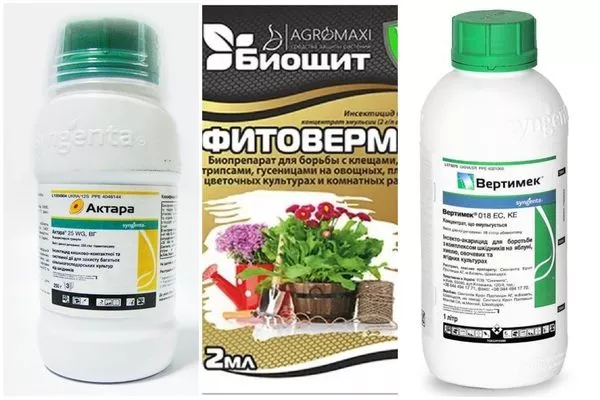
Removing affected flowers, using folk remedies such as soapy water, systemic insecticides, acaricides, and setting traps can help solve the problem.
Plant aging
As hibiscus ages, it loses its decorative qualities and ability to produce buds. This is a natural process that can be slowed down.
Loss of flowering ability in older bushes
An old bush stops forming buds due to the following reasons:
- a decrease in vital energy, causing the plant to transition to a “vegetative mode”;
- thickening of the crown, caused by an increase in the density of branches and preventing them from receiving good illumination;
- soil depletion (growing without replanting);
- reducing sensitivity to stimulants and supplements.
Hibiscus Rejuvenation Tips
The following steps will help you make an old bush bloom again:
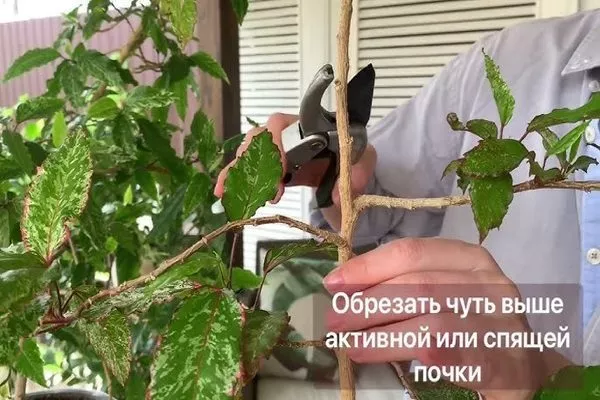
- TrimmingDrastically pruning branches and removing old and thickening shoots will stimulate the emergence of new growth. Perform this procedure in spring or fall. Leave 3-5 strong branches to rejuvenate the hibiscus.
- TransferTransfer the bush to a pot with nutritious, fresh soil, ensuring good drainage. The container should be slightly larger than the original one to stimulate root growth.
- Top dressingIn spring, apply nitrogen fertilizer for plant growth, and in summer, apply phosphorus-potassium fertilizer for bud formation.
- Apply growth stimulantsEpin, Zircon, and humates will help activate dormant buds.
- CuttingsTake a cutting from an old plant and grow a young bush from it.
Other tips and tricks
If your hibiscus refuses to produce buds even after following the care instructions, try these proven methods to stimulate flowering:
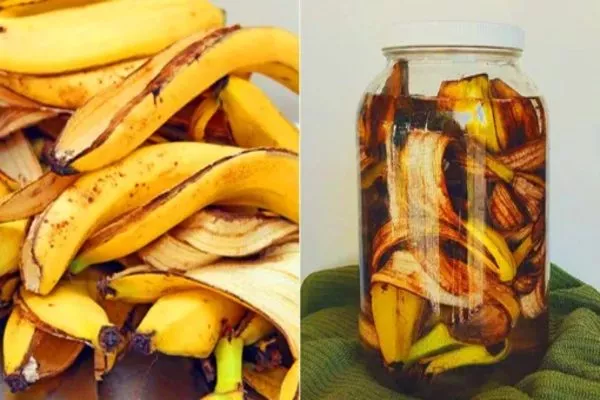
- Make a banana peel infusion using 1 peel and 1 liter of water. Let it sit for 24 hours. Water the potted plant with it and spray the foliage.
- Use an ash infusion. To make it, add 1 tablespoon of ash to 1 liter of water and let it steep for 24 hours. Water the bush with it once a month.
- Water the bush with sweetened water (1 teaspoon of sugar per 250 ml). Apply the solution every 2 weeks.
- Mix damp tea leaves into the substrate under the hibiscus to improve the soil microflora.
- Give your hibiscus a contrasting air bath in the spring by first leaving the plant on the balcony for a couple of hours (it should be cool, but not cold), and then returning it to a warmer environment.
- Prune the plant in spring to encourage new growth, which will later produce buds.
- Move the flower pot to a new location, one with brighter, warmer light. This could be an east- or west-facing window.
- Limit root growth by repotting the bush into a slightly smaller pot. This will encourage flowering.
- Place the bush into dormancy during winter by lowering the room temperature to 12-15°C and reducing watering. This will help it "rest" and gain strength for flowering.
Reviews
Hibiscus's lack of blooms is a problem that can be solved with proper care and improved conditions for this beautiful tropical plant. Research your green plant's needs thoroughly to know what it requires to maintain its health, attractive appearance, and flower production.