
Bonsai is a unique technique for creating miniature trees, originating in Japan. These trees are identical to the originals growing in their natural habitat. They are distinguished by their small size while maintaining their proportions. You can create a real, living tree on a stand from a common ficus tree. It will make a unique interior decoration.
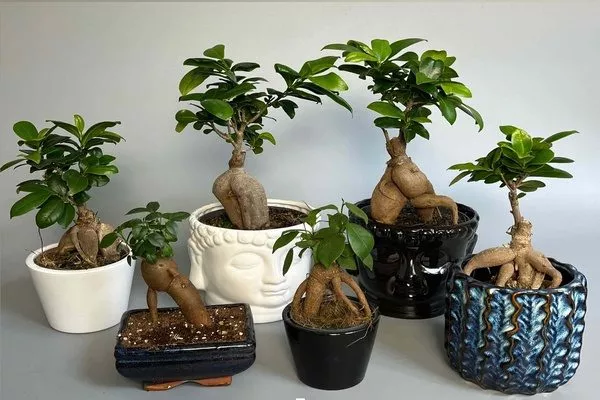
What are indoor ficus bonsai trees?
Miniature trees, true works of decorative art, are not grown by gardeners from special plant varieties or species. They are created from common maple, pine, or ficus trees using a unique artistic shaping technique. This involves the following manipulations:
- pruning;
- growth restriction;
- giving it the shape of a full-sized adult tree.
According to Eastern philosophy, these unusual houseplants symbolize the strength and beauty of wild nature.
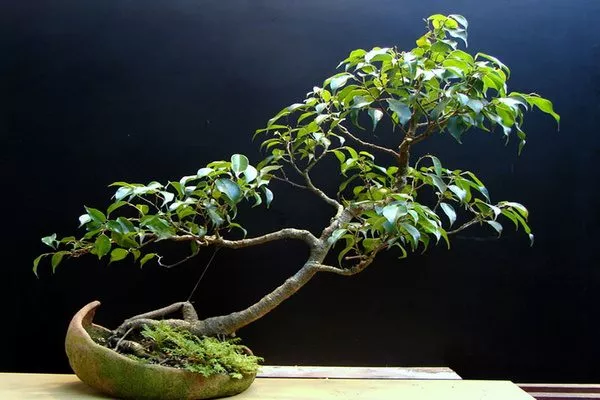
This man-made wonder can be obtained from any species of small-leaved ficus. This indoor plant is ideal for bonsai due to the following characteristics:
- it is capable of quickly forming a strong trunk and a very branched crown;
- It has beautiful evergreen foliage, the small size of which is suitable for creating medium and large bonsai trees;
- It demonstrates unpretentiousness, endurance, and good tolerance of hot air, which is important for cultivation at home.
Features and varieties of the species
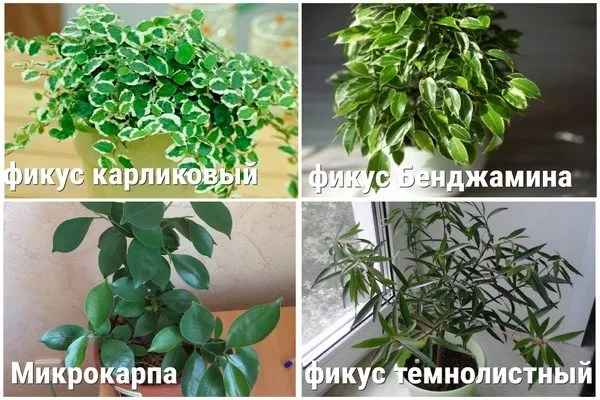
Various types of ficus, suitable for growing indoors, are suitable for creating a miniature Japanese-style tree:
- Ficus pumila (dwarf);
- Ficus benjamina (Benjamin);
- Ficus microcarpa (microcarpa) or ginseng;
- Ficus neriifolia (dark-leaved).
To shape a bonsai tree, use young, healthy plants with good foliage growth. Mature specimens with an interesting trunk shape are also suitable.
A ficus grown correctly using the oriental technique will have the following distinctive features:
- miniature size;
- compact form obtained by regular pruning of roots and branches;
- thick trunk;
- curved branches;
- decorative crown created using wire and artistic trimming;
- large, developed roots (if the plant is designed in the banyan style, they come to the surface and form spectacular protruding “nebari”).
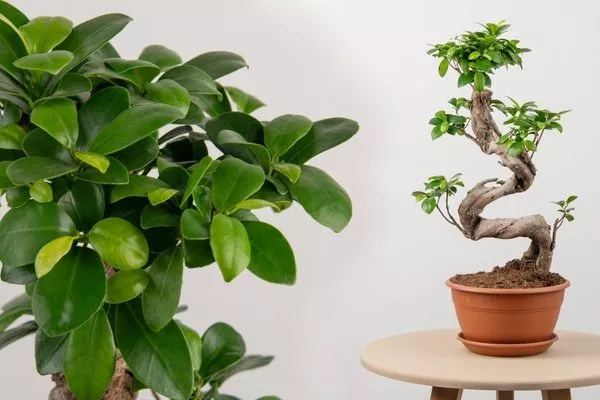
Forming a bonsai tree is a lengthy process that requires attention and effort from the gardener. It's painstaking work. It's much easier to purchase a pre-made plant.
Landing
If you've decided to create a unique living Japanese-style decorative piece with your own hands, approach the process responsibly. Follow all the rules to ensure you're not disappointed with the result.
Selection and preparation of planting material
Start by choosing the right "starting material." Choose flexible ficus varieties that grow quickly and tolerate pruning well (for example, the dwarf Ficus benjamina). A plant between 1 and 3 years old is ideal; it's easier to shape.
A ficus tree for growing a bonsai tree must be healthy and have the following characteristics:
- with a strong trunk;
- no signs of parasites;
- without symptoms of disease;
- without damage or defects.
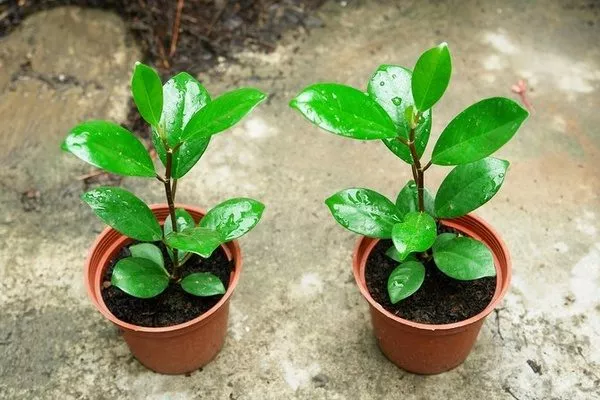
Once you've selected your seedling, carefully prepare it for planting. This will increase its chances of successful establishment. Follow these steps:
- Inspect the rootsTo do this, carefully remove the ficus from the pot and examine the condition of the underground part of the plant. If you find damaged roots, remove them. Any overly long shoots will need to be trimmed.
- Form a root baseTo do this, trim the roots by 1/3, especially if they have grown too much. This will stimulate the growth of new, compact roots, which are more suitable for bonsai trees.
- Process the cutsSprinkle all wounds with powdered activated charcoal or cover with garden pitch. This prevents the ficus's underground portion from rotting.
Preparing the substrate and pots
Depending on the plant type and its age, choose a suitable planting container. A regular pot will be fine for a young plant, but after it has been trained using the Eastern technique, it will need to be transplanted into a more suitable container.
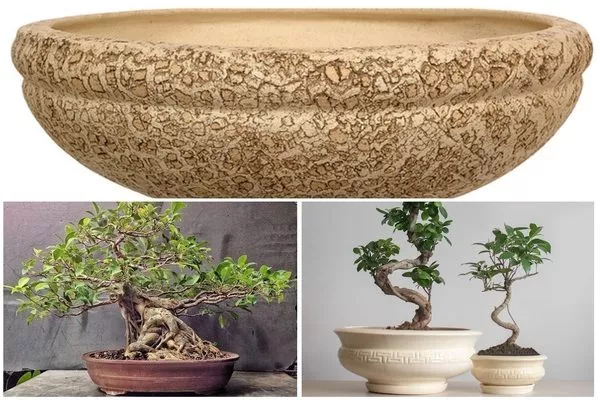
Bonsai tree containers come in a variety of sizes, from small to quite capacious. For creating a miniature landscape sketch, containers with a diameter of 60 cm are suitable. When choosing, consider the following guidelines:
- the height of the sides should be equal to 1/2 of the “height” of the tree;
- The flat container is ideal for artistic compositions;
- use a tall container to create a cascading plant ensemble;
- The pot stand can be either flat or on legs.
To grow a miniature tree, you can use a clay container with a glazed exterior, as well as stone, ceramic, or even wooden ones. They should have drainage holes in the bottom.
Not every soil is suitable for ficus. It thrives in loose, light, aerated soils that are slightly acidic or neutral.
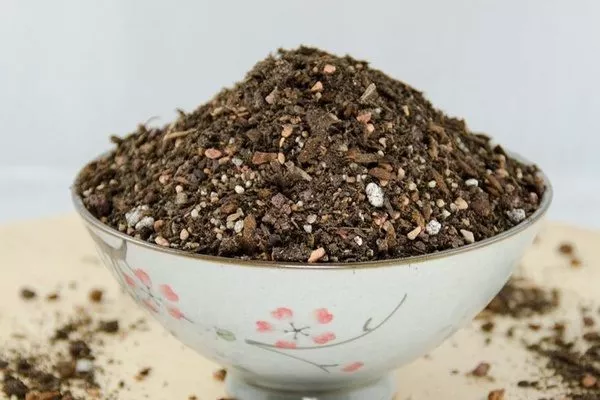
Use a ready-made substrate purchased at a flower shop, or make your own soil mixture from the following ingredients:
- leaf soil;
- coarse sand (can be supplemented with other leavening agents: perlite, vermiculite);
- vermicompost or compost;
- peat.
Planting and replanting ficus bonsai
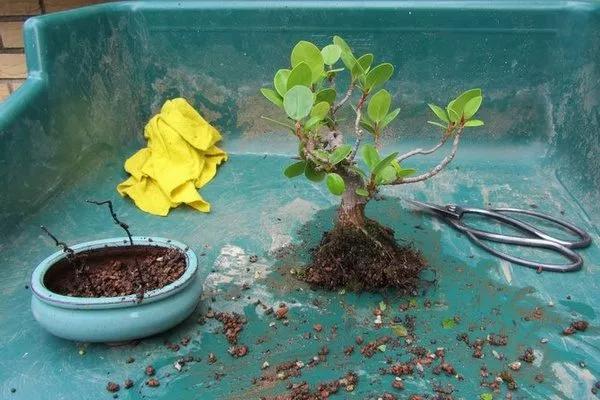
After filling the pot with a suitable substrate for ornamental plants, proceed with planting. Follow these step-by-step instructions:
- Place the plant in the center of the container. Fluff up its roots and distribute them evenly over the soil surface.
- Fill the root system with soil. Lightly compact it using a wooden stick. Make sure there are no air pockets.
- Fix the trunk in the desired position with wire passed through the drainage holes in the pot.
- Water the ficus generously with lukewarm, settled water. Use a spray bottle.
Repot once a year while the tree is young. As it matures, repot less frequently—once every 2-3 years. The best time to do this is spring.
Follow the step-by-step instructions to repot your bonsai tree:
- Carefully remove the retaining wire.
- Remove the ficus from the pot.
- Clean its roots from old soil using a dry wooden stick.
- Remove a third of the roots, completely cutting off dry and diseased shoots and shortening those that are too long.
- Disinfect the inside of the pot. You can also rinse it with boiling water.
- Place a drainage layer of gravel or expanded clay on the bottom. Fill the container with fresh substrate.

- Plant the ficus back, forming a mound for exposed roots.
- Water the plant.
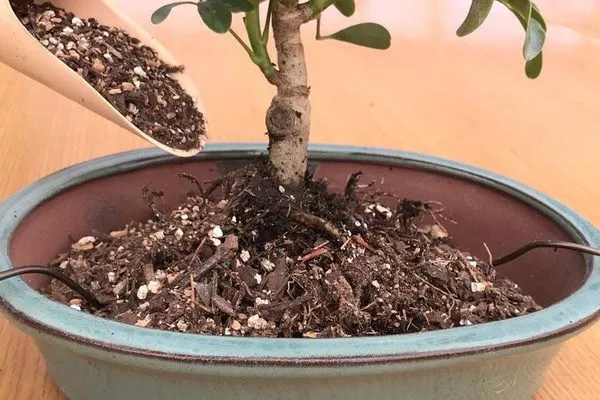
Place your green plant in a bright, warm room. Protect it from direct sunlight and drafts. Do not fertilize for the first week after repotting. Water it sparingly, as the top layer of soil in the pot dries out.
Growing
After planting/repotting, provide the plant with favorable conditions in your home. This will help it overcome stress more quickly, recover, and establish itself in its new location.
Housing conditions and lighting
The ficus bonsai thrives in warmth and moisture. It thrives in areas with plenty of bright, indirect light. In the south, you can keep this miniature tree outdoors, while in cold or temperate climates, it should be kept indoors, away from drafts. Create the following conditions:
- temperature range: +18-25⁰С;
- air humidity - not less than 60%;
- at least 6 hours a day of bright sunlight transmitted through a screen that diffuses rays (a western or eastern window is especially suitable for growing ficus);
- shading from direct midday rays, especially in summer;
- supplementary lighting with phytolamps during periods of short daylight hours.
Watering mode
Although the plant is considered hardy and undemanding, many gardeners encounter complications caused by improper watering. Bonsai are typically planted in a wide, shallow container filled primarily with drainage material. The plant often experiences "thirstiness" for the following reasons:
- pebbles or expanded clay, unlike soil, dries quickly;
- The large surface area and shallow container depth promotes more intense moisture evaporation.
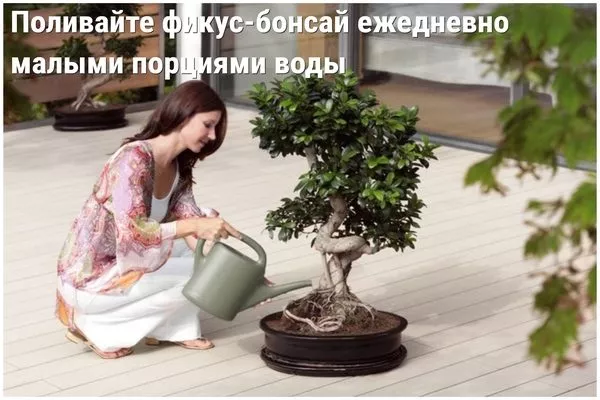
To prevent your ficus from suffering from water stress, water it daily in small amounts. The top layer of soil should not dry out more than 2-3 cm between waterings.
The optimal method for watering bonsai trees is the submersible watering method. Place the container containing the plant in a wide container of water. Leave it there for 5-10 minutes. This will allow the roots to absorb moisture. Then, allow the excess water to drain.
To moisten the substrate under the ficus, use water with the following characteristics:
- soft (hard can damage the root system);
- settled;
- warmed to room temperature.
During the cold season, water your green pet less often, but do not allow the soil in the container to dry out completely.
When growing ficus bonsai, indoor humidity is also important. The ideal level is 60-70%. Dry conditions can cause this tropical plant to shed its leaves. To prevent this problem, take the following measures:
- daily spraying of the crown (this is especially necessary in winter when the heating is on and in summer during hot weather);
- use of a household humidifier;
- placing a pot with a plant on a tray with wet stones;
- placing bowls of water next to the tree.
Shaping and trimming
To give the ficus the appearance of a miniature tree, you'll need to regularly trim excess branches and pinch out the top. It grows quickly but requires little time to recover.
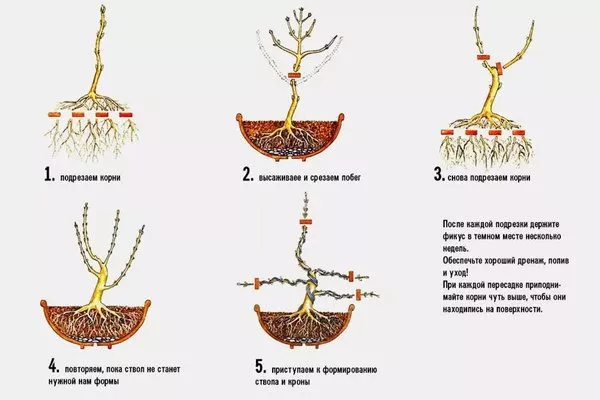
When pruning a Japanese-style indoor plant, follow these rules:
- remove 4 leaves from every 8 that appear;
- carry out the manipulation from the bottom up, gradually moving towards the crown;
- shorten not only the branches, but also the roots;
- use sharp and disinfected tools: a knife, a razor, garden shears, pruning shears (they should be small in size, since the tree, although real, is miniature);
- Sprinkle all cuts with crushed charcoal;
- pruning of shoots for the purpose of crown formation is carried out in the spring, when the crop enters the phase of active growth;
- if necessary, it is permissible to carry out the manipulation in summer and autumn;
- In winter, pruning ficus is contraindicated, as this is the time of hibernation and a slowdown of all life processes (the plant will not have the strength to recover after manipulation).
After pruning, ficus foliage often begins to turn yellow and dry out. This is normal. Once the plant recovers, its appearance will return to normal.
To shape a bonsai tree into an original-looking trunk, use one of the following techniques:
- Tying upTie the shoot or its tip (depending on its length) to the base of the plant. This technique will help you achieve a beautiful curved trunk shape.
- Wire constructionWrap the tree with insulating wire from the roots to the crown, creating a smooth transition. Secure the resulting frame in the desired position. Leave it alone for 7-8 weeks. During this time, the trunk will "get used" to the new shape and learn to hold it on its own. After this, the structure can be removed.
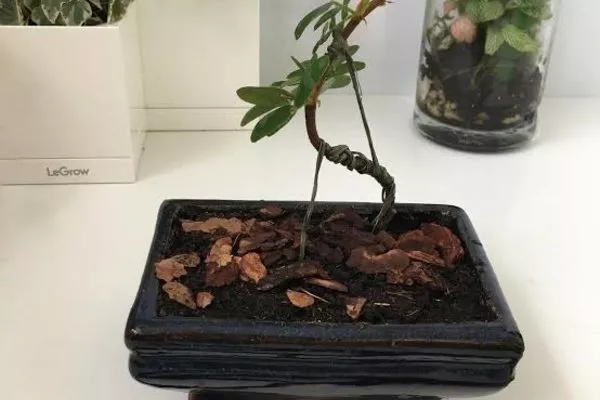
The first method is considered simple and safe. It's suitable for working with a young ficus tree. The second technique is more complex, but allows you to give the tree a unique shape. Its downside is the risk of over-wired the plant, which can cause it to dry out. It shouldn't be used immediately after pruning.
In addition to shaping the crown and trunk of a bonsai tree, it is necessary to create a beautiful root base - nebari.
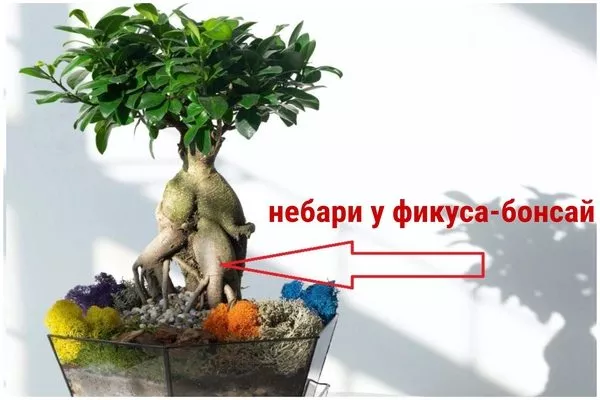
To do this, not only trim the vertical root shoots, but also do the following:
- Carry out surface planting of the cropYou will need to slightly lift the plant's neck so that the roots spread out beautifully along the ground.
- Use flat containers to grow ficusThis type of container will limit the vertical growth of the underground part and stimulate the development of lateral roots.
- Use aeroponics or mesh potsThe roots, receiving more air, will branch better and thicken.
- Use mossLaying sphagnum moss around the trunk will stimulate new root growth. The material will help retain moisture in the root zone and prevent it from drying out.
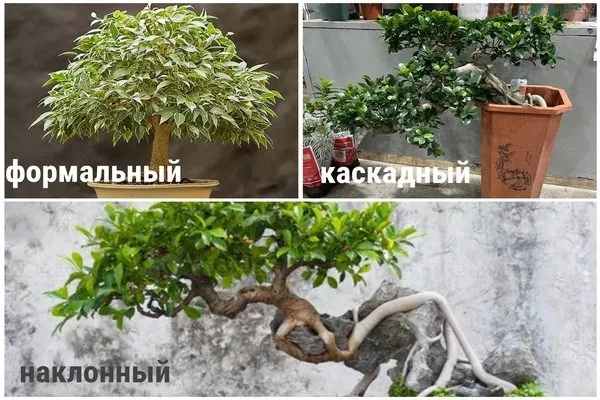
You can design your ficus bonsai in the style you like best:
- Formal (classical). It is called "chokkan" or "tyokkan." The tree grows strictly vertically, gradually tapering from the base to the crown. Distortions and bends are not characteristic of the trunk.
- InclinedIts name is "shakkan." The tree appears to be falling, shaped by the elements (such as a strong wind or storm). The trunk's angle relative to the ground is 60-80 degrees.
The roots appear strong and developed, acting as support for the leaning ficus (they are located on the other side for balance). The trunk can be either straight or curiously curved.
- Cascade ("kengay") or semi-cascade ("han kengai"). Rarely seen. A tall pot is used to create this bonsai. It imitates a tree standing over a cliff, bent downwards under a heavy mass of snow. The crown is either below the rim of the pot or flush with it.
Fertilizers and mineral additives
Frequent watering quickly leaches nutrients from the substrate in which a ficus bonsai grows. This is why it requires regular fertilization. The optimal option for this ornamental plant is a mineral NPK complex. It will provide the tree with everything it needs:
- nitrogen - to stimulate the growth of foliage and shoots;
- phosphorus - to strengthen the root system;
- potassium - to improve immunity.
In spring, apply a 12:6:6 NPK mixture. In summer, feed the ficus with nitroammophoska. In autumn, focus on phosphorus and potassium, choosing a 3:10:10 NPK mixture. Apply the nutrient mixtures no more than once every two weeks, following the fertilizer manufacturer's recommended dosages.
Apply a fertilizer after pruning the plant. This will promote faster recovery and the emergence of new growth. Use a specialized bonsai fertilizer or one of the following:
- FERTIKA Kristalon "Mineral";
- BONA FORTE "Beauty";
- Green Life elixir for ficus and palm trees, in the form of a spray.
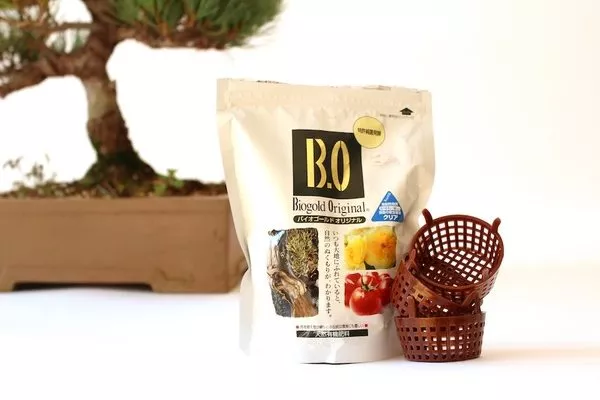
There's no need to apply fertilizer immediately after planting/repotting. Excess minerals in the substrate can harm the plant.
Methods of reproduction
If you're looking to expand your collection of ficus bonsai, consider these methods for growing new plants that can later be shaped into miniature trees:
- CuttingsIn spring, cut off semi-woody shoots (10-15 cm long) from the plant. Remove the lower leaves, leaving 2-3 upper leaves. Rinse the cut to remove any milky sap. Place the cuttings in water or bury them in a mixture of peat and sand. After 2-3 weeks, roots will appear, and the cuttings can be repotted.
The advantages of this propagation method include rapid rooting and preservation of varietal characteristics. It is suitable for most species, including microcarpa and Ficus benjamina.
- Air layeringMake a cut in the bark of the selected branch, wrap it in damp moss, and then cover it with plastic wrap. Roots will appear in 4-6 weeks. Separate the cutting from the mother plant with a knife and plant it along with the moss.
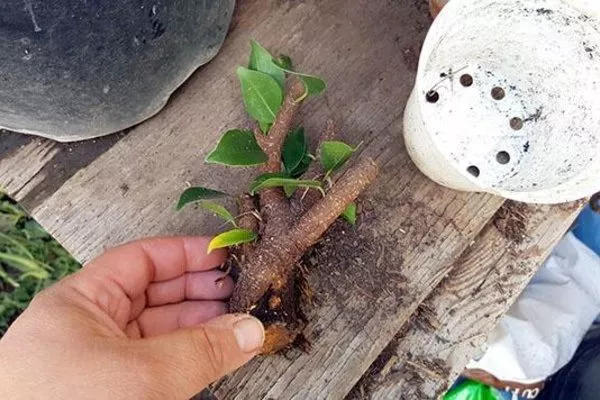
The advantages of this method: you'll receive a fully formed tree section, and the material has a good survival rate. It's suitable for the ficus variety microcarpa. - Propagation by root cuttingsWhen replanting, separate a portion of the rhizome. Plant it in a separate pot, leaving 2-3 cm above the soil surface. The planting material will take root within 3-4 weeks.
Advantages of this method: rapid start of seedling growth, the ability to form a bonsai tree from an old ficus. - Seed methodIt's labor-intensive and time-consuming. Sow the seeds in the substrate in furrows (0.5 cm deep). Keep the seeds at a stable temperature of 22-25°C and high humidity. Sprouts will appear in a few weeks. After two true leaves appear, transplant the seedlings.
Florists rarely use this method of propagating ficus. Plants grown from seeds do not retain varietal characteristics.
You will find maximum useful information about the methods of propagation of this popular indoor plant Here.
Advantages and disadvantages
A ficus bonsai is more than just a houseplant; it's a work of art. It's a true "living sculpture," combining aesthetics and biology. It has many advantages, but also disadvantages. Carefully consider both before you begin growing this miniature tree.
Among the main advantages of the culture obtained through the Japanese method of formation, one can see:
Ficus bonsai also have some disadvantages that a novice gardener should take into account:
Creating a Japanese-style ornamental from a ficus is a challenging task for a novice gardener. Mistakes made during pruning or repotting can cause severe stress to the plant, quickly losing its decorative appeal.
Reviews
A ficus bonsai is a stunning plant created using an ancient Japanese technique. It's a miniature tree. It looks as if it grew in the wild, not among its full-sized counterparts, but somewhere in the land of Lilliput. You can create it yourself through regular pruning, shaping the crown and trunk, and limiting its growth.