
Ficus benjamina is a popular houseplant, prized for its elegant foliage and air-purifying properties. Its compact size and variety of shapes make it a versatile addition to any interior. While it's low-maintenance, it does require careful attention to humidity and lighting, making it a striking addition to any home or office.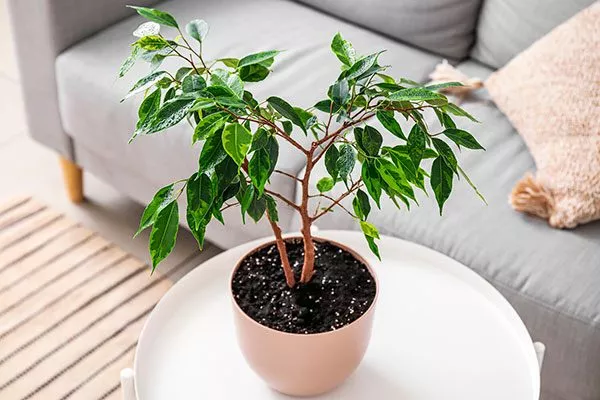
Origin and history
The Ficus benjamina's native range spans vast territories, from Southeast Asia and China to India, the Philippines, and northern Australia. There are two hypotheses regarding the origin of the plant's name:
- According to one theory, the name "Benjamin" has no direct connection to a human name. It is believed to have originated from the English term "benjamin," which refers to the hardened resin obtained from the storax benzoin plant.
- Another version says that the ficus received its name in recognition of the achievements of the British botanist Benjamin Daydon Jackson, who is credited with the discovery of this plant.


Botanical characteristics
Ficus benjamina is a popular evergreen plant grown indoors as a tree or shrub. Indoors, its height typically ranges from 2 to 3 meters. Its spreading crown and graceful drooping branches make it widely used in interior design.
Distinguishing characteristics:
- The bark of the trunk has a grey tint with slight brown inclusions, which gives it additional aesthetic value.
- A distinctive feature are its glossy, elongated-oval leaves with a pointed tip. They range from 6 to 13 cm in length and from 2 to 6 cm in width.
- The leaves have a smooth, fine texture. The venation is pinnately looped, with an indistinct central vein and 8-12 pairs of lateral veins.
- The leaves are green and have smooth, entire margins. The petioles reach approximately 2 cm in length.
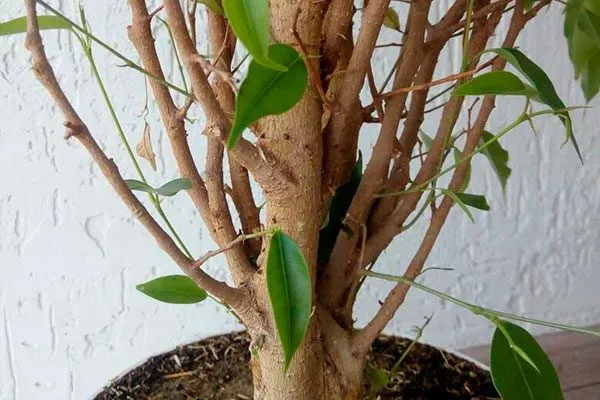
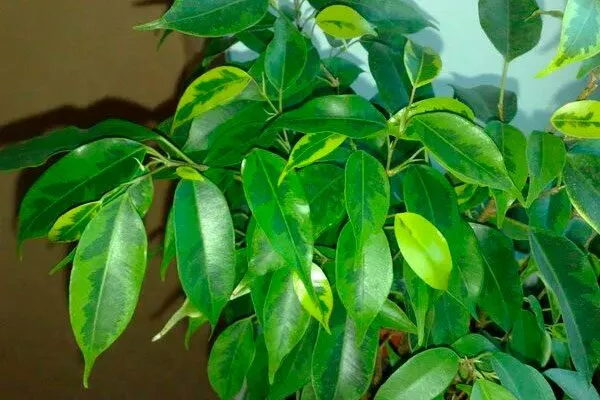
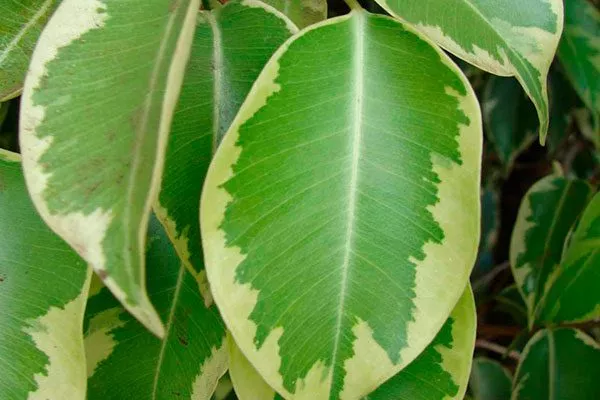
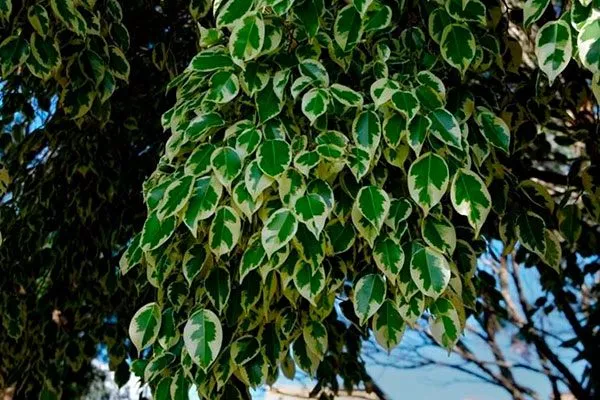
Flowering is rarely observed indoors. The plant itself produces inedible fruits of a rich burgundy color, which can be either round or oval. The flowers are usually shades of white or pink.
Ficus Benjamina varieties
Ficus benjamina comes in a variety of forms, differing in several key respects. Primarily, this includes the size and color of the foliage, which can range from large to small and have a variety of shades. Below are the most popular varieties.
Danielle
A popular houseplant, prized for its low maintenance and decorative qualities. It grows quickly and is easy to shape, especially when young, when its flexible shoots can be used to create an original trunk, such as a braid.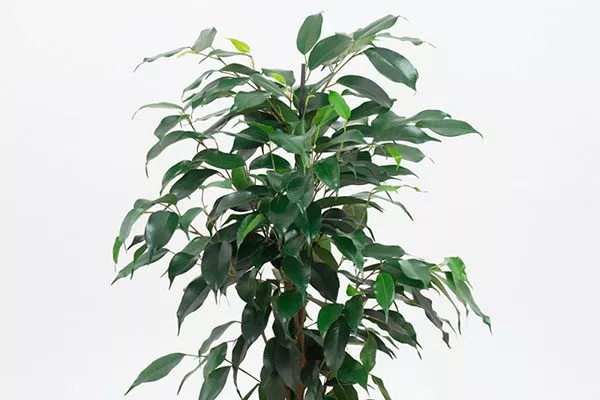
Key Features:
- The leaves have a glossy surface and smooth edges, and their color varies from light green in young plants to a rich, deep green in mature specimens.
- The oval leaves with a pointed tip reach approximately 8 cm in length.
Exotica
This is one of the oldest varieties of Ficus benjamina. It is characterized by rapid growth but remains moderate in size, typically not exceeding 1.5 m.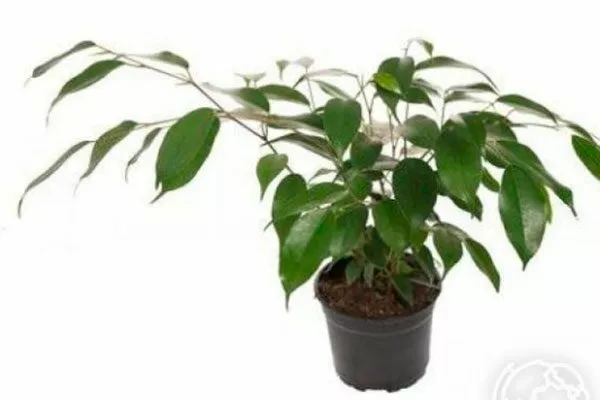
The plant is resilient and adapts to a variety of lighting conditions, including shaded areas, without hindering its growth. Ficus leaves are small, up to 6 cm long, soft to the touch, bright green, and have a glossy surface.
Baroque
It attracts attention with its unique, wavy foliage. Its small, glossy leaves, 3 to 4 cm in size, have smooth but curved edges. This swirling shape of the foliage gives the crown a lush, curly appearance.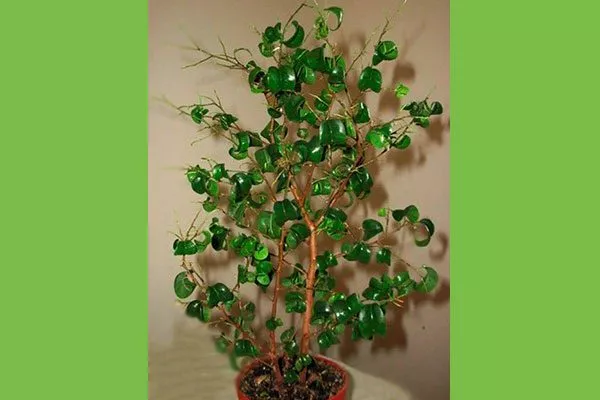
The plant's slender main stem produces numerous side shoots, which are also graceful. Because of this characteristic, Barok is most often grown as a bush, with several shoots planted in a single pot.
Natasja
This variety stands out thanks to its dense, spreading crown and memorable, artfully colored, succulent leaves. Its uniqueness lies in the crown structure and color palette.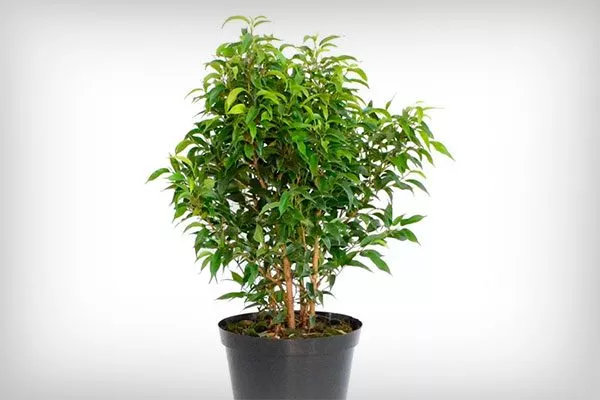
Characteristic features of leaves:
- slightly curved and glossy;
- reach significant sizes: approximately 7 cm in length and up to 3 cm in width;
- The main color is a rich green, but the central vein, which runs along the leaf, and the uneven, variable width border along the edges have a light green hue.
Wiandi
Flowering is extremely rare indoors. This species grows quite slowly. Because of the characteristic shape of its branches, it is often called a "weeping fig."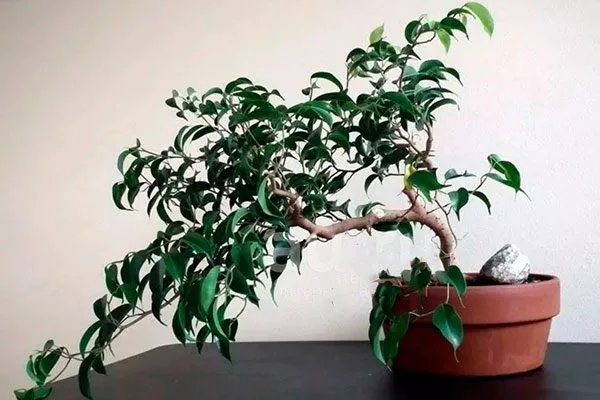
Main characteristics:
- Compact root system, small height and tendency to spread in width.
- It has thin, elegant branches, densely covered with foliage of a uniform green color.
- The leaves are small, about 3-4 cm long, oval in shape with a pointed tip.
- The trunk is woody and has a strange, curved shape.
Too Little
A dwarf variety with small, neat leaves, ideal for bonsai. Its compact size and slow growth make it easy to grow indoors, even in small spaces.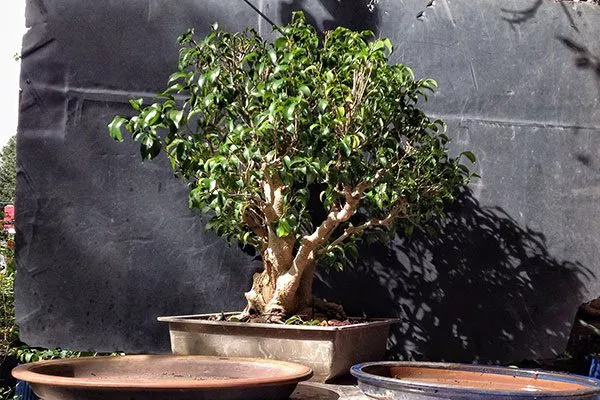
Dense, small foliage gives the plant an elegant and refined appearance. These characteristics make this variety a top choice for miniature plant and bonsai enthusiasts.
Midnight Lady
The Ficus 'Midnight Lady' is an evergreen tree distinguished by its graceful crown and slender, drooping branches. The plant can reach a height of 3 meters.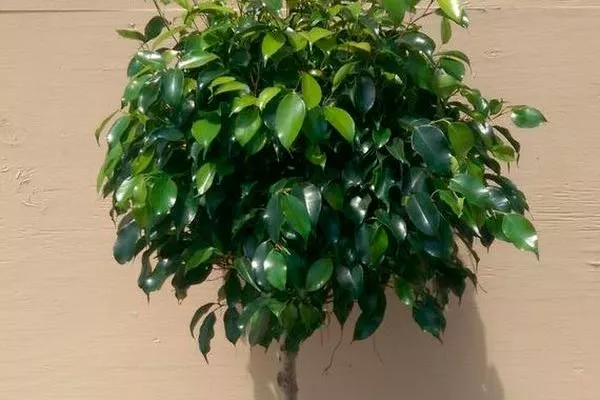
Description:
- The foliage is abundant, oval-shaped with pointed tips, small in size and with a glossy surface.
- The leaves are characterized by a wavy texture and a dark burgundy-green hue.
- The edges of the leaf blades are smooth, although in some specimens they may be wavy.
- This variety does not have variegated leaves.
Golden Monique
It is characterized by a graceful, thin trunk. Its branches, thin and flexible, tend to droop downwards.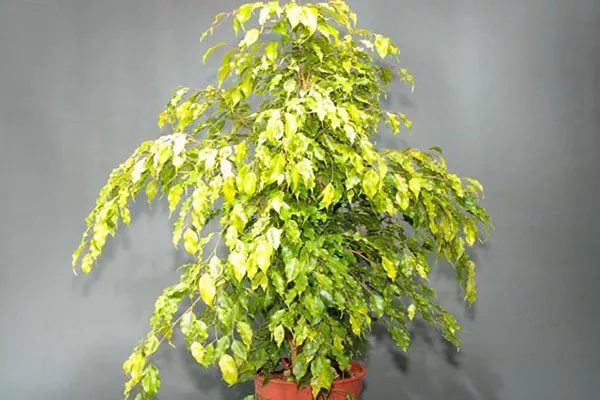
Description of leaves:
- medium size, oblong shape;
- on average they reach 6-7 cm in length and have a glossy surface;
- have a feathery structure;
- the color varies from light green to dark green with characteristic inclusions;
- The edges have a wavy, corrugated structure.
Starlight
Starlight is rightly considered one of the most attractive ficuses with colorful foliage. This variety is characterized by medium-sized leaves (4-6 cm), which are significantly longer than wide – almost three times as long.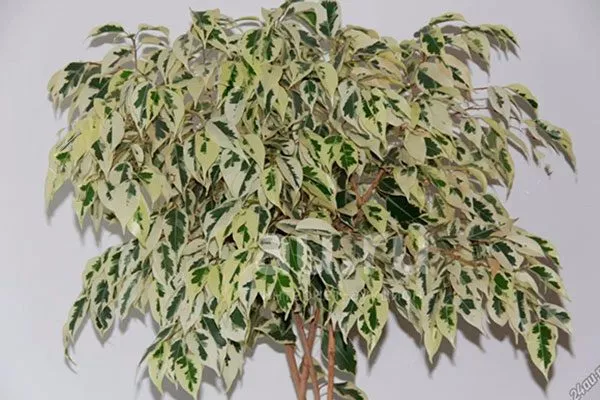
The rich green leaves are decorated with a wide border along the edges, sometimes so pronounced that it occupies almost the entire area of the leaf, making it white.
The variegated leaves have a slight concavity along the midrib, resembling a boat shape, and their pointed tips are slightly curved. The branches are flexible, allowing the plant's trunk to be shaped.
Kinky
It's a striking ornamental plant. Unlike other varieties, its distinctive feature is the ability to shape its crown into any desired shape, and its name translates as "curly."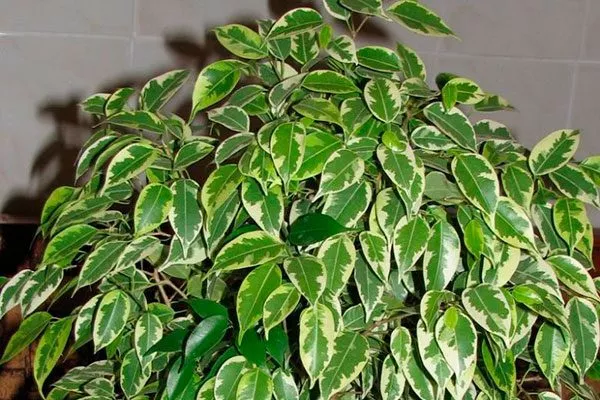
Botanical description:
- The evergreen shrub is characterized by a tree-like structure and is covered with small, oblong leaves up to 4 cm in length.
- The leaves range in color from light green to yellowish-white, often turning white with age.
- The branches are drooping and located on a woody trunk.
- The plant is compact, reaching a maximum height of only 40 cm.
- The lush, spherical crown is the main advantage of the plant.
Without pruning, ficus spreads its branches in different directions as it grows. The gray bark of the trunks is covered with veins and can grow together.
Golden King
The foliage is distinguished by its unusual golden-green color, decorated with thin dark green stripes. The leaves, which have a glossy surface and an elongated, tongue-shaped form, also have a distinctive corrugated texture.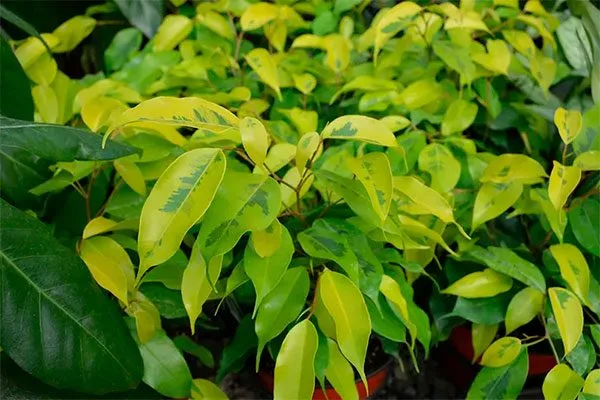
Thanks to its powerful root system, the plant can reach an impressive 30 meters in height under favorable natural conditions. However, such significant growth is only possible in its natural habitat.
Curly
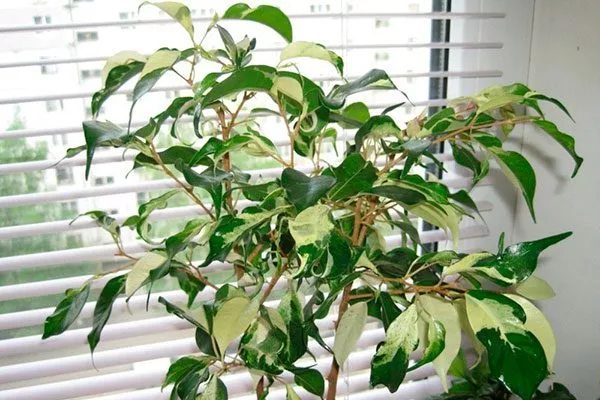
The variety's uniqueness lies in the striking diversity of its leaf shapes and colors. Distinguishing features:
- The leaves of a single plant can vary greatly from one another, displaying a wide range of shades of white and green, as well as spots of various shapes and sizes.
- The edges of the leaves also vary: from straight to ribbed, with curvatures or spiral twists.
- The leaves are 5 to 7 cm long and 1.5 to 3.5 cm wide.
- The plant grows slowly and requires regular crown pruning. This variety prefers bright light and is sensitive to moisture stress.
De Gantel
Indoors it typically reaches 1.5 m in height, but in the wild it can stretch up to 25 m. A characteristic feature is the often drooping shoots.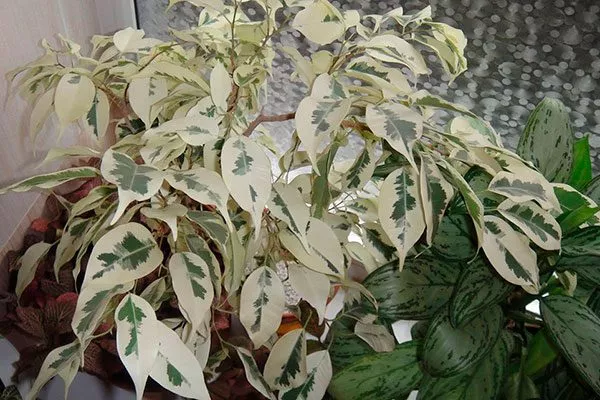
The leaves are elliptical in shape and have a glossy, shiny surface. The foliage is predominantly white, with small green flecks creating a variegated effect.
Necessary conditions for Ficus Benjamina
With proper care and adequate light, the Benjamin ficus is generally trouble-free. Finding the perfect spot for it in most homes is easy.
Lighting and suitable location
All varieties of Ficus benjamina require good lighting. Even specimens with normal green foliage require adequate light, otherwise they will begin to lose leaves and become leggy.
The ideal place for them would be eastern and western windows with bright but diffused light, as well as southern windows at a distance of up to 50 cm.
Mature ficus trees tolerate direct sunlight better than young ones, so it's recommended to avoid midday sun on any plant, especially during the summer months. As the days get shorter, move the Benjamin ficus to a brighter location.
Temperature, humidity and care requirements
For healthy growth and development, maintain temperatures between 22°C and 25°C. Sudden fluctuations and cold air currents are highly undesirable.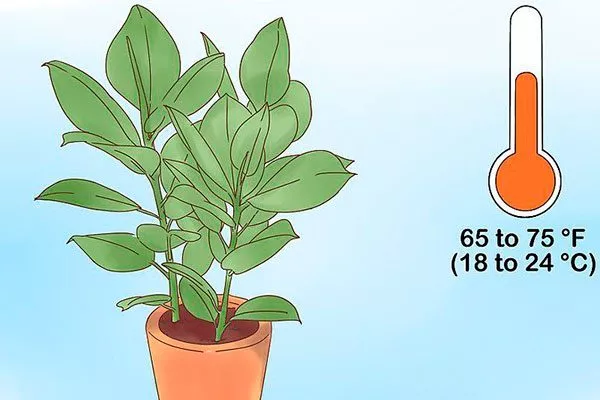
The plant isn't particularly sensitive to humidity, but an optimal level of 50-65% promotes vigorous growth and reduces the risk of spider mites. Ficus responds well to fresh air, but avoid exposure to icy currents.
Selecting a container and soil
Opt for plastic pots or glazed ceramic containers, as the soil dries out too quickly in terracotta containers. If you have large windows and intense lighting (or use powerful grow lights), pots with an automatic watering system are ideal for ficus.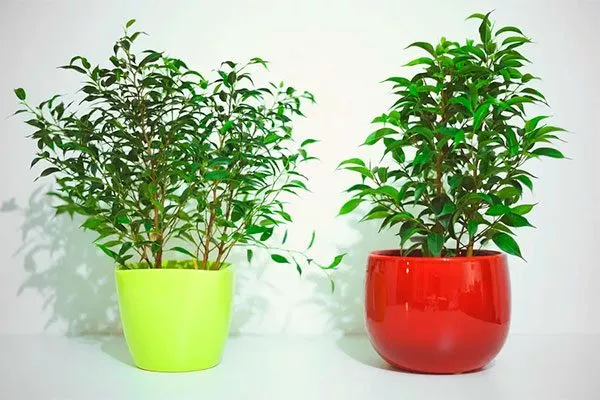
Basic soil requirements:
- A loose, nutrient-rich soil mixture is suitable for this plant. Use a general-purpose substrate designed for ficus or ornamental foliage plants, or choose a neutral high-moor peat.
- To improve the drainage properties of the soil, add perlite, foam glass, zeolite or coarse river sand.
- When using an unglazed terracotta pot, add vermiculite or coconut coir to increase the soil's water-holding capacity.
- To increase nutritional value, you can add vermicompost or sapropel.
Growing rules
To successfully grow a Ficus benjamina, it's important to follow a few simple rules. Following these recommendations will help maintain the plant's health and beauty for years to come.
Landing and transplanting
When the ficus's root system expands, filling the entire pot and beginning to emerge through the drainage holes, it needs to be repotted into a larger container. The optimal time for this is early spring.
Basic requirements:
- Repot young ficus trees annually for the first five years. Repot mature plants every 2-3 years, renewing the top layer of soil annually.
- Change the pot of a store-bought ficus plant after 2-3 weeks, once it has adapted to the new conditions. Use a universal, slightly acidic soil or a homemade mixture of 2 parts leaf mold, 1 part each of peat, humus, and sand. For mature plants, add vermiculite, pine bark, and charcoal.
- The repotting pot should be ceramic or clay and 3 cm larger than the previous one. An overly large container is not recommended, as it encourages excessive root growth.
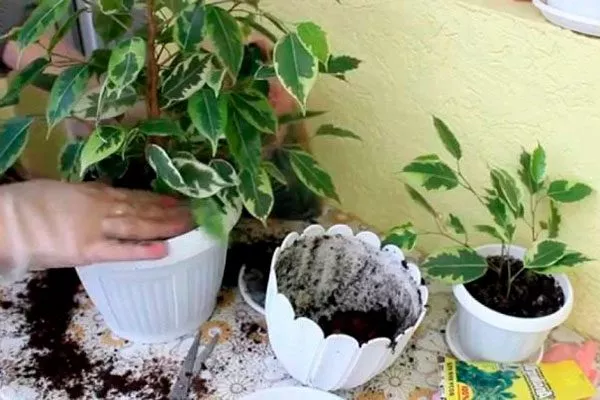
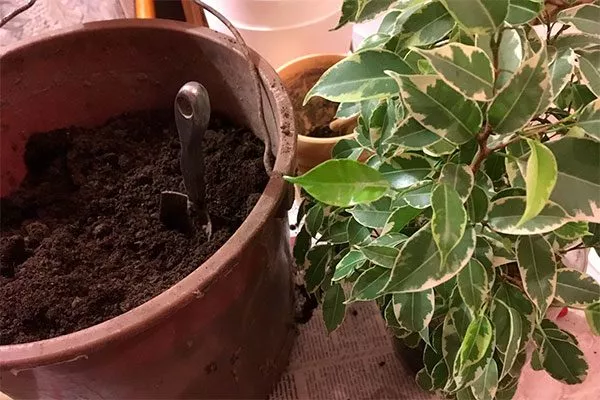
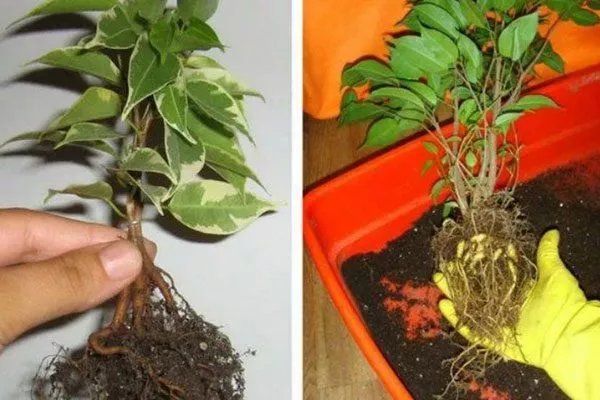
Before repotting, lightly moisten the soil to make it easier to remove the plant. Carefully remove the ficus plant along with its root ball and place it in the new pot, filling the empty spaces with fresh soil. No watering is required for the first 2-3 days after repotting, then continue watering as usual.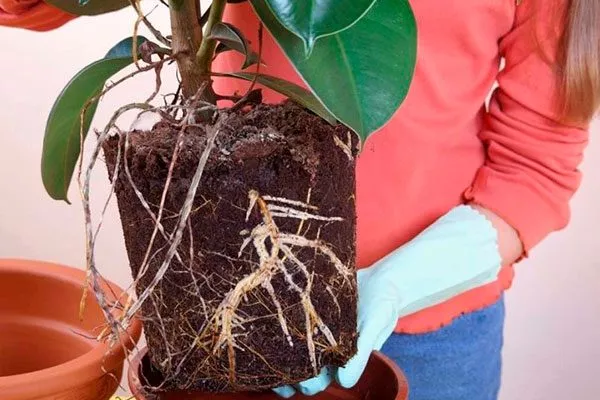
Watering and humidification
The plant prefers a humid environment. The frequency and intensity of watering depend on several factors:
- temperatures;
- illumination;
- age of the plant;
- season.
During the active growth period in summer, more frequent watering is required, about twice a week, without allowing the soil to dry out completely. In winter and fall, reduce watering to once every 7-10 days, but it should be generous.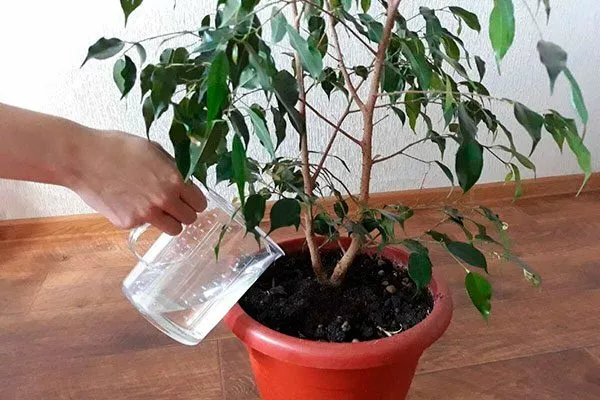
Maintain a balanced moisture level, as both too much and too little water negatively impact the plant's health. Overwatering can cause leaf discoloration, while underwatering can cause leaf drop. Focus on the soil: water when the top 2-3 cm of soil becomes dry. Be sure to remove excess water from the tray.
Fertilizer and feeding
Proper nutrition plays a key role in the growth and development of ficus. Follow these recommendations:
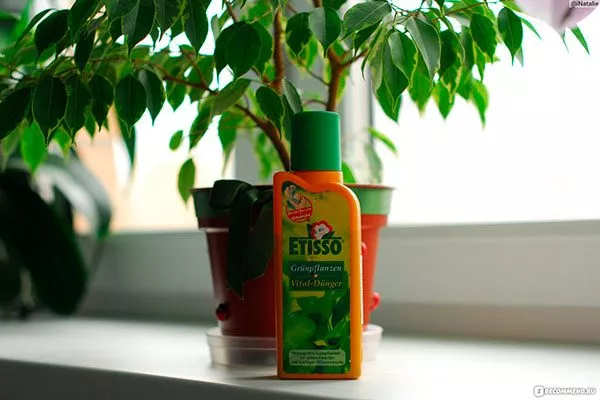
- After the winter, when the plant is actively growing, its root system requires nutrients. Start fertilizing at the end of March and continue monthly until May.
- From May to mid-June, apply fertilizer every three weeks, and then, until October, it is enough to feed the plant once every two weeks.
- Stop fertilizing from mid-November, as the ficus enters a dormant state.
Shaping and trimming
The best time to prune a ficus is early spring, especially March and April. Begin shaping when the plant reaches 45-50 cm in height.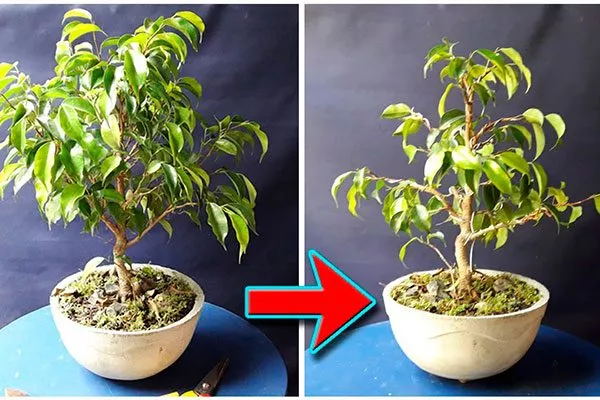
There are several types of structuring:
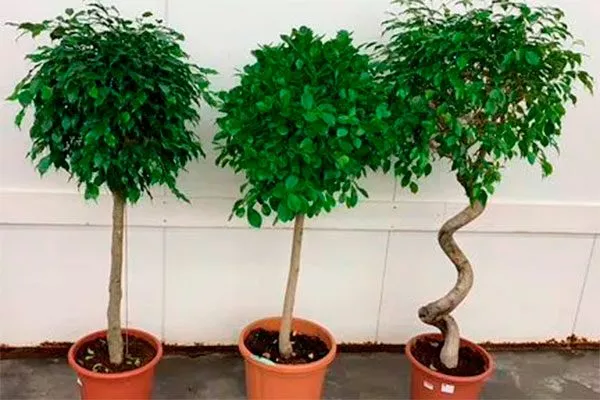
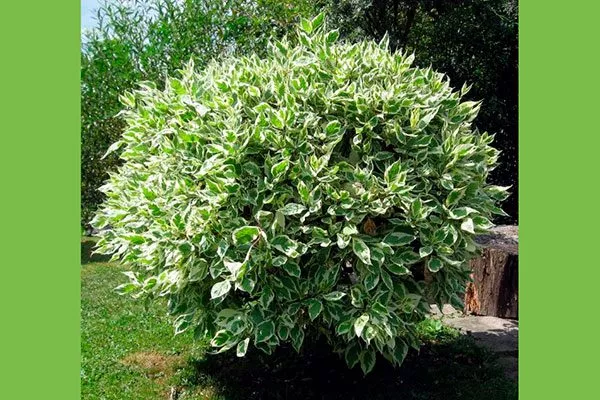
- On the standard. A spherical crown is created on a long trunk with a sparse amount of foliage. The lower branches are left bare. The shoots can be intertwined. To create this shape, first pinch the top, then trim the side branches at different heights. Provide good light to ensure uniform crown development.
- In a bush. The crown resembles a small bush. Pinch the tops until they reach 15 cm in length. Repeat the process after the side shoots reach 10 cm in length. Remove internal buds to prevent the crown from becoming too dense.
- Pyramid. The pyramidal shape is created from a prepared standard. Pinch the shoots when they reach 10 cm in height. Pinch the side shoots to form tiers. Repeat until you reach the desired number of tiers.
- Arc. A wire frame is used to guide and tie up the shoots.


Propagation of Ficus Benjamina
There are several methods for propagating ficus, including cuttings, air layering, leaf cuttings, and seed sowing. Cuttings are the most accessible and simple method.
Cuttings
Cuttings are a simple method available at any time of year. Use woody stems, taking 15-20 cm long cuttings from the top. It's recommended to trim any large leaves on the cuttings.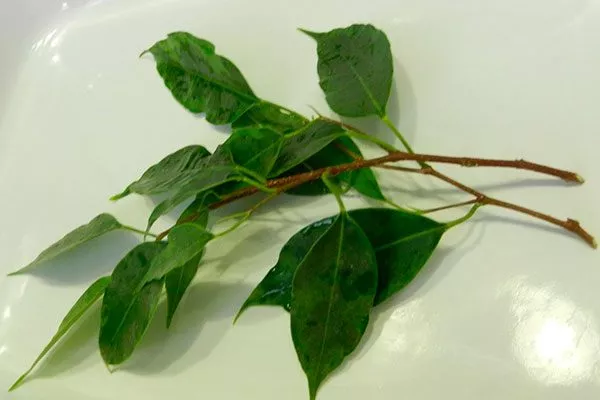
The cuts will secrete a milky sap. Remove it, as it will impede root formation. Rinse the sap with water or soak the cuttings in warm water for about 2 hours, then air-dry for 2 hours.
Rooting cuttings is possible in two ways:
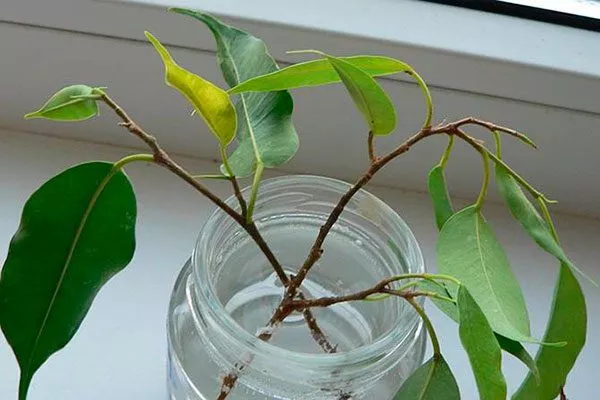
- In the water. Place the cuttings in a container of warm water, ensuring the leaves don't touch it. Adding an activated charcoal tablet will prevent rotting. To create a greenhouse effect, cover the cuttings with plastic wrap to promote root growth.
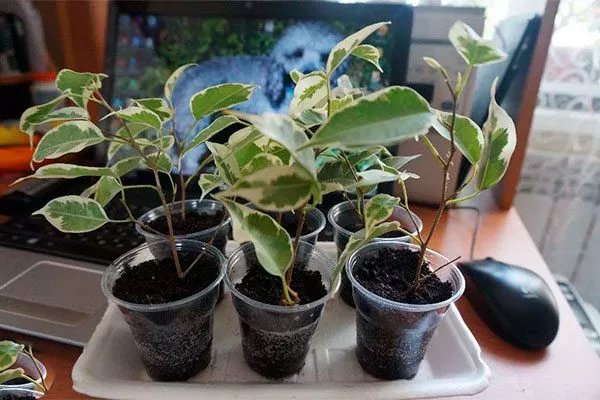
Place the container in a location with filtered light for 2-3 weeks, avoiding direct sunlight. Add water as it evaporates, and replace it if it becomes dirty. Once roots appear, transplant the cuttings into individual pots. - In the soil. This procedure involves planting prepared cuttings in pots filled with moistened soil mixture treated with root growth stimulants. Cover the cuttings with plastic wrap, plastic bottles, or glass. Keep them in good light and at a temperature of 25 to 30°C.
Water and mist as needed, avoiding overwatering. When new shoots appear (after 3-5 weeks), transplant the rooted cuttings into containers.
Layering
Propagating ficus by air layering is a more labor-intensive method, often used to rejuvenate older specimens. Follow these recommendations:
- Make a circular cut in the bark of the stem. Cover it with moistened moss and wrap it tightly in plastic film. In about two months, roots will begin to form under the film in the area of the cut.
- After the roots appear, cut the stem below the formed roots and plant it in prepared soil.
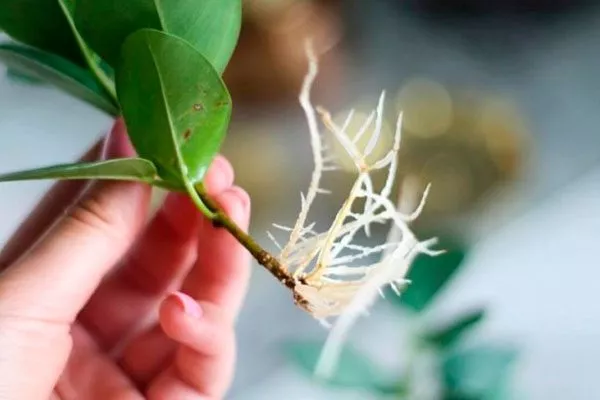
This method allows you to obtain a new plant while preserving the genetic characteristics of the parent plant.
Leaf
This is a rather complicated and less common method, as successful rooting usually requires parts with veins or cuttings with a piece of stem. But it's theoretically possible to try.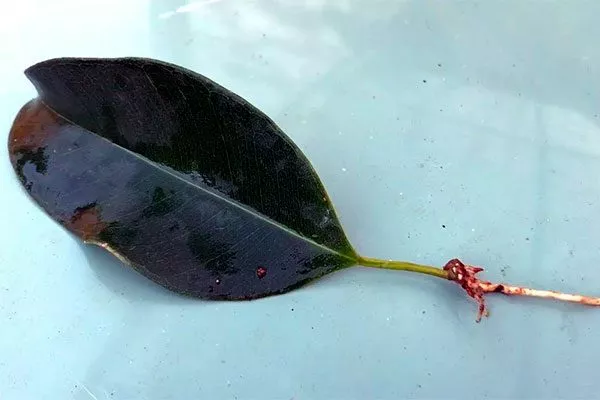
Please adhere to the following requirements:
- Take a healthy, mature leaf with a small section of the petiole (the part that connects the leaf to the branch) still attached. A leaf without a petiole will root very poorly.
- Cut the leaf with a sharp, sterile knife or scissors to avoid damaging the fabric.
- To increase the chances of rooting, dry the cuts slightly for 1-2 hours, and then treat them with a root formation stimulator (for example, Kornevin or Heteroauxin).
- Place the leaf and petiole at a slight angle in a loose, moist substrate (a mixture of peat and perlite or vermiculite). Cover with a transparent bag or glass jar to create a greenhouse effect.
From seeds
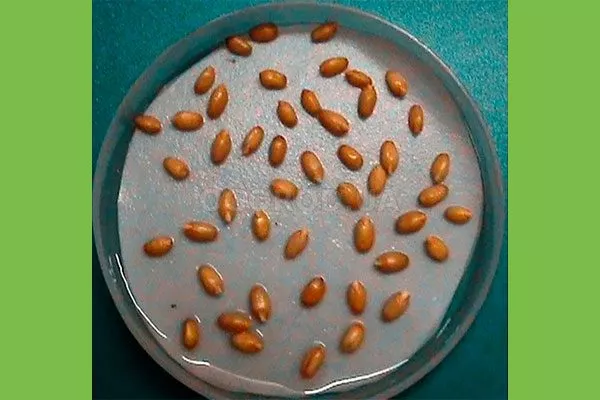
To purchase planting material, visit a specialized gardening store. Pre-soak the seeds in a growth stimulating solution for approximately 24 hours. This technique promotes faster germination and strengthens the plants' immunity to various diseases.
Popular stimulants:
- Epin;
- Humate;
- Heteroauxin.



Next, follow the rules:
- After soaking, plant the seeds in a prepared potting mix. Space them about 1.5 cm apart, burying them about 0.5 cm deep.
- After sowing, carefully water the soil and cover the container with film to create a greenhouse effect.
- Ventilate the crops daily, removing the film for 10-15 minutes at first. As the first shoots emerge, increase the ventilation time to two hours.
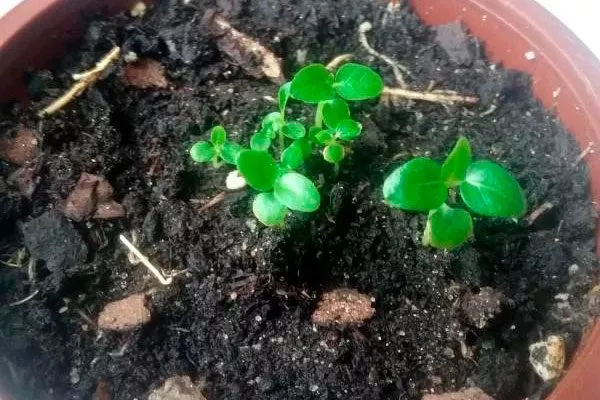
- When most of the seeds have sprouted, remove the film completely.
- Once the young plants have become stronger and grown a little, transplant them into separate containers.
Ficus Benjamin Diseases
This plant requires careful and attentive care; neglect can lead to illness. Signs of ill health:
- slow growth;
- yellowing and falling of leaves.
Ficus diseases are often caused by fungi or pests. Here are the most serious ones:
- Root rot. This poses a serious threat because it is incurable. Signs of the disease include wilted and rapidly yellowing leaves, as well as an unpleasant odor from the soil. Dispose of the infected plant along with the pot. To prevent the disease, avoid overwatering and stagnant water in the tray.
- Gray rot. A fungal infection affecting ficus. It can be identified by dark spots on the leaves and stem at the base. Remove all affected parts of the plant and inspect the roots. If rot is detected, repot immediately into a new pot with fresh soil. Treat with fungicides such as Topaz, Skor, Fundazol, etc.
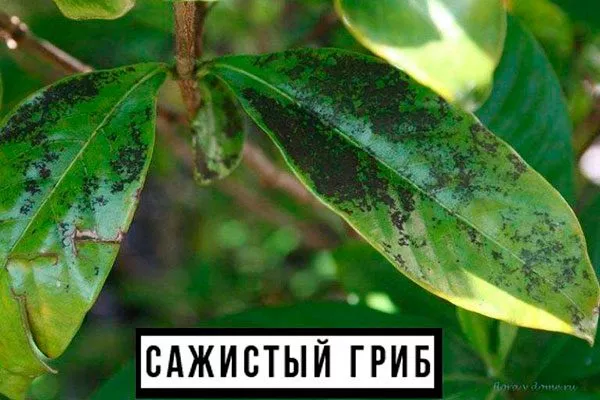
- Sooty mold. It appears as a gray coating on the leaves. If the infestation is extensive, remove the foliage and spray the plant with a fungicide solution such as Horus or Switch. Smaller lesions can be treated with a strong soap solution by wiping the leaves with it.


Ficus Benjamin Pests
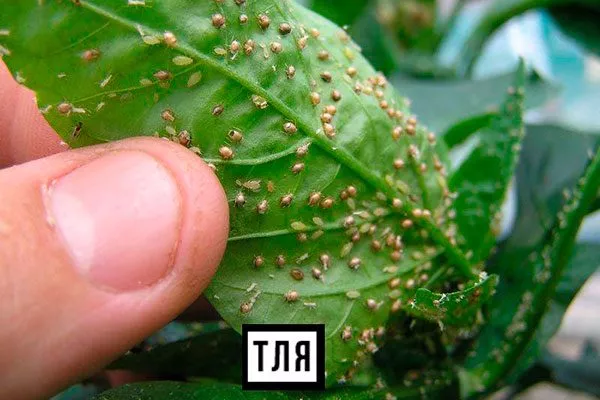
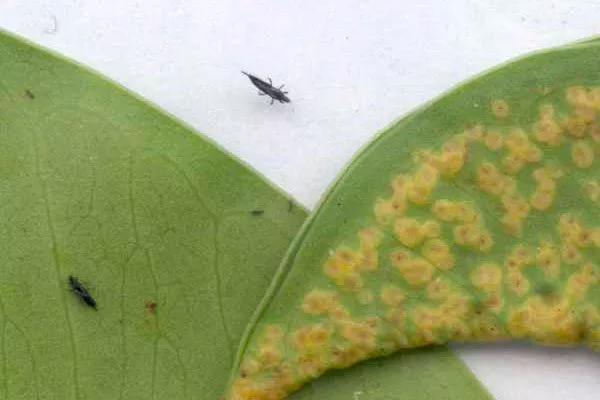
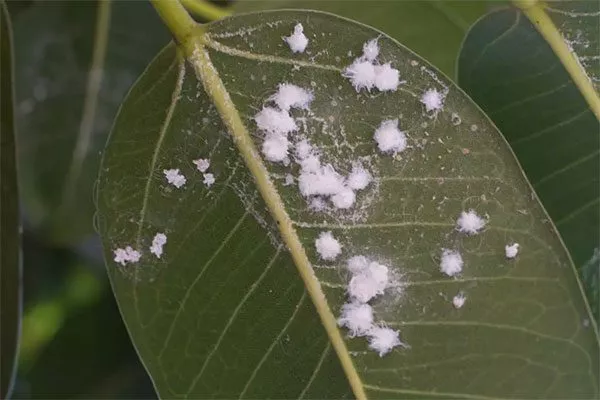
Ficus benjamina often suffers from pest infestations, including aphids, scale insects, thrips, and mealybugs. A detailed examination:
- Leaves affected by aphids curl and turn yellow. Signs of scale insects include hard, brown growths on the foliage, causing it to turn yellow and fall off. A concentrated soap solution is effective in controlling these pests.
- Thrips, which accumulate on the undersides of leaves, cause yellowing, discoloration, and wilting. To control them, insecticides such as Aktara, Fitoverm, and Actellic are required.
- Mealybugs feed on plant sap, leaving behind a white, cotton-like coating. Soap or tobacco solutions are effective in controlling them, and in severe infestations, insecticides such as Confidor are effective.
The main problems when growing Ficus Benjamin
The culture requires careful care, and any disruptions in its maintenance conditions immediately impact its health. The main challenges are:
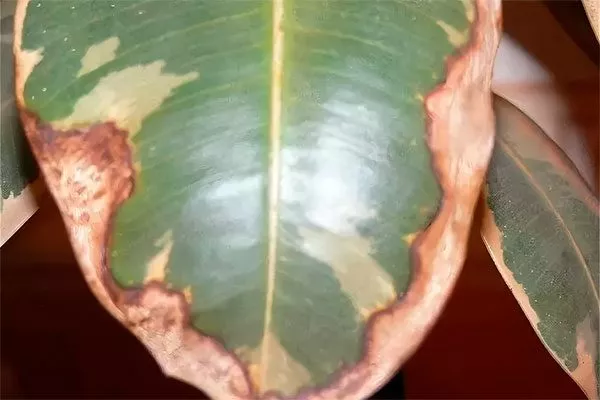
- The tips or edges of the leaves take on a brown tint. This could indicate excessive heat, overfertilization, or insufficient humidity. In this case, it's recommended to mist the plant regularly and ventilate the room, avoiding drafts.
- Slow growth and appearance of small new leaves. These indicate a nutrient deficiency. If the plant is weakened, fertilize with half the recommended fertilizer dose. To stimulate foliage growth, use a mullein infusion (1:10) or a high-nitrogen fertilizer.
- Deformed leaves and poorly developed shoots during the winter period. These indicate excess nitrogen. In this case, stop fertilizing and move the plant closer to a light source.
Pros and cons
Frequently Asked Questions
Ficus benjamina is a popular houseplant, so many people experience some difficulties caring for it. This section contains answers to the most common and important questions to help you successfully grow and maintain your plant.
Why do the leaves of my Ficus Benjamina turn yellow?
The causes of ficus leaf loss are usually related to improper watering, an unsuitable location with insufficient light, exposure to drafts, as well as diseases and pests.
To avoid these problems, it is necessary to choose a comfortable location for the plant, strictly follow care instructions, and promptly treat it at the first signs of disease.
Why are my Ficus Benjamin losing leaves?
The main causes of problems can be root rot, insufficient light, and hypothermia. To address these, you need to add supplemental lighting and treat any underlying conditions.
How to choose a Ficus Benjamin?
The most important thing is that the plant is healthy: no spots on the leaves or bare shoots, which could indicate leaf drop. If possible, carefully remove the ficus from the pot and inspect the roots – they should be strong and free of signs of rot.
Please note that varieties with unusual leaf colors are more demanding in terms of care and often do not tolerate mistakes in maintenance.
Reviews
Ficus benjamina is characterized by its resilience and decorative qualities, adapting well to indoor conditions. Its dense green foliage creates a cozy atmosphere and improves the indoor microclimate. With proper care, this plant will delight with its striking appearance for a long time, becoming a true living decoration for any space.