
The asp is prized for its large size, leading anglers to compete fiercely in pursuit of giant specimens. The fish's only drawback is its bony nature. However, this doesn't prevent fish from being bred for personal use or for commercial sale.
Appearance and characteristics
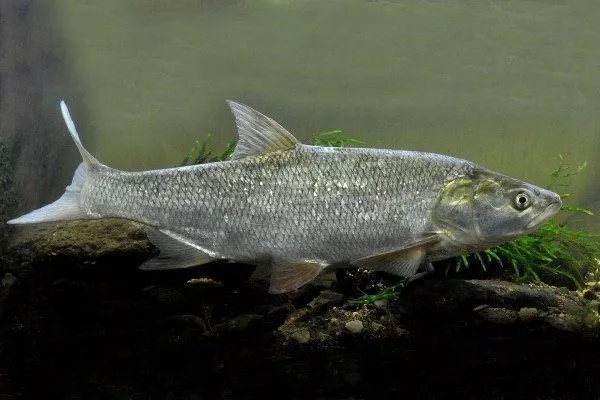
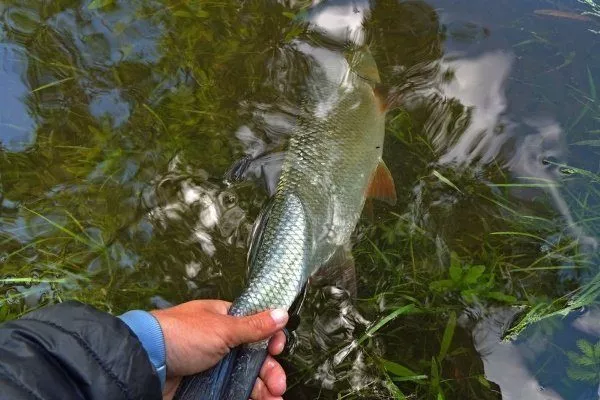
The asp is a fish of the Cypriniformes order, family Cyprinidae. It is distinguished by the presence of numerous bones. The asp has a massive body, simultaneously thick and short, with a spindle-shaped form. The back is broad.
The asp has a grayish, uneven coloration, changing from back to belly: the back is dark with a gray-blue tint, the sides are silvery-blue, and the belly is white. Large silvery scales cover the body. The front and lower fins are grayish, darkening at the tips. The dorsal fin is thin, long, and pointed.
The fish has a powerful tail, the lower half of which is slightly longer than the upper. Distinguishing features include an elongated head, a large mouth, and a massive lower jaw.
These external features and lifestyle have led not only to the official name of the fish, but also to the emergence of other common names:
- Horse (mare). The fish can jump high.
- Shersper. From the obsolete verb "sheresperitsya", which means to bristle, to be lively.
- Grip. For dexterity and reaction speed.
- Whiteness (whiteness). For its colouring features: silvery-grey sides and white belly.
- Sherikh, shilishper, cherich, shereshper, zherich. Regional, distorted forms of the original name.
In the modern world, the asp is called a "river corsair" because it thrives in currents. It is found only in clean, oxygen-rich rivers.
Habitat and distribution
Asp are found in natural bodies of water, small rivers, and lakes with limited habitat. To thrive, they require spacious, deep water with clean, flowing, oxygen-rich water and an abundant food supply.
In natural conditions, such fish inhabit systems represented by large rivers, large lakes, and reservoirs of the South, Baltic, and North Seas of Russia.
The asp's habitat is limited to a small area, encompassing some areas of Eastern Europe and a significant portion of Western Europe. It is found in parts of the Eurasian continent, such as between the Ural and Rhine rivers, and in Central Asia, including parts of Kazakhstan and the Caspian and Aral Sea basins. It is also abundant in the Volga River.
A small number of asp individuals are observed in the waters of Lake Balkhash, where commercial fish appeared artificially.
Types of asp and its characteristics
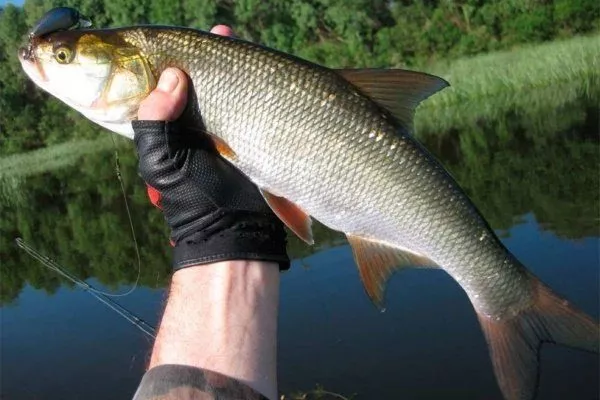
The fish grows very quickly, reaching impressive sizes. When caught, anglers can boast of catches weighing 2-2.5 kilograms and measuring 60 centimeters in length. Fish weighing 4-5 kilograms and 75-80 centimeters in length are not uncommon. However, even these figures are far from extreme. Anglers have even managed to catch giant fish measuring 120 centimeters in length and weighing 12 kilograms. Among the carp family, the asp is a large and aggressive fish.
Average monthly water temperature directly influences not only the lifespan but also the size of the fish. The fish is long-lived; its exact age has not yet been determined, but it is believed that some individuals can live up to 15 years. This resilience is due to its natural timidity and quick reflexes. If an individual sees an approaching shadow near the shore, it will immediately retreat into the depths.
There are several varieties of asp, which are described below.
| Object | Weight (kg) | Length (cm) | Lifespan (years) |
|---|---|---|---|
| Amur flathead | 2-4 | 80 | 20 |
| Near Eastern | 1.5-1.6 | 50-55 | |
| Aral | 5.5-6 | 65-70 | 9 |
Amur flathead
This fish prefers to live on the river bottom. It has an elongated body, a low yet elongated head, and a flattened forehead. Its distinctive features are its scarlet fins, which is why it is also called the "rudd." It inhabits the Amur River basin: Onon, Ussuri, Shilka, Buir-Nur, Khanka, and Sungari. It lives up to 20 years, grows up to 80 centimeters in length, and weighs 2-4 kilograms.
Near Eastern
This small fish weighs 1.5-1.6 kilograms and measures 50-55 centimeters in length. Although they are highly prolific, their numbers are still declining significantly. This is due to the constant discharge of industrial waste and sewage into the river.
Aral
The Aral asp inhabits saltwater and freshwater bodies in Central Asia. It lives up to nine years. It is distinguished by its light, smoky fins and a more squat body than the common asp. It reaches a weight of 5.5-6 kilograms and a height of 65-70 centimeters. The Aral asp's most distinctive feature is the purple coloration of its mouth and all fins.
Lifestyle
The asp is a flatland fish, preferring current-flowing bodies of water over 100 meters wide. Still waters are of no interest to the fish, although they are occasionally caught there. The asp is considered a predatory chaser, capable of constantly cruising its routes in search of food. When it finds a fish, it stuns it with its tail and then swallows it. In search of food, the asp typically ventures behind islands, into riverbeds, into riffles, into the mouths of tributaries, and into larger currents far from the shore.
During the first year of life, small individuals stay in flocks, then they split up and go hunting alone.
What does the asp feed on?
Based on their feeding habits, asp are classified as pelagic ichthyophages, preferring the upper or middle layers of water, as evidenced by the structure of their mouth and body appearance. Young asp feed exclusively on worms, insects, small crustaceans, and some other small invertebrates.
Once the fish reaches 30-40 centimeters in length, it becomes a predator and begins actively feeding on the fry of any other fish species, preferring small bream and Caspian roach. However, some portion of the growing asp's diet still consists of worms and insects.
Because the fish is indiscriminate, it feeds on any similar fish, including trash species: bleak, ide, gudgeon, and even pike-perch. They tend to chase larger fish, those small enough to fit in the asp's mouth. The predator often seizes prey as long as 14-15 centimeters.
Asp are fish that chase their prey rather than ambush it. In inclement weather, during heavy rains and strong winds, these predators tend to retreat to deeper waters, sometimes rising closer to the surface to catch various small bugs and beetles that are often sucked into the water by overhanging vegetation.
Spawning
Asp grow very quickly, thanks to their active metabolism and unpretentious diet. By the first year of life, the average asp reaches approximately 28 centimeters in length and weighs 200 grams or more.
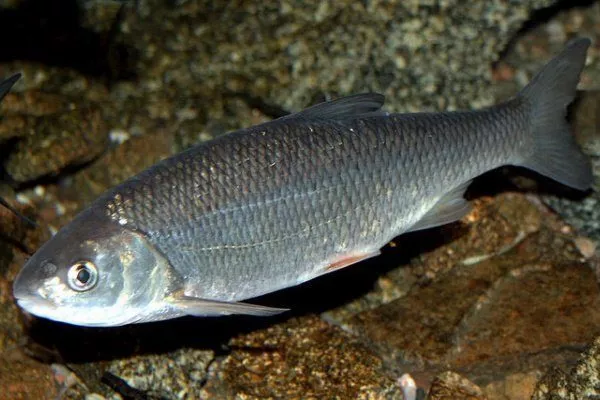
The fish reach sexual maturity around the third year of life, when the average body weight of the asp reaches approximately 1.5 kilograms. The onset of spawning depends directly on climatic conditions. In southern Russia, spawning begins in mid-April, lasting approximately several weeks. Reproduction occurs at water temperatures of approximately 7-16 degrees Celsius.
Spawning is a paired process, meaning that up to ten pairs of fish may spawn simultaneously in a single area, creating the appearance of a group breeding. The active breeding period is accompanied by battles between males vying for possession of the female.
When searching for spawning grounds, asp prefer not to enter shallow river tributaries. They prefer a sandy, clayey, or rocky riffle located in the bed of a permanently inhabited body of water. During this search, the predatory fish swims high upstream, even against the current.
An average-sized female can spawn approximately 50,000 to 100,000 eggs, which settle on the roots and stems of plants that die back in winter. Asp eggs have a sticky consistency and adhere very well to the substrate. Under favorable conditions, the fry hatch within a few weeks. If the water isn't warm enough, the incubation period can last even longer.
Seasonal fishing
In autumn, asp begin to accumulate fat for the winter and hide in the deep. Large specimens are caught during this time, but fishing requires distance from the shore, making a boat a better option. Catching active asp is easy, but live bait or deep-sea wobblers are used. The live bait must be large, otherwise the asp won't even notice it. In autumn, the aggressive fish are repulsive, allowing experienced anglers to camouflage themselves.
In summer
In summer, asp hunt for small fish. They swim close to the shore for short periods, allowing anglers to catch them using small live bait. Besides small fish, frogs are also used for shore fishing. Natural baits aren't the only option; surface spinners and wobblers are also acceptable.
During the hot summer, the fish fully recover, becoming both alert and wary, and avoiding the shore. Long-range lures are used to catch the predator.
Early morning is considered the best time for fishing, as this is when asp emerge to hunt schools of small fish, making them easy prey. Asp are sought in areas where large schools of surface fish migrate.
Asp hunt close to the surface, lying in wait for their prey in shallow waters with strong or moderate currents. Smaller specimens, up to 2.5 kilograms, begin to form schools, while larger fish hunt alone.
In winter
In winter, asp continue to hunt near the surface, but catching them is difficult. This requires years of experience. They are caught in ice-free waters, far from the shore, during the daytime in areas where bleak congregate, when the fish are actively feeding. Asp are caught using winter spinning rods. Land the aggressive fish carefully, using a small gaff; otherwise, the large fish may lurch upstream, breaking the rod.
Asp are caught from the ice, but only in areas where there are washouts in the river, a strong current near the holes, or where the water is otherwise oxygenated. To catch asp through a hole, use:
- a donk with a leash longer than 20 centimeters;
- vertical jigging method using narrow spinners, castmasters or pilkers;
- pike-perch silver spoons (used extremely rarely).
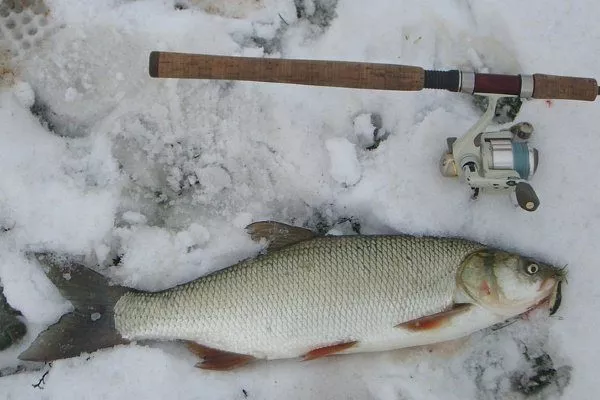
It's acceptable to approach the ice holes with a standard spinning rod, but remember that the ice at the water's edge is thin. To avoid falling through, take a position 10-15 meters from the ice edge. When doing this, stop not above the current, but to the side of it.
Increased catches will be ensured by feeding bait that matches the fish's seasonal dietary preferences. In early spring, boiled grits with worms and small bottom-dwelling animals are recommended. In May, asp prefer only the cockchafer. In summer, asp feed on dragonflies, pieces of fish fry, butterflies, grasshoppers, and large flies. Fishermen form insect balls and place them in the feeder. In summer and fall, pieces of fish and frogs are recommended.
Valuable properties of asp
Asp are cautious and shy fish, yet also quite feisty, which has made them extremely popular in many European countries, making them a popular target for spin fishing. Due to their rapid growth and the nutritious and delicious meat, asp are considered a valuable fish.
Semi-anadromous subspecies of asp are of great commercial importance. The fish's flesh, despite its excellent taste, is characterized by excessive bony structure. For this reason, it is often used for smoking or curing, and asp balyk is comparable in flavor to balyk made from salmon.
What dishes are prepared from asp:
- The fish meat is fatty and tender, but it contains many small bones. When salted, the bones soften and are practically invisible.
- Asp meat is used for making minced meat, stewing with vegetables, in sauce and sour cream, baking in foil or frying.
- Salted asp caviar has a delicate flavor. Serve as an appetizer with croutons.
- A delicious fish soup or fish soup is prepared from the fish fillet.
- Fish is delicious cooked with vegetables: tomatoes, tomato paste, and celery. Asp is sprinkled with herbs and baked with cheese.
- Fish meat is cooked over a fire, baked in the oven and on coals.
- Suitable for marinating and stuffing.
Enemies of the asp
The asp has well-developed vision and senses. Even while hunting, the fish maintains a clear awareness of its surroundings, making it difficult for its natural predators to approach it.
Young fish fall prey to a wide variety of predators, including adult asp. The young are often eaten by certain birds, especially cormorants and gulls.
Adult asp have virtually no predators in the wild. The greatest danger to mature specimens comes from eagles and ospreys. These birds can spot asp from a bird's eye view, then swoop down and deftly snatch the predatory fish from the water.
Breeding and growing asp
The asp is a member of the carp family. It can be raised in a pond or cage, provided the right conditions are created for its development. Asp are bred both for personal consumption and for sale as a profitable, income-generating business.
- ✓ Availability of running water with a high oxygen content.
- ✓ The depth of the reservoir is at least 1.5 meters to ensure comfortable living conditions.
- ✓ Absence of industrial discharges and pollution in the reservoir.
Cage farming
Asp farming for commercial purposes involves intensive fattening. Cages made of fine-mesh nets are set up in a specially constructed pond or pool, into which the asp fry are released.
Cages are bags attached to a floating wooden frame, additionally equipped with floats to keep it afloat. Ideally, the cage should be 6 x 4 meters in size, and its height should correspond to the depth of the pond, but not exceed 2.5 meters.
Each cage is stocked with fish at a rate of 200 individuals per square meter. It is recommended to use yearling asp for stocking. With intensive feeding, up to 5,000 kilograms of marketable fish can be obtained from one cage per season.
A mandatory condition is to provide high-protein food, aeration of the pond or pool, water filtration, lighting to attract natural food: zooplankton, insects.
Income is generated not only from the sale of fish products but also from the allocation of a portion of the land for breeding. The inseminated eggs are then collected and the carp fry are raised, which are then sold for breeding on other farms.
A pond in a country house
Farming asp on a permanent basis at a summer cottage is permissible if it is possible to dig a pond or dam a stream with an area of at least 30 square meters and a depth of at least 1.5 meters. If these conditions are not available, asp are farmed only in summer in artificial plastic tanks.
When constructing a pond, it is necessary to replicate the structure of natural reservoirs:
- The bottom soil is laid out in layers, alternating stones, clay and silt.
- They make a stepped relief with two eyebrows.
- Aquatic plants are planted along the banks.
- There should be a hole and a shallow at the bottom.
- Testing water quality for oxygen content and absence of harmful substances.
- Creation of a stepped bottom relief with pits and shallows.
- Planting aquatic plants along the banks to create a natural habitat.
Some daylight hours should be reduced, meaning the pond should be dug in an area shaded by buildings or trees. This is necessary to allow the fish to hide from the scorching sun.
A pond can have either an artificial soil bed or a pre-cast concrete base. If the pond has a natural water supply, it is recommended to leave the natural base. If the pond is filled with imported or tap water, it should be built like a swimming pool with a concrete base. This will require the installation of a water filtration system.
Asp are introduced into the pond after the water has stagnated for several months—this allows for silt to settle, aquatic plants to develop, and a natural ecosystem to develop. With proper management, adult asp will begin spawning within a few years.
The asp is an amazing fish that, despite its timid nature, is a fast predator, preventing stronger specimens from preying on it. It is characterized by its attractive appearance, valuable and nutritious meat, and its use in a variety of dishes.