
The ide is the most common fish in the carp family. In Russia, it is very popular, even more so than the common carp. The ide is an omnivorous semi-predator that lives in schools until it reaches a certain age. Moreover, it organizes schools by age group.
Description of the ide fish
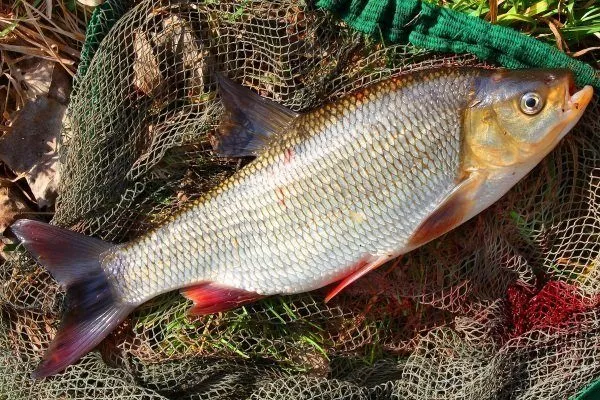
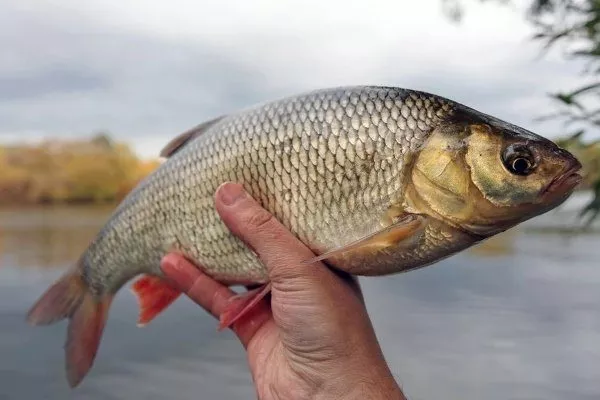
Ide can be recognized by their appearance: an adult reaches 35-57 cm in length, and a single fish weighs 2-2.7 kg. In rare cases, a single ide can stretch up to 90 cm in length and weigh as much as 6 kg. The head is short, the body thick, and the mouth small and slanted. It is important to understand that these characteristics may vary slightly depending on habitat, time of year, and age.
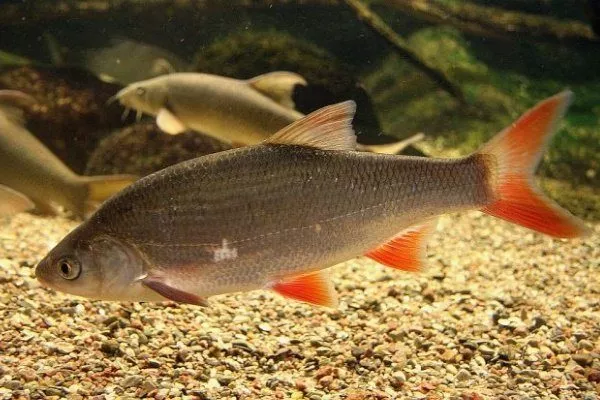
In the spring, when spawning begins, the ide's body takes on a metallic sheen, with its cheeks and head appearing golden. When turned toward the sunlight, its coloring shifts, sometimes becoming golden, sometimes silver, sometimes dark. The back is dark blue, the sides are white, and the belly has a silvery sheen. The fins on the tail and back, as well as the lower and lateral fins, are red. The eyes are yellow-green with a dark spot on the top.
The fry have a lighter, more silvery tone and paler fins compared to adult fish.
During the mating season, small white specks appear on the head and body of males, which disappear after spawning. The more of these specks, the more productive the male, and these characteristics distinguish males from females.
- ✓ Presence of deep areas with slow currents.
- ✓ Presence of reed beds or bushes near the shore.
- ✓ Clayey or silty bottom.
Lifestyle
Ides always hunt in groups, grouping by age; the older the river dweller, the fewer they are. Larger fish prefer to live alone, grouping together only during the winter months and during spawning. Ides tolerate water salinity up to 10 grams per liter, so they can be found in rivers and mildly saline seas.
In Russia, both amateur and sport fishermen prefer to catch larger fish. As for ide, a good fish is no longer than 29 cm. If a smaller fish is caught, it is immediately released back into the river.
Ide can live for as long as 10 or even 15 years. If they live in a place inaccessible to humans, where they can find good food, the fish can live up to 20 years.
Distribution area
The ide is common throughout Europe, with the exception of southern and southeastern Europe. It can also be found in Siberia and Yakutia. It inhabits the rivers of the Black Sea basin, from the Danube to the Kuban (it is not found in Crimea), and in the northern Caspian Sea, in the Volga, Emba, and Ural rivers. The ide was also introduced to North America, where it has become well established in the United States and Connecticut.
Ecology and living conditions
The ide is a freshwater fish, but can also live in brackish waters of the sea bay. This fish lives in:
- rivers;
- flowing lakes;
- river ponds.
Ide are uncommon in cold, fast-flowing, or mountain rivers. They prefer deep, slow-moving rivers with silted and clayey bottoms. They inhabit bridges, whirlpools, and holes below rapids, as well as banks where tall bushes grow. According to Sabaneev (a fish specialist), ide are quite hardy fish, easily tolerating temperature fluctuations. They do not hibernate.
What does the ide eat in the wild?
Ide are fish that feed on everything, including both plant and non-plant matter. They even enjoy small fish, crayfish, and frogs. Semi-predatory fish like ide can only feed once a day, compared to predatory fish, which can go without food for quite a long time. However, compared to fish that eat only vegetation, semi-predators need to feed twice a day, while ide only need one snack.
The most important resource for river inhabitants is food, which depends on precipitation, the melting of ice floes at the end of winter, and the opening of floodgates. When the current strengthens, the fish are supplied with abundant plant food, enough to feed all marine and river inhabitants.
During this period, ide stay in the watercourse, as this is where most of their food is found. Lake ide are not dependent on floods, but rain is essential for their survival, as it not only fills the lake with clean water but also provides food. All ide, regardless of habitat, feed in the adjacent shallows, but do so during the daytime; they may sometimes hunt at night.
Feeding the fry
The fry's primary food source is small crayfish, crabs, lobsters, and insect larvae. When they reach 20 cm in length, they begin to consume small fish, tadpoles, and leeches. They also begin to include small algae and other aquatic vegetation in their diet.
Spawning of ide
Males reach sexual maturity at two years of age, reaching 25 cm in length and weighing 250 grams. In the North, sexual maturity occurs one to two years later. Ide spawn earlier than other fish, as soon as the ice melts and the water warms to 7 degrees Celsius.
At this time, the inhabitants break up into groups, each containing fish of the same age. They then swim to the surface and search for a suitable mating spot. If the ide inhabited large rivers, during spawning they migrate to small tributaries and swim near rocks no deeper than 50 cm. The previous year's vegetation will serve as substrate.
During spawning, males emerge to the surface and swim there. This spawning period is brief, lasting up to three days, and occurs in a single session: the older fish arrive first, followed by the young. Once spawning is complete, the river dwellers return to their original locations.
During one spawning, one female can lay from 40 to 150 thousand eggs.
A week later, the larvae emerge and hang motionless for three days, attached to rocks or vegetation by a sticky substance produced by cement glands. Afterward, they detach, swim, and feed independently, learning to survive on their own. They remain in the same location for three to five days, and then migrate to safer coastal areas.
The ide in the lake during spawning migrate to nearby river mouths or shallow reed beds. After spawning, they retreat to deeper waters, and three days later they emerge and actively feed, replenishing lost calories.
Fishing for ide
Sport and recreational fishermen are especially interested in catching ide, as this large fish is rich in nutrients. This species can be caught year-round. Its meat is delicious and nutritious, containing all the vitamins, microelements, and protein necessary for healthy development.
Fishing methods
Ide can be caught with a variety of fishing rods, but the choice of which rod to use is entirely up to the individual. It also depends on the season.
All fishing rods are suitable for catching ide, the most effective ones listed below:
- fly float;
- wire fishing rod;
- Bolognese rig;
- match rod;
- donk;
- feeder;
- live bait fishing rod;
- fly fishing tackle;
- bombard;
- spinning.
In winter, special gear is needed to catch this omnivorous semi-predator:
- nod;
- a fishing rod with a float, which must be kept underwater at all times to prevent the float from freezing to the ice.
It's impossible to say when the season for catching ide opens, as it can be caught in any season (except during the spawning season). It might not bite during severe frosts, but with the slightest warming, it immediately begins to delight anglers with active bites.
Feeding activity peaks five days after spawning ends and when autumn cools off. However, feeding in autumn is somewhat weaker than after spawning, but continues for a full three weeks.
Nozzles and baits
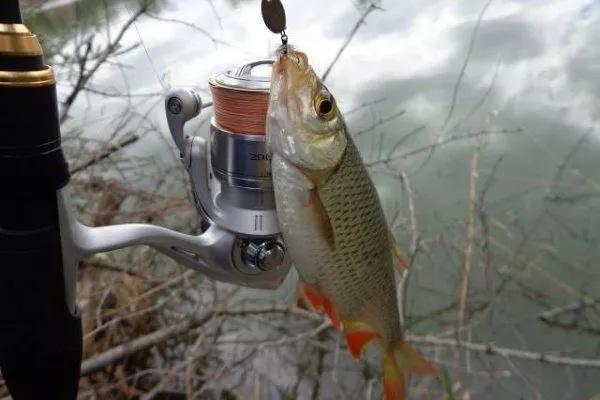
This fish has a small mouth, so lures should be small, ranging from size 0 to 2, and spoons no longer than 4 cm. Hooks should be a maximum of size 5. Ide is a shy and cautious fish, so fishing should be done silently and preferably camouflaged. Transparent fishing line with a diameter of 0.22 mm and leaders of 0.18 mm are suitable for this rig.
If fishing is done with a float, the following baits are used:
- grasshopper;
- caddisfly;
- muckworm;
- maggot;
- dragonfly;
- mole cricket;
- May beetle;
- bark beetle;
- mayfly;
- reed shoots;
- fry;
- wobblers;
- a jig with a piece of fish;
- peas;
- dough;
- semolina;
- insect larvae;
- worms;
- bloodworm.
Plant-based baits can also be used for catching ide: dried canned peas, corn, semolina, bread, etc.
To catch ide, you can use simple bait, but it must have a scent:
- vanilla;
- sunflower oil;
- birch branches.
This bait can be made at home using bread mixed with clay. The bite is confident and fast, so the angler should always be on the hook. Spinning is quite effective.
For vegetation, mulberry algae has proven to be the best choice, especially when fishing with a trolling motion. Starting in May, this bait works best, not only for ide, but also for:
- rudd;
- roach;
- ruff;
- crucian carp.
The bait should be no longer than 10 cm; a strand of seaweed is woven around the hook and tied, leaving a small strand for it to hang down.
Such algae can be found on rocks at a depth of 30 cm, as well as on driftwood and concrete structures (bridges, piers, slipways).
For bottom fishing, small fish are used as live bait: dace, bleak, gudgeon, and small toads. Ide is a finicky fish, picky about its food, but it never refuses bark beetles (larvae) and dragonflies.
In the video below, a fisherman catches ide with a homemade lure and explains how to fish, what to use, and where to fish:
The ide appears lazy and sluggish, but in the wild it puts up a stronger fight than many other fish. As soon as it's hooked, it begins to twist, wriggle, and leap out of the water. It often manages to escape by cutting the line with its sharp fin.
How is ide bred and raised?
The ide is the most popular fish for pond breeding. The golden ide thrives in the water, hunting insects. In a large pond, it can reach 50 cm in length; the fry feed on both plant and live food.
If the pond has sufficient plant life, breeding ide is easy and effective. By the third year of life, pond ide can weigh up to 500 grams. Breeding requires no special equipment, and they feed on foods that carp refuse.
The value of fish
Ide has excellent meat flavor, making it a popular culinary choice. Its only drawback is excessive bonyness, which can be reduced in several ways:
- Marinate the fish for a long time in a vinegar solution for 24 hours.
- The meat is passed through a meat grinder and cutlets or meatballs are formed.
- Canned fish is made using vegetable oil, in which case the fish is stewed for a long time until the bones are completely soft.
Ide meat ranges in color from white to yellowish. Ide is used in a wide variety of dishes, including:
- extinguish;
- to cook;
- fry;
- bake;
- to salt;
- marinate;
- dry;
- to dry;
- to preserve;
- make pie filling.
Ide should not be stored unprocessed for long periods of time, as the meat spoils quickly and its flavor deteriorates. It is best to clean and gut the fish immediately after catching it. Raw meat should be refrigerated for no longer than 24 hours.
The nutritional value per 100 grams of product is indicated in the table.
| Nutritional value | Gram |
| caloric content | 117 |
| proteins | 19.0 |
| fats | 4.5 |
| water | 75.4 |
| ash | 4.1 |
Fish meat contains numerous vitamins, micro- and macroelements, protein, and fatty acids essential for humans. Ide protein contains the following amino acids:
- taurine;
- lysine;
- tryptophan;
- methionine.
Ide is low in calories, so even nutritionists value its meat and include it in many diets. Furthermore, it has additional beneficial properties:
- The presence of high amounts of fluoride and calcium, which strengthen bones, hair, teeth, and also prevent problems with the musculoskeletal system.
- Extractive substances have choleretic properties, therefore they stimulate the digestive tract, improve appetite and prevent gastrointestinal problems.
- A variety of vitamins strengthens human organs and the immune system.
- Since meat contains plenty of vitamin B, regular consumption will reduce nervous tension, aggression and overexcitement.
- Nutrients normalize blood circulation, reduce cholesterol levels, improve vascular tone, and help prevent Parkinson's disease.
Dangerous properties of fish
There are two dangers: the many small bones that can cause choking and the parasites that often live in the ide, so it is important to thoroughly cook the fish before cooking.
Ide is a hardy fish and can survive for long periods in waters polluted by industrial processes, where heavy metals, pesticides, herbicides, and various wastes are present. Therefore, it's important to ensure the fish is safe before fishing.
What can you confuse an ide with?
| Characteristic | Ide | Chub | Roach |
|---|---|---|---|
| Maximum length (cm) | 90 | 80 | 45 |
| Maximum weight (kg) | 6 | 8 | 2 |
| Eye color | Yellow-green | Silvery | Reds |
| Color of fins | Reds | Gray | Reds |
The ide can be confused with other types of fish, since it is similar in appearance to:
- chub, from which it differs only in its light back, narrow head, thick body and small scales;
- roach, from which it differs in the yellowness of its eyes and small scales, and the back of the roach is lighter than that of the ide.
Ide is a fish that tolerates temperature fluctuations and can be caught year-round. Its meat has a number of beneficial properties. Ide can be caught with a wide variety of baits and virtually any fishing rod, which is why many fishermen prefer fishing specifically for ide. The meat is simply delicious, and it is served in many cafes and restaurants.