
Peled are a timid fish, but experienced fishermen know how to time and catch a large specimen, which can then be prepared using any method. Peled can be raised in a pond for personal consumption or for sale. This business is considered profitable if it develops a loyal clientele.
What is the peled fish?
Peled is a lake and river fish that is popularly farmed both naturally and artificially. On average, the fish reaches a length of about 40-55 centimeters and weighs 2-3 kilograms, though sometimes they can reach 4-5 kilograms. Peled have a lifespan of 8-11 years.
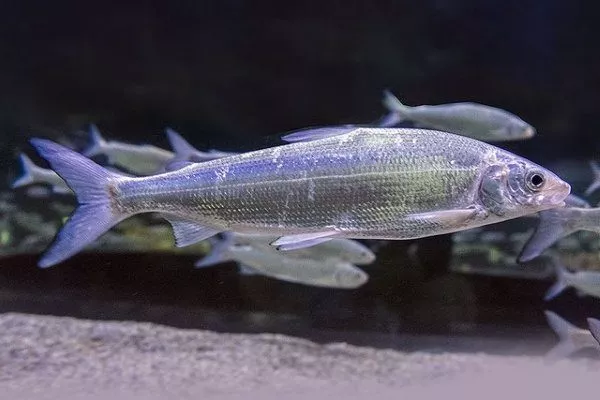
The peled has a laterally compressed body and a silvery color. A distinctive feature is a prominent dark gray stripe on its body. Black dots are located on the head and dorsal fin. It has a terminal mouth, numerous gill rakers, and a longer upper jaw. Peled are characterized by the presence of an adipose fin located between the dorsal and caudal fins. The fish's body is densely covered in scales.
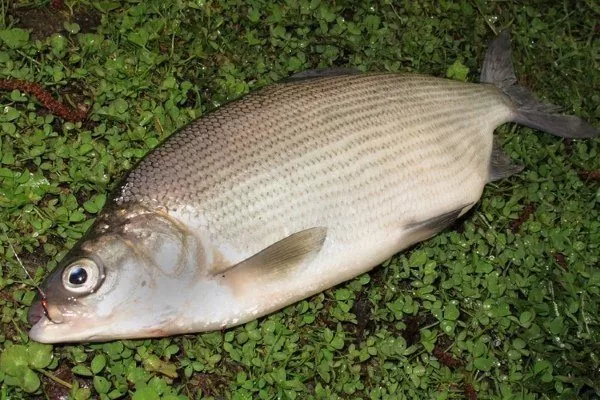
There are three forms of peled:
- River fast growingFound in floodplain rivers and lakes. Matures by the third year of life.
- Lake dwarfThe fish acquired its small size due to its habitat in shallow lakes.
- Lake commonIt does not leave its habitat and remains where it has settled all the time.
Peled's competitors include young whitefish, vendace, and tugun. Its natural enemies include pike, burbot, and other fish species that feed on its eggs.
Where does it live and what conditions does it require?
Peled are found in freshwater bodies across Eurasia, in rivers and lakes stretching from Karelia to Kolyma. They do not venture into the sea or saltwater. They spawn in lakes and do not prefer fast-moving waters. They also spend most of their time in lakes. Due to these characteristics, peled is farmed over a large area, primarily in northwestern Russia.
But some varieties of peled inhabit the flowing waters of northern rivers. Peled prefer to stay in schools, avoiding dense underwater vegetation. If a young specimen is particularly strong, it usually leaves the school in the summer and settles in deeper waters. Very young specimens have a different lifestyle: they settle in coastal waters and swim in areas with vegetation. After the ice melts in the spring, the river fish tend to migrate to floodplain lakes, where they can recover, gain strength, and feed to their heart's content.
In addition, it tends to find itself in tributaries or oxbow lakes, where a lot of food for peled accumulates in the spring. As soon as the flood subsides, the peled try to leave these bodies of water and return to the rivers.
What does peled eat?
The peled's main diet consists of zooplankton and crustaceans. This significantly complicates fishing for peled: they rarely take the bait common to other fish. Peled can be caught year-round. To find the feeding grounds, pay attention to specific circles and splashes on the water's surface.
Peled can also feed on maggots, worms, mosquitoes, bloodworms, mollusks, amphipods, and gammarids. For this reason, in the summer, fishermen use jigless fishing.
Spawning of the cheese
Peled spawn in the fall, when ice begins or ends, between September and December. They choose pebble-covered spawning areas with a spring outlet. For normal reproduction, they require cold water, with a temperature no higher than 8 degrees Celsius (46 degrees Fahrenheit). Spawning most often occurs at temperatures closer to 0 degrees Celsius (32 degrees Fahrenheit).
- ✓ The water temperature should not exceed 8 degrees.
- ✓ Presence of areas covered with pebbles, with a spring outlet.
- ✓ Absence of strong current in the spawning area.
Peled are capable of spawning more than a couple of tens of thousands of eggs, with a diameter of about 1.5 millimetres.
The hatched larvae gradually grow and are no longer considered fry at 6-7 months of age. In rivers, maturation occurs slightly more slowly, reaching adulthood at 3-8 years. However, lake peled mature much earlier, at 2-3 years. Everything depends on the fish's nutrition: the better it is, the faster the peled will reproduce, and spawning can occur annually or at 12-month intervals.
Does fish have opisthorchiasis?
Few people consider the dangers that may await fishermen after catching fish from a river. Nearly 90% of fish are infected with opisthorchiasis, a parasitic worm. Fish carrying helminth larvae are caught in rivers such as the Volga, Ural, Ob, Irtysh, Dnieper, and Northern Dvina.
It's a common misconception that only fish of the carp family carry diseases. It was previously believed that peled had nothing to do with worms. But this isn't entirely true.
Carp are considered the most susceptible fish, but other cold-water fish species can also become infected. Opisthorchiasis can infect a wide variety of fish, and peled is no exception. Over the past few years, opisthorchiasis pathogens have been repeatedly detected in this whitefish species. For this reason, eating this fish is especially dangerous due to the risk of worm infestation.
The presence of worms in peled depends on their habitat. Previously, opisthorchiasis was found in mollusks and carp. Peled can become infected if they share water with carp.
The whitefish is a predatory fish that eats shellfish and other fish, thus becoming a source of infection for others. Helminth eggs enter the whitefish's body along with the consumed specimens, where they mature and develop further.
The parasite is easily identified by examining the fish's entrails. The worm larvae appear as unusual growths resembling whitish rice grains. Once you see this, there's no doubt the cheese is infected. When infected fish is consumed, the worms settle in the liver and gallbladder, where they actively begin laying eggs.
Features of fishing
Fishing for peled can be challenging. Without plankton, the fish will feed on bottom-dwelling organisms, which prevents them from taking standard baits. They don't like sudden hooking, as it can tear their weak lips. A sudden retrieve can cause the fish to dive deeper.
Fishing time
Peled are caught during the non-spawning season. They have a remarkable ability: they tolerate low oxygen levels in the water, which allows them to thrive throughout the winter. Just before the end of winter, waters are poor in food, and any bait will be attractive to peled. In this situation, they will swim right under the ice, making them easy prey for anglers.
Tackle
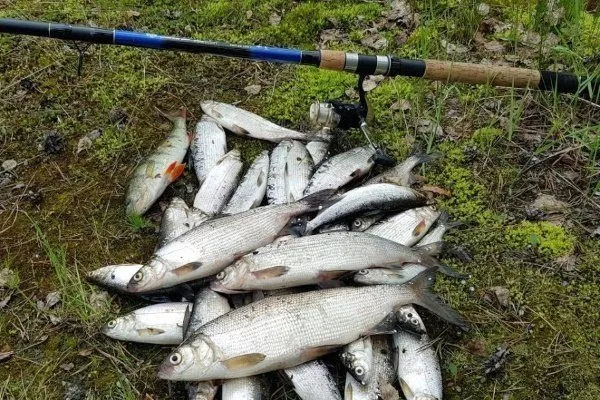
Peled are shy fish, and it's best to catch them in complete silence. They can be fished at any time of year, except during spawning. Splashes in the water and specific circles can help you find their habitat. For winter fishing, a regular fishing rod is recommended, while in summer, a float rod without a sinker is considered effective.
For peled fishing, it's best to use a line with a thickness of 0.2-0.22 mm. A hook size 4 or 5 is recommended. A fish bite is characterized by a sharp jerk. If you hook a large specimen, landing it can be difficult.
When fishing for peled on the Volga, it's advisable to have a pobradok—a simple, meter-long rod. A 2.5-4 meter-long fishing line is tied to it. Several pobradoks are used during the fishing process. The fishing begins with the angler going deep and trying to make the water turbid, as peled are particularly attracted to turbidity. They gravitate toward the turbid cloud, hoping for a good catch. They will notice the bait and grab it. The hook must be set very carefully, but at the same time sharply, although this could result in a lost catch.
Large peled can drag the line for a long time, until the angler exerts all their strength to reel it in. Experienced anglers place the bait on the bottom, near their feet, holding onto the top. The current will gradually carry the bait downstream, requiring occasional reeling. After 10-15 minutes of this type of fishing, they move a couple of steps upstream and repeat the technique.
Bait
In summer, fishermen use common earthworms, clams, or bloodworms as bait. Maggots can also be used to catch peled, but this bait, unlike the previous options, is less effective. The hook is held approximately in the middle of the water column. Peled's favorite depth is considered to be about 70-150 centimeters from the bottom.
Live bait is not used in winter. In this situation, it's best to use a jig.
Another way to increase your chances of catching peled is to use a special shaded ice hole. This is quite simple. Create a snow mound around the hole so that the shadow cast by the mound completely shades the water. The mound should be about 1 meter high. Keep the bait no deeper than 5-6 centimeters from the bottom of the ice. If the fish aren't biting, it's recommended to fish both at mid-depth and close to the ice.
Is it possible to breed and grow fish?
Breeding peled alongside carp can increase the profitability of a fish farm. In addition to increasing pond productivity, this method also provides excellent prevention of helminthiasis in other fish, as peled are prone to feeding on copepods, which are an important intermediate link in the parasite cycle.
- ✓ Availability of a constant source of clean water with a temperature no higher than 22 degrees.
- ✓ Absence of fast currents and dense underwater vegetation.
- ✓ The depth of the reservoir must be at least 3 meters for comfortable living of peled.
Fish breeding and cultivation occurs in stages:
- The first stage The breeding program consists of a pre-prepared broodstock from which eggs are obtained. The best females and males are selected and released into small ponds, from which they are subsequently collected. In November, the fish are transferred to separate flow-through ponds indoors for maturation. The ponds must be at least 70 cubic meters in volume and elongated. To ensure the fish are comfortable, the water is changed regularly—every 8 hours. A maximum of 1,500 broodstock individuals may be stocked in a single pond.
- The second stage The method involves placing the mature spawners in groups of 250 individuals in small pools, where the eggs are collected. Males are typically "used" several times, with intervals of 2-3 days. The fertilized eggs are then placed in an incubator to ensure the embryos receive optimal oxygen levels. Depending on the temperature, the incubation period lasts 123-145 days. During this time, preventative washing of the eggs using special solutions is essential. After the larvae hatch, they are placed in cages. Within a week, they are ready to actively feed.
- The third stage The process begins with introducing the fry into a yearling pond, where they grow alongside carp. The stocking density is calculated at 20,000-25,000 larvae per hectare. Ideally, the pond should be no more than 3 meters deep and cover an area of 15-20 hectares. The amount of silt at the bottom of the pond is unimportant, as the peled will be discharged with the water. Ponds containing fry do not require filtration for two months. Only when the fish reach this age should flow be created.
Although peled can thrive in warm water, it's best to keep them in a body of water where the temperature doesn't exceed 22 degrees Celsius (72 degrees Fahrenheit). Syrka peled are caught when the temperature drops to 5 degrees Celsius (41 degrees Fahrenheit) or below.
Today, the survival rate of peled is about 50%, due to which about 2 centners of fish are obtained from 1 hectare, with the average weight of yearlings being about 20-25 grams.
Peled fingerlings often overwinter in carp wintering tanks, with oxygen levels required to maintain at least 5 mg/L. The recommended stocking rate for peled fingerlings per hectare is up to 120,000. In recent years, fish farmers have been constructing wintering complexes for peled fingerlings, which are essentially "greenhouse" tanks buried 2 meters deep.
It's difficult to give a definitive answer regarding the best time to catch fish for sale. In the wild, three-year-old peled weigh 200-350 grams, four-year-olds weigh 300-600 grams, and five-year-olds weigh 500-700 grams. Selling fish at two years of age is more profitable.
Survival and fish productivity
During the first summer of life in ponds, the survival rate of peled is 80% of the number of introduced larvae; in the second year, it's 80-90% in rivers; and 60% in lakes, of the number of introduced yearlings. When peled reach three years of age, their growth slows, leading to their removal from lakes. Unlike other whitefish, peled are undemanding of oxygen levels in the water, allowing them to tolerate water temperatures around 0°C (32°F).
The fertility of a two-year-old peled weighing 350 grams grown in a pond is 15 thousand eggs, and of a 500 gram weight - 200 thousand eggs per female peled.
The productivity of peled fish in shallow lakes when reared alongside carp is approximately 100-120 kilograms per hectare, while in ponds, it can reach up to 250 kilograms per hectare. It is recommended to farm peled in larger ponds with a total surface area of at least 100 hectares.
The benefits and harms of fish
Eating peled has beneficial effects on the human body. It contains numerous micro- and macroelements that promote cellular regeneration and normalize nervous system function. Peled meat is rich in chromium, which is essential for maintaining optimal blood sugar levels.
Regularly including fish in your diet can improve sleep and alleviate depression and irritability. Fish helps relieve constipation and bad breath. Fish contains substances that help keep your skin firm and elastic.
Eating fish several times a week will improve your concentration and eliminate chronic fatigue. Whitefish is also beneficial for the digestive system, relieving stomach cramps and pain. Whitefish is rich in potassium, which normalizes heart function, and its phosphorus content optimizes reproductive function, especially in women.
Peled is an excellent preventative against atherosclerosis and helps lower cholesterol. 100 grams of peled meat contains only 126 calories, making it a great addition to a diet.
Despite its many beneficial properties, fish should not be consumed in some cases:
- Peled that have not passed sanitary inspection or were caught in polluted waters may be infected with opisthorchiasis worms.
- Frequent consumption, more than 4 times a week, may cause an allergic reaction, which will cause rashes on the body, heaviness in the stomach, and sometimes nausea.
- Fish is not suitable for consumption by children under 1 year of age.
But this doesn't mean that fish consumption is completely prohibited. In any case, caution and monitoring of your health are required.
The peled fish is considered a valuable commercial species. Fishing for this "funny" fish is interesting and exciting, as hunting for members of the whitefish family is not as easy as it seems at first glance. However, catching a large specimen is a real stroke of luck for the angler.