
The largest salmonid, a cold-water fish, is the nelma. It belongs to the whitefish family and is a subspecies of the whitefish family. Its flesh is white or light pink, but not red. This freshwater or semi-anadromous salmon reaches a length of up to 1.3 m and weighs approximately 40 kg. The largest fish ever caught was 1.5 m long and weighed almost 50 kg.
Description
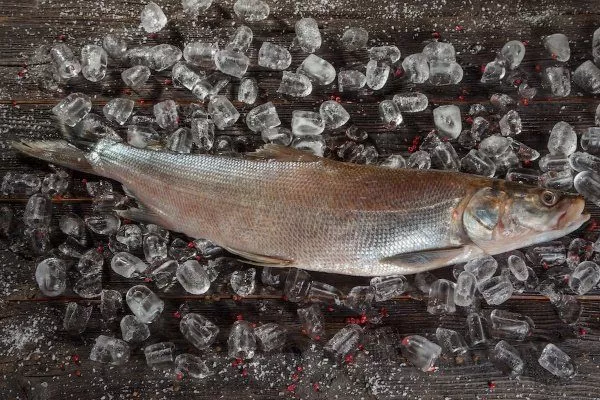
The long body of the nelma resembles a “torpedo” or “spindle”, and is slightly flattened on the sides.
Eight small fins are located on the body:
- dorsal;
- anal;
- fatty - it has no rays and is a fold of skin;
- tail;
- abdominal;
- lateral.
The caudal fin is noticeably forked, equal-lobed and, together with the dorsal fin, has a darker color than the others.
Nelma can be distinguished from other salmon by its small, triangular head, disproportionate to its body. The mouth is large, with numerous small, sharp teeth, even on the tongue. The lower jaw is elongated and protrudes forward, longer than the upper. Another characteristic feature of the fish is its dorsal fin, which is sharp and high. The lateral line contains approximately 100 scales (80 to 120).
The back is gray with a greenish, bluish, or brownish tint. The belly is white, and the rest of the body is covered with large silvery scales. There are no dark spots on the body, unlike other whitefish species.
There are two species of whitefish, all of which originated in the Arctic:
- True whitefish — a resident of the Caspian Sea, where it later migrated from the Arctic Ocean basin. It prefers warm, calm waters.
- True nelma - an inhabitant of cold waters.
The whitefish differs from the nelma in its smaller size, faster growth, and sexual maturity. Both populations are similar in appearance. The lifespan of these fish does not exceed 22 years.
Spreading
As mentioned earlier, this fish swims in cold waters. Therefore, it is found in the Arctic and in waters connected to the Pacific Ocean. Its primary habitat is Siberia and the Far East.
Looking at the entire world map, it can be found in Canadian and American (Alaska) rivers, that is, in areas with a similar Siberian climate.
The distribution of nelma is uneven. In some places, their numbers are high, while in others, they can be counted on the fingers of one hand. Why? Several factors play a role:
- climate, which may differ at the same latitude;
- the nature of the rivers - slow-flowing, fast-flowing;
- poaching;
- environmental situation.
Ecology is one of the main factors influencing its distribution in ecosystems. Hydroelectric power plants built in the nelma's habitat increase water temperatures and make it turbid. The fish are forced to leave these areas, and their habitat is drastically reduced, as are their spawning grounds. Water pollution is another common cause.
Nelma prefer wide, clean, moderate-flowing rivers with cold, running water; some also live in lakes. This species can be roughly divided into two types based on habitat: riverine and lake-riverine. Representatives of the first group spend most of their time swimming in large Siberian rivers and near the coastlines of northern seas. The water salinity is no higher than 20 ppm. The latter live in lakes, leaving them only to spawn.
Interestingly, when standing, it keeps its head upstream. Nelma dislikes deep water, preferring to stay close to the surface and not diving below 2 meters. It prefers sandy or pebble bottoms. Unlike other salmon, it avoids shallow water and rapids. It doesn't venture into such areas even during spawning season.
Nelma is a traveler; it covers very long distances (1500 km) and often swims to the south of Siberia.
Nutrition
This striking representative of the predatory world completely ignores plant food. It's no wonder its jaws, tongue, and vomer are covered with sharp teeth. During the first year of life, the fry are forced to eat a mixed diet due to their small size, but their diet more often includes plankton and benthos. They then switch to small fish.
The main food for adults is crustaceans, shrimp, juveniles, and small fish—smelt, vendace, muksun, roach, burbot, juvenile perch and carp, including their own smaller relatives, and insect larvae. This is why they prefer slow-moving rivers, where this "good stuff" is plentiful.
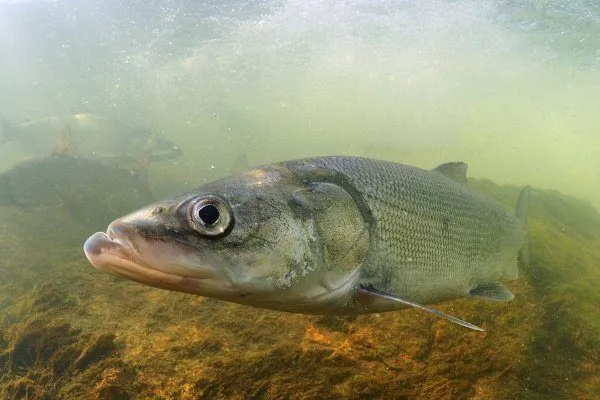
Lake species prefer areas near river mouths, for the same reason: the rivers bring silt containing food into the lake. Nelma never take food from the bottom. They prefer to hunt and live in schools. Schooling fish stun their prey with blows of their tails and then scoop them up.
She goes hunting in the morning and evening, being most active in the morning. During the day, she leads a passive lifestyle.
Seasonal behavior
As rivers begin to break up, schools of mature individuals begin migrating from the Arctic Circle to their spawning grounds. Throughout the summer, they migrate upstream, gaining weight. Intensive fish migration in the rivers is observed in mid-July.
By September, they reach southeastern Siberia, where they stop to spawn in numerous rivers, clinging to the bottom. Nelma, which live in inland lakes, spend their entire lives there and spawn in tributaries.
After spawning, they fatten up until the following summer and gradually migrate downstream to the sea. Some individuals can remain in the channel for up to three years. Juveniles live in the spawning rivers for two to three years, and then migrate to the larger body of water.
Spawning
Nelma mature late, and this is unrelated to their size or weight. They are a very slow-growing fish. Males mature at 5-10 years, females at 8-14, and their lifespan is only 20-22 years. Furthermore, females don't spawn every year, but every 2-3 years, as the journey from their habitat to the spawning grounds takes on average six months.
Thus, uncontrolled fishing has a negative impact on the population, and today the low numbers of nelma are causing concern among experts.
Having moved upstream and found a sandy-rocky bottom, the female begins spawning small, light-colored, non-sticky eggs. By this time, the water temperature has cooled to 6-8°C. The female lays 120,000-400,000 eggs at a time. They develop for 250 days between large rocks. The larvae usually emerge in April.
Unlike other salmonids, nelma do not die after spawning. Males and females are indistinguishable by their anatomy, meaning they lack sexual dimorphism. Their coloration does not change throughout the year, and males do not wear a "nuptial plumage."
Conservation status
The nelma is under state protection due to its rapidly declining population. Initially, it was listed in the Red Data Books of the regions where it lives, and in 2001, it was added to the Russian Red Data Book. Therefore, commercial and recreational fishing for this species is completely prohibited in the central and southern regions of Siberia.
The value of fish and its use
Nelma is a valuable commercial species and produces high-quality meat. 100 grams of fish contains 160 kcal. Its main components are only proteins and fats with polyunsaturated fatty acids. The latter are very beneficial for the body—they normalize lipid metabolism, remove "bad" cholesterol, and therefore help prevent cardiovascular disease and the formation of cholesterol plaques.
Salmon also contains fat-soluble vitamin D, essential for calcium absorption. A deficiency can lead to rickets. Indigenous peoples of the Far North, who lack ultraviolet light, replenish their vitamin D levels by eating salmon.
Among minerals, it is rich in chlorine, sulfur, and fluorine. It also contains zinc, molybdenum, nickel, and chromium, as well as vitamins such as niacin, or vitamin PP.
When cooked, it must be thoroughly cooked. Japanese cuisine, which often includes fresh fish, poses health risks. This is because nelma is infected with a helminth—the broad tapeworm, which can infest the human intestine—and with roundworms, which prefer to inhabit the small intestine. The latter cause prolonged diarrhea with significant loss of fluid and nutrients. Roundworm larvae can also trigger intestinal ulcers.
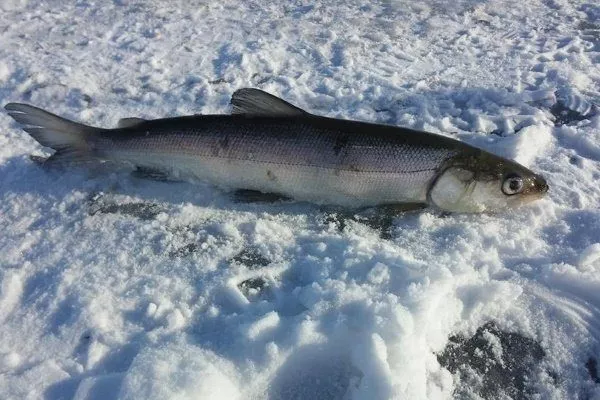
Nelma is delicious fried, boiled, baked, or smoked. It pairs well with fish broth and cream.
Growing and breeding
To increase the nelma population, attempts are being made to breed it artificially. However, so far, specialists have had little success, as large numbers of fry die in captivity. Currently, there isn't even the technology to raise this fish in an artificial environment.
- ✓ Availability of cold, running water with a temperature not exceeding 8°C.
- ✓ Sandy or pebble bottom to simulate natural habitat conditions.
- ✓ No pollution or turbidity in the water.
In the 20th century, scientists developed recommendations for nelma farming, but the young were raised in ponds and lakes with natural food sources. Later, in 2009-2010, there were attempts to resume the work, but these were experimental in nature.
Thus, the protection of spawning grounds and habitats of nelma is of utmost importance for the preservation of its population.
Nelma is a valuable species for breeding and commercial fishing; it lives only in clean waters, as it does not tolerate pollution. The fish has excellent taste, but the nelma population has significantly declined recently.
Fish interfere with oil and gas production, otherwise they wouldn't make a mess, and the reindeer have nothing to eat.