
Bream is a tasty and healthy fish, popular not only among fishermen but also among consumers. If desired, it is possible to breed and raise the fish in your own pond. Bream fishing is considered an exciting pastime, as it requires silence, adding more intrigue to the process.
Description, characteristics and distribution of the fish
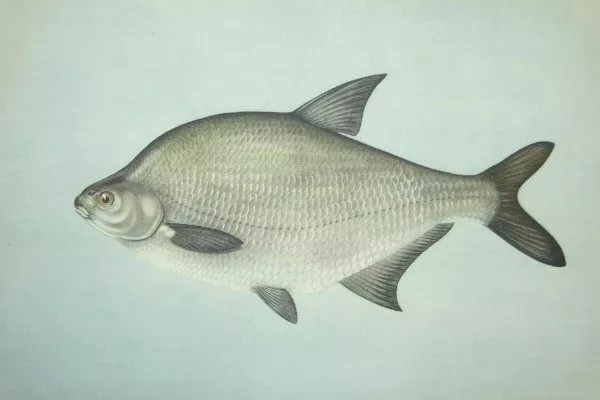
Bream, like some other carp, have a rather compressed body. They are easily identified visually by their body height, which is approximately one-third of their total length. The high, narrow dorsal fin makes the fish appear even larger than they actually are. Breams have an asymmetrical caudal fin—the upper lobe is slightly smaller and shorter than the lower lobe.
The anal fin, with 30 rays, functions as a keel, adding stability to the fish. The bream has a small head, small eyes, and a small, protruding mouth. The body is covered with small scales, although the dorsal portion lacks them.
Bream's coloration changes with age. Young specimens are gray with silvery highlights. As they mature, the color darkens, turning the fish brown or blackish with a characteristic yellow-golden sheen. Fins range from light gray to blood-red.
Bream are found throughout the Northern Hemisphere. In Russia, bream are particularly common in the northwestern and central regions, rivers, and lakes of Siberia and the Urals, as well as in the basins of all the seas that border the country.
Depending on the region of distribution, there are local names for the fish: eastern, Danube, Baltic bream, roach.
Population and status of the species
The overall population of bream species, which belong to the carp family and the Cypriniformes order, varies significantly in different natural bodies of water. This is directly related to the success of annual reproduction.
Under favorable conditions, high floodwaters ensure spawning of semi-anadromous bream. After the river flows of the southern seas were regulated, the total number of spawning grounds decreased significantly. To effectively conserve the main stocks, several dedicated fish farms were established. Efforts are also underway to rescue juvenile bream from small bodies of water when their connection to the rivers is lost.
Special floating spawning grounds help ensure the most successful spawning process in natural and artificial reservoirs. Furthermore, bream numbers in some reservoirs are negatively impacted by epidemics of various fish diseases.
The black Amur bream is listed in the Russian Federation's Red Book. Its fishing is prohibited by law.
Nature and lifestyle
Bream are considered schooling fish, preferring deep waters with abundant vegetation that provides food. Bream are cautious and intelligent fish. They sometimes gather in large schools, which is typical in areas with large bream populations (reservoirs, large lakes). In winter, bream hibernate in deep holes. Lower Volga bream populations often winter in the Caspian Sea or in the Volga River estuary.
Bream reach sexual maturity at 3-4 years of age. They spawn in shallow waters with abundant grass or in shallow bays. During this time, they are noisy, active, and playful.
What does bream eat?
The bream's typical diet, everything it eats, depends directly on local conditions and its feeding habits. The fish has a small mouth, allowing it to feed on small crustaceans, bloodworms, algae shoots, and insect larvae.
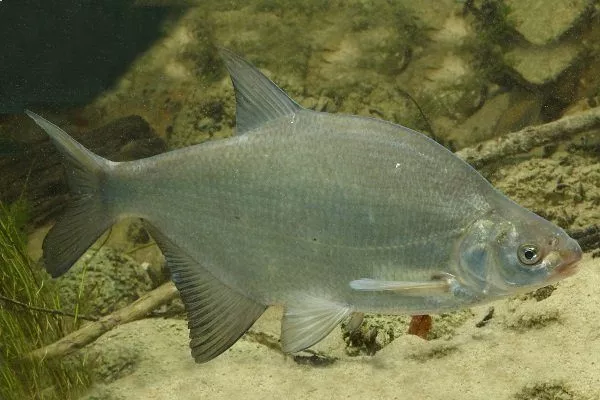
Bream suck food from the bottom through their lips, bending their entire body downwards toward the bottom. In the south, their diet consists primarily of numerous crustaceans that inhabit the brackish waters of the Azov and Caspian Seas. Bream also feed on the eggs of other fish and the excrement of domestic animals in their drinking areas.
Reproduction
Bream begin spawning at three to four years of age, laying eggs in shallow waters overgrown with aquatic vegetation. The spawning process begins when the water temperature reaches 12-15 degrees Celsius. In northern and central Russia, this occurs in mid-May. Fishermen determine the exact time of bream spawning by observing the willows: when the leaves begin to unfurl.
A single female can lay up to 340,000 eggs. The larvae hatch on average after 5 days. During spawning, bream are virtually impossible to catch, but after spawning, they bite actively and are disease-free.
Bream is a fast-growing fish, reaching 70-75 centimeters in length and weighing up to 8 kilograms by the age of 10. Growth rates can vary depending on habitat and feeding conditions.
Bream that inhabit southern latitudes grow significantly faster. For example, individuals found in the lakes of the Republic of Karelia reach an average body length of 24 centimeters by age 5, while those inhabiting the Volga River basin can reach 30-34 centimeters. This is a significant difference.
Enemies and competition
Compared to many other carp species, bream grow quickly and develop rapidly. This developmental ability gives the fish many advantages in the struggle for survival and competition:
- Due to their rapid growth, bream avoid the most dangerous and difficult period for them, when their small size attracts many predators, turning them into accessible and easy prey.
- The fish's rapid growth rate allows them to completely escape the natural pressure of many predators by the age of 2-3 years. However, their main enemies remain, including large bottom-dwelling pike, which are dangerous even for adult fish.
- Various parasites also pose a danger to fish, including the tapeworm Ligula, which has a complex life cycle. Helminth eggs enter the waters of the reservoir through the feces of certain fish-eating birds, and the hatched larvae are ingested by many planktonic crustaceans that bream feed on. From the fish's intestinal tract, the larvae easily penetrate into body cavities, where they actively grow and can lead to death.
- In summer, bream also encounter other natural enemies. In warm waters, the fish can often become infected with tapeworms and a severe fungal disease of the gills called bronchitis. Affected bream, which offer no resistance, are typically eaten by adult pike and large seagulls.
Commercial value
Fishing regulations today provide for more rational commercial exploitation of the main bream population, which include a reduction in the prohibited pre-estuary area, an expansion of coastal fishing in the marine zone, and a limitation on the use of traps and trap nets from the beginning of March until April 20.
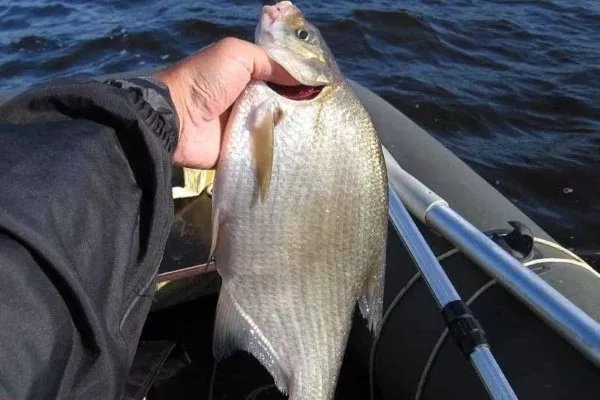
Also, the official extension of the bream fishing season in the river delta front has been extended, starting from April 20 and continuing until May 20. These measures have helped to somewhat increase the intensity of fishing operations and increase the catch volumes of river and semi-anadromous fish, including bream.
Bream fishing
When going fishing, an angler should be aware of where and when bream is caught, as well as what bait and groundbait are used. It's also equally important to know the proper fishing technique, as there are several ways to hook a fish.
Time and places
Bream fishing declines exclusively in summer, especially in July. In mid- or late August, the fish begin to bite again, continuing until mid-October under favorable weather conditions.
In the spring, bream fishing is prohibited during spawning season. However, the fish bite actively after spawning, especially when the fish are in a feeding frenzy, creating better fishing conditions. Bream are caught both during the day and at night. At night, the fish may come close to the shore, but during the day, they try to hide in the pits again.
To ensure the best fishing, fishermen seek out promising spots. To identify such areas, it's important to know the fish's habits. While bream spend the day in deep water, especially during hot weather, at night they rise from the depths and venture into the shallows in search of food. When fishing during the day, long-casting gear is recommended. At night, bream are spotted closer to the shore.
It's important to remember that bream dislike noise on the shore; if they hear it, they won't approach the bait. Maintaining complete silence is the key to successful fishing and a good catch.
Fishing methods
There are several main methods for catching bream: bottom fishing and float fishing. These methods are used year-round, including ice fishing, with the right type and size of rod. Float rigs are mounted on pole, Bolognese, and match rods. Bottom fishing is done with spinning rods rigged using specialized techniques, using classic bottom tackle such as a rubber band or a set line.
Bream are caught both from the shore and from a boat. Bream are wary fish, requiring anglers to use delicate tackle and extremely large lines. This places special demands on rods equipped with reels with precisely adjusted drag and the use of shock-absorbing devices such as feedergams.
In summer, bream are caught from the shore in complete silence, without unnecessary movement or conversation. Approaches to fishing spots from a boat are made only at a slow speed and against the current. Even with extreme caution and care, bream will not start biting for at least an hour after setting up and rigging the fishing tackle.
Lures and Lures
Professional anglers use a variety of baits and tackle to catch bream, depending on the season, reservoir characteristics, and food.
The most common are the following:
- combined options, "sandwiches" (pearl barley with maggots, corn with worms, etc.);
- plant baits (pea mash, pearl barley, potatoes, corn grain, semolina);
- animal baits (maggot, bloodworm).
| Season | The most effective bait | Percentage of successful bites |
|---|---|---|
| Spring | Combined options | 70-80% |
| Summer | Animal baits | 60-70% |
| Autumn/Winter | Experimental feeds | 40-50% |
Experience shows that plant-based and combination baits are most effective in the spring. In the summer, it's preferable to catch fish using animal-based baits. In the fall and winter, experienced anglers experiment with bait, as fish are overly cautious and the bite is weak during these seasons.
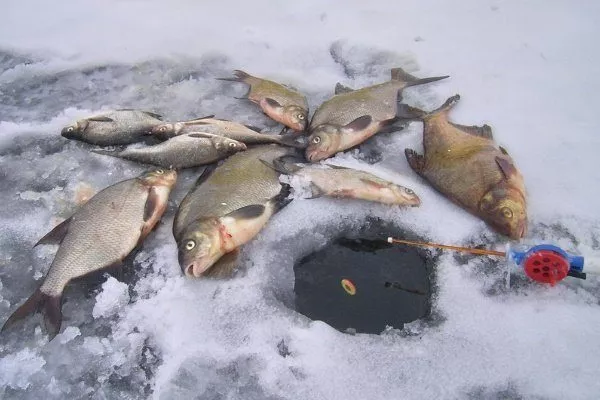
For fishing, float and bottom fishing rods with various hooks, fishing lines of different thicknesses, and additional equipment are used.
Breeding and cultivation
Since the bream's diet is based on freshwater benthos, it is best to breed the fish in shallow ponds or lakes with a muddy bottom or abundant underwater vegetation.
- ✓ The depth of the reservoir must be at least 2 meters to ensure comfortable wintering.
- ✓ The presence of a muddy bottom or abundant underwater vegetation for natural feeding.
Bream is often polycultured with carp. Carp is the primary species, producing more commercial fish, while bream is a secondary species. The overall fish productivity of polyculture is always significantly higher than that of bream farmed alone. This is because, when farmed together, carp and bream utilize the food supply much more fully.
Exact productivity depends heavily on the reservoir itself. Since these fish are bred without artificial feeding, the rate of live weight gain is determined by stocking density and the volume of natural food, as well as their ability to regenerate on their own throughout the season.
Bream fry are obtained using small spawning ponds, into which the bream are released only during the spawning season. The average spawning bream weighs approximately 750 grams and is just over 30 centimeters long. Spawning ponds should be pits with soft meadow vegetation. The ponds are filled with water a few days before spawning. After spawning, the spawning bream are removed from the spawning grounds and transferred to regular broodstock ponds.
After the eggs hatch, the fry remain in the pond until they reach 2-3 grams in weight. The pond water, along with the fry, is then released into the main nursery pond, where the food supply must be constantly monitored. The nursery ponds are fertilized if necessary. Within 3-4 years, the bream reach marketable weight, after which they are harvested. The average survival rate for bream is no more than 10%.
What fish can it be confused with?
Adult bream differs significantly from other related species (white bream, blue bream, and rhododendron) in its deep body. No other species of similar size exists. Fishermen often confuse bream with white bream, especially if the specimen is young or small. The difference between white bream and roach, while visually similar, lies in the coloration of the fins. The roach's fins are much darker. These species also have different body shapes: the white bream's is rounded, while the white bream's is more elongated.
The main distinguishing feature of the bream is the caudal fin, the lower part of which is much longer and larger than the upper part.
The scaly-eyed trout and the blue bream have light, elongated bodies. The blue bream has an iridescent blue-green hue. The white-eye trout is completely light in color, with only a darker back. Its anal fin is longer than that of the bream.
Hazards to human health
Bream is a food with no contraindications. Only some people have an individual intolerance to freshwater fish, including bream. The following factors may pose a health risk:
- Omnivorous fish. Bream are omnivorous, so if the water they inhabit is heavily polluted, harmful substances will inevitably end up in the fish. To protect yourself from this problem, make sure the fish was caught in a clean water.
- Small bones. Small fish bones have been the cause of death on more than one occasion. Bream should be eaten carefully to avoid choking on the bones. It is also recommended to marinate the fish before cooking. Feeding bream to small children is not recommended.
- Parasites. Bream is often infested with parasites, which are easily detected during cleaning. The presence of broad tapeworm in bream is rare. Such fish should not be eaten even when cooked. Immediately boil the knife and thoroughly wash the cutting board with soap.
Tapeworm eggs are very small and resilient. If you don't want to throw the fish away, cook it thoroughly, gutting and washing it well beforehand. Another parasite commonly found in bream's guts is the tapeworm, which is harmless to humans.
Bream is a valuable river and lake fish used for cooking in any form. Bream has distinctive characteristics that make it unmistakable. Its meat is delicious, tender, and nutritious, making it highly prized.