
The common ruff is a freshwater fish suitable for human consumption. It is attractive in appearance, and fishing for it is a fascinating pastime. This article discusses the ruff's habitat, lifestyle, and diet, as well as some of its species.
Appearance and characteristics
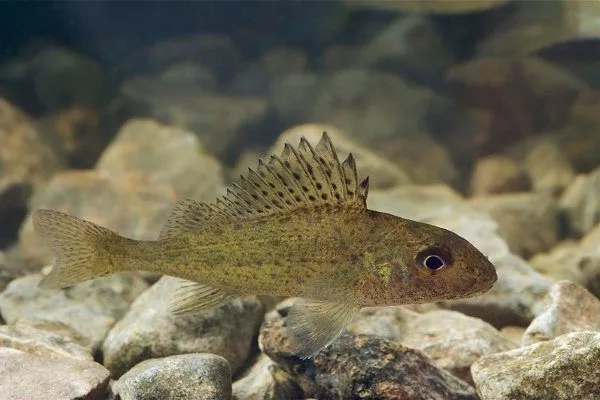
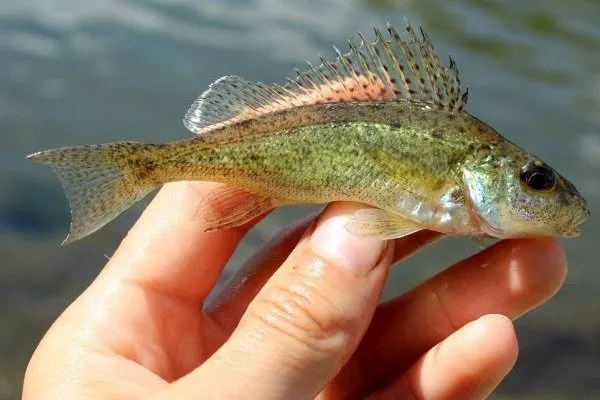
Due to its distinctive appearance, the ruff is very difficult to confuse with other species. It has a large head, large pale pink eyes, and a mouth with bristle-like teeth. Its body is dense, cylindrical, and covered in mucus. It has wide gill covers with spines. Small ctenoid scales also appear on its surface.
The back has gray-green spots and dots. The sides have a yellowish tint. The belly can be light gray or white, depending on environmental conditions. For example, fish that live on sandy bottoms are lighter than those that inhabit areas with muddy bottoms.
An adult averages 10 centimeters in length. Rarely, fish up to 12 centimeters long are encountered. They weigh only 15-25 grams. However, it's quite possible to catch giant specimens up to 20 centimeters in length and weighing 100 grams.
Habitat
The common ruff is the most widespread of the four species in the genus Ruff. It is found in northern and eastern France, eastern England, the rivers of the Baltic Sea basin, and central and eastern Europe. Ruffs are also found in northern Asia up to the Kolyma River basin and the Trans-Urals.
Lifestyle
Ruffs have an unpretentious lifestyle. They can inhabit a wide range of depths. Although they prefer to live near the bottom, they are also found near the surface and in the intermediate depths between the bottom and the surface.
Quiet waters are considered ideal for these fish. Because of this, they are caught in places where there are practically no people. Common ruffs are found in areas with soft bottoms and no aquatic vegetation. This habitat is considered favorable for the fish because it contains the animals they feed on. Ruffs inhabit shaded areas of the reservoir; they are naturally adapted to low light levels.
Life expectancy
Researchers can determine the age of a ruff by the number of growth lines on its scales, and occasionally by the number of layers in its otoliths. Female ruffs live up to 11 years, while males live no more than 7 years. They reach sexual maturity at 2-3 years, at a length of 10-12 centimeters.
Fish nutrition
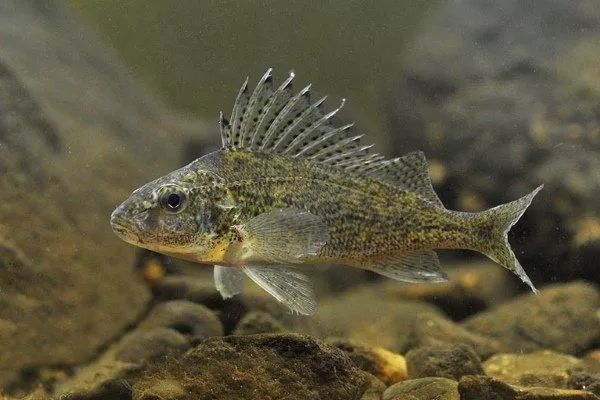
The common ruff's main food is crustaceans. It also actively feeds on insects and larvae. In the spring, this fish begins to eat other fish of its own kind. It often eats the eggs of other fish, which can lead to the complete extermination of other fish populations.
The ruff readily feeds on young fish, not neglecting fry. Its diet also includes benthic organisms living on the water's bottom.
The process of reproduction
Ruff spawning occurs in mid- to late April, when water temperatures are 6 degrees Celsius or higher. Spawning occurs in batches, with each clutch containing between 10,000 and 200,000 eggs.
For spawning, females choose deep waters closer to river mouths or flowing lakes, where the water has a higher oxygen content and a relatively cool temperature. Spawning continues until mid-June. Reproduction occurs in schools, usually at night. At this time, the fish are very active and noisy.
Ruff eggs have a jelly-like texture. The sticky eggs attach to rocks and sometimes even to underwater vegetation. The incubation period lasts approximately 2-3 weeks. After hatching, the fry remain in the spawning area until the end of the summer.
Who is the ruff's enemy and competitor?
The common ruff's food competitors are common in Asia and Europe; these are other benthophagous fish, which include perches, large roaches, chubs, breams, eels, and smelts.
Perch are considered the ruff's primary competitors, as these fish share a similar diet. Ruffs are also eaten by eels, salmon, burbot, and catfish. Cases of cannibalism are rare.
Cormorants and various species of herons actively hunt them, while small individuals suffer from the common kingfisher, smew and merganser.
Catching ruff
Fishing is a very exciting process. If an angler knows where ruffs are found, they can catch many. Choosing the best spot for ruffs is crucial for a successful fishing trip.
Ruff fishing is done year-round, but the best results are achieved in the fall, when they gather in huge schools in the pits. With some skill, a single piece of worm is often enough to catch several ruffs. If an angler notices that 10-15 minutes have passed without a bite, the conclusion is clear: there are no ruffs in the area, so they should look elsewhere.
Ruff are primarily caught with a rod, rigged so that the bait is near the bottom. Ruff respond best to a slightly crushed earthworm, although they will also take bloodworms and other baits. For a novice angler, this is the most accessible target, but experienced anglers are less interested in catching "trash fish," as their primary goal may be to catch more valuable specimens.
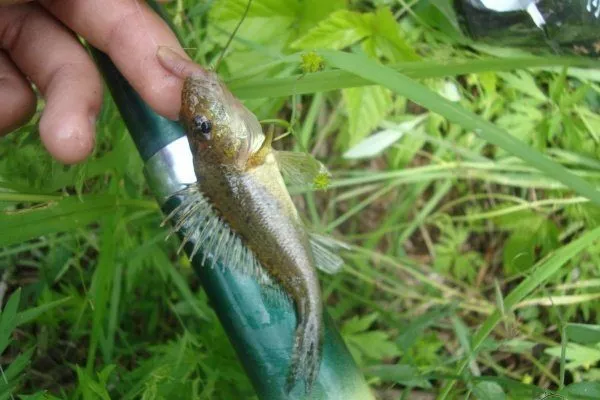
Ruff bites best in spring, autumn and early winter, because it is during this period that it is extremely hungry, so it takes any bait.
They fish in the morning and evening, and at night in the summer. No bait is required. In winter, it is recommended to catch ruff using bloodworms and mosquito larvae. Ruff are voracious feeders.
When removing the hook, you should do so carefully so as not to prick your fingers, because when the fish rises to the surface, its spiny fins bristle, which can lead to a painful prick.
Gastronomic properties
Ruff is considered a low-calorie food, rich in easily digestible protein and beneficial nutrients—vitamins A, E, PP, amino acids, molybdenum, phosphorus, chromium, and fluorine. There are 88 calories per 100 grams.
The fish has a pleasant, slightly sweet flavor. It can be fried, baked, stewed, or even boiled. Ruff fish soup is considered a delicious dish.
Another popular method of drying fish is to gut it first and then place a layer of coarse salt on a bed, the same salt used for salting ruffs. The subsequent rows of fish are laid out in the same manner. The carcasses are removed after 3-5 days and soaked in water for several hours to remove excess salt. The fish are dried in the shade for 5-7 days.
Breeding
The fish is of no commercial interest. However, some amateur fishermen may create a home pond with ruffs on their property.
Not just any water can be used to raise fish in a home pond. Water from springs is unsuitable, as it may be contaminated. For the same reason, plants and fish are not taken from the wild, but purchased from specialized stores.
Tap water is suitable for breeding ruffs, but it must be purified and treated. Special additives can be purchased to make unsuitable water suitable for a summer cottage pond.
- ✓ The pond depth should be at least 1.5 meters to ensure a stable water temperature.
- ✓ The presence of a silt layer on the bottom of the pond is critical for the natural nutrition of the ruff.
Don't immediately add fish to the tank after filling it with water. First, plant the fish and wait for the right microclimate and silt layer to form. It can take up to a month to achieve favorable conditions for ruffs. Then drain the water without disturbing the silt, and fill the tank with clean liquid. After it has settled for a while, add the fish.
Plants not only enrich the pond with oxygen but also provide nutrients. The plants themselves are often used as food by the fish.
Water lilies, water hyacinths, chickweed, water lilies, fir panicles, water chestnuts, water locusts, marsh marigold, water mint, and others will truly enhance the pond (and create an ecosystem for the fish). To prevent large areas from becoming overgrown with plants, special bags are made for filling with gravel, and then the plants are planted.
Raising fish at home requires constant monitoring of water quality and composition, including its hardness and acidity. These parameters can be improved by supplements available in stores. Investing in an aeration device is a good idea. This is especially important during the winter to prevent mass fish deaths due to oxygen deficiency, as occurs in the wild. It's also important to feed ruffs with special food.
What other types of ruffs are there?
| Object | Length (cm) | Weight (g) | Habitat |
|---|---|---|---|
| Donskoy | 18-20 | 200 | Black Sea-Azov basin |
| Baloni | 17-18 | 40-50 | Pools of the Vltava, Morava, Laba |
| Striped | 30 | 250 | Germany, Ukraine, Bulgaria |
| Black Sea | 40 | 800 | Eastern Atlantic, Black, Azov, and Mediterranean Seas |
The ruff is an easy-to-catch fish prized for its excellent taste and attractive appearance. There are several varieties of ruff:
- Donskoy. A popular fish native to the Black Sea-Azov basin in Russia. In Europe, it is found in the Dniester, Southern Bug, and Dnieper rivers. Distinguishing characteristics include a wedge-shaped head with an elongated snout, a white belly, a light yellow back, and a protruding mouth. A single specimen can weigh up to 200 grams and measure 18-20 centimeters in length. It is an endangered species listed in the Red Book of Ukraine.
- Baloni. The body length can reach up to 17-18 centimeters, weighing 40-50 grams. It lives up to 6 years. Its main habitat is the Vltava, Morava, and Laba river basins. The Baloni ruff is also found in the Danube, the middle reaches of the Pripyat, and the Dnieper. Distinguishing features of this species include a tall, humped body, a short, flattened snout, two spines on each gill cover, and a tiger-like gray-yellow coloration.
- Striped. The olive-yellowish sides feature 3-4 dotted or solid stripes. The fish has an elongated snout, a protruding mouth, and large eyes. Reaching up to 30 centimeters in length, the ruff can weigh up to 250 grams. It is found in Germany, Ukraine, and Bulgaria.
- Black Sea. The only similarity between the ruff and the common ruffe is the presence of sharp spines. This marine predatory fish is characterized by a huge mouth with an elongated lower jaw. The ruff is comparable to a snake, as it can shed its tight skin, and its fins and bony spines contain venom.
The ruff grows up to 40 centimeters and weighs around 800 grams. It inhabits the Eastern Atlantic, Black Sea, Sea of Azov, and Mediterranean. If properly cleaned and processed, the ruff is perfectly suitable for consumption. Its meat is considered not only tasty but also healthy.
The common ruff is a small, light fish suitable for any type of cooking. It's possible to grow and breed ruff at home, provided you create the right microclimate for the fish.
What a wonderful fish the ruff is! I just want to get one!