
The African catfish is a popular fish among many fish farmers. With a well-designed business plan and the acquisition of all necessary equipment, including feed and fry, this venture can be highly profitable, as the price per kilogram of commercial fish is high.
Story
The first catfish farms appeared in 1980 in the Netherlands. By 1986, there were more than 60 farms, producing approximately 300 tons of fish.
In 1992, African catfish production increased to over 1,235 tons, with 71.3% of this figure, or 880 tons of fish, produced in the Netherlands on 8 large farms.
Description and appearance
In appearance, the African catfish is similar to the common species found in Russian rivers. The African catfish (sharmut) has an elongated body, slightly compressed laterally. The African catfish is a tasty, easy-to-care-for fish that grows very quickly. Its biology allows it to survive out of water for about 48 hours while breathing air. This is evidenced by the presence of both gills and lungs.
The African catfish is a strong and intelligent fish. In Africa, it can walk up to 1 kilometer when rivers flood. It can leap up to 2 meters from water holes and then crawl in search of water.
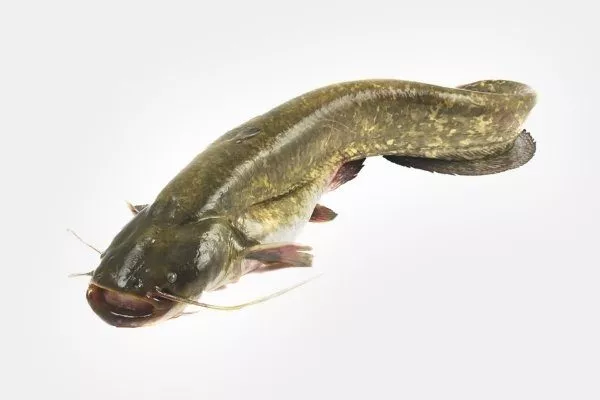
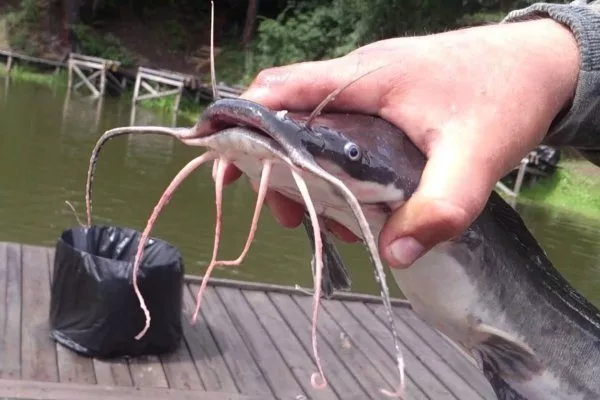
The African catfish has a large, slightly compressed head and small eyes. The occipital process is narrow and angular. It is characterized by a pointed, narrow clavicle with longitudinal ribs. The fish has a large, terminal mouth, above which are four pairs of barbels. It has long dorsal and anal fins. The caudal fin is predominantly rounded. The catfish's coloration ranges from sandy yellow to gray with olive and greenish-brown markings. The belly of the Sharmut catfish is white.
Habitats
The African catfish is found throughout Africa. It can be found in Israel, Lebanon, Turkey, Jordan, and several countries in Europe, Asia, and South America. The fish inhabits streams, rivers, lakes, swamps, and marshes that often dry out.
Clariad catfish inhabit swamps and floodplain backwaters. From large pools, where they live and grow for up to one year, they migrate to temporary coastal bodies of water, where they spawn.
Conditions of detention
African catfish are considered easy to keep, but certain conditions are still crucial for their breeding. A fishkeeper must know the appropriate water temperature, what to feed them, and which bodies of water to raise them in.
The fish tolerates water temperatures of 18 degrees Celsius well. They can survive in water temperatures ranging from 8 to 35 degrees Celsius. However, reproduction is only possible at temperatures above 18 degrees Celsius, and feeding requires temperatures above 25 degrees Celsius.
It's not recommended to use lake and river water to fill artificial fish ponds, as it can easily introduce diseases that catfish are unable to combat. For these reasons, it's wiser to use regular well water. Specialized systems designed to reduce the alkalinity of plain water are also acceptable.
Feeding regime and rules
Breeding African catfish is easy, and their diet doesn't require any special attention from the fishkeeper. Not only are they easy to care for, but they are also practically omnivorous.
In industrial production, African catfish are fed exclusive diets, which are quite expensive. However, the advantage of this diet is the fish's rapid weight gain.
In backyards, African catfish are fed various trash fish, including sand eel, sprat, and ruff. Frozen fish is also permitted. Juveniles are pre-crushed. However, after they reach 10 days of age, there is no need to do so.
The daily requirement for this type of feed is 3% of the fish's total weight. The fish feed is added to the catfish pond three times a day, spreading it over the entire surface of the pond to promote uniform weight gain.
Disrupting their feeding schedule is unacceptable, as it can lead to cannibalism. If food is scarce, African catfish may begin to eat each other.
Reproduction
The technology for producing African sharptooth catfish offspring in artificial conditions has been developed in several countries, including Israel, Germany, and Egypt. However, the technology is patented and has not been fully published in the public domain.
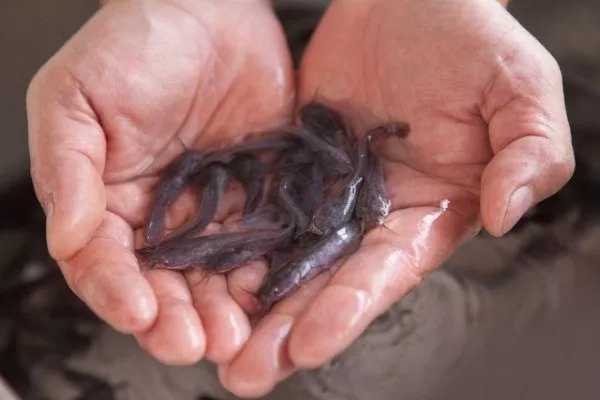
This technology has not yet been fully developed in the CIS countries. Consequently, all seeding material is imported from abroad, increasing the cost of commercial production by 15%. Currently, one 10-gram African catfish fry costs 0.50 cents or 1 Belarusian ruble on the market.
Breeding stock
African catfish spawners are raised separately from commercial juveniles. The best fish are selected to form the broodstock, after which they are provided with the most comfortable conditions and well-fed.
Clariad catfish are capable of spawning monthly if the queens are stimulated. The eggs obtained from the queens are artificially fertilized with male sperm and then placed in aquarium-type incubators. Once the fry have grown a little, they are transferred from the incubator to tanks. This breeding technique for Sharmuta catfish is common on large fish farms.
Obtaining fertilized eggs when breeding catfish in a backyard is a complex process. Because of this, many backyard catfish farmers simply purchase eggs from fish farms.
When does spawning occur?
Successful egg maturation requires keeping the females in water with a temperature of at least 25 degrees Celsius until spawning. Ovulation occurs completely 12 hours after the pituitary injection. African catfish are known as nervous fish, which is why fish farmers must euthanize the females to ensure safe egg collection. The fish are injected with an anesthetic, most often Propiscin.
Caviar is harvested separately from each female. The ideal caviar yield is at least 20% of the individual fish's weight. After this, the females are placed in a KMnO4 solution for 1 hour. The solution is diluted at a rate of 0.5 grams per 100 liters of water.
Obtaining fertilized eggs
After collecting the eggs, the fish farmer divides them into three portions, making sure not to mix eggs from different females. Each portion weighs approximately 300 grams. Next, 3 ml of milt is collected. The effectiveness will be higher if milt is collected from different males, as this helps stimulate the fertilization process. Therefore, it is advisable to collect 1 ml of milt from three males. The milt and eggs are placed in water and mixed thoroughly for 5 minutes.
Stages of cultivation
The first stage is 20-25 days. This occurs when the African catfish begins to breathe atmospheric air. During this period, approximately 100 larvae are added to 1 liter of water. Gradually, the water becomes saturated with oxygen, which promotes proper metabolism in the tank.
At this stage, the larvae are fed with tubifex or decapsulated brine shrimp. After 7 days, starter foods are gradually introduced. Lighting requirements are maintained—it should be subdued or twilight. Because the larvae are prone to cannibalism, by the end of the first stage, only 25-50 catfish fry out of 100 introduced will survive.
The future fish are sorted in the third week. Interfering with their personal space can cause stress, so careful sorting is required. The fish are then soaked in an antibiotic solution for one hour.
The second stage is 35 days. Initially, the fish farmer fills the tank with sorted larvae, approximately 300-500 mg in quantity. The larvae are sorted into two groups: small and larger. Catfish fry are added based on the individual fish weight and tank volume. The fry should be fed three times a day, with the amount of food amounting to approximately 5% of the fish's weight.
The third stage lasts several months. During this period, the fish weigh 130-200 grams. The growth rate of the fry depends on the stocking density. For a 5,000-liter pool, the stocking density is 2.5 fish per liter. The water temperature should be around 27 degrees Celsius. During this stage, the fry are fed floating food. Feeding is done manually or automatically. The water is changed every two hours.
Productivity indicators
When African catfish reach six months of age, they are ready for harvesting. At this age, the marketable weight of the fish is already around 1 kilogram. The productivity of the sharptooth catfish depends on the quantity and quality of its food.
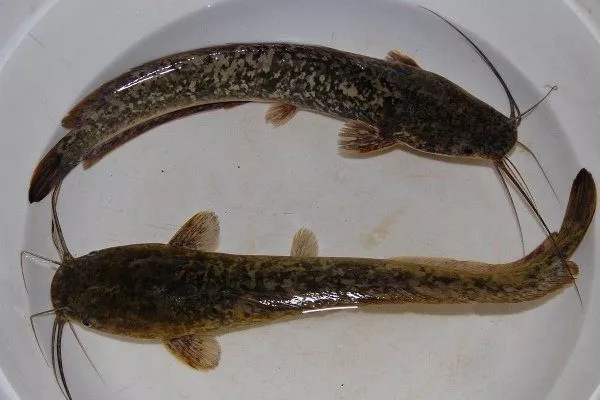
African catfish are considered a fish that gains weight according to a strict schedule, allowing a farmer to independently calculate how much the fish will gain when fed a specific amount of feed. Accordingly, it's also possible to calculate the expected profit percentage.
Diseases and control
African catfish are susceptible to various parasitic, fungal, and bacterial diseases. Some of the most important pathogens are listed in the table:
| Disease | Type | Symptoms | Treatment |
| Gill and external parasites (Trichodina maritinkae) | protozoa | White spots appear on the skin and gills. The fish become irritable and unstable, their activity decreases, and they lose their appetite. The gills turn pale and become very swollen. | To combat parasites, fish are given baths with salt or formalin. |
| Parasites (Cysticerca sp.) | nematodes | The worm attacks the mucous membranes and internal organs. It is usually found in bodies of water. Fish show no visible signs of infection. | There are no methods to combat the parasite. |
| Parasites (Gagtylogyrus sp.) (Gyrodactilus sp.) | trematodes | The fish float vertically on the surface of the water or nervously twitch their heads, with their bodies on the bottom. A thin, whitish-gray mucus appears on the skin. A massive death is possible. | Symptoms are eliminated with Formalin 25-50 mg/l, Dipteryx 0.25 mg/l. |
| Parasites (Henneguya sp.) | protozoa | Juvenile African catfish hybrids exhibit white spots on their gills and skin. | Antibiotics added to the feed can help eliminate the problem. Oxytetracycline, Terramycin, or Chloramphenicol are used. |
| Parasites (Costia sp., Chilodonella, Trichodina | protozoa | The same symptoms are observed as with trematode infection. | Symptoms are eliminated with Formalin 25-50 mg/l, Dipteryx 0.25 mg/l. |
| Water mold | Gray or white, fur-like patches appear on the fins, gills, skin, and eyes. The eggs are affected by water mold. The infection usually spreads quickly throughout the body and gills. | To treat infected fish, place them in baths containing malachite green (5 mg/L for an hour) or sodium chloride (5% for 1-2 minutes). It is important to avoid stressing the fish or subjecting them to mechanical damage. | |
| Septicemia by motile aeromonads (Aeromans sp.) | bacterium | The fish's eyes bulge, their bellies stretch, and deep, bleeding, inflamed ulcers appear on their skin. | The fish are protected from stress by using feed containing trimethoprim and bactrim for 10 days. |
| White kidney disease (Myxobacteria) | bacterium | The fish swims vertically near the surface of the water. It swims sluggishly and is inactive. White spots appear on the skin around the mouth and gills. | To combat bacteria, antibiotics are added to the feed: Oxytetracycline, Terramycin or Chloramphenicol. |
| Aeromonas hydrophylla (Septimum cemia) | bacterium | The catfish's fins become red and bristly. The fish lose their vibrant coloring. Ulcers appear on the skin. | Oxytetracycline, Sulfamethoxine, and Ormetoprim are added to the feed. |
| Head deformity | The skeleton becomes deformed, the fish loses its appetite, becomes lethargic, and dies with swollen tissue on both sides of its head. This problem typically occurs in fish less than 10 centimeters long. The dead fish has a thickened and curved skull, indicating the formation of cracks. | To prevent individuals from experiencing head deformation, vitamin C is regularly added to their food. | |
| Intestinal damage syndrome | The abdomen swells, the ventral side becomes darker, and the anal area takes on a reddish tint. In the final stage, the abdominal wall becomes damaged. The fish exhibit lethargic behavior. | A balanced and easily digestible food will help solve the problem. | |
| Peptic ulcer disease | When African catfish are infected, they develop red or white ulcers on the skin of the lower and upper jaws and on the surface of the caudal fin. The fish become lethargic. | To prevent ulcer disease, fish farmers need to monitor the quality of the water and remember to change it regularly. |
Is it possible to make money breeding African Clarias catfish?
Beginning entrepreneurs use extensive or semi-intensive cultivation methods, while businessmen with good start-up capital prefer the intensive method.
A business plan for starting a business is based on the calculation of projected costs and annual profits. Investments will be required to build a small pond with the necessary ecosystem.

Installing auxiliary equipment, including filters and lighting systems, is essential. Not only will it be necessary to obtain the necessary permits, but also to calculate the costs of purchasing feed and fry and establish relationships with suppliers. Also, to promote the business, attracting customers through advertising will be a good idea.
Requirements for the premises
For catfish farming, it's recommended to use a large area; this will allow you to cover your expenses and start making a profit sooner. To produce 100 tons of fish per year, an area of at least 0.06 hectares is recommended. To create comfortable conditions for the fish, the water in the tanks should be changed regularly, and powerful filters should be installed in the pools.
Main expenses
Before estimating the actual profitability of an African catfish farming business, consider the main expenses, including pond construction, which will cost between 50,000 and 100,000 rubles. Heating, filtration, ventilation, and lighting systems will need to be installed, which will cost approximately 300,000 rubles.
What else will you have to spend money on:
- Purchase of caviar or fry. Most often, preference is given to catfish fry, the cost of which for 5 thousand individuals is up to 1,500 rubles.
- Fish food. For premium feed, a fishmonger will have to shell out around 150 rubles per 100 kilograms. The same amount of premium feed will cost around 250 rubles. Meanwhile, the price per kilogram of commercial fish is around 150 rubles when sold wholesale.
- Equipment and special clothing. This will cost about 60 thousand rubles.
Total expenses can amount to half a million rubles or more. Moreover, it may take a year or more to recoup the investment and realize a profit.
Home breeding
There are several methods for growing African catfish at home:
- Breeding in the pool. Fish are raised within a specific, limited water space, meaning they are placed in a pool located on a private property. Preparing the area and purchasing equipment are expensive, and there's no need for climate control—a closed water supply system and heated water are available. This option is ideal for fish farming in cold climates.
- Cage culture. The method involves keeping fish in specialized cages, where juveniles and adults are kept separately. In confined spaces, it's possible that adult fish will begin to eat their offspring.
- Fattening breeding. When choosing this option, African catfish are kept together with other fish species, but of similar sizes, to eliminate the possibility of aggression and attacks.
- Pond cultivation. In summer, juveniles are introduced into ponds in home gardens. While preparation for this method is simple, the rearing process itself can pose some risks. Pond catfish farming is only suitable for southern and warmer regions of the country.
| Breeding method | Required investments | Risk of cannibalism | Suitable for cold regions | The need for artificial feed |
|---|---|---|---|---|
| Breeding in a pool | Tall | Short | Yes | Yes |
| Cage culture | Average | High | No | Yes |
| Fattening breeding | Low | Average | No | No |
| Pond farming | Low | Short | No | No |
Catfish can be raised extensively, as it doesn't require large investments in pond construction and equipment. This method allows the fish to access natural food found in the water. With cage farming, the farmer will need to purchase feed and special equipment for the pond.
Many recommend intensive catfish farming, which involves creating the most favorable conditions for the fish: setting the optimal temperature for weight gain, adjusting the feeding schedule, and so on.
- Selecting a breeding method depending on climate conditions and budget.
- Preparation of a pond or pool taking into account the requirements for water temperature and quality.
- Purchasing fry or eggs from trusted suppliers.
- Organization of the feeding and care system for fish.
- Regular monitoring of fish health and water quality.
It's acceptable to use catfish as a "cleaner" in a pond when raised with other fish species. However, since catfish are predatory, carp or trout of similar size should be carefully selected for breeding together to prevent the catfish from eating them.
Breeding African catfish at home involves releasing the fry into a pond at a water temperature of 15 degrees Celsius (59 degrees Fahrenheit). The optimal growth temperature for the fish is considered to be 25 degrees Celsius (77 degrees Fahrenheit). A pond with a capacity of approximately 2,000 liters (2,000 liters) requires approximately 60 fry.
The fish are fed at least three times a day, using prepared food and mixed feed. Catfish feed on plant matter, so they are fed chicken giblets, various insects, and earthworms as supplementary food. The amount of feed is calculated based on the fish's weight and age.
- ✓ Activity and absence of visible damage
- ✓ Size and weight correspond to age standards
- ✓ No signs of disease
By the age of 2, the fish reach sexual maturity, which is why they are used for breeding.
A profitable business requires providing the fish with a covered pond for wintering; otherwise, growth will slow and the young may die. A pump for air supply and a device to maintain a stable pond temperature are essential for winter maintenance. Subdued lighting is essential for breeding.
The main problems with growing and breeding
African catfish are farmed by private individuals using systems that meet ecological standards. In traditional floodplain ponds, farmers spent decades perfecting sustainable fish farming practices. Their self-organization within local communities was dictated by customs and recommendations from non-governmental organizations with the goal of preserving fisheries.
Due to the recent collapse of the African sharptooth catfish market in South Africa, reducing production costs and maintaining competitiveness has become especially important. This allows for improved pond ecosystems rather than relying on increasingly intensive culture systems and improved feeding techniques.
The African catfish is particularly prized for its striking appearance, increased disease resistance, undemanding care, and omnivorous nature. Today, many fish farmers, with well-designed business plans that consider costs and potential profits, are breeding this fish.