
An artificial pond in your backyard requires careful maintenance, especially in winter. During cold weather, create comfortable conditions for fish and aquatic plants. This will ensure successful operation in the future. Start preparing for winter in the fall.
Preparing a fish pond for winter
In temperate latitudes, winters are often cold and frosty. Reservoirs freeze, often to great depths. Decorative ponds, even those built by hand, suffer significantly in such conditions. The walls and bottom become deformed, and flora and fauna perish. Stagnant water becomes stale.
There are some preparatory measures for wintering artificial ponds:
- water purification from debris;
- water pumping;
- dismantling and inspection of equipment;
- cleaning the bottom and walls;
- transfer of aquatic fauna and flora representatives indoors;
- filling with water;
- installation of equipment.
In some cases, not all measures can be applied.
What is needed for wintering?
You'll need a suitable room with a specific temperature and light regime. This will be where the animals and plants removed from the pond will be stored. They'll need containers with suitable capacity, filled with water or nutrient solution.
- ✓ The water temperature in the wintering room should be stable, without sudden changes.
- ✓ Lighting should imitate natural daylight hours, not exceeding 8-10 hours.
Preparing a pond for winter depending on its size
One of the first steps is pumping out the pond. The need for this depends on the type and size of the pond. This also influences subsequent cleaning measures.
Decorative ponds are:
- Small ones. Area – up to 20 sq. m, depth – up to 0.8 m inclusive.
- Large ones. Area – more than 20 sq. m, depth – more than 1 m.
- Rigid ponds. They are made of plastic or similar materials.
Small ponds are considered non-wintering. They freeze completely, regardless of their origin (natural or artificial). Such a body of water is first completely emptied: the flora and fauna are removed, and the water is pumped out.
For a small artificial pond, the following measures are taken before wintering:
- Manually clean all wall and bottom surfaces with a brush.

- Blow out the pipes thoroughly and seal them with tightly fitted pieces of foam. It's best not to use wooden plugs, as they swell with moisture and damage the pipes.
- Fill the pond 2/3 full before frost. Snow accumulated in the empty pond over the winter takes a long time to melt. In the winter, you can ventilate the ice layer and pump out the water to create an air cushion, which significantly accelerates melting.

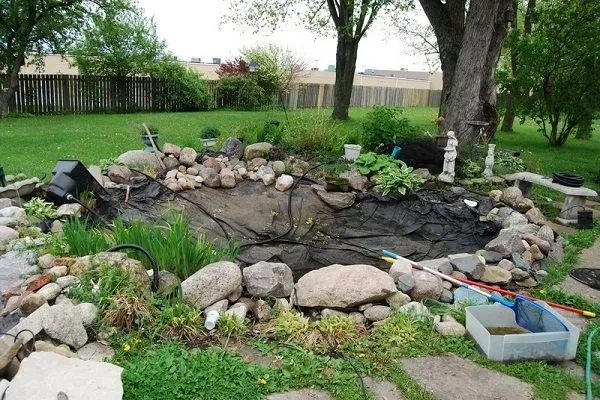
Removing water from a large pond isn't necessary. Clean the water of debris, remove equipment, and remove any inhabitants. Such ponds are typically made of concrete, and with proper design, their waterproofing is high-quality. The pond will overwinter filled with water.
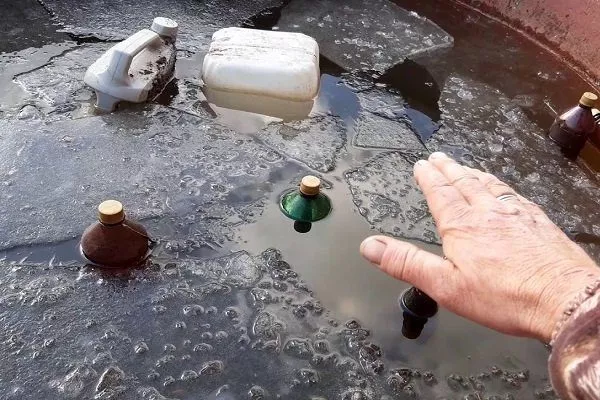
For rigid structures, pressure fluctuations can be detrimental. Pumping out such a pond is not necessary. It's recommended to lower several plastic bottles half-filled with sand into the water. When they freeze, they will be subjected to the pressure of the ice.
The pond's surface may be level with the ground. In this case, pumping is not necessary. If the pond is elevated, the water level is brought up to the ground surface.
Watch a video about preparatory work for a decorative pond before winter:
Cleaning the pond from leaves and small debris
The first preparatory step before winter is clearing the pond surface of any debris accumulated over the summer. Do this in late fall, after the leaves have fallen and before frost sets in. It's recommended to take the water temperature into account—it should be at least 7°C.
Carry out the following work sequentially:
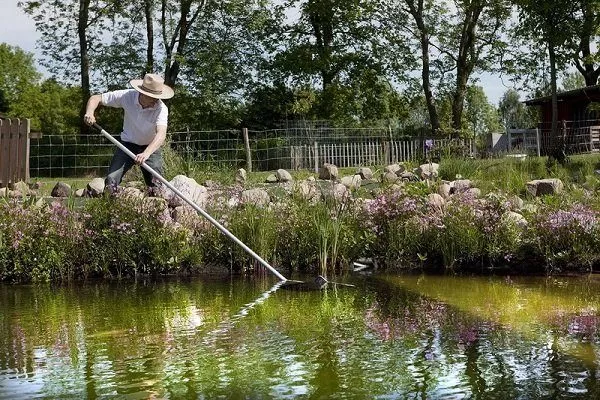
- Remove all fallen leaves from the surface. It's easiest to do this with a net. Any remaining leaves will rot and decompose, negatively impacting water quality.
- Remove any remaining fish food. A net can also help with this. As food decomposes, it produces gases that disrupt the bacterial balance.
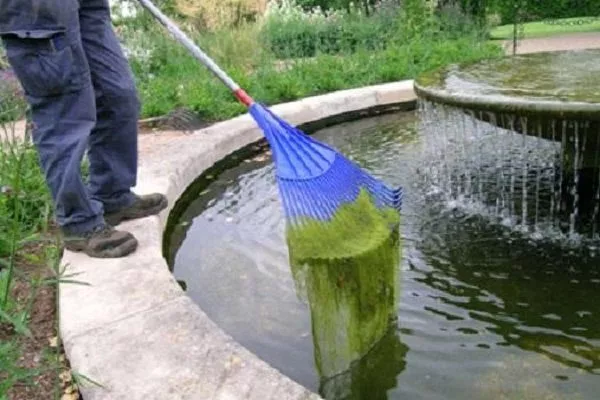
- Take a fan rake and thoroughly go over the bottom. This will mix the substrate, allowing it to break up and become oxygenated, and remove any remaining plant debris.
Preparing aquatic plants for winter
Aquatic flora require special conditions for overwintering in an artificial pond. These conditions depend on whether the pond plants are frost-hardy or heat-loving.
The first category is typical of common mid-latitude water bodies and overwinters without difficulty. Representatives of the second species require a range of conservation measures.
Of the frost-resistant plants, the following are commonly used:
- marigolds;
- water lilies;
- calamus;
- water lilies;
- water-colors;
- swamp dwellers;
- Elodea;
- duckweed.
They can withstand even severe frosts and sudden temperature changes. Leave them in a pond deeper than 1.5 meters, otherwise the plants may freeze along with the water.
Preparatory measures for frost-resistant representatives of fauna are carried out as follows:
- Inspect all plants for damage. Remove dead or rotted leaves and stems.
- Move the plants to the middle of the pond and sink them to a depth of 1 m, securing them with thick wire.
- If a mild winter is expected, you can even leave the plants in a shallow pond. Cut a few healthy buds from each plant species and store them indoors. This will help revive the plants if they die.
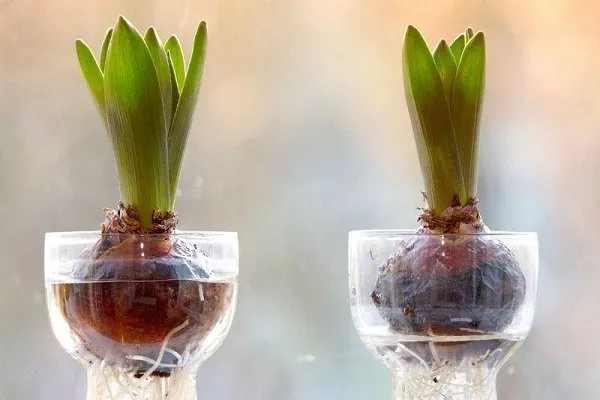
Of the heat-loving plants most often used for decorative ponds are:
- papyri;
- irises;
- hyacinths;
- tropical water lilies;
- pistia.
- ✓ Requires temperatures of at least +10°C for successful wintering.
- ✓ The need for frequent changes of water in containers (at least 2 times a week).
They are moved indoors regardless of the pond's depth. Such plants die with even a slight drop in temperature. The following steps are taken to transition them into winter mode:
- Prepare a room that will receive some sunlight.
- Transplant the plants into deep, wide containers. The root system of each plant should be covered with a lump of soil, and fill the rest of the container with water.
- Maintain a temperature between 10°C and 12°C. This temperature prevents plants from becoming over-chilled, but slows their growth and development. This helps them survive the winter.
- Change the water in the containers at least twice a week. Warm it to room temperature.
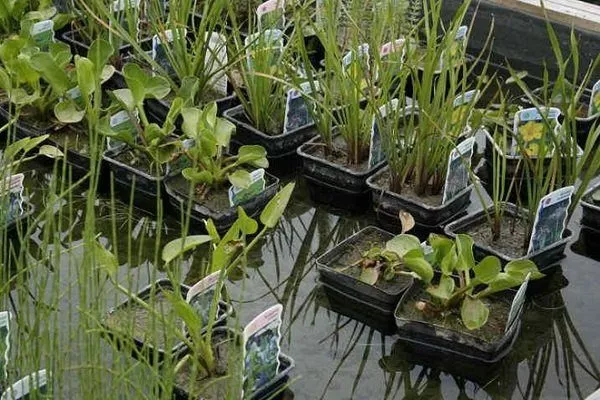
For more information on how to care for overwintering plants in ornamental ponds, watch the video below:
Creating appropriate conditions for aquatic fauna
Many gardeners keep exotic fish accustomed to warmer temperatures in their garden ponds. These include:
- minnow;
- goldfish;
- coldwater trout;
- verkhovka;
- koi carp.
These specimens aren't left to overwinter, even in deep water. Provide them with comfortable conditions starting in the fall:
- Prepare a large barrel or aquarium. Rinse the container thoroughly with clean water.
- Calculate the container's volume based on the following principle: at least 1 liter of water per 1 cm of each specimen's length. Maintain a temperature of +10…+15°C.
- Install a water filtration and oxygenation system into the container.
- Place the aquarium with ornamental fish in a room with dim lighting. Cover the windows with white matte curtains and use LED bulbs with diffusers.
- In winter, fish become significantly less active. Feed them small amounts of high-protein food no more than twice a week. Leftover food can pollute the water, which negatively impacts their health.
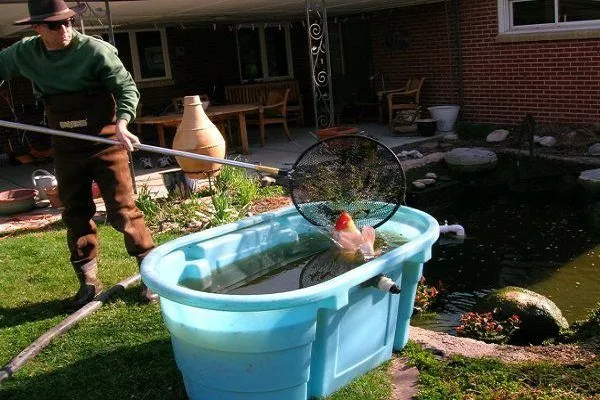
A wintering pit is constructed for local fish species. Its dimensions are 1 m wide by 1 m wide and 1.5 m deep. It can be dug anywhere on the pond bottom.
To learn how to ensure a comfortable winter for fish in a pond, watch the video:
Formation of ice cover and provision of comfortable wintering for fish
To prevent your pond from freezing solid and to ensure easy maintenance, monitor how ice forms on the surface. There are several steps to take:
- If cattails and reeds grow around the pond, trim them back. Leave stems 15-20 cm long above the water surface.
- Place pruned, hollow branches vertically in the water. This allows air circulation, allowing oxygen to enter the pond and carbon dioxide to escape. The water around these branches will freeze more slowly.
- As soon as the first light frost sets in, place bundles of straw or pieces of foam plastic on the surface in various places. These can then be easily removed to create vents in the ice layer.
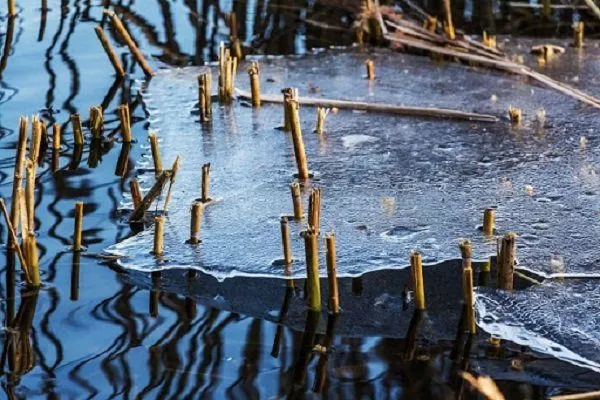
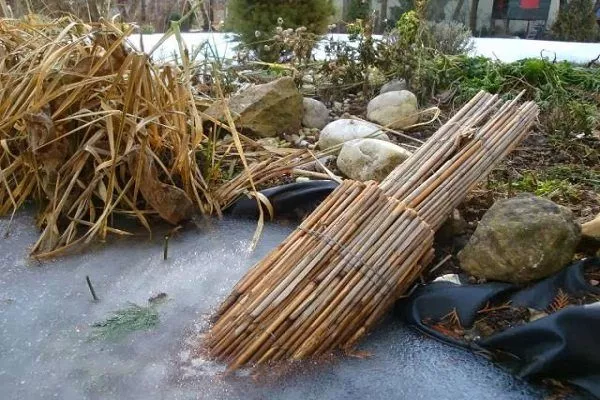
To create a hole, drill the ice rather than chop it. Do this at a distance from the wintering pit. This will prevent vibration and pressure differences from damaging the swim bladders of the hibernating fish.
You can also use portable aerators, powered by batteries or cords. The device is lowered into the hole to a shallow depth. Its function is to stir and heat the water.
Caring for a wintering pond
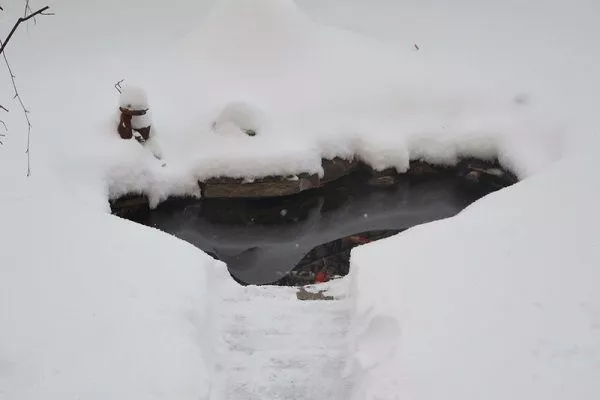
When the pond freezes, snow is periodically cleared from the ice. Otherwise, the fish and plants don't get enough light.
To prevent a pond from freezing solid, when severe cold weather sets in, make a hole in the ice and pump out a small amount of water. Place a covering material over the hole. This will create an air cushion that prevents ice from forming.
Caring for pond inhabitants
A change in living conditions can cause stress in fish. It's recommended to overwinter them in their native pond. This is suitable for ponds with a depth of at least 1.5 meters. Otherwise, the water will freeze completely, taking the fish with it.
When overwintering your fish in a pond, install aerators and heaters. This equipment maintains the required temperature and oxygen levels. If installing these equipment is not possible, make holes in the ice and periodically spray them with very hot water.
Burning the pond in winter
In some areas, frosts can be severe, and moving fish indoors isn't always possible. The pond will need heating.
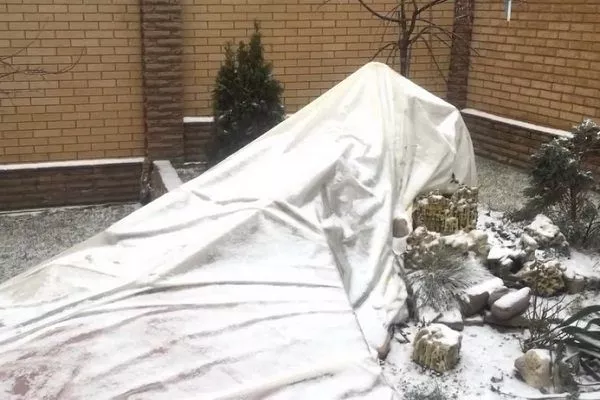
A burlap covering provides sufficient light. Straw is often used for this purpose. Since fish and bottom plants require light, the covering is removed periodically.
Heating Features
At low temperatures, a hole is made in the ice surface and some water is pumped out. The resulting air cushion prevents excess ice from freezing and enriches the reservoir with oxygen.
The area with the drilled hole is also insulated. Special heaters are used. They provide a constant flow of warm water, preventing the hole from freezing.
Heat-loving fish require more substantial heating. A factory-made heater is installed in the water. Its characteristics should match the pond type.
Temperature
Certain fish species require optimal temperatures for comfortable wintering. Heat-loving fish should have water temperatures between 5 and 8°C. For others, 3°C is sufficient.
Maintaining such temperature conditions is ensured by regularly covering the ice with insulation or installing heaters.
Experienced farmers who have been breeding and keeping fish in ponds on their property for a long time recommend moving the fish to a warmer location for the winter. This eliminates the need to worry about maintaining the pond and significantly simplifies its maintenance. Otherwise, it's necessary to properly prepare for winter and adhere to all winter regulations.