
When a pond begins to die, a series of radical measures are required to completely rebuild it. This is where the procedure of "summerization" comes in. This is a complex, integrated process that involves draining the water and clearing the pond bed of vegetation, snags, and other debris. Read more about organizing a pond's summerization below.
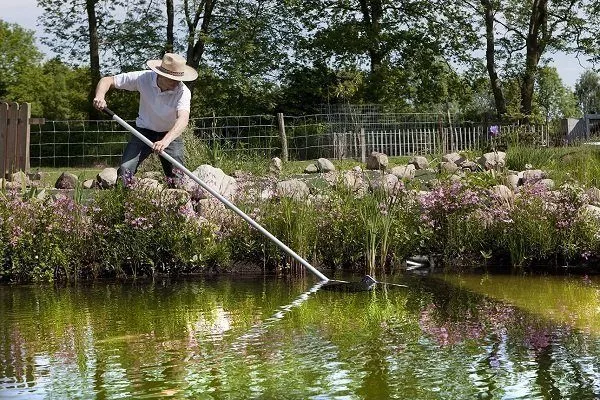
What is this procedure?
Summerization is a complex of fishery, meliorative, and veterinary-sanitary works that are periodically carried out in fishery waters according to a pre-developed plan, taking into account local conditions. This complex invariably includes a number of stages:
- Draining the pond in autumn.
- Freezing of its bed (bottom).
- Cleaning of bottom sediments in winter.
- Carrying out reclamation work in a drained pond in summer.
In terms of its effectiveness, summering has no alternative and is used for the following purposes:
- eliminate all pathogens of invasive, viral and bacterial infections in pond farms (after the pond dries out, the pests die or lose their ability to infect under the influence of sunlight and disinfectants);
- stabilize the gas and salt conditions of water;
- improve the health of fish farms if they are susceptible to contagious diseases, including branchiomycosis and aeromoniasis (rubella), which is dangerous for carp and salmon;
- improve zoohygienic conditions for fish;
- increase soil fertility and natural fish productivity of the reservoir by 50-100%;
- carry out fish farming, land reclamation and repair work on the site.
After the summer, the reservoir bed is aerated, the organic matter accumulated in it is mineralized, and the hard underwater and above-water vegetation is destroyed.
For which ponds is summering used?
This method of improving the health of a reservoir is often used in areas such as:
- Spawning and wintering pondsThey undergo the procedure with the same frequency, but different reclamation measures are carried out.
Grass is maintained in spawning ponds because it provides the fish with shelter from direct sunlight. Furthermore, such vegetation provides them with food.
In wintering reservoirs, on the contrary, they fight against vegetation, since in winter unfavorable processes of decomposition of organic matter take place on their bottom. - Fattening pondsThey are used to raise commercial (table) fish—carp, wild carp, crucian carp, tench, pike-perch, and others. Typically, such ponds are created by constructing dams across the river or stream bed. In some cases, parts of the floodplain are enclosed with dams, and water is supplied from the reservoir through canals.
- Earthen cagesThese are often enclosed areas of natural bodies of water. Dams, weirs, or stakes serve as enclosures. There are also artificial earthen enclosures, such as various depressions in the coastal area or specially dug ditches or pits in the ground that are filled with water.
Regardless of where this procedure is applied, the technology for its implementation remains unchanged.
Conditions of the event
The improvement of the fishing industry in this way is carried out subject to the following conditions:
- it is possible to simultaneously drain water from all the farm's ponds, and then thoroughly dry their beds and hydraulic structures;
- the water source is free of diseases and parasites, or there is the possibility of their destruction during the work;
If after the summer the pond is filled with water that contains a pathogen causing an infectious disease, all the work will go down the drain.
- It is possible to purchase the necessary planting material and high-quality breeding stock for the pond from a successful farm.
Summering technology
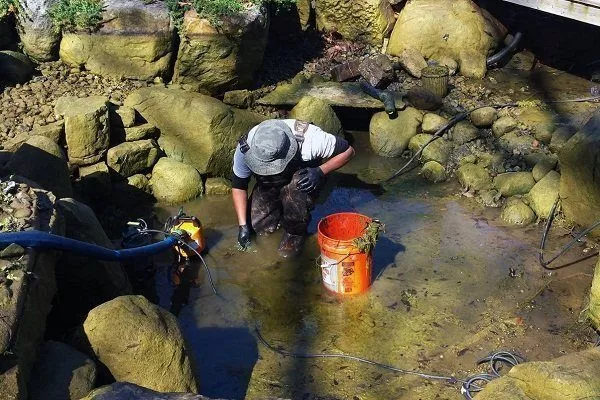
To ensure that the pond restoration process produces only positive results and does not harm the pond, it must be carried out in stages, adhering to a number of important rules:
- Site surveySpecialists inspect the reservoir to accurately diagnose the presence of parasites or pathogens. If any are detected, the fishery is declared unhealthy. It is quarantined, and a further recovery plan is developed.
- Removing the source of the pathogen from the pondThis could be infected fish or water. To eliminate pathogens, all fish are caught and sold in the fall, and the water is drained from all ponds.
- DisinfectionDitches and pools—local widenings and deepenings of the reservoir bed—are treated with bleach (5 c/ha) or quicklime (20-25 c/ha). Hydraulic structures—monasteries, flumes, grates, etc.—are treated with a freshly prepared 20% quicklime solution or a 10% bleach solution.
All fish farming equipment, including fishing gear and transport containers, is also disinfected. Small equipment such as nets and canvas stretchers should be replaced with new ones. - Clearing the bed of coarse vegetationRhizomes and natural debris are removed from the pond bottom, and stumps are uprooted. Floating roots and stems (the tangled roots and stems of plants that float on the surface of the water) are dried and removed from the pond bed, after being cut into small pieces.
If the autumn is warm and dry, the pond bottom is thoroughly dried, and then the necessary reclamation work is carried out - the drainage ditches on the pond bed are straightened and deepened, the small ponds are filled in, etc. At the end, the pits are filled in. - FreezingWith the onset of winter, the bed is left to freeze.
- Bed healingThe following spring and summer, the pond remains dry. During this time, restoration work continues.
Another disinfection process is carried out by drying and insolation—exposing the surface to sunlight (solar radiation). Pathogens on the soil surface are killed by direct sunlight, while those living in the upper soil layers are killed by disinfectants or drying.
After this, the soil moisture at a depth of 0.5-1 cm should be no more than 13%. This indicator must be monitored. In areas with higher soil moisture, slaked lime or bleach is added according to the calculations described above.Critical parameters for successful flight- ✓ Soil moisture control at a depth of 0.5-1 cm should be no more than 13% for effective disinfection.
- ✓ Use of slaked lime or bleach at a rate of 20-25 c/ha to neutralize soil acidity and improve its quality.
Liming not only helps disinfect the soil, but also neutralizes soil acidity, improves its quality, and promotes faster decomposition of organic matter.
- Soil cultivationTo ensure better drying and disinfection of the bed, all vegetation that has grown is mown down, and the soil is harrowed or plowed. Areas containing marsh vegetation are cultivated with a marsh plow with a screw moldboard to a depth of 20-25 cm. After plowing, the layer is cultivated 2-4 times with disc harrows. Plowing helps oxygen penetrate the deeper layers of dried silt.
- MineralizationTo completely mineralize organic sediments and improve environmental conditions for subsequent fish farming, the pond bottom is seeded with a vetch-oat mixture, serradella, or lupine. After harvesting the grass, row crops are sown:
- cereals (oats) - consume nitrogen in deeper layers of soil, so they are the best option when silt deposits are too deep;
- Legumes - enrich the soil with nitrogen, so they are more suitable for surface silt;
- grains and feed (barley, wheat, sudan grass) - allow the farm to provide itself with its own feed for fish, and also reduce the toxicity of the soil and increase its fertility, improve the productivity of the reservoir and microbiocenosis (the totality of populations of different types of microorganisms living in a certain biotope);
- Vegetables (potatoes, beets, rutabaga, cabbage, carrots) – provide mineralization of organic matter and detoxification of harmful compounds.
Unique traits for selecting crops for mineralization- ✓ Cereal crops are preferable when silt deposits lie deep.
- ✓ Legumes enrich the soil with nitrogen when silt lies on the surface.
The founder of pond fish farming in our country, A. T. Bolotov, in his works recommends sowing the bottom of floating ponds with grain: in the first year, sow winter and spring rye, in the second - barley, and in the third - oats.
The root system of the crops keeps the soil loose and absorbs excess minerals. If the pond doesn't drain well, it can be used as a meadow.
- Final disinfection. It is carried out in the autumn of the following year in those places where pathogenic microorganisms could have survived.
The alternation of low temperatures in winter and high temperatures in summer, the effects of solar radiation, and the sowing of vegetation in a drained pond in summer all contribute to the mineralization of organic matter and the death of pathogenic microorganisms that cause infectious fish diseases.
For information on how and why pond liming is done, watch the following video:
Pond stocking
After the summer, favorable conditions for fish development and growth are created in the ponds. Depending on the farm's capabilities, they can be filled with water from a clean source in the spring or fall, and then restocked with healthy fish acquired from successful farms.
In the spring, broodstock can also be added to quarantine ponds. These are individuals approaching first maturation, selected to replenish the broodstock. They should then be transferred to separate broodstock ponds. If they do not become infected, they can be used for spawning the following season.
If the stocked fish do not show signs of infectious diseases during the growing season, the quarantine can be lifted from the farm.
Periodicity and duration of summering
To improve fish productivity and eliminate parasites, this procedure should be performed on average every 4-5 years. This parameter can be adjusted depending on the pond category and fish farming method. For example, nursery ponds with intensive fish farming can be brought into the summer period after 4-7 years, while those with extensive fish farming can be brought into the summer period after 15-20 years. These same timeframes are acceptable for nursery ponds, but spawning and wintering ponds should be treated annually.
As for the duration of the procedure, it cannot be less than one year. This is the time the pond remains dry. It needs to be adjusted depending on the silt layer. If leaving the pond dry for one summer results in intense vegetation growth, the process of restoring the pond's health may take several years.
How is it different from fish crop rotation?
Fish farming can be effectively combined with agricultural production. This combination is called fish crop rotation. It differs from traditional summer crop rotation in that it involves deliberately alternating the use of ponds for fish farming and crop production every 1-2 or more years. Livestock feed—grains, forage, melons, etc.—is often grown in the pond bed.
Regular crop rotation is beneficial because it allows for efficient summering and, as a bonus, additional agricultural production. However, this method has also proven its drawbacks in practice. These include disrupting the stability of the veterinary and sanitary conditions of the plot.
Experts note that by the second or third year, the pond becomes significantly overgrown with macrophytes (aquatic photosynthetic plants that float on the surface or submerge in the water) and agricultural weeds. Furthermore, outbreaks of fish diseases are observed, leading to a decrease in fish productivity. To minimize these negative consequences, it's best to plant grain crops on the dry pond bed.
Summerization is a labor-intensive and complex process typically carried out in nursery ponds, reservoirs, and earthen cages to enhance natural fish productivity by improving the soil structure and creating favorable conditions for the development of food organisms. It is carried out in several stages, each requiring strict adherence to a number of rules.