
If you approach oyster farming correctly, you can become the owner of a profitable business. Due to economic sanctions and depleted natural resources, the market is experiencing a shortage. Let's find out what methods of shellfish farming exist and how profitable this business is.
Subtleties of cultivation
Oyster farms are places where oysters are grown on an industrial scale. While humans can influence the growth process on fish, pig, or chicken farms, with oysters, humans merely facilitate their growth in their natural environment.
Before getting into oysters, it's helpful to understand the intricacies of their life and cultivation:
- It takes 3 to 5 years for an oyster to grow to a marketable condition.
- Mollusks grow in their natural habitat - in "oyster beds" of coastal ocean waters, or on artificially created "farms".
- The more difficult the living conditions, the more the mollusk struggles to survive, the tastier its meat. By trying to retain saltwater within its shell, the mollusk becomes more elastic, meatier, and ultimately, tastier.
- The taste of oysters depends on literally everything it encounters – the composition of the water, the speed of the current, the density of plankton, and much more.
Is it profitable to start an oyster business?
While oyster and other shellfish farming was once reserved for those with access to natural waters—seas and oceans—it's now a profitable venture for anyone. All it takes is a special closed-loop system for shellfish farming. These systems, called RAS, cost around $10,000. A recommended investment for business development is $80,000-$100,000.
Restaurants are interested in fresh oysters, so this delicacy always finds a market.
The first oysters can be sold in the third year of cultivation. Therefore, there will be no profit for the first two years. Only in the third year will the RAS owner make a profit that will cover the startup costs. And only in the fifth year will the business begin to generate real income.
Once you reach your planned production volumes, the profit from shellfish farming will exceed your annual investment by 10 times.
The smallest farm, using manual labor, can produce up to 10 tons of produce per year. The price of one shellfish is 2 euros. Harvesting takes place in the spring and fall, and two trained workers are often sufficient. Experienced entrepreneurs can set up a farm of 30-50 hectares, yielding up to 1,000 tons of shellfish.
So, the oyster business is profitable, but it requires a significant initial investment and financial patience.
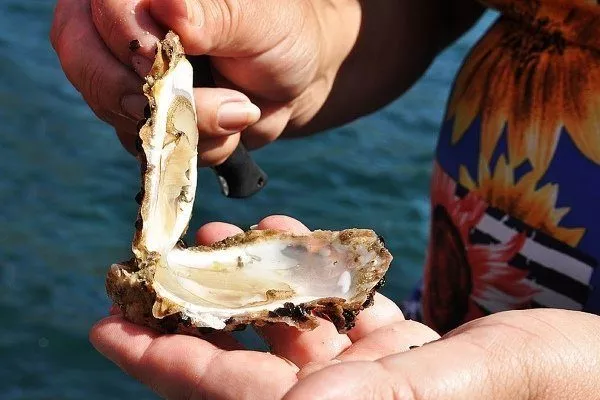
Classification of edible oysters
Classification of food oysters:
- By cultivation method:
- full sea (wild) – grown in natural conditions;
- refined - grown in an artificial environment.
- By size: concave oysters – No. 5, No. 4, No. 3, No. 2, No. 1, No. 0, No. 00. The smallest size is 5, the largest is 00.
- By structure:
- Flat. These include four distinct varieties of shellfish, differing in appearance, taste, and price. They are common in the British Isles and the Mediterranean basin.
- Deep. They are found in the Pacific Ocean. They come in exquisite and special varieties. The former are smaller in size.
In Europe, the most popular size of oysters is No. 3. These mollusks weigh 80-100 g. In Russia, No. 2 oysters are the most popular, weighing 100-120 g.
Finely ground oysters are also classified by density. The density coefficient of a mollusk is the ratio of the weight of the meat of 20 mollusk shells of the same size to the weight of 20 oyster shells, multiplied by 100.
Among the shellfish with varying density, there are Spéciale, Spéciale de Clerc, Fine de Clerc, and Pousse-en-Clerc oysters. For example, the density coefficient of Spéciale is 10.5 or higher. The oysters' flavor nuances depend on their density.
Which oysters are the most popular?
What buyers pay attention to:
- Where the oysters are grown. Gourmets prefer wild-caught shellfish—experts easily recognize them by their shape and taste. Today, there are nine farmed shellfish for every wild-caught oyster.
But farmed shellfish have a significant advantage: their taste can be influenced. Factors that influence this include water salinity, temperature, algae, and so on. It's believed that the tastiest shellfish are found in cold waters. - The taste of shellfish. The most delicious oysters grow in water containing 20-30% salt. When the salt concentration rises to 35%, the oyster meat becomes tough. If the salt content in the water is less than 12%, the oysters die.
- It's fishing time. The worst-tasting oysters are harvested in the summer. At this time, they actively reproduce, and their flavor often changes for the worse.
Flat oysters are considered the most popular in cooking and restaurant service. These include:
- Belon. Found in the waters of Brittany. Grayish-white in color, with a characteristic iodine smell. The largest belon is the "horse hoof."
- Buzig. Found in the Mediterranean, these shellfish are large, round, and have a salty taste and a sea-like aroma.
- Gravett. Popular oysters from Arcachon Bay. They don't have much flavor or aroma, but they are very meaty.
- Maren OléronThis is the most prized type of flat oyster. They are distinguished by their delicate texture and rich flavor.
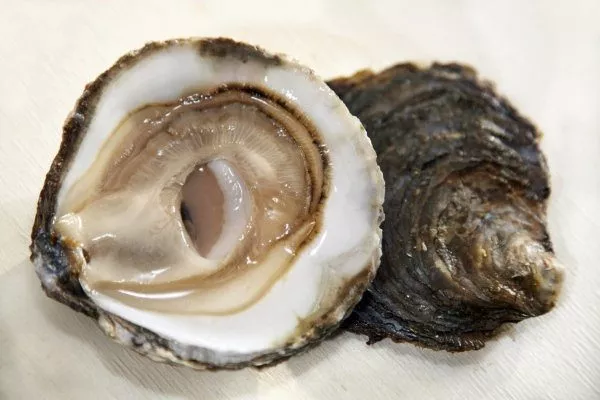
Belon oyster
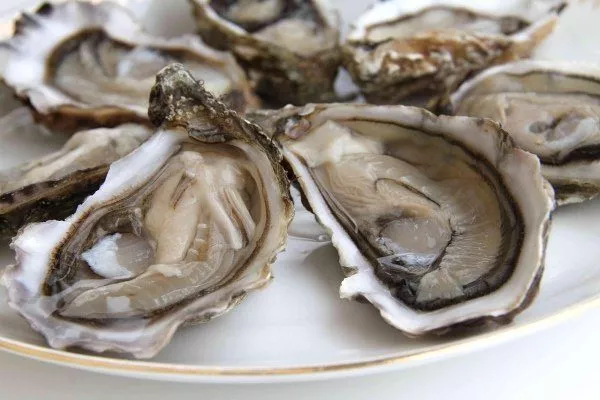
Bouzigues oysters
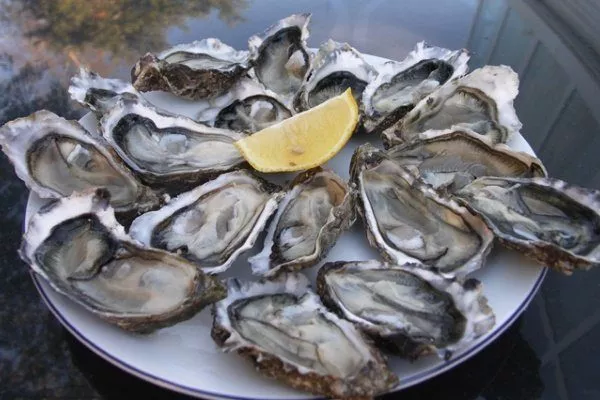
Gravette oysters
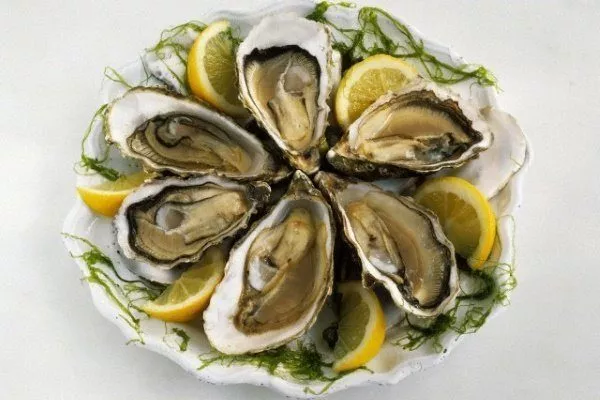
oysters "Marin Oleron"
Deep-shell oysters are somewhat less valuable than flat-shell oysters, but they are still in demand. There are five varieties of this type of oyster:
- Fine de Claire. The fattest ones with a slightly salty taste.
- Special. Very large, contain a lot of meat.
- Croesus. Irish oysters, fat and meaty.
- Blue oyster. They are distinguished by a special shade, which is obtained through the use of special content.
- White pearl. They have a sweet taste and an elegantly shaped shell.
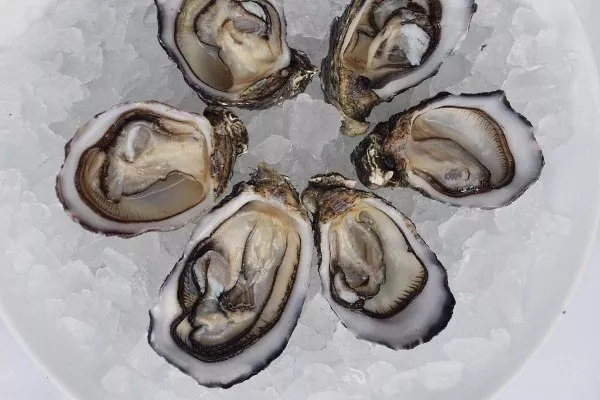
Fine de Claire oysters
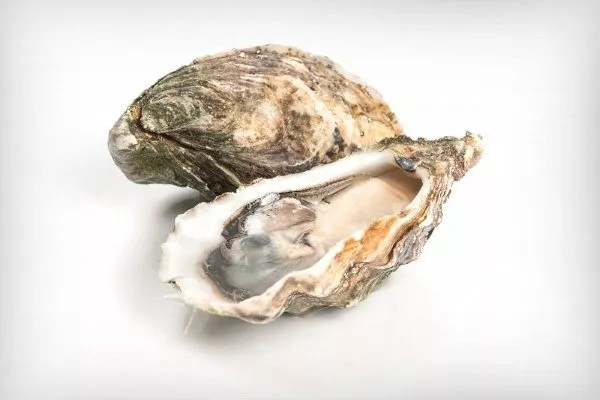
oyster "Special"
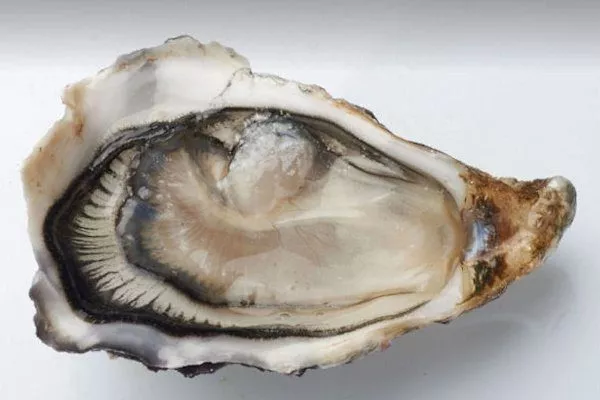
oyster "Croesus"
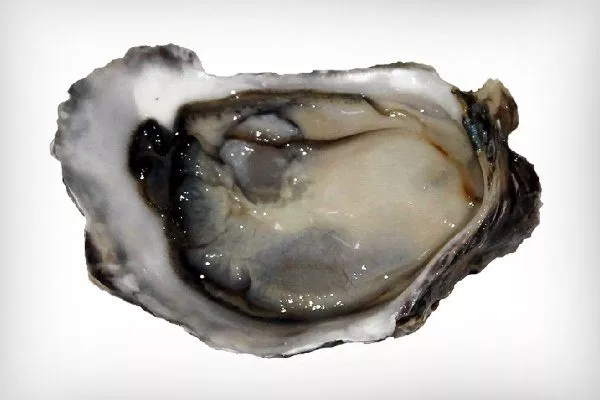
Blue Oyster
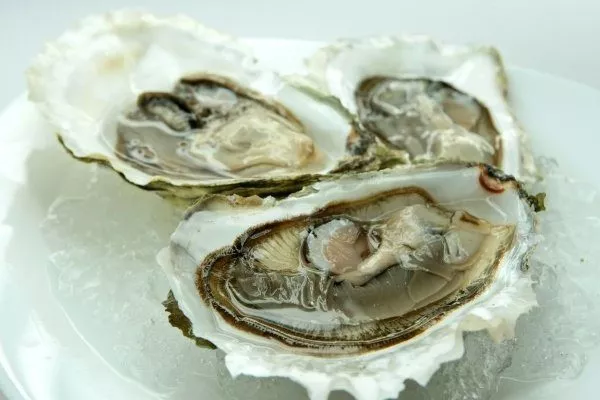
White Pearl oysters
- ✓ Optimal water salinity for oysters: 20-30%.
- ✓ Water temperature for optimal growth: +12°C to +22°C.
- ✓ The pH level of the water should be between 7.5-8.4.
Growing conditions
The oyster industry hasn't yet become widespread in Russia, so competition in this sector is limited. What are the distinctive features of the oyster industry?
- Any edible species of oyster can be farmed. Each species requires specific living conditions, and it's up to humans to provide them with these.
- The harvest can be collected at any time - there is no need to do it before the order is received.
- Mollusks do not need food – they live off the natural food supply.
Oyster farming is easiest where there is easy access to the coast. Anyone without access to the sea but wishing to get involved in the oyster business will have to set up a farm.
- Conduct a water analysis to ensure that the water meets the parameters for oyster cultivation.
- Select and prepare a site for the farm, including installing protective structures against waves and pollution.
- Purchase and install equipment for oxygen supply and feed base.
- Purchase young oysters or organize the collection of spat in natural conditions.
- Regularly sort and replant the mollusks as they grow.
When organizing oyster farms, it is necessary to carry out certain tasks:
- Clean the cages from algae and dirt.
- Regularly sort the mollusks, transplanting them, as they grow, into larger cages.
- Catch predatory mollusks – rapana.
- Separate fused shells.
What do you need for a farm?
To breed oysters for sale, it is necessary to carry out a number of tasks and select suitable conditions for the oysters:
- The depth of the reservoir is 20 m.
- The bottom of the reservoir is flat. The uneven surface is leveled.
- Protection from waves and pollution.
- Providing mollusks with oxygen and food is achieved by installing special equipment for their supply.
- Periodic water analysis.
Oysters feed on tiny algae and microorganisms.
There are three options for harvesting oysters:
- Collection of naturally grown shellfish at low tide.
- Oysters are grown in cages located in sea “fields”.
- Oysters are kept in a combination of river and sea water.
Oyster farming in artificially created conditions requires significant labor and specific knowledge. The mollusks are provided with specific living conditions:
- When setting up a small oyster farm, you'll need to spend about half a million rubles on cages and 10,000 rubles on larvae.
- It will be necessary to build a nursery for the growing mollusks – approximately 130,000 rubles.
- Money is needed to pay staff salaries.
To supply oysters to restaurants and other food service establishments, you'll need to formalize contracts. To do this, you'll need to officially register your business. You can do this as a sole proprietor or LLC, register with the tax authorities, and choose a suitable taxation system.
In some countries, used oyster shells are processed into a product to stimulate oyster growth.
Growing methods
The key to oyster farming is a favorable environment. Humans then only monitor and maintain these conditions. Any method of oyster farming can be a highly profitable endeavor.
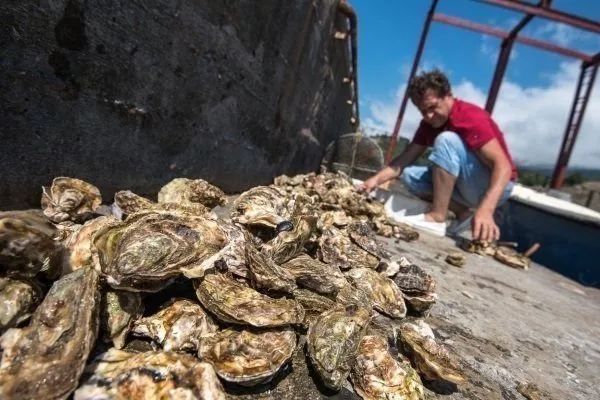
Natural
You can farm oysters without buying juveniles. The "seedlings" are taken from the sea, and the mollusks grow naturally. To farm oysters this way, you only need three things: special tools, the sea, and the ability to wait.
Features of growing oysters in natural conditions:
- Spat—young oysters—are harvested using collectors placed in the coastal zone during spawning season. Oyster spawning begins in the spring and continues throughout the summer. During this period, the collectors are not moved. The oyster larvae settle on the collectors, where they grow.
- By the end of summer, the grown juveniles are moved to mesh-covered pockets. They are placed slightly above the seabed, on poles. This protects the juveniles from natural enemies and flooding of the frames. The mussels feed on plankton, which is abundant in the sea.
- After a couple of years, the grown-up young are moved to tanks called “nursery tanks,” where the oysters remain for about a year, reaching their “marketable appearance.”
- The final stage is harvesting.
To make oysters heavier and more fleshy, the mollusks should be partially submerged in water during the rearing period. Alternatively, fresh water can be mixed in with the salt water. By trying to retain seawater in their shells, the mollusks gain muscle, become more elastic, and the flavor of their flesh improves.
Modern oyster farming relies on spat production and subsequent rearing in the open sea. This approach has a number of serious drawbacks:
- only 30% of the young fish sent for rearing survive;
- low growth rate – due to periods of wintering;
- unstable growth due to the risk of phytoplankton deficiency or deficiency;
- force majeure circumstances – storms, hurricanes and other unfavorable natural factors that have a destructive effect on marine farms;
- epidemics among mollusks - they do not depend on humans and can destroy the entire “population”;
- long-term cultivation – 3-4 years;
- high logistics costs;
- the risk of toxic substances concentrating in shellfish meat due to pollution of farm waters as a result of man-made accidents.
At the same time, the technology of growing remains dominant in the oyster business today.
Basic equipment for oyster farming:
- Collectors for larvae. They are made of copper wire strung with old shells. The distance between the shells is 1.5 cm. Each wire contains 100 shells. The usable area of the shells on a single collector is 0.5 square meters.
- Containers for collectorsMade of angle metal.
- Nylon cagessize 1.0×1.0 m.
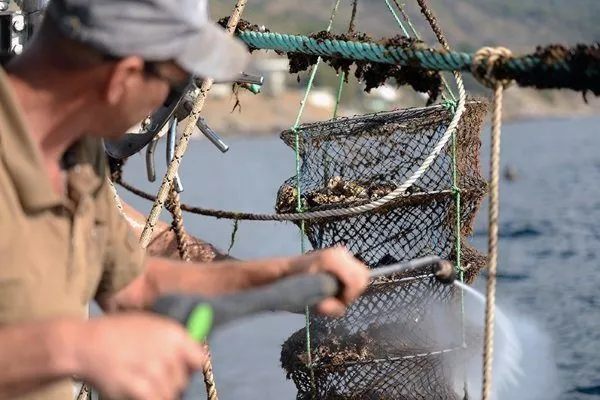
Industrial oyster farming indicators:
| Indicators | Norms |
| Settling of larvae per 1 sq. m of collector, | 1,400 pcs. |
| Fertility of mollusks | 200-300 thousand pieces |
| Collector reserve | 50% |
The development of technology on the one hand, and the deterioration of the ocean ecology on the other, contribute to the development of artificial methods of oyster cultivation.
Artificial
The absence of a sea is no longer an obstacle to the development of the oyster industry. Artificial habitats are being created for this purpose. Closed aquaculture systems are particularly convenient, creating conditions ideal for any living creature, including various species of oysters.
The cost of such installations amounts to tens of thousands of dollars, but they make it possible to create a profitable and high-tech enterprise for growing shellfish.
The RAS consists of modular pools in which biological and chemical processes are automatically controlled. The system also includes water purification and treatment systems. The RAS is a closed system, so it does not require constant water supply. The daily water consumption rate is 5-10% of the total system volume.
Advantages of using RAS:
- ease of operation;
- versatility – you can grow oysters (or other mollusks, fish, crustaceans) anywhere in the world;
- economy;
- possibility of full automation – no need for highly qualified engineers;
- minimal logistics costs – the farm can be built as close as possible to the sales market;
- the ability to deliver fresh products to consumers – this improves the taste and healthiness of the products;
- accelerated growth – without wintering, growth time is reduced;
- the use of species-specific plankton doubles the fattening rate and improves the quality of oyster meat;
- there are no epidemics, predators or poachers – all of this has a positive impact on business profitability;
- environmental friendliness of products;
- high taste characteristics;
- the ability to influence the color and taste of shellfish through the use of special phytoplankton.
What cultivation methods are used?
Recirculating aquaculture systems (RAS) are expensive equipment, and not every aspiring entrepreneur can afford it. Less-expensive methods are also used for shellfish farming today. Below are methods suitable for growing different types of shellfish.
In the video below, a farmer talks about oyster farming in a recirculating aquaculture system:
In fresh water bodies
This is a simple method that doesn't require extensive knowledge or investment. Freshwater cultures primarily produce "river oysters"—mussels—as well as other freshwater mollusks. Growing mollusks in freshwater is similar to cultivating them in saltwater.
Features of growing shellfish in fresh water bodies:
- When choosing a site, contact a specialist who knows the technology of mollusc breeding.
- Collectors or old seines are tied to a horizontally stretched rope. A weight is tied to the bottom of the collector. In cold weather, the collectors are buried deeper to protect them from storms and ice.
- If there is poor water exchange, yearlings fall off and the “productivity” drops.
- They constantly monitor the population size, transplanting excess mollusks to other areas.
- The minimum water temperature is +12°C. For juveniles to settle in artificial reservoirs, the water needs to be even warmer.
Ground
The young animals are collected using special collectors and placed in nursery areas. The growing period is three years. Features of growing on soil:
- They find areas for obtaining planting material in advance. They prepare a site in the shallows. They install protection from parasites and predators.
- Larvae are collected between May and July. The process continues until September. The young, which have settled on poles, are transferred to special collectors suspended from special rafts.
- To prevent the collectors from sinking to the bottom under their weight, they are moved to a new location, separating the outer layer. A site protected from predators and with a good food supply is selected.
- After a few years, when the mollusks reach a marketable condition, they are collected with dredges and stored at high tide so that they can be cleared of mud.
Disadvantages of growing shellfish on soil:
- the possibility of losses due to predators and parasites that have overcome protective barriers;
- the mollusks become overgrown with mud;
- mineral particles and sand get into the meat.
Raft cultivation is much more effective. Mechanization of the cultivation process is advisable. It's important to monitor the mollusks' stocking density to thin them out promptly.
In the aquarium
Marine mollusks are difficult to keep in aquariums; they require specific conditions and care. They are kept in aquariums purely for the sake of curiosity—this method of cultivation is not suitable for commercial purposes.
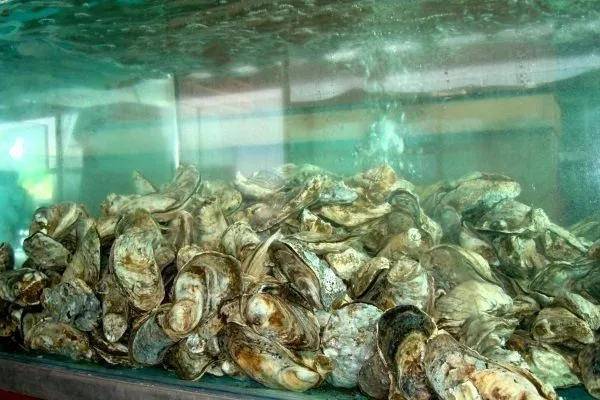
Features of growing mollusks in aquariums:
- It is better to purchase specimens from pet stores to avoid contaminating the water with any diseases.
- The aquarium must be spacious and equipped with filtration and aeration systems.
- To harden the water, line the bottom with chalk, shell rock, or pure limestone. Calcium ions should also be added to the water.
- Water temperature should not exceed 22°C. Water that is too warm will kill the mollusks.
Harvesting
It takes about three years from the hatching of the larvae to the harvest. During this time, preparations must be made by acquiring the necessary tools. When farmed naturally, oysters are typically harvested during the cooler months – from September to April.
Benefits of harvesting in cold weather:
- During the breeding season, which is the warm season, the oyster meat is thin, watery and less tasty.
- Warm water contains a lot of bacteria, making oyster meat more dangerous, especially since they are mostly eaten raw.
Once the oysters have grown to marketable size, they are collected and sent for processing, where the following tasks are performed:
- washing;
- sorting;
- weighing;
- package.
Features of oyster harvesting:
- The best weather for harvesting oysters is dry and sunny. It's not recommended to harvest oysters during rain or immediately after it. Wait 2-4 days, as rain can contaminate the shellfish with bacteria and harmful substances found in seawater.
- Oyster shells are sharp and can cut you, so wear gloves when picking them.
Oysters are prized fresh, but can be stored in freezers for up to a year if necessary.
Sales market
Western oysters were placed on the list of products prohibited from import. As a result, domestic oyster production in Russia has increased tenfold. Instead of oysters imported from Europe, cafes and restaurants serve Russian-grown shellfish. Moreover, the government is now interested in developing the oyster industry and provides it with every possible support.
Russia's domestic market is ready to absorb a huge amount of oysters—demand for them is colossal. Almost no restaurant can do without this product. Anyone who invests in developing this highly profitable business will have no problem finding customers.
Government support for the oyster business
Demand for oysters exceeds supply. This product is prized worldwide not only for its taste but also for its nutritional value. Today, the oyster industry enjoys government support. In particular, the Russian Federation Law "On the Development of Mariculture" has been passed, creating favorable conditions for oyster farming. The oyster industry in the Black Sea is particularly promising and profitable.
Watch this video about how oyster farming is a necessary and important activity that needs to be promoted:
The state support program provides the following benefits for oyster business owners:
- Exemption from taxation.
- There is no need to pay for renting the water area.
- Possibility of receiving subsidies.
What is the difference between oysters and mussels?
A variety of shellfish can be farmed for sale. Along with oysters, farms often grow mussels, their differences:
- They are smaller than oysters.
- Less demanding of living conditions.
- They can move along the bottom, but oysters live sedentary lives.
- Mussels have a round shell, while oysters have a flat or slightly concave shell.
- Mussels have smooth shells with sharp edges. Oysters have rough shells with wavy edges.
- Mussels are not eaten raw, but oysters are usually served raw.
- Oysters are light, mussels are dark.
But the most important thing anyone considering shellfish farming should know is the cost of oysters and mussels. The latter, although considered a delicacy, are much cheaper because their cultivation is less labor-intensive.
Oyster farming is a highly promising business. The main challenge is the initial costs. If you're willing to invest in a profitable venture, within five years you could become the owner of a significantly profitable one.