
Fish farming has been around for a long time, but it only reached industrial scale in the 20th century. One method of farming is in pools. This option has certain advantages and disadvantages. Pool farming requires a number of specific features and requirements.
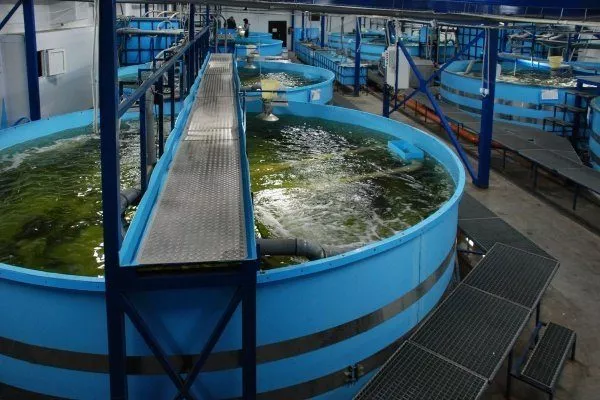
Advantages and disadvantages of breeding fish in a pool for sale
Breeding fish in a pool allows for greater control over the environment. This applies to the following factors:
- water flow;
- temperature conditions;
- hydrochemical regime.
The tank allows for year-round fish farming, which is essential for business profitability, as sales will be ongoing. Properly managed operations allow for rapid recoupment of costs and a stable income.
Raising fish in tanks allows for automation and mechanization of the process. This includes providing sufficient feed, water purification, and oxygenation. For small tank farms, this can easily be managed by one person.
Another important advantage of basin management is the absence of taxes. This applies to income tax, social contributions, and VAT. A single agricultural tax (SAT) is also possible.
There are some disadvantages to tank fish farming, primarily related to the costs involved. You need to set up a tank, purchase fry, and purchase feed for them. You'll also need a pumping station and treatment facilities. Compared to cage farming, the costs of tank farming are approximately 50% higher.
The disadvantages include the need to conduct business legally. Registering a swimming pool business requires gathering a specific set of documents.
What fish can be grown in pools?
When raising a fish farm, it's important to choose fish that are easy to maintain, disease-resistant, and gain weight quickly. It's also important to consider public demand for the product.
Pike, salmon, carp, perch, and bream are commonly raised in pools. From a profit-making perspective, it makes sense to focus on raising expensive delicacies, such as salmon and sturgeon.
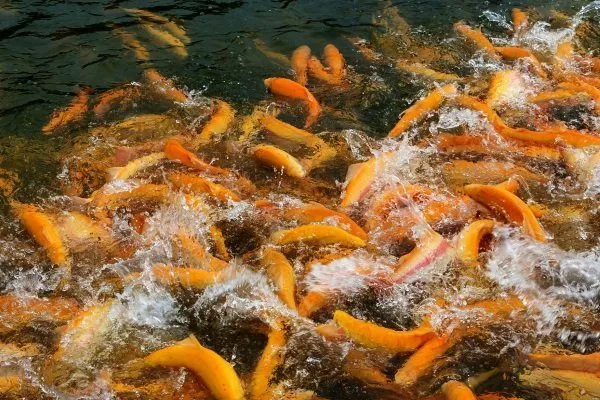
Trout can be bred in pools. This is quite labor-intensive and requires the participation of a highly qualified specialist. With proper management, the costs will be offset by the high prices for this fish, which is renowned for its taste and undemanding husbandry conditions.
| Type of fish | Growth rate | Water requirements | Market price per kg |
|---|---|---|---|
| Rainbow trout | 12-18 months | t° 14-18°C, O₂ ≥6 mg/l | 450-600 rubles |
| Siberian sturgeon | 24-30 months | t° 18-22°C, O₂ ≥5 mg/l | 1200-1800 rub. |
| Carp | 8-12 months | t° 20-28°C, O₂ ≥4 mg/l | 150-250 rubles |
| Tilapia | 6-9 months | t° 22-30°C, O₂ ≥3 mg/l | 300-400 rubles |
| African catfish | 5-8 months | t° 25-30°C, O₂ ≥3 mg/l | 250-350 rubles |
Setting up a fish farming pool
When raising fish, many factors are important, including tank setup. In this case, it's important to consider:
- Material of executionFor artificial ponds, metal or plastic can be used. The latter is usually preferred, as metal is more expensive, difficult to change the configuration, and requires regular repairs. The pool can also be made of wood, concrete, or fiberglass.
- Shape of the reservoirThe shape of the pool isn't critical for fish. It can be round, oval, rectangular, square, or hexagonal. It's important to consider how convenient a particular shape is for keeping the fish close together and cleaning the pool.
- Pool surfaceThis parameter is important for the fish's well-being. If the pool walls are rough, various microorganisms and harmful bacteria will accumulate on them. A smooth surface reduces this risk and is also much easier to clean.
Water quality control is crucial when installing a swimming pool. The pond is artificial, so a pumping station and purification equipment are essential.
The quality of water determines the quality of life of fish. They require oxygen to survive. Its quantity depends on the species of the pool's inhabitants. Carp require 4 cubic centimeters of oxygen per liter of water, while trout require 1.5-2 times more.
When monitoring water quality, it's important to check its pH. High acidity isn't good for fish, so the pH should be at least 7.
Iron in the water is essential for fish to survive, but high levels impair their respiratory function. Active aeration of the water is essential for stabilization, as it oxidizes and precipitates the iron.
Water control schedule
- Daily: Temperature, O₂ level, visual assessment of transparency
- 2 times a week: pH, NH₃, NO₂
- Once a month: general analysis of iron, hardness, CO₂
- When changing a batch of fish: a complete biochemical analysis
Carbon dioxide levels also need to be monitored. They should not exceed 10 mg per liter.
If the pool isn't cleaned regularly, hydrogen sulfide and methane will form in the water. These gases are harmful to fish.
The design and operating principles of a fish farming pool are discussed in detail in this video:
Amount of investment
To calculate the exact investment amount, you need to create a sound business plan. With luck, you can start your own business with around 200,000 rubles.
The exact investment depends on the scale of the fish farming operation. A small tank can be purchased for around 10,000 rubles. Fish farming requires specific equipment, which will cost at least 50,000 rubles.
One of the expenses is purchasing the fry. A kilogram costs an average of 400 rubles. Feed is also an additional expense. A ton costs at least 15,000 rubles.
When developing a business plan, it's also important to consider unexpected expenses. Funds may be needed for purchasing additional fry, treatment, and repairs.
| Expense item | Minimum amount (rubles) | Optimal amount (rubles) |
|---|---|---|
| Pool 5 m³ | 10,000 | 25,000 |
| Filtration system | 15,000 | 40,000 |
| Aerator | 8,000 | 20,000 |
| Fry (1000 pcs.) | 40,000 | 120,000 |
| Feed per cycle | 15,000 | 50,000 |
| Veterinary drugs | 3,000 | 10,000 |
Not all purchased fry survive. About 10% will die, and of the remaining, only a third will reach the desired weight.
Raising fish in a pool can be a great business if you consider all the components and develop a sound business plan. Pool farming has both advantages and disadvantages. The right approach will quickly recoup costs and generate a stable income.