
Carp have long been bred in artificial ponds or fountains. This is relatively simple. Their diet is enriched with seafood, leaving a sufficient supply of fish for sale. But before you begin breeding carp at home, it's worth learning how to organize the fish's habitat, what to feed them, and how to care for them.
Features, advantages and disadvantages of carp breeding
Fish farming, including carp, has its risks, advantages and typical situations. The undoubted advantages of carp breeding include:
- no need for deep water;
- rapid growth of carp;
- undemanding to maintenance conditions;
- carp is omnivorous, which makes feeding it easier;
- tasty fish meat with few bones;
- high consumer demand.
There are also difficulties in keeping carp:
- fish start to get sick if there are a lot of them in the pond;
- The initial investment will pay for itself only after 1-2 years, when the fry grow up and gain weight.
Carp are known for their love of warmth: they thrive and reproduce only in well-warmed water. Therefore, their pond should be half sun and half shaded, so the fish stay warm but have access to some escape from the scorching sun.
Description of fish and choosing the best breed
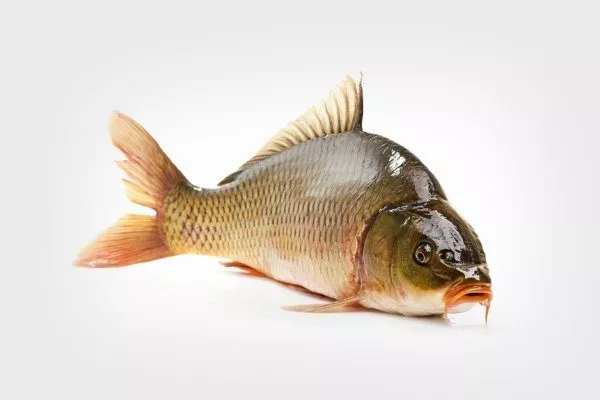
The common carp (Cyprinus carpio) is a freshwater fish of the carp family, genus Carpi. It is common in temperate regions of Russia, Ukraine, Moldova, and Southeast Asia, the family's native land. There are 27 species of carp in the genus Carpi.
Semi-wild carp are called carp. This fish is long-lived, and can grow for up to 50 years. For farming in artificial conditions, the following are usually chosen:
- Mirror carpThey can reach exceptionally large sizes—up to 1 meter in length and over 50 kilograms in weight. Such giants are rare, but this data provides an indication of the average size of mirror carp. Representatives of this species gain weight exclusively in warm water. Mirror carp are classified into the linear and framed varieties.
- Naked carpIt's named for a reason—its body is not covered in scales. Of all the food species, it's the most demanding when it comes to growing conditions.
- Scaly carp (common)The most unpretentious carp, it is usually the one that is used to begin commercial breeding.
| Breed | Disease resistance | Temperature requirements | Growth rate |
|---|---|---|---|
| Mirror carp | Average | Tall | Fast |
| Naked carp | Low | Tall | Average |
| Scaly carp | High | Low | Fast |
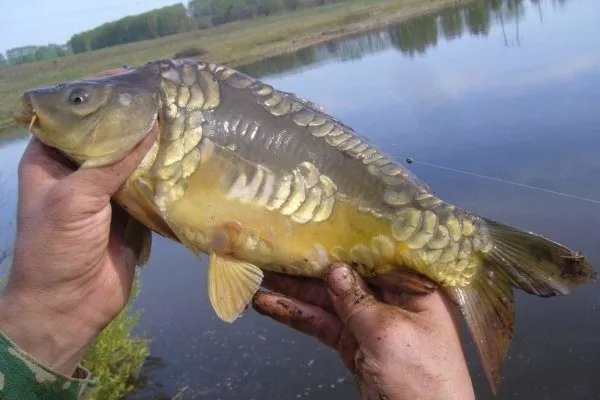
Mirror carp
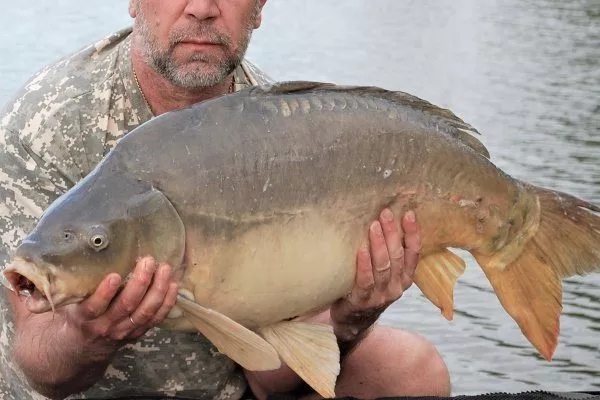
Naked carp
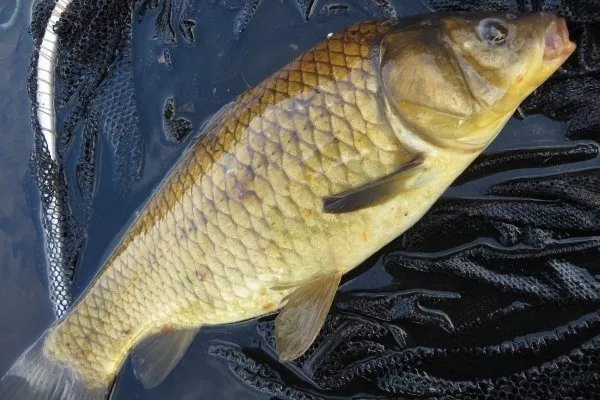
Scaly (common) carp
Koi carp are much loved in Japan, but they are prized for the decorative qualities of their scales, which are colored with black, red, and orange spots in unpredictable combinations. Koi are kept in garden ponds or large fountains.
Choosing a growing site
Carp can thrive in a variety of bodies of water, including lakes and rivers. However, fish farms typically use artificial ponds. In recent years, convenient pools have been created for home fish breeding. The key is to properly construct the bottom and oxygenate the water. The pond location should be as far away as possible from noise sources and not in a low-lying area where dirty water can drain during heavy rains and floods.
- ✓ Availability of natural shade
- ✓ Access to clean water
- ✓ Possibility of water temperature control
Pond
Some people already have a pond on their property. In these cases, its condition is assessed according to carp husbandry requirements. When digging a new pond, the following rules are considered:
- The depth is no more than 3 meters. Carp love warmth, and the sun doesn't reach deep enough.
- Width and length – 3x3 meters.
- Vegetation should be planted along the shore to prevent the soil from sliding into the pond, and trees will also provide shade, which is needed on hot days.
- It is recommended to fill the bottom with sand, then pour concrete, stretch a rubber film on top, and then turn on the water.
- The water needs to be populated with microorganisms and algae. The easiest way is to bring a couple of buckets from a natural freshwater pond. After a few months, the pond will naturally become teeming with life. Another option is to purchase and seed algae.
- Fish may only be introduced when the water temperature is above 24 degrees Celsius.
Protect your pond from birds! They carry pathogens and viruses.
Pool
It is much more convenient to breed carp in a pool, as it is much easier to monitor the condition of the fish, create comfortable conditions, and keep the water clean.
You can purchase a pool or build one yourself. Currently, silo pools with vertical water supply are the most popular. The material of the pool is not critical. The optimal depth is 1.5 meters.
Before releasing fish, the pool, like the pond, needs to be colonized with microorganisms. The methods are the same: water from a natural pond or seeding.
The main thing is to maintain the oxygen saturation of the water in the pool.
Learn more about how to raise fish in a pool – read here.
Equipment for carp breeding
The bare minimum for carp survival includes the right water and warmth. However, there are some tools that can make caring for the fish easier and help increase their production:
- cages and cage lines;
- water filters;
- aeration system;
- compressors;
- oximeter;
- oxygen generator;
- automatic fish feeders;
- barrels and pumps;
- water recycling system;
- incubators for hatching fry from eggs;
- bottom cleaners;
- sterilizers;
- devices for testing water composition;
- backlight.
Conditions of detention
The common carp is one of the most undemanding fish. But, like any other living creature, it requires comfortable conditions to grow and reproduce.
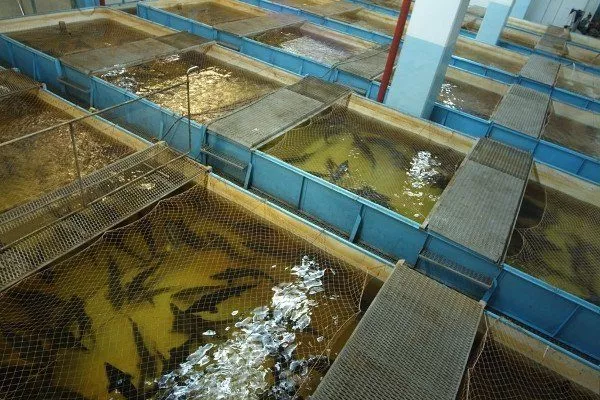
Water and its oxygen content
Ideally, you want to simulate running water in the pond, but with a slower current. To achieve this, install two pipes: one from the pond/pool and one into it. One, smaller in diameter, will bring in clean water, thanks to a filter and pump, while the other will discharge it. The water can be drawn from a clean river, stream, or well. It should be discharged into the sewer. A filter should also be installed on the drain to prevent fish from escaping.
Water from the central water supply is not suitable, as it has been chlorinated and contains a lot of salts.
Oxygen levels should not fall below 3 milligrams per liter. This is determined using a special device called an oximeter. Oxygen generators, aerators, or compressors are used to increase the oxygen level. These are lowered to the bottom and released into the water. Bottom contamination with fish feces and rotting plants reduces oxygen levels.
Temperature
During the warmer months, the water warms up automatically. However, it's important to monitor the temperature. It shouldn't fall below 22 degrees Celsius or rise above 30 degrees Celsius. Thermal processes are regulated by draining and supplying fresh water.
How to breed carp?
Once you've prepared your pond and equipped it with the necessary equipment, you can begin fishing. The first step is to choose the carp species.
It is recommended to take a species that is typical for the region where the fish farm is being created.
Purchase of fry
The safest way to buy carp fry is from someone who has already successfully bred carp. You can also see what life is like on a fish farm and ensure the fish are healthy. Before purchasing, be sure to check the seller's licenses and certificates.
Fry can be ordered from another region and delivered in special tanks, buckets, or cans. They are filled with either pond water or rainwater.
When to release fish into a pond
The ideal time to introduce fry to the water is late April to early May. However, the water should warm up to 22-24 degrees Celsius, meaning artificial heating may be necessary.
How and what to feed carp?
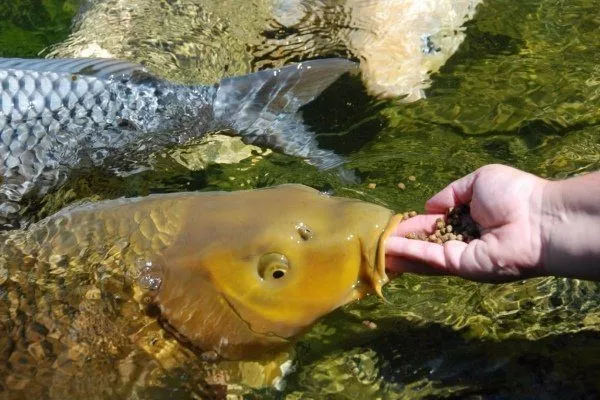
Carp feed only in warm water, twice a day. It's best to feed in the morning, as soon as the sun's rays warm the water, and in the evening before sunset. However, these recommendations don't apply to all feeding methods for carp—there are three:
- Extensive typeThe pond is stocked with natural flora and fauna (excluding other fish). The carp feed entirely on their own. This method guarantees environmentally friendly fish meat, but the carp will gain weight slowly.
- Intensive type. Feeding is done with artificial pig or poultry feed with at least 30% protein. The fish will quickly gain weight. However, the carp's taste will deteriorate, and the pond will need to be frequently cleaned of food residue.
- Semi-intensive typeThe golden mean in carp feeding. The fish feed on the natural population of the reservoir and receive supplementary bait. This can include bread, oats, corn, wheat, maggots, larvae, bloodworms, earthworms, and legumes.
A complete diet will turn a fry into an adult fish weighing half a kilogram in 9 months.
Reproduction
It's advisable to create a separate pond for carp spawning and introduce adult, healthy specimens into it. There should be twice as many males as females.
The females lay their eggs in moss or turf laid on the bottom in advance. The eggs remain there until hatching, which occurs in about a week. When this happens, the adults should be returned, the water drained, and the "youngsters" collected with a fine-mesh net and transferred to a separate pond. Otherwise, there's a high risk that the fry will be eaten by the adults.
The fry's diet is the same as that of the adults. It may also include powdered milk. In winter, juveniles should be moved to a home pool or aquarium.
Carp spawning begins at the same time as wheat bloom.
Wintering carp in a pond
After the first solid ice appears, an outdoor pond or pool is covered with snow or artificial insulation, remembering to make holes in various places to allow oxygen to enter.
Individuals that live indoors should be fed less and less frequently.
Business payback
When investing effort and money into a business, you need to anticipate the outcome. The main disadvantage of carp farming is the large financial investment required at the start. But rarely does a business succeed without some initial capital.
Expenses
The main expense is the pond. Building a pond, providing aeration and cleaning, can cost a significant amount—approximately 100,000 rubles.
It can be reduced by not building a pond from scratch, or by purchasing a pool instead of renting one. It's cheaper to develop an existing pond.
The average price for carp fry is 5 rubles each. It takes 600 fry to stock a pond. The total purchase price is 3,000 rubles.
Depending on the chosen feeding type, food will require costs from 1 to 6 thousand rubles per year.
Profit and profitability
Under favorable conditions, carp can be sold by the end of the year. The average price is 70 rubles per kilogram. This means, assuming all the fry survive and grow to maturity, they will sell for 42,000 rubles.
Selling live carp will be even more expensive (around 100 rubles per kilogram). There's no point in selling all the fish. But selling even half of the adult fish will cover the cost of carp farming.
You can learn how to choose, where to buy carp fry, and how to stock them in your pond by watching this video:
Fish farming is a fascinating and profitable endeavor. The main challenges in carp farming involve creating a suitable pond, water supply, purification, and oxygenation systems. By creating favorable conditions, you can build a successful business.
You meant to say "when the ears of milky ripeness of wheat appear" and not "with the flowering of wheat".