
Trout is one of the most delicious and expensive fish varieties. With the right conditions, you can breed it yourself. However, not all trout species can be kept at home. Therefore, to engage in this type of business, it is necessary to thoroughly study the technology and specifics of trout farming.
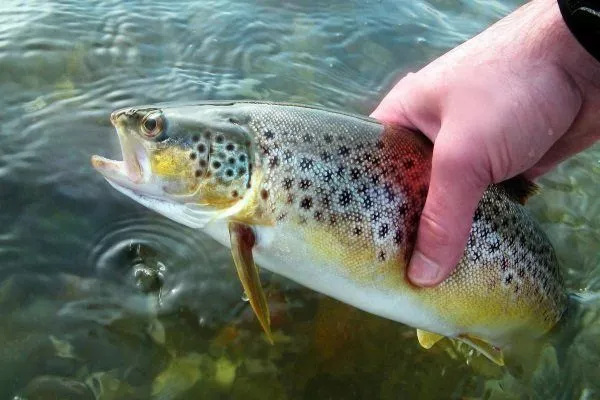
What do you need to breed trout?
Equipment requirements for trout farming are the same as for other fish species. Anyone planning to farm trout will need to purchase or equip the following:
- a pond or swimming pool;
- RAS (for home use);
- control equipment.
Once the necessary conditions have been established, fry are purchased. The number of fry depends on the size of the tank they will be kept in. Feeding mixtures and supplements will be required for the fry.
Breeding and selling trout isn't an expensive business. However, starting one requires securing start-up capital in advance. Practical knowledge of home-based fish farming is also essential. Trout survival depends on water quality, temperature, feeding, and a host of other factors. Without experience in this field, the likelihood of a successful implementation is minimal.
What kind of trout should I breed?
There are approximately 20 species of trout, but only a small number can be raised at home. Keeping trout is complicated by the fact that they are predatory fish. Therefore, before raising them at home, you need to ensure you have sufficient funds to feed them.
Each trout species has its own husbandry preferences. It's important to decide in advance which one you'll be breeding to ensure the appropriate conditions are provided.
| A type of trout | Temperature of content (°C) | Growth rate | Number of eggs from one female | Puberty (years) | Disease resistance |
|---|---|---|---|---|---|
| Rainbow | 16-18 | Fast | 800-3000 | 3 | High |
| Brook | 2-8 | Slow | 1500 | 3 | Average |
Rainbow trout (mikizha), brook or lake trout (or brown trout), Eisenham trout, Arctic char and smallmouth char are listed in the Red Book, therefore their keeping is prohibited by law (Criminal Code of the Russian Federation, Article 258.1).
Rainbow
Rainbow trout are native to North America. They are accustomed to cold temperatures but thrive in warmer conditions. Rainbow trout are best kept at temperatures between 16 and 18 degrees Celsius (61 to 64 degrees Fahrenheit). This species offers several advantages:
- The fry weigh no more than 30 grams, making them easier to keep at a young age;
- in just one year the fish can grow up to 125 grams;
- Young females can lay up to 800 eggs.
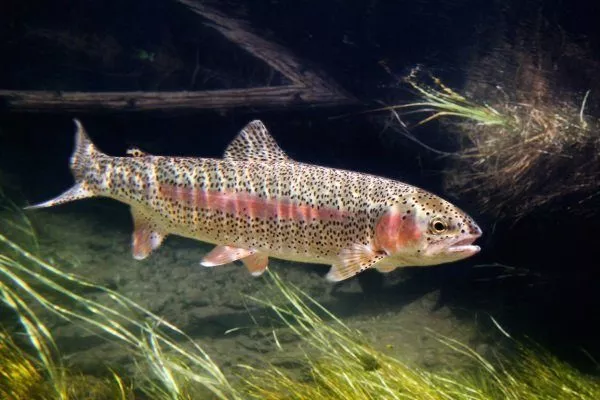
A disadvantage of rainbow trout is that they reach sexual maturity at around three years of age. Therefore, trout farming is not possible during the first few years.
Males can be identified by a wide iridescent stripe, which appears at puberty. For trout breeding, it is recommended to keep females until they become adults. At this age, they are capable of producing up to 3,000 eggs. The fry are born in the spring.
Brook
Brook trout grow more slowly than rainbow trout and produce fewer offspring. In their first year, young fish reach a weight of only 25 grams. To reach 500 grams, a trout must be at least three years old.
The benefits of brook trout include:
- an adult fish reaches a weight of 12 kilograms;
- the female is capable of producing up to 1500 eggs;
- The diameter of one egg is only 7 millimetres, so they don’t require much space for storage.
Brook trout reach sexual maturity at age three. By increasing the temperature to 8 degrees Celsius, the incubation period can be reduced to 65 days. If the eggs are stored in water at 2 degrees Celsius, the incubation period will last approximately 200 days. The young fish are born in the fall.
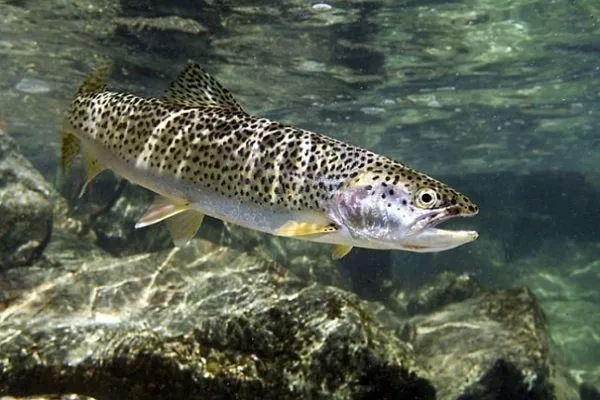
Purchase of fry
Fry are purchased from specialized trout farms. The price of fry depends on their weight. For trout, the price ranges from 250 to 400 rubles per kilogram. The smaller the fry, the more expensive they will be.
- ✓ Weight and age appropriate
- ✓ Absence of visible signs of disease
- ✓ Activity and mobility
- ✓ Origin from healthy producers
According to statistics, one tenth of young trout do not survive, no matter how comfortable the conditions in which they are kept.
A cheaper way to breed trout is to buy eggs. However, those without experience in this field will have a hard time raising fish from them. In this case, it's safer to buy adult trout weighing 200 grams, which, after a certain period of time, will spawn and raise their own fry.
Choosing a location for trout farming
The choice of trout farming location depends on its age. The most common methods for keeping this species are:
- cages;
- pond;
- RAS.
Cages are best suited for juvenile and adult fish. It is recommended to keep eggs separately. To increase growth, combined husbandry methods can be used. The maximum allowable volume of the structure also differs. For cages and ponds, this limit is 100 cubic meters, while for recirculating aquaculture systems (RAS), it is only 60.
cages
Cages are considered the most cost-effective way to keep trout. They involve using a special pond. Around its perimeter, stakes are placed, covered with a metal or nylon mesh. The structure resembles a landing net.
Cages are installed in open water, providing the fish with natural habitats. The maximum diameter of such a structure is 20 meters, and the depth is 6 meters or more. The depth of the cages depends on the depth of the water body in which they are installed. The distance from the cage to the bottom must be at least 1 meter. An anchor may be used to secure the structure.
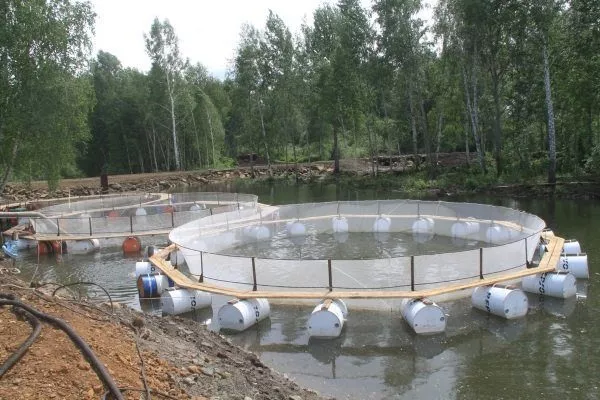
Cages are classified by the type of water they are installed in. If warm water is used, they are designed to be free of current. These structures are usually automated.
Cold water cages are:
- sectional;
- pontoon;
- stationary.
Northern lakes are used for installing such structures. Seawater cages come in pontoon and automated types. This option is best suited for trout farming.
Pond
Two types of ponds are used for trout farming: natural and hand-reared. The former is less suitable for trout farming, as it is quite difficult to create the conditions necessary for this species.
Poachers pose an additional threat, and protection against them can only be ensured if the pond is located on private property. The advantage of a natural pond is that there is no need to feed the fish.
The basic requirements for a homemade pond are current and the right temperature. Current helps oxygenate the pond and remove waste. The right temperature promotes faster growth of trout. Feeding the fish in such a pond is essential.
The main disadvantage of a homemade pond is that sometimes you need to fertilize the eggs yourself.
You can learn more about the specifics of selecting females for collecting eggs for breeding fry by watching this video:
Recirculating aquaculture systems
A recirculating aquaculture system (RAS) is a popular, but expensive, method of trout farming. RAS includes a set of equipment necessary to ensure the necessary conditions. fish farming in a pool.
The installation consists of:
- water filters;
- pumping equipment;
- cleaning and disinfection systems;
- gas exchange device;
- heating devices.
Thanks to the RAS, the water in the pool is purified and oxygenated. To ensure proper operation, the equipment uses specially purchased food, rather than natural feed. The main advantage is that the feeding process and water conditions are under human control. The pool temperature can be adjusted manually. The risk of external contamination is minimized.
To learn more about how a home trout farm looks and functions, watch this video:
Equipment for growing
You can provide conditions suitable for growing trout at home using:
- a gas generator that fills water with oxygen and ozone;
- water circulation pumps;
- cleaning filters;
- automatic feeding systems;
- devices for determining the level of acidity and chlorine in a reservoir.
If you plan to raise fish from eggs and fry, you'll need additional incubation equipment. Buckets and nets are also needed for catching and transporting trout.
When using RAS, you won't have to purchase most of the equipment separately.
Growing cycle and technology
Growing trout takes a considerable amount of time. To ensure that the fry grow to adult size over several years, suitable conditions must be created. The equipment used for trout farming is also suitable for other fish species. The difference lies in the unique conditions. To do this, it is recommended to first study the characteristics of the trout's natural environment.
Chemical composition of water
The appropriate chemical composition of water for keeping trout includes the following standards:
- oxygen level – from 7 to 11 milligrams per liter (the required level will be provided by an aeration column);
- pH - not lower than 6.5 and not higher than 8 (if it falls below the permissible level, the fish stops reproducing, if it rises above, the trout may die);
- nitrate concentration – up to 100 milligrams per liter (above this value poses a risk to fish);
- ammonia level – 0.1 milligrams per liter;
- hardness index – from 8 to 12;
- carbon dioxide content – up to 35 milligrams per liter;
- chlorine level – up to 0.01 milligrams per liter.
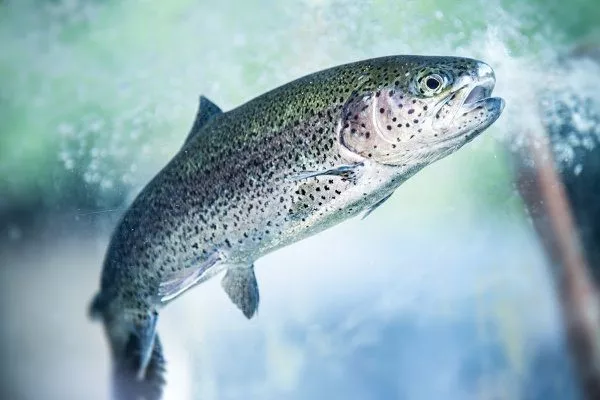
To test chemical indicators, special devices are used, which can be purchased at hardware stores.
Feeding fry and adult fish
Proper feeding determines how long it takes for fry to reach adult size and how tasty the fish will be. Trout food comes in two types: organic and dry. The fish tastes better when the former is used.
To give fish meat a red color, canthaxanthin should be added to the feed.
Feeding fry and adult fish differs. Trout should be fed from the moment they hatch. The diet for fry consists of:
- zooplankton (addition of egg yolk is allowed);
- meat and fish meal;
- fish oil.
You can prepare a mash by combining different food options. The optimal number of feedings per day should not exceed nine. About 90 grams of food is required for a thousand individuals. Special floating and sinking food is available for sale, making feeding easier.
Adults can be fed both dry and live food. The ratio of these types is approximately equal, with a bias toward live food. The diet for adult fish consists of:
- minced animal meat;
- fish waste;
- shrimp;
- aquatic snails;
- insects.
Fiber is also used in fish feed. It doesn't provide any nutritional benefits to trout, but it does loosen other types of food, making them more digestible.
Temperature
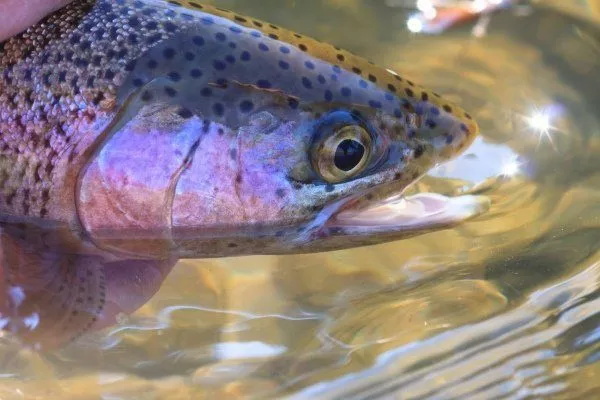
It's difficult to regulate the temperature in a natural reservoir. Therefore, it's recommended to keep trout in a recirculating aquaculture system. Depending on the age of the fish, the following temperatures are suitable:
- from +6 to +12 degrees Celsius – for caviar maturation;
- from +10 to +14 degrees Celsius – for fry;
- from +14 to +16 degrees Celsius – for adult fish.
Temperatures gradually rise as the trout grow.
Care and growing standards
To ensure trout thrive, it's important to follow a few tips. The water must be at the right temperature and have sufficient oxygen. It's important to check the filters for proper operation—polluted water can harm the fish.
It's recommended to separate small and large fish and place them in separate tanks. This method will ensure that the weaker fish receive more food and grow faster. During spawning, the best fish should be selected for breeding.
During normal development, the weight of a rainbow trout is:
- 30 grams – at the age of fry;
- 125 grams – yearlings;
- 200 grams – fish aged two years or more.
Brook trout develop more slowly, so the figures given for them are lower at the same age.
Disease prevention
If one of the fish shows signs of illness, it should be moved from the others to a separate tank and monitored for health. To reduce the risk of illness, use fresh food that does not contain cottonseed meal, check the water regularly, and avoid keeping juveniles and adults together.
The characteristic signs of infectious diseases are:
- change in scale color;
- slow movements;
- reduced need for feeding.
When purchasing fry or young fish, it is not recommended to release them into existing fish populations. They should be quarantined for a period of time to ensure they are free of disease.
Common mistakes in trout farming
The list of the most common mistakes that inexperienced fish farmers face includes:
- lack of constant quality control of the water in which trout are kept;
- purchasing cheap feed (there is a risk of reducing the fish population by half);
- savings on the size of the reservoir in which the trout is located (the stocking density should not exceed the maximum permissible indicator);
- using low-quality or used equipment (the slightest malfunction can cause serious harm to trout);
- purchasing fry from unregistered farms.
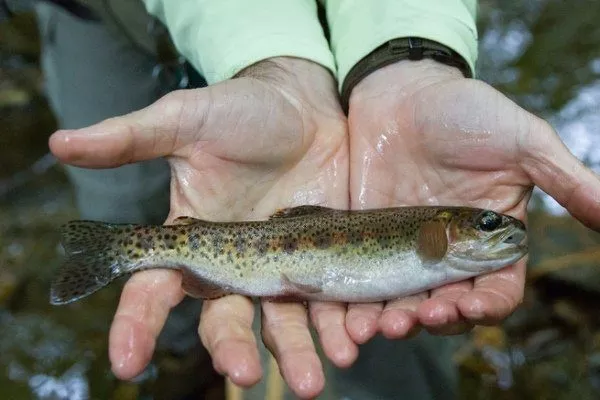
Trout farming should be carried out strictly according to the instructions. This will help avoid most mistakes.
Costs and profitability
Starting a trout farming business will require between 1.5 and 3 million rubles, depending on the method used for raising the fish. About 400,000 rubles will be needed to purchase the fry and feed. Hiring experienced workers is recommended. Their total salary will be approximately 300,000 rubles. The remaining funds will go toward equipping the pond for trout farming.
The profitability of this business is 9%. A ton of trout can fetch an average of 155,000 rubles. Large farms have lower profitability than smaller ones.
Farming trout at home is a profitable business venture. However, it takes 2-3 years to break even. This type of venture requires not only knowledge of fish farming but also a significant amount of free time. Otherwise, success in trout farming is minimal.