
Low oxygen levels in stagnant bodies of water degrade water quality, making it unsuitable for fish and other organisms. To prevent stagnation, algal blooms, and deterioration of water quality, special devices called aerators are used. Let's find out what types there are and whether you can make one yourself.
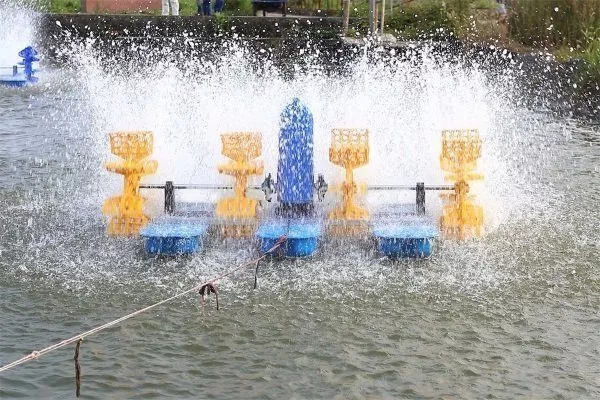
What is an aerator and what is it used for?
An aerator is a hydromechanical device that saturates water with oxygen. Fish and other living organisms in bodies of water require a certain concentration of oxygen to survive. A lack of oxygen negatively impacts the health of all living things. Thanks to an aerator, stagnant, foul-smelling bodies of water are transformed into ponds brimming with life—fish, mollusks, water lilies, and other attributes of a healthy pond.
How does it work?
In nature, water is saturated with oxygen through natural water movement. In artificial reservoirs, especially in winter, stagnant water masses are observed.
What does an aerator do:
- Mixes layers of water by creating artificial currents.
- Cleans water from impurities and contaminants, making it transparent.
- Eliminates unpleasant odor.
- Cleans water bodies from algae.
- Reduces the number of midges and mosquitoes.
- In winter, it forms a hole through which harmful gases escape.
What does an aerator consist of?
Typically, a pond aeration system consists of:
- compressor;
- air sprayers with a 4 mm connection nipple;
- a distributor with 4 mm fittings at the outlet – connects the sprayers to the compressor;
- Silicone hoses with an internal diameter of 8/4 mm – connects the input of the multiplier to the compressor/the multiplier to the sprayers.
Compressor models are equipped with multipliers with a number of output channels corresponding to the maximum performance of the device..
- Spring-type check valves – they are installed in front of the sprayers, their task is to prevent the aeration hoses from freezing in the winter.
The design nuances of an aerator depend on its type and operating principle. Vortex compressors are typically used for stocked ponds. The table lists compressor types with different operating principles and their application features.
Features of using different types of compressors
| Types of compressors | For reservoirs with a volume of cubic meters | When to use | Noisiness | Application |
| Membrane | up to 15 | all year round | low-noise | decorative ponds |
| Piston | from 10 to 300 | all year round | medium-noise | decorative ponds |
| Vortex | from 150 | all year round | noisy | fish farming ponds |
Criteria for selecting a device
An aerator is not cheap, but the cost is incomparable to the problems that arise in a pond with stagnant water. Regardless of the pond's purpose—whether decorative or commercial—water aeration is essential. The industry produces various types of aerators, differing not only in name but also in operating principle.
- ✓ The noise level that may affect the inhabitants of the reservoir.
- ✓ The energy consumption of the device and its compliance with the capabilities of the electrical network.
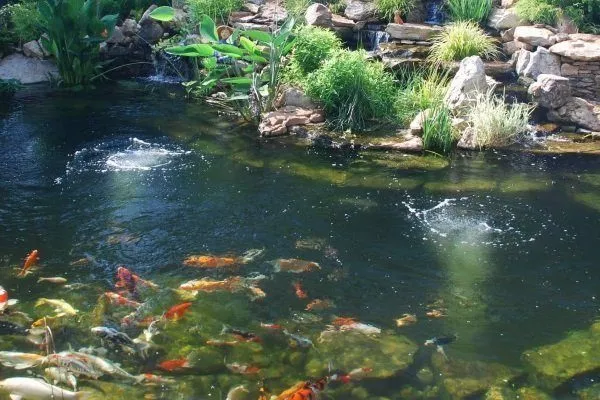
When choosing a compressor, consider the size of the pond—each device is designed for a specific volume of water. What else do you need to know about oxygenating water?
- The amount of oxygen in the water must correspond to the needs of the fish - its excess is just as harmful as its lack.
- The need for oxygen varies depending on the season.
- The type of aerator, its design and operating principle are selected in accordance with the purpose of the pond.
When choosing an aerator, it is evaluated according to the following indicators:
- compressor power;
- noise;
- Limit temperatures for using the device.
Aerators for small ornamental ponds cost between 4,000 and 10,000 rubles. A device for a large stocked pond costs ten times more – around 100,000 rubles.
The optimal ratio of compressor performance to water volume is 1 l/h per 1 liter of water.
There's no exact formula for choosing a compressor. For each specific pond, the device is selected based on a variety of factors:
- stocking density;
- presence of aquatic plants;
- water temperature;
- biochemical composition of the soil;
- depth of the reservoir;
- presence of shallow water;
- bottom configurations;
- the presence of a shadow over the water surface.
If you're purchasing an aerator for the first time and the optimal power is unknown, start with a 40-60W unit. After installing the aerator, monitor the oxygen concentration in the spray zone using specialized tests. If oxygen concentration is insufficient, additional compressors are purchased—their number and power are determined experimentally.
To ensure high-quality aeration, the daily water flow of the system must be four times greater than the total volume of the pond.
Under certain circumstances, it is necessary to increase the capacity of the aeration system by increasing the number of aerators in the pond if:
- the reservoir is oversaturated with algae;
- organic matter enters the reservoir along with rainwater;
- The reservoir has an irregular shape, which makes it difficult to mix the water.
On average, at least one aerator is required for every 10,000 square meters of water surface.
By appearance
All aerators are divided into two large groups according to their installation type:
- Stationary. Permanent structures installed in a specific body of water. Operation is either continuous or scheduled.
- Mobile. These devices are designed for temporary, seasonal use. They can be moved from place to place and installed in different bodies of water. Such devices are typically used in small ponds and in bodies of water that do not require constant oxygenation.
By location
Based on their operating principle and location, aerators are divided into the following groups:
- Superficial. These are compressors that create water flows in the form of fountains or waterfalls. This striking design is more appealing for a decorative pond. The constant noise can be disturbing to pond inhabitants, so consider this when choosing the type of aerator. A surface aerator works simply: the pump draws in a portion of water and then accelerates it back out. When the water enters the air, it picks up oxygen and, falling back into the pond, replenishes its oxygen levels.
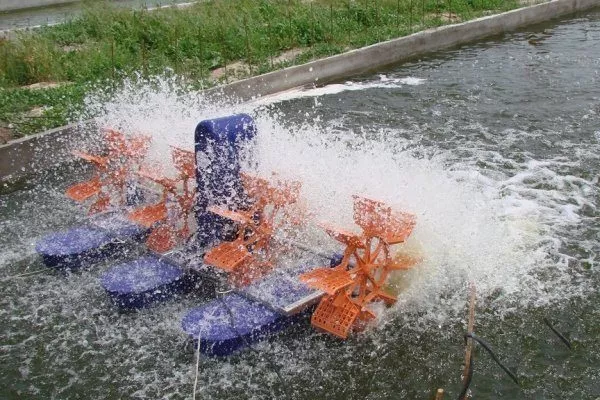
- Ejectors. These devices operate almost identically to surface aerators. However, ejectors don't suck in water; they simply set it in motion. Motor-driven blades strike the water with force, mixing the water and creating air bubbles. Ejectors, like surface aerators, are quite noisy.
- Combined. The compression system is located on the shore, and the sprayer is in the pond. A stream of water emerges from the sprayer head, usually located on the surface of the water, and as it falls, it oxygenates the water.
- Wind. This is a self-contained device. It requires no electricity to operate—it's powered by wind. There are two design options: stationary or floating. The design consists of blades located on the surface of the water and a propeller located underwater. The blades, turned by the wind, transmit torque to the propellers, which cause the water to mix and churn.
- Bottom. This is a relatively new type of aerator. It's the most effective device available today. The compressor remains running and making noise on the shore, while only the tube and diffusers are immersed in the water. Water exiting through small-diameter holes passes through the water layers. The pond receives oxygen, and the water layers are constantly mixed. This type of aerator is ideal for fish ponds. The only drawback is the high cost.
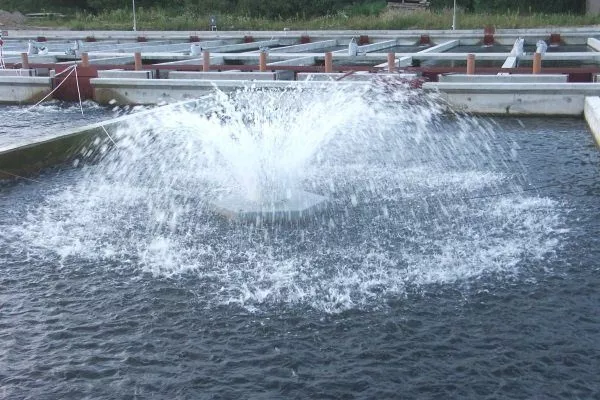
Surface aerator
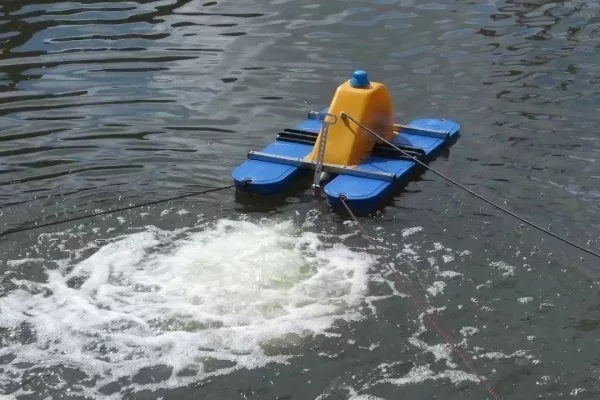
Ejectors
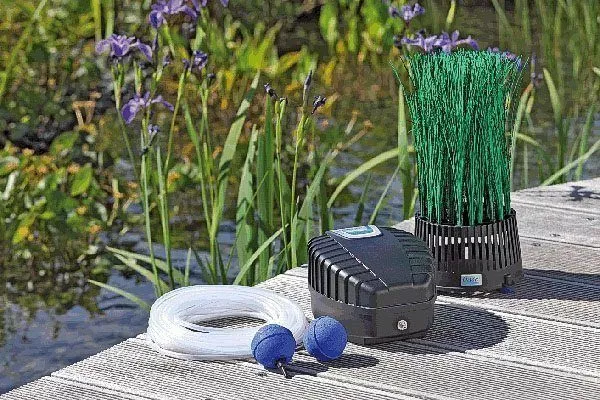
Combination aerator
Wind aerators
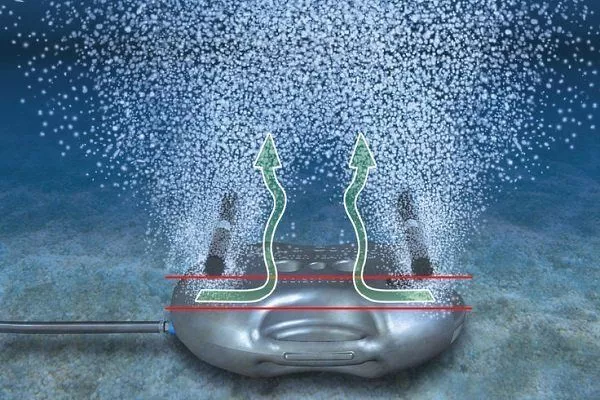
Bottom aerator
Model overview
Aerators are widely available on the market today, offering a model suitable for ponds of any size. Let's look at several modern models.
AquaAir 250
This powerful floating aerator is designed for ponds up to 250 square meters in area. It penetrates air to a depth of 4 meters. It can transform a stagnant pond into a flowing body of water. It maintains the biological balance of ponds and prevents algal blooms.
Features of the model:
- equipped with an adjustable injection nozzle – ensures precise oxygen supply;
- characterized by a high flow rate;
- pump suspension and casing – made of stainless steel;
- low noise level;
- Thanks to the sealed pump, the device has a long service life.
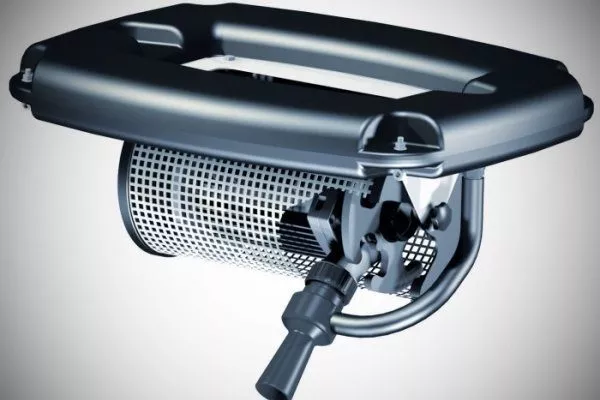
Technical characteristics of AquaAir 250:
| Characteristics | Parameters |
| Dimensions (L x W x H), mm | 725 x 555 x 310 |
| Volume of pumped air, l/h | 30,000 |
| Minimum depth of the reservoir, m | 0.5 |
| Power consumption, W | 650 |
| Maximum pond volume, l | 250,000 |
| Weight, kg | 28 |
| Cable length, m | 30 |
| Average price, RUB | 186,000 |
ROBUST AIR RAE-1
A bottom-type aerator designed for ponds up to 4,000 square meters in area. The kit consists of:
- compressor;
- bottom sprayer;
- metal stand for the compressor.
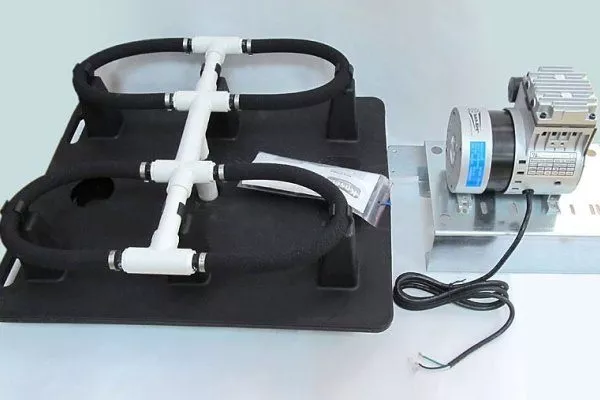
Technical characteristics of ROBUST AIR RAE-1:
| Characteristics | Parameters |
| Productivity, l/h | 5400 |
| Compressor size, cm | 19x18x20 |
| Bottom sprayer size, cm | 51x61x23 |
| Maximum immersion depth, m | 6.8 |
| Average price, RUB | 145,000 |
Advantages and features of the model:
- ideal for water bodies up to 15 m deep;
- economical – it continuously mixes water using compressed air, consuming a minimum of energy;
- year-round use is possible.
Airmax PS 10
Bottom-type aerator for small ponds up to 6.5 m deep and up to 4,000 sq. m in area. Single-diffuser model. Noise level: 51.1 dB at 1.5 m.
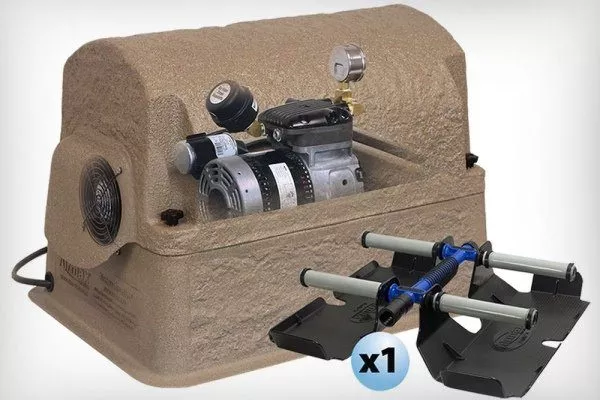
Airmax PS 10 Specifications:
| Characteristics | Parameters |
| Productivity, l/hour | 3908 |
| Maximum depth of the reservoir, m | 6.5 |
| Minimum depth of the reservoir, m | 1.8 |
| Dimensions (L x W x H), cm | 58 x 43 x 38 |
| Power, W | 184 |
| Weight, kg | 37 |
| Price, RUB | 171,000 |
Advantages and features of the model:
- The housing reliably protects internal parts from water and mechanical damage.
- The body has a camouflage aesthetic – it is practically invisible in the landscape design.
AirFlow 25 F
A floating aerator capable of creating a powerful flow of oxygen-rich water.
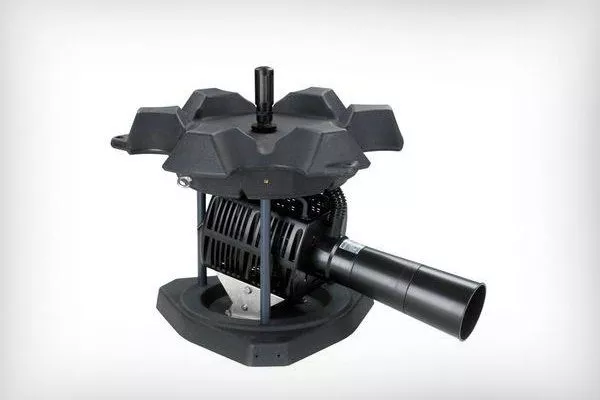
Technical characteristics of AirFlow 25 F:
| Characteristics | Parameters |
| Volume of pumped water, cubic meters/hour | 75 |
| Volume of pumped air, cubic meters/hour | 10 |
| Minimum depth of the reservoir, m | 0.65 |
| Dimensions (L x W x H), cm | 980 x 750 x 680 |
| Power, W | 250 |
| Weight, kg | 37 |
| Price, RUB | 131,000 |
Features of AirFlow 25 F:
- air injection is provided by the Venturi effect;
- the device is economical – it consumes a minimum of energy;
- you can change the direction of the flow;
- Suitable for use in sea water.
Each aerator model comes with individual operating instructions. Most instructions are in the language of the country of manufacture, so they should be translated first.
Is it possible to assemble an aerator yourself?
Pond aerators, especially those designed for large areas, cost over 100,000 rubles. If the pond owner is skilled in using equipment and tools, they can save money by assembling their own. Let's look at the assembly processes for different types of devices.
- Check that the aerator's power corresponds to the volume of the pond.
- Make sure you have the necessary fasteners and additional materials.
- Perform a test run of the aerator to check its operation.
How to assemble an ejector aerator?
What you will need to stock up on:
- drainage pump;
- sewer pipe d 32 mm – 2 m and branch pipe – 30-50 cm;
- corner tee at 45 degrees;
- 45 degree corner;
- with double braided wire.
A pump of moderate power and cost is selected, taking into account the aeration area. The cable cross-section is chosen to withstand the current drawn, even during continuous operation.
Assembly process:
- The pump typically comes with an elbow and a hose fitting. Seals are inserted into the sewer tee and connected to the fitting. Silicone sealant can be used to seal the connection.
- A branch pipe is connected to the second side of the tee.
- A 45° angle is placed in the upper branch and a 2-meter pipe is attached to it.
- All that remains is to connect the resulting structure to the pump's angular adapter.
- The cable is connected. The plug is cut off. The wires are twisted together and wrapped with electrical tape. Then they are hidden in a sleeve filled with polymer. If the plug is not cut off, an extension cord will have to be used. The socket and plug are then wrapped in plastic and sealed with electrical tape.
- The pump is placed at a depth of 70-100 cm. The intake pipe should be above the water surface. For this purpose, a mast is made from steel pipe and driven into the ground.
- It's best to place the pump in a mesh container. The aerator is secured to the mast with wire. Now you can turn on the power.
A tee with a 90-degree angle should not be used. If the angle is 45 degrees, the air is drawn in, moving and mixing with the water. If the angle is 90 degrees, there is a risk of backflow.
How to assemble a bottom aerator?
Assembling such an aerator is inexpensive. This design requires a car compressor with a receiver. Also stock up on:
- high pressure hose;
- clamp;
- tees;
- sprayers.
Sprayers can be made from half-liter polyethylene bottles. Simply poke holes in them with an awl. To reduce the diameter of the escaping bubbles, wrap the bottles in foam rubber.
Assembly procedure for a homemade bottom aerator:
- The compressor is installed near the pond or in some nearby outbuilding.
- The compressor is connected to a central hose, which is pulled to the reservoir.
- Branches are made using tees. The number of branches corresponds to the number of nozzles. They are secured with clamps.
- Diffusers attached to tees are placed on the pond bottom. To prevent them from rising to the surface, they are weighed down with stones or secured with pins with curved ends.
Bottom aerators cannot operate continuously. They also produce noise, causing discomfort to those around them. These devices are typically used to periodically oxygenate the water.
The video below shows how to make an aerator yourself:
How to assemble a wind aerator?
Wind turbines are especially good for winter. The assembly process is simple and doesn't require expensive parts. You'll need:
- metal sheet – square with a side of 30 cm;
- steel rod, d 20 mm;
- bearings of the appropriate section;
- metal strips (thickness – 2 mm);
- plastic container;
- fan;
- fasteners.
Assembly order:
- Eight squares are cut from a sheet of metal. These are then assembled into cubes. Crossbars are placed inside the cubes, a hole is made in the crossbar, and a bearing is inserted. The bearing centers must be aligned.
- The rod is inserted into the bearings.
- The plastic container is cut in half - these will be the blades for rotating the shaft.
- The blades are attached to the top of the rod using metal loops.
- The support legs are welded to the structure.
- A radiator propeller is attached to the end of the shaft.
- Now the structure can be lowered into the water.
The wind spins the blades, transmitting rotation to a propeller located at the bottom of the shaft. The propeller, as it rotates, creates a vortex that prevents water from freezing in winter.
Aerators are an indispensable tool when raising fish in still waters. You can buy one or make one yourself—the main thing is that the pump is powerful enough to aerate the required area.