
Exophthalmos in pond fish is not a separate disease. It is a symptom of other internal illnesses, ranging from vitamin deficiency to serious infections. Only an ichthyologist can accurately diagnose the condition. In this article, we will discuss the possible causes of enlarged eyes in fish, treatment methods, and prevention.
When is it normal for pond fish to have large eyes?
There are several fish species for which exophthalmos is not a disease, but a physiological characteristic. These are rare, and all are ornamental. For example, telescope fish and black telescope fish are varieties of goldfish. They can be kept in ponds, but they are more often found in aquariums.
In other cases, when large eyes are not a characteristic of the fish, it is a disease and requires immediate treatment.
What is exophthalmos?
According to ichthyologists, bulging eyes in fish are a systemic pathological condition affecting the fish's eyes. They are caused by infection/fungus or poor environmental conditions (such as being kept in an unsuitable, toxic environment). The scientific name for this condition is exophthalmos.
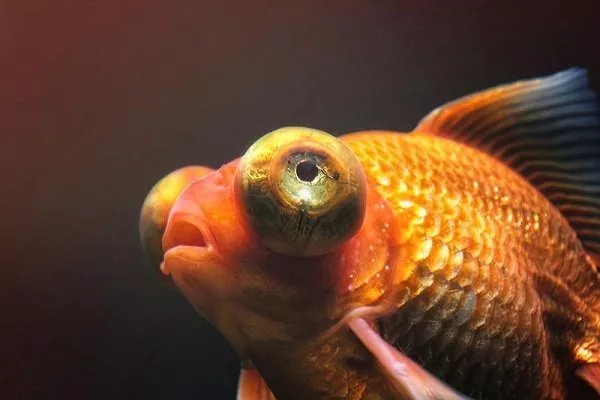
All types of fish are susceptible to exophthalmos, as it is not considered a separate disease, but is most often a consequence of a lack of proper care.
If treatment is not started promptly, the fish may lose its eyes. Over time, the affected organs completely separate from the body.
Pathological causes of exophthalmos in fish
The most common cause of exophthalmos in fish is poor water quality. Improper water chemistry negatively impacts osmosis regulation and other biochemical processes. In many cases, this condition can be cured by improving the environment.
If the problem is caused by poor water quality, both eyes will be affected. If only one eye is swollen, it may be due to a simple injury from an attack by another fish or some other trauma (for example, if the fish hit a rock or snag).
In addition to an unsuitable habitat, other causes of exophthalmos in fish include:
- eye flukes;
- systemic bacterial infection;
- viral infection;
- systemic fungal infection;
- vitamin deficiency.
Eye problems such as these can also indicate kidney and liver problems. Fish poisoned by environmental toxins can no longer detoxify themselves and suffer from kidney failure, which can lead to, among other things, exophthalmos.
Signs
The main symptom is swelling of one or both eyes, causing them to protrude from their sockets. This is caused by fluid collecting inside or behind the eyes. This causes the eyeball to become noticeably larger, making it appear as if it's about to fall out. Blurred vision also occurs across the entire outer surface of the eye.
How to treat exophthalmos?
Treatment for exophthalmos depends on the cause. If mechanical damage is involved, minor injuries will resolve on their own over time (provided the fish are provided with suitable conditions and a balanced, vitamin-rich diet).
Nuances in case of injury:
- In case of injury, it takes about a week to recover;
- An indicator that everything is going well is that the clouding of the eye goes away, even if the swelling has not yet subsided.
- ✓ Ensure water temperature is at least 22°C to speed up healing.
- ✓ Use food with a high content of vitamin A for the regeneration of eye tissue.
Various antibiotics and antibacterial medications, similar to those used to treat fin rot, help combat bacterial diseases. It is recommended to mix the medication with food rather than simply adding it to the water.
If we're talking about an infectious disease, such as rubella, then only after an experienced ichthyologist has provided a conclusion and treatment recommendations, taking into account the characteristics of a specific body of water, can you begin to combat the infection.
In this case, it is impossible to make independent treatment decisions, since the incorrect use of prebiotics, which are usually used to treat such diseases, can destroy the entire population of the reservoir.
If the pond has a natural water supply, sick fish cannot be cured. The only solution is summeringTo do this:
- The tank is completely drained and disinfected.
- All fish are destroyed in the process.
What happens after treatment?
The recovery process can take a long time—from several weeks to several months. Exophthalmos leaves behind serious consequences (detachment of the eye tissue) that cannot be completely cured.
The fish still has visible damage, and their vision deteriorates, sometimes even disappears. In extreme cases, the eyes even fall out due to delayed treatment.
The latter situation may be incompatible with natural life for some species, such as predators. For these fish, euthanasia may be the best solution.
Prevention of exophthalmos in pond fish
Providing appropriate conditions for the fish species you keep is the key to preventing exophthalmos and many other unpleasant diseases. Furthermore:
- regularly clean the aquarium from organic waste;
- clear the bottom of the reservoir from objects with a rough surface and sharp edges;
- Avoid combining slow and overactive fish, especially aggressive ones, in the same pond.
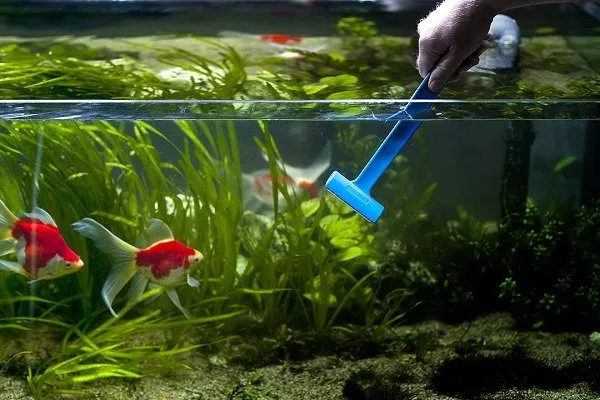
To treat exophthalmos in pond fish, first identify the cause. It most often occurs due to improper maintenance conditions or when a fish bumps into something sharp or is attacked by another fish. Although less common, it can be caused by infectious or other diseases.