
Bacterial fin rot primarily affects aquarium fish, and less commonly, pond fish. Experienced aquarists are familiar with this disease and can easily recognize it, as well as know how to treat it. If you haven't encountered this fish disease before, we recommend reading our article.
Description of the disease
This disease is bacterial in origin and highly contagious. The pathogenic bacteria Aeromonas punctata and Pseudomonas fluorescens are considered the main culprits.
Aeromonas bacteria are anaerobic rods, meaning they thrive in either small amounts or a complete absence of oxygen. Pseudomonas fluorescens — They are aerobic organisms, requiring oxygen for growth, but some strains can utilize nitrates instead of oxygen. Regardless of genus, both bacteria inhabit both fresh and brackish water.
A common sign of infestation is red spots on the body and fins of fish. Left untreated, the disease progresses very quickly and leads to the death of aquarium/pool inhabitants. Therefore, it is important to recognize the first signs of infestation promptly and prevent its spread.
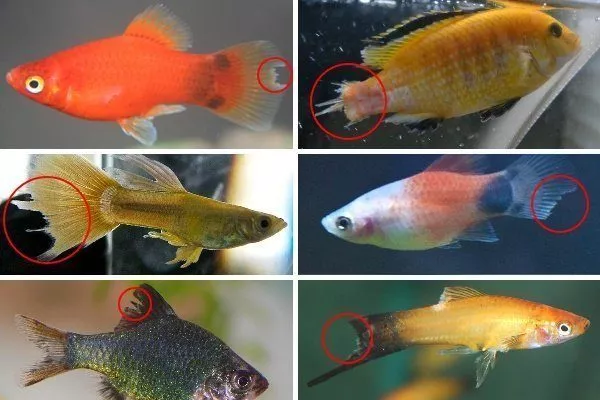
Young fish are difficult to treat, and the mortality rate from this disease is high. Adults often recover, but their fins do not regain their shape—they remain shortened and jagged, their rays fractured and knotted. If the ulcers spread to the body, the fish will most likely die.
Which fish get sick more often?
| Name | Average adult size | Temperature range | Recommended water pH |
|---|---|---|---|
| Angelfish | 15 cm | 24-28°C | 6.5-7.4 |
| Guppies | 4 cm | 22-28°C | 7.0-8.5 |
| Cockerels | 7 cm | 24-30°C | 6.0-7.5 |
| Veiltails | 20 cm | 18-22°C | 7.0-7.5 |
Aquarium fish are most susceptible to fin rot. Fish with long and veil-like fins are particularly at risk:
- angelfish;
- guppies;
- cockerels;
- veiltails ("goldfish"), etc.
Pond fish in cage farms can also be affected by these bacteria, but the disease is less common. According to our observations, juvenile salmon are particularly susceptible. For them, the source of infection is believed to be adult infected fish and their carcasses.
Causes of the disease
The presence of pathogenic bacteria in an aquarium or pool is considered normal as long as their numbers are within acceptable limits and the fish's living conditions are not compromised. Fish's immune systems can cope with the bacteria in the water, preventing disease from developing. However, this all changes when the number of microorganisms begins to increase or the fish's immune system is weakened due to poor care.
Factors influencing the development of the disease:
- Violation of temperature regime.Each fish species feels comfortable at a specific water temperature. Higher or lower temperatures in the environment where the fish live can cause shock in aquatic life and, consequently, a weakened immune system.
- Stress in fish due to sudden changes in water parametersIf you replace a large amount of old water with new water in an aquarium or introduce fish into the pond without prior preparation, the fish will experience severe stress, which can lead to a decrease in their ability to resist disease.
- Poor water parametersInfrequent water changes, rotting aquatic plants, pond pollution, and unsuitable pH levels in the aquatic environment can all contribute to poor fish health and increased susceptibility to pathogenic bacteria.
- Fish aggressionBarbs, angelfish, cichlids, gouramis, and others can injure other fish and each other when overcrowded. Carp are very voracious and can eat smaller fish or injure young fish in an attempt to get more food. Open, damaged areas become sources of infection.
- Feeding intensity and feed qualityFeeding live food is preferred, but vitamin-rich and plant-based foods are also necessary, so it's important to rotate all food types to ensure a varied and nutritious diet. Improper feeding and overfeeding can weaken the fish's immune system.
- Infected new residentsWhen adding fish to your tank, newcomers should be quarantined, or special additives (disinfection and immunity boosting) should be added to the water as a preventative measure.
Symptoms
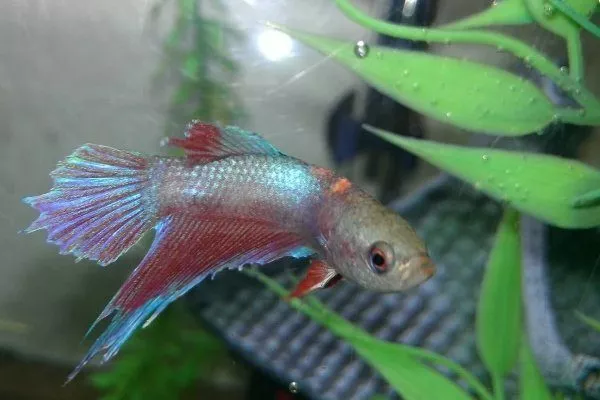
If the disease occurs in even one individual, all fish that shared the same pond must be treated. To prevent the disease from progressing, regularly inspect your aquatic pets. The first signs are a bluish-white clouding of the fin edges, which was not previously observed. As the disease progresses, the fin tips die off, eventually shortening completely or splitting into rays. Aquarists describe this condition as follows: "The fish has 'decayed' fin edges and a tail that looks as if something has eaten it away" or "The fish's caudal fin appears to be frayed and broken in places."
The presence of a combination of the following symptoms indicates an advanced stage of the disease:
- red spots at the base of the fins;
- ruffling of scales and their loss;
- possible exophthalmos, enlargement of the abdomen;
- the fins are destroyed, and erosions form in their place (there is a high risk of infection entering the blood, then the fish dies).
In acute cases, fish die en masse; in chronic cases, fish can be saved with adequate and timely treatment. This disease should not be confused with a common fin injury, mycobacteriosis, or ichthyophonosis. You can read about other fish diseases and their symptoms here. here.
Treatment
At the initial stage, regularly changing 30% of the water (every week), allowing it to settle and warm to the maximum temperature considered optimal for spawning for your fish species, can help combat the disease. When changing the water, siphon the substrate, clean the aquarium filter, and remove any rotting plants. If this doesn't help, more drastic measures are used, including various substances and medications.
Antibiotics
One of the following antibiotics is added to the general aquarium or to separate tanks where the sick individual is placed:
- Bicillin-5 at a rate of 5,000 units per liter of water. The required amount of antibiotic is dissolved in a bath, and the "patients" are released into it. The procedure lasts 30 minutes. Treatment is continued for 6 days.
- Tetracycline (erythromycin will also work) at a dosage of 70-150 mg/L. Add to the main aquarium once a week for 2 months.
Antibiotics can be combined with antibacterial agents, such as streptocide. Dissolve it in a small separate container at a ratio of 1.5 parts per 10 liters of water, and then pour the solution into the main container (i.e., if you have a 100-liter aquarium, dissolve 15 g of streptocide in a jar and pour it into the aquarium).
Antibiotics should only be added to an aquarium as a last resort! Along with pathogens, they also kill beneficial bacteria, which disrupts the biological balance in the aquarium, which is harmful to both fish and other aquarium inhabitants. Also, be aware that some medications are lethal to snails.
Potassium permanganate (potassium permanganate)
A potassium permanganate solution is used for therapeutic baths. The concentration should be 1-1.5 g per cubic meter of tank. Fish are soaked in this solution for 10 minutes twice a day—morning and evening.
Other methods
Veterinary clinics offer specialized treatments for fin rot, including Sera Baktopur, TetraMedica General Tonic, Aquarium Pharmaceuticals TC Capsules, and others. When using these medications, strictly follow the instructions.
| Treatment method | Efficiency | Risk to fish |
|---|---|---|
| Antibiotics | High | Average |
| Potassium permanganate | Average | Short |
| Specialized tools | High | Short |
During treatment in a community aquarium, remove plastic and ceramic decorations, increase aeration, and reduce the amount of live food. Each species requires an individual approach. For example, it's best to treat angelfish without placing them in separate tanks, as frequent transfers can worsen their already fragile health. Bettas are recommended to be treated in quarantine.
In his video, an aquarium fish breeder shares how he treats his pets for fin rot:
Prevention
To reduce the risk of disease, especially if you have fish with beautiful long fins, follow a few rules:
- Change 30% of the water weekly, cleaning the bottom of the aquarium as you go. Remember, adding water is not the same as replacing it!
- Feed your fish high quality food and do not overfeed.
- When purchasing new inhabitants, be sure to quarantine them for 10 days.
- Separate fish separately if you have any doubts about their health.
- Do not use other people's equipment or unsterilized soil.
- Maintain optimal conditions for keeping fish.
- Add preventative medications to the aquarium water. Basic violet K or malachite green (available at veterinary pharmacies) are most commonly used for this purpose. However, when using these medications, exercise caution and follow the prescribed dosage to avoid harming your fish.
- ✓ Maintain pH levels in the range of 6.5-7.5 for most fish species.
- ✓ Monitor the water temperature, avoiding sudden fluctuations of more than 2°C per day.
- ✓ Provide aeration of water to maintain oxygen levels of at least 5 mg/L.
So, fin rot is a dangerous and highly contagious disease. But with timely treatment, it's possible not only to restore the fish's fins but also to save the lives of most pets.
I have a sick (or not) male guppy. He's a veiltail. He lives in a 20-15 liter tank with four shrimp, one female guppy, and two danios. His dorsal and caudal fins are strange: they're eaten away in semicircles (dorsal) and entire "feathers" (caudal) are plucked out. Is it possible to treat the fish (add furacilin and sodium SO4 to the tank)? Please help, I'm very worried about the fish and shrimp (I'm not aware of this illness).