
About the disease
Helminths are the general term for parasites that inhabit the bodies of humans, fish, animals, birds, and plants, causing helminthiasis. Fish become infected most often by eating infected crustaceans or by eating sick birds living near a pond.
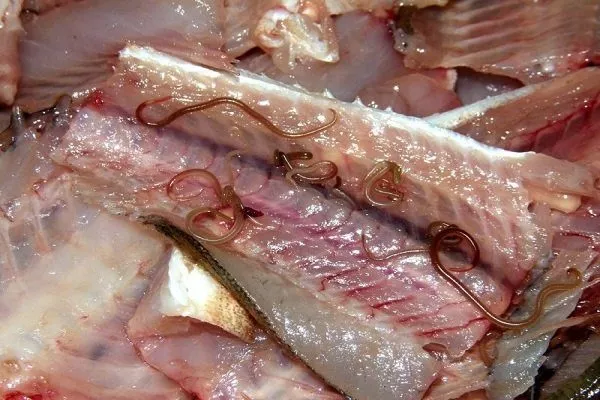
After infection, the parasite continues its development in the fish in an active form, and over time, irreversible changes occur in the host's body.
The proliferation of worms puts tremendous pressure on internal organs, causing them to atrophy. The abdominal wall can rupture, resulting in the death of the parasite's host.
Certain fish species are particularly susceptible to infection, such as:
- perch;
- ruff;
- pike;
- burbot;
- Far Eastern salmon;
- gudgeon;
- roach.
Less susceptible: bream, rudd and white bream.
Symptoms
Acute symptoms of helminthiasis are most pronounced in spring or summer, most often in fish aged 2 to 4 years. In the early stages, it's virtually impossible to detect the possibility of infection. However, helminthiasis has specific signs that allow one to identify infected fish:
- They try to stay as close to the shore and to the upper layers of water as possible - this way it is easier for them to breathe and easier to feed;
- swimming with a slight tilt to the side or lifting the stomach up, significant weight loss;
- bloating and hardening of the abdomen;
- the eyes of a fish infected with a parasite are cloudy, and its body is covered with small spines;
- they react poorly to the appearance of people or boats in their field of view; infected fish are easy to catch;
- If there are too many parasites, the abdominal wall ruptures and the worms fall into the water.
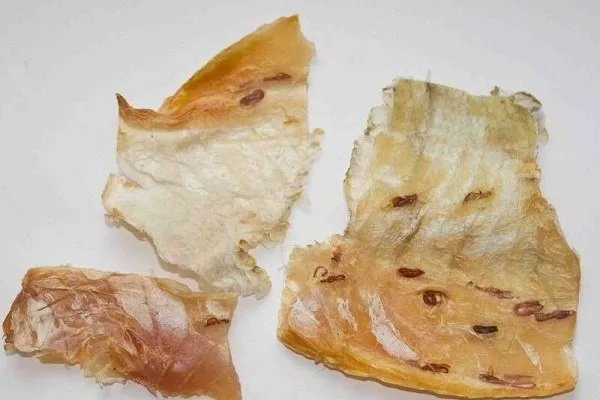
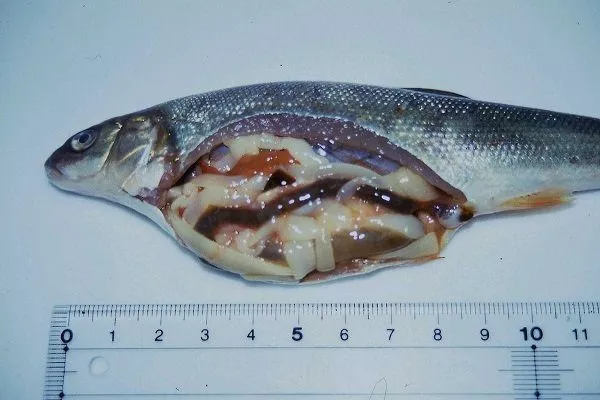
When cutting fish, visually identifying worms is easy, as they are worms. They vary significantly in structure, shape, and size. Small worms and their larvae are particularly dangerous.
Types of worms in fish
| Name | Length | Danger to humans | Form |
|---|---|---|---|
| Amur fluke | up to 15 mm | dangerous | flat |
| Echinococcus | up to 0.5 cm | harmless | round |
| Broad tapeworm | up to 25 m | dangerous | tape |
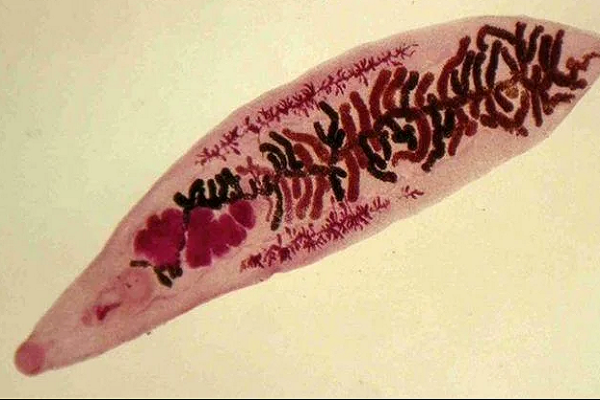
| Trematodes (flukes) | 2-2.5 cm | dangerous | flat |
| Nanophyetosis | up to 0.5 mm | dangerous | round |
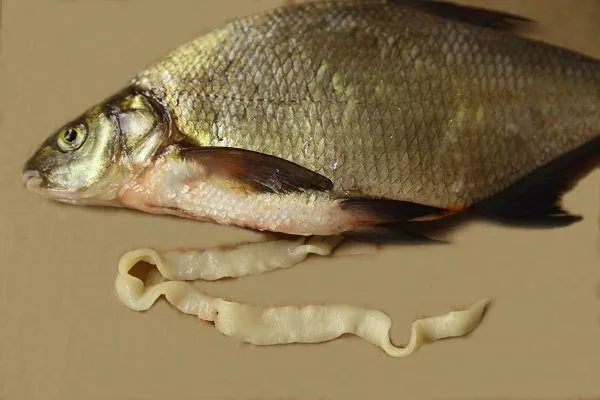
| Common Ligula or Ligula | up to 1 m | harmless | tape |
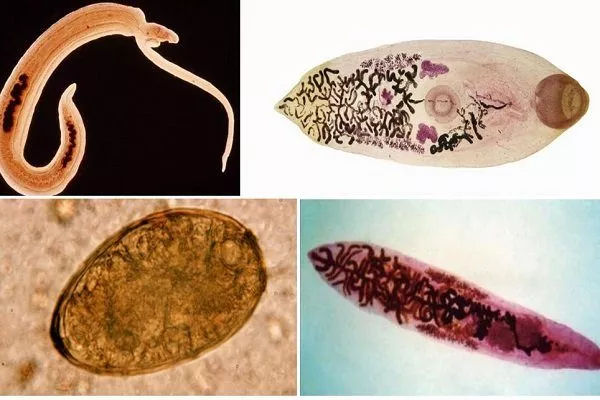
- Amur fluke. A worm that infects freshwater fish. It is considered one of the most common and dangerous fish parasites. It grows to no more than 15 mm in length and is flat. It is considered dangerous to humans and causes the disease opisthorchiasis.

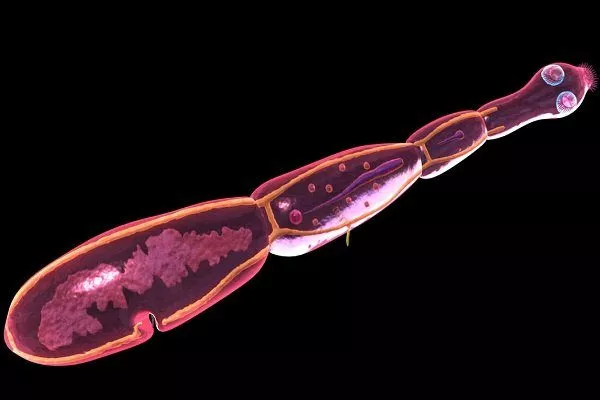
- Echinococcus. A worm reaching up to 0.5 cm in length. Harmless to humans. It parasitizes both fish and humans only in a temporary form.
- Broad tapeworm. It can grow up to 25 meters in length and is considered dangerous to humans. It can live in the human body for 35 years. The worm's primary hosts are humans and animals. Its intermediate host is fish. The broad tapeworm is most often found in sushi and roll eaters.
- Trematodes (flukes). Small worms, approximately 2-2.5 cm long, are dangerous to humans and cause diseases such as metagonimiasis and opisthorchiasis, as well as various other disorders.
- Nanophyetosis. Imagine these tiny parasites, no more than half a millimeter in length. They cause a wide variety of toxic and allergic reactions in humans, although this parasitic disease primarily affects organs.
- Common Ligula or Ligula. It can grow up to one meter in length, and its size is so large that it can exert significant pressure on organs and cause serious damage. It poses no danger to humans. The fish is a temporary host.
Treatment and prevention
Fish can become infected with helminthiasis even with the best and most careful care. It's important to notice it early. diseaseMonitor the fish's condition daily. When feeding, pay attention to any signs of illness or unusual behavior.
- Kamala and Fenasal. These medications are mixed into the feed and administered according to the instructions. Treatment is administered when fish are transferred to wintering ponds in the fall or in the spring when they are transferred from wintering ponds to nursery ponds.
- Medicinal baths. Flukes (trematodes) can be controlled with antiparasitic baths, for which the fish are placed in a 5% solution of table salt for 5 minutes; ammonia baths are used to treat fry.
- ✓ Disinfect the pond before stocking fish in the spring using phosphorus chloride at a concentration of 0.5 kg per 1000 m³ of water.
- ✓ Ensure separation of juvenile and adult fish to minimize the risk of infection.
- It is not recommended to keep old and young fish in the same pond;
- There should be no infected fish in the reservoir; if they are found, they must be immediately removed from healthy ones;
- For wintering, fish are moved from a man-made reservoir;
- until winter comes, the pond water is drained, and is released only in the spring, at which time its land is disinfected with phosphorus chloride, after which it is plowed;
- It is necessary to scare away birds that feed on fish from ponds, because they are carriers of helminths in this chain, and to ensure that such birds do not settle (build nests) near ponds - it is necessary to mow down hard and above-water plants.
| Method | Efficiency (%) | Periodicity |
|---|---|---|
| Pond disinfection | 90-95 | Annually |
| Separate content | 85-90 | Constantly |
| Bird repelling | 70-75 | Seasonally |
Electrofishing rods are used to catch infected fish. Sick fish are more sensitive to electricity, making them easier to catch.
It is recommended to bury dead infected fish deep in the soil. Do not place them on the surface! Fish-eating birds living near the pond will eat them, creating a new cycle of fish parasites.
The danger of worms in fish for humans
Humans can easily become infected from fish infected with worms. Many worms can cause serious illness in humans, so it's important to understand this issue and take prompt action. Women are most often infected when handling fish and eating it raw.
When worm larvae enter the human body from fish, they can cause the following diseases:
- Diphyllobothriasis. The disease is caused by the broad tapeworm. These large parasites can reach up to 10-15 meters in length and can live in the body for 5-10 years.
Symptoms include severe weakness and nausea on an empty stomach, periodic dizziness, unstable stool, and allergic skin reactions. - Anisakiasis. This type of parasite causes various gastrointestinal illnesses, causing nausea and vomiting. The illness can develop over a period of just a few hours or up to a week.
- Opisthorchiasis. The disease is caused by a fluke. The worms are approximately 12 mm long. Symptoms appear a few days after infection: fever, weakness, and vomiting. Self-medication is strictly prohibited; seek immediate medical attention!
- Metagonimiasis. These worms are spread by rudd, silver carp, gudgeon, catfish, and carp. The worms, up to 2 mm long, parasitize the intestines. The disease begins to manifest itself within one to two weeks of infection. People experience nausea, vomiting, diarrhea, and abdominal pain.
- Clonorchiasis. The cause of this disease is the Amur fluke, a flat-bodied parasite 10-20 mm long. Symptoms of clonorchiasis can vary in severity. Symptoms include fever, vomiting, nausea, a bitter taste in the mouth, and weakness.
Some worms pose no danger to the human body; once they enter the body, they simply die. Also, most of the fish we eat is frozen, and worms don't survive at -15-20ºC (they'll hatch in about 7 days).
It's best to take precautions and never eat raw fish, as this can lead to infection. And if you really want to eat it, eat only farmed fish (from specialized fish farms).
Special medications and baths are used to treat fish for worms. However, it's best to prevent the disease from occurring by taking preventative measures. This will help avoid unnecessary problems and expenses, and maintain the pond's high productivity.