
Fish, like most living creatures, are susceptible to disease. Early diagnosis of fish ailments can significantly simplify their treatment, as many can be prevented at an early stage. This article discusses the most common fish diseases.
Non-communicable diseases
Non-communicable diseases are most often caused by unfavorable living conditions or various injuries and traumas. Causes can include poor-quality feed, gas poisoning, oxygen deficiency, and sudden temperature changes.
| Name | Temperature range | pH of water | Required oxygen level |
|---|---|---|---|
| Asphyxia | 22-27 | 7.0-7.5 | High |
| Acidemia | 18-22 | 6.5-7.0 | Average |
| Alkaline disease | 22-27 | 7.5-8.0 | High |
| Shock in fish | 18-22 | 7.0-7.5 | Average |
| Gas bubble disease | 22-27 | 7.0-7.5 | Short |
| Cold | 18-22 | 7.0-7.5 | Average |
| Obesity | 22-27 | 7.0-7.5 | Short |
| Gonadal cyst | 22-27 | 7.0-7.5 | Average |
| Inflammation of the gastrointestinal tract | 18-22 | 7.0-7.5 | Average |
Asphyxia (suffocation, starvation)
Asphyxia is a condition caused by a lack of oxygen. Asphyxia can result in death.
Reasons. Asphyxia occurs in overcrowded pools with insufficient oxygen levels, at excessively high temperatures, as a result of rotting dead fish and food scraps not removed from the “home” in time.
Symptoms. The fish rise en masse to the surface of the water and actively gulp air, which continues for several hours. Their gills protrude.
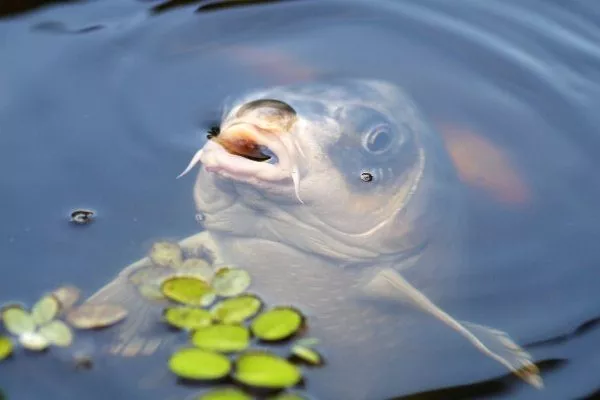
Treatment. First, the cause of asphyxia is eliminated. Next, some of the water is changed and aeration is performed. If this is not possible, temporary relief can be provided by a 15% hydrogen peroxide solution at a rate of 1 g/l. Repeated use of this solution is not recommended, as the fish may die.
Acidemia
This is due to high ammonia levels. This is a waste product of fish, and even small amounts of it are toxic to fish.
Reasons. When ammonia levels in the water increase, an alkaline reaction occurs. Acidemia is caused by infrequent water changes, overcrowding, and the accumulation of decaying organic matter.
Symptoms. The fish darken in color, float on the surface due to lack of oxygen, and sometimes attempt to jump out of the pond/pool or tank. Gill damage may occur.
Treatment. Treatment begins with partial water changes/refreshes, which will help save the fish. If there are many fish in the pond, installing an additional filter and turning on a pump is recommended. For prevention, it's advisable to balance the amount of food and fish with the size of the pool. Immediately remove any food debris and dead fish from the tank.
Alkaline disease (alkalosis)
Alkalosis is associated with increased pH levels. This results in dull skin and mucus secretion from the gills.
Reasons. A tank with soft, acidic water, densely planted, and intense sunlight can cause a sudden increase in pH. Long-term exposure to such an environment can cause alkalosis.
Symptoms. The fish's breathing quickens, they begin spreading their fins and thrashing around the tank. Loss of coordination and convulsions are noticeable. The fish attempt to jump out of the water.
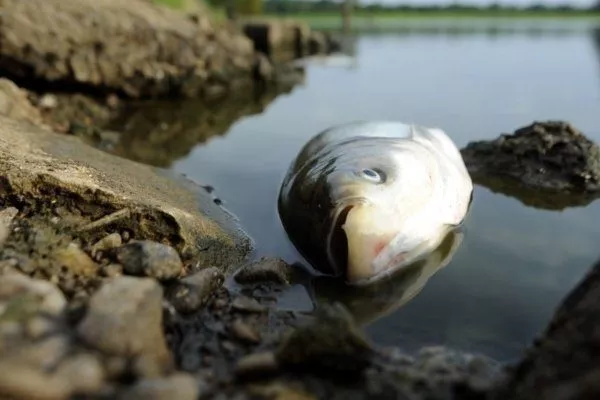
Treatment. Immediately after the disease is diagnosed, the fish are transferred to a tank with a pH of 7.5-8. In a tank with a high pH, the pH is gradually adjusted to the optimally low level. Achieving the desired pH is accomplished with a special pH buffer.
Shock in fish
This is the body's physiological response to sudden shocks of various types. Shock typically occurs when one or more environmental factors (particularly temperature or water chemistry) change too abruptly.
Reasons. Shock is usually observed in fish that have just been added to a pool/pond, but often this ailment appears due to a partial water change/change, if attention is not paid to this parameter.
Symptoms. The intensity of coloration decreases, the fish hide among plants or other objects, individuals have accelerated or slowed breathing, they periodically move abruptly to another place.
Treatment. If shock begins suddenly and clearly, the cause is determined first, and then treatment begins. If all pond inhabitants are affected, the conditions are adjusted. If recently introduced fish are shocked, they are transferred to more suitable conditions (water with familiar parameters).
Gas bubble disease (gas embolism)
During a gas embolism, the fish begins to behave timidly: losing coordination when the eye is damaged, and swimming on its side. This indicates the need for urgent action.
Reasons. Unsettled water used to fill a pool or pond contains numerous air bubbles, leading to gas embolism. Another cause is considered to be excessive aeration of the pool. Too many plants and too much lighting can lead to excessive oxygenation of the "home."
Symptoms. It manifests as blisters on the fish's body and eyes. Blisters can also appear on the fish's internal organs, which can be fatal in 60-80% of cases. The fish becomes lethargic and refuses to feed. Their fins begin to twitch spasmodically, their gills move less frequently, their eyes become cloudy, and their coordination is impaired.
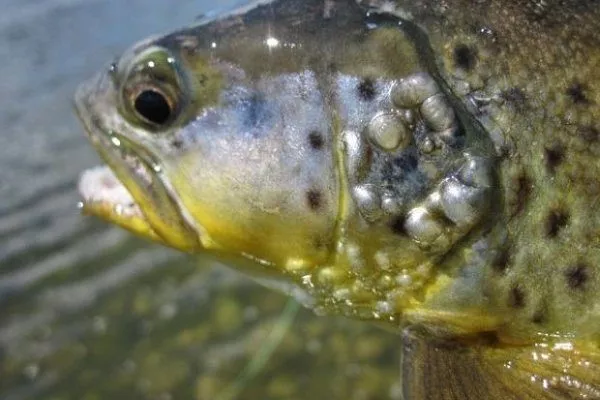
Treatment. Settling the supplied water in intermediate basins with minimal water movement will help eliminate excess dissolved gases. After 18-24 hours, the gas levels will return to normal.
Cold
Keeping fish in water that is unsuitable for them for a long time leads to a cold, which causes the fish to become less active and float on the surface.
Reasons. This occurs when fish are kept in colder water than is appropriate. Warm-water fish are typically kept in water at a temperature of 22-27 degrees Celsius, while cold-water fish are kept in water at a temperature of 18-22 degrees Celsius.
Symptoms. Cold-affected individuals become dark and earthy, their gill filaments swell and darken, growth slows, and dystrophic changes are observed in their internal organs. As a result, the fish produce immature eggs and milt. The fry die.
Treatment. Infected individuals are provided with normal conditions, with the temperature raised to an optimal level. The water is oxygenated, and disinfectant treatments are used.
Obesity
Obese fish may experience difficulty moving. Obesity is accompanied by invisible internal problems: digestive disorders and functional infertility resulting from the formation of fatty deposits around the gonads and a fatty liver.
Reasons. High-nutrition food, with a fat content of over 3% for plant-based fish and 5% for carnivores. Obesity also occurs due to overfeeding, improper feeding, or monotonous feeding, including dry food. A common cause is a densely populated pond or pool, where fish cannot swim freely and lose calories.
Symptoms. Large body circumference in the abdominal area, as well as the area between the head and the abdominal region.
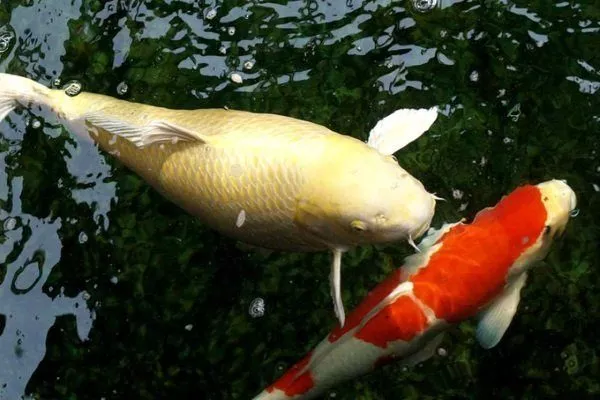
Treatment. A therapeutic diet and a strict feeding regimen can help overcome this problem. It won't hurt the fish to reduce its food intake to an absolute minimum until its body returns to its natural state.
Gonadal cyst
Gonadal cysts occur when fish are separated by sex. They are chronic, meaning they are often detected late, when the milt or eggs have already undergone changes.
Reasons. Long-term keeping of females and males separate, excessive feeding of dry food.
Symptoms. The abdomen swells significantly due to the presence of liquid or mushy contents. This causes severe pressure on the fish's reproductive organs, leading to dysfunction and metabolic disorders in the body as a whole. If left untreated, the cyst ruptures, potentially fatal.
Treatment. Treatment is only possible in the initial stages. To do this, place the fish belly-up in a cotton ball soaked in water and gently stroke it from the pectoral fins to the caudal fin to squeeze out the tumor's contents. This helps achieve positive results.
Inflammation of the gastrointestinal tract
This is a common problem seen in fish. Dry food is poorly digested and causes inflammation of the fish's gastrointestinal tract.
Reasons. Fish caught in the reservoir's wastewater are introduced into a pool or artificial pond, fed with dried daphnia, gammarus, and bloodworms. Fish also suffer from gastrointestinal inflammation due to consuming poor-quality food.
Symptoms. The fish are eating well but appear lethargic. Their skin darkens, and their bellies swell slightly. Redness of the anus and thread-like stools with bloody mucus also indicate intestinal inflammation.
Treatment. The inflammation is easily treated: the fish are switched to a varied, nutritious diet of live aquatic biopsies. It is not advisable to harvest live food from bodies of water receiving wastewater from domestic and industrial facilities.
Parasitic diseases
Ichthyopathological examination of fish living in ponds and reservoirs of fish farms typically reveals the presence of numerous parasitic organisms. In small numbers, the fish are relatively unharmed, but with numerous parasites, there is a risk of contracting a parasitic disease.
- ✓ The optimal ammonia level should not exceed 0.02 mg/l.
- ✓ Nitrite concentration should be below 0.3 mg/l.
- ✓ Nitrate levels should not exceed 50 mg/L for most fish species.
| Name | Temperature range | pH of water | Required oxygen level |
|---|---|---|---|
| Chilodonellosis | 22-27 | 7.0-7.5 | High |
| Dactylogyrosis | 18-22 | 6.5-7.0 | Average |
| Trichodinosis | 22-27 | 7.5-8.0 | High |
| Gyrodactylosis | 18-22 | 7.0-7.5 | Average |
| Glugeosis | 22-27 | 7.0-7.5 | Short |
| Lernaeosis | 18-22 | 7.0-7.5 | Average |
| Octomytosis | 22-27 | 7.0-7.5 | Short |
| Ichthyophthirius | 22-27 | 7.0-7.5 | Average |
Chilodonellosis
An invasive disease of freshwater fish. In pond fish farming, it affects young fish weakened by winter. However, chilodonellosis is also common in warm-water ponds.
Reasons. Chilodonellosis, which is externally manifested by the formation of coarse-grained formations of a gray-blue tint from mucus, at the initial stage of the disease development visible only from a certain angle, is caused by three species of ciliates from the genus Chilodonella - Ch. hexasticha, Ch. cyprini (piscicola) and Ch. uncinata.
Symptoms. Infected individuals begin to rub against rocks and plants and press their fins. Occasionally, their appetite decreases. Upon examination, with the fish upside down, a bluish-opaque coating is visible along the lateral line. Sometimes the skin peels off in patches. Gill infection often causes mass fish mortality.
Treatment. Before starting treatment, keep the fish at a temperature of 30-32 degrees Celsius (86-90 degrees Fahrenheit), which promotes recovery. If symptoms are noticed when the fish are still eating, this recommendation is not necessary. Treatment with a reduced dose of Sera Mycopur is effective. Chilodonellosis is also treated with antibiotics.
Dactylogyrosis
An invasive disease caused by monogenean flukes. There are approximately 150 known species of monogenean flukes.
Reasons. The causative agent of dactylogyriasis is a fluke from the genus Dactylogyrus, which has an elongated body.
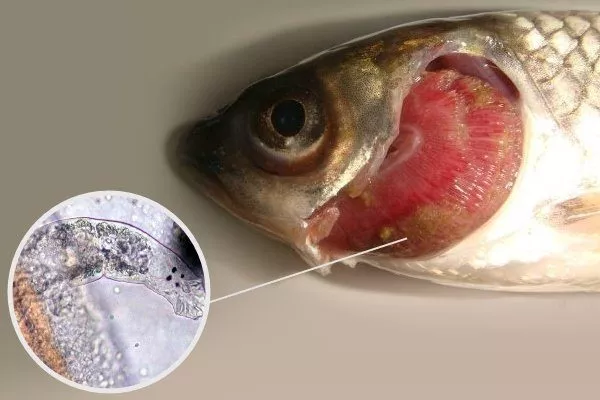
Symptoms. Fish infected with the parasite lose their appetite, hover near the surface, greedily gulping air, and rubbing against objects. A thick layer of mucus, resembling a mosaic, develops on the animal's gills. The gill filaments fuse together.
TreatmentInfected individuals are transferred to a quarantine tank, where a 0.2% ammonia solution is added at a rate of 2 ml per 1 liter of water. Chlorophos solutions are used to treat fry in nursery and fry ponds (the solution is added at a rate of 0.6-1 g per cubic meter of water). In a common tank, larvae without fish will die within 24 hours. When purchasing new fish, quarantine them. Disinfect the tank with a solution of baking soda.
Trichodinosis
A disease in which fish suffer from loss of appetite, rapid breathing, and a complete slowing of reaction time. The fish die after turning over on their sides.
Reasons. Trichodinosis is caused by the ciliate parasite, a round, reddish-colored parasite that lives on the skin and gills. It enters the artificial pond from a natural fish pond, along with soil and plants.
Symptoms. The bodies of infected fish become covered with a grayish-matte mucus, preventing them from breathing normally. Initially, the fish are restless, constantly surfacing to gulp air. A thick layer of mucus also develops on their gills.
Treatment. Aerate the pond using methylene blue. In an empty pond without fish, ciliates die within 2-3 days. Organic dyes, seawater, active chlorine solutions, and table salt are used as treatments. Treatments are carried out every 24-48 hours, for a total of 3-4 treatments. For prevention, it is essential to observe hygienic measures and quarantine new specimens before introducing them to the rest of the fish.
Gyrodactylosis
Hydrodactylosis can kill fish in a community pool within a week. Fish with this disease lose their appetite, and a plaque appears on their skin and gills.
Reasons. Caused by monogenetic flukes Gyrodactylus from the family of the class Monogenea.
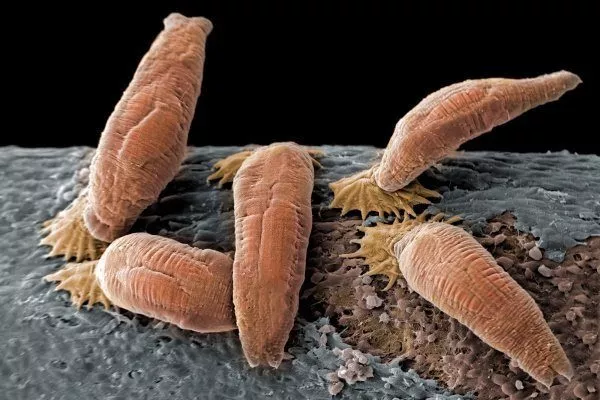
Gyrodactylus flukes under high magnification of a microscope
Symptoms. Affected fish bob and float on the surface of the water, with tightly contracted fins. As the disease progresses, the fish begin to rub against objects. Individual blue or gray patches appear on the surface of the body, the eyes become cloudy, and a coating forms on the gills.
Treatment. For treatment, salt baths with a 5% solution of table salt are used with a 5-minute exposure time. During winter, violet "K" can be added to ponds at a rate of 0.2 g per cubic meter. For preventative purposes, hygiene rules are observed and the tank is regularly disinfected. Before introducing fish for spawning, the pool should be treated with a solution of table salt for 24 hours.
Glugeosis
The causative agent is a sporozoan, which colonizes tissue, internal organs, and gills. Once ingested, they mate, forming white nodules that appear on the fish's body.
Reasons. The parasite can be introduced into a pond by sick fish when the disease is still in its early stages. Fish of the carp family are particularly susceptible to glugeosis.
Symptoms. It is accompanied by bloody spots that turn into ulcers, unilateral or bilateral exophthalmos, cone-shaped protrusions on the fish’s body, and swimming on its side.
Treatment. There's currently no cure for the problem. If glugeosis is diagnosed, it's best to remove all plants and fish from the pond.
Lernaeosis
During lerneosis, sick fish become emaciated, refuse to eat, lose mobility, accumulate in the water flow and die.
Reasons. This is an invasive disease of freshwater fish caused by the copepod Lernaea cyprinacea from the Lernaeidae family, which parasitizes the body of individuals.
Symptoms. The parasites penetrate the skin and reach muscle tissue, penetrating deeply, spreading over the entire body surface. At the sites of tissue penetration, an inflammatory process occurs: swelling and hyperemia, leading to the formation of ulcers. Scales not only become deformed and raised, but also fall out.
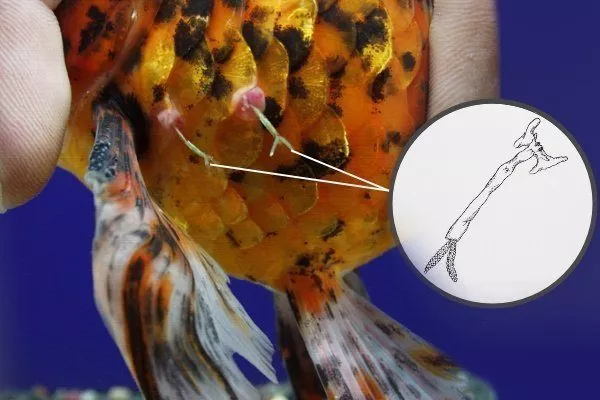
The copepods lerna attached themselves to a fish
Treatment. Lerneosis is difficult to treat. Various medications and treatment methods are used. For sick fish, it is recommended to prepare a quarantine tank with optimal conditions and add a solution of table salt at a rate of approximately 20 grams of salt per 10 liters of water. The fish are kept in this solution until they have fully recovered and their wounds have healed.
Octomitosis (hexamitosis)
This is a parasitic disease that negatively affects the gallbladder and intestines. It is easily identified by the presence of holes, ulcers, and furrows. For this reason, hexamitosis is also called "hole" disease.
Reasons. Failure to adhere to basic care guidelines for tank or pond inhabitants. These include mineral or vitamin deficiencies (which lead to weakened immunity), infrequent or excessive feeding, and the use of low-quality or spoiled food.
Symptoms. Fish lose their appetite, become picky eaters, and develop white mucus. Their bellies also swell, fins disintegrate and fall off, deep erosions appear on the sides of the fish's body, and the anus enlarges.
Treatment. Initially, infected fish are transferred to a quarantine tank, which will prevent the disease from spreading to the general population. After this, the water temperature in a separate (quarantine) tank is raised to 34-35 degrees Celsius. This has a detrimental effect on some of the parasites, leading to their death.
Ichthyophthiriasis (“semolina”)
All fish species are susceptible. It's commonly known as "manna disease" due to the formation of white specks on the fish's fins and scales.
Reasons. The causative agent is the ciliate parasite, which is highly adaptable.
Symptoms. The fish breathe frequently, begin to scratch themselves against objects and hard surfaces, and subsequently suffer from a white coating in the form of grains.
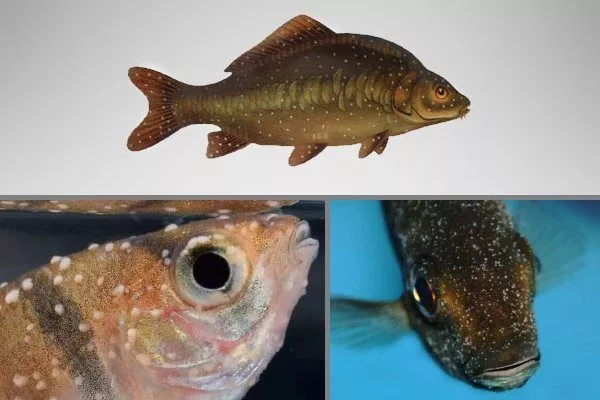
Treatment. Quarantine is recommended as a preventative measure—newcomers should not be immediately introduced into the general pond. For treatment, adding salt and raising the water temperature is acceptable—the parasite does not tolerate salty environments or elevated water temperatures. Bactericidal medications are also used to combat ich.
Bacterial diseases
Contagious diseases are caused by various pathogenic bacteria. Depending on the type of disease, certain behavioral or health problems may occur in fish. To diagnose the disease and prescribe timely treatment, it's important to know the specific signs of common infections.
| Name | Temperature range | pH of water | Required oxygen level |
|---|---|---|---|
| Mycobacteriosis | 22-27 | 7.0-7.5 | High |
| Aeromonosis | 18-22 | 6.5-7.0 | Average |
| Furunculosis | 22-27 | 7.5-8.0 | High |
| Fin rot | 18-22 | 7.0-7.5 | Average |
| Lepidorthosis | 22-27 | 7.0-7.5 | Short |
| Pseudomonas | 18-22 | 7.0-7.5 | Average |
| White-skinned | 22-27 | 7.0-7.5 | Short |
Mycobacteriosis (tuberculosis)
Mycobacteriosis affects viviparous fish species. They experience behavioral changes and loss of appetite.
Reasons. It is transmitted through food, plants, or soil. It can also be transmitted by fish and shellfish. There are known cases of mycobacteriosis being caused by insects coming to drink water. The development of mycobacteriosis is caused by improper housing conditions and a weakened immune system.
Symptoms. Fish become lethargic, their eyes bulge, they become disoriented, and some go blind. They also suffer from ulcers, tears, blindness, and apathy.
Treatment.It is carried out at an early stage: for this purpose, the use of Monocycline, Trypoflavin, and copper sulfate is recommended.
Aeromonas (carp rubella)
A bacterial infection in carp causes scales to become ruffled and begin to fall out. Treatment can lead to recovery or death.
Reasons. Aeromonas is introduced into artificial ponds and pools from natural bodies of water by introducing unquarantined fish via sediment, vegetation, and water. The infection spreads through poorly disinfected equipment and tools.
Symptoms. In the acute stage of the disease, fish die en masse. Serous hemorrhagic inflammation of the skin, along with hydremia of organ and muscle tissue, appears on the belly, fins, and lateral body walls. In the chronic stage, open and scarring ulcers form, accompanied by liver anemia and kidney swelling.
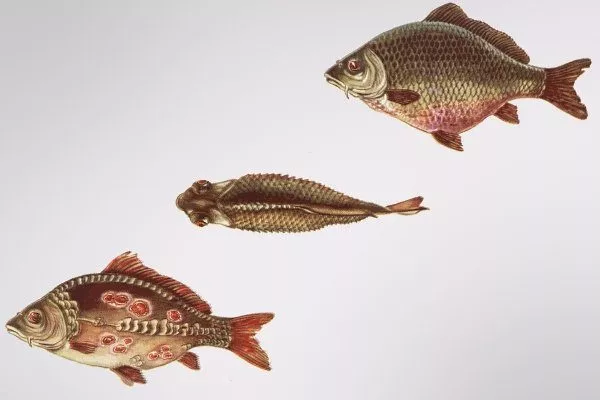
Treatment. Aeromonas is treatable only in its early stages. Fish with abdominal dropsy and raised scales are destroyed. Apparently healthy fish should be treated by immersing them in a separate container with Basic Violet K (Chlorohydrite, a synthetic dye). Add Bicillin-5 or soluble white streptocide to the main tank at a rate of 15 g per 100 liters of water.
Furunculosis of salmon
Furunculosis is an infection characterized by septicemia, the formation of boils in muscle tissue, followed by rupture and their transformation into reddish ulcers.
Reasons. The causative agent of furunculosis is the bacterium Aeromonas salmonicida.
Symptoms. When infected with furunculosis, fish develop spotted hemorrhages of varying sizes and shapes, an enlarged belly, bulging eyes, and ruffled scales in some areas or throughout the body. Inflamed fins often have a blood-red tint.
Treatment. To prevent furunculosis, it is necessary to prevent the introduction of the pathogen via water, fishing gear, eggs, fish, and other aquatic organisms. For prevention, it is recommended to treat eggs with solutions of Acriflavine or Merthiolate. A developed set of therapeutic and prophylactic measures will help prevent the further spread of furunculosis: eggs are treated with Acriflavine, Iodinol, or formalin. To treat infected fish, they are fed feed supplemented with sulfonamides at a dose of 120 mg per 1 kg of fish weight for 14 days.
Bacterial fin rot
This disease causes the fish to lose a fin. Ulcers develop at its base, exposing the spinal column, which can lead to death.
Reasons. It occurs due to an infection that destroys fish fins. The causative agent is a bacteria. Fin rot is caused by poor care and infrequent water changes or cleaning in the pond or pool.
SymptomsAt the onset of the disease, a slight clouding of the bluish-white color appears on the edges of the fins. The edges of the fins become frayed, and the tips of their rays gradually fall off.
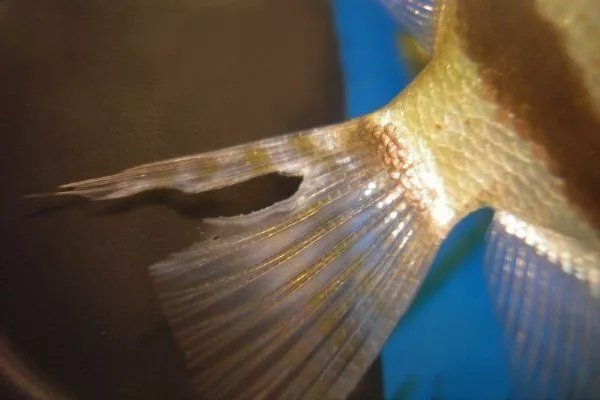
Treatment. They take radical measures. Initially, they improve the fish's living conditions. In cases of severe fin damage, medication is essential. The pool is disinfected regularly.
Lepidorthosis (infectious scaly rash)
Lepidorthosis progresses slowly. Afterward, the fish die, but with prompt treatment, a successful outcome can be achieved.
Reasons. The pathogens are bacteria that enter the artificial pond from a reservoir where there are fish and food.
Symptoms. Initially, affected individuals suffer from rough, ruffled scales in some areas. Gradually, this condition spreads to the entire body. Soon, the scales begin to fall out, leading to death.
Treatment. Treatment of infected fish is acceptable at the initial stage. Medicated baths with Biomycin or Bicillin-5 are recommended. When treating in a separate vessel, the use of basic violet K is acceptable. If treatment is ineffective, the fish are euthanized, and the pool and other equipment are disinfected.
Pseudomonas (ulcer disease)
Symptoms develop rapidly. In most cases, ulcerative disease leads to the death of the fish.
Reasons. It is caused by bacteria that enter the pool with food or from sick fish. Poorly settled water is one of the sources of pathogenic bacteria. The bacteria can also be transferred to the container from human hands.
Symptoms. This is accompanied by the appearance of dark spots on the fish's skin, which gradually develop into ulcers. The fish's belly also becomes larger, their eyes bulge, their appetite decreases, and their scales become ruffled. The infection penetrates the body.
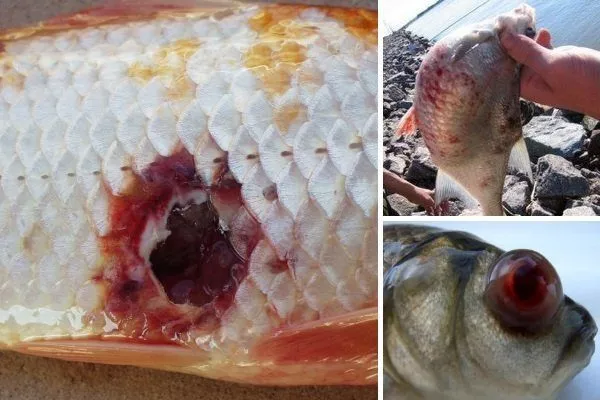
Treatment. Treatment must begin promptly. Streptocide is used for control, dissolving one tablet in 10 liters of water. Fish can also be treated with potassium permanganate, dissolved directly in the pool—5 grams of solution per 10 liters of water. The fish should swim in this solution for about 20 minutes, then return to clean water.
White-skinned (Pseudomonas dermoalba)
An infectious, serious disease that negatively impacts the fish's body and therefore requires prompt treatment immediately after the first symptoms are detected.
Reasons. Infection of fish by pathogenic bacteria, which can enter the pond from a natural body of water along with sick fish, soil, and plants.
Symptoms. Whitening of the skin is observed in areas around the dorsal fin and tail. The fish stays close to the surface, often exposing its fin. The coloration becomes white. If left untreated, damage to the central nervous system and organs responsible for motor coordination can occur. This can be fatal.
Treatment. Prevention can be achieved by following basic hygiene rules. Affected fish are moved to another container for quarantine. Dissolve 150-200 mg of Levomycetin in 1 liter of water and pour the mixture into the pond containing the infected fish. They are kept in this environment for at least 5 days.
Mycotic diseases of fish
Fish suffer from mycotic diseases caused by fungi. These fungi are multicellular or unicellular organisms that do not contain chlorophyll and are classified as lower plants.
| Name | Temperature range | pH of water | Required oxygen level |
|---|---|---|---|
| Branchiomycosis | 22-27 | 7.0-7.5 | High |
| Ichthyophonosis | 18-22 | 6.5-7.0 | Average |
| Saprolegniosis | 22-27 | 7.5-8.0 | High |
Branchiomycosis
This is a fungus that attacks the gill apparatus of fish. Branchiomycosis is caused by Branchiomyces demigrans and Branchiomyces sanguinis.
Reasons.Fungi colonize the gill filaments. All fish species kept in improper conditions can be affected. The disease develops due to high water temperatures and organic compounds from dead plants. The disease progresses rapidly.
Symptoms.Sick fish lack oxygen, pinpoint hemorrhages are visible on the gill plates, and the gill covers become deformed. The fish refuse to feed and constantly swim near the surface, gasping for air. Bright red and pale spots become visible on the gills.
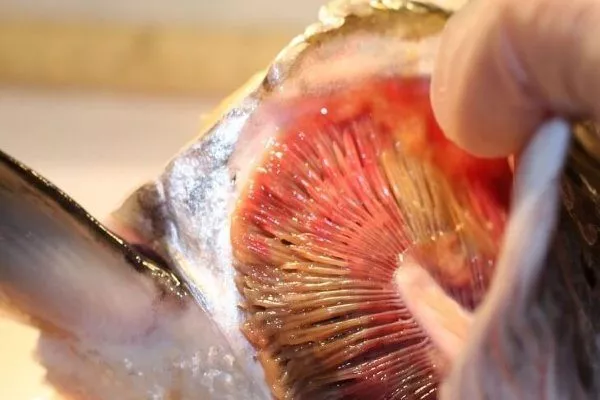
Gill rot
Treatment. When the first signs appear, all fish are transferred to a quarantine tank and treated with malachite green oxalate, and the observation tank is cleaned and disinfected. Maintaining cleanliness and hygiene in the tank will help prevent branchiomycosis.
Ichthyophonosis
A dangerous mycotic disease of pond and aquarium fish. Presumably caused by an imperfect fungus of the class Phycomycetes.
Reasons. The causative agent is Ichtyophonus hoferi, a round or ovoid fungus. A capsule forms around the fungus, secreted by the affected organ. Hyphae are also observed as blunt projections that branch off into a separate round body.
Symptoms. The pathogen spreads hematogenously to various organs and tissues, where inflammation first develops, followed by encapsulation of the affected areas. When these functions are impaired, the fish stop responding to stimuli, and their movements become erratic and sluggish. They stay near the shore. When the liver and kidneys are affected, exophthalmos, scale ruffling, and ascites are observed. Localization of the pathogen in the subcutaneous tissue, muscles, and eyes leads to cone-shaped swellings and ulcers, as well as black spots on the skin.
Treatment. Not yet developed. However, the fish transportation process is mandatory. Feeding fish with marine conspecifics is mandatory and should only be done after heat treatment. Also, as a preventative measure, it's advisable to promptly disinfect ponds with quicklime or bleach.
Saprolegniasis (cotton wool disease)
A mycotic disease affecting most fish species, caused by opportunistic aquatic fungi of the Oomycetes class. It is usually a secondary disease, initially affecting injured areas of the body or damaged eggs, then spreading to healthy areas and the eggs.
Reasons. The causative agents of the disease are members of the genera Achlya and Saprolegnia. The mycelium of these fungi is formed by hyphae with a limited number of transverse septa.
Symptoms. The most characteristic sign of the disease is cotton-like, fluffy white growths on the caudal and dorsal fins, head, olfactory pits, eyes, and gills. Loss of balance is noted before the fish dies.
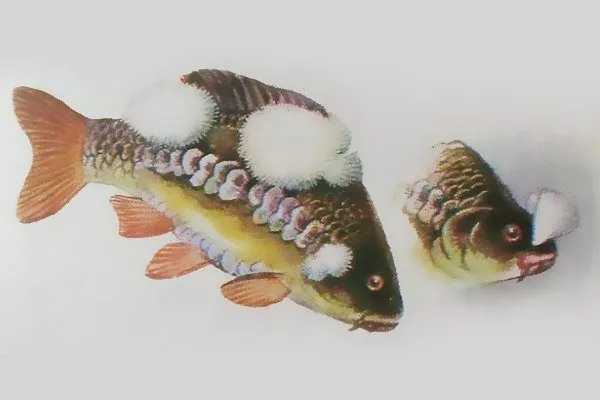
Treatment. In summer and fall, as a preventative measure, it is recommended to treat fish twice with basic violet K at a rate of 1 g per cubic meter of water for half an hour. A 0.1% salt bath for 30 minutes is also suitable. To combat the disease, water entering the hatchery is disinfected with ultraviolet rays.
- ✓ Change in skin color to paler or darker.
- ✓ Rapid or slow breathing.
- ✓ Loss of appetite or refusal to eat.
Symptoms of diseases
Often, certain diseases cause certain symptoms that allow for a timely diagnosis and treatment to save the fish.
Exophthalmos
With this condition, the eyes swell severely, often completely drooping. This symptom occurs with an infectious infection, such as ichthyosporidosis, mycobacteriosis, etc. The treatment method directly depends on this.
Reasons. Exophthalmos can occur as a result of infection by viruses, bacteria, or fungi. Other potential causes include physiological problems, trematodes, eye nematodes (worms), and vitamin deficiencies.
Symptoms. Clouding of the entire eye, the appearance of a whitish film, and the eye's detachment from the body. Advanced cases lead to the loss of one or both eyes.
Treatment. If exophthalmos is caused by a bacterial infection, the initial treatment is antibiotics, supplementing the fish's food. If the problem is caused by unsuitable living conditions, treatment begins with addressing those conditions: regularly cleaning the water and feeding the fish a balanced diet.
Bloating
Dropsy is accompanied by severe abdominal distension and protruding scales. The fish becomes lethargic and breathes heavily.
Reasons. Causes of abdominal distension include mycobacteriosis, aeromonosis, and nocardiosis. Besides bacteria, a virus (spring viremia) can also cause abdominal distension. In females, gonad cysts also cause abdominal distension.
Symptoms. A swollen belly, transparent skin due to a large increase in the abdomen, and curvature of the spine.
Treatment. The fish is immediately removed, observed, and examined. Treatment depends on the cause of the bloat, but most often, death occurs if the bloat is caused by a bacterial infection.
Learning to recognize the causes and symptoms of diseases can help prevent them or manage them effectively. Following simple hygiene rules, changing water frequently, and feeding fish high-quality food will reduce the risk of infection in fish bred in the wild or captive.